Quick wins for a faster PC:
Clear out junk files and repair common Windows errorsFree Scan →Scan for outdated or missing drivers - takes under a minuteDriver Scan →For most repeat-blooming bush roses, cut back in late winter or early spring—when the plant is still mostly dormant, the worst hard freezes have passed, and the buds are beginning to swell. The exact date depends on your climate and the kind of rose. Ramblers and once-blooming old garden roses are the major exceptions: prune them after flowering, because they bloom on older wood.
For most repeat-blooming bush roses, cut back in late winter or early spring—when the plant is still mostly dormant, the worst hard freezes have passed, and the buds are beginning to swell. Do not follow a single national date: pruning too early can expose tender new growth to frost, while pruning too late can remove developing flower buds and delay or reduce the first flush of blooms.
As an Amazon Associate I earn from qualifying purchases.
The most important exception is the rose’s flowering habit. Modern repeat-blooming roses flower mainly on new-season growth and tolerate a substantial spring cutback. Ramblers and once-blooming old garden roses flower on older wood and should generally be pruned after they finish flowering, not in late winter.
Quick timing guide
| Rose type | When to prune | How much to cut |
|---|---|---|
| Hybrid teas, grandifloras, floribundas, and miniatures | Late winter to early spring, after severe frost risk and before vigorous growth | Usually a firm cutback; retain three to five strong canes and three to five outward-facing buds on each |
| Repeat-flowering shrub roses | Spring, while growth is beginning | Remove about one-third of the oldest canes; avoid automatically cutting the whole plant hard |
| Repeat-flowering climbing roses | Early spring, or late autumn/winter after flowering has faded where local conditions allow | Shorten flowering side shoots by about two-thirds or to roughly 3–6 inches; train main canes horizontally |
| Once-blooming ramblers | Immediately after flowering, commonly in early summer | Remove spent, weak, crowded, or very old growth while preserving new flowering wood |
| Once-blooming old garden roses | After flowering | Prune lightly for shape and renewal; remove dead or damaged wood |
| Repeat-flowering Bourbons, Hybrid Perpetuals, and Portlands | Before flowering in late winter or spring | Prune with more flexibility because they flower on both old and new wood |
These are practical starting points rather than fixed calendar rules. For example, Oregon State University guidance places main pruning around mid-February to early March in the Willamette Valley, while central Oregon guidance recommends waiting until roughly late April or early May. Washington State guidance for central Washington places the work around late February. Those differences reflect local winter and frost patterns, not contradictory advice. Colorado State University Extension likewise recommends spring pruning and cautions against cutting roses back after mid-fall.
#1 Best Overall

- CLEAN CUTS FOR LIVE GROWTH: Bypass blade design is ideal for pruning delicate flower stems and green growth, helping reduce crushing and plant damage while cutting stems and small branches up to 5/8” in diameter
- BLADES STAY SHARP: Precision-ground steel blades are engineered to stay sharp through heavy use, & all-steel construction provides lasting durability, delivering consistent cutting performance for regular garden maintenance & detailed pruning tasks
- SMART BLADE FEATURES: Blade coating helps reduce friction for smoother cuts, minimizes sap buildup & gumming, and enhances resistance to rust for longer-lasting performance in outdoor conditions; sap groove keeps the blades from sticking during use
- COMFORTABLE, CONTROLLED GRIP: Ergonomic, non‑slip handle enhances control and reduces hand fatigue during repetitive cuts; easy‑open safety lock secures the blade for safe transport and compact storage
- INCLUDES: (1) Fiskars Bypass Pruning Shears designed for everyday gardening and plant care and backed by a Lifetime Warranty. Product care tips: Wipe pruners clean after each use to prevent sap build-up and lightly oil blade for longer product life
Use your local weather, not a date on the calendar
Prune when three conditions come together:
- The plant is still dormant or only just beginning to break dormancy.
- The likelihood of a damaging hard freeze has substantially declined.
- The buds are swelling, but strong new shoots have not yet developed.
In a mild region, that window may arrive in February. In a colder or higher-elevation climate, it may not arrive until April or May. If your area has an unusually changeable spring, waiting a little longer is generally safer than making a hard cut just before a severe freeze. Ask your county or state university extension service for the locally recommended window, particularly if your climate differs significantly from the regional examples above.
How to prune modern repeat-blooming bush roses
This method applies most directly to hybrid teas, grandifloras, floribundas, and miniature roses. These types flower best on current-season wood, which is why a firm spring reduction can produce a compact framework and vigorous flowering shoots.
1. Gather the right tools and protect your hands
Wear thick or leather rose-pruning gloves, especially when working around hybrid tea or climbing rose thorns. Use a sharp, clean bypass hand pruner for ordinary canes. Bypass loppers are useful for larger canes, and a pruning saw may be needed for very old, thick wood.
Do these 3 things before closing this tab:
1Clear out junk files and repair common Windows errors2Scan for outdated or missing drivers - takes under a minute3Repair Windows errors before they cause bigger problemsA sharp bypass hand pruner makes a cleaner cut than a dull or crushing tool. The recommendation is about tool type, not a particular brand: extension guidance identifies a bypass hand pruner as the principal tool for rose pruning.
Clean the blade with 70% isopropyl alcohol during the job, particularly after cutting diseased material and before moving to another cane or plant. This helps reduce the chance of spreading disease.
2. Remove the three Ds first
Begin with dead, damaged, and diseased wood. Cut dead canes back until the cut surface is healthy white or pale wood. If the center remains brown or discolored, continue lower until sound tissue is reached. Remove broken stems cleanly rather than leaving ragged ends that can collect moisture and decay.
Do not leave diseased wood simply because removing it changes the plant’s shape. Bag or dispose of suspect cuttings rather than adding them to home compost unless your composting system reliably reaches temperatures suitable for destroying pathogens.
3. Open the center of the plant
Remove spindly canes, crossing branches, and shoots growing inward toward the center. Keep growth that points outward. An open-centered structure improves light and air movement through the plant, makes later maintenance easier, and reduces the congested conditions associated with some disease problems.
4. Keep the strongest framework
For a typical mature hybrid tea, grandiflora, floribunda, or miniature rose, retain approximately three to five healthy, stout canes spaced around the plant. Cut those canes back to three to five strong buds, choosing buds that point outward.
As a general spring reduction, Illinois Extension describes removing approximately one-half to two-thirds of the plant’s height for these modern repeat-blooming roses. That is a useful framework, not a command to make every plant the same size. A weak, newly transplanted, stressed, or very small rose may need a lighter hand.
Rank #2
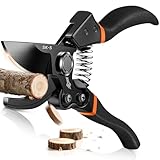
- LONG-LASTING SHARPNESS: Japanese SK5 bypass blade with titanium coating is tested through 5,000 cuts to maintain a sharp edge and deliver clean, consistent cuts on live stems and branches
- BUILT FOR 5X DURABILITY: Heavy-duty 3-layer titanium-coated SK5 blade resists wear and corrosion, while anodized aluminum handles and high-hardness screws reinforce the pruner. Repeated cutting tests show up to 5X the durability of standard pruners
- POWERFUL 4X LEVER CUTTING: The optimized lever-action design multiplies cutting force up to 4X, making thicker branches easier to prune with less hand effort. Cuts branches up to 3/4" with smooth, controlled power for everyday garden pruning
- ARTHRITIS & SENIORS FRIENDLY: Ergonomic non-slip rubber handles cushion pressure and provide a secure, comfortable grip, helping reduce hand and wrist fatigue. A comfortable hand pruner for seniors, arthritis and longer pruning sessions
- ONE-HAND SAFETY LOCK: The easy-access safety lock opens and closes with one hand for faster trimming, then securely holds the blades closed for safer carrying and storage
5. Make each cut above an outward-facing bud
Place the cut approximately one-quarter inch above a healthy bud, with the cut sloping at about 45 degrees away from the bud. The outward-facing bud directs the next shoot away from the center. Avoid leaving a long stub, but do not cut so close that the bud is damaged.
If a cane has no healthy buds in the section you want to retain, cut it back to a lower healthy bud or remove the cane entirely. Step back periodically to check the plant’s overall balance rather than making every decision from close range.
How much should you cut back?
Hard spring pruning is appropriate for many modern repeat-blooming bush roses, but “hard” does not mean indiscriminate. The goal is a small number of vigorous, well-spaced canes—not a bare stump and not a dense bundle of short branches.
- Strong, established modern bushes: reduce height by roughly one-half to two-thirds, then refine the shape by removing weak and inward-growing wood.
- Young or weak plants: remove damaged and poorly placed growth first and use a lighter reduction so the plant retains enough foliage and structure to recover.
- Large modern shrubs: do not assume they should be treated like hybrid teas. Their mature stems can carry flowers, so severe annual cutbacks may reduce production.
Pruning exceptions by rose type
Modern shrub roses: renew gradually
Repeat-flowering shrub roses flower on mature stems that are established but not yet excessively old and woody. Severe pruning can remove too much of that flower-bearing framework.
In spring, remove approximately one-third of the oldest canes and allow younger growth to replace them. Also remove dead, diseased, crossing, and weak wood. This gradual renewal maintains the shrub’s natural shape while continually making room for productive new canes.
Windows Errors? Fix Them Before They Spread
Repair common Windows errors and clear accumulated junk for a smoother, more stable PC - no reinstall needed.Free scan · no reinstallOutdated Drivers Are Slowing You Down
One free scan finds every outdated or missing driver and matches the right update for your exact hardware.Free scan · exact hardware matchNewly planted modern shrub roses can often be left largely unpruned for the first two or three seasons, apart from removing dead, broken, or diseased growth. Letting the natural form develop is usually preferable to forcing a mature shape too soon.
Repeat-flowering climbers: prune the sides and train the main canes
Established repeat-flowering climbers are commonly pruned in early spring. Some guidance, including the Royal Horticultural Society’s routine advice, also allows late autumn or winter work after flowering has faded. In areas with severe or changeable winters, the safer practical choice is generally to complete structural pruning after the worst frost risk has passed.
Rank #3

- Drop-forged construction delivers exceptional durability and sturdiness for long-term heavy garden use.
- Premium SK-5 steel blade with titanium coating and ultra-fine polishing ensures sharpness, rust resistance, and smooth cutting.
- Ergonomic non-slip aluminum handles wrapped with PVC offer lightweight strength, comfort, and reduced hand fatigue.
- Built-in sap groove effectively channels away sap to prevent sticking and keep blades clean during pruning.
- Capable of cutting branches up to 3/4 inch in diameter, ideal for live plants, stems, and light woody pruning tasks.
First remove dead, diseased, dying, weak, and congested growth. Tie in suitable young shoots, then shorten flowered side shoots by about two-thirds or to roughly 3–6 inches. If the base is crowded, remove some very old branches at ground level to encourage renewal.
Do not leave all the main canes pointing straight upward. Secure them as close to horizontal as the support allows. More horizontal main canes usually produce more flowering side shoots along their length. Avoid forcing or sharply bending brittle old wood; train flexible young canes gradually.
What’s actually slowing this PC down?
Pick the symptom - the matching free tool is one click away.
Climbers and ramblers are not the same
A climbing rose and a rambler may both cover a wall, fence, or support, but their pruning schedules differ. Climbing roses commonly repeat flower through summer and into autumn. Ramblers commonly produce one main display, normally around June, on older wood.
Check the plant’s label or cultivar information before pruning. If a once-blooming rambler is cut back in late winter, you may remove the older stems that carry that year’s flowers.
Ramblers and other once-blooming roses: prune after flowering
Prune a once-blooming rambler immediately after it finishes flowering, usually in early summer. Remove dead, damaged, weak, and excessively crowded growth, shorten or remove spent flowering stems as needed, and retain healthy new shoots for the next season.
The same principle applies to old garden roses that bloom once, including Alba, Gallica, Centifolia, Damask, and Moss classes. They flower on old wood, so wait until after flowering and keep pruning light—mainly shaping, thinning, and removing old or unhealthy material.
Repeat-flowering old garden roses
Bourbon, Hybrid Perpetual, and Portland roses flower on both new and old wood. They can be pruned before flowering with more flexibility than once-blooming classes. Remove unhealthy and badly placed growth, preserve a balanced framework, and avoid stripping away all mature canes unnecessarily.
Rank #4
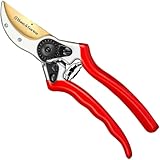
- Sharp, Clean Cuts Every Time – Engineered from Japanese grade, high-carbon steel, ClassicPRO bypass pruning shears for gardening stay sharp and make precise cuts that encourage healthy growth and won’t damage your plants
- No More Hand Fatigue and Wrist Strain – ClassicPRO gardening shears are designed with an ergonomic handle, non-slip grips, and shock-absorbing pads, making them lightweight and comfortable for smaller hands, seniors, and arthritis sufferers
- Rust and Corrosion Resistant – Tired of garden shears that rust after just a few uses? Our heavy duty pruning shears are constructed from anodized aluminum with titanium-coated blades to reduce friction and protect against rust and corrosion
- One Gardening Pruner, Many Uses - Preferred by professional landscapers and master gardeners, ClassicPRO clippers for gardening are adjustable general-purpose secateurs and branch cutters to trim trees, plants, and indoor flowers up to 1” thick
- Designed to Last Season After Season – Tired of cheap, low-quality hand pruners for gardening? Our heavy duty handheld garden clippers are designed for durability and longevity so you always have reliable shears
What if you missed the ideal pruning window?
Missing late winter does not mean the rose is ruined. A late correction is usually better than leaving dead or diseased wood in place, but it should be conservative once foliage and flower buds are well developed.
- Remove dead, broken, and diseased canes first.
- Cut out clearly crossing or dangerous growth only where doing so will not destroy substantial foliage or developing flower buds.
- Avoid a major height reduction or wholesale reshaping during active growth.
- Expect the first bloom flush to be later or lighter if substantial flowering wood had to be removed.
Dead canes can still be removed later in the season when doing so will not damage healthy foliage. Removing them improves air circulation and may reduce future disease problems. The trade-off is that heavy late pruning can reduce that season’s flowers and the plant’s overall size.
Deadheading is not the same as annual pruning
Structural pruning removes or shortens major canes to shape, renew, and improve the plant. Deadheading removes fading flowers during the growing season. They serve different purposes and happen at different times.
Free tools Windows power users keep installed
One-click scans. No signup required.
For repeat-blooming roses, inspect the plant regularly and remove fading flowers—often about weekly during active flowering—to encourage more blooms. Oregon State University guidance gives a practical cutback point: cut the flower stem just above the second leaf with five leaflets, using a slanted cut.
Do not deadhead automatically all season. If a rose’s hips are ornamental or useful as winter food for birds, stop removing spent flowers around mid-summer and allow hips to form. This is particularly relevant for roses selected for attractive autumn and winter fruit.
Seasonal pruning checklist
- Late winter or spring: carry out the main cut on most modern repeat-blooming bush roses after hard-freeze risk declines.
- During spring and summer: remove dead, damaged, or diseased stems whenever you notice them.
- During flowering: deadhead repeat-blooming roses if you want more flowers and do not want hips.
- After flowering: prune once-blooming ramblers and old garden roses.
- Late season: avoid hard pruning that stimulates tender new growth before winter. Remove hazards and unhealthy material, but leave major reshaping until the appropriate window.
Common rose-pruning mistakes
- Using one date for every rose: identify the class and whether it flowers on old or new wood first.
- Pruning too early: a warm spell can trigger tender shoots that are then damaged by hard frost.
- Hard-pruning every shrub rose: mature flower-bearing wood may be removed unnecessarily.
- Cutting once-blooming roses before flowering: this can remove the wood carrying the season’s flowers.
- Leaving the center congested: crossing and inward-growing canes restrict air movement and complicate maintenance.
- Using dull or dirty tools: crushing and contaminated cuts increase the risk of poor healing and disease transmission.
- Training climbers only vertically: horizontal or near-horizontal main canes encourage more flowering laterals.
- Confusing deadheading with structural pruning: removing faded flowers is a light seasonal task, not a substitute for correctly timed cane pruning.
The simple decision rule
If you are unsure, identify the rose before picking up the pruners:
- Does it repeat flower? If yes, it is often pruned in spring, especially if it is a modern bush rose.
- Does it flower once on last year’s wood? If yes, wait until immediately after flowering.
- Is it a shrub rather than a compact modern bush? Renew it gradually instead of cutting it back severely.
- Is it a climber? Preserve and train the main canes; shorten the flowering laterals.
- Is the wood dead, broken, or diseased? Remove it regardless of the normal seasonal schedule, provided the cut can be made without damaging healthy growth.
Correct timing and technique can encourage flowering, maintain form, improve air circulation, and remove unhealthy wood. They cannot guarantee perfect blooms every year: light, watering, nutrition, climate, cultivar, pests, and disease management matter just as much.
The Tool Desk
Outbyte PC Repair FREEClear out junk files and repair common Windows errorsFree Scan →Outbyte Driver Updater FREEScan for outdated or missing drivers - takes under a minuteDriver Scan →Best Value

- · ULTRA-SHARP SK5 STAINLESS STEEL - Engineered with premium SK5 stainless steel, these heavy duty pruning shears deliver razor-sharp precision and maximum hardness. The rust-resistant blades are designed to stay sharp longer, effortlessly resisting corrosion and sap buildup for smooth, friction-free garden shears performance year after year.
- · CLEAN CUTS FOR 1 INCH THICK BRANCHES - Say goodbye to crushed stems and ragged bark. Our professional bypass pruning shears slice through thick branches up to 1 inch like butter(as the videoes show). By ensuring perfectly clean cuts without leaving debris, it helps your roses, fruit trees, and indoor plants heal faster and stay healthy.
- · ERGONOMIC COMFORT FOR ARTHRITIS & WEAK HANDS - No more hand fatigue or wrist strain! Featuring a non-slip SoftGrip handle with premium cushioning, these garden clippers absorb pressure with every cut. It is the ultimate arthritis friendly hand pruner for seniors or anyone with limited hand strength to enjoy yard work pain-free.
- · 100% LEFT-HANDED FRIENDLY & SAFETY LOCK - Unlike standard garden scissors that flop and crush stems when used left-handed, our uniquely balanced hand pruners work flawlessly for both right and left-handed users. Equipped with a secure, easy-to-operate safety lock to protect your fingers and ensure safe storage.
- · HIGH-VISIBILITY RED & LIFETIME WARRANTY - Never lose your tools in the grass again! The vibrant high-visibility red handle makes these plant shears pop instantly in any backyard setting. We stand behind our industrial-grade quality—enjoy 100% risk-free shopping backed by our ironclad Lifetime Warranty. Perfect gardening gifts for women and men!
Sources and guidance used
This article draws on rose-pruning guidance from Illinois Extension, Oregon State University Extension, Washington State University, Colorado State University Extension, and the Royal Horticultural Society. Their regional windows differ because local frost conditions and rose types differ.
Frequently Asked Questions
What month is best to cut back roses?
For most modern repeat-blooming bush roses—such as hybrid teas, floribundas, grandifloras, and miniatures—prune in late winter or early spring. Wait until the risk of hard frost has declined, but prune before vigorous new growth develops. The exact month varies by climate.
Should all roses be cut back at the same time?
It depends on the rose. Modern repeat-blooming bushes can usually be pruned firmly in spring. Repeat-flowering climbers are also generally pruned in early spring. Once-blooming ramblers and old garden roses should usually be pruned immediately after flowering because they bloom on older wood.
Can I still prune roses if I missed early spring?
Yes, if the rose is a modern repeat-blooming bush and it is still dormant or just beginning spring growth. Remove dead, damaged, and diseased wood first, then thin crowded growth and shorten strong canes to outward-facing buds. Avoid hard pruning if active growth and flower buds are already well developed.
Recommended Free Tools
What is the difference between pruning and deadheading roses?
Deadheading removes fading flowers during the growing season and encourages many repeat-blooming roses to produce more flowers. Structural pruning removes or shortens major canes and is normally done during the appropriate seasonal pruning window. They are related tasks, but they are not interchangeable.
The Bottom Line
Most repeat-blooming bush roses should be pruned in late winter or early spring, after hard freezes have largely passed and before vigorous growth begins. Once-blooming roses and ramblers are the major exception: prune them after flowering so you do not remove the wood carrying the next display.
Quick Recap
Product prices and availability are accurate as of the date/time indicated and are subject to change. Any price and availability information displayed on Amazon at the time of purchase will apply.

