Quick wins for a faster PC:
Fix the driver behind crashes, sound loss and screen glitchesFind Drivers →Repair Windows errors before they cause bigger problemsFix Now →The right time to cut back a hydrangea depends on its type. Prune bigleaf and oakleaf hydrangeas just after flowering because they set next year’s buds on old wood. Prune panicle and smooth hydrangeas in late winter or early spring because they flower on new wood. If you cannot identify the plant, remove only dead or damaged stems until after it blooms.
The short answer: prune hydrangeas according to when they set flower buds
The best time to cut back a hydrangea depends on its type. Bigleaf and oakleaf hydrangeas usually bloom on old wood—stems that grew last year—so prune them lightly and immediately after flowering. Panicle and smooth hydrangeas bloom on new wood—growth produced this year—so they can be cut back in late winter or early spring before new growth begins.
As an Amazon Associate I earn from qualifying purchases.
If you prune an old-wood hydrangea in fall, winter, or early spring, you may remove the flower buds for the coming season. If you do not know which type you have, remove only dead or damaged wood until you can identify it, or wait until after it flowers.
Recommended Free Tools
| Hydrangea type | Where flowers form | Best pruning time | Typical approach |
|---|---|---|---|
| Bigleaf, mophead, and lacecap (Hydrangea macrophylla) | Mainly old wood | Immediately after flowering | Lightly remove spent blooms, dead stems, and a few oldest branches |
| Reblooming bigleaf, including many Endless Summer cultivars | Old and new wood | After flowering is safest | Light shaping and deadwood removal; preserve healthy old stems |
| Oakleaf (H. quercifolia) | Old wood | Immediately after flowers fade | Prune lightly and retain most of the framework |
| Panicle or peegee (H. paniculata) | New wood | Late winter or very early spring | Remove dead wood and shorten selected stems above healthy buds |
| Smooth, including Annabelle (H. arborescens) | New wood | Late winter or spring | Cut low for vigorous renewal or leave a taller framework |
| Climbing (H. anomala subsp. petiolaris) | Established flowering framework | Immediately after flowering | Usually minimal pruning; shorten overlong shoots |
Why the pruning date matters
Hydrangeas do not all produce flowers in the same place or at the same time. Old-wood bloomers form the next season’s flower buds during late summer and early fall. Those buds remain on the stems through winter. Cutting those stems during dormancy can remove an entire season of flowers.
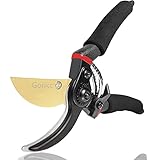
#1 Best Overall

- CLEAN CUTS FOR LIVE GROWTH: Bypass blade design is ideal for pruning delicate flower stems and green growth, helping reduce crushing and plant damage while cutting stems and small branches up to 5/8” in diameter
- BLADES STAY SHARP: Precision-ground steel blades are engineered to stay sharp through heavy use, & all-steel construction provides lasting durability, delivering consistent cutting performance for regular garden maintenance & detailed pruning tasks
- SMART BLADE FEATURES: Blade coating helps reduce friction for smoother cuts, minimizes sap buildup & gumming, and enhances resistance to rust for longer-lasting performance in outdoor conditions; sap groove keeps the blades from sticking during use
- COMFORTABLE, CONTROLLED GRIP: Ergonomic, non‑slip handle enhances control and reduces hand fatigue during repetitive cuts; easy‑open safety lock secures the blade for safe transport and compact storage
- INCLUDES: (1) Fiskars Bypass Pruning Shears designed for everyday gardening and plant care and backed by a Lifetime Warranty. Product care tips: Wipe pruners clean after each use to prevent sap build-up and lightly oil blade for longer product life
New-wood bloomers form flower buds on shoots produced during the current growing season. They can therefore be pruned later, while dormant or just before vigorous spring growth starts.
This is why the commonly repeated advice to “cut hydrangeas back in late winter” is only correct for some types. It is appropriate for panicle and smooth hydrangeas, but can be a serious mistake for traditional bigleaf or oakleaf plants.
When to prune each common hydrangea
Bigleaf hydrangeas: prune just after flowering
Bigleaf hydrangeas include the familiar mophead varieties with large, rounded flower clusters and lacecap varieties with flatter flower heads. Most flower primarily on old wood.
What’s actually slowing this PC down?
Pick the symptom - the matching free tool is one click away.
The safest routine is to wait until the flowers begin to fade, then remove each spent flower head. Follow the flower stem down to a healthy pair of buds and make the cut just above them. If the shrub needs renewal, remove one or two of the oldest stems at ground level rather than shortening every branch.
Do not routinely shear or hard-cut a bigleaf hydrangea. Pruning it in fall, winter, or early spring may remove the buds that were formed for the coming summer. In colder regions, exposed stems and flower buds may also be killed by winter weather. A plant that fails to bloom after careful pruning may have suffered winter injury rather than a pruning mistake.
Reblooming bigleaf hydrangeas: forgiving, but still worth pruning carefully
Some newer bigleaf cultivars can flower on both old and new wood. The Endless Summer series is a well-known example; other named reblooming cultivars include Blushing Bride, BloomStruck, Summer Crush, and Twist ‘n’ Shout.
Rank #2
- Drop-forged construction delivers exceptional durability and sturdiness for long-term heavy garden use.
- Premium SK-5 steel blade with titanium coating and ultra-fine polishing ensures sharpness, rust resistance, and smooth cutting.
- Ergonomic non-slip aluminum handles wrapped with PVC offer lightweight strength, comfort, and reduced hand fatigue.
- Built-in sap groove effectively channels away sap to prevent sticking and keep blades clean during pruning.
- Capable of cutting branches up to 3/4 inch in diameter, ideal for live plants, stems, and light woody pruning tasks.
Because these plants can produce some flowers on new growth, they may still bloom after winter damage or an ill-timed cut. However, preserving healthy old stems usually provides the earliest and often the fullest first flush. Treating every plant marketed as a rebloomer as identical is risky: performance varies by cultivar and climate.
Prune after flowering when possible. In spring, remove clearly dead wood and damaged tips, but avoid cutting healthy stems lower than necessary.
Oakleaf hydrangeas: prune lightly after the flowers fade
Oakleaf hydrangeas bloom on old wood, so their pruning window is short: immediately after flowering. This gives the shrub the rest of the growing season to produce the stems that will carry next year’s buds.
Remove spent flower heads, dead branches, and damaged growth. Keep most healthy stem length. Oakleaf hydrangeas often have attractive exfoliating bark and dried flower heads that add winter interest, so there is no need to strip the plant in autumn or cut it into a compact shape.
Panicle hydrangeas: prune in late winter or early spring
Panicle hydrangeas, including popular cultivars such as Limelight, bloom on new wood. Late winter or very early spring is the usual pruning window, before vigorous new growth begins.
Do these 3 things before closing this tab:
1Repair Windows errors before they cause bigger problems2Scan for outdated or missing drivers - takes under a minute3Clear out junk files and repair common Windows errorsFirst remove dead, broken, crossing, and weak stems. Then shorten selected stems with a heading cut just above a plump, outward-facing bud. Hard pruning is tolerated and can produce larger flower heads on shorter, stronger stems, but it is not required for a healthy display. Cutting every branch back severely can create a less natural shape and excessive, weak new growth.
Rank #3
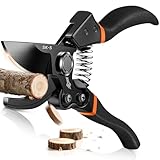
- LONG-LASTING SHARPNESS: Japanese SK5 bypass blade with titanium coating is tested through 5,000 cuts to maintain a sharp edge and deliver clean, consistent cuts on live stems and branches
- BUILT FOR 5X DURABILITY: Heavy-duty 3-layer titanium-coated SK5 blade resists wear and corrosion, while anodized aluminum handles and high-hardness screws reinforce the pruner. Repeated cutting tests show up to 5X the durability of standard pruners
- POWERFUL 4X LEVER CUTTING: The optimized lever-action design multiplies cutting force up to 4X, making thicker branches easier to prune with less hand effort. Cuts branches up to 3/4" with smooth, controlled power for everyday garden pruning
- ARTHRITIS & SENIORS FRIENDLY: Ergonomic non-slip rubber handles cushion pressure and provide a secure, comfortable grip, helping reduce hand and wrist fatigue. A comfortable hand pruner for seniors, arthritis and longer pruning sessions
- ONE-HAND SAFETY LOCK: The easy-access safety lock opens and closes with one hand for faster trimming, then securely holds the blades closed for safer carrying and storage
Many gardeners leave the dried cone-shaped flower heads in place over winter for structure. Remove them during the late-winter cleanup if desired. A low framework generally produces larger flower heads; a taller framework maintains more height and a looser form.
Smooth hydrangeas: cut back in late winter or spring
Smooth hydrangeas such as Annabelle also flower on new wood. Once established for a season or two, they can be cut close to the ground in spring for vigorous renewal. A practical alternative is to leave approximately 6 to 12 inches of framework above the soil.
There is a trade-off. Cutting low encourages fresh, vigorous stems and can keep the plant compact. Leaving more framework produces a larger shrub and preserves more structure. Do not assume that the shortest cut is automatically the best cut for every garden.
Climbing hydrangeas: prune only when necessary
Established climbing hydrangeas generally need little routine pruning. Remove dead wood and shorten shoots that have grown beyond the intended space, preferably immediately after flowering.
Flowers are often concentrated toward the top of the plant. Cutting away the upper flowering framework can reduce the display, so avoid major renovation unless it is necessary. If extensive reduction is unavoidable, spread the work over several years when preserving flowers matters.
What to remove first
- Dead wood: Remove branches that are completely dead back to live wood or to their point of origin.
- Diseased, broken, or badly damaged stems: Cut below the affected section, stopping at healthy tissue.
- Winter-damaged tips: In spring, cut frost-damaged shoots back to the first healthy pair of buds. Wait until the extent of damage is clear; premature cutting can make it harder to judge where live wood begins.
- Weak or straggly growth: Remove thin stems that are unlikely to support flowers.
- Crossing or ground-trailing branches: Thin them selectively to improve the shrub’s structure and keep branches from rubbing.
On an established old-wood hydrangea, renewal pruning is usually safer than blanket cutting. Remove one or two of the oldest stems at ground level each year rather than shortening the entire plant and sacrificing all potential flowers.
Rank #4

- DUAL CUTTING POWER: VERSATILE PRUNING COMBO --- With both Pruning Shears and Pruning Snip, this combo delivers unmatched versatility. Whether you're delicately trimming flowers and shrubs, tackling thicker tree branches, or tending to your vegetable and fruit garden, our combo pack excels in all areas. They're also perfect for landscaping projects and maintaining the health and appearance of indoor plants. With this pack, you have a versatile tool that simplifies your gardening tasks.
- ULTRA SHARP --- Much less effort to cut branches with our combo pack. Our pruning shears are crafted from premium Stainless Steel, and the pruning snip features a stainless steel blade with a titanium coating. Our garden scissors and garden clippers boast exceptional durability and sharpness. A perfect pruning shears for gardening and a must-have garden tool, hedge clippers pruners for gardening.
- RUST PROOF STAINLESS STEEL GARDENING SHEARS --- Our branch cutter tree pruner combo is built to last.
- SENIORS AND ARTHRITIS FRIENDLY --- Our pruners for gardening have comfortable handles that are easy to grip. With a non-slip texture for enhanced control, you can confidently prune in wet conditions. You can work longer without any hand fatigue.
- SAFETY LOCK PREVENTS ACCIDENTS --- Both of our pruning shears and pruning snips come with a built-in safety lock that securely holds the blades closed when not in use, preventing any accidental openings that could lead to injuries. This feature is designed for easy, one-handed activation, offering convenience and peace of mind whether you're storing the combo or carrying them in your pocket or toolkit. Trust in the safety and simplicity of our combo pack for all your gardening needs.
How to make the cuts
Use selective thinning and heading cuts instead of hedge shears. A hedge trimmer cuts many stems to the same height and can destroy the natural framework that supports hydrangea flowers.
Free tools Windows power users keep installed
One-click scans. No signup required.
- Make heading cuts about one-quarter inch above a healthy bud or bud pair.
- Choose an outward-facing bud when redirecting a branch so new growth develops away from the center of the shrub.
- Keep cuts clean and avoid leaving long stubs.
- Do not force a tool through wood that is too thick for it; crushed or ragged cuts heal poorly and make the work harder.
Tools for hydrangea pruning
For most maintenance, a sharp pair of bypass pruning shears is the most useful tool. Bypass blades slide past one another and are suited to live, green stems and ordinary heading cuts. Hand pruners are generally appropriate for branches up to about three-quarters of an inch, although the actual limit depends on the tool and the wood.
For older branches that are too thick for a clean hand-pruner cut, use bypass loppers. Their longer handles provide leverage, but do not use that leverage to crush a branch beyond the loppers’ clean-cut capacity. A pruning saw is the better choice for still larger stems or mature-shrub renovation.
Use clean, sharp blades. First remove visible dirt, sap, and plant debris; then disinfect the blades. Extension guidance identifies 70% or higher isopropyl alcohol as suitable for hand pruners. Disinfect between plants, and be especially careful when cutting material that may carry disease. Bleach can corrode sharp metal edges, so it is not a convenient default for maintaining pruning tools.
If you do not know which hydrangea you have
Do not guess based only on flower color. Use several clues:
- Leaf shape: Oakleaf hydrangeas have distinctly lobed leaves resembling oak leaves.
- Flower shape: Panicle hydrangeas have cone-shaped clusters; mopheads have rounded clusters; lacecaps have flatter heads with prominent outer flowers.
- Plant habit: Climbing hydrangeas attach to walls or trees and develop a climbing framework rather than forming a typical free-standing shrub.
- Records and labels: Check the original plant tag, nursery records, or the cultivar name.
- Past bloom timing: A shrub that flowers only on established stems should be treated cautiously as an old-wood bloomer.
When identification remains uncertain, remove only dead, broken, or diseased wood. Then wait until the plant has flowered before doing additional shaping. This conservative approach may leave the shrub slightly untidy, but it protects the buds you may otherwise cut away.
Independent reader supportYour contribution helps us test, update, and keep practical guides available for everyone.Why a hydrangea may not bloom
Pruning at the wrong time is only one possible cause of poor flowering.
| Symptom | Possible explanation | What to check |
|---|---|---|
| Healthy leaves but no flowers after fall or spring pruning | Old-wood buds may have been removed | Whether the plant is bigleaf or oakleaf and when it was cut |
| Dead-looking stems after winter | Cold injury, not necessarily incorrect pruning | Scratch-test questionable stems lightly and cut only to live wood once damage is clear |
| Flowers only on lower or protected branches | Winter killed exposed buds | Whether stems were protected by snow, a wall, or the shrub’s interior |
| New growth but few flowers | Excess shade, excessive nitrogen, browsing, or immature growth | Light levels, fertilizer use, deer damage, and plant age |
| Plant is repeatedly cut to the ground | Old-wood flowering framework is being removed | Species or cultivar identification before the next pruning |
Hydrangeas also need suitable light, consistent moisture, and good general health. In cold climates, a bigleaf hydrangea may be correctly pruned and still fail to bloom because its flower buds cannot survive winter. Florist or gift hydrangeas may likewise be poorly adapted to the local climate.
A simple pruning decision process
- Identify the type. Look for the plant label, leaf shape, flower shape, and growth habit.
- Determine the flowering wood. Bigleaf and oakleaf generally use old wood; panicle and smooth generally use new wood.
- Choose the season. Prune old-wood types just after flowering; prune new-wood types in late winter or spring.
- Remove problems first. Start with dead, diseased, broken, and winter-damaged wood.
- Choose the least aggressive cut that solves the problem. Light thinning is usually preferable to shearing.
- Protect future flowers. If the type is uncertain, stop after deadwood removal and wait for flowering.
There is no single date that guarantees perfect blooms. The dependable rule is to identify the hydrangea first, preserve old wood on old-wood bloomers, and reserve substantial late-winter pruning for new-wood types.
Best Value

- ULTRA SHARP - Much less effort to cut branches with our pruning shears. Crafted from premium SK5 steel with titanium coating, our garden scissors and garden clippers boast exceptional durability and sharpness. A perfect pruning shears for gardening and a must-have garden tool, hedge clippers pruners for gardening
- ...
- SENIORS AND ARTHRITIS FRIENDLY - pruners for gardening have comfortable handles that are easy to grip. With a non-slip texture for enhanced control, you can confidently prune in wet conditions. You can work longer without any hand fatigue.
- SAFETY LOCK PREVENTS ACCIDENTS - Our pruning shears come with a built-in safety lock that securely holds the blades closed when not in use, preventing any accidental openings that could lead to injuries. This feature is designed for easy, one-handed activation, offering convenience and peace of mind whether you're storing the shears or carrying them in your pocket or toolkit. Trust in the safety and simplicity of our pruning shears for all your gardening needs.
- PRECISION CUTTING --- Our Pruning Shears offer precise cutting with a 7.5 cm (2.95 inches) long blade and a 3.6 cm (1.42 inches) wide opening, making it easy to trim branches of different sizes. The titanium-coated bypass mechanism ensures clean and efficient cuts, keeping your plants healthy. Whether you're reaching for distant branches or working with various stems, these shears provide accuracy and simplicity, helping your garden look its best.
Frequently Asked Questions
When is the best month to cut back hydrangeas?
Bigleaf and oakleaf hydrangeas usually bloom on old wood, so prune them immediately after flowering. Panicle and smooth hydrangeas bloom on new wood, so prune them in late winter or early spring before vigorous growth begins.
Can I cut my hydrangea all the way to the ground?
Yes, but only if it is a new-wood type such as a panicle or smooth hydrangea. Cutting a bigleaf or oakleaf hydrangea to the ground can remove the buds responsible for the next season’s flowers.
What should I do if I do not know my hydrangea variety?
Remove clearly dead, broken, diseased, and winter-damaged wood first. For a healthy old-wood hydrangea, wait until after flowering before doing additional shaping.
Why is my hydrangea healthy but not flowering?
Not necessarily. Bigleaf hydrangeas can fail to bloom because winter kills their flower buds, even when they were pruned correctly. Shade, deer browsing, excessive nitrogen, and plant health can also reduce flowering.
The Bottom Line
Prune bigleaf and oakleaf hydrangeas immediately after they finish flowering; prune panicle and smooth hydrangeas in late winter or early spring. When the variety is unknown, remove only dead or damaged wood until you can identify whether the plant flowers on old wood or new wood.
Quick Recap
Product prices and availability are accurate as of the date/time indicated and are subject to change. Any price and availability information displayed on Amazon at the time of purchase will apply.

