Do these 3 things before closing this tab:
1Repair Windows errors before they cause bigger problems2Fix the driver behind crashes, sound loss and screen glitches3Clear out junk files and repair common Windows errorsFor routine checks and light upkeep, start with four things: a tire pressure gauge, a basic ratchet-and-socket and screwdriver set, clean rags or paper towels, and a flashlight. Add a portable tire inflator if you want to correct low tire pressure at home. A tread-depth gauge, OBD-II code reader, or multimeter can come later. This is a starter kit for inspections and simple jobs—not a universal repair kit. Your vehicle’s owner’s manual remains the authority for service intervals, fluid specifications, tire pressures, lifting points, and model-specific procedures.
The essential home-maintenance starter kit
Buy tools according to the jobs you actually plan to perform. A compact kit for checking tires, checking oil, replacing an air filter, inspecting visible components, and handling small fasteners is different from a professional mechanic’s tool chest.
As an Amazon Associate I earn from qualifying purchases.
| Tool or supply | What it enables | Priority | Important qualification |
|---|---|---|---|
| Tire pressure gauge | Monthly pressure checks on every tire and the spare, if equipped | Essential | Use the vehicle placard or owner’s manual for the target pressure; the number molded on the tire is not the vehicle recommendation. |
| Basic ratchet, socket and screwdriver set | Light maintenance such as an air-filter or battery job, when the vehicle design permits | Essential for light DIY | Socket sizes, fastener access and procedures vary by vehicle. |
| Clean rags or paper towels | Wiping a dipstick, cleaning small spills and keeping hands or parts clean | Essential supply | Use a clean rag or paper towel for an oil-level check and follow the manual’s checking procedure. |
| Flashlight or LED trouble light | Illuminating the engine bay, tire sidewalls, fluid reservoirs and areas under the hood | Useful | Good lighting improves inspection; it does not make an unsafe repair safe. |
| Portable tire inflator | Adding air after a pressure check finds a low tire | Useful | Verify the final pressure with a gauge and stop if the tire is damaged or will not hold air. |
| Tread-depth gauge | A dedicated measurement of tire tread depth | Optional | It supplements, rather than replaces, a visual tire inspection and professional evaluation when damage is suspected. |
| OBD-II code reader | Reading diagnostic trouble codes on compatible vehicles | Optional/advanced | A code identifies a system or circuit clue; it does not by itself prove which part failed or replace diagnosis. |
| Digital multimeter | Basic electrical-voltage checks for an owner who understands the vehicle’s system | Optional/advanced | Incorrect probing can damage electronics or create a short. Use model-specific instructions. |
| Floor jack, jack stands and torque wrench | Wheel work such as tire rotation | Advanced/task-specific | Use only on a suitable, level surface and follow the manufacturer’s lifting points and torque specifications. Never work under a vehicle supported only by a jack. |
Why the tire pressure gauge comes first
A gauge supports a recurring safety check rather than a one-time repair. The National Highway Traffic Safety Administration (NHTSA) advises checking all tires, including the spare if the vehicle has one, at least once a month when the tires are cold. Proper inflation can extend the average life of a tire by 4,700 miles, according to NHTSA; that is an agency estimate, not a guaranteed result for every vehicle or driving pattern.
What the basic hand-tool set is for
A small ratchet and socket set, screwdrivers, an adjustable wrench and a few driver bits cover many light-access tasks. Consumer guidance from Cars.com specifically connects this type of kit with jobs such as changing an air filter or battery. It does not mean every vehicle uses the same fasteners or that a stuck, corroded or high-voltage component is suitable for a beginner.
#1 Best Overall
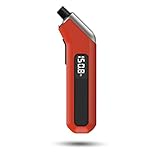
- PROCESS LEVEL ACCURACY: Each ETENWOLF’s digital tire pressure gauge is calibrated manually to ANSI B40.7 Grade 2A(plus-minus 1 PSI).Presta valve adapter not included, if used for bicycles, it must be purchased separately
- ACCURACY IN EXTREME PRESSURE RANGE: Whether tire pressure is below 12 PSI or above 140 PSI, ETENWOLF’s digital tire gauge is accurate as well
- ACCURACY IN EXTREME WEATHER: Built-in AI chip with thermal compensation inside, ETENWOLF’s tire gauge works normally even in extreme cold or hot weather(-4°F-130°F/-20°C-54°C)
- PRESSURE RANGE 3-200 PSI : ETENWOLF’s digital tire pressure gauge can measure pressure of all types of vehicles
- REPLACEABLE AAA BATTERIES: Batteries are easy to replace and helps to extend the tire pressure gauge’s life span, with LED light to illuminate dark areas for easy tire pressure reading
How to check and correct tire pressure
Pressure work is simple when you use the vehicle’s specification and take a reading under the correct conditions.
- Find the specification. Check the driver-door placard or owner’s manual. Do not substitute the maximum pressure printed on the tire sidewall; that figure describes the tire’s limit, not necessarily the pressure selected for your vehicle.
- Let the tires become cold. NHTSA defines a cold tire as one that has not been driven for at least three hours. Checking immediately after driving produces a warmer reading that should not be used as the normal target.
- Remove the valve cap and measure. Press the gauge squarely onto the valve stem and record each tire separately. Include the spare if equipped, because it can lose pressure while sitting unused.
- Inspect while measuring. Look for a puncture, bulge, exposed cord, badly worn tread or a valve-cap problem. A low reading accompanied by visible damage is a reason to stop and seek tire service rather than simply adding air.
- Add air gradually if needed. Connect a portable inflator, use the vehicle specification as the setting, and recheck with the gauge. An inflator’s built-in display is convenient, but a separate gauge provides an independent check.
- Replace the caps and monitor the result. If one tire drops again, arrange an inspection for a puncture, valve leak or wheel problem. Do not treat repeated air loss as normal seasonal maintenance.
A standalone gauge is inexpensive, compact and useful even when an inflator is available. An inflator-with-gauge combination saves storage space and can correct a low reading, but its sensor may not match a separate gauge exactly. For either choice, the vehicle placard and a repeat measurement determine whether the tire is correctly inflated.
Using the kit for common light-maintenance tasks
Checking engine oil
AAA’s home-maintenance guidance describes the basic equipment as a dipstick and a clean rag or paper towel. Park and prepare the vehicle exactly as the owner’s manual directs; some engines require a particular warm-up, shutdown and waiting period, while others specify a level surface and a cold check.
The Tool Desk
Outbyte Driver Updater FREEScan for outdated or missing drivers - takes under a minuteDriver Scan →Outbyte PC Repair FREEClear out junk files and repair common Windows errorsFree Scan →Rank #2

- Accurate, Dependable Readings: Factory‑calibrated to ±1 PSI, so you can confidently match your vehicle’s recommended PSI (check the door jamb sticker). Ideal for monthly checks and road trips — consistent results every time, cold or warm.
- Bright Backlit Display & Nozzle Light: The illuminated nozzle helps you find the valve stem in the dark, while the backlit LCD makes readings crystal clear in dim garages or at night. No more squinting or holding a flashlight.
- 4 Measurement Units, One Button: Quickly switch among PSI, Bar, Kgf/cm², and KPA with a single press. No complex settings — just press and cycle to your preferred unit. Perfect for drivers who need multiple scales.
- Broad Compatibility for Everyday Vehicles: 0–150 PSI covers cars, SUVs, motorcycles, and spare tires (often 60 PSI). Fits standard Schrader valves; just press on for a reading.
- Auto‑Off to Extend Battery Life: The gauge automatically powers down after 30 seconds of inactivity, so the included 2*AAA batteries last longer. Always ready for your monthly checks without surprise dead batteries.
- Locate the dipstick and identify the low and full marks from the manual.
- Pull the dipstick, wipe it clean with the rag or towel, reinsert it fully, then remove it again.
- Read the oil level on the marked area and compare it with the manual’s acceptable range.
- If oil is low, add only the specified oil in small amounts, allowing the level to settle before rechecking. Do not guess the viscosity or overfill.
- Secure the dipstick and filler cap, wipe any spill, and investigate an unexplained drop in level or a visible leak.
The rag is a small item, but it prevents a dirty dipstick from giving a misleading reading and keeps spilled oil from spreading onto belts, wiring or hot surfaces.
Replacing an air filter or battery when the manual allows it
These jobs commonly use the ratchet, sockets and screwdrivers in a basic set, but access and safety vary. Before removing anything, read the model-specific procedure, photograph or label connections if appropriate, and keep fasteners organized. A battery can be heavy and may involve a prescribed disconnect sequence; an air-filter housing may use clips rather than bolts. If the manual calls for a reset, relearn or special support procedure, account for that before starting.
Visual inspections and cleanup
Use the flashlight to examine tire sidewalls, hose areas, belts, fluid reservoirs, wiring and the ground beneath the parked vehicle. Rags or paper towels are useful for cleaning a small spill and making a new leak easier to identify. Do not wipe or handle hot, moving or electrically energized components. A clean, well-lit inspection can tell you when to stop; it cannot substitute for a repair procedure or a qualified diagnosis.
Rank #3

- PROCESS LEVEL ACCURACY: This heavy duty tire pressure gauge is calibrated manually to ANSI B40.1 Grade A (±1% of span)
- PRESSURE RANGE 0-75 PSI: ETENWOLF’s tire gauge can measure pressure of pickup, motorcycle, truck, bike, SUV, RV or ATV
- EASY TO READ IN THE DARKNESS: The large glow dial helps you clearly read the pressure at night or in low light
- EASY TO USE: 360 degree swivel chuck allows you to measure and take a reading from a tire valve at any angle
- ACCURACY IN EXTREME WEATHER: PSI gauge works normally even in extreme cold or hot weather
Optional diagnostic tools: useful clues, limited conclusions
OBD-II code reader
An OBD-II reader can retrieve stored diagnostic trouble codes on compatible vehicles and may help you describe a problem to a repair shop. Treat the code as a starting clue. One code can have several possible causes, and clearing it without fixing the underlying fault can erase useful information. Follow the vehicle’s service information and do not assume a low-cost reader can access every manufacturer-specific system.
What’s actually slowing this PC down?
Pick the symptom - the matching free tool is one click away.
Multimeter
A multimeter can measure basic voltage or continuity when the owner understands the circuit and the meter’s settings. It is an advanced addition, not a requirement for tire, oil or visual checks. Never probe an unfamiliar connector or an airbag, hybrid or high-voltage system without the exact safety procedure for that vehicle.
When a jack, stands and torque wrench become necessary
Wheel work changes the risk level. Cars.com identifies a floor jack, jack stands and a torque wrench as equipment for tasks such as tire rotation. These tools are not simply larger versions of the starter kit: they must match the vehicle’s weight and lifting points, and they require a controlled work area and correct technique.
Rank #4

- HIGH ACCURACY: Every ETENWOLF's pencil tire gauge is calibrated to ANSI B40.1 Grade B, it is accurate to 2% of span in the middle 50% of range and 3% of span in the lower and upper 25% of range. Each ETENWOLF pencil tire pressure gauge is manually calibrated and has its unique calibration number printed on the pencil
- WIDER RANGE: ETENWOLF's tire gauge offers 2 pressure ranges: 10-50PSI, 20-120PSI for all types of vehicles
- ALL METAL: ETENWOLF tire gauges are made of all solid metal, zinc alloy head and stainless steel body, they are durable and can be used for many years unless you lose them
- DEFLATION: You can also use ETENWOLF's tire gauge to deflate tires when the tire pressure is overinflated
- 16 CAPS IN 2 CASES: ETENWOLF even offers 16 valve stem caps, so you won't worry about losing tire caps anymore
| Situation | Home work may be reasonable when | Choose a shop or roadside professional when |
|---|---|---|
| Routine inspection or pressure check | You can follow the manual, work on a stable surface and interpret the result. | You find structural tire damage, a persistent leak or a warning condition. |
| Oil or filter check | The procedure and fluid specification are clear, and you can prevent spills. | The level is extremely low, a leak is active, or the engine shows an oil-pressure warning. |
| Battery or air-filter replacement | The manual gives a straightforward procedure and you have the correct replacement part. | Access is restricted, a relearn is required, terminals are damaged, or you are unsure of the disconnect sequence. |
| Tire rotation or wheel removal | You have rated lifting equipment, stands, wheel chocks, the correct lifting points and the specified tightening torque. | You lack any of those items, the surface is uneven, or you are not confident the vehicle is securely supported. |
| Brake, steering, suspension or underbody repair | Only if you have the training, service information and equipment for that exact vehicle. | Whenever the task exceeds your experience or requires specialized inspection or lifting equipment. |
Never crawl under a vehicle held only by a floor jack. The jack is for raising; correctly rated stands support the vehicle. Use the manual’s lifting points, chock the wheels as directed, keep people clear, and use a torque wrench where the manufacturer specifies wheel-fastener torque. If any part of that sequence is uncertain, pay for the work rather than improvising.
Home-maintenance kit versus roadside emergency kit
These are related but different purchases. NHTSA’s road-trip guidance includes a jack and ground mat, gloves, flashlight, tire gauge and basic repair tools for preparedness away from home. That list is designed for an unexpected roadside problem; it does not mean every item belongs in a beginner’s home-maintenance kit. At home, you can use a stable work area, better lighting and the vehicle manual. On the road, visibility, traffic and weather make prevention and professional assistance more important.
Use the owner’s manual as your buying and scheduling guide
Before buying fluids, filters, replacement parts or vehicle-specific adapters, confirm the exact year, engine, trim and market specification. AAA and NHTSA both direct owners to manufacturer instructions for maintenance details. The manual supplies the intervals, capacities, approved fluids, tire pressures, fuse information, lifting points and any reset procedures that a generic tool list cannot provide.
Best Value

- RUGGED DESIGN: The stainless steel components prevent rust and corrosion while the precision-crafted nozzle seamlessly seals onto the valve stems for highly accurate readings (±2% span). We also provide 4 valve stem caps for convenient replacement.
- MEASURES PSI, kPa, BAR; Measurement range from 10-75 PSI, 70-550 kPa, 0.7-5.5 BAR. Attention! Do not exceed the maximum pressure of the gauge, doing so will permanently damage the device.
- UNIVERSAL APPLICATION: Not only are these gauges easy to use, but include an integrated deflator valve, chuck, and ABS indicator bar
- CONVENIENT DESIGN stows easily in a glove box, tool belt, workbench, or even a pocket; the pocket clip makes it easy to carry with you while on the job
- Further service provided by AstroAI, BATTERY FREE means no maintenance and total reliability under all weather conditions; a necessary tool for roadtrips and optimal safety
Keep a simple record of the date, mileage, tire readings and work performed. A beginner schedule is valuable because routine checks can reveal a problem before it becomes a larger repair. AAA Club Alliance’s June 12, 2026 beginner schedule attributes this advice to Melvin Escobar, AAA Car Care director for Maryland and Virginia: “Staying on schedule helps prevent small issues from turning into major repairs and keeps vehicles operating safely and efficiently.”
Warning signs that end a DIY check
Stop the inspection and arrange professional help when you encounter any of these conditions:
- An oil-pressure warning or another critical dashboard warning.
- Visible fluid leaking onto the ground or rapidly falling fluid levels.
- Difficulty steering, an unusually low brake pedal or a change in braking response.
- Smoke or steam from the engine bay, wheel area or underside.
- Grinding, knocking or other severe mechanical sounds.
- A tire with a bulge, exposed cord, deep cut, repeated pressure loss or damage near the valve or wheel.
- Uncertainty about safely lifting, supporting, electrically isolating or reassembling the vehicle.
AAA’s home-maintenance guidance highlights these warning conditions because the correct response is diagnosis and repair, not another routine check. A flashlight, gauge and socket set help you identify a problem; they do not make a hazardous system safe to operate.
Quick wins for a faster PC:
Fix the driver behind crashes, sound loss and screen glitchesFind Drivers →Clear out junk files and repair common Windows errorsFree Scan →Scan for outdated or missing drivers - takes under a minuteDriver Scan →A practical buying order for beginners
- Buy a reliable tire pressure gauge and keep it with the car or in the garage.
- Add a compact ratchet-and-socket and screwdriver set after checking which fasteners your vehicle uses.
- Stock clean rags or paper towels and a bright flashlight.
- Add a portable inflator if you regularly need to correct pressure at home or want backup for travel.
- Choose a tread-depth gauge if you want a dedicated tire-tread measurement.
- Only then consider an OBD-II reader or multimeter, and learn the limits of each before relying on its readings.
- Buy a floor jack, stands and torque wrench only for a specific wheel task you can perform safely and according to the manual.
This order keeps spending tied to frequent, low-risk checks while reserving specialized equipment for a defined job. Recheck compatibility before every purchase: a tool can be well made and still be wrong for your vehicle, its fasteners or its required procedure.
Quick Recap
Product prices and availability are accurate as of the date/time indicated and are subject to change. Any price and availability information displayed on Amazon at the time of purchase will apply.

