Timber in a covered bridge rots when it remains wet, is repeatedly wetted, and cannot dry for long enough under temperatures that support decay fungi. A roof and siding reduce rain exposure but do not make the structure watertight: leaks, wind-driven precipitation, wet bearings, ground or masonry contact, water-trapping joints, poor drainage, and debris can keep critical members damp. Structural danger can also come from insects, failed connections, impact, overloading, fire, vandalism, or changed traffic loads; those mechanisms require different evidence and repairs.
Moisture is the starting point for most timber decay
Wood-degrading fungi need moisture, a suitable temperature, oxygen, and vulnerable wood. Of those conditions, available water is usually the factor an owner can most effectively control. The Federal Highway Administration (FHWA) explains in its 2005 Covered Bridge Manual that most wood species reach the fiber saturation point in the range of 24% to 32% water by weight of wood. That is a technical range, not a universal pass/fail reading for every species, member, or bridge. It indicates when cell walls are saturated and additional liquid water can support decay conditions.
As an Amazon Associate I earn from qualifying purchases.
Repeated wetting is often more damaging than one short-lived event. A roof leak that is repaired promptly may leave a stain without meaningful loss of capacity. A small leak that wets the same joint through several seasons can keep the timber above a decay-favorable moisture level, allow fungi to establish, and eventually involve concealed surfaces. Moisture can also move through end grain, bolt holes, cracks, and contact surfaces, so a dry-looking face does not prove that the interior is sound.
Windows Errors? Fix Them Before They Spread
Repair common Windows errors and clear accumulated junk for a smoother, more stable PC - no reinstall needed.Free scan · no reinstallOutdated Drivers Are Slowing You Down
One free scan finds every outdated or missing driver and matches the right update for your exact hardware.Free scan · exact hardware matchWhy covered does not mean waterproof
The enclosure is a rain shield, not a sealed envelope. Open construction can help wood dry, but the same gaps and interfaces can admit wind-driven rain. Water can be trapped where members meet, where connectors interrupt the grain, or where a timber bears on stone, masonry, or another wet material. USDA Forest Service guidance notes that trapped moisture can lead to both decay and insect attack.
#1 Best Overall
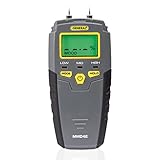
- HUMIDITY SENSOR: Our handy meter tool can quickly determine what level of remediation is needed to keep your family safe from black mold. High levels of dampness that go untreated are the leading cause of harmful fungus growth in the home.
- WATER LEAK DETECTOR: Finding the moisture content in your wood or drywall is the first step in early prevention. Continuously check and test suspicious water stains around the house so you can determine whether the area is wet or has already dried. Low, medium and high moisture tones and on-screen icons, Reading HOLD button
- MOISTURE READER: The mold test features large 0.3" high digits in a backlit LCD for quick and easy detecting. Our mildew scanner includes extra 8mm stainless steel pins, a protective cap that doubles as a calibration checker, and a “9V” battery.
- MOLD TESTER: For an accurate test read, stick the stainless steel pins into the surface of what you're measuring. The gauge has a broad range of 5 - 50% for wood and 1.5 - 33% for building materials such as concrete and drywall.
- GENERAL TOOLS: We're a recognized leader in designing and developing specialized precision tools dedicated to delivering exceptional customer service. We encourage artisans and DIYers to work smarter, measure better, and repair more productively.
How decay fungi weaken a bridge
Decay fungi use enzymes to break down cellulose, hemicellulose, and lignin—the polymers that give wood its stiffness, strength, and shape. Different fungi leave different patterns, and appearance alone is not a reliable field diagnosis.
Soft rot
Soft rot generally attacks from the surface inward and is associated with very wet conditions. It is a concern where timbers abut locations that collect or continually supply water. The affected surface may look eroded or softened, while the extent below the surface can be greater than a casual visual check suggests.
Brown rot
Brown rot can progress internally and cause substantial strength loss early in the process. As damage advances, wood may turn brown, develop checks across the grain, shrink irregularly, collapse, or crumble into dry fragments. Because capacity can fall before the full visual pattern is obvious, a member that still appears mostly intact may require professional probing and structural evaluation.
Quick wins for a faster PC:
Clear out junk files and repair common Windows errorsFree Scan →Scan for outdated or missing drivers - takes under a minuteDriver Scan →White rot
White rot attacks cellulose, hemicellulose, and lignin and is more common in hardwoods. Early affected areas can look bleached. The FHWA manual describes an extreme example in which white-rot attack produced up to 97% weight loss; that figure illustrates a decay mechanism, not a typical condition or a failure rate for covered bridges. The same manual notes that one fungus-fruiting structure can release nearly one billion spores in a day. Spore counts do not indicate how common structural decay is or whether a particular bridge is unsafe.
Rank #2

- 🌲【Accurate and fast measurements reveal hidden water leaks】: It has 2 high-precision pins that can penetrate the surface to be tested and quickly measure moisture content to estimate potential moisture increase throughout the home. COCZOW moisture meter is the ideal tool for measuring moisture.
- 🌲【Professional Wood Moisture Meter】: 6 calibrated scales. Our moisture meter is a great tool for manufacturers, floorers, inspectors and wood suppliers to quickly and easily measure moisture content (% Mc). You can quickly determine if the moisture content is low (5-12%), medium (12-17%) or high (17-60%). Checking moisture content prevents wood from cracking and warping.
- 🌲【Widely Used】: PM6811A moisture meter is ideal for carpentry, building construction, agricultural restoration and floor laying. Measure moisture content of wood products such as hardwood floors, cabinets, furniture, lumber, lath, beams, plywood, panels, composite boards, window frames, forestry wood, coils, building materials, etc.
- 🌲【User-friendly】: With LCD backlight, the backlight color is divided into three types of green, yellow and red, or display the moisture content of different measurement types. Hold function, maximum/minimum moisture measurement function and 5-minute automatic shutdown function (no power supply required).
- 🌲【Why choose COCZOW Wood Moisture Meter】: LED display function, large measuring range (wood: 2.0%-75.0%. Building materials: 1.5-30%), durable stainless steel needle, heat insulation, light weight and easy to carry. Get professional and accurate results with Peakmeter Wood Moisture Tester.
Where a covered bridge gets wet
Inspection should follow the water path rather than stop at the first dark mark. The most frequent moisture routes are concentrated at details that shed water poorly or cannot dry.
Roof and wall failures
- Missing, cracked, displaced, or poorly flashed roofing allows water to reach trusses and deck components.
- Damaged weatherboarding and open wall joints admit wind-driven rain, especially at bridge ends.
- Blocked gutters, failed drainage, and splashback can wet lower members repeatedly.
- Unsound siding or roofing can make an inspection report obsolete quickly because conditions continue to change.
Supports, bearings, and lower members
Members touching soil, stone, or masonry are especially vulnerable. At bearings, tracked-in dirt, washed-in debris, asphalt, and poor approach drainage can hold water against end grain and lower chords. A small gap that should provide ventilation can become a moisture reservoir when packed with mud or leaves. FHWA recommends clearing this material at least annually and cautions against pressure washing structural wood, which adds water and can drive contamination into cracks.
Joints, bolts, and connectors
Water can collect in connection pockets or travel inward along bolts and other connectors. End splits, checks, and bolt holes expose absorbent grain. If a joint is repeatedly wetted, decay may remain hidden behind plates, caps, or adjacent members while the connection loses bearing area or clamping effectiveness.
Debris and trapped organic material
Leaves, soil, vegetation, and other debris retain moisture against timber. They also obscure cracks, insect galleries, crushed fibers, and bearing conditions. Clearing debris is a maintenance task, not a substitute for an inspection, but it removes a predictable source of prolonged wetting.
Rank #3

- ✅【Accurate & Trusted Measures, Identify Moisture Level】With accurate & trusted performance, Mecurate moisture meter can detect moisture content from wood to building material. A reliable must-have tool for home owners, woodworkers, painters & architects to detect moisture level and spot hidden damage, which would save potential expensive repairs.
- ✅【2 Mode 8 Scale,Guaranteed Accuracy】With 0.1% resolution, the moisture meter has 2 mode : wood and building material. Wood mode has 8 calibrated scales for different wood types with full list on manual. Integrated with "Self-Testing" Aid on protective cap, users can calibrate the tool before use.
- ✅【3 Colored Indicators, Fast Spot Problem】Integrated with 3 colored indicators, together with intuitive on-screen icons for low/medium/high moisture content. Fast and accurately identify the dampness.
- ✅【Multi Function Easy Use】Integrated with temperature detection in °C/°F, one button click to know ambient temperature. Hold button to freeze the reading plus low battery icon to remind battery replacement. Comes with a jumbo smart backlit display, gives extended visibility suited to any ambient brightness. Side covered with anti-slip material, provides comfort firm grip.
- ✅【Packed for Convenience】Comes with a water resistant carry pouch. A "Wood Type Quick-Search Index Table" printed on back of the device, help adjust setup quick-and-easy.A full wood list on user manual to help quick identify correct scale.
How to distinguish a stain from active deterioration
Discoloration records exposure; it does not, by itself, prove active rot. Compare the location and pattern with current moisture, softness, and changes in geometry.
| Observation | What it can mean | What to do |
|---|---|---|
| Isolated dark stain under a repaired, dry leak | An old wetting event with little or no present structural effect | Verify the area is dry, document it, and monitor for change |
| Continuing leak, damp joint, or wet bearing | Active moisture exposure capable of sustaining decay | Correct the water source and arrange a professional assessment |
| Soft, fibrous, crumbly, checked, or collapsed wood | Possible advanced decay or other loss of material | Keep loads and access under professional control until evaluated |
| Crushing, abnormal shrinkage, or a member that no longer bears evenly | Possible concealed decay, overload, connection movement, or load-path distress | Have an engineer or qualified bridge specialist assess capacity and geometry |
Internal decay may not be readily visible. A dark surface can be cosmetic, while brown rot or a deteriorated bearing can reduce strength before a broad exterior symptom appears. Do not cut, jack, drill, or replace a suspect member based only on a photograph or a casual probe.
Structural damage that is not timber rot
Fungi and insects are biological mechanisms. Covered bridges can also deteriorate through events and load effects that demand different investigations.
| Mechanism | Typical evidence to investigate | Why the distinction matters |
|---|---|---|
| Insect attack | Frass, galleries, exit holes, weakened or hollow-sounding areas, and favorable moisture | Treatment and follow-up differ from fungal decay, and active insects may continue spreading |
| Connection failure | Loose or missing fasteners, split timber around bolts, slipped joints, reduced bearing, or displaced hardware | Connection distress can interrupt the truss load path even when the main members look sound |
| Impact | Vehicle strikes, broken siding, crushed chords, displaced members, or sudden geometry changes | Damage may be localized but immediately capacity-critical |
| Overloading or changed use | Loads beyond the original assumptions, repeated heavy vehicles, excessive vibration, or new equipment | A sound-looking bridge can still be overstressed |
| Fire or vandalism | Char, heat distortion, cut members, removed hardware, or intentional damage | Residual capacity and repair details require a different engineering basis |
FHWA reports that failing connections, rather than the timber members themselves, cause most problems with covered-bridge trusses. Inspection therefore has to include alignment, truss geometry, lower-chord tension splices, bearing points, and the condition of fasteners—not just a search for rot.
Rank #4
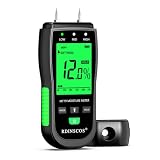
- FIND HIDDEN WALL MOISTURE EARLY — Check suspicious drywall and building surfaces after a leak, water stain, or other moisture concern. Detect abnormal moisture before a small issue develops into more extensive damage and costly repairs
- CHECK BEFORE YOU REPAIR — Don't rely on a wall looking or feeling dry. Use the moisture meter to check questionable areas before painting, repairing, or covering the surface, helping you make decisions based on actual moisture readings.
- CHECK FIREWOOD BEFORE YOU BURN — Test firewood before placing it in your fireplace or wood stove. Knowing the moisture level of your firewood helps you choose wood that is ready for burning and avoid relying on appearance alone.
- PIN-TYPE TESTING FOR DIRECT MEASUREMENTS — The contact pins penetrate the material to measure moisture inside wood and building materials. This makes it useful for checking areas where surface conditions may not tell the whole story.
- ONE TOOL FOR TWO IMPORTANT HOME CHECKS — Keep it ready for two practical jobs: checking walls for hidden moisture and checking firewood before burning. A simple way to make informed decisions before a moisture problem becomes expensive or wood goes into the fireplace.
Why bearings and connections deserve priority
A truss transfers load through a chain of members and joints. Decay at a lower-chord end, heel, bearing, or splice can remove a critical part of that chain. Crushing at a bearing reduces the area carrying load; shrinkage can loosen a joint; and water entering a connector pocket can reduce both timber section and fastener performance. A defect away from the primary load path may be less urgent than a smaller defect at a support or tension splice.
Bridge movement, out-of-plumb trusses, unusual sag, shifted joints, or doors and siding that no longer align can indicate geometry changes. These signs do not identify a single cause, but they tell an inspector where to examine the load path and whether temporary traffic restrictions are needed.
Prevention: a maintenance sequence that keeps timber dry
- Keep the roof and siding sound. Replace failed roofing and weatherboarding, maintain flashing, and close paths for wind-driven rain. A patch that sheds water temporarily should not be treated as a permanent repair without checking adjacent framing.
- Find the source before replacing wood. Trace stains upward and outward, inspect end grain and joints, and check whether runoff or splashback reaches the member. Replacing a rotten piece without correcting the leak leaves the new timber in the same environment.
- Manage drainage at approaches and abutments. Keep ditches, outlets, and approach surfaces from directing water toward bearings. Remove asphalt, soil, and washed-in material that holds moisture at supports.
- Preserve separation and airflow. Keep timber from unnecessary contact with ground, masonry, or standing water. Maintain the intended gaps and ventilation at bearing areas; do not pack them with debris or seal them in a way that traps condensation.
- Clear moisture-holding debris at least annually. Remove leaves, mud, vegetation, and other material from bearings, lower chords, joints, and drainage paths. Perform the work gently; FHWA cautions against pressure washing structural wood.
- Inspect after severe weather or impact. Wind, flooding, ice, and vehicle strikes can open new leaks or shift members. A post-event check can prevent a small breach from becoming a multiseason decay problem.
- Use preservative treatment only in the right context. FHWA notes that treatment may be appropriate when a replacement member suffered biological attack and the moisture source has not been corrected. Treatment is not a substitute for drainage, drying, sound detailing, or structural design.
The FHWA summarizes the principle directly: “Protecting the main truss members from the elements that cause decay is the most effective way to extend a covered bridge’s service life.”
The Tool Desk
Outbyte PC Repair FREEClear out junk files and repair common Windows errorsFree Scan →Outbyte Driver Updater FREEFix the driver behind crashes, sound loss and screen glitchesFind Drivers →How a suspected problem should be assessed
Structural assessment is not a do-it-yourself repair recipe. A qualified bridge engineer or experienced timber-preservation professional should determine whether deterioration is active, how much section remains, and whether the bridge can safely carry its current loads.
Best Value

- Quick moisture detection: This moisture tester can detect hidden moisture in wood. The probe reaches a measurement depth of 10mm, leaving only two tiny pinholes on the surface.
- For accurate readings, fully insert the pins into materials. The full-length electrodes detect true moisture content even if the surface is wet while the interior stays dry.
- Large screen, easy to read: MT19C is equipped with a color LCD display screen, which will automatically sound and light an alarm when the humidity measurement range is exceeded. The HOLD key function enables easy capture of readings even in difficult to measure areas.
- Built in flashlight, suitable for dark areas: The wood hygrometer has a built-in flashlight that allows you to accurately measure humidity even in basements, behind walls, or other dark enclosed spaces.
- Replaceable probe: The electrode length of the moisture meter is 12 millimeters, equipped with a pair of spare needles to ensure long-term stable use and reduce usage costs.
- Make the area safe. Control traffic and public access if there is a falling hazard, an impact, a visibly displaced member, severe crushing, fire damage, or a rapidly worsening leak.
- Document the condition. Record location, dimensions, photographs, weather, visible water paths, and changes since the last inspection. Note whether the timber is dry, damp, soft, hollow-sounding, cracked, or crumbling.
- Trace moisture and drainage. Check roof and siding above the defect, bridge ends, approach runoff, abutments, bearings, joints, and debris pockets. The source matters as much as the damaged area.
- Examine the whole load path. Inspect members, fasteners, splices, bearing surfaces, truss alignment, and geometry. Look for connection slip, crushing, abnormal shrinkage, and reduced contact—not merely surface color.
- Determine whether the condition is active. Compare current moisture and damage with earlier records, and look for continuing leaks, fresh frass, new cracks, or progressive movement.
- Develop a repair that preserves historic fabric and capacity. Repair choices should account for original construction, load demands, water management, and future inspection access. FHWA warns that placing steel immediately beside timber can promote hidden condensation-related rot if the detail prevents drying.
- Reinspect after repair. Confirm that the leak, drainage defect, or contact condition is actually corrected, then monitor the repaired area and adjacent members.
FHWA states that “a careful physical examination of all bridge components by an experienced, knowledgeable, thorough, and careful professional” is often sufficient to identify sources of potential structural distress. That examination is the basis for deciding whether a member needs cleaning, drying, treatment, reinforcement, replacement, or a load restriction.
Using a moisture meter without mistaking it for a capacity test
A pin-type wood moisture meter can help an owner or preservation group monitor whether a location is becoming wetter or drying after a repair. USDA guidance identifies moisture measurements as useful for finding levels favorable to decay fungi. Take readings at comparable locations and dates, mark the conditions, and treat changes as a reason to investigate the water path.
A meter reading is not a structural-capacity diagnosis. Readings vary with species, temperature, grain direction, salts, fasteners, and probe placement, and a meter cannot map hidden decay or certify a safe load. Do not use one reading to clear a bridge, authorize traffic, or decide that a member should be replaced. Professional inspection remains necessary when readings stay high, the timber is soft or deformed, or a bearing or connection is involved.
Repair pitfalls that can make deterioration worse
- Replacing wood without fixing water. The new member can decay in the same location if the roof, drainage, splashback, or contact condition remains.
- Sealing in a wet detail. Impermeable coatings, tight wraps, or poorly ventilated additions can prevent drying and conceal progression.
- Relying on appearance. Stains, paint, and intact surfaces can hide internal decay; conversely, old stains can lead to unnecessary removal if current moisture and capacity are not checked.
- Adding steel without moisture detailing. Steel placed directly beside timber may create concealed condensation and inspection problems.
- Ignoring connections. A member replacement does not restore a slipped, split, crushed, or corroded joint unless the connection itself is assessed and repaired.
- Cleaning aggressively. Pressure washing structural wood adds water and can damage surfaces or drive contaminants into checks.
- Returning traffic too soon. Load decisions should follow an assessment of remaining section, connections, geometry, and actual demands—not a visual statement that the bridge “looks fine.”
What the available evidence can and cannot say
The FHWA figures on fiber saturation, extreme weight loss, and spore production explain how decay works; they do not establish a covered-bridge-wide prevalence rate, annual rot rate, or percentage of collapses caused by rot. Official guidance supports a mechanism-based approach: identify where water is entering or being retained, determine whether decay or another mechanism is active, and evaluate the affected load path.
For historic structures, preservation and engineering decisions should be coordinated. The objective is not simply to remove every discolored board; it is to keep water out, allow sound timber to dry, retain historic material where safe, and restore the capacity and durability of members and connections that have actually deteriorated.
Quick Recap
Product prices and availability are accurate as of the date/time indicated and are subject to change. Any price and availability information displayed on Amazon at the time of purchase will apply.

