If you find a possible fire-safety defect in a block of flats in England, report it promptly in writing to the building’s responsible person, landlord or managing agent. Describe exactly what you saw, where and when you saw it, keep the report and any reply, and ask for the current fire risk assessment, evacuation strategy, interim precautions, planned remedial work and timetable. If there is a fire or immediate danger, follow the building’s fire instructions and call 999 or 112 instead of waiting for a complaint to be handled.
The process below applies to England. Scotland, Wales and Northern Ireland have separate arrangements that are not covered here.
As an Amazon Associate I earn from qualifying purchases.
First decide whether it is an emergency
Fire or immediate danger
A defect report is not an emergency response procedure. If you see a fire, smoke, an explosion risk or another immediate threat to life, follow the building’s fire action notice, leave by the safe route if instructed to do so, warn others only if it is safe, and call the fire and rescue service on 999 or 112. Do not stop to complete a form, wait for the landlord or investigate the construction of the building. The Home Office’s small-block fire-safety guide sets out emergency fire-action instructions.
Suspected defect without an active fire
For a non-emergency concern, make a prompt written report. A loose self-closing device, damaged fire door, failed alarm in a communal area, blocked escape route or suspected combustible external-wall material can become more serious if it is left unrecorded. Do not wait for a routine inspection when you can report the condition now.
#1 Best Overall

- Reliable Fire Protection: Stop basic home fires involving trash, wood, paper, liquids, gases, and electrical equipment
- All-Metal Construction: Made with robust materials for long-lasting durability
- Easy pull safety pin
- Compact & Lightweight: Aluminum construction and small size allow for easy storage and use
- Easy-to-Read Pressure Indicator: If arrow is in the green it’s charged
Find the building’s responsible person
Under the fire-safety arrangements for England, the responsible person is the person or organisation controlling relevant premises and shared areas. In a block this is commonly the freeholder, landlord, management company, housing association or local council. A managing agent may run day-to-day operations, but the responsible person retains the legal responsibility for assessing relevant risks, reducing or controlling them and providing residents with fire-safety information.
Check your lease, tenancy agreement, service-charge correspondence, resident handbook or building notices if you are unsure who that is. You may send the report to the managing agent and landlord or freeholder at the same time, asking them to confirm who is responsible. The GOV.UK guide for residents of flats in England explains the roles and routes for raising concerns.
The Fire Safety Order covers common parts and, following the Fire Safety Act 2021, relevant building structure, external walls and flat entrance doors. Residents can have duties inside their own flat, while responsibility for a flat entrance door can depend on the lease or tenancy agreement. Do not assume that you personally must replace a door or alter a shared system.
The Tool Desk
Outbyte PC Repair FREEClear out junk files and repair common Windows errorsFree Scan →Outbyte Driver Updater FREEFix the driver behind crashes, sound loss and screen glitchesFind Drivers →Record the defect safely before you report it
Good records allow the responsible person and, if necessary, an enforcing authority to understand the risk without relying on a general statement such as “the building is unsafe.” Write a factual account and preserve supporting material.
- Record the exact location: building, entrance, floor, flat number (if relevant), stair or corridor and the particular door, alarm, wall or route.
- Describe what you observed, such as a closer that does not pull a door shut, a hole or damaged seal, an alarm that does not sound during an authorised test, combustible-looking material exposed by damage, or items obstructing an escape route.
- Note the date and approximate time you noticed it, whether the condition is recurring and any obvious damage or malfunction.
- List earlier reports, reference numbers, inspections or promises about the same issue.
- If it is safe and lawful, take clear photographs from a normal resident area. Keep the original files and copies of emails, letters and replies.
Do not enter a locked plant room, roof space or restricted area to investigate. Do not remove a fire-door closer, wedge open a fire door, silence an alarm, test equipment beyond the instructions given to residents or attempt a repair to a shared system. Altering a door or alarm can undermine the building’s fire risk assessment and create a separate hazard.
Rank #2
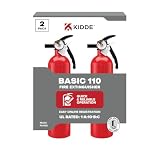
- Reliable Fire Protection: Stop basic home fires involving trash, wood, paper, liquids, gases, and electrical equipment
- All-Metal Construction: Made with robust materials for long-lasting durability
- Easy pull safety pin
- Compact & Lightweight: Aluminum construction and small size allow for easy storage and use
- Easy-to-Read Pressure Indicator: If arrow is in the green it’s charged
Make a written report that asks for action
Send the report by an address or portal the building normally uses, and retain proof of sending. Use a subject such as “Fire-safety defect – [location] – [date]”. Keep the wording precise: report what you saw and why it could affect fire safety, rather than declaring a legal conclusion or diagnosing a material you cannot identify.
Your report should ask the responsible person to confirm receipt, record the concern in the building’s safety process and explain the proposed response. Include the following information:
Quick wins for a faster PC:
Clear out junk files and repair common Windows errorsFree Scan →Fix the driver behind crashes, sound loss and screen glitchesFind Drivers →Repair Windows errors before they cause bigger problemsFix Now →- your name, flat or unit and contact details;
- the exact location and factual description of the defect;
- when you noticed it and whether it remains present;
- photographs or other evidence, where safe to provide;
- any immediate effect on an escape route, fire door, alarm or other safety system; and
- a request for the inspection, interim control and repair plan.
For example, you could write:
I am reporting a possible fire-safety defect at [exact location], observed on [date and time]. The condition is: [factual description]. It may affect [door integrity/escape route/alarm/external wall]. Please confirm who is the responsible person, what immediate precautions are in place, whether the latest fire risk assessment addresses this issue, what work is planned and the expected timetable. Please acknowledge this report and tell me how to provide further information.Ask for the fire risk assessment and the building’s plan
Residents can ask to see the latest fire risk assessment (FRA), the risks it identifies and the actions being taken. Ask questions that connect the document to the defect you observed:
- Can you provide the latest FRA and explain the findings relevant to this location?
- Does it cover the external walls, relevant structure and flat entrance doors, as well as escape routes, alarms and fire equipment?
- Has the assessment identified a reason for a fire risk appraisal of external walls (FRAEW), and if one exists, can you provide its executive summary?
- What is the current evacuation strategy, including whether the building uses “stay put” or simultaneous evacuation?
- What temporary controls are operating while permanent work is arranged—for example additional alarms, a fire warden or restricted access?
- What remedial work is planned, who is arranging it and when is each stage expected to happen?
- How are fire-safety systems inspected, tested and maintained, and which contact should residents use for future concerns?
The responsible person must share information about risks identified in the FRA, the evacuation strategy, how to report concerns and the actions being taken. A FRAEW is a specialist appraisal of the external-wall system; it is not a complete assessment of every fire risk in the building.
Common defects and the right questions for each one
Flat entrance and communal fire doors
Report a fault or damage to a flat entrance or communal fire door immediately. Keep the door shut when it is not in use and never wedge it open or tamper with its self-closing device. If you want to alter or replace a flat entrance door, coordinate the work with the responsible person so the replacement does not conflict with the building’s FRA.
Rank #3
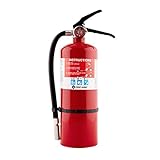
- The First Alert HOME2PRO Fire Extinguisher is UL rated 2-A: 10-B:C and meets minimum 2-A: 10-B:C code requirements; It features durable all-metal construction with a commercial-grade metal valve and trigger
- Heavy-duty fire extinguisher fights wood, paper, trash, plastics, gasoline, oil, and electrical-equipment fires; ideal for offices, homes, and workshops
- Uses mono ammonium phosphate extinguishing agent; Rechargeable by certified professionals after use
- Includes wall hook and easy-to-read, color-coded, corrosion-resistant pressure gauge
- 12-year limited
“Residents should report any fault or damage immediately to the Responsible Person.”
Special offer. See more information about Outbyte and uninstall instructions. Please review EULA and Privacy policy.
That wording appears in section 5.2 of the Home Office’s Fire Safety (England) Regulations 2022 fire-door guidance.
For blocks whose top storey is more than 11 metres above ground level, Regulation 10 guidance says the responsible person must use best endeavours to check every flat entrance fire door at least every 12 months and communal fire doors at least every 3 months. These are visual and basic routine checks. They do not establish whether the door’s original specification was adequate; that question belongs in the wider FRA.
External walls, cladding and insulation
Tell the responsible person if you see damaged, detached or exposed external-wall materials, unusual combustible-looking panels or signs of fire spread. Do not remove a panel or sample insulation yourself. Ask whether the FRA identifies a reason for an FRAEW and whether a specialist appraisal has been commissioned. An FRAEW examines the external-wall system and should not be treated as a substitute for the building’s overall fire-risk assessment.
The resident guide also provides a supplementary route to tell Homes England about an external-wall concern or ask about funding eligibility through its residents’ guide to fire safety in blocks of flats. Use that route in addition to reporting to the responsible person and, where appropriate, the local authority or fire and rescue service.
Free tools Windows power users keep installed
One-click scans. No signup required.
Rank #4

- Simple, Fast Activation:Take control with an easy-to-use design—just press, aim, and spray. Each extinguisher Emergency Survival Kits includes two sturdy mounting brackets for quick access in kitchens, cars, and other essential spots.
- Versatile 8-in-1 Fire Protection:Effectively tackles a variety of fires: wood, cooking oils, gasoline, and lithium-ion battery fires in devices like phones and laptops. A protective barrier helps prevent reignition for added security.
- Eco-Friendly and Non-Toxic Formula:The non-toxic, water-based formula is safe for users and the environment. It leaves no residue, making cleanup fast and mess-free—perfect for homes, vehicles, or offices.
- Compact and Portable:Lightweight and easy to store, this extinguisher fits into small spaces like kitchen drawers, glove compartments, or boat lockers, ensuring you’re prepared for emergencies anytime.
- Reliable 6-Year Warranty :Enjoy peace of mind with a six-year warranty. Whether it’s support, replacement, or guidance, the customer service team is ready to assist, keeping you safe and covered.
Alarms, smoke control and escape routes
Report communal alarms that fail an authorised test, missing detectors, defective emergency lighting, smoke-control equipment that does not operate as instructed, or corridors and stairs obstructed by storage, waste or building work. State exactly what failed and whether the issue affects one floor or the whole building. Do not disconnect equipment or move another resident’s property unless an authorised building procedure tells you to do so.
Flat entrance doors and responsibility boundaries
A flat entrance door may be part of the building’s regulated fire-safety arrangements, but the lease or tenancy agreement can affect who must maintain it. Report the problem first; ask the responsible person to confirm the responsibility boundary rather than assuming that a resident must pay or carry out the work.
What a reasonable response may involve
The owner, landlord or managing agent should tell residents what fire-safety checks have been completed, what work is planned and when it is expected. Depending on the assessment, the response might include a more detailed inspection, immediate temporary measures, replacement of unsafe external materials, repairs to doors or alarms, or a change to evacuation arrangements.
Residents may sometimes need to leave while work is completed, but the existence of a defect alone does not prove that evacuation is required. Follow the building’s current instructions and official emergency advice. Ask for written details of any temporary arrangement, including how residents will be warned, who will supervise it and when it will be reviewed.
Do these 3 things before closing this tab:
1Repair Windows errors before they cause bigger problems2Fix the driver behind crashes, sound loss and screen glitches3Clear out junk files and repair common Windows errorsEscalate if the concern is ignored
If the responsible person does not acknowledge the report, refuses relevant information or leaves a serious concern unresolved, use the route that matches your tenure. Keep a chronology of reports, replies and missed commitments.
Best Value

- Reliable Fire Protection: Stop basic home fires involving trash, wood, paper, liquids, gases, and electrical equipment
- All-Metal Construction: Made with robust materials for long-lasting durability
- Easy pull safety pin
- Compact & Lightweight: Aluminum construction and small size allow for easy storage and use
- Easy-to-Read Pressure Indicator: If arrow is in the green it’s charged
| Resident status | First step | Further routes if unresolved |
|---|---|---|
| Leaseholder | Raise the issue with the freeholder or managing agent and request leaseholder advice. | Contact the local council or fire and rescue service. Formal protections and advice may also be available for qualifying leases. |
| Social tenant | Use the landlord’s complaints process or tenant panel where available. | Contact the Housing Ombudsman, local fire and rescue service or an appropriate tenant advice organisation. |
| Private renter | Report to the landlord or responsible person in writing. | Contact the council’s housing team, fire and rescue service or a tenant advice organisation. |
| Resident unable to reach the responsible person | Contact the local authority and explain that you cannot obtain a response. | The authority or fire and rescue service can direct you to the relevant enforcement or housing route. |
For a complaint about a building-level fire-safety issue, provide your evidence and explain what you have already asked the responsible person to do. Authorities may need to assess whether the matter falls within their powers; an escalation is not an automatic finding that the building breaches a particular legal requirement.
Additional route for qualifying high-rise residential buildings
In the England residents’ guide, a high-rise building is described as one with 7 storeys or at least 18 metres. Such buildings have additional accountable-person roles. First raise the concern with an accountable person, such as the landlord or management company.
After that step, the Building Safety Regulator (BSR) accepts specified complaints about defined issues in high-rise residential buildings, including matters that could lead to fire spread. Confirm that your building meets the applicable classification and that your complaint concerns a matter within the BSR’s current remit before using the form. Include the building address, your earlier report, the response received and the safety issue in factual terms.
Who pays for repairs?
Building-level fire-safety problems are usually the owner’s responsibility to fix, and a developer or builder may be responsible for defects it caused. Payment protections are fact-specific. The government’s resident guidance says many qualifying leaseholders will not pay for major fire-safety problems such as cladding where the relevant protections apply, while historical costs and smaller measures such as fire doors can depend on the lease and building. This is a high-level explanation, not a determination of your liability.
Renters should not normally be charged directly for fire-safety repairs. If a landlord appears to pass a cost through rent or another charge, obtain tenancy and housing advice rather than withholding payment without advice.
Formal legal mechanisms can include a remediation order requiring an owner to fix major issues and a remediation contribution order requiring an owner or developer to pay for issues it caused. They do not apply automatically. Current government guidance and qualified legal or housing advice are appropriate before relying on either mechanism.
Quick Recap
Keep a case file and avoid actions that create new risk
- Keep one folder containing the original report, photographs, delivery evidence, replies, inspection notes and escalation references.
- Use dates and exact locations in every follow-up so the history can be matched to inspection records.
- Do not block, prop open or modify a fire door while waiting for a repair.
- Do not enter restricted areas, remove cladding or insulation, or alter alarms, smoke-control equipment or communal wiring.
- Do not promise neighbours that the building is safe or unsafe; share the responsible person’s verified instructions and emergency information.
- If conditions change—such as a new obstruction, a door that stops closing or an alarm failure—send a new urgent report and identify the change.
A practical reporting sequence
- Make it safe for yourself. Leave an emergency situation and call 999 or 112; do not investigate a fire or enter a restricted area.
- Identify the defect. Note the exact location, condition, date and any effect on escape, compartmentation, alarms or external fire spread.
- Report in writing. Send the facts and photographs, if safe, to the responsible person, landlord or managing agent and keep proof.
- Request the documents and controls. Ask for the FRA, relevant FRAEW information, evacuation strategy, interim precautions, planned work and timetable.
- Track the response. Save replies and record whether promised inspections or repairs occur.
- Escalate by tenure and building status. Use the council or fire and rescue service route, the landlord complaints process, the Housing Ombudsman, or—after contacting an accountable person—the BSR where the high-rise rules apply.
- Get advice about costs. Lease, building and defect facts determine liability; seek qualified advice before accepting or disputing a charge.
Product prices and availability are accurate as of the date/time indicated and are subject to change. Any price and availability information displayed on Amazon at the time of purchase will apply.

