Stop touching the fixture and stop using it. A shock from a light fixture is a warning that an energized part, wiring fault, defective component or grounding problem may be present. Keep everyone away. If you can reach the electrical panel without approaching the hazard, switch off the suspected branch circuit, then arrange an inspection by a qualified electrician. Do not remove the fixture, test exposed conductors or attempt a repair based on this article.
Why a shock from a light fixture is an emergency warning
A light fixture should not deliver a perceptible shock through its metal trim, canopy, lamp holder, switch plate or other accessible surface. Even a brief tingle means current may have found an unintended path through your body. The sensation does not tell you how serious the fault is: a small shock can occur before a more dangerous failure, and a person can be badly injured without a dramatic visible mark.
As an Amazon Associate I earn from qualifying purchases.
The exact cause cannot be diagnosed safely from a description or photograph. A shock may involve miswiring, damaged insulation, a defective fixture, an energized conductor that was assumed to be off, or a missing or ineffective grounding path. The U.S. Consumer Product Safety Commission (CPSC) gives a related example in which a shock from the metal shell of a lamp socket can indicate a miswired lamp or receptacle. That example does not establish the cause of every ceiling, wall or outdoor fixture.
Electrical Safety First also lists burn marks, buzzing or crackling, unusual heat, blown fuses and repeatedly tripped breakers as warning signs around lighting equipment. Those signs increase the urgency of removing the circuit from service, but their absence does not make a shocking fixture safe.
#1 Best Overall

- NON-CONTACT DETECTION of AC voltage in cables, cords, circuit breakers, lighting fixtures, switches, non-tamper-resistant outlets, and wires
- CLEAR INDICATION: Bright LED illuminates green to indicate tester is operational and flashes red and emits a beeping alert when voltage is detected
- BROAD APPLICATION with a 50 to 1000V AC power detection range
- CONSERVE BATTERIES with auto power-off function
- LIGHTWEIGHT AND DURABLE compact design with a convenient clip fits securely in pocket; 6.6-Foot (2 m) drop protection
What to do immediately
- Break contact and step away. Do not touch the fixture again to see whether the sensation repeats. Move other people, children and pets away without touching any exposed electrical part.
- Do not use the wall switch as your only safety measure. A switch can be miswired, can interrupt the wrong conductor, or can control only part of the circuit. A switch position is not proof that every conductor at the fixture is de-energized.
- Turn off the circuit at the panel only if you can do so without approaching danger. Stand on a dry surface, avoid touching the fixture, and operate the correctly identified breaker or fuse. If the panel, floor or route to it is wet, damaged, smoking or otherwise unsafe, leave the area and call emergency services or an electrician.
- Leave the fixture out of service. Do not replace the lamp, tighten a terminal, remove a cover, reset a breaker repeatedly or continue using another control connected to the same fixture.
- Arrange a qualified electrical inspection. Tell the electrician exactly what happened, which surface was touched, whether the shock was a tingle or a painful jolt, and whether there were sparks, noise, heat, smoke or a tripped protective device.
CPSC’s home-wiring guidance uses the practical instruction to avoid touching the faceplate or using a device until help from a qualified electrician is obtained. Treat a light fixture in the same cautious way: isolate it, keep people away and obtain professional help.
If another person is still in contact with the fixture
Do not touch the person. You could become part of the electrical path. First isolate the supply from a safe location if you can do so without entering the hazard area. If you cannot isolate it safely, back away and call your local emergency number.
Call emergency services immediately if the person is unconscious, having difficulty breathing, not breathing normally, suffering a seizure, badly burned, confused or experiencing chest pain. Emergency numbers depend on location; 911 is used in the United States and Canada, while 999 is used in the United Kingdom. Use the number that applies where you are and follow the dispatcher’s instructions.
Do these 3 things before closing this tab:
1Clear out junk files and repair common Windows errors2Fix the driver behind crashes, sound loss and screen glitches3Repair Windows errors before they cause bigger problemsWhen the source has been isolated, provide first aid only within your training. Electrical Safety First advises beginning CPR and using an automated external defibrillator (AED) when a person is not breathing normally if you are trained and it is appropriate to do so. Do not move a person unnecessarily if there may also be a fall or other injury. A conscious person should still be medically assessed and observed because internal injury, heart-rhythm problems and burns may not be obvious immediately. OSHA training material likewise advises seeking emergency medical attention after an electrical shock.
Why a light fixture might shock you
The following are possible mechanisms, not a remote diagnosis. A licensed electrician must test and inspect the installation with the supply safely isolated.
Rank #2

- Be aware of voltage easily - the tip glows red and a beeper sounds when voltage is detected
- Continuous self-test so you always know it’s working
- Voltage detection range for wide application use - 90 V to 1000 V AC or 200 V to 1000 V AC
- Audible/Silent mode for added convenience
Miswired conductors
Line and neutral conductors may be connected to the wrong terminals, or a switch may interrupt neutral instead of the energized conductor. In that situation, a lamp holder or internal part can remain at line potential even when the light appears to be off. A polarized lamp or plug that produces a shock can be a sign of a miswired lamp or receptacle, according to the CPSC example.
Damaged insulation or a defective fixture
Age, heat, moisture, mechanical damage, loose connections or a failed component can allow an energized conductor to contact the fixture body. Metal trim, a canopy, a screw or another accessible part can then become hazardous. A fixture may look intact while insulation inside it has deteriorated.
An unintended energized conductor
Lighting circuits can share junction boxes, switches or cable routes with other circuits. A conductor that is not controlled by the switch may still be energized. OSHA incident records include fatal events involving lighting work where people believed a circuit was off; those records illustrate why assumptions about the correct breaker or switch can be dangerous.
Grounding or bonding problems
Protective grounding and bonding are intended to provide a low-resistance path that helps a protective device operate when a fault reaches exposed metal. A loose, missing or damaged grounding connection can leave metalwork at a dangerous voltage or prevent a fault from clearing promptly. Grounding problems can coexist with other wiring defects, so installing or checking one component is not a substitute for a full inspection.
Moisture and environmental damage
Water, condensation, damp plaster, outdoor exposure and conductive contamination can create paths that should not exist. Do not touch a wet fixture or stand in water while attempting to reach a switch or panel. A damp location requires an electrician to assess both the fixture’s suitability and the condition of the circuit.
Rank #3

- SAFETY FIRST: It will send out multiple alarms through sound and light. When the voltage is detected, the tip will send out red light and beep. When the higher the sensed voltage is, or the closer it is to the voltage source, it beeps at a higher frequency and the percentage value will be larger. At the same time, the screen will be red or green, red means high voltage and live wire are detected, green means low voltage and null wire are detected
- NON-CONTACT: With NCV inductive probe for AC voltage; Just place the tip near a terminal strip, outlet, or supply cord. When the tip glows red and the pen beeps, you know there's voltage present. The live wire detector can automatically detect the live or neutral wire. Ideal for breakpoint Test. Handy circuit tester for electricians, homeowners
- DUAL RANGE: Detects standard and low voltage (12-1000V AC / 70-1000V AC) for more sensitive and flexible measurements. Press the S button to adjust sensitivity and adapt low range for doorbells, thermostats, irrigation wiring etc.; The NCV sensor automatically recognizes the voltage and displays it on the bar graph, and the percentage value can display the voltage signal intensity more intuitively
- SECURITY LEVEL: IEC rated CAT III 1000V CAT IV 600V, Meets CE requirements; The electrical tester is safely double insulated. High Voltage Alert to warn you of voltage above 90V, the screen turn red and the safety symbol on the screen shines
- COMPACT DESIGN: Bright LED flashlight for work in dim ares; Low-Power-Indicator when battery voltage is below 2.5V; Automatic Power Off after 5 minutes without operation or signal detection; Pocket-sized, pen hook allows you to carry it in your shirt pocket. We provide 36-Month after sale service, Please feel free to contact us if you have any concerns
Why the wall switch and breaker are not proof of safety
People often assume that turning a light off removes power at the fixture. That assumption can fail when wiring is incorrect, when more than one circuit enters a box, when a switch has failed, or when the wrong breaker is identified. A breaker handle can also be mislabeled, and a circuit can remain energized through an unexpected supply.
OSHA workplace incident records describe serious and fatal shocks involving lighting equipment that workers believed was safe. OSHA’s electrical-work rules address workplace practices and are not a homeowner repair procedure, but the incidents show why a visual check or a switch position cannot replace proper isolation and verification by a qualified person.
For the same reason, do not open the fixture to “check” whether a wire is live, use a household voltage tester as a DIY diagnosis, or remove a breaker cover. Live testing and circuit identification require appropriate training, equipment and procedures.
RCDs and GFCIs: useful protection, not a repair
An RCD (residual-current device) or GFCI (ground-fault circuit interrupter) can reduce the duration of current flow when it detects an imbalance under certain fault conditions. Electrical Safety First explains that an RCD limits the time current can flow through the body if someone contacts a live source, while explicitly cautioning that it is not a guarantee of absolute safety.
That protection does not make a shocking fixture acceptable. An RCD or GFCI may not trip in every contact scenario, may be absent, may be incorrectly installed, or may not protect every conductor involved. It also does not identify or correct a miswired fixture, damaged insulation or failed grounding connection. Never keep resetting a device that trips when the fixture is used. Leave the circuit off and have the cause investigated.
What’s actually slowing this PC down?
Pick the symptom - the matching free tool is one click away.
Rank #4
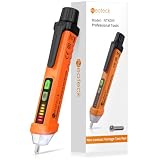
- 【Non-contact Voltage Tester】 Ranging 12-1000V AC, You can easily distinguish the live and null wire through different level of alarm sound and LED indicator. ( Note Please:Not Suitable for Christmas Light Testing)
- 【Safe and Convenient】 The Voltage Pen Tester Detectes Voltage in a Non-Contact Way, So Do Not Worry about There Could be any Possibility of being Shocked by the Electricity
- 【High Efficiency】 As Long As Voltage is Detected, the Led in the Tester Pen will Shine
- 【Multifunction, Easy to Use】 It Also Acts as an Emergency Flashlight which can Illuminate the Working Area, You can Use the Non Contact Voltage Detector in Circuit Breakers, Lighting Fixtures, Switches, Outlets, Wires and Anywhere You Need it
- 【CE CAT III600V RoHS Certificate】 A Professional Tester, It is Perfectly Suitable also for DIY'ers, Hobbyists and Home Owners, It Helps You Make the First and the Most Important Safety Check
What a qualified electrician should establish
A professional assessment should determine why an accessible part became energized and whether any related wiring or equipment is unsafe. The electrician may need to:
- Identify every supply feeding the fixture, switch box and junction boxes.
- Isolate the circuit using procedures appropriate to the installation and verify de-energization with approved test equipment.
- Inspect the fixture, lamp holder, switches, terminals, cable insulation, junctions and connections for damage, heat, moisture or incorrect wiring.
- Check protective grounding, bonding and the operation of applicable RCD/GFCI protection.
- Determine whether the fixture, cable or other component must be repaired or replaced.
- Check for related warning signs elsewhere on the circuit, including unexplained heat, buzzing, scorch marks or repeated trips.
Ask what was found and what was corrected, and request confirmation that the circuit was tested before it is returned to service. Do not restore power simply because the fixture looks normal after a cover is replaced.
Independent reader supportYour contribution helps us test, update, and keep practical guides available for everyone.When to escalate beyond a routine electrician visit
Call emergency services rather than waiting for a routine appointment if there is smoke, fire, arcing, a burning smell, a hot or melting fixture, exposed conductors, water entering energized equipment, repeated loud crackling, or anyone has been seriously shocked. If the building has widespread loss of power, sparking at the service equipment or damage after flooding, stay out of the area and notify the utility or emergency authority as directed.
Seek medical advice after any shock that causes pain, burns, numbness, weakness, palpitations, dizziness, breathing difficulty, loss of consciousness or a fall. Even a person who feels fine should obtain prompt medical guidance after a significant shock, because effects can be delayed.
Quick wins for a faster PC:
Scan for outdated or missing drivers - takes under a minuteDriver Scan →Clear out junk files and repair common Windows errorsFree Scan →How to prevent a repeat incident
- Have new, altered or repeatedly faulty lighting circuits installed and inspected by a properly qualified electrician.
- Use fixtures rated for their location, especially in bathrooms, kitchens, outdoors and other damp areas.
- Keep covers, faceplates and protective fittings intact; do not operate equipment with cracked insulation, loose parts or exposed wiring.
- Pay attention to heat, discoloration, buzzing, crackling, burning odors and unexplained breaker or RCD/GFCI trips.
- Test protective devices only according to their manufacturer’s instructions and local electrical guidance; a successful test does not certify the fixture.
- After a shock, label the affected circuit as out of service and tell everyone in the property why it must not be used until inspected.
Common mistakes to avoid
“It was only a tiny tingle.”
The intensity felt by one person depends on contact, skin condition, footwear, moisture and the fault path. A mild sensation cannot establish that the voltage or available current is harmless.
Best Value

- VERSATILE VOLTAGE DETECTION: This Voltage Tester offers non-contact detection of low voltage in security, entertainment, communications, environmental control, and irrigation systems
- CLEAR INDICATION: Bright LED illuminates green to indicate tester is operational and flashes red and emits a beeping alert when voltage is detected
- BRIGHT FLASHLIGHT: Equipped with a bright flashlight, this tester illuminates the work area, allowing for enhanced visibility. The flashlight can also be used independently of the voltage detection function
- DUAL-RANGE DETECTION: Select voltage range of 12-1000V, or 70-1000V for targeted voltage detection
- LIGHTWEIGHT AND COMPACT: With its lightweight and compact design, this tester is easy to carry and features a pocket clip for convenient storage and quick access
“The breaker did not trip, so it is fine.”
Protective devices operate under particular fault conditions and thresholds. A breaker that remains on does not prove that an accessible metal part is safe.
“I will change the bulb first.”
Changing a bulb requires contact near the lamp holder. If the fixture has already shocked you, keep it out of service until it has been isolated and inspected.
“I installed an RCD/GFCI, so the fault is solved.”
Additional protection can reduce exposure in some circumstances, but it cannot repair incorrect wiring or damaged equipment. The shocking fixture still requires professional investigation.
The Tool Desk
Outbyte Driver Updater FREEFix the driver behind crashes, sound loss and screen glitchesFind Drivers →Outbyte PC Repair FREEClear out junk files and repair common Windows errorsFree Scan →“I can check it quickly with a screwdriver tester.”
Improvised or inappropriate testers can give misleading results and place you close to energized parts. Do not perform live diagnosis unless you are trained and equipped to do so professionally.
What information to give the electrician
Write down the date and circumstances while they are fresh. Include whether the fixture was on or off, exactly which part was touched, whether you were barefoot or wet, whether anyone else felt a shock, and whether a breaker, fuse, RCD or GFCI operated. Note any smell, sound, heat, visible mark or recent work on the circuit. Do not take close-up photographs by approaching an unsafe fixture; use only information you can obtain from a safe distance.
This information helps the electrician plan a safe isolation and inspection, but it does not replace testing. Until the professional confirms the installation is safe, treat the entire affected fixture and any connected controls as hazardous.
Quick Recap
Product prices and availability are accurate as of the date/time indicated and are subject to change. Any price and availability information displayed on Amazon at the time of purchase will apply.

