Quick wins for a faster PC:
Repair Windows errors before they cause bigger problemsFix Now →Fix the driver behind crashes, sound loss and screen glitchesFind Drivers →Do not go back inside until local officials say the area and structure are safe. Then work in this order: check for life-threatening hazards from a safe location, notify your insurer and document every room before moving property, protect anyone entering with the right equipment, remove water and wet materials only after electrical systems are cleared, and obtain local, property-specific advice for structural, coastal, HVAC and permit decisions.
Floodwater can combine unstable construction, live electricity, gas leaks, sewage, chemicals, mold and contaminated sediment. Coastal homes also may have saltwater corrosion, storm-surge damage and rebuilding rules that general federal guidance does not settle. Treat this as an initial safety and recovery sequence, not a substitute for a building official, licensed electrician, HVAC professional, structural or coastal engineer, or qualified restoration contractor.
As an Amazon Associate I earn from qualifying purchases.
1. Wait for an official all-clear and assess hazards without entering
Follow instructions from your city or county emergency manager, fire department and utility companies. Ready.gov’s flood guidance is blunt: “Do not walk, swim or drive through flood waters. Turn Around. Don’t Drown!” Read the current FEMA/Ready.gov flood guidance before approaching the property.
Look for hazards from a safe location
- Downed or damaged power lines, utility poles and electrical equipment.
- Collapsed walls, shifted foundations, sagging floors, broken stairs, undermined soil or other signs that the building may be unstable.
- Standing water that could conceal holes, debris, animals, sewage or energized equipment.
- Broken gas lines or a rotten-egg odor. Leave immediately, avoid switches, phones, flames and anything that could create a spark, and call the gas company or emergency services from a safe location.
- Floodwater mixed with sewage, fuel, pesticides, household chemicals or other contaminants.
Do not touch electrical equipment while standing in water. If the main disconnect can be reached only by walking through water, stay out and call a qualified electrician. CDC explains the hazards and re-entry precautions in Safety Guidelines: Reentering Your Flooded Home.
#1 Best Overall

- Semiconductor dehumidifiers use thermoelectric cooling to remove moisture from the air. They create a drier, more comfortable environment by reducing humidity and improving air quality.
- Our home dehumidifier features intelligent auto-shutoff, automatically powering down when the water tank is full. Set it and forget it, knowing your dehumidifier is working efficiently and safely, giving you true peace of mind.
- Our dehumidifier features a captivating 7-color ambient light, allowing you to bathe your room in a spectrum of soothing hues. Choose from a calming blue, energizing green, romantic red, and more – easily select the perfect color to create your desired atmosphere and enhance your living space. Dehumidify in style and set the perfect mood, every time.
- Sleep Mode creates the perfect sleep sanctuary. The dehumidifier's atmosphere lights automatically turn off, and noise fades to a whisper. Experience truly undisturbed dehumidification for a night of perfect rest.
- Elevate your home's comfort and style with our sleek and compact dehumidifier. Designed to seamlessly blend into any space, from the living room and bedroom to the bathroom, basement, and even your RV. Its modern aesthetics and space-saving footprint make it the perfect dehumidification solution for every corner of your home.
Decide who should stay away
Children should not take part in disaster cleanup. Anyone with asthma, another breathing condition, or a weakened immune system should avoid moldy or water-damaged buildings. Keep pets out until contamination and structural hazards are addressed. If anyone develops breathing difficulty, dizziness, severe irritation or other concerning symptoms, leave the area and seek medical advice.
2. Notify your insurer and create an evidence record before cleanup
Once it is safe to do so, report the loss to your insurance company and ask what emergency measures, documentation and claim deadlines apply to your policy. Flood damage may involve separate flood, homeowners, windstorm or other coverage, and only your policy and insurer can determine what is covered.
Document the property before disturbing it
- Take wide photographs and video of the exterior, each room, waterlines, structural damage and every affected item. Include close-ups that show model and serial numbers where possible.
- Record the approximate floodwater level and the date and time of your observations. FEMA says an adjuster documents building and personal-property damage and floodwater levels; your own record helps preserve that information.
- Make a room-by-room inventory. List the item, quantity, approximate age, purchase information if available, condition and location. Photograph labels, receipts and manuals.
- Save copies of your policy declarations page, claim number, adjuster’s contact details, inspection notes, contractor estimates and every receipt for emergency work, lodging, protective equipment and disposal.
- Back up photographs, video and notes to a cloud account or another location outside the damaged home.
FEMA’s Starting Your Recovery After a Flood describes organizing information for the adjuster. Do not discard damaged belongings before documenting them and checking with the insurer, unless leaving them in place creates an immediate health or safety danger. If an item must be discarded for safety, photograph it thoroughly and keep a written description and disposal receipt.
3. Protect people before beginning cleanup
Assume floodwater and wet debris are contaminated until a qualified assessment says otherwise. Wear waterproof boots or waders, durable gloves and clothing that covers exposed skin. For mold cleanup, CDC specifically advises an N95 respirator, goggles and protective gloves; see Safety Guidelines: Returning Home After a Natural Disaster.
Use respiratory and eye protection correctly
- Use a properly fitting N95 respirator for mold work; facial hair can prevent a reliable seal.
- Use goggles that protect the eyes from splashes and airborne debris.
- Use gloves suited to the contaminants and task. Change or clean them as directed and wash hands after removal.
- Wear disposable or washable clothing that can be kept separate from clean areas.
Do not mix bleach with ammonia, acids or other cleaning products. Follow the product label and provide ventilation without spreading contamination into unaffected rooms.
Rank #2

- 【80 Pint Capacity for Up to 5,000 Sq.Ft Spaces】Quickly removes excess moisture from basements, bathrooms, bedrooms, RVs, and other large living areas, delivering 80 pints per day (95°F, 90% RH).conditions. Designed as a powerful dehumidifier for basement, home, and large spaces, it helps eliminate damp air, condensation—and pet-related odors caused by excess humidity. Even during humid seasons, it works continuously to maintain a dry, comfortable, and healthier indoor environment.
- 【90° Auto Swing Airflow for Even Coverage】Distributes dry air evenly across the room, helping cover every corner and reduce uneven humidity levels. The 90° auto swing function enhances air circulation and drying efficiency, bringing a level of airflow distribution typically not available in standard models. It delivers balanced airflow without direct drafts, creating a more comfortable indoor environment.
- 【30%–80% Smart Humidity Control for Flexibility】 Unlike many standard dehumidifiers limited to a minimum of 40% RH, this unit can reach as low as 30%, offering a wider and more flexible control range. Engineered with advanced technology, it adapts to real-world conditions and maintains a stable, comfortable humidity level across different environments—including basements, bathrooms, bedrooms, closets, RVs, and other high-humidity areas.
- 【Energy Star Certified for Efficient Operation】Engineered for consistent, real-world performance, this ENERGY STAR certified dehumidifier delivers reliable results across everyday conditions—not just controlled test settings. It helps minimize unnecessary energy use while maintaining strong dehumidification efficiency, supporting lower operating costs over time.
- 【AI-Smart Protection System for Reliable Performance】Equipped with intelligent sensing technology, this dehumidifier detects frost buildup and abnormal operation in real time. It automatically activates auto defrost and overload protection to maintain stable performance and help prevent potential damage. With AI-assisted monitoring, it optimizes operation to reduce unnecessary energy use while ensuring reliable performance in low-temperature and extended-use environments.
Know when a homeowner should stop
Arrange qualified restoration or remediation help when water is heavily contaminated, mold is extensive, the building is structurally damaged, sewage is involved, hazardous materials may be present, or the work requires entering a confined or unstable area. A professional should also handle an HVAC system affected by floodwater and any electrical, gas, structural or coastal-engineering question.
4. Establish electrical and utility safety before using equipment
Flooded wiring, outlets, appliances and panels can remain energized or fail later through corrosion. Have a qualified electrician inspect the service, panel, circuits, outlets, appliances and any equipment exposed to water. Do not restore power or use a flooded appliance merely because it appears dry.
Free tools Windows power users keep installed
One-click scans. No signup required.
Safe use of pumps, vacuums, fans and dehumidifiers
Only after electrical safety is confirmed may suitable equipment be used to remove water and accelerate drying. Depending on the conditions, a pump, wet-dry shop vacuum, fan or dehumidifier can help. Keep cords, plugs and equipment away from standing water, follow manufacturer instructions and stop if a breaker trips, equipment overheats or conditions change.
Generator and fuel safety
Operate fuel-burning generators outdoors at least 20 feet from doors, windows and vents, as CDC guidance specifies, to reduce carbon-monoxide exposure. Never use a generator, grill, camp stove or other combustion device inside the house, garage, crawlspace or an enclosed porch. Use only a properly installed transfer switch or other connection method approved by an electrician; do not back-feed a household outlet.
5. Remove standing water and dry the structure quickly
CDC recommends cleaning and drying, or removing, flood-wet materials within 24–48 hours where possible to reduce mold growth. That is an operational target, not a guarantee: access, power, weather, contamination and structural safety may make it impossible. Safety and professional clearance come first.
Rank #3
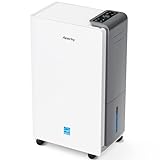
- 【ENERGY STAR 25 ≠ ENERGY STAR Most Efficient 2025】Don't fall for competitors' word games. With only 2.6% of ENERGY STAR models earning "Most Efficient 2025" title, these options are exceptionally rare on the market. RHEA-001 is one of the few to truly hold this top-tier certification. Many brands use misleading phrases like "Energy Star Efficient 25" or "Energy Star 25" to imply a standard they haven't met. Choosing them is a risk.With AEOCKY, you get verified performance and the peace of mind of authentic, top-tier efficiency.
- 【True ENERGY STAR Most Efficient 2025 Compressor Dehumidifier for homes (5500 sq.ft)】80 pint/day in the humid Mid-summer (95℉, 95%RH); 56 pint/day in the warm, damp basement (86℉, 80%RH)! Among all ENERGY STAR dehumidifiers, only an elite 2.6% earn the ENERGY STAR "Most Efficient 2025" certification. It is this top-tier capability that allows the RHEA-001 to completely outperform its competitors in both performance and energy efficiency.(Dehumidification capacity≠Water Tank Volume)
- 【Top-Rated Efficiency - Save More Energy】Breaking industry barriers, one of the first brands to achieve ENERGY STAR Most Efficient 2025. Compared to non-Energy Star inefficient products,RHEA-001 efficiency is increased by ≤50%, saving ≤1000 on electricity bills annually (running 24/7 year-round). Energy efficiency is the domain of absolute dominance for our RHEA-001. This relentless pursuit of technological innovation in efficiency is the ironclad moat that has established AEOCKY as the leading dehumidifier brand.
- 【Powered by Exceptional Core Components】AEOCKY utilizes Cutting-Edge High-Efficiency Rotor Compressor Pro+ to RHEA-001, whose core components evaporator and condenser adopt“3+2”structure with one more row than others. Never use aluminum tubes, we unswervingly use 7mm diameter high-tooth internal thread pure copper pipes.We also equipped with advanced blue hydrophilic aluminum foil, achieving breakthrough heat exchange efficiency meeting the most rigorous energy efficiency standards in history.
- 【Cutting-Edge Smart Humidity Control for Unprecedented Precision】Newly designed architecture breaks industry's decade-long lack of innovation, enabling it have high-performance chip. Millisecond-level dynamic detection keep humidity within ideal range,with full-stack proprietary humidity compensation algorithm ensuring RHEA-001 exceeds industry standard for humidity accuracy.Exclusive power-off memory function can be used with smart socket, automatically resuming function after power restoration, suitable for smart home or special area like RV.
Prioritize water removal
- Keep people out of rooms with unstable floors, ceilings, contaminated water or suspected electrical hazards.
- After an electrician clears the system, remove standing water with an appropriate pump or wet-dry vacuum. Do not use household vacuums that are not designed for water.
- Move salvageable items to a dry, ventilated area only after photographing them and recording their original location.
- Open doors and windows when outdoor conditions permit and when doing so will not spread mold or expose occupants to contaminants.
- Use fans and dehumidifiers after visible mold is cleaned and electrical safety is established. Position airflow to dry materials, not to blow mold spores into clean rooms.
Separate cleanable materials from items to discard
Nonporous materials that can be cleaned and dried promptly may be salvageable. Porous materials that remain wet, contaminated or visibly moldy often cannot be reliably restored and may need removal. Examples can include saturated carpeting and pad, upholstered furniture, mattresses, drywall, insulation, ceiling tiles and other materials that hold moisture. Photograph each item and ask the insurer or a qualified restorer before disposal when circumstances allow.
The Tool Desk
Outbyte PC Repair FREERepair Windows errors before they cause bigger problemsFix Now →Outbyte Driver Updater FREEFix the driver behind crashes, sound loss and screen glitchesFind Drivers →EPA’s Flooded Home guidance emphasizes that drying and removal must continue until signs of water damage and mold are gone. A surface that feels dry can still conceal moisture inside walls, floors, cabinets or insulation, so a restoration professional may use moisture meters and targeted inspection.
6. Clean mold and contaminated surfaces without spreading the problem
Mold can begin growing quickly on wet building materials. Do not dry-brush, sweep or use fans in a way that disperses visible mold. Isolate the work area where practical, protect clean rooms and follow a written remediation plan for larger losses.
Basic sequence for limited, accessible areas
- Put on the N95 respirator, goggles, gloves and protective clothing before entering the work area.
- Remove the moisture source and standing water first. Cleaning without drying allows mold to return.
- Clean hard, nonporous surfaces with detergent and water, then dry them completely. Use a disinfectant only as directed for the specific contamination and material.
- Remove porous materials that cannot be thoroughly cleaned and dried. Bag or wrap debris to limit spread during transport.
- Keep HVAC systems that were exposed to floodwater switched off until an experienced professional has inspected and cleaned them. Operating a contaminated system can distribute mold and contaminants throughout the home.
- Continue checking hidden spaces, baseboards, cabinets, wall cavities and flooring for moisture or odor.
Bleach is not a universal mold-removal solution and must never be mixed with other cleaners. If mold covers a large area, returns after cleaning, affects an HVAC system, or is associated with sewage, use a qualified remediation contractor and ask how containment, disposal and post-cleaning verification will be handled.
Independent reader supportYour contribution helps us test, update, and keep practical guides available for everyone.7. Treat coastal damage as a site-specific engineering and permitting problem
General U.S. flood guidance does not establish a universal method for saltwater corrosion, storm-surge structural damage, coastal foundation movement or local rebuilding permits. Salt, sediment and prolonged saturation can affect fasteners, wiring, mechanical equipment, concrete, wood connections and concealed cavities in ways that are not visible during an initial walkthrough.
What’s actually slowing this PC down?
Pick the symptom - the matching free tool is one click away.
Rank #4

- Compact Moisture Control – This Wi-Fi enabled dehumidifier removes up to 8 pints per day at 80°F, 60%RH (24 pints MAX at 95°F, 90%RH), keeping spaces up to 1,800 sq ft comfortably dry.
- Space-Saving & Ultra-Quiet – Designed for small spaces, this 38dB whisper-quiet dehumidifier keeps humidity under control without disruption, ideal for bedrooms, nurseries, and home offices.
- Hassle-Free Drainage – Includes a 3.3ft drain hose for continuous drainage, so you never have to empty the tank manually. Perfect for long-term use in basements, laundry rooms, and storage areas.
- Energy-Efficient & Smart Control – Energy-saving design reduces electricity costs. Wi-Fi-enabled for remote control via app or voice assistants. Set humidity levels, timer, and auto mode with ease.
- Safe & Easy to Maintain – Features auto shut-off to prevent overflow, a removable water tank, and washable filters for long-lasting performance. Portable handle for easy movement.
Get the right local assessments
- Ask the local building or planning department what inspections, demolition approvals, floodplain rules, elevation requirements and permits apply before repair or replacement.
- Have a qualified structural or coastal engineer assess foundations, load-bearing walls, floor systems, retaining elements, connections and erosion or scour where relevant.
- Use a licensed electrician to evaluate saltwater-exposed electrical components and a qualified HVAC professional for air handlers, ducts, controls and condensers.
- Ask a restoration professional how contaminated materials, salt deposits and wet assemblies will be cleaned, removed and documented.
FEMA’s Be Prepared for Any Hazard: Flood Information Sheet supports checking local authorities before repairs. Do not assume that a contractor’s visual estimate replaces required inspections or engineering sign-off.
8. Choose between homeowner work and professional help
| Situation | Appropriate next step |
|---|---|
| Small area of clean-water damage, stable structure, power confirmed safe, no visible mold | Homeowner may handle limited drying and cleaning with PPE, documentation and insurer coordination. |
| Standing water, damaged wiring, flooded panel or appliances | Keep out until a qualified electrician assesses the system; use professional water removal if needed. |
| Sewage, chemicals, fuel or unknown contamination | Use qualified restoration or environmental cleanup help; avoid direct contact. |
| Extensive or recurring mold, concealed moisture or HVAC involvement | Use a qualified mold-remediation or HVAC professional and keep the affected system off. |
| Cracks, settlement, shifting, erosion, scour or unstable floors and walls | Stop entry and obtain a building official’s and qualified structural or coastal engineer’s assessment. |
| Repairs that alter structure, elevation, utilities or flood-resistant construction | Confirm local permits and inspection requirements before work begins. |
9. Manage the claim and repairs as one documented project
Keep a dated log of calls, inspections, drying readings, photographs, removed materials, disposal, equipment rental and payments. Share estimates and proposed scopes with the insurer before non-emergency demolition when possible. Ask contractors to identify what they observed, what they removed, how moisture was measured, which systems were tested and what remains inaccessible.
Questions to ask a restoration contractor
- Are you licensed or otherwise qualified for this work in the property’s jurisdiction?
- How will you contain mold and contaminated debris?
- Which materials will be cleaned, which will be removed, and why?
- How will you verify drying inside walls, floors, cabinets and insulation?
- Who is responsible for electrical, HVAC, structural and permit coordination?
- What emergency work is included, what is optional, and how will change orders be approved?
10. Know when the home is ready to reoccupy
Re-entry is a decision by local authorities and qualified professionals, not a calendar date. Before normal occupancy, confirm that utilities are safe, structural concerns have been addressed, contaminated materials have been removed, moisture is controlled, visible mold and water-damage signs are gone, and required inspections or permits are complete. Have the HVAC system inspected and cleaned if it was exposed. Keep children, people with respiratory conditions and anyone with a weakened immune system away until the property is demonstrably safe.
For current federal references, use CDC re-entry guidance, CDC returning-home guidance, EPA’s flooded-home guidance, and the FEMA resources linked above. Local emergency instructions, your insurance policy and a property-specific professional assessment control what happens next.
Quick Recap
Product prices and availability are accurate as of the date/time indicated and are subject to change. Any price and availability information displayed on Amazon at the time of purchase will apply.

