Check the house as a system before you tighten its envelope. Repair water entry, test fuel-burning appliances and venting, measure radon before sealing below-grade spaces, identify wiring and hazardous materials, and design ventilation before adding insulation. In a vented attic, seal the ceiling plane first while keeping the intended attic-air paths open. A qualified home-performance professional should evaluate combustion safety, electrical hazards, hazardous materials and moisture-sensitive assemblies.
The safest sequence is inspection, correction, design and then installation. Insulation can hide leaks, change pressure relationships and disturb materials that were safe when left alone. Older construction also varies widely: a detail that dries safely in one climate or wall may trap moisture in another.
As an Amazon Associate I earn from qualifying purchases.
Why older homes need a pre-insulation check
Weatherization changes how heat, air and moisture move through a building. Air sealing reduces uncontrolled air exchange; insulation changes surface temperatures; and new layers can cover wiring, leaks or deteriorated framing. Those changes are beneficial only when the house can shed water, vent combustion gases, manage indoor moisture and supply adequate fresh air.
Recommended Free Tools
DOE whole-house guidance treats a leaking or moisture-damaged home as unfinished work: repair the source and dry or remediate the damage before covering it. Codes, climate-zone requirements, local radon procedures, contractor credentials, costs and incentives are jurisdiction-specific, so the final design should be checked against local requirements.
#1 Best Overall
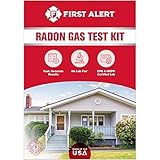
- The simple and safe way to test for radon
- Listed under the EPA radon gas measurement proficiency program
- Includes test materials and lab fees, excluding NJ state fees
- Results are emailed within 72 hours of lab receipt
- Recommended for use only within the United States
What should you check before insulating an old house?
Use this order so a later step does not conceal or worsen an earlier problem.
| Inspection area | What to look for | Decision before insulation |
|---|---|---|
| Water and drainage | Roof and flashing leaks, failed siding or trim joints, poor site drainage, foundation entry, plumbing leaks and recurring dampness in wet rooms | Repair active leaks; dry or remediate wet materials before covering assemblies |
| Combustion and venting | Furnaces, boilers, water heaters, fireplaces, chimneys, vent connectors, draft and appliance operation | Arrange qualified testing before air sealing and again after the work |
| Radon | Potential accumulation in an in-ground basement or crawlspace | Test before sealing below-grade areas; mitigate a problem before proceeding |
| Electrical systems | Active knob-and-tube wiring and other wiring that insulation could surround | Have an electrician assess it; do not bury active knob-and-tube wiring without an appropriate solution |
| Hazardous materials | Lead paint in pre-1978 homes, suspect asbestos products and vermiculite insulation that may contain asbestos | Use applicable assessment and work practices; do not disturb suspect asbestos |
| Ventilation and indoor air | Exhaust fans, ducts, pressure effects, pollutants and moisture sources | Design adequate fresh-air ventilation for the tightened house |
1. Fix water entry before adding insulation
Water is the first gate. Walk the exterior and interior before selecting an insulation system.
Exterior inspection
- Inspect roof coverings, valleys, penetrations and flashing for active leaks.
- Examine siding and trim intersections for failed joints or paths that direct water behind the wall.
- Check grading, gutters, downspouts and the foundation for water entering at or below grade.
A roof that leaks should be repaired before insulation, or the project should be deferred until repair is possible. Insulation placed over a wet ceiling, wall or floor can conceal the source, stay damp and damage framing.
Interior inspection
Look beneath sinks, around toilets and tubs, at washing-machine connections and near water heaters. In kitchens, bathrooms and laundry areas, check plumbing connections, caulk, grout and recurring stains or musty odors. A damp basement or crawlspace needs a source investigation, not simply a thicker insulation layer.
Repair the leak, then allow materials to dry or have moisture damage remediated before closing the assembly. If framing, sheathing or insulation has been persistently wet, a professional can determine whether materials require removal.
2. Test combustion appliances and chimneys before and after tightening
Air sealing can change pressure inside the home. If a furnace, boiler, water heater, fireplace or other fuel-burning appliance relies on natural draft, the new pressure balance may interfere with exhaust flow. Backdrafting can bring combustion products, including carbon monoxide, into living space.
Rank #2

- Portable Radon Detector: AEGTEST HOUND-1011S is a compact, portable radon detector for continuous monitoring. It measures radon levels from 0.09 to 1000 pCi/L, supports switching between pCi/L and Bq/m³ units, ensuring reliable protection against harmful radon gas
- Quick & Accurate Results:Equipped with a high-precision semiconductor sensor, the radon tester delivers fast, accurate readings. First results appear within 12 hours, with hourly updates for real-time accuracy. Data is reliable and testing can be restarted anytime
- Short-Term & Long-Term Monitoring: Multiple timeframes of radon concentration can be viewed — from the past 12 hours to 504 days — providing long-term, stable monitoring suitable for all environments. It helps safeguard against the health risks of prolonged radon exposure
- Long Battery Life: Supports long-term home use with a Type-C cable for continuous monitoring. The built-in battery lasts up to 45 days in sleep mode, ideal for travel—ensuring constant safety and peace of mind
- Easy to Use: The LCD screen displays data for the past 12H/24H/48H/72H/96H. Ready to use at startup with no learning curve. Comes with a stand and supports various environment monitoring. Includes 1× HOUND-1011S, 1× Charging Cable, 1× Lanyard, 1× Manual
What a qualified check should cover
- Appliance operation and combustion performance.
- Chimney and vent condition, connections and termination.
- Draft under the conditions in which the equipment normally operates.
- Pressure effects from exhaust fans, dryers, ducts and the proposed air-sealing work.
Arrange testing before work starts and repeat it after the envelope is tightened. A carbon-monoxide alarm is an important safeguard, but it does not replace appliance testing, draft evaluation or repair. Keep working alarms installed according to local requirements while the project is under way.
Do these 3 things before closing this tab:
1Repair Windows errors before they cause bigger problems2Scan for outdated or missing drivers - takes under a minute3Clear out junk files and repair common Windows errors3. Should you test for radon before sealing a basement?
Yes. Test before sealing a basement or crawlspace, especially where there is an in-ground basement or a relevant local radon concern. Sealing below-grade air pathways can change how soil gas enters and may increase indoor radon concentration. A test is the practical way to find out whether radon is accumulating.
How to handle the result
- Obtain a DIY radon test kit and follow its placement, closed-house and exposure instructions exactly.
- Keep a record of where and when the test was conducted.
- If the result indicates elevated radon, arrange appropriate follow-up and mitigation before sealing the below-grade space.
- After mitigation or major enclosure changes, follow local guidance on retesting.
The U.S. Department of Energy’s 2012 insulation guide, attributing an estimate to the U.S. Environmental Protection Agency’s 2011 information, said nearly one out of every 15 U.S. homes had high radon levels. That is a dated estimate, not a current national prevalence statistic, and it should not be used to predict the result for a particular house.
4. Identify wiring and hazardous materials before disturbing the building
Knob-and-tube wiring
Older houses may contain active knob-and-tube wiring. Insulation placed around active wiring can allow it to overheat and create a fire risk. Before insulating walls, attics or other areas containing this system, have an electrician identify what remains energized and determine the appropriate correction. Do not assume that visible portions are abandoned, and do not cover the wiring simply because it appears intact.
Lead paint in pre-1978 homes
If work will cut, scrape, drill or otherwise disturb painted surfaces in a home built before 1978, address lead-paint risk before starting. Use the applicable lead-safe assessment and work practices for your jurisdiction. Planning matters even when the insulation itself is not painted: access holes, trim removal and friction from installation can create contaminated dust.
Free tools Windows power users keep installed
One-click scans. No signup required.
Asbestos-containing products
Do not break, sand, cut or remove a suspect asbestos-containing product as a routine preparation step. DOE older-home guidance identifies possible asbestos locations including vinyl asbestos tile, some vermiculite insulation, some mid-century siding and insulation or backer boards associated with older appliances. A qualified assessment and the work practices required in your area are needed when these materials may be disturbed.
Rank #3

- FIRST OF ITS KIND: The first battery-operated, digital radon detector. Monitor your home without the need for an outlet.
- LONG TERM MONITORING: Monitor for cancer-causing radon gas. Long term monitoring is necessary as radon levels fluctuate daily.
- BE IN CONTROL: Take action if your radon levels are high. Know if your improvements have worked by checking the short term, on-screen readings.
- RADON REPORT: Generate a radon self-inspection report easily, whenever you need it.
- FAST RESULTS: On-screen results show both long and short term readings, for a quick overview of your radon levels.
Vermiculite insulation
Loose-fill vermiculite may contain asbestos. Do not rake it aside, vacuum it or mix it with new insulation without an appropriate evaluation. Tell every contractor about its presence before anyone enters the attic or wall cavity.
5. Plan ventilation and moisture control with the insulation
A tighter home has less accidental air exchange. Without a deliberate ventilation plan, indoor pollutants and moisture can become concentrated. Cooking, bathing, clothes drying, combustion and stored materials all add moisture or contaminants that the old leakage pattern may previously have diluted.
Questions for the design review
- Which exhaust fans exist, where do they discharge, and are their ducts intact?
- Will the proposed air sealing alter pressures near fireplaces, furnaces, boilers or water heaters?
- How will the house receive outdoor air after major leakage is reduced?
- Does the climate and enclosure design require mechanical ventilation?
- Where can moisture dry, and could a new vapor-control layer block that drying path?
DOE guidance says mechanical ventilation may be needed in a tighter home. The right approach depends on the house, climate, exhaust equipment and combustion appliances; it is not a universal fan size or single product choice. A home-performance contractor can evaluate pressure relationships and indoor-air needs as part of the whole-house plan.
6. Treat each enclosure assembly on its own terms
There is no single insulation material or air-sealing recipe that is safe for every older home. Compare the proposed detail by location, climate, drying potential, existing water and vapor controls, fire clearances, wiring, hazardous materials and access.
| Assembly | Primary pre-work action | Important limitation |
|---|---|---|
| Vented attic | Seal ceiling-plane penetrations and large openings before adding insulation | Keep soffit and other designed ventilation paths open with suitable baffles |
| Basement or crawlspace | Test for radon and investigate water entry before sealing | Moisture movement and vapor-control placement must be evaluated for the specific assembly |
| Exterior or interior wall | Check for leaks, wiring, hazardous materials and the existing wall layers | Climate and drying potential determine whether a proposed vapor-control layer is safe |
Vented attic sequence
- Inspect the roof and repair leaks first.
- Identify knob-and-tube wiring, vermiculite or other suspect materials before entering or moving attic insulation.
- Seal penetrations at the ceiling plane, including large openings around services, before placing new insulation.
- Install or verify baffles so soffit and other intended ventilation routes remain open.
- Add insulation only after the air barrier and ventilation paths are correctly established.
The ceiling plane generally serves as the air barrier in a vented attic. Blocking the intended intake or exhaust paths can create a different moisture problem, so insulation should not be piled into those channels.
Basements, crawlspaces and walls
Below-grade and wall assemblies need climate- and moisture-aware design. DOE warns that some interior vapor-retarder placements over below-grade air-permeable insulation can trap moisture and damage insulation or framing. That warning does not create a universal prohibition or a universal recipe: the existing wall, water conditions, climate and drying direction must be evaluated together.
Rank #4

- Portable Radon Detector: AEGTEST HOUND-1011S is a compact, portable radon detector for continuous monitoring. It measures radon levels from 0.09 to 1000 pCi/L, supports switching between pCi/L and Bq/m³ units, ensuring reliable protection against harmful radon gas
- Quick & Accurate Results:Equipped with a high-precision semiconductor sensor, the radon tester delivers fast, accurate readings. First results appear within 12 hours, with hourly updates for real-time accuracy. Data is reliable and testing can be restarted anytime
- Short-Term & Long-Term Monitoring: Multiple timeframes of radon concentration can be viewed — from the past 12 hours to 504 days — providing long-term, stable monitoring suitable for all environments. It helps safeguard against the health risks of prolonged radon exposure
- Long Battery Life: Supports long-term home use with a Type-C cable for continuous monitoring. The built-in battery lasts up to 45 days in sleep mode, ideal for travel—ensuring constant safety and peace of mind
- Easy to Use: The LCD screen displays data for the past 12H/24H/48H/72H/96H. Ready to use at startup with no learning curve. Comes with a stand and supports various environment monitoring. Includes 1× HOUND-1011S, 1× Charging Cable, 1× Lanyard, 1× Manual
When to use a qualified professional
Use qualified help when the work involves combustion testing, electrical systems, suspected asbestos, lead-safe disturbance, radon mitigation, persistent moisture or an enclosure whose drying behavior is uncertain. A qualified home-performance or weatherization provider can coordinate the shell, pressure, ventilation and appliance checks instead of treating each symptom separately.
The Tool Desk
Outbyte Driver Updater FREEScan for outdated or missing drivers - takes under a minuteDriver Scan →Outbyte PC Repair FREERepair Windows errors before they cause bigger problemsFix Now →- Call an electrician for active knob-and-tube wiring or uncertain circuits.
- Use an appropriately qualified hazardous-materials professional when suspect asbestos or lead-containing materials may be disturbed.
- Use a trained combustion professional for appliance operation, draft and post-sealing checks.
- Use a radon professional when test results call for mitigation or local rules require specialized follow-up.
A practical go/no-go checklist
Do not start insulation installation until each applicable item has a documented answer.
- Roof, flashing, siding, foundation and plumbing leaks have been repaired or the affected work is deferred.
- Wet materials have dried or been remediated.
- Fuel-burning appliances, chimneys and vents have passed a qualified pre-work check.
- Radon has been tested before basement or crawlspace sealing.
- Active knob-and-tube wiring has been identified and addressed.
- Lead-paint precautions are in place for work that disturbs paint in a pre-1978 home.
- Suspect asbestos and vermiculite have not been disturbed without the required evaluation and controls.
- The ventilation plan accounts for exhaust fans, pressure effects, pollutants and moisture.
- Attic air sealing will preserve designed ventilation paths.
- The proposed wall or below-grade detail has been checked for climate, moisture and drying behavior.
- Post-work combustion testing and any required retesting are scheduled.
How to make the project safer and more durable
Document conditions with photographs and notes before walls or ceilings are covered. Record the location of wiring, vents, plumbing, damp areas, radon-test dates and any materials that require special handling. Give that record to every trade so one crew does not unknowingly disturb a hazard another crew identified.
Plan the work in phases when a correction is needed. For example, repair a roof, allow the assembly to dry, then perform the combustion and radon checks before returning to insulation. This may take longer than installing insulation immediately, but it prevents a new layer from hiding the evidence needed to diagnose a failure.
Finally, judge success by more than a warmer room. A properly sequenced project leaves water out, combustion products outside, indoor air adequately refreshed, hazardous materials undisturbed or safely managed, and each assembly able to dry in its climate.
Quick wins for a faster PC:
Clear out junk files and repair common Windows errorsFree Scan →Scan for outdated or missing drivers - takes under a minuteDriver Scan →Quick Recap
Product prices and availability are accurate as of the date/time indicated and are subject to change. Any price and availability information displayed on Amazon at the time of purchase will apply.

