Some links on this page are affiliate links: if you buy through them we may earn a commission, at no extra cost to you.
Before paying for bagged cement, verify five things: the cement type and designation match your project specification; the manufacturer and traceability details are legible; the packing or manufacturing and batch information makes sense; any conformity mark can be checked against the applicable standard and current licence listing; and the bag has no obvious physical damage. This is a buying screen, not a laboratory test.
The detailed marking examples in this guide come from Bureau of Indian Standards (BIS) documents for products sold in India. Marking rules, standards, licence systems and age wording vary by country and by cement variety, so use your local regulator’s requirements when buying elsewhere.
As an Amazon Associate I earn from qualifying purchases.
The Tool Desk
Outbyte Driver Updater FREEFix the driver behind crashes, sound loss and screen glitchesFind Drivers →Outbyte PC Repair FREERepair Windows errors before they cause bigger problemsFix Now →What the bag should tell you at a glance
Lay the bag flat and read all printed panels before comparing prices. A useful first pass is:
- Product identity: cement name, type, grade or other designation.
- Traceability: manufacturer name and address, net quantity, and batch or control-unit number.
- Date information: manufacturing or packing date, week/month/year or batch details, and any best-before or test-before-use wording.
- Conformity information: the applicable standard reference, mark and licence details, where required for that product and market.
- Physical condition: a bag that is visibly intact and does not show obvious hard lumps. Treat this as a simple visual precaution, not proof of cement performance.
Do not approve a bag because it has one familiar grade label. Cement designations are tied to particular product types and standards; a grade on one type is not automatically interchangeable with a grade on another.
#1 Best Overall
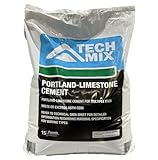
- MULTIPURPOSE: Basic building material for crafts, pavement, sidewalks, reinforced concrete buildings, masonry units, and more
- MIX AND USE: Use to create concrete, mortar, and stucco mixes
- GREAT FOR DIY PROJECTS: Ideal for small crafts with forms and silicone molds
- HIGH STRENGTH: Solid once dry, dry in 48 hours
- LESS IS MORE: One bag yields approximately .16 cu. ft.
First identify the cement you are actually buying
Match the product name and type to the project specification
Start with the project documents, not the seller’s preferred product. The specification may identify a cement variety, a standard number, a strength class or grade, and sometimes additional performance requirements. Read the bag’s product name and designation character for character and compare it with that requirement.
BIS material distinguishes cement varieties and assigns standards to those products. Ordinary Portland cement, composite cement and masonry cement therefore cannot be treated as one generic product simply because each is sold in a similar sack. If the specification names a particular variety, obtain that variety or have the designer or engineer approve a substitution before purchase.
Free tools Windows power users keep installed
One-click scans. No signup required.
Do not compare grade labels across unlike cement types
A grade or strength designation only has meaning within the product standard that defines it. Comparing the number printed on an ordinary Portland cement bag with the number printed on a different cement type can create a false “higher is better” conclusion. In a side-by-side check, compare each bag’s complete type-and-designation combination against the job requirement, rather than ranking isolated numbers.
Resolve unclear terminology before loading the order
Ask the seller to explain any abbreviation, suffix or designation that is not present in your project documents. Request the relevant standard number and the product’s technical information in writing. If the seller cannot identify the product type or standard, pause the purchase instead of relying on a verbal assurance that it is suitable for every application.
Check manufacturer and traceability markings
Read the maker’s identity and address
Look for the manufacturer’s name and address printed on the sack. BIS marking examples list these details among the information carried on cement bags, although exact requirements differ by cement variety. The address should be legible enough to distinguish the responsible manufacturer from a distributor or retailer.
Compare the name printed on the bag with the name on the quotation, invoice or delivery note. A mismatch is a reason to ask for clarification, not an automatic finding of counterfeit product: distribution arrangements can differ. Do not accept a bag whose manufacturer cannot be identified at all.
Recommended Free Tools
Rank #2

- WHITE PORTLAND CEMENT FOR SWIMMING POOL REPAIRS AND MOLD CASTING
- TYPE 1 CEMENT FOR CONCRETE PROJECTS
- USE TO MAKE COLORED CONCRETE AND GROUT
- USE IN ALL CONCRETE MIXTURES FOR POURING MOLDS
- MIX WITH SAND AND GRAVEL TO MAKE CONCRETE
Confirm net quantity
Check the stated net quantity and compare it with the quantity used in your estimate. Record the quantity printed on the bag rather than assuming every sack has the same content. If bags in the same purchase show different printed quantities, ask why and ensure the invoice reflects the actual packs supplied.
Record the batch or control-unit number
Find the batch number, control-unit number or equivalent lot identifier. BIS implementation documents include this type of traceability information. Photograph or write down the identifier before the bags are stacked, especially when several deliveries will be combined. A batch number gives the seller, contractor and any testing laboratory a way to distinguish one production lot from another.
Look for consistent, readable printing
Dates, quantities, batch identifiers and manufacturer information should be readable and internally consistent. Smudged, overprinted or partially covered information makes later verification difficult. Ask the seller to show another bag from the same lot if one panel is unreadable, and keep the clearest example for your records.
Read the date and age wording precisely
Find packing or manufacturing information
Search all sides of the bag for a manufacturing date, packing date, week, month, year or a batch-linked production code. Some schemes describe variable production details such as date, week and batch rather than presenting one identical label format for every cement variety. If you cannot interpret a code, ask the manufacturer or seller to decode it before buying.
Distinguish a date from a best-before or test-before-use instruction
A printed production or packing date tells you when the lot was made or packed; it is not automatically an expiry date. Read the exact wording that accompanies the date. The bag or applicable standard may provide a best-before statement, a test-before-use instruction, or no age instruction in the same form.
Understand the three-month wording in its limited context
One BIS implementation scheme for ordinary Portland cement, STI/269/7 (2016), states: “Cement to be tested before use if more than 3 months old from date of packing.” That is an instruction in that specific document, not a universal expiry rule for every cement variety or country. A 2019 BIS composite-cement scheme also addresses date, week and batch information, but product-specific wording still governs.
Rank #3

- Quikrete Concrete Mix Bag 10 Lbs.
Use the age instruction that applies to the exact cement variety and edition of the standard. Do not reject every bag older than three months as automatically expired, and do not treat a younger bag as automatically suitable without checking its type, traceability and condition. For old or uncertain stock, arrange testing through a competent local construction-materials laboratory before incorporating it into work; testing requirements and acceptance decisions should follow the project specification and applicable standard.
Check date consistency across bags
When buying multiple bags, compare the printed dates and batch identifiers. A mixed-age delivery is not necessarily prohibited, but it changes how you track and use the material. Ask the supplier to identify which bags belong to which lot and to explain any bag that has an unreadable or apparently altered date.
PC Slower Than It Used to Be?
A free scan shows the junk files, broken settings and background clutter dragging Windows down - then fixes them in one click.Free scan · Windows 10 & 11Outdated Drivers Are Slowing You Down
One free scan finds every outdated or missing driver and matches the right update for your exact hardware.Free scan · exact hardware matchVerify the applicable standard and conformity information
Use the standard number, not just a logo
A conformity mark can be useful, but a mark by itself does not prove that the current licence is valid for the exact product in your hand. First identify the cement type and its standard number; then verify the corresponding listing with the relevant standards body.
How to check an Indian product through BIS
For cement sold in India, the BIS “Know Your Standard” portal provides a practical verification route. Its functions include searching by Indian Standard number or product keyword, opening standard documents, viewing amendments and notifications, checking testing schemes, consulting licence lists and laboratories, and reviewing classification information.
- Copy the Indian Standard number printed on the bag or supplied in the product documents.
- Search that number in the BIS Know Your Standard portal. If no number is printed, search by the product keyword and narrow the results to the relevant cement variety.
- Open the standard-details record and confirm that the product description corresponds to the cement type and designation on the bag.
- Review the related licence information and current listing for the manufacturer. Match the manufacturer identity, product scope and any other identifying details.
- Read the associated amendments, notifications or testing scheme when the bag’s wording refers to a particular requirement.
- Save the record or note the date of your check with the batch and licence details kept in your project file.
The BIS IS 269 standard-details page identifies the Ordinary Portland Cement standard and provides licence details; use the live record for current status rather than relying on an old photocopy or a logo printed on a previous delivery.
What to do when the listing does not match
Stop and ask the seller for an explanation if the manufacturer, product type, standard number or licence scope does not match the live listing. Do not “fix” a mismatch by assuming a similar standard applies. If the seller cannot resolve it with documentary evidence, choose a traceable bag that can be verified.
What’s actually slowing this PC down?
Pick the symptom - the matching free tool is one click away.
Rank #4

- 🏘️Great Value Masonry Tools: Includes 3 pcs grout bag + 1 pcs brick jointer + 1 pcs tuck pointers. The grout bag set is well suited for fitting-out works such as grouting, masonry and tile juncture, caulking, projects of stone bricks or floor tiles, mortar and cement, etc.
- 🏘️ Professional Tuck-Pointing Tools: Whether you're a professional mason or a DIY enthusiast, use Tahikem brand tile tile bag to fill with grout to get the job done quickly and protect your hands from dirty mess and other harsh substances. Brick jointer can make a professional finish to joints between bricks, and tuck pointers help tuck mortar between bricks and blocks.
- 🏘️ How to Use: Soak the grout bags masonry in water for 5 minutes before use, which can make your grouting process smoother, and then you can start working. You will find that you have never used such a useful grouting mortar tool.
- 🏘️ Easy to Clean Up and Money-saving: Designed for easy-cleaned and convenient for application of grouting. The concrete grout bag can be cleaned and is reusable depending on the material of application. As a decorator, the Tahikem brand mortar bag will save you a massive expense on materials. Tip: it is recommended to use warm water to clean the grout bag.
- 🏘️ High-Quality Material: Masonry bags are made from heavy duty canvas with heat sealed seam and waterproof vinyl. This PVC canvas is tear and puncture resistant so you can do your work without unnecessary interruptions. this mortar piping bags with molded in tip is designed to help you carry out your tasks efficiently, it can be applied as an applicator for a variety of materials such as cement, grout, mortar, and concrete.
Inspect the bag itself at the point of purchase
Use condition as a visual warning screen
Look at the sack before it is loaded. A dry-looking, intact bag with no obvious hardened lumps is a sensible consumer precaution because visible damage or moisture exposure deserves questions. However, the material reviewed for this checklist did not establish those observations as an authoritative technical acceptance test. Treat them as visual warning signs only, not as proof that the cement meets strength or setting requirements.
Separate packaging problems from performance testing
A bag can look clean and still require the checks in the project specification. Conversely, a torn or damp-looking sack may have been compromised even if its markings are complete. If the package is damaged, ask the seller to replace it with an intact, traceable bag from a clearly identified lot. For disputed or aged material, a laboratory test—not appearance alone—should determine suitability.
Check that the printed information remains accessible
Do not accept a bag whose key panel is hidden by an outer wrap, covered by an unidentifiable sticker or too blurred to read. You need the type, quantity, batch and date information later if a delivery problem occurs.
Side-by-side comparison when choosing between bags
When two products are available, compare them on the same axes. Do not let a lower price or a larger-looking logo substitute for a type and traceability check.
Do these 3 things before closing this tab:
1Fix the driver behind crashes, sound loss and screen glitches2Clear out junk files and repair common Windows errors3Scan for outdated or missing drivers - takes under a minute| Comparison point | What to compare | Buying decision |
|---|---|---|
| Cement identity | Complete cement type and designation on each bag | Select the product that matches the project specification or obtain written approval for a substitution. |
| Manufacturer and traceability | Manufacturer name and address, net quantity, batch or control-unit number | Prefer the bag with complete, legible and internally consistent information. |
| Date and age wording | Packing or manufacturing date, week/month/year or batch details, and any best-before or test-before-use instruction | Apply the wording for that cement variety; arrange testing when the applicable instruction requires it or the age is uncertain. |
| Conformity verification | Applicable standard reference, conformity mark and current licence listing | Check the relevant standards-body record; a logo alone is not enough. |
| Net quantity and package condition | Printed quantity and visible integrity of the sack | Confirm the invoice quantity and ask for replacement of visibly compromised bags. |
A decision workflow for buying a delivery
- Start with the job specification. Write down the required cement variety, designation, standard and quantity before visiting the supplier.
- Inspect one representative bag. Read the product identity, manufacturer, address, net quantity, batch or control-unit number and date information.
- Check the wording, not an assumed shelf life. Look for best-before or test-before-use language and identify which standard or scheme governs it.
- Verify the standard. For an Indian product, search the BIS portal by standard number or keyword and inspect the current licence listing.
- Compare every lot. If the delivery contains several batches, record each batch and date rather than treating the entire delivery as one lot.
- Inspect the physical sacks. Set aside bags with obvious damage, moisture indications or hard lumps and request replacements.
- Document the purchase. Keep the invoice, photographs and verification notes with the project records so the material can be traced if a question arises.
Common buying mistakes and the safer response
Choosing the most familiar cement type
Mistake: treating one cement type as universally best. Safer response: follow the project specification and confirm the exact designation before comparing brands or prices.
Treating three months as a universal expiry date
Mistake: rejecting or accepting every bag solely because it crosses a three-month threshold. Safer response: apply the age wording in the applicable variety-specific standard; the STI/269/7 (2016) instruction is specific to that implementation scheme.
Best Value
- WHITE PORTLAND CEMENT FOR MOLD CASTING
- TYPE 1 CEMENT FOR CONCRETE
- USE TO MAKE COLORED CONCRETE AND GROUT
- USE IN ALL CONCRETE MIXTURES FOR POURING MOLDS
- MIX WITH SAND AND GRAVEL TO MAKE CONCRETE
Assuming a mark proves a current licence
Mistake: relying on a printed conformity mark without checking the live record. Safer response: match the bag’s standard, manufacturer and product scope to the current standards-body listing.
Ignoring traceability because the bags look similar
Mistake: accepting mixed or unreadable batches as one uniform delivery. Safer response: record each batch or control-unit number and ask the seller to explain inconsistencies before unloading.
Quick wins for a faster PC:
Fix the driver behind crashes, sound loss and screen glitchesFind Drivers →Repair Windows errors before they cause bigger problemsFix Now →Scan for outdated or missing drivers - takes under a minuteDriver Scan →Using appearance as a quality certificate
Mistake: concluding that a clean, unbroken sack guarantees performance. Safer response: use visual inspection only to flag obvious concerns; rely on the applicable specification and testing for technical acceptance.
What changes outside India
The checklist’s logic travels well, but its legal details do not. The cited BIS documents are Indian examples: the BIS Know Your Standard portal, the IS 269 Ordinary Portland Cement record, the October 2019 composite-cement scheme and the 2016 STI/269/7 implementation scheme. Other countries may use different product names, conformity marks, licence databases, date formats or age instructions. Some jurisdictions regulate the information printed on a bag; others place more detail in accompanying documents.
Before buying outside India, identify the national or regional standards body, find the standard for the exact cement variety, and verify the manufacturer’s conformity or licence record there. Do not copy the Indian three-month wording onto a foreign product, and do not assume that a mark used in one country has legal meaning in another.
When a bag is old, uncertain or disputed
Separate three questions: can you identify the product, can you trace the lot, and has the applicable age or performance requirement been met? If any answer is no, hold the material rather than blending it into the work.
- Ask the seller for the manufacturer’s documentation and an explanation of the date or batch code.
- Check the relevant standard and testing scheme for the cement variety.
- Use a competent, locally accredited construction-material testing laboratory when the applicable instruction calls for testing or the stock’s history is uncertain.
- Keep the test request tied to the exact batch or control-unit number; testing a different bag does not establish the condition of the disputed lot.
- Have the project engineer or responsible specifier decide acceptance, replacement or another permitted use.
A September 2024 BIS masonry-cement document is identified as a draft. Its proposed three-month best-before and test-before-use language should therefore not be presented as a finalized general rule. Check the final, applicable standard for the product you are purchasing.
Five-minute purchase record
For each delivery, record the following before the bags disappear into storage:
- cement type, grade or designation and applicable standard;
- manufacturer name and address;
- net quantity per bag and total bags received;
- batch or control-unit number;
- manufacturing or packing date and any best-before or test-before-use wording;
- conformity mark and the standards-body licence record checked;
- visible package condition and any bags rejected at delivery;
- invoice, photographs and the person who performed the check.
This record lets you match the material used on the project to the bag information that was available at purchase, without turning a logo, price or visual impression into a substitute for the specification.
Quick Recap
Product prices and availability are accurate as of the date/time indicated and are subject to change. Any price and availability information displayed on Amazon at the time of purchase will apply.

