Some links on this page are affiliate links: if you buy through them we may earn a commission, at no extra cost to you.
Before you make an offer, identify exactly what is being built, read the project’s environmental and noise documents, inspect the title and easements, and test the home at different times of day. Highway work can bring months or years of noise, dust, haul traffic, detours, safety hazards and access changes. The completed road may also alter permanent traffic noise, glare, drainage, sightlines and outdoor-space usability. Some effects are temporary; others can remain for the life of the project.
No general percentage can reliably predict a particular home’s value or future noise. Use the project’s own forecasts, plans and commitments, then obtain local professional advice where the documents leave material uncertainty.
As an Amazon Associate I earn from qualifying purchases.
Why a highway project changes the buying decision
A house near an existing highway is not the same risk as a house beside a planned widening, interchange, bypass or reconstruction. During construction, residents may experience heavy equipment noise, dust, vibration, haul routes, temporary lane shifts, blocked driveways, pedestrian detours, reduced emergency access and changing work zones. After opening, traffic volumes, vehicle speeds, road elevation, ramps and pavement type can change what the property experiences every day.
Distance alone is not enough to judge the impact. A closer home behind a continuous barrier may be quieter than a more distant home with a direct line of sight. Bedrooms, patios, ventilation openings, retaining walls, drainage paths and access rights can matter as much as the road centerline. Treat the project as a property condition that must be documented, not as a vague possibility.
Popular on Amazon

- 2.25-inch LCD Screen with Backlight: This TS-501B sound level meter is measured noise levels are expressed in decibels and displayed on the 2.25-inch LCD screen, it easy to read on a big display design. Long press the backlight button to turn on a backlight, making it easy to view even in dim light
- Decibel Meter with A/C Weighting: TopTes TS-501B decibel meter uses a precise condenser microphone to capture sound. It’s equipped with A-weighting and C-weighting facilities that measure noise levels from 30 to 130 dB with an accuracy of 1.5 dB, Frequency from 30 to 8000Hz. Perfect for monitoring noise levels in communities, home theaters, audio systems, automobiles, workshops, schools, offices, factories
- MAX/MIN Measurement: The sound pressure level (SPL) meter has Max or Min measurement values to represent the maximum/minimum (high/low peak) value of the sound produced within a certain time, and the data hold function can freeze the current reading based on the sound measurement according to individual needs
- Easy Use and Feature Packed: The non-slip side design ensures that the portable noise meter fits easily in the hand. TS-501B SPL meter is a battery-operated noise meter that comes with three durable batteries and has an automatic power off function to extend battery life. A low battery indicator will appear on the screen when the battery is low to remind the user to replace the battery in time
- What’s in the Box: One TS-501B Decibel Meter, Three AAA Batteries, One User Manual, One Carry Case. The device has been factory calibrated to ensure high measurement accuracy and compliance with quality standards.
1. Establish exactly which project affects the property
Identify the responsible agency and project limits
Start with the transportation department, toll-road authority, county or city responsible for the work. Ask for the project name or identification number, limits, current design stage and a public contact who can answer property questions. Confirm whether the work is only resurfacing, or includes widening, a new interchange, bridge replacement, frontage roads, drainage improvements, sound barriers, utility relocation or right-of-way acquisition.
Ask for a map that shows the proposed roadway, ramps, temporary construction limits, staging areas, haul routes and any parcels or easements needed. A concept map can differ substantially from final plans, so note the date and revision number on every document.
Confirm schedule, funding and approvals
Request the anticipated construction start, major phases, estimated completion and likely periods of night or weekend work. Also ask whether funding is committed, permits are issued and the design is approved for construction. Schedules can move when funding, property acquisition, utilities or environmental approvals change; treat an agency estimate as current information, not a guaranteed closing-date promise.
Ask how schedule updates, emergency closures and complaints will be communicated. A project with a clear public-information process is easier to monitor than one where residents have no defined contact.
Ask whether the property is directly affected
Find out whether any part of the lot, driveway, drainage system, retaining wall or access route lies within proposed right-of-way or a temporary construction easement. A home can be affected even when the building itself is outside the acquisition line. Temporary construction access, slope rights, wall-maintenance rights and drainage rights can restrict landscaping, fencing or future additions.
2. Read the environmental and noise records
Collect the complete document set
Request the environmental review, noise analysis, approved plans, mitigation commitments, right-of-way plans and access or traffic-management plans. Federal Highway Administration (FHWA) guidance addresses traffic-noise analysis for applicable federally assisted projects; state and local procedures may differ. The responsible agency should tell you which review applies to this project.
Outdated Drivers Are Slowing You Down
One free scan finds every outdated or missing driver and matches the right update for your exact hardware.Free scan · exact hardware matchWindows Errors? Fix Them Before They Spread
Repair common Windows errors and clear accumulated junk for a smoother, more stable PC - no reinstall needed.Free scan · no reinstallDo not rely on a project summary alone. Ask for appendices, technical memoranda, plan sheets and the latest approved version. Record the publication date because a preliminary study may not reflect later design changes.
Read the noise analysis for assumptions and future conditions
Look for the modeled year, traffic volumes, vehicle mix, speeds, roadway elevation, pavement assumptions and locations of modeled receivers. Check whether the analysis considers the home’s bedrooms, patios or other outdoor areas, or only standardized points near the property. Compare existing conditions with the predicted future condition after the project opens.
Identify the project’s stated impact threshold and the areas classified as affected. A forecast is not a measurement of what every room will sound like, and a property outside a mapped impact area can still be subjectively uncomfortable. Conversely, a modeled impact does not automatically mean a barrier will be built.
Also popular on Amazon
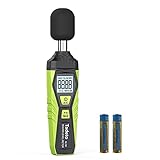
- 【Accurate Measurement】 The measuring range of the sound level meter is 30dB to 130dB . Highly accurate with ± 2.0 dB. Real-time monitoring can give you accurate data on the sound level in the area.
- 【A/C Weighted Measurement】 The A weighted simulates the frequency characteristics of low-intensity human ear noise, which is suitable for the detection of ambient noise. The C weighted simulates the frequency properties of high-intensity noises of the human ear, which are suitable for the sound pressure analysis of machine motors and machines. More professional measurement methods provide users with a more perfect user experience.
- 【Fast and Slow Measurement】 The sound level meter has the function of converting the fast and slow response rate. The fast response rate uses a time constant of 0.125s/time for general environmental measurement. The slow response rate uses a 1s/time constant, which is used for environmental measurements with relatively large changes in noise levels.
- 【Digital LCD Display 】 The digital display is a 4-digit LCD display with a resolution of 0.1 dB. Backlit LCD digital display, the reading effect is clearer in dark places. When the battery is low, the LCD display will display a low voltage icon, indicating that the power is low at this point and the battery needs to be replaced.
- 【Convenient and Lightweight 】Tadeto sound level meter is lightweight and easy to carry. It's widely used in factories, transportation, car, baby room and audio system offices, sound quality control in homes, schools, and construction sites.
Separate commitments from possibilities
FHWA guidance says agencies determine expected traffic-noise impacts and consider abatement when an impact is identified. Whether a measure is reasonable and feasible is decided for the specific project. The guidance also states: “The views of the impacted residents will be a major consideration in reaching a decision on the reasonableness of abatement measures to be provided.”
Quick wins for a faster PC:
Scan for outdated or missing drivers - takes under a minuteDriver Scan →Repair Windows errors before they cause bigger problemsFix Now →Fix the driver behind crashes, sound loss and screen glitchesFind Drivers →Read the final environmental documents and approved plans to determine whether a wall, earth berm, low-noise pavement, insulation or another treatment is funded and committed. A concept drawing, public meeting statement or unfunded option is not the same as a construction obligation. Ask the agency what happens if costs, property access or design standards change.
3. Understand construction disruption before you offer
Noise, dust and vibration
Construction noise can come from demolition, pile driving, concrete breaking, backup alarms, trucks and nighttime safety work. Dust may arise from earthwork, stockpiles and unpaved haul routes. Vibration risk depends on the equipment and the building, soil and distance; do not assume that a general project statement answers the question for this house.
Ask for permitted construction hours, anticipated high-noise activities, dust-control methods, equipment restrictions and the process for reporting violations. If the agency gives only broad hours, ask which phases could require overnight lane closures or continuous concrete pours.
Traffic, detours and safety
Request the traffic-control plan or a plain-language explanation of lane shifts, temporary signals, truck routes, pedestrian crossings and bicycle detours. Determine whether your normal route to work, school, transit, shops and medical care will be interrupted. Ask how long each access change is expected to last and whether driveway access will be maintained at all times.
Recommended Free Tools
Emergency access deserves a specific answer. Confirm how fire, ambulance, utility and delivery vehicles will reach the property during each phase. A route that is technically open may still be difficult for large vehicles or unsafe for children and pedestrians.
Staging, lighting and working space
Find out where contractors may stage equipment, store materials, place temporary lighting or operate batch plants. Night lighting can affect bedrooms and yards even when noise is controlled. Dust and mud can be tracked onto local roads, while temporary fencing can reduce usable yard area.
Ask who maintains temporary barriers, restores landscaping and repairs damage to private driveways or drainage features. Get any restoration promise in writing rather than relying on a verbal assurance.
4. Evaluate the completed highway’s likely effects
Distance, elevation and sightlines
More separation generally reduces highway noise, vibration, emissions, glare and dust. Topography matters: a road cut, embankment or retaining wall can block or redirect sound, while an elevated roadway can create a direct line of sight to traffic and lights. Inspect the view from bedrooms, main living rooms and outdoor areas, not only from the front boundary.
Also popular on Amazon

- Accurate 30-130dB Noise Measurement: The Goldeep SL750A decibel meter measures sound levels from 30 to 130dB with ±1.5dB accuracy and a 31.5Hz-8KHz frequency response. This sound decibel meter is ideal for checking home noise, neighbor noise, traffic sound, office noise, construction sites, factories, classrooms, baby rooms and musical instruments.
- A/C Weighting for Different Sound Environments: This digital sound level meter supports A/C weighting modes for more flexible noise testing. A-weighting is suitable for environmental noise such as urban traffic, schools, offices, business areas and construction sites. C-weighting is designed for industrial noise from machinery, equipment, aerospace, high-speed rail and other high-intensity sound sources.
- dB/SONE Units for Sound & Loudness Testing: Use the dB unit to measure sound intensity for environmental noise, machine noise, traffic noise and workplace noise. Switch to SONE to better understand perceived loudness, making this db meter useful for music, audio systems, acoustic checks and instrument noise control..
- FAST/SLOW Response with MAX/MIN Tracking: The spl meter includes FAST and SLOW response settings. FAST response, 0.125s per reading, is useful for changing noise levels, while SLOW response, 1s per reading, is suitable for steady-state noise. MAX/MIN value tracking helps record peak and minimum noise levels over a period of time.
- Easy-to-Use Sound Meter for Daily & Professional Needs: Designed with data hold, clear LCD display, anti-slip grip and a windbreak ball, this sound meter is practical for indoor and outdoor use. Package includes 1 sound level meter, 2 AAA 1.5V batteries and 1 user manual, so you can start measuring noise right away.
Measure or map the approximate distance from the home and outdoor living areas to the nearest lane, ramp and intersection. A ramp or signalized junction can produce braking, acceleration and idling noise different from steady freeway traffic.
Barriers and other mitigation
Determine whether a sound wall, berm or other treatment is proposed at the property line, along the roadway or on separate land. Check its planned height, length, material and completion phase. A gap at a driveway, bridge or drainage structure can leave part of the property exposed.
Ask whether maintenance responsibilities, access gates and future repairs are defined. A barrier that is shown in an early visualization but absent from the approved plans should be treated as uncertain.
Indoor sound and ventilation
Inspect window seals, frame condition, exterior doors and wall penetrations. Note whether bedrooms face the road and whether the home can be ventilated without opening those windows. Mechanical cooling or balanced ventilation can make it easier to keep windows closed, but installation cost and planning permission vary by location.
Free tools Windows power users keep installed
One-click scans. No signup required.
An acoustical consultant can assess the existing envelope and recommend treatments such as secondary glazing, upgraded seals or ventilation changes. The consultant should distinguish traffic noise from construction noise and state the measurement method used.
5. Check title, survey, drainage and easements
Search for transportation and construction rights
Have a conveyancer or real-estate attorney review the title commitment, deed, survey and recorded easements. Look specifically for highway or transportation easements, temporary construction easements, slope rights, retaining-wall maintenance rights, drainage easements and access rights. MnDOT acquisition guidance identifies these categories because they can affect what an owner may build, plant or modify.
Compare the legal descriptions with the project’s right-of-way map. A narrow strip along the boundary can still contain a wall, ditch, utility, access route or future widening reservation.
Understand practical restrictions
Ask who may enter the property, for what purpose, during which dates and with what notice. Determine whether the easement permits excavation, grading, tree removal, wall reconstruction or temporary storage. Check whether you would be responsible for maintaining a drainage channel or wall that primarily serves the highway.
What’s actually slowing this PC down?
Pick the symptom - the matching free tool is one click away.
Review drainage plans and recent history of flooding, ponding or erosion. Highway grading can redirect runoff even when the house itself is not acquired. A local engineer can explain whether proposed culverts, swales or retaining structures protect the lot and who maintains them.
Also popular on Amazon

- 【Widely Used】The noise meter is the use of environmental sound level instrument, can be widely used in such as factories, workshops, schools, residential, office areas, traffic roads, audio and other occasions of sound level measurement. Also suitable for noise engineering, product quality control, health,prevention and control.
- 【Accurate Measurement】Measuring Range:30~130dB ;Accuracy:±1.5dB(94dB@1KHz);Display Resolution:0.1dB
- 【A Weighted Measurement】 A Weighted network (automatic switching range display)
- 【Fast/Slow mode selection】Press the MODE key, you can convert the response speed of the noise meter, FAST fast, SLOW slow
- 【MAX/MIN Measurement】Press RANGE key to measure the maximum value of MAX and minimum value of MIN.A maximum duration of more than 3 seconds is recorded, with a normal test sampling rate of 0.5 seconds. The maximum error is ± 5%.
Verify disclosure and purchase-contract rights
Disclosure requirements differ by country, state and province. Ask the seller directly about agency notices, acquisition contacts, construction complaints, access agreements and prior damage, then obtain supporting documents. Your attorney can advise on inspection, document-review and termination contingencies that are lawful in the jurisdiction.
6. Visit the property like a future resident
Make several visits
Visit on different days and at different times, including a busy traffic period if practical. Observe the property before work begins, during any active phase and after a major traffic change. Rain can reveal drainage problems; a dry, quiet midday visit cannot.
Stand in each bedroom, the main living area, the yard and any planned patio location. Listen with windows open and closed. Note idling, acceleration, horns, backup alarms, dust, vibration, glare and how easily people can converse outdoors.
Do these 3 things before closing this tab:
1Fix the driver behind crashes, sound loss and screen glitches2Repair Windows errors before they cause bigger problems3Scan for outdated or missing drivers - takes under a minuteUse a sound meter only for rough comparisons
A consumer sound meter can document preliminary differences between rooms or visit times. It does not replicate the calibrated, specified measurement and modeling process used in formal project analysis. FHWA guidance describes measurements using ANSI Type I or Type II integrating sound-level meters; a casual phone reading should never be presented as an official acoustic determination.
If readings are useful, record the date, weather, location, window position, traffic condition and device so the comparison is reproducible. Do not use a single number to promise that the home will meet a legal or comfort standard.
Inspect access and daily routes
Drive the route to work, school, shops and emergency services during likely construction periods. Walk from the property to the nearest safe crossing or transit stop. Look for narrow shoulders, temporary barriers, blocked sidewalks and places where children or mobility-impaired residents would have difficulty.
7. Compare candidate homes using the same framework
When choosing among homes, use identical questions and documents rather than relying on a general impression. The following comparison axes combine project, noise and property-rights considerations.
The Tool Desk
Outbyte Driver Updater FREEScan for outdated or missing drivers - takes under a minuteDriver Scan →Outbyte PC Repair FREERepair Windows errors before they cause bigger problemsFix Now →| Factor | What to compare | Why it matters |
|---|---|---|
| Road relationship | Distance, elevation, ramps, intersections and direct sightline | These influence traffic noise, lights, dust and vibration. |
| Predicted future noise | Modeled levels, receiver locations, forecast year and assumptions | Shows the agency’s expected post-project condition, subject to its stated limits. |
| Mitigation status | Barrier or other treatment proposed, funded, approved and scheduled | A committed measure is more reliable than a concept or unapproved option. |
| Construction exposure | Duration, work hours, haul routes, staging and high-noise phases | Determines the intensity and length of temporary disruption. |
| Access | Driveway, emergency route, pedestrian path and detour plan | Daily convenience and safety can change before the road opens. |
| Outdoor usability | Patio and yard orientation, barriers, glare and conversation comfort | Affected outdoor space can reduce the home’s practical value to you. |
| Bedroom orientation | Road-facing rooms, window quality and ventilation alternatives | Nighttime disturbance depends on the rooms you use for sleeping. |
| Land rights | Highway, slope, drainage, wall-maintenance and construction easements | Rights can limit improvements and create maintenance obligations. |
| Ability to reduce indoor sound | Window condition, mechanical ventilation and upgrade feasibility | Determines whether indoor comfort can be improved independently of the project. |
This is a decision framework, not a universal score. Weight each factor according to your household: a remote worker may prioritize daytime noise, while a family with young children may prioritize safe crossings and emergency access.
Independent reader supportYour contribution helps us test, update, and keep practical guides available for everyone.8. Bring in the right professionals
Independent property inspector
Ask the inspector to pay particular attention to cracks, doors and windows that bind, roof or foundation movement, drainage, retaining walls and signs of water intrusion. Construction-related vibration cannot be diagnosed from a single visual inspection, so document existing conditions with dated photographs before work starts.
Also popular on Amazon

- Datalogs up to 16,000 readings with USB interface for downloading to a PC
- Triple LCD displays humidity, temperature, and date (year, month, and day)
- Programmable from keypad or PC
- Selectable data sampling rate
- User programmable audible and visual alarms
Real-estate attorney or conveyancer
Use a local legal professional to interpret title exceptions, easements, disclosure duties, acquisition notices and contract contingencies. The rules differ by jurisdiction; general internet guidance cannot substitute for review of your contract and land records.
Acoustical consultant
Consider an independent consultant when the home is close to the alignment, a noise wall is uncertain, bedrooms face the road or the environmental documents leave important questions unanswered. Ask for a written scope that states measurement locations, equipment, weather conditions, standards used, assumptions and recommended treatments. The consultant should not imply that a short visit replaces the agency’s project model.
Drainage or civil engineer
Obtain engineering advice when the project changes grades, culverts, retaining walls or overland flow. Clarify who owns and maintains each structure after construction and whether an easement grants the agency future access.
9. Protect yourself during due diligence and closing
Build a document checklist into the offer
Where local law permits, make the purchase conditional on reviewing the current project plans, environmental and noise records, title, survey, easements and seller disclosures. Specify a deadline long enough for professional review. Ask the seller to deliver agency correspondence and notices, not merely a statement that no problem is known.
Record the property’s pre-construction condition
Photograph foundations, walls, ceilings, driveways, fences, drainage features and mature trees. Keep copies of inspection reports and date-stamped sound or access observations. These records can help distinguish pre-existing conditions from later damage, although they do not guarantee compensation.
Do not price an uncertain benefit as certain
A proposed sound wall, landscaping restoration or access arrangement should not be treated as completed unless it appears in an approved, funded commitment. Conversely, the absence of a current disturbance does not prove that future traffic or construction will be minor. Base your offer on documented conditions and your tolerance for residual uncertainty.
10. Red flags that warrant a pause
- The seller cannot identify the project agency, limits or current plans.
- A promised barrier or access improvement appears only in a rendering or meeting presentation.
- The title search reveals a transportation or construction easement that no one can explain.
- Night work, haul routes or emergency access are described as “to be determined” close to the expected start.
- The home relies on open windows for comfort but has no practical ventilation alternative.
- Drainage, retaining-wall or slope responsibilities are unclear.
- Agency documents use an old design, traffic forecast or schedule that does not match current plans.
- The seller or agent discourages direct contact with the responsible agency.
One red flag does not automatically make a property unsuitable. It means the missing fact should be resolved, priced as a risk or accepted consciously before you waive contingencies.
11. A practical decision sequence
- Map the project. Identify the agency, project limits, design stage, schedule, funding status and public contact.
- Collect the records. Obtain environmental review, noise analysis, approved plans, mitigation commitments, traffic staging, access plans and right-of-way information.
- Test the assumptions. Check modeled year, traffic volumes, receiver locations, barrier details, construction hours and unresolved impacts.
- Inspect legal rights. Review title, survey, drainage, slope, wall-maintenance, highway and construction easements with a local professional.
- Visit repeatedly. Observe bedrooms, living spaces, yards and routes at varied times and weather conditions; record rough comparisons consistently.
- Obtain targeted advice. Add an inspector, attorney, acoustical consultant or civil engineer where the facts justify the cost.
- Negotiate with evidence. Use documented access restrictions, uncertain mitigation, repair needs or easement burdens when setting price and contingencies.
- Recheck before closing. Confirm the latest agency schedule, plans, notices and title status because designs and construction dates can change between offer and settlement.
What the available guidance cannot tell you
There is no broadly applicable statistic that predicts how much a highway project will reduce a specific home’s value, affect health or change an individual’s noise experience. Official guidance provides procedures and impact categories rather than a universal percentage. Value depends on the local market, the project design, the home’s alternatives and what buyers in that area actually accept.
The cited guidance also comes from different jurisdictions, including the United States, New Zealand and Victoria, Australia. FHWA and MnDOT terminology or procedures may not apply in your country, state or province, and NZTA separation guidance is not a substitute for local planning rules. Confirm current requirements, records and commitments with the responsible agency and qualified professionals before relying on them in a purchase decision.
Quick Recap
Product prices and availability are accurate as of the date/time indicated and are subject to change. Any price and availability information displayed on Amazon at the time of purchase will apply.

