Do not rely on the distance shown in a property listing. Before buying near bridge works, identify the exact project and phase, read the latest environmental and land documents, verify how your street and driveway will function during construction, assess noise, vibration, dust and traffic at the property, and obtain local legal and building advice. Construction effects can end when the bridge opens, but the completed bridge may introduce permanent traffic, access, visual and maintenance effects. Whether you have any compensation or other protection depends on the project and the law where the home is located.
No address, bridge, country or project stage was supplied here, so the checks below are a due-diligence framework rather than a prediction for a particular house.
As an Amazon Associate I earn from qualifying purchases.
1. Identify exactly what is being built
“A bridge project” may include much more than the bridge deck. It can involve approach roads, temporary haul routes, utility relocation, drainage, retaining walls, demolition, land clearance, staging areas and later maintenance. Ask the project sponsor or local authority for the current project name, map and approval status, then match those documents to the address you are considering.
Confirm the sponsor and legal status
- Record the sponsoring transport agency, council or private developer and the department handling public enquiries.
- Find the latest planning, consent or environmental-assessment file, including screening, scoping, addenda and revised drawings.
- Check whether the design is still being consulted on, approved, tendered, under construction or being changed after approval.
- Ask whether compulsory acquisition, temporary occupation or construction easements are proposed.
A sale listing or old newspaper announcement can be out of date. Project drawings, work packages and dates often change, so use the sponsor’s latest notice and ask when it was issued.
#1 Best Overall

- 2.25-inch LCD Screen with Backlight: This TS-501B sound level meter is measured noise levels are expressed in decibels and displayed on the 2.25-inch LCD screen, it easy to read on a big display design. Long press the backlight button to turn on a backlight, making it easy to view even in dim light
- Decibel Meter with A/C Weighting: TopTes TS-501B decibel meter uses a precise condenser microphone to capture sound. It’s equipped with A-weighting and C-weighting facilities that measure noise levels from 30 to 130 dB with an accuracy of 1.5 dB, Frequency from 30 to 8000Hz. Perfect for monitoring noise levels in communities, home theaters, audio systems, automobiles, workshops, schools, offices, factories
- MAX/MIN Measurement: The sound pressure level (SPL) meter has Max or Min measurement values to represent the maximum/minimum (high/low peak) value of the sound produced within a certain time, and the data hold function can freeze the current reading based on the sound measurement according to individual needs
- Easy Use and Feature Packed: The non-slip side design ensures that the portable noise meter fits easily in the hand. TS-501B SPL meter is a battery-operated noise meter that comes with three durable batteries and has an automatic power off function to extend battery life. A low battery indicator will appear on the screen when the battery is low to remind the user to replace the battery in time
- What’s in the Box: One TS-501B Decibel Meter, Three AAA Batteries, One User Manual, One Carry Case. The device has been factory calibrated to ensure high measurement accuracy and compliance with quality standards.
Separate each time period
Make a simple timeline for enabling works, main construction, bridge opening and long-term operation. Planning Inspectorate environmental-impact-assessment advice for nationally significant infrastructure projects in England and Wales says relevant construction, operation and decommissioning periods should be considered. A home that is tolerable during a two-year build may be less attractive if the completed road carries constant traffic; conversely, a short construction inconvenience may not matter if there is little permanent change.
| Phase | Questions to answer | Evidence to request |
|---|---|---|
| Pre-construction | Will surveys, vegetation clearance, demolition or utility work begin before the advertised start date? | Enabling-works plan, survey notices and access arrangements |
| Main construction | What are the work hours, haul routes, noisy activities, closures and weekend or night shifts? | Construction environmental-management plan, staging map and traffic-management plan |
| Opening and operation | What traffic, lighting, drainage, maintenance closures and pedestrian routes will remain? | Final road layout, traffic forecast, lighting and maintenance information |
| Decommissioning or future works | Could later widening, resurfacing or bridge maintenance affect the home? | Asset-management or future-works commitments, where available |
2. Read the environmental assessment for your street
Locate the project’s environmental assessment or environmental statement and search it for the address, street name, nearest receptor, property number or map grid. Do not stop at the executive summary. Read the impact tables, construction assumptions, mitigation commitments and appendices.
Look beyond noise
A bridge assessment may cover:
- construction and operational noise;
- ground-borne vibration and structural effects;
- dust and air quality;
- traffic, road safety and pedestrian movement;
- driveway, parking, delivery and emergency access;
- visual effects, lighting and loss of outlook;
- land acquisition, temporary occupation and resettlement;
- drainage, flooding, waterways and soil disturbance; and
- human-health or amenity effects.
The Land Transport Authority Samoa preliminary environmental assessment for the Malie-Afega Bridge Replacement illustrates the breadth of issues to look for: it identifies air quality and dust, traffic and access, noise and vibration, visual amenity, land requirements and resettlement. Those are categories in one project assessment, not proof that every bridge will create each effect.
Do these 3 things before closing this tab:
1Clear out junk files and repair common Windows errors2Scan for outdated or missing drivers - takes under a minute3Repair Windows errors before they cause bigger problemsUse the source–pathway–receptor test
Planning Inspectorate guidance recommends identifying the source of an impact, the pathway by which it travels and the sensitive receptor affected. For a house, the source could be piling or truck movements; the pathway could be airborne sound, ground vibration or a changed road; the receptor could be a bedroom, garden, driveway or nearby school route. Ask the authority:
- Is this property, its street or the nearest façade shown as a receptor?
- What distance, elevation, orientation and intervening barriers were assumed?
- Which work methods, equipment, traffic volumes and hours were modelled?
- What mitigation is committed, rather than merely suggested?
- How will monitoring, complaints and corrective action be recorded?
“Within 200 metres” is not a universal danger line. In the Samoa assessment, approximately 20 houses were within 200 metres of construction activities and approximately 17 private driveways were within the construction footprint. Those figures describe that project only; they cannot establish a threshold for another address.
Rank #2

- Accurate 30-130dB Noise Measurement: The Goldeep SL750A decibel meter measures sound levels from 30 to 130dB with ±1.5dB accuracy and a 31.5Hz-8KHz frequency response. This sound decibel meter is ideal for checking home noise, neighbor noise, traffic sound, office noise, construction sites, factories, classrooms, baby rooms and musical instruments.
- A/C Weighting for Different Sound Environments: This digital sound level meter supports A/C weighting modes for more flexible noise testing. A-weighting is suitable for environmental noise such as urban traffic, schools, offices, business areas and construction sites. C-weighting is designed for industrial noise from machinery, equipment, aerospace, high-speed rail and other high-intensity sound sources.
- dB/SONE Units for Sound & Loudness Testing: Use the dB unit to measure sound intensity for environmental noise, machine noise, traffic noise and workplace noise. Switch to SONE to better understand perceived loudness, making this db meter useful for music, audio systems, acoustic checks and instrument noise control..
- FAST/SLOW Response with MAX/MIN Tracking: The spl meter includes FAST and SLOW response settings. FAST response, 0.125s per reading, is useful for changing noise levels, while SLOW response, 1s per reading, is suitable for steady-state noise. MAX/MIN value tracking helps record peak and minimum noise levels over a period of time.
- Easy-to-Use Sound Meter for Daily & Professional Needs: Designed with data hold, clear LCD display, anti-slip grip and a windbreak ball, this sound meter is practical for indoor and outdoor use. Package includes 1 sound level meter, 2 AAA 1.5V batteries and 1 user manual, so you can start measuring noise right away.
3. Verify construction access and daily travel
Access problems can be more disruptive than occasional noise. Obtain the traffic-management drawings for the road directly serving the house and ask for dates, not just a general promise that access will be maintained.
Check the property itself
- Will the driveway be closed, narrowed, moved or reached through a temporary route?
- Can residents, visitors, tradespeople, refuse vehicles and deliveries reach the property at all stages?
- Will parking be removed or restricted?
- How will emergency services enter if a lane or bridge is closed?
- Are pedestrian crossings, pavements, bus stops or cycle routes being diverted?
The Malie-Afega assessment describes possible temporary access arrangements for affected driveways and traffic and pedestrian changes. The actual route, dates and notice period for your home must come from the relevant project authority.
Test realistic journeys
Map the route to work, school, healthcare, shops and public transport during each proposed closure. Identify an alternative route and estimate whether it remains usable in bad weather, by wheelchair, with a trailer or for emergency travel. Ask whether construction traffic will share a narrow residential street and whether the route changes by stage. Visit at the times you normally leave and return; a quiet midday inspection can conceal peak-period queuing.
4. Establish how noisy, dusty or disruptive the work may be
Noise and vibration
Request the predicted construction and operational noise levels, the measurement locations, assumed hours and mitigation. Look for piling, breaking concrete, sheet driving, blasting, reversing alarms, generators and night work. Ask whether predictions are façade levels, garden levels or indoor levels; they are not interchangeable.
The Planning Inspectorate’s EIA pre-application advice states: “Wherever possible, quantitative rather than qualitative methods of assessment should be used.” That advice applies to England and Wales and does not turn an estimate into a guarantee. Ask what will happen if monitoring exceeds the prediction: changed equipment, barriers, restricted hours, respite periods or a complaint investigation.
Rank #3

- 【Widely Used】The noise meter is the use of environmental sound level instrument, can be widely used in such as factories, workshops, schools, residential, office areas, traffic roads, audio and other occasions of sound level measurement. Also suitable for noise engineering, product quality control, health,prevention and control.
- 【Accurate Measurement】Measuring Range:30~130dB ;Accuracy:±1.5dB(94dB@1KHz);Display Resolution:0.1dB
- 【A Weighted Measurement】 A Weighted network (automatic switching range display)
- 【Fast/Slow mode selection】Press the MODE key, you can convert the response speed of the noise meter, FAST fast, SLOW slow
- 【MAX/MIN Measurement】Press RANGE key to measure the maximum value of MAX and minimum value of MIN.A maximum duration of more than 3 seconds is recorded, with a normal test sampling rate of 0.5 seconds. The maximum error is ± 5%.
Vibration deserves a separate question. Ask whether the assessment considered human annoyance and building effects separately, what baseline survey was taken and whether pre-condition photographs or crack monitoring will be offered. A low noise prediction does not automatically mean no vibration from piling or heavy vehicles.
Recommended Free Tools
Dust and air quality
Check the dust-control plan for wheel washing, covered loads, water suppression, road cleaning, stockpile management and wind-related stop-work rules. Ask whether the home’s ventilation openings, garden, laundry area or children’s play space face the works. The assessment should identify baseline air quality and the construction activities modelled; do not infer health risk from a project name alone.
Visual change, lighting and outdoor use
Review photomontages, temporary hoarding, cranes, lighting towers and the permanent bridge profile. A barrier can reduce noise but also block a view. Night lighting can affect bedrooms even when daytime construction has ended. Ask whether lighting is directional, timed and shielded, and whether the completed road changes privacy or overlooking.
5. Inspect the home’s condition and exposure
Arrange an independent building survey before becoming unconditionally committed. Tell the surveyor about the bridge works and ask for specific attention to existing cracks, movement, water ingress, drainage, retaining structures, foundations, roof condition, windows and mechanical ventilation. There is no universal bridge-specific inspection protocol; the surveyor should adapt the inspection to the site and proposed methods.
Create a baseline record
- Photograph existing internal and external cracks, damp marks, boundary walls, paving and drainage, with dates and wide-angle context.
- Keep the seller’s disclosures, previous survey, repair invoices and insurance claims together.
- Ask the project authority whether it will carry out a pre-construction condition survey and how residents can obtain a copy.
- Do not attribute every defect to construction without professional evidence; ordinary settlement, leaks and poor maintenance have other causes.
If the property is particularly sensitive, ask a qualified structural engineer or environmental professional what monitoring is proportionate. A consumer sound meter can help you keep a personal diary of observations, but it is not a calibrated compliance measurement and cannot by itself prove a breach or compensation entitlement.
Free tools Windows power users keep installed
One-click scans. No signup required.
Rank #4
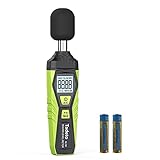
- 【Accurate Measurement】 The measuring range of the sound level meter is 30dB to 130dB . Highly accurate with ± 2.0 dB. Real-time monitoring can give you accurate data on the sound level in the area.
- 【A/C Weighted Measurement】 The A weighted simulates the frequency characteristics of low-intensity human ear noise, which is suitable for the detection of ambient noise. The C weighted simulates the frequency properties of high-intensity noises of the human ear, which are suitable for the sound pressure analysis of machine motors and machines. More professional measurement methods provide users with a more perfect user experience.
- 【Fast and Slow Measurement】 The sound level meter has the function of converting the fast and slow response rate. The fast response rate uses a time constant of 0.125s/time for general environmental measurement. The slow response rate uses a 1s/time constant, which is used for environmental measurements with relatively large changes in noise levels.
- 【Digital LCD Display 】 The digital display is a 4-digit LCD display with a resolution of 0.1 dB. Backlit LCD digital display, the reading effect is clearer in dark places. When the battery is low, the LCD display will display a low voltage icon, indicating that the power is low at this point and the battery needs to be replaced.
- 【Convenient and Lightweight 】Tadeto sound level meter is lightweight and easy to carry. It's widely used in factories, transportation, car, baby room and audio system offices, sound quality control in homes, schools, and construction sites.
Visit more than once
Walk the property during a weekday peak, an evening and, if possible, a weekend. Listen inside with windows open and closed, stand in the garden and inspect the rooms facing the works. Note wind direction, reflected sound from hard surfaces, truck queues, dust on surfaces and whether outdoor space remains usable. These observations supplement—not replace—the project’s technical assessment.
6. Check title, planning and land rights
Have a conveyancer or property lawyer qualified in the relevant jurisdiction review the title and project records before exchange or an equivalent binding commitment.
Documents to request
- Title plan, registered easements, rights of way and shared-drive arrangements
- Compulsory-acquisition, temporary-occupation or notice documents
- Project land plans and construction-compound boundaries
- Planning permissions, conditions, objections and later amendments
- Covenants affecting access, parking, walls, trees or alterations
- Seller disclosures about notices, disputes, cracking, flooding or access interruptions
Ask specifically whether any part of the garden, driveway, boundary or access road is needed temporarily or permanently. An environmental assessment may flag land take or property impacts, but it does not by itself tell you what legal interest will be acquired, who receives notice or how a private right of way will be protected.
Check future development controls as well. A new road reserve, bridge approach or drainage corridor may restrict extensions, tree planting, fences or vehicle access. The applicable names and effects of these documents vary by country and state, so use local professional advice rather than a generic online form.
7. Find out what complaint and compensation routes actually exist
Get the construction contact in writing
Ask the sponsor for the community-relations or environmental-compliance contact, complaint number, response target, out-of-hours process and method for reporting access blockages, dust, vibration or unsafe traffic. Request copies of monitoring results and notices that affect your street. Keep a dated log of events, photographs and correspondence; follow the project’s stated escalation route if a response is inadequate.
Best Value
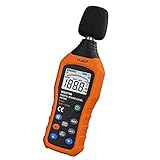
- The sound level meter is an instrument used to real-time measure the sound level,such as sound level around factories,workshops,schools,residential,offices,road,audio etc (Battery not include), Can not keep and generate a report directly from the device
- It also can be appropriate for noise engineering,product quality control,health prevention and treatment,etc.This audio noise measure device is a great tool for checking, monitoring or controlling and test the sound level of any environments. It is widely applicable for personal, families, business, studies, industrial and etc
- With the measuring scope from 30 to 130dB and shifting function. Digital display,good anti-interference performance,power saving
- With the backlight feature,it is appropriate for gathering the sound data at night.Backlight auto power off function is provided.With power saving and high-reliability circuit design,well-design high-efficiency power supply circuit makes the batteries more durable
- Composite material injection molding process is adopted for casing with anti-drop structure design.It is not only extremely wear-resisting,but also elegant,It’s a mini handheld portable sound level reader
Do not assume compensation
Compensation depends on jurisdiction, statutory eligibility, the claimant’s legal interest and whether the loss arises from construction, land acquisition or later operation of the public works. A buyer may not inherit a previous owner’s claim, and a sale listing cannot create an entitlement.
UK Government guidance on compulsory purchase and compensation is a narrow example. It describes a possible noise payment of up to £1,650 for certain occupants of moveable homes when a new or altered highway is constructed or opened within 300 metres, subject to stated conditions. That is not a general entitlement for someone buying a conventional house near a bridge, and UK rules should not be applied elsewhere. Ask a local lawyer about eligibility, deadlines, evidence and whether a claim belongs to an owner, occupier or another interest holder.
Separate mitigation from damages
A project may promise barriers, restricted hours, temporary access or monitoring without offering money. Conversely, a statutory claim may exist even when day-to-day mitigation is working. Have your adviser explain both tracks and whether accepting a settlement affects later rights.
The Tool Desk
Outbyte Driver Updater FREEScan for outdated or missing drivers - takes under a minuteDriver Scan →Outbyte PC Repair FREEClear out junk files and repair common Windows errorsFree Scan →8. Compare homes on the same evidence
If you are choosing between properties, assess exposure and the property itself separately. Distance is only one input; orientation, barriers, work staging and access can produce a different experience at two homes on the same street.
| Exposure axis | Home A | Home B | What to verify |
|---|---|---|---|
| Construction phase and duration | Record from latest schedule | Record from latest schedule | Start, finish, staging and likelihood of revision |
| Work hours and night/weekend activity | Record | Record | Permit conditions and contractor plan |
| Noise and vibration | Record predicted receptor result | Record predicted receptor result | Method, location, baseline and mitigation |
| Dust and air controls | Record | Record | Suppression, monitoring and stop-work triggers |
| Driveway and walking access | Map each stage | Map each stage | Closures, temporary routes, parking and emergency access |
| Permanent effects | Record traffic, view and lighting changes | Record traffic, view and lighting changes | Operational plans and maintenance access |
| Title and land exposure | Legal review result | Legal review result | Acquisition, easements and restrictions |
| Existing condition | Survey findings | Survey findings | Cracks, damp, foundations and drainage |
| Alternative routes | Travel-time and resilience notes | Travel-time and resilience notes | School, work, emergency and bad-weather options |
Do not award a home a favourable score merely because it is farther away if its only driveway is within the work zone. Conversely, a closer house may be better protected by a permanent barrier and have a reliable alternative route.
9. A practical sequence before you make an offer
- Obtain the latest project pack. Save the map, schedule, environmental documents, traffic plan, land plans and consultation updates with their issue dates.
- Mark the property. Identify the nearest work area, haul route, bridge approach, compound, receptor location, driveway and likely line of sight.
- Ask written questions. Request stage-by-stage access dates, work hours, monitoring, mitigation, complaints contact and any property-specific notices.
- Inspect at representative times. Visit during traffic peaks and quieter periods; speak with nearby residents without treating anecdote as technical proof.
- Commission professional checks. Use a local conveyancer for title and statutory issues and a building surveyor for condition. Add acoustic, environmental or structural expertise where the documents or site warrant it.
- Price the uncertainty. Consider temporary accommodation, longer journeys, parking, garden use, likely resale audience and the cost of mitigation, but do not invent a property-value percentage unsupported by evidence.
- Make the contract conditional where possible. Your lawyer can advise on inspection, finance, access, title and project-notice conditions before you become bound.
- Recheck immediately before commitment. Confirm that the schedule, design and access plan have not changed since your first review.
10. Red flags that warrant a pause
- The seller cannot identify the project sponsor or gives you only an old announcement.
- The authority will not provide a current map or says access will be “managed” without dates or routes.
- The assessment discusses a corridor but does not show the property, street or nearest sensitive receptor.
- Predictions omit work hours, piling, haul traffic, night work or the completed bridge’s operation.
- A driveway, boundary or garden appears inside a construction footprint, but no land or access document has been supplied.
- Existing cracks, damp or drainage problems are dismissed as construction-related without a survey.
- You are urged to rely on a consumer sound-meter reading, an informal promise or a claimed compensation amount instead of written project and legal documents.
A red flag does not automatically mean “do not buy.” It means the uncertainty is material enough to resolve, document or reflect in your contract and price before proceeding.
11. Decide only after separating temporary inconvenience from lasting risk
At the end of your review, write two short summaries. The first should describe the construction burden: dates, hours, access, noise, vibration, dust, traffic and mitigation. The second should describe the property’s lasting position: title and access rights, permanent traffic and visual changes, drainage, condition, route alternatives and any legal remedy. If either summary depends on an answer the sponsor, surveyor or lawyer has not provided, treat that as unresolved rather than assuming the most favourable outcome.
Quick wins for a faster PC:
Fix the driver behind crashes, sound loss and screen glitchesFind Drivers →Repair Windows errors before they cause bigger problemsFix Now →The most defensible purchase decision is based on address-specific documents and professional advice, not a radius measured on a map. Bridge projects are assessed by their design, methods, pathways and receptors; your home should be assessed in the same specific way.
Quick Recap
Product prices and availability are accurate as of the date/time indicated and are subject to change. Any price and availability information displayed on Amazon at the time of purchase will apply.

