Do these 3 things before closing this tab:
1Scan for outdated or missing drivers - takes under a minute2Clear out junk files and repair common Windows errors3Fix the driver behind crashes, sound loss and screen glitchesSome links on this page are affiliate links: if you buy through them we may earn a commission, at no extra cost to you.
The new federal rule does not automatically order every homeowner to replace a pipe at personal expense. The rule most people mean is the EPA’s Lead and Copper Rule Improvements (LCRI), finalized October 30, 2024. It is directed primarily at public water systems, which must identify and generally replace lead and certain galvanized service lines under their control within 10 years or sooner if the state establishes an earlier deadline.
For your property, the important questions are whether the service line is lead, galvanized requiring replacement, unknown, or non-lead; which portions the utility owns or controls; whether state or local law requires your consent; and whether the local replacement program pays for private-side work. Your water utility, not a single nationwide homeowner mandate, is the starting point.
As an Amazon Associate I earn from qualifying purchases.
The short answer for homeowners
The LCRI requires covered community water systems and non-transient non-community water systems to maintain service-line inventories and replacement plans. In general, systems must replace lead and galvanized-requiring-replacement service lines at an average pace that results in replacement within 10 years, subject to earlier state deadlines and limited exceptions.
That does not mean every house has a lead pipe, every owner must immediately hire a contractor, or every private-side replacement will automatically be free. The federal rule operates through the water system and its state-approved program. Ownership, access, funding, restoration work, and scheduling can vary substantially from one utility to another.
Popular on Amazon

- [Replacement filters] Need Upgrade NSF/ANSI 53, 42 & 372 filters for PT-09? Search for PF01A-P or ASIN B0D6Y4W9Q1 on Amazon. Choose genuine Waterdrop filters for a precise fit and reliable performance. Please confirm your model before ordering
- [Glass materials, green choice] This glass water filter pitcher is made from high-quality glass that is non-toxic, sustainable, and easy to clean, helping reduce plastic use for a more eco-friendly daily water solution. Note: Do not wash it in the dishwasher. For improved durability, this pitcher is designed with a sturdy plastic inner liner
- [5-stage filtration for cleaner water] This water filter pitcher adopts 5-stage filtration materials, including advanced carbon fiber, ion exchange resin, and activated carbon block. Tested by a third-party lab, it helps reduce chlorine, mercury, taste and odor, copper, cadmium, PFOA/PFOS, sand, sediment, and large particles. Note: This system DOES NOT lower TDS value. If you prefer a low TDS value, please choose the Waterdrop TDS Reduction Glass Pitcher by searching PT-13W on Amazon
- [NSF/ANSI 42, 53 & 372 certified filter] The filter used in this glass pitcher is certified against NSF/ANSI 42 for reducing chlorine, taste, and odor; NSF/ANSI 53 for reducing mercury; and NSF/ANSI 372 for lead-free materials, helping provide reliable filtration performance for everyday drinking water
- [Long life & fast flow rate] The filter lasts up to 100 gallons or 2 months, whichever comes first based on local water conditions. With a fast flow rate of 8.5 oz/min, this 10-cup glass water filter pitcher fills an 8 oz cup in less than 1 minute, helping reduce waiting time for fresh filtered water
Which law is this?
There is no single federal law that sends every homeowner a replacement bill. The measure generally being described as the new lead pipe replacement law is the EPA’s Lead and Copper Rule Improvements, or LCRI. It updates federal drinking-water requirements for public water systems under the Safe Drinking Water Act.
The LCRI should not be confused with federal rules concerning lead paint. It addresses lead in drinking-water systems, including the service line that connects a water main to a building’s plumbing. It also does not establish one nationwide price, one contractor for every property, or one appointment date for every home.
Recommended Free Tools
The federal rule works alongside separate infrastructure funding. The Bipartisan Infrastructure Law provided $15 billion specifically for lead service-line replacement through the Drinking Water State Revolving Fund (DWSRF). Complete replacement on private property can be an eligible DWSRF expense, but eligibility for funding does not guarantee that every homeowner qualifies for free work or that every local program covers every private-side cost. For disadvantaged communities, 49 percent of specified lead-replacement and general supplemental funds must be provided as grants or principal-forgiveness loans. The EPA’s infrastructure fact sheet explains the funding framework.
What exactly is being replaced?
A service line is the pipe running from the public water main to the building’s plumbing. It may have a utility-owned portion and a customer-owned portion, although the dividing point and legal responsibility differ by location. A line is generally classified as lead if any part of that connection is lead.
| Inventory classification | What it means | What it means for you |
|---|---|---|
| Lead | All or part of the service-line connection is lead. | Ask when the utility will replace the entire line and whether the customer-owned portion is included. |
| Galvanized requiring replacement (GRR) | A galvanized line is, or was, downstream of a lead or qualifying unknown line and may have accumulated lead particles. | Do not assume galvanized steel is automatically safe under the rule. Ask how the utility classified it and what replacement plan applies. |
| Unknown | The material has not yet been established. | The utility must work to identify the line by the applicable replacement deadline. Ask what evidence is needed and whether an inspection is available. |
| Non-lead | The service line has been determined not to be lead or GRR. | The service line may not require LCRI replacement, but interior plumbing, solder, fixtures, or other components can still affect water quality. |
The EPA’s service-line identification and replacement guidance describes these classifications and identification methods. A house’s age or a quick look at an exposed pipe is not enough to make a regulatory determination. The line can change material underground, and lead can come from plumbing inside the building even when the service line itself is not lead.
When does the replacement deadline begin?
The LCRI’s timing is a system-level schedule, not a promise that every property will be excavated on the same day.
Free tools Windows power users keep installed
One-click scans. No signup required.
Also popular on Amazon

- [Replacement filters] Need Upgrade NSF/ANSI 53, 42 & 372 filters for PT-72? Search for PF01A-P or ASIN B0D6Y4W9Q1 on Amazon. Choose genuine Waterdrop filters for a precise fit and reliable performance. Please confirm your model before ordering
- [Glass materials, green choice] This glass water filter pitcher is made from high-quality glass that is non-toxic, sustainable, and easy to clean, helping reduce plastic use for a more eco-friendly daily water solution. Note: Do not wash it in the dishwasher. For improved durability, this pitcher is designed with a sturdy plastic inner liner
- [5-stage filtration for cleaner water] This water filter pitcher adopts 5-stage filtration materials, including advanced carbon fiber, ion exchange resin, and activated carbon block. Tested by a third-party lab, it helps reduce chlorine, mercury, taste and odor, copper, cadmium, PFOA/PFOS, sand, sediment, and large particles. Note: This system DOES NOT lower TDS value. If you prefer a low TDS value, please choose the Waterdrop TDS Reduction Glass Pitcher by searching PT-13W on Amazon
- [NSF/ANSI 42, 53 & 372 certified filter] The filter used in this glass pitcher is certified against NSF/ANSI 42 for reducing chlorine, taste, and odor; NSF/ANSI 53 for reducing mercury; and NSF/ANSI 372 for lead-free materials, helping provide reliable filtration performance for everyday drinking water
- [Long life & fast flow rate] The filter lasts up to 100 gallons or 2 months, whichever comes first based on local water conditions. With a fast flow rate of 8.5 oz/min, this 7-cup glass water filter pitcher fills an 8 oz cup in less than 1 minute, helping reduce waiting time for fresh filtered water
- October 30, 2024: The final LCRI was issued.
- October 16, 2024: EPA inventory materials identify an initial inventory requirement date. This is an inventory milestone for water systems, not an individual homeowner replacement appointment.
- November 1, 2027: EPA materials identify the baseline inventory deadline. Utilities must continue updating inventory information as new evidence is obtained.
- Expected late 2027: EPA’s current implementation materials describe the general LCRI compliance date as three years after publication of the final rule in the Federal Register. The utility’s state-approved plan and published replacement schedule are more useful to a homeowner than trying to calculate a personal deadline from the federal rule alone.
- After the program begins: The ordinary replacement pace is a cumulative average of 10 percent per year, assessed beginning at the end of program year three. This is a system-wide calculation, not a requirement that exactly 10 percent of homes on every street be replaced each year.
States may establish an earlier deadline when faster replacement is feasible. A small share of systems with unusually high proportions of lead and GRR lines may qualify for additional time, but EPA describes deferred deadlines as limited and conditioned on continued progress toward replacement. The EPA’s LCRI questions and answers and its service-line replacement calculation fact sheet provide the implementation details.
Does the homeowner have to pay?
Not automatically under the federal rule. The LCRI requires water systems to replace lines under their control and addresses replacement where the system has access to the relevant property. It does not create a universal nationwide requirement that every homeowner hire a plumber and pay for both sides of the service line.
In practice, responsibility may be divided. A utility may own or control the public side while the property owner owns the section between the curb, meter, or property line and the building. Another utility may have a different ownership arrangement or a program that replaces both sides. State law, municipal ordinances, water tariffs, easements, and property-access agreements can all affect the answer.
Private-property access matters
If the utility needs to enter private property, state or local law, the utility’s tariff, or an access agreement may require owner consent. If consent is required, the LCRI defines a reasonable effort as at least four attempts using at least two communication methods. If the utility cannot obtain access, it must document the reason and continue required notifications. The line is not treated as replaced merely because the utility could not enter.
Quick wins for a faster PC:
Scan for outdated or missing drivers - takes under a minuteDriver Scan →Clear out junk files and repair common Windows errorsFree Scan →Fix the driver behind crashes, sound loss and screen glitchesFind Drivers →Before signing an access agreement, ask what work is authorized, which portions will be excavated, who pays for restoration, whether interior work is included, and what happens if unexpected conditions are found. Keep a copy of anything you sign.
What funding may be available?
Local programs may use utility funds, state appropriations, DWSRF grants, principal-forgiveness loans, other loans, or a combination of sources. A program may offer no-cost replacement to qualifying owners, cover only certain portions of the line, require an income or location qualification, or reimburse eligible work after approval. Another program may require the owner to handle landscaping, a driveway, interior plumbing, permits, or restoration.
Also popular on Amazon
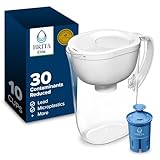
- This Everyday water pitcher is made without BPA, easy to fill, fits in most fridges and can hold 10 cups of water, enough to fill 3 24-ounce reusable water bottles; Packaging may vary
- This space efficient Brita pitcher is fridge friendly, features an easy-fill lid to make refills a breeze; Height 10.7"; Width 5.4"; Length/Depth 10.1"; Weight 1.3 pounds
- Get great tasting water without the waste^; by switching to Brita Elite, you can save money and replace 1,800 16.9 fl oz single-use plastic water bottles a year
- Reduce 99% lead, Chlorine (taste and odor), Cadmium, Mercury, Benzene, Asbestos, and more*, while an electronic indicator makes filter reminders effortless
- Brita Elite filters are compatible with all Brita pitchers and dispensers except Stream; replace the Brita Elite water filter 2x a year** (about every 6 months
Ask for the answer in writing rather than assuming that the phrase lead service-line replacement includes the customer-owned side. Complete private-side replacement can be eligible for federal funding, but local eligibility and program terms control what happens at a particular address.
What to do now: a homeowner checklist
- Contact the water utility serving the property. Ask for the service-line classification, the evidence supporting it, the public inventory link, the replacement-program contact, and the current schedule. EPA says utilities must notify people served by known or potential lead lines and maintain publicly accessible inventory information.
- Ask whether the classification covers the entire line. A record showing the utility-side material may not answer what is under your property. Ask specifically about the customer-owned portion, the meter connection, and any segment between the main and the building.
- Confirm the replacement scope and cost. Ask whether the program replaces the full length, whether the work is free, subsidized, reimbursable, or loan-funded, and whether owner consent is required.
- Get an identification plan if the line is unknown. Home age and a visual guess are not enough. The utility may have inspection records or a verification process. If its records are incomplete, consider a licensed plumber for a service-line inspection, while recognizing that a private inspection may not replace the utility’s official inventory process.
- Ask about water testing and interim instructions. The utility can provide local sampling and flushing guidance. Ask what laboratory or sampling method it accepts and whether nearby work changes the advice.
- Use interim protection when appropriate. If the utility recommends filtration while you wait, choose a certified lead-reduction water filter evaluated by an accredited third-party certification body. Follow the installation, use, and cartridge-replacement instructions exactly.
- Keep a complete paper trail. Save notices, inventory screenshots, inspection reports, test results, access agreements, invoices, grant applications, permits, and final replacement records. These documents may matter for future eligibility, property disclosures, insurance questions, or resale.
A message you can send to the utility
Include the property address and account number and ask:
- Is the service line classified as lead, galvanized requiring replacement, unknown, or non-lead?
- What evidence supports that classification, and does it cover the entire line?
- Which portions are utility-owned and which are customer-owned?
- What is the expected replacement year or program status for this address?
- Will the program replace the private-side portion as well as the utility-side portion?
- Is the work free, subsidized, reimbursable, or loan-funded?
- Is owner consent required, and what happens if consent is declined or delayed?
- Are permits, landscaping, sidewalks, driveways, interior plumbing, and restoration included?
- What flushing, filtration, or water-testing steps are required after the work?
What if the utility says the line is unknown?
Unknown does not mean lead, but it also does not mean non-lead. Treat it as an unresolved classification. Ask the utility how it is collecting evidence and whether you can submit photographs, construction records, plumber findings, or other documentation. Do not remove or disturb a pipe simply to inspect it without understanding the safety and access implications.
A plumber can help identify an accessible portion, but an interior inspection may not establish the material of the buried service line. A water test can show what was present in a particular sample; it cannot by itself prove that a service line is lead-free. A negative result from a consumer test kit should not be used to classify the pipe or to conclude that the service line is safe.
Protecting drinking water while you wait
Replacement is the long-term remedy when a service line is confirmed as lead or GRR. Interim steps reduce potential exposure but do not make the pipe disappear.
- Use cold water for drinking and cooking. Do not use hot tap water for those purposes.
- Follow the utility’s flushing directions. Water that has been sitting in plumbing can contain more lead. Local instructions are preferable because flushing time and procedure depend on the building and water system.
- Do not boil water to remove lead. Boiling does not remove lead from water.
- Choose filtration carefully. EPA recommends a point-of-use or pitcher filter evaluated by an accredited third-party certification body for lead reduction. EPA’s filter guidance identifies filters evaluated for lead reduction to 5 parts per billion or less and particulate reduction under NSF/ANSI Standards 53 and 42. Certification and correct cartridge maintenance matter; a generic claim that a filter is a water purifier is not enough.
- Ask what to do after construction. Water-main work, road work, or service-line work can disturb deposits and temporarily increase lead release. Ask the utility what precautions, flushing, sampling, or filter measures apply after nearby construction.
A filter is an interim measure, not a substitute for full service-line replacement. It also does not necessarily address lead from every fixture, solder joint, or section of interior plumbing.
Also popular on Amazon

- REDUCES 99% OF LEAD + 30 CONTAMINANTS*: Brita Elite filter uses Advanced Carbon Core Technology to reduce 99% of lead and 30+ contaminants from your tap water, for long-lasting filtration
- LARGE 27-CUP CAPACITY, LASTS 6 MONTHS: This UltraMax water dispenser holds 27 cups and the Elite filter lasts 120 gallons or about 6 months — 4x longer than PUR** — meaning fewer replacement filters and more savings for your family
- BPA-FREE COUNTERTOP DESIGN: Made without BPA, the UltraMax filtered water dispenser features a convenient spigot for easy dispensing; fits on most countertops or in the fridge; space-efficient for large families
- REPLACE UP TO 900 PLASTIC BOTTLES: One Elite filter replaces up to 900 single-use 16.9 oz plastic bottles — that's 5,400 bottles replaced per year when you switch to the Brita Elite UltraMax dispenser
- WQA NSF/ANSI CERTIFIED: Brita Elite dispenser is certified by WQA to NSF/ANSI standards for lead, microplastics, chlorine, pharmaceuticals, pesticides and more. *See certifications. **Approximation based on 120-gallon filter life. Substances reduced may not be in all users' water
What happens during a replacement?
The physical work may involve excavation in a public right-of-way and on private property, removal of the old service line, installation of a non-lead line, reconnection at the main and building, and restoration. The exact construction method depends on local conditions and the utility’s program.
Before work starts, ask the utility or contractor to identify:
- the full section being replaced, including the utility and customer sides;
- the installation material and whether the completed line will be classified as fully non-lead;
- the location of excavation and any required access agreement;
- responsibility for landscaping, sidewalks, driveways, fences, irrigation, and other surface restoration;
- whether interior plumbing, basement penetrations, meters, shutoff valves, or permits are included;
- water-service interruptions and advance notice;
- post-work flushing, filter, sampling, and documentation requirements; and
- the procedure for reporting damage or unresolved leaks after restoration.
Under the LCRI, a line counts as fully replaced only when its entire length is non-lead. The rule generally prohibits partial replacement of lead or GRR lines. Limited exceptions include emergency repairs and certain planned infrastructure work affecting the service line, such as water-main or meter work. A partial replacement does not count toward the mandatory replacement rate and triggers additional risk-mitigation requirements.
Buying or selling an older home
A service-line classification is a property issue worth investigating during a purchase or sale. Ask the utility for the current inventory entry, replacement-program status, pending access agreement, estimated schedule, and any records of prior partial work. A seller should not describe an unknown line as non-lead based only on the age of the home or a visual impression.
What’s actually slowing this PC down?
Pick the symptom - the matching free tool is one click away.
The LCRI includes a specific ownership-change provision: within six months after a change in property ownership, the water system must offer full replacement to the new owner, and within one year it must make a reasonable effort to obtain consent. This does not mean every new owner automatically receives a free replacement or that work will occur immediately. It means the ownership change can affect the utility’s offer and consent process, so buyers should obtain the utility’s written explanation rather than relying only on a seller disclosure.
Independent reader supportYour contribution helps us test, update, and keep practical guides available for everyone.What the new rule does not mean
- It does not mean every U.S. home has a lead service line.
- It does not mean every homeowner must immediately hire a plumber.
- It does not create one nationwide rule requiring homeowners to pay all private-side costs.
- It does not guarantee that every private-side replacement will be free.
- It does not make a water filter a permanent substitute for full replacement.
- It does not make an unverified generic filter claim sufficient; lead-reduction certification and maintenance matter.
- It does not allow a utility to count a partial lead-line replacement as a full replacement except in the rule’s limited circumstances and with the required risk mitigation.
- It does not address lead paint as a separate housing hazard.
How to interpret your utility’s answer
| If the utility says… | Your next question should be… |
|---|---|
| Lead | When will the complete line be replaced, and are both sides included? |
| GRR | What lead or unknown line is associated with the galvanized section, and what risk-mitigation steps apply before replacement? |
| Unknown | How and when will the line be identified, and can the utility inspect or accept supporting evidence? |
| Non-lead | What other building plumbing or fixtures should be considered if water testing or construction raises concerns? |
| Not in our program | Which agency or utility controls the line, and what state or local funding or replacement pathway applies? |
The answer should identify the particular utility and state rules that apply to the property. If the utility cannot answer questions about the customer-owned side, restoration, or funding, request the program terms and ownership map in writing and contact the state drinking-water primacy agency for the appropriate escalation path.
Also popular on Amazon

- [Great Fit] This Waterdrop filter replacement is specially designed to fit all Waterdrop pitchers and dispensers, eliminating your concerns about incompatibility. This water filter can ensure tight seals without causing the issue of water leakage. For the optimal compatibility, please excercise caution to other brands.
- [NSF/ANSI 42 & 53 & 372 Certified] This Waterdrop filter for pitchers and dispensers has been certified against NSF/ANSI 42 for reduction of chlorine and taste and odor, certified against NSF/ANSI 53 for reduction of mercury, and also certified against NSF/ANSI 372 for the lead-free materials (≤0.25% lead).
- [5-stage Efficient Filtration] Through 5-stage efficient filtration, this water filter WD-PF-01A-P can effectively reduce lead, chlorine, taste & odor, cadmium, copper, PFOA/PFOS and mercury, tested by a third-party lab, providing pure and clean water.
- [Longer Pure Water Enjoyment] Experience pure water for an extended period with this water filter by means of its 100G lifespan (When tested in accordance with the NSF's protocol based on a 200 gallon filtration (double the rated usage)). By eliminating the need for thousands of plastic bottles, it not only saves you money but also contributes to preserving our planet.
- [Ultra-high absorptive ACF] With the adoption of carefully selected materials of advanced ACF (activated carbon fiber) technology, this Waterdrop pitcher filter replacement has higher absorption capability than ordinary ones. The application of the latest Japanese technology assures you of 100% quality and user experience.
Primary EPA resources
- Lead and Copper Rule Improvements overview
- LCRI service-line inventory fact sheet
- LCRI replacement-rate fact sheet
- EPA LCRI questions and answers
- Getting started with lead service-line identification and replacement
Frequently Asked Questions
Does the LCRI require every homeowner to replace a lead pipe immediately?
No. The LCRI is primarily a requirement for covered public water systems to identify and replace lead and galvanized-requiring-replacement service lines. Your utility’s classification, schedule, access rules, and funding program determine what happens at your property.
Will the government replace the private side of my service line for free?
Not necessarily. Some utility and state programs cover both utility-owned and customer-owned portions, while others may subsidize only certain work or impose eligibility requirements. Ask your utility specifically about private-side costs, restoration, permits, and reimbursement.
Can a water filter solve the lead-pipe problem?
No. A properly certified lead-reduction filter can be an interim protection measure when recommended by the utility, but it does not replace the service line or address every possible source of lead in building plumbing. Boiling water does not remove lead.
How can I find out whether my home has a lead service line?
Start with the water utility’s service-line inventory and ask what evidence supports the classification. If the record is unknown or incomplete, ask about a utility inspection or consult a licensed plumber. Home age, a quick visual guess, or a single consumer water-test result is not conclusive.
What happens if I do not allow the utility onto my property?
Where consent is required, the utility must make and document reasonable efforts to obtain access, including at least four attempts using at least two communication methods. If access is not obtained, the line is not treated as replaced merely because the utility could not enter. The exact legal consequences depend on state and local law.
The Bottom Line
Your water utility is at the center of the new federal lead-pipe rule. The LCRI pushes covered systems to identify and generally replace lead and GRR service lines, but it does not impose one immediate, nationwide homeowner payment obligation.
The Tool Desk
Outbyte PC Repair FREERepair Windows errors before they cause bigger problemsFix Now →Outbyte Driver Updater FREEFix the driver behind crashes, sound loss and screen glitchesFind Drivers →Check your utility’s inventory and replacement plan, determine whether the private-side line is included, get the funding and restoration terms in writing, and follow local testing, flushing, and filtration guidance while you wait.
Quick Recap
Product prices and availability are accurate as of the date/time indicated and are subject to change. Any price and availability information displayed on Amazon at the time of purchase will apply.

