The Tool Desk
Outbyte PC Repair FREEClear out junk files and repair common Windows errorsFree Scan →Outbyte Driver Updater FREEFix the driver behind crashes, sound loss and screen glitchesFind Drivers →Start with the site’s liaison contact, keep a dated incident log, and report persistent noise or dust to your local authority Environmental Health team. In England, the council is the main public-nuisance route. Ask it to check planning conditions, permitted working hours and required controls. Vibration and road debris often need a more specific planning, highways or environmental-permit route, so describe each impact separately and ask for a case reference.
First steps when construction is disrupting your home
1. Record a contemporaneous pattern
Begin a log as soon as the problem becomes persistent or serious. For every incident, note:
As an Amazon Associate I earn from qualifying purchases.
- the date and exact start and finish times;
- whether the impact was noise, dust, vibration, road mud or debris, or a combination;
- where it was noticeable, such as a bedroom, garden, shared entrance or pavement;
- what activity appeared to coincide with it, for example demolition, drilling, piling, deliveries or vehicle movements;
- the practical effect, such as interrupted sleep, being unable to use a room, dust settling on surfaces or visible movement of fixtures; and
- the action you took and any response from the contractor, council or other authority.
Keep copies of emails, letters and case references. Safely taken photographs or short recordings can show dust deposits, blocked access or visible movement, but they do not by themselves establish a statutory nuisance or a legal noise level. Do not enter the site or place yourself near moving plant to collect evidence.
2. Use the site’s published liaison channel
Look for a neighbour-letter, site board, construction-management plan or project website that gives a community or complaints contact. Give two or three dated examples rather than a general statement that the site is “always noisy”. Ask:
#1 Best Overall

- Dual Standard Noise Attenuation: Tested by NVLAP accredited lab per EU EN352-1 standard, certified SNR 33dB (printed on product outer package). Industry recognized equivalent US ANSI S3.19 NRR 28dB, SNR & NRR adopt different testing algorithms
- Fully Adjustable Headband: Adjustable metal frame and padded headband fit most adult and teen head sizes. Distributes pressure evenly, no squeezing or pinching even after all-day wear. Compatible with most eyeglasses with minimized sound leakage
- Foldable & Portable Design: ProCase earmuffs fold into a compact size, easy to store in bags, toolboxes or pockets. Lightweight build makes them perfect for shooting ranges, construction sites, travel, concerts and outdoor activities
- Soft Breathable Cushions for All-Day Comfort: Thickened soft ear pads are skin-friendly and breathable, Over-ear ergonomic design fits snugly around ears, comfortable for work, study, sleep and long hours of use
- Durable Build & Wide Versatile Applications: Constructed by solid ABS shell ensure long service life. Ideal for shooting, construction, woodworking, mowing, studying, sleeping, fireworks and crowd noise. Great for workers, shooters, students, light sleepers and sensory-sensitive users
- what activity is causing the disturbance;
- when that activity is expected to finish;
- which hours are authorised for the work; and
- what controls are in place for noise, dust and vibration.
City of London guidance describes neighbour liaison as an essential element of best practicable means and expects controls for noise, vibration and dust. Environment Agency permit guidance likewise tells operators to publish contact information, respond promptly, explain actions and timescales, and keep complaint records. These are useful expectations, but a contractor’s voluntary response does not replace the council’s enforcement powers.
3. Report urgent hazards separately
If construction debris, mud or materials make a public road dangerous and the contractor is not acting, tell the police. The local or county highways authority may also be able to deal with road contamination or obstruction. Explain the location, immediate danger and whether traffic or pedestrians are at risk. A road-safety report is different from a noise or dust nuisance complaint.
Which authority should receive your complaint?
Use the impact type to choose the first public route. You can contact more than one service where the problems are genuinely different, but avoid sending an undifferentiated complaint that makes it unclear what you want investigated.
Quick wins for a faster PC:
Fix the driver behind crashes, sound loss and screen glitchesFind Drivers →Repair Windows errors before they cause bigger problemsFix Now →Scan for outdated or missing drivers - takes under a minuteDriver Scan →| Impact | First contact | Ask it to check | Useful evidence |
|---|---|---|---|
| Construction or demolition noise | Local authority Environmental Health/noise team | Statutory nuisance, construction-noise controls, hours, equipment and mitigation | Dated times, activity, location, sleep or use of rooms affected |
| Dust entering a public area or home | Local authority Environmental Health team | Public nuisance, dust controls and any planning or protective-works conditions | Dates, direction of dust, deposits, affected rooms or public areas, photographs |
| Vibration | Local authority; planning or environmental-permit route may also apply | Applicable vibration controls, conditions and whether specialist assessment is needed | Time, coinciding activity, rooms affected, visible movement or changes observed |
| Dangerous mud, debris or obstruction on a road | Police for immediate danger; highways authority for road maintenance or contamination | Removal of the hazard and responsibility for the affected highway | Exact location, photographs taken safely, traffic or pedestrian risk |
| Pollution from a permitted installation | Usually the local authority first; environmental-permit regulator where applicable | Whether the site is regulated by a permit and which complaint procedure applies | Site name or address, dates, impact type and any operator reference |
The correct service depends on the site and council. In England, the Health and Safety Executive (HSE) directs residents who are affected by demolition-site dust or noise causing a public nuisance to their local authority Environmental Health Department. Permit guidance aimed at operators and regulators does not mean every resident should bypass the council.
How to report construction noise in England
What the council is assessing
In England, a noise problem may be a statutory nuisance when it unreasonably and substantially interferes with the use or enjoyment of premises, or injures or is likely to injure health. The test is contextual: timing, duration, frequency, character, location and effects all matter. The official pages reviewed do not establish one universal decibel number that residents can apply at home.
Rank #2

- NRR 26dB Noise Reduction: TICONN ear muffs provide effective noise reduction with an NRR 26dB rating, meeting international safety standards, and are ideal for loud environments such as hunting, construction sites, and travel
- Comfort and Adjustable: Designed for long-lasting wear, the noise cancelling headphones feature soft memory foam cushions that offer superior comfort, while the adjustable headband ensures a secure fit for all head sizes
- Impact-Resistant: Made with high-quality ABS plastic shell and reinforced metal frame, these ear muffs for noise reduction are impact-resistant (1.5m/4.9ft drop test), cold-resistant (-20°C/-4℉), and heat-resistant (50°C/122℉), ensuring long-lasting durability
- Foldable and Portable: The compact, foldable design of these hearing protection ear muffs allows for easy carrying and storage; They are ideal for ear protection in hunting, sleeping, gardening, air travel, and more
- Safety Certification Standards: Enjoy peace of mind with our hearing armor that meets ANSI S3.19-1974 and CE EN 352-1 standards; Protect your hearing with confidence in any noisy environment
Councils must investigate complaints about noise that could be a statutory nuisance. If the council agrees that a statutory nuisance exists or is likely to occur, it must serve an abatement notice. For construction or demolition noise, that notice can specify how work is done, the machinery used, permitted hours, noise levels or mitigation measures.
Information to put in the report
- Give the site address and your address or the location from which the noise is heard.
- Describe the sound precisely: impact drilling, reversing alarms, piling, demolition, generators, deliveries or another activity.
- List at least several dated incidents with start and finish times.
- Explain the effect on sleep, work, study, conversation or use of rooms.
- State whether you contacted the site and what it promised or did.
- Ask for the complaint reference, the investigating officer or team, and the council’s next formal escalation step.
Do not promise the council that a notice will be issued or that an officer will attend within a particular period. Ask what will be investigated and how you will receive the outcome.
Windows Errors? Fix Them Before They Spread
Repair common Windows errors and clear accumulated junk for a smoother, more stable PC - no reinstall needed.Free scan · no reinstallCrashes, No Sound, or Screen Glitches?
Random freezes, missing sound and display glitches usually trace back to one bad driver. Find and replace yours safely.Free scan · under a minuteHow to report construction dust
Public nuisance and site controls
HSE’s resident-facing guidance says: “If the dust is causing a public nuisance you can contact your local authority Environmental Health Department.” Use that route when demolition or construction dust is spreading into a public area or onto neighbouring property. Describe the source, wind direction if known, how often it occurs, where deposits collect and whether windows, ventilation, balconies, gardens or shared paths are affected.
Ask the council whether the project has an approved construction-management or protective-works scheme and what dust controls it requires. City of London material dated May 2026 describes measures such as screening or wrapping, dampening dusty activities and liaison with affected neighbours. Those examples show the kinds of controls a local authority may require; they are not a single England-wide code.
Practical indoor protection while the complaint is handled
Source control is the priority: report the release, ask when dusty work will stop and request that the contractor keep screens, coverings and dampening measures effective. If dust is entering your home, you may choose an indoor air cleaner with suitable particle filtration as a supplementary measure. This is a practical precaution, not a substitute for controlling the site, and the cited council guidance does not test or endorse consumer filtration products.
Rank #3
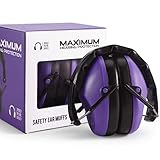
- 34 dB NRR — Proven, Compact & Trusted for Over 10 Years: Since 2013, we’ve designed sleeker, lighter safety earmuffs without sacrificing performance — launching one of the first models certified at 34dB NRR, a rare achievement for compact soundproof earmuffs. Most ear muffs above 30 dB are bulky and heavy; ours deliver powerful noise protection with lasting comfort, fold to pocket size, and give you the confidence to take on shooting ranges, hunting, yard work, and any loud environment
- BREAK-IN TO UNLOCK COMFORT & CUSTOMIZED FIT: For best noise reduction, these passive noise cancelling ear muffs fit snugly by design. If they feel tight at first (normal), just clamp them over the product box for 2–4 hrs or overnight to loosen the fit. The headband is fully adjustable and padded to fit kids through adults — simply place it on your head and pull each earcup down to fit. They are available in Standard and Large sizes; for larger heads, search “Pro For Sho Large” on Amazon
- ESSENTIAL GEAR FOR LOUD EVENTS & SENSORY NEED: Pro For Sho 34 dB NRR noise reduction ear muffs deliver serious protection in a slim, compact build—making them the perfect choice for shooting ear protection, drumming, sports events, monster truck rallies, Monster Jam, fireworks, and NASCAR. They also work as sensory headphones to aid concentration or meditation, and to ease sensory overload, including autism/ASD. Foldable and travel-ready for protection anywhere.
- CERTIFIED, TRUSTED PROTECTION: ANSI S3.19 & CE EN 352-1 certified with a 34 dB NRR (OSHA-adjusted to 31 dB per safety guidelines). Engineered to cut harmful high-frequency sounds—like gunshots, power tools, or engines — while staying slim, compact, and foldable. As passive noise reduction earmuffs, they reduce rather than cancelling noise, so low-frequency sound (e.g., conversation, bass) is less affected. For maximum ear protection in extreme noise, double up with earplugs under the earmuffs.
- From Our Hands to Your Ears – US Small Business’s Handshake Promise: For over 10 years, we’ve thoughtfully designed hearing protection ear muffs families truly love. If your pair ever lets you down, we’ll replace or refund it—friendly, fast, no runaround. Trusted by professionals in demanding environments and by families with autism for comfort, our sound proof earmuffs stay slim, compact, and foldable while delivering industry-leading 34 dB NRR. - trusted by over 1M families worldwide.
What to do about construction vibration
Describe the event, not a guessed threshold
Vibration routes are more location-specific than noise complaints. The sources reviewed do not establish one universal resident threshold or a standard compensation route for building damage. Report the date and time, the activity occurring at that moment, which rooms or parts of the building were affected, and what you observed: rattling fixtures, moving objects, shaking floors or new visible cracking.
What’s actually slowing this PC down?
Pick the symptom - the matching free tool is one click away.
Ask the council whether the site has vibration conditions, a monitoring requirement or a planning-enforcement route. Environment Agency permit guidance says vibration-specific issues should be discussed with the regulator where a permitted site is involved. Environmental monitoring is specialist work, so a phone app or household sound meter cannot determine compliance.
If you suspect damage
Photograph changes safely with a date record and keep earlier photographs if you have them. Tell the council and the site promptly that you are reporting apparent damage, identify the activity and ask what competent assessment is appropriate. Do not state that construction caused the damage unless an appropriate assessment establishes that connection. If there is an immediate structural-safety concern, leave the affected area and contact the relevant emergency or building-safety service.
Check planning conditions, working hours and permits
Many councils limit construction or demolition working times, but there is no single schedule that applies everywhere. Ask the planning or Environmental Health team:
- whether planning permission sets hours for noisy or dusty work;
- whether an approved construction-management, logistics or protective-works scheme applies;
- how to report a suspected breach of those conditions;
- whether the site has an environmental permit; and
- which regulator is responsible for any permit-related complaint.
Southwark’s published material, for example, describes local controls covering hours, noise, dust and vibration. City of London guidance gives another local example of protective works, dust screening and neighbour liaison. These documents demonstrate local powers and practices, not national rules. Always ask for the conditions attached to the particular site in your area.
Rank #4

- 34 dB NRR — Proven, Compact & Trusted for Over 10 Years: Since 2013, we’ve designed sleeker, lighter safety earmuffs without sacrificing performance — launching one of the first models certified at 34dB NRR, a rare achievement for compact soundproof earmuffs. Most ear muffs above 30 dB are bulky and heavy; ours deliver powerful noise protection with lasting comfort, fold to pocket size, and give you the confidence to take on shooting ranges, hunting, yard work, and any loud environment.
- BREAK-IN TO UNLOCK COMFORT & CUSTOMIZED FIT: For best noise reduction, these passive noise cancelling ear muffs fit snugly by design. If they feel tight at first (normal), just clamp them over the product box for 2–4 hrs or overnight to loosen the fit. The headband is fully adjustable and padded to fit kids through adults — simply place it on your head and pull each earcup down to fit. They are available in Standard and Large sizes; for larger heads, search “Pro For Sho Large” on Amazon.
- ESSENTIAL GEAR FOR LOUD EVENTS & SENSORY NEED: Pro For Sho 34 dB NRR noise reduction ear muffs deliver serious protection in a slim, compact build—making them the perfect choice for shooting ear protection, gun range, drumming, sports events, monster truck rallies, Monster Jam, fireworks, and NASCAR. They also work as sensory headphones to aid concentration or meditation, and to ease sensory overload, including autism/ASD. Foldable and travel-ready for protection anywhere.
- CERTIFIED, TRUSTED PROTECTION: ANSI S3.19 & CE EN 352-1 certified with a 34 dB NRR (OSHA-adjusted to 31 dB per safety guidelines). Engineered to cut harmful high-frequency sounds—like gunshots, power tools, or engines — while staying slim, compact, and foldable. As passive noise reduction earmuffs, they reduce rather than cancelling noise, so low-frequency sound (e.g., conversation, bass) is less affected. For maximum ear protection in extreme noise, double up with earplugs under the earmuffs.
- From Our Hands to Your Ears – US Small Business’s Handshake Promise: For over 10 years, we’ve thoughtfully designed hearing protection ear muffs families truly love. If your pair ever lets you down, we’ll replace or refund it—friendly, fast, no runaround. Trusted by professionals in demanding environments and by families with autism for comfort, our sound proof earmuffs stay slim, compact, and foldable while delivering industry-leading 34 dB NRR. - trusted by over 1M families worldwide.
How to write a complaint that can be investigated
Use a clear subject line such as “Construction noise and dust at [site address]” and separate each impact in the body. Include:
- your preferred contact details and whether you are reporting for yourself or a group of neighbours;
- the construction-site address, contractor or developer name if displayed on the site board, and the nearest affected public place;
- a short chronology drawn from your incident log;
- the practical consequences, without exaggerating them;
- photographs or short recordings labelled with date, time and location, where safe;
- details of any contact with the site and the response; and
- the action you are requesting, such as an investigation, confirmation of permitted hours, inspection of dust controls or advice on the vibration route.
Ask for a case reference and the name of the team handling it. If you are told the matter belongs to another service, request the correct contact rather than opening several identical cases.
Escalating when the problem continues
Follow the council’s formal process
After reporting, ask what was investigated, what evidence was considered and which formal complaint or escalation stage applies if you disagree with the outcome. Keep adding dated incidents to your log. A new pattern, a change in working hours or a failure to follow an agreed control may be relevant to a further report.
When an abatement notice or other notice may be involved
If the council establishes statutory nuisance, it must serve an abatement notice. A construction-noise notice may control machinery, hours, noise levels or the way work is carried out. The notice is the council’s legal action; residents should report facts and effects rather than demand a particular penalty or promise that a notice will be granted.
When the Environment Agency is relevant
The Environment Agency controls some potential statutory nuisances at permitted sites. Check whether the construction activity is actually covered by an environmental permit and follow the regulator’s published procedure when the council directs you there. Permit guidance is principally for operators and regulators, so the local authority remains the normal first public-nuisance contact for residents.
Best Value

- Efficient Hearing Protection: These noise canceling headphones are equipped with a double-layer sound-dampening foam and a composite housing that effectively reduces noise levels by SNR 34dB certified(ANSI S3.19 (US)). They excel at suppressing harmful noises, making them ideal for shooting activities as they reduce the noise to a safe and comfortable level.Generous space inside the ear cups ensure breathability meanwhile soft imitation leather provides a tight sound-proof seal
- Universal Fit: These noise-canceling headphones feature retractable steel wires that allow for easy adjustment to fit almost any head size. Simply slide the earmuffs along the headband to find the perfect fit. The safety earmuffs come with 360° rotatable pins, ensuring a customized fit that conforms to your unique head shape and size. With spacious ear cups, they comfortably accommodate all types of ears, providing ample ventilation and ensuring maximum comfort.
- Robust Construction for Enhanced Comfort: These noise-canceling ear muffs are designed with durability and ergonomic comfort in mind. The high-density sponge padding and skin-friendly imitation leather create a snug acoustic seal, ensuring a comfortable fit throughout the day. The addition of a specially designed hole at the bottom allows the soft sponge to provide a slow rebound, resulting in a customized and perfect fit.
- Convenient Combination: These shooting ear protection earmuffs feature a compact folding design, allowing for easy storage and convenient portability. They fit seamlessly into a range bag or backpack, making them a practical choice for on-the-go use.
- Expert-Level Hearing Protection: These hearing protection ear muffs have been approved by ANSI S3.19 and CE EN 352-1, ensuring that you receive ear protection supported by scientific standards. With this certification, you can trust that these earmuffs are designed to provide optimal hearing protection in various environments, such as construction sites, woodworking areas, welding stations, lawn mowing, airplane travel, factories, and while operating heavy machinery.
Limits of recordings, meters and online advice
A phone recording, sound-meter app or household monitor can help show when an incident occurred and what it sounded or looked like. It cannot, on its own, prove a statutory nuisance, establish a compliant noise level or replace specialist environmental monitoring. Give the council your dated observations and ask whether it needs competent measurements or an officer visit.
Likewise, a single photograph of dust or a crack rarely explains duration, source or causation. A chronological set of observations, linked to the construction activity and the effect on your home, is more useful for deciding which authority should act.
Scope: England and local variation
The statutory-nuisance and construction-notice descriptions in this guide apply to England. Scotland, Wales and Northern Ireland have different legislation, agencies and council procedures. Even within England, working hours, planning conditions, permit responsibilities and reporting forms differ by council. Use your local authority’s current Environmental Health, noise, pollution, planning and highways pages for the live contact details and local process.
Do these 3 things before closing this tab:
1Clear out junk files and repair common Windows errors2Fix the driver behind crashes, sound loss and screen glitches3Repair Windows errors before they cause bigger problemsThe practical sequence remains consistent: document the pattern, contact the site liaison channel, report noise or dust to Environmental Health, ask about planning and permit controls, route road dangers to police or highways, and escalate through the council’s actual complaints procedure.
Quick Recap
Product prices and availability are accurate as of the date/time indicated and are subject to change. Any price and availability information displayed on Amazon at the time of purchase will apply.

