For most U.S. homes heated by a conventional furnace, boiler, or electric-resistance system, set the thermostat around 68°F when you are home and awake. Lower it by roughly 5–10°F when everyone is asleep or away for several hours if the household remains comfortable and the equipment can recover normally. Heat pumps are the important exception: large setbacks can trigger auxiliary electric heat, so they often perform better with a stable setting or a modest, equipment-approved adjustment.
The best winter thermostat setting, in one sentence
For most U.S. homes heated by a conventional furnace, boiler, or electric-resistance system, 68°F is a practical starting point when people are home and awake. When everyone is asleep or away for several hours, lower the setting instead of heating the house to the occupied temperature continuously—provided the household remains comfortable and the heating system can recover normally.

As an Amazon Associate I earn from qualifying purchases.
Official guidance commonly supports a setback of about 7–10°F for roughly eight hours a day. ENERGY STAR uses a somewhat more conservative typical range of 5–8°F for several hours of absence. These are planning ranges, not guaranteed bill savings. The right setting depends on outdoor temperature, insulation, drafts, humidity, equipment type, health needs, and how quickly the home can warm back up.
Recommended Free Tools
A practical winter thermostat schedule
Use this as a starting schedule for a conventional furnace, boiler, or electric-resistance heating system:
#1 Best Overall
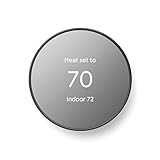
- ENERGY STAR certified smart thermostat for home that helps you save energy and stay comfortable.Connectivity : Wi-Fi - 802.11b/g/n 2.4 GHz, 802.11a/n 5 GHz Wi-Fi., Wireless interconnect : Bluetooth Low Energy Please refer to the product description section below for all applicable legal disclaimers.Product note: You can also check your system’s compatibility before purchasing a Nest thermostat with our online Nest Compatibility Checker on the Google Nest support page
- The Nest Thermostat is designed to work without a C wire in most homes, but for some systems, including heating only, cooling only, zone controlled, and heat pump systems, you’ll need a C wire or other compatible power accessory
- Nest Thermostat turns itself down when you leave, so you don’t waste energy heating or cooling an empty home. Lock feature: No
- Programmable thermostat that lets you create an energy efficient schedule in the Google Home app on your Android or iPhone
- Remote control lets family members change the thermostat temperature from anywhere on a phone, laptop, or tablet[1]
| When | Starting setting | How to use it |
|---|---|---|
| Home and awake | About 68°F | Adjust for comfort rather than treating 68°F as a universal requirement. |
| Sleeping | About 5–10°F lower | Try a setback if everyone remains comfortable and pipes, pets, and sensitive occupants are safe. |
| Away for several hours | About 5–10°F lower | Automate the change with a programmable or smart thermostat. |
| Away for an extended period | An energy-saving hold above freezing | Follow the equipment instructions and protect plumbing and the building from freezing conditions. |
For example, a household might set the thermostat to 68°F from 6 a.m. to 9 a.m., reduce it to 60–63°F while everyone is away, and use the same lower range overnight. The exact number matters less than choosing a setback that the household can tolerate and the equipment can handle efficiently.
Why lowering the thermostat can save energy
A home loses heat more slowly when the indoor temperature is lower. That is because the temperature difference between indoors and outdoors is smaller. The heating system may run for a longer period while recovering, but the house has generally lost less heat during the setback period.
The savings do not come simply from making the furnace cycle less often, and a setback is not a promise of a specific percentage reduction in your heating bill. Weather, fuel prices, building envelope, system efficiency, and the length of the setback all affect the result. The U.S. Department of Energy and Federal Trade Commission both recommend lowering the thermostat before bed or before leaving for the day when practical.
The major exception: heat pumps
Do not automatically apply a large furnace-style setback to a heat pump. Some air-source heat-pump systems use auxiliary electric-resistance heat during a difficult recovery. Auxiliary heat can cost more to operate than the heat pump’s normal heating mode, so a large setback may create an expensive recovery period.
For a heat pump, the safer general approach is to maintain a relatively stable comfort setting or use only a modest setback unless the manufacturer, installer, or thermostat control system specifically supports a larger adjustment. Equipment design matters, including whether the system is single-stage, multistage, ducted, ductless, or paired with another heat source.
If you are unsure whether your home has a heat pump, check the equipment documentation or thermostat settings. A heat pump may provide both heating and cooling and often has an outdoor unit that runs during the heating season. Do not assume that every thermostat is compatible with every heat-pump configuration.
Quick wins for a faster PC:
Fix the driver behind crashes, sound loss and screen glitchesFind Drivers →Repair Windows errors before they cause bigger problemsFix Now →Smart versus programmable thermostats
The easiest way to maintain a home, sleep, and away schedule is to automate it. An ENERGY STAR smart thermostat may offer programmed schedules, geofencing, remote control, learning features, energy-use feedback, and compatibility with some utility programs. Certified models are independently evaluated using field data, but certification does not remove the need to check compatibility.
Before buying, verify that the thermostat supports your:
- Heating equipment, including a furnace, boiler, heat pump, or electric-resistance system;
- Single-stage or multistage configuration;
- Number of heating and cooling zones;
- Wiring and available common wire, often called a C-wire;
- Auxiliary or backup heat controls;
- Boiler-specific features, such as the required control or relay arrangement.
A programmable thermostat is a reasonable lower-cost alternative if you do not need Wi-Fi, an app, geofencing, or learning features. It can still automate the same basic 68°F occupied setting and lower sleep or away setting. Heat pumps may require a specialized programmable thermostat, so confirm compatibility before installation.
For a replacement project, record the existing thermostat wiring and equipment model before shopping. If the wiring or system type is unclear, have the installation evaluated rather than choosing a thermostat based only on its display or app features.
Comfort is also about humidity and drafts
If the house feels uncomfortable at 68°F, raising the thermostat may not solve the real problem. Cold floors, air leaks, inadequate insulation, blocked registers, poor airflow, and dry winter air can all affect comfort.
Indoor humidity is separate from thermostat temperature. The Environmental Protection Agency generally recommends keeping indoor relative humidity between 30% and 50% and using a humidity gauge to measure it. A humidifier is not automatically the answer: excessive moisture can encourage mold and other biological growth, and condensation on windows or other cold surfaces indicates that humidity may already be too high for the outdoor conditions.
Rank #3

- Save up to 23% every year on heating and cooling costs, adjusts to your set schedule to save energy when you’re gone and optimize comfort when you’re home. Compared to a hold of 72
- Compatible with 85% of systems, check your system’s compatibility with our online ecobee Compatibility Checker on the ecobee support page
- Change your temperature by easily tapping the color touchscreen or using the ecobee app. Plus, free software upgrades ensure you get the best out of your Smart Thermostat Essential, for years to come
- Automatically adjusts to your set schedule to save energy when you’re gone and optimize comfort when you’re home. Keep track of your energy consumption when you're on the go on the ecobee app
- Easy DIY install. No C Wire, no problem. Get the ecobee Power Extender Kit (PEK) for homes without a C-Wire and keep your walls looking nice with our trim kit – both sold separately
An indoor humidity monitor can help distinguish dry air from a heating or envelope problem. If readings are already near the upper end of the recommended range, do not keep adding humidity simply because the room feels cold.
Prepare the heating system before relying on a setback
A thermostat cannot compensate for a neglected heating system or a leaky building. Before the coldest weather, and during the heating season, check the basics:
What’s actually slowing this PC down?
Pick the symptom - the matching free tool is one click away.
- Replace or clean the filter: Check a central-heating filter monthly during peak heating season. Replace it at least every three months as a general minimum, or follow the filter and equipment manufacturer’s instructions. Homes with pets, construction dust, or unusually high dust loads may need more frequent attention.
- Check airflow: Keep supply registers and return grilles open and unobstructed. Weak airflow can indicate a dirty filter, duct problem, blower issue, or other fault.
- Seal obvious air leaks: Weatherstrip or caulk appropriate leaks around doors, windows, penetrations, and other parts of the building envelope. Air sealing and insulation can improve comfort more reliably than simply turning up the thermostat.
- Schedule preseason maintenance: Professional service can include checking thermostat operation, electrical connections, moving parts, and other equipment components. Heat pumps may need particular attention before winter.
- Watch the recovery: If the home cannot reach the selected temperature, the equipment cycles abnormally, or recovery takes much longer than expected, investigate the system instead of continually increasing the setting.
For construction, renovation, or building-performance work, persistent temperature differences between rooms may point to insulation gaps, duct leakage, air-sealing defects, zoning problems, or equipment sizing issues. A home energy audit can help identify the cause; a thermostat alone cannot correct those conditions.
Protect the home during long absences
For a short absence, a moderate setback is usually straightforward on a conventional system. For a long trip or vacant property, use the heating equipment manufacturer’s instructions and consider the whole building—not just the thermostat display.
- Keep the indoor temperature high enough to reduce the risk of frozen plumbing in the specific building and climate.
- Protect pipes in unheated areas and vulnerable exterior walls.
- Consider low-temperature alerts or remote monitoring if the property will be unattended.
- Do not shut off heat without a plan for freezing conditions, water systems, and the building’s safety requirements.
- Account for household members, pets, plants, and any equipment that requires a minimum indoor temperature.
There is no single safe “vacation temperature” for every climate or structure. A poorly insulated home with plumbing in a crawlspace needs a different risk assessment from a well-insulated home with protected interior plumbing.
Independent reader supportYour contribution helps us test, update, and keep practical guides available for everyone.Check for local thermostat rebates
Some utilities offer rebates or demand-response programs for qualifying smart thermostats. Availability, incentive amount, equipment requirements, enrollment rules, and application deadlines vary by utility service territory and may also depend on income or other eligibility criteria.
Free tools Windows power users keep installed
One-click scans. No signup required.
Before purchasing, check your electric or gas utility’s official website using your ZIP code or account information. An official energy-efficiency incentive finder may also help, but confirm the current terms with the utility before assuming a rebate applies. Do not treat a rebate as universal or assume that every ENERGY STAR certified thermostat qualifies for every local program.
Rank #4

- EASY DIY INSTALLATION: Do it yourself fast with a built-in level and simple step-by-step instructions. Works with the HVAC equipment found in most homes
- COMMON WIRE REQUIREMENTS: Common wire(C-Wire) required for heat pump and heat/cool only systems. C-wire not required on most systems
- SAVE ABOUT 23% ON HVAC ENERGY: ENERGY STAR-certified and packed with features that help you save money, including flexible scheduling, geofencing, remote access and usage reports
- PRIVACY PROTECTION: Sensi won’t sell your personal information to third parties or leverage your thermostat activity data for targeting or advertising purposes
- CONTROL FROM ANYWHERE: The top-rated mobile app for Android and iOS devices makes it easy to control your comfort from a smartphone or tablet
A simple decision guide
- Conventional furnace, boiler, or electric resistance: Start near 68°F when home and awake. Try a 5–10°F setback during sleep or several-hour absences.
- Heat pump: Favor a stable setting or modest setback unless the equipment documentation or installer confirms that a larger setback will not trigger costly auxiliary heat.
- Uncomfortable at 68°F: Check clothing, drafts, humidity, airflow, insulation, and room-by-room temperature differences before assuming the thermostat should be set much higher.
- Thermostat cannot maintain the setting: Check the filter and registers, then arrange HVAC diagnosis if the problem continues.
- Replacing the thermostat: Match the thermostat to the HVAC equipment, wiring, stages, zones, and backup-heat controls—not just the desired app features.
Frequently Asked Questions
Is 68°F a good thermostat setting in winter?
For most U.S. homes with a conventional furnace, boiler, or electric-resistance heating system, 68°F is a reasonable starting point when people are home and awake. Personal comfort, health needs, drafts, humidity, insulation, and equipment condition may justify a different setting.
How low should I set my thermostat at night?
Try lowering the thermostat by about 5–10°F while everyone is asleep or away for several hours, if the household remains comfortable and the system can recover normally. Heat-pump owners should generally use a stable setting or only a modest setback unless their equipment supports a larger adjustment.
Is a smart thermostat better than a programmable thermostat?
A smart thermostat can automate occupied, sleep, and away schedules and may add geofencing or remote control. A programmable thermostat can provide the same basic schedule at lower complexity and cost. Both must be compatible with the home’s HVAC type, wiring, stages, zones, and backup-heat controls.
The Tool Desk
Outbyte PC Repair FREEClear out junk files and repair common Windows errorsFree Scan →Outbyte Driver Updater FREEScan for outdated or missing drivers - takes under a minuteDriver Scan →What humidity should a home have in winter?
The EPA generally recommends indoor relative humidity of 30–50%. Measure it with a humidity gauge, and reduce humidification if condensation appears on windows or other cold surfaces.
Why can’t my home reach the thermostat setting?
Check the filter, registers, returns, drafts, and thermostat operation first. If airflow is weak, the system cycles abnormally, auxiliary heat activates frequently, or the home still cannot reach the setting, arrange professional HVAC diagnosis rather than simply raising the thermostat.
The Bottom Line
For most conventional heating systems, 68°F while home and awake is a sound starting point. Lower it by roughly 5–10°F during sleep or several-hour absences when practical, but use a more cautious strategy for heat pumps and investigate equipment, airflow, humidity, or insulation problems when the home cannot maintain the selected temperature.
Quick Recap
Product prices and availability are accurate as of the date/time indicated and are subject to change. Any price and availability information displayed on Amazon at the time of purchase will apply.

