The Tool Desk
Outbyte PC Repair FREERepair Windows errors before they cause bigger problemsFix Now →Outbyte Driver Updater FREEFix the driver behind crashes, sound loss and screen glitchesFind Drivers →Lighting power density (LPD) is the lighting power installed in a building, space, or outdoor area divided by the corresponding area, usually expressed in watts per square foot (W/ft2) or watts per square metre (W/m2). The applicable code, edition, space classification, and compliance method determine whether the result is permitted.
LPD is used in commercial-building energy-code compliance and lighting heat-gain calculations. LPD is a power-density measure, not a measure of daily or annual lighting energy use, and lighting-control requirements may apply separately.
As an Amazon Associate I earn from qualifying purchases.
Key takeaways
- Lighting power density (LPD) is lighting power divided by the corresponding area, normally expressed in W/ft2 or W/m2.
- LPD measures installed power at a given time, not the lighting energy consumed over a day or year.
- There is no universal good LPD or lighting power density limit; the applicable code, edition, space classification, calculation method, and allowances determine the permitted value.
- A room with 1,200 watts of included lighting over 2,000 square feet has an LPD of 0.60 W/ft2.
- LPD affects energy-code compliance and lighting heat-gain calculations, while lighting controls must often be checked separately.
How do you calculate lighting power density?
Calculate lighting power density by dividing the lighting power included under the governing standard by the corresponding lighted area:
LPD = lighting power ÷ area
For example, a room with 1,200 watts of included lighting over 2,000 square feet has this LPD:
#1 Best Overall

- Energy-Saving Brilliance: The EVELOR A19 100 watt LED light bulbs consumes only 13W while delivering the same brightness as a 100W incandescent bulb, achieving up to 90% energy savings. It's the perfect upgrade from outdated, inefficient lighting.
- Vivid, Sunlight-Like Illumination: With 1500LM brightness and a CRI of 80+, this bright white bulb enhances color accuracy, making spaces appear more vibrant. The non-flicker 100 watt lamp light bulbs beads ensure steady brightness, while the 5000K daylight white light is ideal for areas where clarity and visibility matter.
- Reliable Non-Dimmable Lighting: Designed for consistent performance, these light bulbs 100w provide unwavering illumination-perfect for living rooms, bedrooms, garages, meetingroom, office,kitchen, bathroom, readingroom, study, basement and workspaces where stable light is essential.
- Long-Lasting Durability: Rated for 15,000+ hours, these A19 E26 ampoule LED bulbs reduce replacement frequency and maintenance costs, making them suitable for indoor, outdoor, and commercial use.
- Eye Comfort & Easy Installation: The no-flicker design ensures smooth, strain-free lighting, while the standard E26 base allows for quick installation. Enjoy a bright, steady glow that enhances any environment.
1,200 W ÷ 2,000 ft2 = 0.60 W/ft2
The arithmetic is simple, but an LPD compliance calculation requires more than adding fixture wattages and dividing by floor area. The adopted code or standard determines which luminaires, drivers, ballasts, decorative lighting, display lighting, specialty lighting, allowances, and exceptions belong in the numerator. The applicable building-area or space-by-space method determines the denominator and the comparison value.
What does lighting power density mean?
Lighting power density means the lighting power installed in a building, space, or outdoor area per unit of corresponding area. ASHRAE defines lighting power density as “the lighting power per unit area of a building, space, or outdoor area expressed in W/ft2 (W/m2).”
The U.S. Department of Energy similarly describes LPD as “the lighting power divided by the corresponding floor area” in its Green Proving Ground project guidance. In U.S. construction documents, the usual unit is watts per square foot (W/ft2); metric projects commonly use watts per square metre (W/m2).
Do these 3 things before closing this tab:
1Scan for outdated or missing drivers - takes under a minute2Repair Windows errors before they cause bigger problems3Fix the driver behind crashes, sound loss and screen glitchesIs LPD the same as lighting energy use?
LPD is not the same as lighting energy use. LPD describes installed lighting power, while lighting energy-use intensity describes energy consumed over a period, commonly in Wh/ft2/day or kWh/ft2/year.
| Measure | What it describes | Typical units | What changes the result |
|---|---|---|---|
| Lighting power density | Installed lighting power associated with an area | W/ft2 or W/m2 | Fixture and equipment power, included lighting, and area |
| Lighting energy-use intensity | Lighting energy consumed over a specified period | Wh/ft2/day or kWh/ft2/year | LPD, operating hours, occupancy schedules, daylight response, switching, and controls |
A building can have a low LPD and still use substantial lighting energy if lights operate for long hours. Conversely, occupancy controls, daylight response, scheduling, and switching can reduce energy consumption without changing the installed LPD itself.
Rank #2
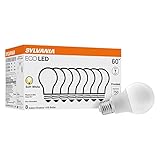
- 60W INCANDESCENT REPLACEMENT BULB - This LED lamp is an energy-efficient replacement and substitute for standard 60-watt incandescent lamps. At 9 watts, it emits a soft white output of 750 lumens and a temperature of 2700K.
- LONG-LASTING – These bulbs are a great energy-saving replacement for old bulbs because they have a total lifespan of up to 7 years. You won’t need to constantly change your lightbulbs anymore.
- ENERGY-SAVING – These LED light bulbs require less energy and can save on your energy bill. An estimated energy cost of only $1.08 per year.
- FUNCTIONALITY: These long-lasting, energy efficient LED light bulbs are ideal in family rooms, kitchens, bathrooms, and in commercial spaces such as retail, hospitality and entertainment industries. With a color rendering of 80 CRI.
- DESIGN: These non-dimmable LED light bulbs have a color temperature of 2700 kelvin, which produces a soft white color rendering ideal for productivity and welcoming spaces.
What is a good LPD for an office?
There is no single good LPD for every office. An acceptable office LPD depends on the energy code adopted by the authority having jurisdiction, the code edition, the compliance method, the office classification, included lighting power, permitted allowances, and separate control requirements.
As one code-specific illustration, the 2024 International Green Construction Code building-area table lists an office allowance of 0.56 W/ft2, a retail allowance of 0.75 W/ft2, and a parking-garage allowance of 0.12 W/ft2. According to the International Code Council’s 2024 International Green Construction Code, those values belong to that code table and compliance method; they are not universal design targets.
What’s actually slowing this PC down?
Pick the symptom - the matching free tool is one click away.
| Example classification | 2024 IGCC building-area value | How to interpret it |
|---|---|---|
| Office | 0.56 W/ft2 | Code-table illustration for the 2024 IGCC building-area method |
| Retail | 0.75 W/ft2 | Code-table illustration for the 2024 IGCC building-area method |
| Parking garage | 0.12 W/ft2 | Code-table illustration for the 2024 IGCC building-area method |
These figures should not be copied into a project governed by another jurisdiction, code edition, building classification, or compliance path. A project may use a building-area method or a space-by-space method, and the permitted values can differ accordingly.
What is the lighting power density limit?
The lighting power density limit is the maximum permitted lighting power per unit area under the specific code, standard, edition, classification, and compliance method governing a project. No single LPD limit applies to all commercial buildings.
For example, the 2024 International Energy Conservation Code includes a commercial modeling provision stating that, when occupancy is unknown in the specified context, the building is treated as an office and assigned 1.0 W/ft2. The 2024 IECC C407.4.1 building-specifications provision is a specific compliance rule, not a general definition of LPD and not a universal office target.
Rank #3

- 【Efficiency Meets Comfort】 Dalattin's A19 engergy saving LED bulbs replace 60W incandescents with just 9W while delivering full 800 lumens brightness, slashing energy usage by up to 85%. This eco-conscious choice not only saves you approximately $1.08 annually per bulb but also ensures a cooler operation,and enhancing safety. With a lifespan of up to 13.7 years (at 3 hours daily use), they provide a lasting, no worry experience.
- 【Enhanced Ambiance】 Boasting a high Color Rendering Index (CRI) of 80+, our bulbs bring out the truest hues in your surroundings, ensuring colors appear as vivid and accurate as in natural light. This makes them ideal for spaces where aesthetics matter, from art galleries to cozy living rooms, ensuring that every detail shines in its most authentic light.
- 【Eyes First, Safety Always】 Designed with eye care in mind, our non-flicker and non-dazzling technology reduces eye strain, promoting a healthier visual environment. No of lead, mercury, these bulbs prioritize user safety and environmental sustainability, making them suitable for households with children and pets, without compromising on the quality of light.
- 【Seamless Integration, Versatile Charm】 Universally fitting into E26 sockets, our bulbs effortlessly blend into any setting—be it residential, commercial, or hospitality. From bedrooms to cafes, they enrich spaces with their energy-efficient glow, adding a touch of sophistication without the need for special fixtures. Embrace the future of lighting with bulbs that seamlessly adapt and excel in every application.
- 【Long Lifespan & Dedicated Service】Last up to 7 years with typical 3-hour daily use, significantly outlasting traditional bulbs.
ASHRAE Standard 90.1 is another important commercial-building reference. ASHRAE describes ANSI/ASHRAE/IES Standard 90.1 as an energy standard for sites and buildings other than low-rise residential buildings, with interior and exterior lighting-power requirements. The applicable edition must be confirmed before a calculation is prepared; a standard reference is useful only when it matches the edition and jurisdiction being used.
Free tools Windows power users keep installed
One-click scans. No signup required.
For a design team working directly with commercial energy-code requirements, an ASHRAE Standard 90.1 reference can be more useful than a generic LED product or consumer wattmeter. The reference should be selected by the applicable edition and used alongside the adopted code, project classification, and control requirements.
How does ASHRAE 90.1 use lighting power density?
ASHRAE 90.1 uses lighting power values organized by building and space type, while compliance also depends on the selected calculation method and required controls. The standard should therefore be read as a complete compliance framework rather than as a single office-wattage table.
ASHRAE’s overview explains that Standard 90.1 includes updated interior and exterior LPD values. The overview also states that the 2025 edition restructures lighting requirements to distinguish LPD limits from lighting-control requirements. That distinction matters: meeting an LPD number does not automatically demonstrate that a project meets occupancy, daylight, scheduling, or other control provisions.
Before using a Standard 90.1 value, confirm:
- Which Standard 90.1 edition the project specifies or the jurisdiction adopts.
- Whether the calculation uses the building-area or space-by-space method.
- How the standard classifies each building or room.
- Which lighting power and special-lighting allowances are permitted.
- Which lighting-control requirements apply independently of the LPD limit.
Why does LPD matter to HVAC design?
LPD matters to HVAC design because lighting power becomes heat within the conditioned space. ASHRAE’s Nonresidential Cooling and Heating Load Calculations handbook chapter explains that maximum LPD values from Standard 90.1 are used in lighting heat-gain calculations and provides space-type lighting data for load calculations.
Quick wins for a faster PC:
Clear out junk files and repair common Windows errorsFree Scan →Fix the driver behind crashes, sound loss and screen glitchesFind Drivers →Rank #4

- Replacement Soft White Bulbs: Make your home more energy efficient with our soft white LED light bulbs; Relax HD Light Bulbs offer a warm, soft white light that is perfect for comfortable moments and cozy spaces
- Enhanced Color: Experience the difference with bolder colors and enhanced contrast vs standard LED bulbs; Ideal soft white LED bulbs for home spaces like bedrooms, family rooms and dining rooms
- Dimmable Bulbs: Set the right mood and room decor for any occasion with these dimmable light bulbs; Dimmable LED light bulbs work with most dimmer switches and bring your home to life in high-definition light
- Cost Effective: Our improved and lasting energy-saving bulbs help lower energy costs more than 60-Watt incandescent bulbs over each bulb-s life span; Replaces 60W light bulbs using only 10 Watts (800 lumens)
- Long-Lasting: Save a bundle with this pack of LED soft white light bulbs that lasts for years, not months; These light bulbs are rated to last up to 13.7 years based on 3 hours of daily use
A higher installed lighting load can increase the internal heat gain used in cooling-load calculations. A lower LPD can reduce that lighting heat contribution, but the HVAC designer must still use the applicable load-calculation procedure and project data rather than treating an LPD allowance as the complete cooling load.
How should a project team calculate LPD for code compliance?
- Identify the governing requirements. Confirm the authority having jurisdiction, adopted code or standard, edition, project scope, and compliance path.
- Choose the classification and method. Determine whether the project uses a building-area method or a space-by-space method, then classify the building and each relevant space.
- Define included lighting power. Follow the governing document for rated luminaire input power and applicable drivers, ballasts, decorative fixtures, display lighting, accent lighting, specialty lighting, allowances, and exceptions.
- Determine the corresponding area. Use the area definition required by the adopted method, rather than automatically using a convenient overall floor-area figure.
- Perform the division. Divide the included lighting power in watts by the corresponding area in square feet or square metres.
- Compare with the applicable allowance. Check the calculated LPD against the value for the exact classification and method.
- Check controls separately. Verify occupancy, daylight, scheduling, switching, and other required controls even when the calculated LPD is below the limit.
Project documentation should show the classification, area, included fixtures and wattages, allowances, calculation method, resulting LPD, applicable limit, and control compliance. This makes the calculation reviewable and helps prevent a low numerical result from masking an incorrect scope or classification.
What should be compared when choosing between lighting designs?
Two lighting designs should be compared on compliance, operation, and lighting quality—not on LPD alone.
| Comparison axis | Questions to ask | Why it matters |
|---|---|---|
| Compliance basis | Do both designs use the same code, edition, and compliance path? | Different requirements can produce different allowable LPD values. |
| Classification | Are the spaces categorized identically? | Building-area and space-by-space classifications can change the comparison. |
| Included power | Do both designs treat luminaires, drivers, ballasts, decorative, display, accent, and specialty lighting consistently? | An incomplete numerator can make one design appear more efficient than it is. |
| Controls and operation | Do both designs satisfy occupancy, daylight, scheduling, and switching requirements? | Controls affect actual energy use and may be required separately from LPD. |
| Lighting quality | Do both designs provide suitable illuminance, visual comfort, glare control, color quality, and task performance? | A lower LPD does not by itself prove that a space is adequately or comfortably lit. |
What are the limits of using LPD as a design metric?
LPD is a useful power and compliance metric, but LPD alone does not measure lighting quality, operating hours, or actual annual energy use. A design with a lower LPD may still be unsuitable if it fails task-performance or visual-comfort needs, while a design with effective controls may consume less energy without changing its installed-power calculation.
LPD also should not be treated as a direct substitute for an energy model. Energy consumption depends on how long lighting operates and how controls respond to occupancy, daylight, schedules, and switching. The LPD calculation answers “how much lighting power is installed per area,” not “how much lighting energy will the building use each year.”
Best Value

- 【Energy Efficiency】: EVELOR A19 LED light bulb is an energy-saving 9W (60W equivalent) bulb, saving up to 90% energy compared to traditional incandescent light bulbs 60 watt. The led lamp bulb is designed to be highly efficient, making it an ideal replacement for old-fashioned bulbs.Gift options for Christmas and other festivals.
- 【High Brightness & Excellent Light】: With 800LM and a high CRI 80+ (color rendering index), the light it gives out is close to the sun's value, making colors in your room appear richer, true and natural. Also, it has No flicker LED beads for enhanced brightness. This makes the light bulbs 60 watt daylight white 5000K light bulbs a perfect fit for any room where accurate color perception is important.
- 【Non Dimmable Feature】: The A19 E26 LED lightbulbs is Non Dimmable, providing a consistent level of illumination. This is especially useful in areas where a steady light source is required, such as in hallways or stairways. Daylight white light bulb gives a reliable and unchanging light output, different from some dimmable bulbs.
- 【Long Lifespan】: Type a 60w LED light bulbs a long lifespan of 15000+ hours, which means fewer replacements and less hassle. Whether used indoors in living rooms, bedrooms, kitchens, bathrooms, dining rooms, entryways or outdoors in gardens, garages, porches, patios, or in commercial settings like offices, hotels, bars, coffee shops, restaurants, etc., this led light bulb can last for a long time, reducing maintenance costs.
- 【No Flicker & Stable Performance】: NO Flicker design ensures a stable and comfortable light output, providing a better visual experience and protecting your eyes. It operates at 110 - 130VAC and has an E26 Medium base for easy installation. The daylight white light bulbs offer a smooth and steady glow, enhancing the overall lighting effect of any space.
Frequently Asked Questions
What is lighting power density?
Lighting power density is the installed lighting power divided by the corresponding area. LPD is usually expressed in watts per square foot (W/ft2) in the United States or watts per square metre (W/m2) in metric projects.
How do you calculate lighting power density?
Calculate lighting power density by dividing included lighting power by the corresponding area. For example, 1,200 watts divided by 2,000 square feet equals 0.60 W/ft2.
What is a good LPD for an office?
There is no universal good LPD for an office. The permitted office value depends on the adopted code, edition, classification, building-area or space-by-space method, included lighting, allowances, and separate control requirements.
What is the difference between LPD and lighting energy use?
LPD measures installed lighting power per area, while lighting energy-use intensity measures energy consumed over time. Operating hours, occupancy schedules, daylight response, switching, and controls affect energy use but do not necessarily change installed LPD.
The Bottom Line
Lighting power density is the included lighting power divided by the corresponding area, usually reported in W/ft2 or W/m2. To determine whether an LPD complies, use the adopted code and edition, classify the building or space correctly, apply the required inclusions and allowances, and verify lighting controls separately. There is no universal good LPD or lighting power density limit.
Quick Recap
Product prices and availability are accurate as of the date/time indicated and are subject to change. Any price and availability information displayed on Amazon at the time of purchase will apply.

