What’s actually slowing this PC down?
Pick the symptom - the matching free tool is one click away.
An ice dam is a ridge of ice along the lower edge of a roof that blocks melting snow from draining away. The trapped water can work beneath shingles, flashing, or other roof-covering openings and leak into the attic, insulation, ceilings, walls, and finished rooms.
The most important warning pattern is snow remaining on the upper roof while the eaves develop a thick, continuous band of ice. Large icicles can be a clue, but an icicle by itself does not prove that a damaging ice dam is present. If water is already entering your home, contain the leak, keep people away from falling ice, and arrange a professional inspection rather than climbing onto the roof or chopping at the ice.
As an Amazon Associate I earn from qualifying purchases.
How an ice dam forms
Ice dams require three conditions at the same time:
Free tools Windows power users keep installed
One-click scans. No signup required.
- Snow is covering the roof.
- Upper roof surfaces are averaging above 32°F, allowing snow to melt.
- The lower roof edge remains below 32°F, causing the runoff to freeze at the eaves.
In many homes, heat escaping from the living space creates this temperature difference. Warm air can leak through gaps around attic penetrations, recessed lights, chimneys, skylights, ducts, knee walls, and other openings. Heat can also move by conduction, convection, and radiation. University of Minnesota Extension identifies air leakage from the conditioned space into the attic as a major contributor in many ice-dam problems.
#1 Best Overall

- The original USA-made Snow Roof Rake
- Rugged - made of the highest quality strong, yet lightweight aluminum
- Smart engineering - rollers prevent shovel head from touching your roof
- Easy to use - remove snow with ease
The resulting cycle looks like this:
- Heat warms the underside or upper surface of the roof.
- Snow melts on the warmer upper roof.
- Water flows down toward the colder eaves.
- The water freezes when it reaches the cold roof edge.
- The growing ice ridge blocks later meltwater.
- That backed-up water may move beneath the roof covering and enter the building.
Ice dams are therefore usually a roof-temperature and building-envelope problem, not simply a gutter problem. They can form on roofs without gutters, and removing or replacing a gutter does not correct the heat loss that caused the uneven temperatures.
How to tell whether an ice dam is forming
Exterior warning signs
- A continuous ridge or thick horizontal band of ice at the eaves. This is the clearest visible sign of an ice dam.
- Snow remaining on the upper roof while the lower edge is heavily iced. This suggests that snow is melting higher up and refreezing at the colder roof edge.
- Large or persistent icicles. Icicles indicate that melting and refreezing may be occurring, but they do not automatically mean a damaging ice dam exists.
- Ice concentrated below a chimney, skylight, dormer, valley, curb, or other roof penetration. Localized heat loss and complicated roof geometry can create especially cold or warm areas.
- Ice or water appearing behind the gutter line. This can indicate that meltwater is backing up behind the dam. The gutter itself may not be the cause.
- Repeated ice formation in the same roof area. A recurring location can point to an air leak, poorly insulated ceiling section, warm duct, flashing detail, or roof-geometry problem.
Do not wait for water to enter the house before taking these signs seriously. A roof can be leaking into the attic or insulation before a stain appears on the ceiling below.
Interior warning signs
- Water stains or brown rings on ceilings and walls.
- Damp drywall, peeling paint, or active dripping during a thaw.
- Wet, compressed, or displaced attic insulation.
- Damp roof sheathing, frost, or visible moisture in the attic.
- A winter leak that appears during warming weather and stops when temperatures remain below freezing.
- Mold or mildew following a roof leak.
A freeze-thaw pattern is consistent with ice-dam leakage, but it is not conclusive. Flashing failures, plumbing leaks, roof-membrane damage, and attic condensation can produce similar symptoms. A roofing professional should trace the water path instead of assuming every winter leak is an ice dam.
What to do immediately
1. Protect people and property
Keep children, pets, and passersby away from the roof edge. Icicles and chunks of roof-edge snow can fall without warning. Move furniture and electronics away from an interior leak, place containers under drips, and document damaged materials with photographs.
If water is near electrical fixtures, outlets, or wiring, avoid contact with wet electrical components and have the area assessed safely. Dry wet materials as soon as practical, but do not close up, paint, or cosmetically repair wet ceilings and walls before the source has been controlled and the materials are dry.
2. Check for structural warning signs
Snow and ice loads are difficult to estimate visually because snow density, moisture content, distribution, and roof design all vary. Leave the affected area and seek qualified help immediately if you notice:
Rank #2
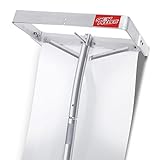
- EFFICIENT SNOW REMOVAL - Our roof rake revolutionizes the tedious task of roof snow removal with its innovative design and efficient performance. Engineered for ease of use, this winter shovel lets you keep both feet firmly on the ground, eliminating ladders. With a practical approach, our extendable shovel protects your roof against the snow loads that cause ice dams and features protective glide pads to prevent damage.
- TELESCOPIC REACH - This snow peeler is designed for convenience and efficiency with the adjustable 9m (30 ft.) telescopic handle, eliminating the need for precarious ladder use. With a sectional handle that allows you to add extensions as needed, our long snow shovel is a versatile solution for low-pitch roofs and challenging-to-reach valleys. This telescopic design is not only practical and user-friendly, but it is also a go-to tool for safeguarding your roof.
- ROOF PROTECTION - Our roof snow rake is not just a tool for snow removal; it's a safeguard for your roof. Engineered with precision and care, our large snow shovel snow rake prioritizes the protection of your home. With its unique design and robust commercial-grade aluminum blade, it effortlessly cuts through fresh and hard-packed snow, preventing the formation of ice dams that can threaten your roof's integrity.
- UNIQUE DESIGN - This roof shovel keeps safety and efficiency at the forefront, allowing users to clear snow effortlessly. Designed for durability and practicality, our snow rake for roof includes protective glide pads to safeguard your roof from damage and a tear-resistant 3m (10 ft.) slide for efficient snow clearance. This solution prevents ice dams and ensures a swift and secure snow removal experience.
- TEAR-RESISTANT SLIDE - This shovel keeps safety and efficiency at the forefront, allowing users to clear snow effortlessly. Designed for durability and practicality, our snowpeeler includes protective glide pads to safeguard your roof from damage. With our big snow shovel, you can confidently tackle snow-covered roofs, knowing that the tear-resistant slide delivers exceptional performance and durability, making snow removal a quick and efficient task.
- A sagging ceiling or unusual roof deflection.
- New cracks in ceilings, walls, masonry, or framing.
- Doors or windows that suddenly bind.
- Very heavy or uneven snow and ice accumulation.
- Sounds of shifting, cracking, or movement from the roof or ceiling.
A structural engineer may be appropriate when the roof capacity or structural damage is in question.
3. Do not climb onto an icy roof
An icy roof is a serious fall hazard, and winter roof work can damage shingles, membranes, flashings, and gutters. Do not climb onto the roof to inspect or remove an ice dam unless you are a properly equipped professional trained for that work.
Do not chop the dam with an ice pick, hatchet, shovel, or other sharp tool. Sharp tools can puncture or tear roof coverings and damage flashing. Do not use a hot-air gun, and do not hose down the roof as a routine removal method.
Can you remove an ice dam yourself?
Removing roof snow can eliminate one ingredient needed for continued ice-dam formation, but snow removal is not risk-free. A roof rake is designed to remove some roof snow from the ground, yet pulling it across shingles can damage roofing materials. It should never be treated as permission to climb onto the roof.
If you use one, follow the tool and roof-covering instructions, work from a stable position on the ground, keep clear of falling snow, and stop if the roof is steep, snow is deep, ice is thick, or the tool cannot be used without force. For those conditions, arrange professional ice dam removal and a roof inspection instead.
Quick wins for a faster PC:
Clear out junk files and repair common Windows errorsFree Scan →Scan for outdated or missing drivers - takes under a minuteDriver Scan →Repair Windows errors before they cause bigger problemsFix Now →In an emergency where water is actively entering, University of Minnesota Extension describes cutting a temporary drainage channel through the dam with tap water on a warm day, working upward from the lower edge. This is not a permanent repair. The channel may become ineffective within days, and roof-edge conditions, weather, access, and roof materials may make the method unsuitable. It should not be presented as a routine do-it-yourself solution.
What about ice-melt chemicals?
NRCA identifies calcium- or magnesium-chloride products as less harsh and less staining than sodium chloride, but that does not make every product safe for every roof. Staining can still occur, and runoff may affect gutters, plants, soil, pets, masonry, and other materials.
If a chemical product is considered, check its label and the roof-covering and gutter manufacturers’ requirements first. Verify compatibility with shingles, membranes, metal, coatings, landscaping, and nearby surfaces. Never assume that a product described as “roof-safe” is universally safe.
Rank #3

- Efficient Snow Removal: VEVOR 25" large blade of the snow roof rake allows for faster roof snow removal, especially in cases of extensive snow coverage. It can clear more snow in a single pass, reducing scraping frequency and lowering your workload. No more worrying about snow piling up during winter.
- High-Quality ABS Material: The snow rake for house roof is constructed of ABS material, resisting corrosion effectively and maintaining blade stability even after extended use. The 0.13-inch thickness maintains blade strength and stability, enabling precise snow removal.
- Adjustable Handle: The handle is adjustable from 5 to 21 feet, suitable for different roof heights. The roof rakes for snow removal allow easy access to high points on the roof without a ladder. The ergonomically designed circular handle fits your hand comfortably, providing a stable grip even in cold conditions.
- Easy Installation & Storage: Installation is a breeze, requiring only five steps and no professional skills. Say goodbye to cumbersome installation processes and make snow removal more enjoyable. The handle is detachable, and its compact size makes the roof snow rake easy to store without taking up much space. Whether it's for residential roofs, garage roofs, removing snow from vehicles, or clearing fallen leaves, it can easily handle snow challenges.
- Stable Operation: Our roof rake has a triangular structure with two pillar blades on both sides, which form a sturdy triangular structure with the handle in the center, ensuring stability and a long lifespan. The weight of only 6.7lbs makes snow removal incredibly easy.
Ice melt is temporary control, not prevention. It does not correct the heat loss or air leakage that causes the dam.
When to call a professional
Arrange a roofing contractor or roof ice dam inspection when the ice is thick, the roof is steep or complex, water is entering, shingles or flashing may be damaged, or access from the ground is unsafe. A qualified contractor can assess the roof covering, flashing, valleys, penetrations, gutters, ventilation, and evidence of concealed water damage.
Ask for a written scope that explains:
- How snow and ice will be removed.
- How the roof, flashing, and drainage areas will be inspected.
- How the contractor will protect siding, landscaping, windows, and interior finishes.
- What happens if roof-covering damage is discovered.
- Who is responsible for damage caused during removal.
- What repairs are included and what warranty terms apply.
Choose a reputable, appropriately insured contractor rather than selecting solely on price. Be cautious of anyone who promises a permanent cure by simply removing the ice, installing heat cable, or applying a chemical product.
The durable way to prevent ice dams
The long-term goal is to keep the roof surface more uniformly cold by reducing heat transfer from the house. The usual sequence is:
- Air-seal the ceiling plane. Seal penetrations and leakage paths between conditioned rooms and the attic. Common problem areas include attic hatches, plumbing and electrical penetrations, recessed lights, chimneys, skylights, ductwork, knee walls, and ceiling joints.
- Improve insulation. Once air leakage is controlled, adequate insulation reduces conductive heat loss through the ceiling.
- Evaluate natural attic ventilation. In a properly designed vented assembly, balanced intake at the eaves and exhaust near the ridge can help maintain more uniform roof temperatures and remove attic moisture. Ventilation is especially relevant in cold climates with persistent snow.
Ventilation is not a substitute for air sealing and insulation. Mechanical attic ventilation is not a universal ice-dam solution; if poorly designed, it can create moisture problems or undesirable negative pressure that draws warm, moist air into the attic.
Do these 3 things before closing this tab:
1Fix the driver behind crashes, sound loss and screen glitches2Clear out junk files and repair common Windows errors3Scan for outdated or missing drivers - takes under a minuteA weatherization contractor or home energy audit can provide a more useful diagnosis than guessing from the roof edge. Ask about a blower-door test to evaluate air leakage and infrared imaging to identify excessive heat loss. The most effective project may involve air sealing, insulation corrections, duct repairs, chimney or knee-wall detailing, or several of these together.
Rank #4

- Angled blade offers more use in less space and is effective on low pitched roofs and two-story houses
- 21' reach with 7" x 24" blade provides superior snow removal
- Blade rollers protect your shingles while still providing a close shave
- Lightweight aluminum makes it easy to maneuver and protects against wear and tear
- Easy snap-button handle assembly and disassembly
Other contributors worth checking
Uneven roof temperatures are not always caused by a general insulation deficiency. An assessment should also consider:
- Bathroom or kitchen exhaust fans that terminate in or near the attic instead of outdoors.
- Leaky or poorly insulated attic ductwork.
- Chimneys and chimney chases.
- Recessed lights that are not properly rated or sealed for the ceiling assembly.
- Skylights, dormers, curbs, and roof-wall transitions.
- Knee walls and areas where insulation is difficult to install continuously.
- Valleys and complicated roof geometry.
- Uneven sun exposure that warms one roof area more than another.
Are heat cables a permanent solution?
Roof-and-gutter de-icing cables can create a heated drainage path at vulnerable eaves, valleys, gutters, or downspouts. They may be useful in a system-specific design, particularly where recurring localized icing cannot be fully eliminated immediately.
However, electric heat cables generally have limited effectiveness and do not fix air leakage, inadequate insulation, or warm attic conditions. They also introduce electrical, installation, maintenance, and roof-covering considerations. A roof and gutter de-icing cable system must be selected and installed according to the product instructions, roof type, local requirements, and electrical-safety provisions, including appropriate ground-fault protection where required.
Recommended Free Tools
Do not coil cable randomly, install it over incompatible materials, or assume that a cable rated for one roof or gutter arrangement is suitable for another. Heat cable should be considered a supplemental control—not a universal cure.
Independent reader supportYour contribution helps us test, update, and keep practical guides available for everyone.Ice-dam protection during reroofing
During a reroofing project or major renovation, an ice-dam protection membrane at vulnerable roof edges can reduce the consequences of water backup. It does not eliminate the heat-loss mechanism, so it should be combined with a properly detailed ceiling air barrier, adequate insulation, and appropriate ventilation.
Membrane placement and extent should follow applicable code, manufacturer instructions, roof-covering requirements, and local construction practice. Valleys, eaves, roof-wall transitions, chimneys, skylights, and other penetrations may require particular attention.
Prevention checklist for homeowners
- Inspect the attic after a major snowstorm and during a thaw, using safe access only.
- Look for wet insulation, frost, damp sheathing, or air movement at ceiling penetrations.
- Confirm that bathroom and kitchen exhaust ducts discharge outdoors and are not leaking into the attic.
- Check whether attic ducts are sealed and insulated.
- Keep gutters and downspouts clear before winter, while remembering that clean gutters do not prevent every ice dam.
- Have recurring problems evaluated with air-sealing, insulation, blower-door, and infrared methods.
- During reroofing, discuss ice-dam protection membranes and roof ventilation with the contractor.
- Do not wait for an interior stain if the same roof area develops heavy icing every winter.
Ice dam versus ordinary icicles
These conditions are related but not identical. An icicle may form from localized dripping, sunlight, or a small area of melting and may not block significant drainage. An ice dam is a ridge or mass that blocks meltwater and allows water to back up against the roof covering.
PC Slower Than It Used to Be?
A free scan shows the junk files, broken settings and background clutter dragging Windows down - then fixes them in one click.Free scan · Windows 10 & 11Crashes, No Sound, or Screen Glitches?
Random freezes, missing sound and display glitches usually trace back to one bad driver. Find and replace yours safely.Free scan · under a minuteBest Value

- Extra-Wide Blade: The snow rake for roof is equipped with a 17 in blade to efficiently clear roof snow, especially suitable for large areas. It allows you to clear more snow in one go, reducing repeated operations and saving effort.
- Aluminum Alloy Material: Crafted from aluminum alloy, this snow roof rake is sturdy and durable. With corrosion & pressure resistance, it is not easily deformed or damaged after long-term use. The thickened design enhances overall strength and stability.
- Adjustable Handle: The roof snow rake comes with an adjustable handle to fit different roof heights, allowing easy removal without ladders. The ergonomic round handle design provides a comfortable grip, ensuring a secure hold even in cold weather.
- Smooth Rolling Wheels: These wheels on the roof snow removal tool avoid the roof surface from scratches and damage. The wheel design ensures smooth sliding on slopes or uneven surfaces, improving controllability for more precise snow removal.
- Easy Installation & Storage: The roof rakes for snow can be assembled easily without tools. The detachable handle saves space for compact storage. It is ideal for residential, garage, and car roofs to clear snow and fallen leaves effortlessly.
The most concerning combination is a thick, continuous ice ridge at the eaves, snow remaining above it, and water or interior moisture appearing during a thaw. That pattern warrants prompt attention even if no water has reached the living space yet.
Frequently Asked Questions
Do ice dams only happen on houses with gutters?
No. Ice dams can form on roofs without gutters. Gutters may collect or redirect backed-up water, but the underlying mechanism is uneven roof temperature caused by snow, melting, and refreezing at the colder roof edge.
Are large icicles proof that I have an ice dam?
No. Large or persistent icicles are a warning sign, not proof. Look for a continuous ice ridge at the eaves, snow remaining on the upper roof, water behind the gutter line, or interior moisture during a thaw.
Should I remove an ice dam with an axe or ice pick?
No. Sharp tools can damage shingles, membranes, flashing, and gutters. Do not climb onto an icy roof. Contact a qualified roofing contractor, especially when the roof is steep, the ice is thick, or water is entering.
What is the permanent fix for recurring ice dams?
The durable approach is to reduce the roof-temperature difference: air-seal the ceiling plane first, improve insulation, and evaluate properly balanced natural attic ventilation. A blower-door test and infrared inspection can help locate the actual heat-loss paths.
Will heat cable prevent all ice dams?
No. Heat cable may provide a supplemental drainage path in selected areas, but it does not correct attic heat loss and generally has limited effectiveness. It must be compatible with the roof system and installed according to manufacturer and electrical-safety requirements.
The Bottom Line
An ice dam is a frozen drainage blockage caused by melting snow meeting a colder roof edge. Treat persistent icicles and eave ice as warning signs, but do not climb onto the roof or attack the dam with sharp tools. Protect the interior, call a professional for active leaks or hazardous accumulation, and solve recurring problems by air-sealing and insulating the ceiling plane, then evaluating ventilation and roof details.
Quick Recap
Product prices and availability are accurate as of the date/time indicated and are subject to change. Any price and availability information displayed on Amazon at the time of purchase will apply.
The Tool Desk
Outbyte PC Repair FREEClear out junk files and repair common Windows errorsFree Scan →Outbyte Driver Updater FREEFix the driver behind crashes, sound loss and screen glitchesFind Drivers →
