The Tool Desk
Outbyte Driver Updater FREEFix the driver behind crashes, sound loss and screen glitchesFind Drivers →Outbyte PC Repair FREERepair Windows errors before they cause bigger problemsFix Now →The best herbs to plant together are the ones that need the same light, drainage, moisture, soil fertility, root depth, and amount of space. Rosemary, thyme, oregano, sage, marjoram, savory, and lavender make a strong dry, sunny grouping. Basil, parsley, and chives are better suited to a regularly watered kitchen planter. Mint should usually have a pot of its own.
That distinction matters because herbs can be “together” in two different ways: in the same garden area or in the same container. Herbs in a garden bed can sometimes occupy separate root zones or receive localized watering. In one pot, however, every plant shares the same soil volume and watering schedule, making mismatched combinations much less forgiving. Iowa State University Extension specifically notes that providing ideal conditions for several herb species in one indoor container can be difficult.
As an Amazon Associate I earn from qualifying purchases.
What Herbs Can Be Planted Together in a Garden or in Containers?
The short answer: the best herb combinations
Choose combinations by growing requirements rather than by cuisine. Herbs used together in a recipe do not necessarily want the same conditions in a garden.
| Growing group | Herbs that can usually share conditions | Best location |
|---|---|---|
| Dry, sunny Mediterranean herbs | Rosemary, thyme, oregano, sage, marjoram, lavender, summer savory, winter savory, French tarragon | Sunny bed, raised bed, or sharply drained trough |
| Moist leafy kitchen herbs | Basil, parsley, chives; cilantro in cooler weather or partial shade | Annual container, window box, or regularly watered garden zone |
| Cool-season leafy herbs | Parsley, cilantro, chervil, chives, and dill in a deep container | Spring or fall planter and cooler garden bed |
| Moisture-loving spreaders | Mint, lemon balm, catnip, and vigorous bee balm | Individual containers or controlled areas |
| Tall or deep-rooted herbs | Fennel, lovage, borage, large dill plants, lemongrass, bay, and large rosemary | Deep individual pots or the back of a large bed |
The most reliable combinations are:
- Rosemary + thyme + oregano + sage: an excellent dry-style combination when drainage is very good.
- Oregano + marjoram + savory: a compact Mediterranean grouping.
- Basil + parsley + chives: a good general-purpose moist kitchen planter.
- Parsley + cilantro + chives: a useful cool-season or partly shaded combination.
- Parsley + dill + cilantro: possible in a deep bed or container, provided dill has room to grow tall.
- Mint alone: the safest choice because mint can spread aggressively.
- Fennel alone or in a deep garden position: its height and taproot make it a poor partner for small container herbs.
These are compatibility recommendations, not claims that a particular pair is biologically incapable of growing together. “Not ideal together” usually means that the plants compete for space or require different watering and soil conditions.
#1 Best Overall
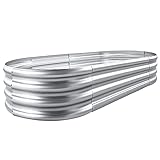
- Each raised metal garden bed size: 4×2×1ft ,7.14Cu
- Upgraded quality and structure: raised garden beds outdoor are made of Q195 galvanized metal sheet, double-layer anti-corrosion galvanizing and oval structure design, which is more beautiful, can withstand greater pressure at the interface, is not easy to loose, and the interface will not Deformed and can be reused for many years.
- Easy to set up, this galvanized stock tank only takes about 5 minutes to easily assemble and continue planting plants.
- Open base: This planter raised garden bed metal galvanized is designed with an open base, which can effectively avoid water accumulation and decay, protect the roots of plants, and allow the roots to better absorb nutrients
- Double thickness: The average thickness of this galvanized planter galvanized sheet reaches 0.78mm, and the thickest part can reach 1.56mm, which is extremely stable. Compared with the ordinary rectangular elevated garden bed with a thickness of 0.3mm, it will be the right choice for you. buy it! ! !
Six things that determine whether herbs will grow well together
1. Light
Most culinary herbs perform best with at least six hours of direct sun, and many tolerate or prefer more. A mixed container should therefore be placed in a bright location rather than combining a sun-loving herb with a genuinely shade-dependent plant.
University of Minnesota Extension identifies full sun as the usual requirement for many herbs. Parsley and cilantro can benefit from afternoon shade in hot climates, particularly when shade helps keep their soil from drying rapidly and delays bolting.
2. Water
Water is the most common reason an attractive mixed herb pot fails. Rosemary, thyme, oregano, sage, lavender, and related Mediterranean herbs prefer soil that drains quickly and is allowed to dry somewhat between waterings. Basil, parsley, cilantro, dill, and chives generally need more regular moisture.
Recommended Free Tools
If you water often enough to keep basil or cilantro happy, rosemary and thyme may remain in wet soil long enough to develop root problems. If you water only when the Mediterranean herbs need it, basil or cilantro may wilt, become stunted, or bolt. The North Carolina Extension Gardener Handbook and Royal Horticultural Society growing guidance both emphasize these meaningful differences in moisture needs.
3. Drainage and soil
All containers need drainage holes. Use a quality, lightweight potting mix rather than garden soil alone; ordinary garden soil is generally too dense for a container and may drain poorly.
Most herbs prefer well-drained soil with a pH roughly in the 6.0–7.5 range, according to the University of Minnesota. In the ground, improve heavy or poorly drained soil with a raised bed or another drainage solution rather than placing Mediterranean herbs where water collects.
Do not assume that more fertilizer produces better culinary herbs. Excessively rich soil can create lush, soft growth with less concentrated aromatic character. Light fertilization is usually preferable to constant feeding; the plant’s drainage, sun, and watering conditions matter more than forcing rapid growth.
4. Mature size and growth habit
Nursery plants look small when they are purchased, but their mature size determines whether they can share a container. A compact thyme plant may fit beside another herb, while a mature sage, rosemary, bay, borage, or lemongrass can eventually dominate the same pot.
Dill and fennel grow upright and tall. Mint spreads through underground growth and creeping stems. Crowded plants become weak and stretched, and poor air circulation raises the risk of disease. Use the plant’s mature width—not the size of the transplant—as the basis for spacing. Minnesota Extension’s herb guidance also warns that overcrowding produces weak growth and air-circulation problems.
5. Root depth and behavior
Small herbs do not all have small root systems. Dill has a taproot and needs a deeper container than a shallow window box provides. Fennel also has a taproot, does not transplant well, and may reach approximately 3–5 feet tall. Lovage is another large-rooted herb that is poorly suited to a small indoor pot.
Illinois Extension recommends roughly 6–8 inches of soil depth for most herbs, but at least 10 inches for taller herbs such as dill and fennel. Those figures are starting points, not a guarantee that a large perennial will thrive in a small container over many seasons.
Free tools Windows power users keep installed
One-click scans. No signup required.
6. Life cycle and overwintering
Plant life cycle affects how a mixed planting should be designed:
Rank #2

- 4X2X1FT GROWING SPACE: This oval raised garden bed measures 4 x 2 x 1 ft, providing 7+ cu. ft. of organized growing space for vegetables, herbs, flowers, strawberries and selected root crops. Its compact footprint fits naturally into backyards, lawns and small outdoor gardens while keeping plants easy to reach and maintain.
- STURDY 1MM GALVANIZED STEEL: Built with average 1mm galvanized steel and reinforced corrugated panels for added strength and structural stability. The durable metal construction helps the garden bed maintain its shape when filled with soil, while smooth rolled edges provide safer, more comfortable handling during assembly and everyday gardening.
- OPEN BOTTOM FOR NATURAL DRAINAGE: The bottomless design allows excess water to drain into the ground while giving plant roots access to the native soil below when placed over lawn or garden soil. This open growing environment supports healthy root development for tomatoes, peppers, herbs, flowers and other garden crops.
- 12-INCH DEPTH FOR VERSATILE PLANTING: The 1-ft-deep growing area provides room for many vegetables, herbs, flowers and selected root crops, including lettuce, peppers, strawberries and carrots. Tomatoes, cucumbers and other climbing plants can also be grown with a separate trellis or plant support when needed.
- EASY TOOL-FREE ASSEMBLY: Set up the galvanized garden bed in about 20 minutes with no additional tools required. Simply follow the illustrated instructions and connect the panels with the included fasteners. The straightforward assembly and smooth rolled edges make setup easier for both first-time gardeners and experienced growers.
- Usually annual: basil, cilantro, and dill.
- Usually biennial: parsley, which commonly produces leaves in its first year and flowers in its second.
- Often perennial: oregano, thyme, chives, mint, and many sage varieties.
- Climate-dependent perennials or tender plants: rosemary, lavender, bay, lemongrass, and some sage cultivars.
“Perennial” does not mean hardy in every location. Winter survival depends on the cultivar, USDA hardiness zone, exposure, and whether the plant is in the ground or in a container. Basil is tender and should not be exposed to frost. Rosemary, bay, lavender, and some sage plants may need protection or indoor overwintering in colder regions. Penn State Extension provides useful distinctions between annual, biennial, and perennial herbs.
Best herbs for the same container
1. Dry Mediterranean cooking planter
Plant together: oregano, thyme, sage, marjoram, and winter savory. In a large container with excellent drainage, rosemary or lavender can be added if there is enough room.
This is the most dependable mixed-herb container because the plants generally share full-sun, fast-draining, relatively dry conditions. The RHS edible-container guidance specifically recommends combinations including sage, thyme, rosemary, marjoram or oregano, and winter savory because their growing requirements align.
What’s actually slowing this PC down?
Pick the symptom - the matching free tool is one click away.
Design it this way:
- Use a wide, heavy planter that will not tip as rosemary or sage grows.
- Place rosemary or sage toward the center or back.
- Put thyme and oregano near the edge so their lower growth can spill outward.
- Use a gritty or sharply draining potting mix.
- Keep the container away from automatic irrigation intended for thirsty annual flowers or vegetables.
Lavender and rosemary can become substantial woody plants, so they are better as the main plants in a large trough or as individual specimens in smaller containers.
2. Fresh kitchen window box
Plant together: basil, parsley, and chives.
This is a more forgiving combination than a pot that mixes basil with rosemary or thyme. Keep the potting mix evenly but moderately moist, never saturated, and position it where all three plants receive strong light. Basil should not be allowed to dry completely, while parsley also performs poorly when repeatedly stressed by drought.
3. Salsa or summer-cooking planter
Plant together conditionally: basil, cilantro, chives, and parsley.
Use a container that can be moved to afternoon shade during hot weather. Cilantro is the limiting plant: heat, drought, irregular watering, crowding, and increasing day length can cause it to bolt before basil reaches peak production. Rather than treating cilantro as a permanent member of the planter, sow or replace it successively through the cooler part of the season. University of California Agriculture and Natural Resources recommends consistent moisture for cilantro and explains why hot or stressful conditions promote bolting.
Do these 3 things before closing this tab:
1Clear out junk files and repair common Windows errors2Scan for outdated or missing drivers - takes under a minute3Repair Windows errors before they cause bigger problems4. Cool-season herb box
Plant together: parsley, cilantro, chives, and chervil. Dill can be added if the container is deep enough and its height will not shade the other plants.
This grouping is particularly useful in spring and fall, when temperatures are moderate. Place parsley and chives toward the front, cilantro in the middle, and dill at the rear. Remove plants as they flower or replace them with new sowings. A succession of smaller plantings is usually more productive than expecting one cilantro or dill planting to provide leaves all summer.
5. Tea and fragrance display
Mint, lemon balm, chamomile, and lemon verbena can make a useful themed display, but they should not automatically share soil. Arrange them as separate pots inside one decorative trough or beside one another on a patio. This gives the collection a unified appearance while allowing each plant to receive the watering and root space it needs.
6. Pollinator container or border
Allow some herbs to flower if the goal is to support pollinators or beneficial insects rather than maximize leaf harvest. Flowering rosemary, oregano, thyme, basil, dill, cilantro, fennel, and sage can provide nectar or attract insects.
Crashes, No Sound, or Screen Glitches?
Random freezes, missing sound and display glitches usually trace back to one bad driver. Find and replace yours safely.Free scan · under a minuteWindows Errors? Fix Them Before They Spread
Repair common Windows errors and clear accumulated junk for a smoother, more stable PC - no reinstall needed.Free scan · no reinstallDill, cilantro, and fennel may attract predators of aphids and other pests, while parsley, dill, and fennel can serve as host plants for swallowtail caterpillars. Caterpillars may cause visible leaf damage, so this is a trade-off rather than a pest-free guarantee. Penn State Extension’s companion-planting guidance and Colorado State University Extension’s pollinator guidance explain these benefits more precisely.
Rank #3
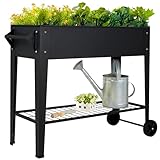
- MOBILE GARDEN ON WHEELS — Two all-terrain wheels and an ergonomic handle let you roll a 200+ lb planted bed wherever sunlight goes. Move your garden across patio, balcony, or backyard in minutes.
- DRAINAGE FOR CONTAINER GROWING — Built-in drainage openings and bottom channels help excess water leave the planting area.
- 32" STANDING HEIGHT — Garden without kneeling or back strain. Five drainage holes and dual cross-channels prevent waterlogging, keeping roots healthy during heavy rain.
- GROW VEGETABLES AND HERBS — Ideal raised bed for tomatoes, herbs, flowers, and greens on patios, balconies, decks, and backyards. Detachable bottom shelf stores tools and supplies.
- ASSEMBLY AND OUTDOOR CARE — Hardware and assembly instructions are included. Protect scratches in the surface coating promptly and follow the care instructions to reduce corrosion during outdoor use.
Herbs that should not share a container
These plants may coexist in the same broad garden area, but they are usually poor candidates for one shared pot.
Rosemary, thyme, sage, or lavender with basil, cilantro, or parsley
This is primarily a moisture mismatch. The Mediterranean herbs prefer to dry somewhat between waterings, while basil, cilantro, and parsley need more consistent moisture. In the ground, they can sometimes be planted in separate irrigation zones. In one container, use separate pots or a divided planter with genuinely independent drainage and watering areas.
Mint with almost anything
Mint prefers richer, moister conditions than rosemary, thyme, lavender, or sage, and it can spread aggressively. A mint plant placed in a mixed bed may send runners into neighboring soil and overwhelm slower-growing herbs.
Quick wins for a faster PC:
Repair Windows errors before they cause bigger problemsFix Now →Fix the driver behind crashes, sound loss and screen glitchesFind Drivers →Clear out junk files and repair common Windows errorsFree Scan →Grow mint in its own container. You can place that pot beside other herbs for a coordinated garden design. If mint must be grown in the ground, a large sunk container can restrict its roots, but keep the rim slightly above the soil surface and remove creeping stems before they root outside the container. The University of Minnesota and RHS both recommend containment for vigorous mints.
Fennel or lovage with small herbs
Fennel is not best separated because it is proven to “poison” neighboring herbs. The defensible reasons are its size, taproot, depth requirements, and growth habit. Herb fennel may reach 3–5 feet and can shade or crowd a small planter. Lovage has similar space problems. Give either plant a deep individual container or a position at the rear of a large bed.
Dill in a shallow planter
Dill can share a moist herb zone, but its taproot and height make it a poor choice for a shallow window box. Use at least about 10 inches of soil depth and allow enough vertical and horizontal space for the plant to mature.
Large rosemary, bay, lemongrass, or borage with compact herbs
These plants may fit temporarily when young, but they can eventually shade, crowd, or outcompete smaller herbs. Plant them individually or use them as the structural, taller plants in a large bed with generous spacing.
How to group herbs in an in-ground garden bed
Layout 1: Dry perennial herb zone
Place rosemary, sage, thyme, oregano, marjoram, lavender, savory, and tarragon in a sunny, well-drained bed. Raised beds are particularly useful where native soil is heavy or remains wet after rain. Put rosemary and sage where they will not shade low-growing thyme and oregano as they mature.
Layout 2: Moist annual herb zone
Use a separately irrigated section for basil, parsley, cilantro, dill, and chives. The soil should remain regularly moist but not waterlogged. In hot climates, provide afternoon shade for parsley and cilantro, and resow cilantro or dill when plants begin to flower.
Layout 3: Contained spreaders
Place mint, lemon balm, and catnip in individual pots. Vigorous bee balm may also deserve its own controlled area, depending on the cultivar and climate. Individual containers can sit directly beside the main herb bed without sharing soil.
Layout 4: Tall herbs at the rear
Grow fennel, lovage, borage, dill, lemongrass, bay, and large rosemary plants at the back of a wide bed or in separate deep containers. This prevents them from shading low herbs and makes it easier to give deep-rooted plants enough space.
How to plant a mixed herb container
- Choose a compatible growing group. Start with light, drainage, moisture, soil, root depth, and mature size—not a list of herbs used in the same dishes.
- Select a container with drainage holes. A decorative cachepot without drainage should hold a separate planted pot rather than be filled directly with soil.
- Use a quality potting mix. Do not use garden soil alone in a container. The mix should be loose and well drained.
- Check mature dimensions before planting. Look at final height, width, and root behavior, especially for rosemary, sage, dill, fennel, bay, lemongrass, and borage.
- Arrange tall plants at the back or center. Place low-growing thyme, oregano, or chives near the edge, where they will receive light and can be harvested easily.
- Leave room for air circulation. Do not pack plants together simply because they fit at transplanting time.
- Water thoroughly after planting. Apply water until it drains from the bottom, then empty any saucer so the roots do not sit in water.
- Adjust watering to the group. Let Mediterranean herbs dry somewhat between waterings. Keep basil, parsley, cilantro, dill, and chives more consistently moist without saturating the mix. Keep mint moist in its own container.
- Fertilize sparingly. Overfeeding can produce soft growth and may reduce the intensity of flavor and aroma.
- Harvest and pinch regularly. Harvesting keeps annual herbs compact and encourages branching. Pinch basil tips to delay flowering, unless flowers are being left for pollinators or seed.
Container size and depth
General container guidance from Illinois Extension gives most herbs approximately 6–8 inches of soil depth. Taller herbs such as dill and fennel should have at least 10 inches. A 12-inch container may hold approximately three or four small herb plants, while a 15-inch container may hold approximately five or six.
Rank #4
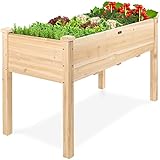
- LARGE PLANTING SPACE: Designed with a long bed space (5CuFt) deep enough to provide your plants and vegetables with ample room to breathe and grow healthy
- PROPER DRAINAGE: Allows excess water to drain out, keeping soil fresh and protecting plants from waterlogging or mineral buildup
- ALL-WOOD CONSTRUCTION: Naturally strong Chinese fir wood provides a water- and weather-resistant structure
- ERGONOMIC HEIGHT: The 30-inch tall design reduces excessive bending and kneeling to help preserve your back and knees as you tend to your balcony, deck, or patio garden
- RAISED GARDEN BED LINER: Separates wood from the soil, keeping the wooden garden planter in excellent condition and discouraging weeds and animals from interfering with plant growth; OVERALL DIMENSIONS: 48"(L) x 24"(W) x 30"(H); WEIGHT CAPACITY: 200 lbs.
These numbers are starting points rather than a universal formula. A 12-inch pot may accommodate three small annuals for one season, but three large perennial herbs will eventually become crowded. In practice:
- One large herb per individual pot is the most reliable long-term arrangement.
- Two or three compatible herbs are a sensible target for a 12–16-inch-wide container.
- More plants belong in a wide, deep trough where mature spacing and air circulation can be maintained.
- Different watering needs: keep plants in separate nursery pots placed inside one decorative container rather than forcing them into one soil environment.
Check containers at least twice daily during hot, dry, or windy weather. Outdoor pots can need daily watering in hot, sunny conditions, but the correct schedule depends on container size, plant maturity, potting mix, weather, and exposure. Always check the mix rather than watering by the calendar. Water until it exits the drainage holes, then allow the mix to drain fully. Illinois Extension’s container-herb guidance provides additional setup and watering advice.
Independent reader supportYour contribution helps us test, update, and keep practical guides available for everyone.Common mistakes and how to fix them
Mixing dry and moist herbs in one pot
Problem: Watering for basil or cilantro keeps rosemary and thyme too wet, while watering for rosemary leaves basil or cilantro stressed.
Fix: Separate the pots, create different irrigation zones, or use a divided planter with independent drainage. A shared garden bed is more forgiving than a shared container.
Trusting a culinary grouping
“Italian herbs” may sound like a logical container theme, but basil, rosemary, oregano, parsley, sage, and thyme do not all have identical water needs. Use cuisine as the design theme and growing requirements as the planting rule.
Putting mint in a mixed herb bed
Mint can overwhelm neighboring plants and spread outside its intended location. Keep it in an individual pot or a properly contained sunk container, and inspect the edges for runners.
Using a shallow planter for dill or fennel
Taproots need depth, and tall plants need enough soil volume to remain stable. Move dill and fennel to a deeper container or plant them in a suitable garden position.
Overcrowding
Plants that are crowded at maturity become tall and weak, dry unevenly, and have poor air circulation. This can reduce production and increase disease problems. Space by mature width and remove plants that have finished their useful season.
Using garden soil in a container
Dense garden soil can restrict drainage and air around the roots. Use a lightweight container mix instead. This is especially important for Mediterranean herbs that are vulnerable to constantly wet roots.
Letting cilantro or dill bolt unexpectedly
Bolting is often a response to heat, drought, irregular watering, crowding, or increasing day length. It is not necessarily a sign that the neighboring herb caused the problem. Grow cilantro and dill in the cooler parts of the season, maintain even moisture, provide afternoon shade where needed, and sow successive crops.
Ignoring frost and winter conditions
Move tender plants indoors before frost where appropriate, but do not assume every outdoor herb will thrive inside. Indoor containers have less light and may be difficult to water correctly when several species share one pot. Individual pots are easier to place, monitor, and overwinter.
Outdated Drivers Are Slowing You Down
One free scan finds every outdated or missing driver and matches the right update for your exact hardware.Free scan · exact hardware matchPC Slower Than It Used to Be?
A free scan shows the junk files, broken settings and background clutter dragging Windows down - then fixes them in one click.Free scan · Windows 10 & 11Companion planting: what herbs can actually do in a vegetable garden
Herbs are often marketed as universal pest repellents, but that is too broad a claim. Some research and extension guidance describes particular herbs as potentially masking plant odors, confusing pests, interfering with egg-laying, or attracting beneficial insects. Those effects depend on the plant, pest, layout, and conditions.
Best Value
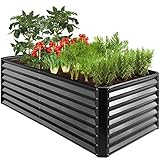
- 2FT GROWING DEPTH: 24 inches of depth holds up to 269 gallons of soil-great for medium to deep rooting plants and vegetables like broccoli, beans, and more; Note: This product does not include a bottom panel
- 100% NON TOXIC MATERIALS FOR SAFE GARDENING: Made with non-toxic materials and independently tested to meet FHSA standards; free from heavy metals and phthalates, and compliant with PFAS screening and California Proposition 65
- TOOL-FREE ASSEMBLY: Beveled steel panels come together with a set of included wingnuts and bolts with rubber edging for your added safety
- BUILT TO LAST: Made of powder-coated steel panels, with a non-corrosive finish, four ground stakes, and two stabilizing rods to keep your garden bed looking its best
- 36 CUBIC FEET: The large planting space makes this the ideal place to set up a self-contained micro-environment for unique and non-native plants; OVERALL DIMENSIONS: 72"(L) x 36"(W) x 24"(H)
For example, dill, cilantro, and fennel can attract beneficial insects near vegetable crops, while flowering herbs provide nectar. Some specific herb–vegetable–pest relationships have been studied, including examples involving basil and tomatoes or thyme and insect egg-laying. However, Oregon State University Extension cautions that many popular aromatic-herb pest-repellent claims remain insufficiently supported.
Therefore, plant herbs next to vegetables primarily because their growing requirements and available space work well—not because a chart promises that one herb will repel every pest. Letting some herbs flower can support pollinators and beneficial insects, but flowering may reduce the quantity or quality of leaves available for cooking.
Practical decision rule
Before putting two herbs in one container, ask:
- Do both receive the same amount of direct sun?
- Do they prefer the same moisture level?
- Will the soil drain quickly enough for both?
- Do they tolerate similar soil fertility?
- Do their roots need a similar depth?
- Will their mature heights and widths fit together?
- Do they have compatible life cycles and winter requirements?
- Can I harvest one without damaging or shading the other?
If the answer to any of the first five questions is no, use separate containers or separate irrigation zones. If the answer to the size question is no, choose a larger bed or give the larger plant its own pot. The simplest successful herb garden is often a collection of individual containers grouped by watering needs.
What’s actually slowing this PC down?
Pick the symptom - the matching free tool is one click away.
Frequently Asked Questions
Can basil and rosemary be planted together?
They can coexist in the same in-ground garden area if each receives appropriate watering, but they are not an ideal same-container combination. Basil prefers more consistent moisture, while rosemary prefers fast drainage and soil that dries somewhat between waterings. Keep them in separate pots or separate irrigation zones whenever possible.
Can mint and basil share a pot?
It is better not to plant them in the same pot. Both can appreciate moisture, but mint spreads aggressively and may take over the limited root space. Grow mint in its own container and place it beside basil for a coordinated display.
Can parsley and cilantro grow together?
Yes. Parsley and cilantro can make a good regularly watered, cool-season planter. In hot weather, provide afternoon shade and keep the soil consistently moist without making it soggy. Cilantro may bolt before parsley, so succession sowing is useful.
Can thyme and oregano grow together?
Yes. Thyme and oregano are well suited to the same sunny, sharply drained container or garden bed. They have similar Mediterranean growing requirements, although mature spacing is still important.
Can dill and cilantro share a planter?
They can share a deep, moist container during a cool season, but dill needs more root depth and grows taller. Use at least about 10 inches of soil depth, place dill at the back, and remove or replace either plant when it flowers.
Which herbs need their own pot?
Mint is the clearest example because it can spread aggressively. Fennel, lovage, borage, lemongrass, bay, large rosemary plants, and large dill plants also often deserve individual pots because of their size, root depth, or mature growth habit.
How many herb plants fit in one container?
As a general starting point, a 12-inch container may hold three or four small herbs and a 15-inch container may hold five or six. These figures do not account for large cultivars or long-term perennial growth. For reliable results, use one large herb per pot or two or three compatible small herbs in a 12–16-inch container.
Can herbs with different watering needs share a raised bed?
Often, yes. A raised bed gives roots more room and allows you to create separate zones, such as a dry Mediterranean section and a regularly watered leafy-herb section. Avoid planting moisture-loving herbs at the lowest, wettest point beside drought-tolerant herbs.
Free tools Windows power users keep installed
One-click scans. No signup required.
Should herbs be planted together by culinary use or watering needs?
Plant them by watering needs, light, drainage, root depth, and mature size. Culinary themes are useful for arranging the garden, but herbs used in the same recipes may require very different conditions.
Can a mixed herb container be kept indoors over winter?
It is usually easier to overwinter herbs in separate pots. Indoor light, humidity, watering, and temperature conditions may not suit every species in a shared container, and Iowa State Extension notes that mixed indoor herb containers are difficult to manage when plants have different requirements.
The Bottom Line
For one shared container, start with either a dry Mediterranean group—such as thyme, oregano, sage, marjoram, and savory—or a moist leafy group such as basil, parsley, and chives. Keep mint in its own pot, give dill and fennel deeper space, and separate herbs whenever their watering needs conflict. In an in-ground garden, use separate sun, soil, and irrigation zones so plants with different requirements can still be part of the same herb garden.
Quick Recap
Product prices and availability are accurate as of the date/time indicated and are subject to change. Any price and availability information displayed on Amazon at the time of purchase will apply.