The Tool Desk
Outbyte Driver Updater FREEFix the driver behind crashes, sound loss and screen glitchesFind Drivers →Outbyte PC Repair FREERepair Windows errors before they cause bigger problemsFix Now →Canada has no single nationwide “spaceport environmental permit.” A commercial facility needs a site-specific approvals matrix covering federal impact-assessment triggers, Transport Canada launch permission, fish and wildlife rules, provincial or territorial environmental and land approvals, municipal permissions, and Indigenous consultation or land-claim processes. Construction approvals and launch authorization are separate: Transport Canada says it does not license spaceports as real-estate facilities, but a company needs the Minister of Transport’s permission to launch in Canada.
Start with the right distinction: facility approvals versus launch permission
A spaceport is a package of physical works and operating activities, not a single approval category. The project may include launch pads, flame trenches or exhaust-management systems, propellant and fuel storage, roads, utilities, control buildings, security areas, telemetry equipment, marine works, and exclusion zones. Each component can create a different regulatory trigger.
As an Amazon Associate I earn from qualifying purchases.
Transport Canada’s published position is explicit: “Transport Canada doesn’t license spaceports.” The agency treats the launch operator—not simply the owner of the land—as the applicant for launch permission. “In order to launch in Canada, a company needs permission from the Minister of Transport,” and the province or territory where the site is located will be consulted. The minister considers whether the launch complies with existing environmental laws. That permission does not replace construction, land-use, water, wildlife, or environmental approvals.
Conversely, a provincial environmental approval does not authorize a rocket launch. Plan the project as two connected tracks: approvals for the site and infrastructure, and Transport Canada’s authorization for the proposed launch activity.
#1 Best Overall

- BEGINNER MODEL-ROCKET LAUNCH SET: The Tandem-X rocket-model launch set offers adults and kids ages 10+ hours of fun during the holidays as they complete and launch our Amazon and Crossfire ISX rocket models. This set includes the easy-to-assemble Amazon model parts, the Crossfire ISX model parts, parachutes, and the launch pad system. It requires rocket engines, Starters, Recovery Wadding, and 4 high-quality 1.5-volt AA alkaline batteries for launch use (sold separately).
- 2 SOARING ALTITUDE HEIGHTS: Our Tandem X set offers a high-performing power duo with our giant 30-inch Amazon model (600-foot projected altitude with a C6-5 rocket engine) and our streamlined 15.6-inch Crossfire ISX model (1,150-foot projected altitude with a C6-7 rocket engine). Other compatible Estes model-rocket engines for Amazon model: B4-2, B4-4, B6-2, B6-4, C5-3, and C6-3. Other compatible engines for Crossfire ISX: A8-3, B4-4, B6-4, and C6-5. All engines sold separately.
- READY TO ASSEMBLE: Our beginner model-rocket launch set comes with 2 build options. The precolored Amazon model features plastic fins and self-stick graphics and can be built in an hour. The Crossfire ISX model comes with laser-cut wood fins, self-stick decals, and aerodynamic parts. Pair the rockets with the included Porta Pad II Launch Pad and Electron Beam Launch Controller for a hands-on educational activity or a unique Christmas gift for a budding scientist or a space aficionado.
- SAFETY FIRST, FUN ALWAYS: Our rockets and rocket launch accessories are designed to be used with the NAR (National Association of Rocketry) model-rocket safety code. Always ensure you have an appropriate launch site, stand back at least 15 ft., insert the safety key, issue a countdown, and then you can let your rocket fly!
- WE IGNITE IMAGINATIONS: Since 1958, Estes has created educational rocket kits and displays designed for an unforgettable aerospace experience. As a family-owned company, we have grown to offer exciting STEM products that engage aspiring rocketeers and the future minds of aerospace.
Federal environmental assessment under the Impact Assessment Act
Designated-project screening
The Impact Assessment Act (IAA) and its regulations are the federal framework. The Physical Activities Regulations identify projects that may be designated for an impact assessment. Calling a facility a “spaceport” does not automatically make it a designated project. The agency must compare the actual physical activities, scale, components, and likely effects with the current regulatory descriptions.
Define the project broadly before asking for a screening view. Include pads, storage tanks, processing or fueling systems, roads, power and water lines, borrow areas, wastewater systems, shoreline or marine works, and any associated airspace or exclusion-zone infrastructure. A project that is below a threshold in one configuration can change materially when its footprint, fuel system, water crossing, or marine component changes.
Projects on federal land
If any component is on federal land, IAA sections 81–91 can require an environmental-effects determination even when the project is not a designated project. This pathway is engaged when a federal authority carries out, funds, or exercises a power, duty, or function that enables the project, such as issuing an authorization. The authority must consider environmental effects, provide required public notices, and make a determination before enabling the project, subject to statutory exclusions and designations.
Federal guidance defines environmental effects broadly. The analysis can cover changes to land, water, air, organic and inorganic matter, living organisms, and interacting natural systems. It also includes effects on Indigenous peoples and on health, social, or economic conditions. Confirm land status at the concept stage; a federal lease, licence, or authorization can change the federal review pathway even where the surrounding parcel is privately or provincially held.
Transport Canada commercial-launch authorization
Begin Transport Canada’s pre-application consultation while the site design is still flexible. The operator should be ready to describe the launch vehicle and mission, launch pad and safety systems, proposed launch azimuths, downrange and exclusion zones, airspace requirements, marine closures or vessel controls, hazardous materials and propellant arrangements, emergency response, and the environmental-law compliance information requested by the department.
The application is for permission to launch. It is not a building permit, environmental assessment certificate, water licence, wetland authorization, or zoning approval. Treat the launch authorization as a separate hold point in the schedule: construction can be unable to proceed if a provincial or municipal approval is missing, while a completed pad still cannot be used for a commercial launch without ministerial permission.
Rank #2

- BEGINNER MODEL ROCKET LAUNCH SET: The Estes Alpha III launch set lets kids ages 10+ and hobbyists easily build and launch this iconic model rocket. The model rocket kit includes rocket parts, engine mount, decals, a parachute, a launch pad system, and instructions. For blastoff, you’ll need Estes rocket engines, Starters, Recovery Wadding, and 4 high-quality 1.5-volt AA alkaline batteries (not included).
- SOARS UP TO 1,150 FT.: Our Alpha III model rocket is designed for first-time STEM kit builders and climbs up to a projected altitude of 1,150 ft. (351 m). It’s compatible with 1/2A6-2, A8-3, A8-5, B4-4, B6-4, B6-6, C6-5, or C6-7 Estes rocket engines (sold separately).
- READY TO ASSEMBLE: Rocket building sparks creativity and a love for science and outer space! This beginner Alpha III model kit is easily put together with 1 hour of preparation and includes decals. It comes with a Porta-Pad II Launch Pad and Electron Beam Launch Controller for an unforgettable blastoff for first-time rocketeers.
- SAFETY FIRST, FUN ALWAYS: Our rockets are designed to be used with the NAR (National Association of Rocketry) model-rocket safety code. Always ensure you have an appropriate launch site, stand back at least 15 ft., insert the safety key, issue a countdown, and then you can let your rocket fly!
- ESTES EDUCATION: Since 1958, Estes has created educational rocket kits designed for an unforgettable launch experience. As a family-owned, US-based company, we offer exciting and engaging STEM products for all interests, skills, and power levels.
Federal permits and prohibitions that can apply independently of the IAA
Fisheries Act and fish habitat
Screen every water-related element: streams and ditches, shoreline work, culverts, bridge crossings, drainage outlets, dredging, launch-pad runoff, erosion-control structures, and construction methods that could affect fish or fish habitat. A project may need review or authorization under section 35 of the Fisheries Act where it could result in the harmful alteration, disruption, or destruction of fish habitat. The Canso Spaceport Facility registration listed “Compliance – Fisheries Act, Section 35” with Fisheries and Oceans Canada as an anticipated federal requirement.
Outdated Drivers Are Slowing You Down
One free scan finds every outdated or missing driver and matches the right update for your exact hardware.Free scan · exact hardware matchWindows Errors? Fix Them Before They Spread
Repair common Windows errors and clear accumulated junk for a smoother, more stable PC - no reinstall needed.Free scan · no reinstallDo not limit the review to a permanent structure. Temporary cofferdams, dewatering, sediment release, blasting, road crossings, and changes in drainage can create the effect that triggers federal attention. Baseline fish and habitat surveys should be timed to the relevant seasonal conditions and tied to a construction method statement.
Migratory birds
Migratory birds, their nests, and eggs are protected wherever they occur under the Migratory Birds Convention Act and the Migratory Birds Regulations, 2022. Harmful-substance deposits into waters or areas frequented by migratory birds are also prohibited. Depending on the activity and circumstances covered by the regulations, a permit may be needed.
Plan vegetation clearing, demolition, pile driving, lighting, blasting, and other disruptive work around nesting risk. A bird assessment should address both direct disturbance and indirect effects from lighting, noise, dust, fuel, and contaminated runoff. Construction timing is a mitigation measure, not a substitute for checking whether a permit or other authorization is required.
Species at Risk Act
Listed aquatic species, their residences, and critical habitat can require authorization from Fisheries and Oceans Canada. Other federal species protections may apply depending on the species, the land status, and the federal decision being made. The assessment must identify listed species and critical habitat before the footprint is fixed, because moving a road, outfall, or pad later can be far more expensive than avoiding sensitive habitat initially.
Do these 3 things before closing this tab:
1Scan for outdated or missing drivers - takes under a minute2Clear out junk files and repair common Windows errors3Fix the driver behind crashes, sound loss and screen glitchesOther federal interfaces
These are not all environmental permits, but they can gate construction or launch:
Rank #3

- INTERMEDIATE MODEL-ROCKET-BUILDING KIT: This Estes model rocket kit bulk pack offers kids ages 10+ the chance to build and blast our high-flying 1754 Wizard model rocket during holidays and special occasions. Each intermediate building kit includes the model parts, an engine mount, design decals, a recovery parachute, and instructions. Each requires rocket engines, a launch pad system, Starters, Recovery Wadding, and 4 high-quality 1.5-volt AA alkaline batteries for launch (sold separately).
- SOAR UP TO 1,600 FT.: Our spellbinding 1754 Wizard rocket model was made for wind-drift studies or flight competitions. It has a projected altitude of 1,600 ft. (488 m) on a C6-7 Estes model-rocket engine (sold separately) and is also compatible with 1/2A6-2, A8-3, A8-5, B4-4, B6-4, B6-6, or C6-5 rocket engines.
- READY TO ASSEMBLE: Rocket-building kits are creative, educational gift ideas for Christmas or special-occasion surprises! Our intermediate-level rocket-building bulk pack comes with ready-to-build rockets that each require approximately 1 hour of assembly time. Add the included decals and pair the rockets with the right engines, Porta-Pad II Launch Pad, and Electron Beam Launch Controller (sold separately) for a memorable blastoff.
- SAFETY FIRST, FUN ALWAYS: Our rockets are designed to be used with the NAR (National Association of Rocketry) model-rocket safety code. Always ensure you have an appropriate launch site, stand back at least 15 ft., insert the safety key, issue a countdown, and then you can let your rocket fly!
- ESTES EDUCATION: Estes Education provides educators with the tools for success through our interdisciplinary STEM products, accessible lessons, and online resources. Our mission is to cultivate the skills and confidence necessary to easily implement science and rocketry in classrooms, youth programs, and beyond.
- Navigation and waterway review for works that could affect navigation.
- Airspace coordination, including launch-related restrictions and notices.
- Marine-traffic coordination for coastal or offshore exclusion zones.
- Dangerous-goods, fuel, and propellant controls.
- Federal-land leases or other tenure instruments.
- Security, defence, or foreign-affairs reviews where the facility or mission creates those issues.
A Canadian spaceport registration in Canso identified federal involvement from Transport Canada, Nav Canada, the Coast Guard, Public Services and Procurement Canada, Global Affairs Canada, National Defence, Fisheries and Oceans Canada, and the federal environment department. The agencies involved will depend on the site and mission.
Provincial or territorial approvals
The province or territory supplies much of the practical construction-permitting layer. Names, thresholds, sequencing, and appeal rights differ, so obtain a written pre-application view from the relevant authority rather than assuming that an approval from another province transfers.
Environmental assessment or project approval
Screen the complete facility under the applicable provincial or territorial environmental-assessment or project-approval legislation. The assessment may be triggered by the industrial facility, a power or water component, a road or pipeline, a shoreline work, or a combination of activities. Federal and provincial assessments can run together, but one is not automatically a substitute for the other.
Recommended Free Tools
Wetlands, water, and erosion controls
Expect separate review of wetland alteration, water withdrawal, watercourse crossings, drainage, shoreline or coastal work, sediment and erosion controls, wastewater discharge, and any temporary dewatering. The Canso Spaceport Facility registration reported 3.09 hectares of wetland habitat in 12 impacted wetlands and stated that wetland alterations would receive provincial permitting approvals before construction. Those figures describe that 2018 project only; they are not a national threshold or a typical spaceport footprint.
Wildlife and species-at-risk rules
Provincial or territorial wildlife and species-at-risk statutes can apply in addition to federal protections. An Ontario example discussed in a 2025 federal analysis report shows the range of instruments that may be used under the province’s Endangered Species Act: permits, agreements, exemptions, or an Overall Benefit Permit for activities that adversely affect listed species or habitat. Fish or mussel relocation during construction may also require a fish-collection licence. These are Ontario-specific examples, not a rule for every province.
Waste, fuel, emissions, and contaminated sites
Screen approvals for hazardous materials, fuel and propellant storage, emissions, wastewater, solid and hazardous waste, spill prevention, and contaminated-site management. The applicable instrument may be a permit, registration, approval, plan, or operating condition. Include construction camps, temporary fuel storage, firefighting water, and emergency-spill containment in the screening; leaving them out of the initial description can create a late redesign.
Rank #4
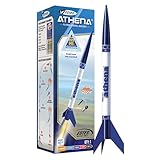
- BEGINNER MODEL ROCKET SET: The Estes Athena model rocket gives kids ages 10+ and beginners an easy way to experience real rocket launches with no building required! This ready-to-fly model rocket kit includes a fully prepared rocket with a parachute. This rocket requires Estes rocket engines, a launch pad system, Starters, Recovery Wadding, and 4 high-quality 1.5-volt AA alkaline batteries (sold separately) for launch use.
- SOARS UP TO 1,125 FT.: Our high-flying Athena rocket features a bright 12-inch parachute for safe recovery and soars up to a projected altitude of 1,125 ft. (343 m) with a C6-7 engine (sold separately). It is also compatible with the A8-3, B4-4, B6-4, and C6-5 rocket engines.
- READY TO FLY: Rocket-building kits are creative, educational gift ideas for Christmas or special-occasion surprises! This beginner-friendly Athena rocket comes fully assembled and just takes 15 minutes of preparation time. This model pairs with the Porta Pad II Launch Pad and Electron Beam Launch Controller (sold separately) for blastoff.SAFETY FIRST, FUN ALWAYS: Our rockets are designed to be used with the NAR (National Association of Rocketry) model-rocket safety code. Always ensure you have an appropriate launch site, stand back at least 15 ft., insert the safety key, issue a countdown, and then you can let your rocket fly!
- SAFETY FIRST, FUN ALWAYS: Our rockets are designed to be used with the NAR (National Association of Rocketry) model-rocket safety code. Always ensure you have an appropriate launch site, stand back at least 15 ft., insert the safety key, issue a countdown, and then you can let your rocket fly!
- ESTES EDUCATION: Since 1958, Estes has created educational rocket kits designed for an unforgettable launch experience. As a family-owned, US-based company, we offer exciting and engaging STEM products for all interests, skills, and power levels.
Land tenure and protected areas
Crown-land tenure, leases, dispositions, protected-area rules, coastal requirements, heritage or archaeological approvals, and provincial Indigenous-government processes may all affect the site. Confirm whether the proposed footprint crosses Crown land, a park or conservation area, shoreline, archaeological potential area, or another regulated designation before acquiring access rights or announcing a schedule.
Municipal permissions
Municipal approvals remain necessary even when federal and provincial reviews are extensive. Check official-plan conformity, zoning, site-plan control, grading and drainage, building permits, road access, noise, lighting, construction traffic, fire protection, emergency services, and local requirements for hazardous facilities. A municipality may require a development agreement or conditions addressing setbacks, public roads, stormwater, emergency response, and operating hours.
Make sure the municipal description matches the federal and provincial project description. A pad, tank farm, access road, or utility corridor omitted from a site-plan application can become a separate amendment and delay the construction hold point.
Indigenous consultation, rights, and land status
Determine title, reserve or settlement-land status, treaty context, Indigenous uses of land and water, and any land-claim or self-government arrangements before fixing the footprint or schedule. Federal IAA analysis expressly considers effects on Indigenous peoples and recognizes Indigenous governing bodies and land-claim or self-government arrangements.
Federal and provincial consultation processes may run in parallel, but they are not interchangeable. Consultation should address the physical works, launch noise and safety zones, access restrictions, effects on harvesting or travel, water and wildlife, cultural sites, emergency planning, and monitoring commitments. If a claim, agreement, or Indigenous government has its own review or consent provisions, those requirements belong in the permit register alongside statutory approvals.
Quick wins for a faster PC:
Fix the driver behind crashes, sound loss and screen glitchesFind Drivers →Clear out junk files and repair common Windows errorsFree Scan →Scan for outdated or missing drivers - takes under a minuteDriver Scan →A practical permitting workflow
- Define the full project. Map the site, pads, launch azimuths, exclusion zones, propellant and fuel systems, roads, utilities, buildings, water crossings, marine interfaces, and construction footprint.
- Confirm land and regulatory status. Identify federal land, reserve or settlement land, Crown land, protected areas, shoreline, navigable water, wetlands, critical habitat, and municipal boundaries.
- Request pre-application screening. Ask the Impact Assessment Agency of Canada and the relevant provincial or territorial authority to screen the project against current thresholds and regulations.
- Start Transport Canada consultation. Use the department’s commercial-launch pre-application process and assemble the launch-site, safety, environmental-law, airspace, and marine-traffic information it requests.
- Commission baseline studies. Cover wetlands, fish and fish habitat, migratory birds, species at risk, hydrology, noise, air quality, contamination, archaeology, and Indigenous land and resource use.
- Build a permit register. Give every approval an authority, statutory trigger, application, supporting study, consultation step, decision, construction hold point, and expiry or renewal field.
- Resolve design constraints early. Adjust roads, outfalls, lighting, clearing windows, drainage, storage, and exclusion zones while alternatives are still available.
- Track construction and launch separately. Do not treat a provincial assessment, municipal building permit, or Transport Canada launch permission as a substitute for any other approval.
How to compare candidate Canadian sites
There is no responsible answer to “Which province is easiest?” without a defined facility and current provincial comparison. Evaluate candidate sites against the same evidence:
- Federal-land, private-land, Crown-land, reserve, or settlement-land status.
- Provincial or territorial assessment thresholds and expected review sequence.
- Wetland, watercourse, shoreline, fish-habitat, and drainage footprint.
- Species-at-risk and migratory-bird sensitivity.
- Distance from populated areas and the practicality of safety zones.
- Launch azimuth, airspace restrictions, marine closures, and vessel traffic.
- Indigenous rights, land-claim arrangements, and consultation complexity.
- Propellant, fuel, dangerous-goods, emissions, and hazardous-material constraints.
- Road, power, water, communications, and emergency-service readiness.
- Municipal zoning, official-plan compatibility, and local capacity to review the proposal.
Common permitting mistakes and how to avoid them
- Assuming “spaceport” is a permit class. Use the actual physical activities and effects to test federal and provincial triggers.
- Applying only for launch permission. Transport Canada authorization does not cover construction, wetlands, water, wildlife, zoning, or building work.
- Waiting until design is complete to study habitat. Wetlands, fish, birds, and critical habitat can force relocation of roads, outfalls, or pads.
- Treating federal and provincial review as interchangeable. Record each authority’s separate trigger, decision, and condition.
- Ignoring temporary works. Dewatering, access roads, cofferdams, temporary fuel, laydown areas, and construction lighting can create their own approvals or prohibitions.
- Fixing the schedule before consultation. Indigenous consultation, seasonal bird or fish windows, and municipal conditions can change sequencing.
- Generalizing from Canso. The 3.09-hectare, 12-wetland figure is a project-specific 2018 registration, not a national benchmark.
- Promising a universal timeline or cost. Official Canadian sources do not establish a Canada-wide permit count, approval duration, or cost for commercial spaceports.
What the project owner should retain
Every commercial spaceport proposal should maintain a current approvals matrix, GIS constraint map, agency contact log, consultation record, baseline-study schedule, permit conditions register, and construction hold-point plan. Update the matrix whenever the launch vehicle, propellant, pad location, access route, water interface, or exclusion zone changes. That discipline is what turns a collection of approvals into a buildable and launchable project.
Canada therefore regulates a commercial spaceport through coordinated, site-specific decisions rather than one national environmental permit. The decisive early work is defining the complete project, confirming land and habitat status, screening IAA and provincial triggers, beginning Transport Canada consultation, and sequencing municipal and Indigenous processes before construction commitments become irreversible.
Quick Recap
Product prices and availability are accurate as of the date/time indicated and are subject to change. Any price and availability information displayed on Amazon at the time of purchase will apply.
What’s actually slowing this PC down?
Pick the symptom - the matching free tool is one click away.

