Free tools Windows power users keep installed
One-click scans. No signup required.
Potholes form when pavement loses support beneath the surface. Water entering through cracks, joints, edges or shoulders weakens the base, subbase and subgrade; freeze–thaw movement can leave voids; and traffic then breaks the unsupported surface apart. Weak materials, poor drainage, inadequate foundation preparation and construction defects can make the same process happen without severe winter weather.
Prevention is therefore a pavement-system job, not a cosmetic one: keep water out, drain what gets in, build on a strong and well-prepared foundation, and preserve sound pavement before distress becomes structural. Patching is important for safety and ride quality, but a patch alone cannot correct a failing drainage path or unstable foundation.

As an Amazon Associate I earn from qualifying purchases.
What a pothole actually is
The Federal Highway Administration (FHWA) defines a pothole as a localized loss of support for the surface course associated with failure in the subgrade or in the base or subbase. That distinction matters. A pothole is not simply a chip or depression in asphalt; it is evidence that the layers carrying traffic have lost enough strength, stiffness or continuity for the surface to collapse.
A road works as a layered structure. The wearing surface sheds most water and supplies the riding surface. Bound structural layers distribute wheel loads. Unbound base and subbase layers spread those loads farther, while the subgrade provides the final foundation. If one layer becomes saturated, erodes, pumps fines into another layer or settles unevenly, the stress is concentrated above the weak spot. Repeated wheel loads then turn a small defect into a hole.
#1 Best Overall
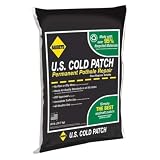
- Use to patch pot holes in asphalt
- Once compacted, Sakrete U.S. Cold Patch becomes as hard as hot asphalt
- Can be used in all weather conditions
- Ready to drive on immediately after application
- No odor or oily mess
Surface appearance can be misleading. A road may look acceptable until water reaches a weak layer or a seasonal thaw removes support. Conversely, a shallow surface crack does not always mean the entire pavement has failed. Treatment should be selected from the observed distress and the condition of the complete pavement system.
How potholes form: the failure sequence
1. Water finds an entry path
Water can enter through ordinary cracks, open joints, failed seams, pavement edges, shoulders, utility cuts and other defects. It can also reach the pavement from inadequate surface drainage, clogged ditches, leaking drainage features or water retained beside the roadway. Once inside, water may remain in the base, subbase or subgrade instead of leaving quickly.
Moisture reduces the strength and stiffness of many unbound materials. It can move fine particles, contaminate clean aggregate, promote swelling or consolidation and create pockets with different support from the surrounding pavement. Those variations are why damage often starts in isolated spots rather than appearing uniformly across a lane.
2. Freeze–thaw movement creates or enlarges a void
In cold climates, water in susceptible soil or aggregate can freeze into ice lenses. Expansion may lift the pavement in a frost-heave event. When temperatures rise, the ice melts and the lifted layer can settle, leaving a void or a very soft zone beneath the surface. The pavement may appear intact for a short time, but it is now carrying traffic over inadequate support.
Vehicles passing over that unsupported area flex the surface. The repeated pressure can crack the surface, displace pieces and force wet material upward through cracks, a process commonly described as pumping. When the cracked material is removed by tires, plows and additional traffic, the depression becomes a pothole.
3. Traffic turns localized weakness into a hole
Heavy wheel loads accelerate damage, but ordinary traffic can also break a pavement that has already lost support. Each axle repetition adds stress around the edge of a crack or void. Water and traffic work together: water weakens the layer, and traffic supplies the repeated loading that collapses it.
FHWA’s pothole guidance identifies moisture, freeze–thaw action, traffic and poor underlying support as common causes, often operating at the same time. That is why a patch can fail quickly when the water source or foundation problem remains.
The Tool Desk
Outbyte Driver Updater FREEFix the driver behind crashes, sound loss and screen glitchesFind Drivers →Outbyte PC Repair FREEClear out junk files and repair common Windows errorsFree Scan →Rank #2

- Effortless Pothole Repair: Fix potholes fast with no mixing or special tools. Liquid Rubber Asphalt Patch is a ready-to-use solution—just scoop, spread, and tamp down. Ideal for homeowners or pros tackling driveways, parking lots, or road repairs
- All-Weather Application: Designed to work in rain, shine, heat, or cold. Whether you're fixing damage in the middle of summer or patching during fall weather, this patch performs year-round with a strong bond and reliable hold
- Built to Last: Formulated for strength and flexibility, it resists cracking and shrinking over time. Creates a smooth, durable finish that holds up to foot traffic, cars, and harsh weather conditions
- Trusted by Pros for 20+ Years: With over 1 million gallons sold, Liquid Rubber Asphalt Patch is a proven performer. Whether you’re patching your first pothole or maintaining a commercial lot, you’re backed by decades of performance and support
- Clean Application, Easy Cleanup: No mess, no stress. Apply directly from the pail and clean up with simple tools and baby oil or mineral spirit
Why roads suffer premature damage
Inadequate drainage
Drainage is a structural protection measure. Pavement needs to shed surface water and provide a path for subsurface water to leave. Blocked ditches, filled edge drains, ponding shoulders, low spots and poorly graded surfaces extend the time that water is in contact with pavement layers. A small crack is much more damaging when water is repeatedly driven through it and cannot escape.
Drainage problems may be visible as standing water, wet shoulders, silty discharge, eroded outlets or a strip of distress along one edge. They can also be hidden below the surface. A road that repeatedly develops potholes in the same wheel path or location warrants investigation of the drainage path, not just another load of patching material.
Moisture-sensitive or weak materials
Materials vary in how much strength and stiffness they retain when wet and how susceptible they are to frost or particle migration. A pavement designed with moisture-sensitive aggregate, frost-susceptible soil or poorly graded fill can deteriorate even when the surface was placed correctly. Contamination between layers can prevent drainage and change the way loads are distributed.
Material selection must match local climate, groundwater conditions, expected traffic and the drainage design. The appropriate specification is jurisdiction-specific; a mixture or aggregate that performs well in one region is not automatically suitable elsewhere.
What’s actually slowing this PC down?
Pick the symptom - the matching free tool is one click away.
Insufficient subgrade preparation
The subgrade must be shaped, compacted and, where necessary, improved before upper layers are placed. Soft pockets, organic soil, uncontrolled fill and variable compaction create differences in support. The surface may look smooth at completion while the underlying weak areas later settle or deform under traffic.
Preparing the foundation can involve removing unsuitable material, improving the soil, controlling moisture during compaction, correcting grades or installing drainage. The right action depends on a site investigation and the road owner’s specification; there is no universal depth or material that fixes every weak subgrade.
Improper layer construction
Each layer must be placed at an appropriate thickness, moisture content and density, with good bonding or interlock to adjacent layers. Inadequate compaction, segregation, poor joints, improper curing or placing material in unsuitable weather can leave weak interfaces. Construction quality also determines whether the finished surface has the crossfall and smoothness needed to move water away.
Rank #3

- Effortless Pothole Repair: Fix potholes fast with no mixing or special tools. Liquid Rubber Asphalt Patch is a ready-to-use solution—just scoop, spread, and tamp down. Ideal for homeowners or pros tackling driveways, parking lots, or road repairs
- All-Weather Application: Designed to work in rain, shine, heat, or cold. Whether you're fixing damage in the middle of summer or patching during fall weather, this patch performs year-round with a strong bond and reliable hold
- Built to Last: Formulated for strength and flexibility, it resists cracking and shrinking over time. Creates a smooth, durable finish that holds up to foot traffic, cars, and harsh weather conditions
- Trusted by Pros for 20+ Years: With over 1 million gallons sold, Liquid Rubber Asphalt Patch is a proven performer. Whether you’re patching your first pothole or maintaining a commercial lot, you’re backed by decades of performance and support
- Clean Application, Easy Cleanup: No mess, no stress. Apply directly from the pail and clean up with simple tools and baby oil or mineral spirit
Traffic beyond the design assumption
More heavy vehicles, higher axle loads, channelized wheel paths or changed traffic patterns can consume the pavement’s structural capacity sooner than expected. Traffic is rarely the only cause of a pothole; it usually exposes a weakness created by water, materials, construction or foundation conditions.
Why potholes often appear after winter
Winter does not create every pothole, but it can reveal weaknesses that were developing for months. During freezing weather, water expands and may lift portions of pavement. During thaw, that water leaves behind voids or saturated, low-strength material. The road can therefore be most vulnerable in the short period when the surface appears merely damp or soft.
Spring traffic applies repeated loads while the foundation is at its weakest. Heavy vehicles can break the surface rapidly, and plows can remove loose pieces around a crack. If drainage is poor, each rain event adds more water to the weakened zone. A pothole discovered in spring may therefore reflect a long-running moisture problem rather than a single night of freezing.
Prevention starts with the whole pavement system
Design for the site and the loads
- Match pavement thickness and materials to expected traffic, axle loading, climate and soil conditions.
- Identify groundwater, frost-susceptible soils, expansive materials and areas likely to retain water.
- Provide a positive surface grade and a drainage layout that moves water away from pavement layers.
- Detail joints, edges, shoulders and transitions so they do not become unprotected water-entry points.
These are design principles, not a substitute for local engineering criteria. Road agencies and qualified designers set the layer materials, thicknesses, drainage details and acceptance requirements for a particular site.
Build the foundation carefully
- Remove or improve soft and unsuitable areas before placing base or subbase.
- Control moisture and achieve the specified compaction for each layer.
- Prevent contamination between layers and maintain clean, free-draining aggregate where the design calls for it.
- Inspect grades, thicknesses, joints, edges and drainage features during construction rather than relying only on a final surface inspection.
Construction records, proof rolling where specified and prompt correction of soft spots help prevent hidden defects from becoming recurring potholes.
Keep water out and remove what gets in
Maintenance should preserve the surface’s ability to shed water. Seal cracks or joints when the treatment is appropriate for the pavement type and condition. Keep shoulders, ditches, inlets, outlets and edge-drain systems clear and functioning. Correct ponding and erosion before water repeatedly reaches the pavement structure.
Drainage work must be coordinated with the pavement. Cleaning a ditch will not solve a blocked subsurface outlet, and sealing a crack will not compensate for a shoulder that directs water into the edge. The objective is a continuous path that prevents infiltration where possible and removes unavoidable moisture quickly.
Preserve pavement while it is still sound
FHWA describes pavement preservation as applying the right treatment to a pavement that is still in satisfactory condition and has meaningful structural life remaining. The purpose is to slow deterioration, extend service life and maintain function—not to rebuild a pavement that has already failed.
Depending on the pavement and distress, preservation treatments can include crack sealing, chip sealing, slurry seal, microsurfacing and thin asphalt overlays. Each has a different purpose and condition range. A treatment that closes a surface crack may be unsuitable where the base has lost support; an overlay may improve waterproofing and ride quality but cannot reliably stabilize a deeply failing subgrade.
Recommended Free Tools
FHWA summarizes the timing principle with the phrase, “A common mantra of pavement preservation is keeping good roads good.” The practical implication is to inspect and treat defects before water and traffic convert them into structural failures.
Choosing between preservation, repair and reconstruction
The correct response depends on four questions: Is the pavement structurally sound? What distress is visible? What is the likely cause? Must water or foundation support be corrected first?
| Situation | Primary purpose | Typical response category | What it does not prove |
|---|---|---|---|
| Sound pavement with early surface cracks and adequate support | Slow future deterioration and reduce water entry | Appropriate crack sealing or a surface preservation treatment selected for the pavement condition | That deeper layers are immune to moisture or loading |
| Sound pavement with oxidation or surface wear but no structural failure | Protect the surface and retain serviceability | Chip seal, slurry seal, microsurfacing or a thin overlay where suitable | That the treatment can repair a weak subgrade |
| Localized pothole that compromises safety or ride quality | Restore immediate serviceability | Corrective patching after removing unsound material and addressing the repair area | That drainage or foundation problems have been fixed |
| Recurring potholes, pumping, widespread deformation or extensive loss of support | Restore structural capacity and stop the failure mechanism | Diagnosis followed by localized repair, drainage work, full-depth repair or reconstruction as warranted | That repeated surface patching is an economical long-term solution |
No single treatment is best for every road. FHWA distinguishes preservation on pavement with satisfactory condition from corrective maintenance used to repair potholes. Treating a failed pavement as if it only needed a surface coating can postpone, but not solve, the underlying failure.
Independent reader supportYour contribution helps us test, update, and keep practical guides available for everyone.How to repair an existing pothole
Make the location safe first
On a public road, pothole response is a safety and traffic-management responsibility. Mark or protect the hazard according to the road owner’s procedures, especially where workers or equipment are exposed to live traffic. A repair should not create a new hazard through loose aggregate, abrupt edges or inadequate curing.
Do these 3 things before closing this tab:
1Scan for outdated or missing drivers - takes under a minute2Clear out junk files and repair common Windows errors3Fix the driver behind crashes, sound loss and screen glitchesDetermine whether the damage is localized
Inspect beyond the visible hole. Look for hollow-sounding or cracked pavement around the perimeter, pumping water or fines, soft shoulders, standing water, repeated repairs at the same location and nearby cracks or joints. If the surrounding pavement is unsupported, simply filling the opening leaves the failure mechanism in place.
Best Value

- JetCoat All-Weather Pothole Patch is a rapid setting pothole patch designed for filling potholes and depressions in driveways, parking lots, roads, and other pavement surfaces. It can be used in both wet and dry conditions.
- Works in all temperatures, in wet or dry conditions.
- Easy to apply: just pour and tamp.
- No drying time required: immediately ready for traffic.
- One 50lb bag covers 5 sq-ft to a depth of 1".
Use a repair method suited to conditions
Pothole patching is corrective maintenance. The repair area generally needs sound edges and removal of loose, failed material so the patch can bond to stable pavement. The selected material and placement method must suit weather, traffic, depth, moisture and the road owner’s specification. Cold asphalt patch is a product category used for some small, localized asphalt repairs, but a bagged material is not automatically suitable for a public road or for a structurally failed area.
Temporary repairs can restore safety until a permanent treatment is possible, particularly during wet or freezing weather. They should be tracked for follow-up. A patch that repeatedly breaks apart is diagnostic evidence: inspect water movement and support instead of applying the same patch indefinitely.
Address the cause when the pattern demands it
Localized repair may be enough when the surrounding pavement is sound and the defect has a clear, isolated cause. Recurring or widespread potholes can require drainage correction, removal and replacement of weak material, full-depth patching or reconstruction. The appropriate extent is determined by observed distress, testing where needed, pavement history and local specifications.
Quick wins for a faster PC:
Clear out junk files and repair common Windows errorsFree Scan →Scan for outdated or missing drivers - takes under a minuteDriver Scan →Diagnosing recurring or widespread damage
- Map the distress. Record pothole locations, dimensions, wheel-path position, edge proximity, standing water and whether damage repeats after rain or winter.
- Check surface drainage. Look for ponding, blocked inlets, eroded outlets, high shoulders, clogged ditches and grades that direct water toward the pavement.
- Inspect entry points. Examine cracks, joints, utility cuts, pavement edges, shoulder seams and transitions for open paths into the structure.
- Look for support failure. Note pumping, settlement, rutting, broad cracking, soft spots and hollow or rocking pavement around the pothole.
- Review construction and loading history. Changes in heavy-vehicle traffic, previous utility work, resurfacing, drainage alterations and past repairs can explain why distress is concentrated in one area.
- Select the smallest treatment that solves the mechanism. Preserve sound pavement, repair localized failures and reserve deeper reconstruction for areas where support or moisture problems require it.
This process prevents a common mistake: judging the repair by the appearance of the filled hole while ignoring the condition of the layers underneath.
Guidance for driveways and private roads
Owners of driveways and private roads face the same physical mechanisms, but they also need to clarify who owns the pavement, who controls drainage and which local requirements apply. A small, isolated depression in an otherwise sound asphalt driveway may be a limited repair. Repeated failures along an edge, near a downspout or at a low point suggest a drainage or foundation issue.
Keep roof runoff and irrigation from discharging onto pavement edges. Maintain ditches and culverts that serve the access road, and avoid adding a hard shoulder or landscaping that traps water against the asphalt. For extensive or recurring damage, a qualified paving or drainage contractor can investigate the underlying layers and propose a repair that matches the site rather than repeatedly filling the symptom.
A practical prevention and response checklist
- Inspect pavement at the end of winter and after major storms.
- Mark cracks, open joints, edge failures and potholes before they spread.
- Keep shoulders, ditches, inlets, outlets and drains clear.
- Correct ponding and erosion promptly.
- Seal suitable cracks and apply preservation treatments while structural support remains good.
- Investigate pumping, repeated patch failure or potholes that return in the same location.
- Match materials and repair depth to traffic, weather, moisture and foundation conditions.
- Use traffic control and worker-protection procedures for repairs on active roads.
- Document repair dates and locations so recurring defects can be recognized as patterns.
The bottom line on pothole prevention
Potholes are usually the visible end of a hidden support problem. Water weakens pavement layers; freezing and thawing can create voids; traffic breaks the surface over those weak zones. Poor materials, inadequate drainage, incomplete foundation preparation and construction defects increase the risk and shorten service life.
The durable strategy is to manage the entire pavement system: design for the site and loads, build and compact every layer correctly, keep water moving away, preserve sound surfaces early and investigate recurring failures below the patch. Patching remains essential for immediate safety and rideability, but lasting prevention comes from removing the source of lost support.
Quick Recap
Product prices and availability are accurate as of the date/time indicated and are subject to change. Any price and availability information displayed on Amazon at the time of purchase will apply.

