A water pressure regulator, also called a pressure-reducing valve (PRV), reduces high incoming water pressure to a lower, controlled pressure for a building’s plumbing. In the common residential design, a spring-loaded diaphragm adjusts a valve opening in response to downstream pressure. The valve controls pressure; it does not create it.
What a water pressure regulator does
A PRV is installed on the water supply serving a building. It reduces excessive incoming pressure before water reaches fixtures, appliances, and piping. Lowering pressure that is too high can help protect plumbing components and reduce water use; high pressure can contribute to premature component failure.
As an Amazon Associate I earn from qualifying purchases.
EPA WaterSense recommends incoming residential service pressure of 45–60 psi for efficient water use and proper fixture and appliance function. This is an EPA recommendation, not a universal legal setting. EPA’s 2023 technical sheet also reports that most U.S. plumbing codes require a PRV when domestic supplied pressure exceeds 80 psi. That is a summary of common code practice, not a substitute for checking the code adopted in your location. Supply-main pressure can reach 100 psi or more, according to EPA; that is a possible supply condition, not a recommended home setting. EPA WaterSense Labeled Homes Technical Sheet: Service Water Pressure (July 2023).
How a direct-acting PRV works
The most common residential pressure-reducing valve is direct-acting. It typically has a globe-style body and an internal valve disc connected to a spring-loaded diaphragm. The diaphragm senses pressure on the downstream side of the valve.
#1 Best Overall

- - Functionality: STMOUTUO RV water pressure regulator is designed to prevent damage to plumbing systems caused by high pressure, making it highly suitable for RV camper, yard irrigation systems, home , trailers. It effectively reduces water pressure, safeguarding the pipes from excessive pressure impact.
- - Safety: STMOUTUO RV water pressure regulator fully complies with NSF/ANSI/CAN 372:2024 Drinking Water System Components – Lead Content, Section 3.1. Constructed from lead-free brass with heat-casting technology, it ensures safe drinking water usage. Each unit is rigorously tested, with lead content less than 0.13%.
- - Adjustability: Our product comes pre-set to a water pressure of 45 PSI. However you can easily adjust the pressure according to your actual needs. Pressure can be adjusted by simply turning the adjusting handle. Additionally, it includes a wide range pressure gauge of 0-160 PSI, allowing you to precisely adjust to your desired water pressure based on different requirements.
- - Stability: The package comes with 2 additional water inlet cartridges and a roll of water tape. The inlet cartridges allow you to filter out some of the impurities in the water while you are using it, and the water tape prevents leakage during plumbing connections.
- - Compatibility: The RV pressure regulator is designed with a 3/4-inch hose thread, compatible with American water sources, and extremely easy to install and use. Simply connect it to the water pipe and start enjoying the regulated water pressure.
As downstream pressure changes, the diaphragm’s force changes relative to the spring. That movement adjusts the valve opening, constricting or allowing more water through so the outlet pressure is regulated as supply pressure varies. A PRV therefore reduces and controls pressure under flow; it is not a pump and cannot increase inadequate supply pressure.
Direct-acting valves are not the only design. Pilot-operated regulators are another type; the appropriate design depends on the application and operating requirements. EPA’s residential explanation focuses on direct-acting PRVs. Watts: Pressure-Reducing Valve FAQ.
Rank #2
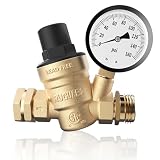
- Function: Prevent water pipes from being damaged due to high pressure, suitable for campers, trailers, and RV plumbing systems.
- CSA Approved: Meets NSF/ANSI 61 and NSF/ANSI 372. C46500 lead-free brass treated by hot casting process technology. Each regulator is tested to contain less than 0.13% lead, giving you a safe and healthy RV life.
- Compatible: Designed with 3/4" garden hose thread. It is compatible with all American water sources, easy to use. RVGUARD regulator inlet screen helps to filter out impurities in water.
- Adjustable: Factory Setting: 45 PSI, water pressure setting can be easily adjusted to whatever water pressure you need by turning the screwdriver. Turn clockwise to increase pressure, and turn counterclockwise to decrease pressure.
- Gauge Display: The water pressure can be seen on the gauge, which is necessary for RVs, campers, and travel trailers.
How to check household water pressure
- Stop water use in the house, including fixtures and water-using systems, so the reading reflects static service pressure.
- Attach a water-pressure gauge to a hose bibb or another suitable cold-water connection.
- Open the supply to the connection and read the gauge. If the property has separate supplies, such as an independent irrigation source, test each one separately.
- Compare the result with EPA WaterSense’s recommended 45–60 psi range. A static reading helps identify supply pressure but does not show every pressure or flow condition while water is running.
EPA says that if pressure is substantially above 60 psi, a homeowner may want a professional to adjust or install a PRV. Measure first rather than assuming that a particular symptom is caused by high pressure or that an adjustment alone will fix it. EPA WaterSense: Home Maintenance.
The Tool Desk
Outbyte Driver Updater FREEFix the driver behind crashes, sound loss and screen glitchesFind Drivers →Outbyte PC Repair FREERepair Windows errors before they cause bigger problemsFix Now →Choosing a regulator for a building
Choose a PRV for the actual service conditions, not simply because its connections match the pipe. Verify the model’s rated inlet-pressure range, outlet adjustment range, flow capacity, connection type and size, potable-water suitability, and required approvals. EPA’s selection guidance says to operate around the middle of the regulator’s rated pressure range and not to select by pipe size alone. It gives minimum flow through a PRV of 10–15% of maximum desired flow as selection guidance; that figure must be considered with the product manual and design conditions, not treated as a universal sizing rule.
Rank #3

- Protects RV/Marine Plumbing: Keep your RV/marine plumbing safe with this brass Camco water pressure regulator. Safeguard against high-pressure city water to protect your hoses & plumbing from potential damage.
- Automatic Pipe Burst Protection: Ensure your pipes are safe using the built-in PSI Guard, preset at 40-50 PSI for automatic burst protection. (Maximum incoming pressure is 125 PSI.)
- Safe for Drinking Water: Camco’s pressure regulator for RV water hoses is drinking water safe. It’s a must-have camper tool for setups that require outstanding water quality.
- Certified Lead-Free: This water regulator for RV campers is crafted from high-quality brass material. It is CSA lead-free content certified to NSF/ANSI 372 & compliant with all federal & state-level lead-free laws.
- Patented Technology: Expertly crafted, this patented RV accessory has undergone extensive testing and quality control to meet the highest standards.
Specifications differ by model. For example, Watts lists a 25–75 psi adjustable range and a standard 50 psi setting for one LFU5B-Z3 product configuration. Those values describe that configuration, not all PRVs. Watts LFU5B-Z3 product information.
Where a PRV is installed
EPA guidance places the PRV downstream of the connection to the water source. A common point-of-entry arrangement is near and downstream of the meter, but local authorities may allow a different order for the meter and valve. Follow local requirements and the instructions for the meter and selected PRV. Caleffi: Pressure Reducing Valves.
Rank #4
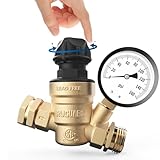
- Adjustable Knob: RVGUARD new design water pressure regulator with an adjustable knob. Just use your hand to adjust the pressure, no tool required, easy to operate. Turn clockwise to increase pressure, and turn counterclockwise to decrease pressure. Factory Setting: 45 PSI.
- Function: Prevent water pipes from being damaged due to high pressure, suitable for campers, trailers, and RV plumbing systems.
- CSA Approved: Meets NSF/ANSI 61 and NSF/ANSI 372. C46500 lead-free brass treated by hot casting process technology. Each regulator is tested to contain less than 0.13% lead, giving you a safe and healthy RV life.
- Compatible: Designed with 3/4" garden hose thread. It is compatible with all American water sources, easy to use. RVGUARD regulator inlet screen helps to filter out impurities in water.
- Gauge Display: The water pressure can be seen on the gauge, which is necessary for RVs, campers, and travel trailers.
Keep the valve accessible for checking and maintenance. Caleffi recommends isolation valves and a downstream pressure gauge in its installation discussion. For the arrangement it describes, the valve can be installed in horizontal or vertical pipe, but not upside down, which can encourage dirt accumulation and malfunction. Installation orientation is model-specific, so confirm the manufacturer’s instructions before installation.
Thermal expansion and a closed plumbing system
A PRV may create a closed plumbing system by limiting reverse flow toward the supply. Water expands as it heats in a water heater, and the downstream system may need a means to accommodate that expansion. Whether an expansion-control device is required depends on the plumbing layout and applicable local code. EPA advises builders to consult local plumbing codes on thermal expansion; do not assume every installation has the same requirement. EPA WaterSense Labeled Homes Technical Sheet: Service Water Pressure (July 2023).
Best Value

- Water pressure regulator made with brass construction and stainless steel liquid-filled gauge; includes support details on packaging.
- Adjust and monitor your water pressure to control what goes into your RV's plumbing. Installation is as easy as attaching a water hose (each product comes with an illustrated guide).
- U.S.-based phone and email support. Renator performs quality control checks in our Florida warehouse. The regulator is made out of heavy duty brass, and the gauge is made of stainless steel and contains silicone oil to reduce friction of internal components.
- Low Lead. Each batch of regulators is tested to contain less than .13% lead. The regulator's inlet screen also helps to filter out debris and other impurities.
- Ready to use. The regulator is compatible with US water sources, including 3/4" garden hose threads and NH threads, and is preset at 45 PSI. It is adjustable up to 160 PSI- we recommend referring to your RV’s manual for optimal settings. Contact us for any questions by clicking on our store name, "Cartlee", and clicking on the ask a question button.
When to get a plumber’s help
Have a qualified professional assess the system if measured pressure is well above the recommended range, if the PRV needs adjustment or replacement, or if pressure drifts, the valve leaks, or performance becomes unreliable. A setting, unsuitable sizing, wear, debris, or other system conditions can produce pressure that is too high, too low, or unstable. The sources cited here do not establish a universal service life or maintenance interval, so check the documentation for the installed model rather than relying on a fixed replacement schedule.
Quick Recap
Product prices and availability are accurate as of the date/time indicated and are subject to change. Any price and availability information displayed on Amazon at the time of purchase will apply.

