Recommended Free Tools
Choose a walk-behind trencher for compact access, short or precise trenching, and relatively modest dimensions. Choose a ride-on trencher when the site is open and the job needs more production, greater trench capacity, or better performance in hard ground. The correct choice depends on the trench’s required depth and width, total length, soil, roots and rock, surface sensitivity, turning room, transport limits, schedule, budget, and operator comfort—not on the machine label alone.
Models vary substantially. United Rentals gives an upper-end walk-behind example that can reach 4 feet and large ride-on examples that can reach 18 feet; those figures are not universal class limits. Confirm the specifications of the exact rental, its chain and attachments, and the current operator manual before committing to the job.
As an Amazon Associate I earn from qualifying purchases.
The practical difference at a glance
| Factor | Walk-behind trencher | Ride-on trencher |
|---|---|---|
| Operator position | Operator walks behind and controls the machine from the handlebar or control station. | Operator sits or stands on the machine while driving and trenching. |
| Best site type | Residential lots, landscaping areas, narrow side yards, and work around buildings, fences, trees, and other obstacles. | Open commercial, utility, agricultural, or infrastructure sites with room to maneuver. |
| Typical project scale | Shorter, narrower, more precise trenches for cable, irrigation, drainage, fencing, and similar work. | Longer production runs, wider or deeper trenches, and projects where cycle time matters. |
| Access and maneuverability | Compact footprint usually makes gates and confined approaches easier, subject to the actual machine width. | Requires more entry width, turning space, and ground bearing capacity. |
| Ground capability | Can handle suitable soil with the right chain, but progress and operator effort suffer in rock, hardpan, heavy roots, or frozen ground. | More machine mass and hydraulic capacity can help in difficult ground, provided the selected attachment is appropriate. |
| Surface impact | Lower mass generally reduces loading on finished surfaces, although tracks or wheels can still damage turf and paving. | Greater weight and turning forces increase the risk of rutting, cracking, or other surface damage. |
| Operator workload | Walking and managing the machine for an extended run can be physically demanding. | Reduces walking during production, but demands competent operation of a larger, heavier machine. |
| Transport | Often simpler to load and move, but verify trailer, ramp, and vehicle requirements for the specific unit. | May require a larger trailer, tow vehicle, loading equipment, and a route that can accommodate the machine. |
This comparison describes the usual trade-offs, not guaranteed specifications. A compact ride-on may fit where a large walk-behind does not, and a powerful walk-behind may exceed the capacity of a smaller ride-on. Use the machine’s manual and rental documentation for final dimensions, weight, depth, and width.
The Tool Desk
Outbyte Driver Updater FREEScan for outdated or missing drivers - takes under a minuteDriver Scan →Outbyte PC Repair FREEClear out junk files and repair common Windows errorsFree Scan →Begin with the trench, not the machine
Write down the finished trench requirements before looking at equipment. Measure the required depth and width at the bottom, estimate the total linear footage, and note whether the trench must remain a consistent size. A machine that can start a slot may still be unsuitable if it cannot maintain the required dimensions, clear spoil, or work at the needed pace.
#1 Best Overall

- STRONG, DURABLE DESIGN — Thanks to the tough, polycarbonate wraparound construction, these anti fog safety glasses for men and women offer superior protection from both direct and peripheral threats. They are the ANSI Z87.1 safety glasses women and men trust.
- LIGHT, COMFORTABLE AND ADJUSTABLE — These clear eye protection glasses have extendable arms and an adjustable soft nose pad so you always get the perfect fit. They're also armed with non-slip rubber grips so your mens safety glasses stays on.
- ULTRASHIELD LENS TECHNOLOGY — Compared to most clear protective glasses, the premium coating on our safety glasses anti fog is 5x more fog resistant and 2x more scratch resistant. No fog, no scratch, and zero optical distortion.
- 100% UV PROTECTION — The clear lenses of these protective glasses block 100% UV radiation. They make great lab safety glasses, shooting glasses, and work glasses for men. They’re great as construction glasses, medical safety glasses, antifog safety glasses and more.
- BUILT TO LAST — Your safety glasses for women and men come with a lifetime warranty. If there’s an issue, we’ll replace your saftey glasses or refund you because we stand behind the high quality of every product and we’ve got your back, no matter what.
Depth and width
Depth determines boom reach, chain configuration, stability, and the amount of spoil the machine must handle. Width affects chain selection and whether the trench will accept conduit, pipe, drainage material, or bedding. Do not use a single “walk-behind depth” or “ride-on depth” number as a rule. The cited rental guidance includes a 4-foot walk-behind example and ride-on examples up to 18 feet, but those are upper-end examples tied to particular models and configurations.
Length and production pace
For a short connection or a few precise runs, the time spent transporting and positioning a larger unit can outweigh its higher digging rate. For a long, repetitive alignment, production becomes more important: repeated repositioning, spoil handling, operator fatigue, and daily schedule all influence the economical choice. Ask the rental provider what production is realistic for your soil and chain rather than relying on a generic feet-per-hour claim; no market-wide productivity figure is established here.
What must fit in the trench
List the utility, pipe, cable, drainage stone, or other material that will occupy the slot. Include required cover, bedding, separation, and room for installation. If the trench must be wider than the available chain or deeper than the available boom, changing machines is safer than forcing an undersized setup.
Do these 3 things before closing this tab:
1Clear out junk files and repair common Windows errors2Fix the driver behind crashes, sound loss and screen glitches3Repair Windows errors before they cause bigger problemsWhen a walk-behind trencher is the better fit
Constrained access and careful positioning
Walk-behind units are designed for jobs where a compact machine can reach the work through a gate, along a side yard, or between existing improvements. The operator can make small positioning adjustments while standing beside the machine and can work around landscaping, posts, walls, and other obstacles. Measure every pinch point, including the narrowest gate, the path to the work area, and the space needed to turn at the end of a run.
Short, precise residential and landscape work
Common applications include irrigation lines, residential communications cable, shallow drainage, fence footings, and landscape installations. These jobs often involve several short alignments rather than one uninterrupted production trench. A walk-behind can be practical when protecting finished surfaces and avoiding disturbance matters more than maximum output.
Trade-offs to plan for
- Sustained walking and vibration can be tiring, especially on long runs or slopes.
- Hard, rocky, frozen, or root-filled ground can slow progress and increase shock loads.
- Small size does not eliminate stability risks; the machine can move unexpectedly on uneven terrain.
- Its practical capacity still depends on the exact boom, chain, and attachment, not just the fact that it is walk-behind.
Schedule regular breaks, keep the route clear, and stop if fatigue prevents precise control. Operator comfort is a productivity and safety issue, not merely a convenience.
Rank #2

- WIDE APPLICATION RANGE PC lens has high light transmittance. It can be used in various situations. Suitable for walking, jogging, cycling, road trips or travel, to construction, industry and more.
- Adjustable temples: The length of the temples can be adjusted, so that regardless of the face or head size, it is suitable for men, women, children, teenagers, adults and the elderly. The ergonomic integrated lens design is comfortable and stress-free.
- High-definition anti-fog field of vision: double-layer coating, strong hardness and abrasion resistance, high-tech lens without fogging, high-definition transparency of UV lens, wide-angle vision with humanity design of optical glasses. It also has anti-dust, anti-pollen and anti-allergic functions. It can reduce ultraviolet rays and block glare, protect eyes from harmful light and have anti-splash function to protect eyes from strong impact.
- Ideal for work and entertainment: very suitable for driving, shopping, washing, painting, walking, laboratory, woodworking, construction, DIY work, grinding machine, car factory, ironworks, cycling, shooting or other outdoor activities. In these activities, it can protect your eyes well.
- WIDE APPLICATION RANGE PC lens has high light transmittance. It can be used in various situations. Suitable for walking, jogging, cycling, road trips or travel, to construction, industry and more.
When a ride-on trencher is the better fit
Open sites and long alignments
Ride-on trenchers suit commercial irrigation, pipelines, sewer lines, transmission lines, and other work with long, continuous runs or repeated passes. The onboard driving position reduces the need to walk behind the machine and can make a larger production program more manageable.
PC Slower Than It Used to Be?
A free scan shows the junk files, broken settings and background clutter dragging Windows down - then fixes them in one click.Free scan · Windows 10 & 11Crashes, No Sound, or Screen Glitches?
Random freezes, missing sound and display glitches usually trace back to one bad driver. Find and replace yours safely.Free scan · under a minuteGreater capacity and difficult ground
Ride-on equipment is often selected when the trench must be wider or deeper, or when additional machine mass and hydraulic capacity are useful in hard or rocky conditions. The chain still has to match the ground. More horsepower cannot make an unsuitable tooth pattern safe or efficient.
Space, loading, and surface consequences
Confirm that the entrance, turning area, staging zone, and spoil area can accommodate the machine. Large ride-ons can be heavy enough to rut turf, compact soil, crack weak paving, or overload slabs and underground structures. Use ground-protection measures where appropriate and obtain permission before crossing finished surfaces. A ride-on that fits the trench but cannot reach the work without damaging the site is the wrong choice.
Match the chain and attachment to the ground
Soil conditions can change the correct machine configuration. Tell the rental provider whether the route contains ordinary soil, clay, gravel, cobbles, rock, frost, pavement, buried debris, or large roots. Chain teeth and other attachments should be selected for those conditions; United Rentals specifically advises matching them to the ground.
Roots
A trencher can be damaged when forced through large roots. If the alignment contains many substantial roots, a mini excavator with a rake attachment may be more appropriate, according to United Rentals. That is a tool-selection alternative, not a universal performance or cost comparison; inspect the site and confirm the method with the equipment provider.
What’s actually slowing this PC down?
Pick the symptom - the matching free tool is one click away.
Rock, sediment, and hard layers
Rocky or sediment-heavy material can cause binding, shock loading, slow digging, and premature tooth wear when the setup is wrong. Ask which chain is approved for the material, what limitations apply, and how the provider expects spoil to be managed. Do not keep increasing throttle or down pressure when the chain is stalling.
Rank #3
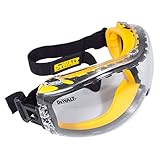
- DEWALT ToughCoat hard coated lens provides tough protection against scratches.
- DEWALT anti-fog lens coating provides tough protection against fogging.
- Soft, dual injected rubber conforms to the face to provide a high level protection from dust and debris.
- Adjustable, elastic cloth head strap provides a comfortable fit.
- Ventilation channels allow breathability and added protection against fogging.
Frost and pavement
Frozen ground and pavement may require a different cutting strategy or a different machine entirely. Verify whether the rental’s attachment is intended for that material and whether the finished trench can meet your required dimensions. If the machine cannot cut without excessive force, stop and reassess rather than treating damage as normal progress.
A decision framework you can use before renting
- Record the trench geometry. Write the required depth, width, length, and any tolerance for variation.
- Map access. Measure gates, paths, overhead clearance, turning areas, slopes, and the location where the machine and trailer can be unloaded.
- Classify the ground. Identify soil, rock, roots, frost, pavement, buried debris, and wet or unstable areas.
- Check surface sensitivity. Mark turf, decorative paving, slabs, finished driveways, and other areas that cannot tolerate concentrated loads or sharp turns.
- Set the production requirement. Decide whether the work is a few precise runs or a long schedule where operator fatigue and repositioning will dominate.
- Confirm the configuration. Have the rental provider match a specific machine, boom, chain, tooth pattern, and attachment to the dimensions and ground.
- Verify logistics. Confirm machine weight, transport method, trailer and tow-vehicle ratings, loading equipment, fuel or charging needs, and return requirements.
- Compare the whole job cost. Include delivery, pickup, loading, surface protection, labor, spoil handling, and downtime—not only the base rental rate.
- Review safety requirements. Complete utility locating, read the current manual, obtain the rental orientation, and plan exclusion zones and personal protective equipment.
Local rental prices and availability vary by location and were not established in the cited guidance. Request a current quote for the exact model and dates rather than applying a published price from another market.
Preparation and safety requirements
Locate every utility before digging
Contact the local One-Call system before starting and separately contact utilities that do not subscribe to that system. This instruction appears in Vermeer’s RT60 Rental Center Guide. Mark the responses on the ground, preserve the markings, and follow the applicable local locate and tolerance-zone rules. A utility locate is a planning requirement, not permission to ignore the machine manual or safe digging practices.
“Before you start any digging project, do not forget to call the local One-Call system in your area and any utility that does not subscribe to the One-Call system.” — Vermeer Corporation, RT60 Trencher Rental Center Guide, April 2014
Use the current manual and orientation
Read the manual for the exact trencher supplied. Model-specific guidance differs, and a 2014 guide cannot replace current instructions, local rules, or the rental provider’s orientation. Confirm controls, emergency shutdown, steering, attachment engagement, slope limits, loading procedure, and maintenance checks before entering the work area.
Wear appropriate PPE
- Work boots with suitable traction
- Safety glasses or other approved eye protection
- Work gloves appropriate to the task
- A hard hat where the site hazard assessment requires it
United Rentals lists these items in its trencher guidance. Eye protection does not make operation safe by itself: keep guards in place, use the exclusion zone, and follow the manual.
Rank #4

- Anti-Fog Lens: Professional coating keeps these safety glasses clear in humid, hot, and cold conditions, so you see sharp detail without stopping to wipe; Reliable eye protection that stays clear when standard glasses fog up
- Impact Resistant: Polycarbonate lenses meet ANSI Z87.1, blocking flying debris and particles on active job sites; Anti-scratch protective eyewear designed as tough safety glasses for work in construction, labs, and outdoor settings
- Adjustable Fit: Temples adjust in angle and length to match different face shapes, while soft rubber nose pads and tips prevent slipping; Safety glasses for men and women with cushioned contact points that sit comfortably for hours
- Wraparound Protection: Wraparound lenses give panoramic coverage at the firing line and on the airsoft field during outdoor target practice; Eye protection for shooting with a full peripheral guard from every angle
- UV Protection: Lenses block 99.9% of harmful UV rays, cutting glare and eyestrain in bright outdoor conditions; Choose from clear, yellow, or gray to match your lighting needs, making these safety glasses ideal as work glasses for gardening, cycling, or the job site
Keep people away from the machine
Vermeer’s RT200 guide warns that contact with the moving chain can cause death or serious injury, and it also warns about sudden machine movement and rollover. Keep spectators and unprotected workers out of the work zone, establish a clear communication method, and never allow anyone to approach the chain, boom, or discharge area while the machine is operating.
Respect movement and rollover hazards
Inspect slopes, soft shoulders, drop-offs, trench edges, and crossing points before moving. Travel at a controlled speed, keep the machine within the manual’s limits, and stop when visibility or traction is inadequate. Do not ride on a machine that is not designed for passengers; the RT200 guide specifically says not to ride on the machine.
Independent reader supportYour contribution helps us test, update, and keep practical guides available for everyone.Operating practices that prevent avoidable damage
For a walk-behind trencher
- Walk the route before starting and remove loose obstacles that could enter the chain.
- Keep both hands positioned as instructed and maintain a stance that lets you step clear if the machine moves unexpectedly.
- Make gradual direction changes; sharp turns can stress the chain and scar the surface.
- Pause when the chain binds, the machine surges, or the spoil stream changes abruptly.
- Use the emergency stop and follow shutdown procedures before clearing material or inspecting the attachment.
For a ride-on trencher
- Check that the travel path and turning envelope are clear before lowering the boom.
- Keep bystanders outside the exclusion zone, including during repositioning.
- Use low travel speeds near edges, slopes, utilities, and finished surfaces.
- Monitor ground bearing and rutting; stop if the machine begins to sink or destabilize.
- Never carry passengers or use the machine outside the seating and restraint instructions in its manual.
For either type, shut down, isolate energy as directed, and follow the manual before removing packed soil, changing teeth, or making adjustments. Never reach toward a moving chain.
Transport, site protection, and scheduling
Transport planning often decides between categories before digging begins. A walk-behind may be easier to load, but the specific unit can still require a rated trailer and ramp. A ride-on may need a heavier trailer, a suitable tow vehicle, loading equipment, and a delivery route that can handle its width and weight. Verify ratings rather than estimating from appearance.
Plan where the machine will be unloaded, fueled, parked, and secured overnight. Reserve a spoil area that does not block access or overload a slab. Protect lawns and paving with approved mats when the provider or site conditions call for them, and account for the time needed to install and remove that protection.
Schedule utility locating, delivery, operator orientation, and restoration in the right order. A larger machine can reduce digging time but increase setup, transport, and surface-restoration time; a compact machine can enter sooner but take longer on a long alignment. Compare the complete sequence, not one isolated operating step.
Best Value

- RELIABLE EYE PROTECTION: These safety glasses feature durable polycarbonate lenses designed to help protect against flying debris, wood chips, metal shavings, and UV rays; Designed to meet ANSI Z87.1 standards, the anti-scratch lenses help maintain clear visibility during daily use, making them dependable protective eyewear for various tasks
- LIGHTWEIGHT COMFORT: Designed for lasting comfort, these safety glasses for men and women fit most adult face shapes without creating excessive pressure during extended wear; The lightweight one-size design provides reliable eye protection for work and everyday projects
- TRUE VISION: Each lens delivers sharp images and clear visibility with no optical distortion; These clear safety glasses also work well as protective glasses for woodworking, laboratory measurements, shooting, and other precision applications
- VERSATILE USE: From construction and cycling to yard work and outdoor sports, these safety glasses for women and men help protect against flying particles in different work and recreational environments; They are also suitable for lab environments and various applications
- MULTIPLE PACK OPTIONS: Available in multiple pack sizes to fit individual projects, workshops, classrooms, and workplace needs; Choose the right quantity for personal use or team purchases while keeping dependable safety glasses on hand whenever needed
Signs that the selected trencher is wrong
- The boom or chain cannot reach the specified depth or width without exceeding the manual’s limits.
- The machine cannot pass the narrowest access point or turn without striking structures.
- Tracks or wheels are rutting, cracking, or destabilizing the surface.
- The chain repeatedly stalls, binds, throws material unpredictably, or suffers rapid tooth damage.
- Roots, rock, pavement, or frost require force beyond the attachment’s intended use.
- The operator cannot maintain safe control because of fatigue, slope, visibility, or vibration.
- People, vehicles, or utilities cannot be kept outside the required exclusion area.
Stop work when any of these conditions appears. Photograph the condition, shut down safely, and ask the rental provider whether a different chain, attachment, machine, or digging method is needed. Do not improvise by removing guards, adding unauthorized weight, or forcing the boom.
When another machine may be better
A trencher is optimized for a continuous, relatively narrow slot. It may be the wrong tool for isolated holes, broad excavation, mixed digging, heavy root removal, or a route that repeatedly changes width and depth. United Rentals notes that a mini excavator with a rake attachment may be preferable where many roots must be cleared.
Choose an alternative only after defining the excavation and confirming the attachment’s suitability. The available guidance does not establish a general cost or performance comparison between trenchers and mini excavators, so obtain project-specific advice and pricing rather than assuming one category is always cheaper or faster.
Quick wins for a faster PC:
Clear out junk files and repair common Windows errorsFree Scan →Fix the driver behind crashes, sound loss and screen glitchesFind Drivers →Repair Windows errors before they cause bigger problemsFix Now →Examples of the choice in practice
Residential irrigation beside a house
A narrow gate, several short runs, finished paving, and moderate depth favor a walk-behind if its measured width, depth, and chain match the soil. Protect the paving, locate utilities, and plan turns so the chain does not strike foundations or edging.
Commercial irrigation across an open field
A long alignment with few obstacles favors a ride-on when the site can support its weight and the selected boom and chain meet the trench dimensions. Confirm spoil handling and delivery access before choosing the larger unit.
Utility route through root-filled ground
Neither category should simply be forced through large roots. Have the provider inspect the route; a mini excavator with a rake attachment may be more suitable for clearing many roots before trenching.
Deep pipeline trench on a constrained lot
Depth may point toward a larger ride-on, but access, ground loading, utility clearances, and trench safety can rule it out. If the machine cannot reach the work without unacceptable surface or stability risk, revise the method rather than relying on the category label.
Bottom-line selection
Rent a walk-behind trencher when compact access, precise short runs, and lower site impact are the priority and the machine’s actual configuration meets the trench requirements. Rent a ride-on when an open site, long production run, harder ground, or greater depth and width justify the additional size, transport, and surface-management demands. In both cases, let measured dimensions, soil and roots, access, and the current machine manual decide the configuration. Locate utilities, complete the rental orientation, wear the required PPE, and keep everyone clear of the moving chain.
Quick Recap
Product prices and availability are accurate as of the date/time indicated and are subject to change. Any price and availability information displayed on Amazon at the time of purchase will apply.

