Windows Errors? Fix Them Before They Spread
Repair common Windows errors and clear accumulated junk for a smoother, more stable PC - no reinstall needed.Free scan · no reinstallCrashes, No Sound, or Screen Glitches?
Random freezes, missing sound and display glitches usually trace back to one bad driver. Find and replace yours safely.Free scan · under a minuteSome links on this page are affiliate links: if you buy through them we may earn a commission, at no extra cost to you.
Updating exterior brick is not just a color decision. Brick is porous, and most residential brick veneer walls are designed as drainage walls, not waterproof surfaces. That means rainwater can get past the face brick, drain through the air space behind it, and exit at weep holes near the bottom of the wall. Any finish that blocks drying, covers weeps, or traps water can turn a cosmetic upgrade into a masonry repair problem.
The four best ways to update exterior brick are: clean and repair it, stain it, limewash or German smear it, or paint it with a proper masonry system. The easiest and lowest-risk option is usually cleaning plus repointing. Stain gives a durable color change while preserving the brick texture. Limewash creates a soft, aged finish that remains breathable. Paint gives the biggest transformation, but it also creates the highest maintenance commitment.
As an Amazon Associate I earn from qualifying purchases.
What’s actually slowing this PC down?
Pick the symptom - the matching free tool is one click away.
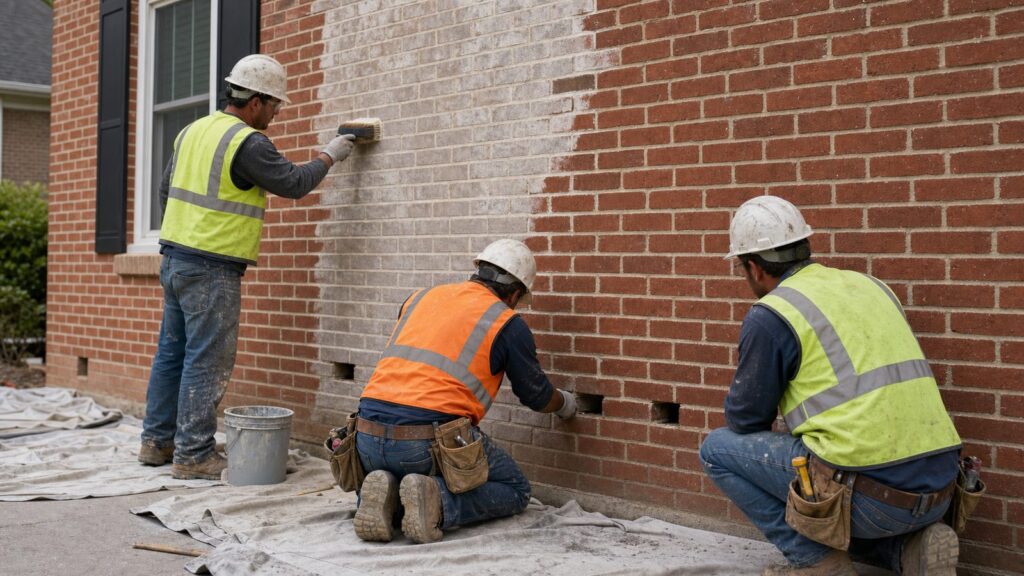
On our job sites, we do not start with a color chart. We start with the wall. If the mortar is cracked, brick faces are spalling, water stains are active, or weep holes are missing or blocked, the finish choice comes later. The right order is inspection, repair, cleaning, sample panel, then coating or finish. That sequence protects the look of the project and the wall behind it.
1. Clean, Repair, and Repoint the Brick First
The most overlooked way to update exterior brick is to make the existing brick look cared for again. Dirt, algae, efflorescence, failing mortar joints, rust stains, cracked caulk, and mismatched patchwork can make a solid brick wall look tired. Cleaning and repair often deliver the best return because they improve both appearance and performance.
#1 Best Overall

- 【ANTI CLOG】Beautiful, finished look.Rugged and strong stainless steel cover designed to weather the elements. This wall weep covers keeps dust and debris out of wall cavities, and won't get clogged with dust or debris, while maintaining needed ventilation.
- 【FOR WEEP HOLE】With size: 7x3cm/2.76x1.18inch(LxW). Universal brick weep vent solution that fits even non-standard size weep hole inserts.Can be cut or stacked to fill different size weep holes. Pinch ends to push into the weep hole until the grill is flush with the wall.
- 【YOU WILL GET】You will receive 100 pcs stainless steel brick weep hole covers.Stops and keeps out mice,wasps,bees,lizards,scorpions,etc.Hole filler 2.76 inches tall. Weep hole covers are stainless steel made,stainless steel provides excellent clamping and a long service life.
- 【EASY TO INSTALL】The flexibility and convenient size of the weep hole covers make for an easy and secure installation process, you just need to pinch and push weep covers into place.You need wear a pair of gloves when installing to avoid scratch.
- 【WITH SHOVEL】There is a stainless steel shovel for your installation work. With size about 17.6x3.9cm, compact and lightweight for easily carrying. With ergonomic handle design, you can easily to grip and will not feel fatigue. A nice hand tool for your replacement work.
Before any finish goes on brick, inspect the wall from grade to roofline. Look for open mortar joints, stair-step cracks, spalled brick, loose brick, white powdery efflorescence, dark moisture staining, rust around lintels, cracked sealant at windows and doors, and landscaping or mulch piled against the masonry. Also check the bottom courses for weep holes. They should remain open, visible, and unobstructed after any work.
What a Proper Brick Refresh Includes
A basic brick refresh can include soft washing, hand cleaning stained areas, treating efflorescence, removing biological growth, replacing failed caulk, repointing deteriorated mortar joints, and replacing damaged brick. On older homes, mortar matching matters. Mortar that is too hard can damage softer historic brick because the brick ends up absorbing movement and moisture stress instead of the mortar joint.
Do these 3 things before closing this tab:
1Repair Windows errors before they cause bigger problems2Scan for outdated or missing drivers - takes under a minute3Clear out junk files and repair common Windows errorsPressure washing deserves caution. Sound modern brick and mortar can often handle controlled washing, but old mortar, soft brick, cracked joints, and high-pressure tips are a bad combination. Too much pressure can erode mortar, scar brick faces, and drive water into the wall cavity. We prefer masonry-safe cleaners and soft washing where possible, then reserve higher pressure for surfaces that are sound enough for it.
Repointing or tuckpointing should be completed before staining, limewashing, or painting. Typical 2026 repointing costs run about $500 to $2,500 for many residential jobs, or roughly $3 to $25 per square foot depending on depth, access, joint condition, and mortar matching. More complex, high, chimney, or historic work can run $25 to $40 per square foot or more. That is not cosmetic padding in the budget. It is the work that lets the finish survive.
When Cleaning Is Enough
Cleaning and repair may be enough when the brick color still works with the roof, windows, gutters, stone, concrete, and landscaping. A wall with good brick, refreshed mortar, clean sills, repaired sealant, and open weeps can look dramatically better without changing the brick color at all.
This option is also the best first move when the homeowner is unsure about permanent changes. Once brick is painted, smeared heavily with mortar, or coated with the wrong sealer, going backward is expensive and sometimes unrealistic. Cleaning and repair keep future options open.
Recommended Free Tools
2. Stain Brick for a Breathable Color Change
Brick stain is often the best choice when you want a real color update but still want the wall to look like brick. Stain penetrates absorbent masonry instead of building a thick film on top. That helps preserve texture and vapor permeability better than standard paint, especially on bare brick that has not been sealed or previously painted.
Stain works best when the brick absorbs water. A simple field test is to spray or splash clean water on several areas: sunny walls, shaded walls, repaired brick, and mortar joints. If water darkens and absorbs into the brick, stain may be a good candidate. If water beads on the surface, the wall may have an existing sealer or coating that changes the prep and product choice.
What Brick Stain Can and Cannot Do
Stain can shift red brick toward brown, charcoal, taupe, warmer red, or a more uniform modern tone. It can reduce strong orange tones and help mismatched repairs blend in. It usually will not hide heavy texture variation, deep stains, failed mortar, or severe color contrast as completely as paint. That is part of its appeal: the wall still reads as masonry, not a flat painted surface.
Expect professional exterior brick staining in 2026 to cost about $1 to $4 per square foot. Whole-house projects commonly land around $1,200 to $6,800, with some larger or more detailed jobs reaching $10,000. Costs increase with high elevations, difficult masking, porous or uneven brick, multiple stain colors, specialty mineral stains, and repair-heavy prep.
Stain should be sampled before the full project. We like sample panels that include brick and mortar, shaded areas, sun-exposed areas, old repairs, and at least one corner or transition. A 2-by-3-foot sample can be too small to judge undertone. A better mockup is often 4 by 4 feet or larger on a low-visibility wall where the homeowner can view it in morning light, afternoon sun, and cloudy conditions.
Rank #2

- Quality materials: Weep hole covers are Stainless spring steel made, Spring Steel provides excellent clamping and a long service life.
- Superior protection: Weephole covers stop debris while maintaining needed ventilation for the inner wall cavity.
- Easy to install: Hole filler 2.75 inches tall, Can be cut or stacked to fill different size weep holes. Pinch ends to push into the weep hole until the grill is flush with the wall. Please wear work gloves and eye protection when cutting.
- More applications: The package includes a set of 100 pieces of mesh netting, An added metal spatula made from stainless steel is included to aid in the installation.
- Satisfaction guaranteed: If you have any questions after receiving our products, please feel free to contact our customer service support, and we will give you a satisfactory solution.
Best Uses for Brick Stain
Stain is a strong option for homes where the brick is sound, bare, absorbent, and generally attractive but the color feels dated. It also works well when the homeowner wants lower maintenance than paint and does not want an intentionally aged limewash look.
Stain is not the right first choice when the brick is already painted, sealed, greasy, heavily patched, or moisture damaged. In those cases, the scope may need coating removal, repair, or a different finish system. If the wall has active water issues, staining should wait until drainage, flashing, gutters, grade clearance, and mortar are corrected.
3. Use Limewash or German Smear for an Aged, Textured Look
Limewash and German smear both change the character of brick, but they are not the same finish. Limewash is a mineral-based coating that bonds with masonry and creates a soft, chalky, breathable look. German smear uses mortar to create a heavier, rustic surface with more texture and coverage. Both can be beautiful when they fit the architecture. Both should be tested carefully because they change the entire personality of the house.
Limewash: Soft, Breathable, and Meant to Patina
Limewash is a good option when the goal is a lighter, historic, European, farmhouse, or cottage-style exterior without fully painting the brick. It is breathable and mineral-based, which makes it friendlier to masonry than many film-forming coatings. It also ages. That is not a defect when the look is intentional. Limewash can weather, fade, and develop variation over time, especially on exposed elevations.
Professional limewashing or whitewashing in 2026 typically costs about $1.50 to $5.00 per square foot. Some exterior pricing runs closer to $2.50 to $6.00 per square foot depending on preparation, height, masking, product quality, and distressing labor. For a 1,000-square-foot brick area, a straightforward specialty limewash may fall around $1,500 to $3,000, while larger or more detailed homes can cost more.
The most common mistake with limewash is treating it like ordinary paint. It has its own rules for surface moisture, weather window, mixing, application, wash-off timing, and curing. The final look depends on how much is removed from the brick face, how the mortar joints take the material, and how quickly the surface dries. Direct hot sun, high humidity, rain, freezing temperatures, and wind can all affect results.
German Smear: Heavier, More Permanent, More Labor
German smear is more aggressive. A mortar mix is applied over the brick and then partially wiped or worked back to expose some of the original face. The result can be rustic and substantial, with more depth than limewash. It can also be hard to reverse. Once mortar is worked into textured brick, removal can damage the face or leave permanent residue.
The Tool Desk
Outbyte Driver Updater FREEScan for outdated or missing drivers - takes under a minuteDriver Scan →Outbyte PC Repair FREERepair Windows errors before they cause bigger problemsFix Now →Full-home German smear projects commonly fall around $5,000 to $10,500 in 2026 contractor pricing, though the number varies widely with coverage, brick texture, access, sample time, cleanup, and how refined the final look needs to be. DIY material costs can be low, sometimes under a few hundred dollars for small projects, but the labor and risk are significant. On a full exterior, inconsistency is easy to see from the street.
With German smear, we pay close attention to weep holes, flashing, sills, and drainage paths. Mortar should not be packed into weeps, smeared over drainage openings, or bridged across details that need to shed water. The finish must stop where the wall system needs to breathe and drain.
4. Paint Brick Only With the Right Prep and Maintenance Plan
Painting brick gives the most dramatic before-and-after result. It can turn a dated red or orange brick house into a clean white, warm greige, deep charcoal, or classic painted masonry exterior. It can also create the biggest maintenance obligation. Paint is a film-forming finish. If moisture gets behind it and cannot dry, coatings can peel, blister, bubble, or accelerate freeze-thaw damage in cold or wet climates.
That does not mean brick should never be painted. It means painted brick needs a builder’s mindset, not a weekend shortcut. The wall must be dry, clean, repaired, and compatible with the coating system. The product should be made for masonry. The work should follow manufacturer instructions for pH, surface temperature, primer, recoat time, weather exposure, and cure time.
Quick wins for a faster PC:
Repair Windows errors before they cause bigger problemsFix Now →Fix the driver behind crashes, sound loss and screen glitchesFind Drivers →Clear out junk files and repair common Windows errorsFree Scan →Rank #3
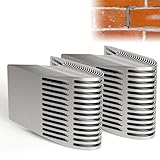
- Easy Installation: Made of spring stainless steel, this weep hole covers are not so flimsy or thin that they kink, our brick wall hole cover has super elasticity, easy to adjust the width and still spring back after bending them down. Confirm the size of the hole before use, squeeze and insert into weep holes, and use a rubber mallet to bump brick repair to complete the installation
- Safety Protection: Hole covering for walls help keeps the uninvited guests out. Weep shield brick keep the air circulation unhindered ensuring a more comfortable and hygienic living or working environment
- Firm and Stable: Made of high quality stainless steel, so brick weep hole covers can last for a long time without worrying about corrosion, rust or weather changes. Different from other products, weep hole mesh have good self-tensioning, stays firmly in place and can't be easily ripped out of the drain holes. Our brick wall hole covers can be trimmed and overlapped for use if required
- Perfect Appearance: These decorative cover for hole in wall enhance the aesthetic appearance of brick walls. Weep holes can sometimes be seen as unattractive gaps on the exterior of a building. With brick weep hole screens, the bricks appear more uniform and seamless, providing a visually appealing finish to the wall
- Hint: Weep hole cover will be sharper after cut, to avoid injury, gloves and goggles are recommended for use.When you receive the drain hole cover it will be covered with a layer of anti-rust oil, simply wipe it off with a cloth and it will work fine.
What Painted Brick Costs in 2026
Professional exterior brick painting commonly ranges from about $3,500 to $10,500 for a full house, with many typical projects near $7,000. Square-foot pricing often lands around $1.50 to $4.50 per square foot, and current production estimating can run about $2.62 to $4.93 per square foot. Some jobs cost more when the brick needs heavy cleaning, scraping, primer, old coating stabilization, lift access, complex masking, trim work, or multiple finish coats.
Brick painting often costs more than painting siding because brick is porous, textured, and product-hungry. It also exposes defects. Open mortar joints, stains, spalls, and uneven repairs become more obvious under a uniform color. If old paint is already failing, the prep can take longer than the painting.
Maintenance Is Part of the Paint Decision
A painted brick exterior should be treated as a maintained coating system. Plan for periodic washing, spot touch-ups, caulk inspection, crack repair, and repainting before coating failure spreads. The exact cycle depends on climate, sun exposure, product quality, color, and wall condition, but homeowners should think in years, not decades without attention.
Darker colors can get hotter in direct sun. White and light colors show dirt, algae, rust bleed, and splashback sooner. Complex homes with brick, trim, shutters, gutters, garage doors, porches, and railings need a coordinated color plan before the first coat goes on. Paint is the least forgiving option if the color is wrong.
Free tools Windows power users keep installed
One-click scans. No signup required.
For homes built before 1978, lead-safe renovation rules may apply when disturbing existing paint. That matters if old painted brick is being scraped, sanded, ground, or stripped, or if adjacent painted trim is disturbed during prep. Contractors working on covered pre-1978 housing need to follow lead-safe practices, containment, cleanup, and documentation requirements. This is a safety issue and a compliance issue, not just a painting detail.
Brick Update Cost Comparison
The right choice depends on the condition of the wall, how much change you want, and how much maintenance you are willing to own after the project. The table below gives practical 2026 planning ranges for a typical U.S. residential exterior. Local labor, access, wall height, repairs, and product selection can move these numbers significantly.
| Option | Typical 2026 Cost | Best For | Maintenance Level |
|---|---|---|---|
| Clean, repair, and repoint | $500-$2,500 average for many repointing jobs; about $3-$25 per sq. ft., with complex work $25-$40+ per sq. ft. | Sound brick that looks dirty, neglected, stained, or has failing mortar | Low to moderate |
| Brick stain | About $1-$4 per sq. ft.; many full exteriors $1,200-$6,800, sometimes up to $10,000 | Bare, absorbent brick where you want color change without hiding texture | Low to moderate |
| Limewash or whitewash | About $1.50-$5.00 per sq. ft.; some projects $2.50-$6.00 per sq. ft. | Soft, aged, breathable finish with natural variation | Moderate; touch-ups expected |
| German smear | Commonly $5,000-$10,500 for full-home contractor work | Heavy rustic texture and a more permanent old-world look | Moderate; harder to reverse |
| Painted brick | About $3,500-$10,500 typical; often $1.50-$4.50 per sq. ft. or $2.62-$4.93 per sq. ft. | Maximum color change and uniform coverage | Highest; repainting and coating repairs required |
How to Choose the Right Brick Update
Start with condition. If the wall has active leaks, spalling brick, missing mortar, rusting lintels, efflorescence, blocked weeps, failed flashing, or grade piled against the brick, choose repair before finish. A coating does not solve water movement. It can hide symptoms long enough for damage to spread.
Next, decide how much brick character you want to keep. If you like the brick but not the grime, clean and repoint. If you like the texture but not the color, stain. If you want a softer aged finish, limewash. If you want heavy rustic texture, German smear. If you want a completely new color field and accept maintenance, paint.
Climate matters. In cold or wet regions, trapped moisture can become a bigger problem because freeze-thaw cycles punish saturated masonry. In hot sun, dark coatings can stress materials and fade faster. Coastal humidity, irrigation overspray, shaded walls, and poor gutter performance also affect which finish makes sense.
Pre-Finish Checklist
Before committing to stain, limewash, German smear, or paint, use this checklist:
- Test absorption with water in several locations.
- Identify existing paint, sealer, waterproofing, or previous stain.
- Inspect mortar joints, brick faces, lintels, sills, flashing, and weep holes.
- Correct water sources such as bad gutters, splashback, sprinklers, or poor grade clearance.
- Repair cracks, replace spalled brick, and repoint failed mortar before coating.
- Clean with masonry-safe methods and allow proper drying time.
- Build a sample panel that includes brick, mortar, shade, sun, and repaired areas.
- Check HOA rules, historic district requirements, and any local permit triggers.
- Confirm lead-safe requirements for pre-1978 painted surfaces.
For commercial or multifamily properties, the scope should also include lift access, pedestrian protection, tenant notices, staging areas, runoff control, work hours, and a plan for keeping entries usable. Those logistics affect price and schedule as much as the finish itself.
Rank #4

- Weep Hole Covers for Brick Walls: Say goodbye to the cuties entering your home with these stainless steel weep hole covers. Specially designed to fit brick walls, these covers effectively stop debris from entering while maintaining the needed ventilation for the inner cavity of brick walls
- Easy Installation: Featuring a diamond-shaped hole design with a 0.12 inch x 0.23 inch aperture, these covers are effortless to install. The package includes inserts for attaching and replacing the brick weep hole screens, along with a hook for easily removing old screens
- Durable Construction: Made from high-quality stainless steel, these weep hole inserts are built to last. They offer reliable protection for your property while maintaining a sleek and unobtrusive appearance on your brick exterior
- Practical Accessories: Each set comes with 100 covers, ensuring you have an ample supply for your brick walls. Additionally, 5 rubber finger sleeves are included to prevent scratches while handling the covers
- Satisfactory service: Our weep hole covers for brick walls are designed to meet your needs. If you have any questions about our products, please feel free to contact our customer service support for a satisfactory solution
When to DIY and When to Hire a Pro
DIY can make sense for small, low-risk areas: a brick mailbox, garden wall, small porch wall, or a sample panel. Cleaning light dirt, testing stain colors, or applying limewash to a small detached feature can be reasonable if the brick is sound and accessible from the ground.
DIY becomes risky when the project involves a full house, two-story ladder work, scaffolding, old coatings, failing mortar, lead paint, moisture stains, historic masonry, or walls with missing weeps and flashing concerns. Product cost is not the main issue. The expensive mistakes come from trapping water, damaging mortar, using incompatible coatings, creating uneven color, or covering drainage paths.
Hire a professional when the exterior needs masonry repair before cosmetic work. Repointing, brick replacement, lintel rust repair, flashing corrections, and coating removal all require judgment. A good contractor will slow the project down long enough to find the reason for damage, not just cover it.
For painted brick, hire a pro if the home has old peeling paint, high walls, extensive masking, complex trim, or any chance of lead-based paint. A professional scope should specify cleaning method, repair allowances, primer, coating type, number of coats, weather limits, protection of weep holes, and what happens if hidden damage is found during prep.
What We Recommend Most Often
For many homes, the best sequence is conservative: clean the brick, repair the mortar, correct water issues, then decide whether the house still needs a finish. A surprising number of exteriors look right once the masonry is clean, joints are crisp, trim is painted, gutters are aligned, and landscaping is pulled back from the wall.
When color change is needed, we usually prefer the least film-forming finish that achieves the design goal. Stain is often the strongest middle ground for bare, absorbent brick. Limewash is excellent when the homeowner wants movement, patina, and a softer historic look. German smear should be chosen only when the heavier texture truly fits the house. Paint belongs on the table when the owner wants the most dramatic transformation and understands the maintenance cycle.
The main rule is simple: do not use a cosmetic finish to avoid masonry work. Brick walls need to drain and dry. Keep weep holes open, maintain flashing and sealants, match mortar correctly, and use breathable masonry systems where possible. When those basics are handled, an exterior brick update can make a house look current without shortening the life of the wall.
Frequently Asked Questions
What is the easiest way to update exterior brick without painting it?
The easiest low-risk option is cleaning, minor repair, and repointing. It removes dirt, algae, efflorescence, and failing mortar without permanently changing the brick. If you want color change without paint, brick stain is usually the next best option for bare, absorbent brick.
Is it better to paint, stain, or limewash exterior brick?
Stain is best when you want a color shift while keeping brick texture and breathability. Limewash is best for a soft, aged finish that will patina. Paint is best for a dramatic uniform color change, but it requires the most prep and long-term maintenance.
How much does it cost to paint a brick house in 2026?
Professional exterior brick painting commonly costs about $3,500 to $10,500, with many projects near $7,000. Per-square-foot pricing often falls around $1.50 to $4.50, while detailed estimating ranges can run about $2.62 to $4.93 per square foot.
Can painting brick damage it?
Painting brick can cause problems if moisture is trapped behind the coating. Failed coatings may peel, blister, or contribute to freeze-thaw damage in cold or wet climates. The wall should be repaired, dry, clean, and coated with a proper masonry system.
Should brick be pressure washed before staining or painting?
Brick should be cleaned before finishing, but high pressure is not always the right method. Too much pressure can damage old mortar or drive water into the wall. Soft washing and masonry-safe cleaners are often better, especially on older or weakened brick.
Can I cover weep holes when painting or limewashing brick?
No. Weep holes must stay open so water can drain from behind brick veneer. Do not fill them with paint, mortar, caulk, foam, mulch, or landscaping. Photograph them before work and inspect them again after the finish is complete.
Quick Recap
Product prices and availability are accurate as of the date/time indicated and are subject to change. Any price and availability information displayed on Amazon at the time of purchase will apply.

