What’s actually slowing this PC down?
Pick the symptom - the matching free tool is one click away.
Some links on this page are affiliate links: if you buy through them we may earn a commission, at no extra cost to you.
Transplant shock is a general term for stress after a tree is moved, often because roots were disturbed or lost; it is not a diagnosis that explains every wilted or discolored tree. If a newly planted tree looks stressed, check moisture in the root ball and nearby soil, confirm the root flare is not buried, and review the planting site before changing how you care for it. Watering needs vary with weather, soil drainage, species, and tree size, so use local guidance and the tree’s actual condition rather than one schedule as a universal rule.
What is transplant shock?
Transplant shock describes stress a tree may experience after planting or relocation, particularly when digging, handling, or planting disturbs or removes roots. A damaged or reduced root system may have difficulty taking up enough water while it grows into the surrounding soil. The tree may respond with wilting, leaf scorch, smaller leaves, yellowing (chlorosis), or delayed growth. These are possible signs of stress, not proof of transplant shock: pests, disease, root damage, planting depth, soil conditions, and watering problems can produce decline too. Montana State University Extension’s transplant-shock guidance describes symptoms, but there is no single visual test that identifies the cause in every tree.

As an Amazon Associate I earn from qualifying purchases.
Windows Errors? Fix Them Before They Spread
Repair common Windows errors and clear accumulated junk for a smoother, more stable PC - no reinstall needed.Free scan · no reinstallOutdated Drivers Are Slowing You Down
One free scan finds every outdated or missing driver and matches the right update for your exact hardware.Free scan · exact hardware matchSome adjustment after planting is possible, but worsening or persistent decline deserves attention. Treat “transplant shock” as a reason to investigate the root zone and site—not as a diagnosis that makes all other causes irrelevant or as a problem that can automatically be fixed with fertilizer.
Why is my newly planted tree wilting or losing color?
Start by checking whether the root ball and adjacent soil are too dry or staying saturated, then look for a buried root flare and competing turf or weeds. Do not assume that a stressed-looking tree needs more water: both insufficient moisture and overwatering can interfere with establishment.
Popular on Amazon
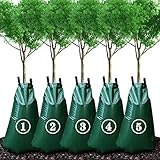
- 【BIG CAPACITY】Holds up to 20 gallons of water for deep watering to keep trees hydrated longer, especially in drought or hot weather areas. Most bags typically empty within 5–9 hours, while actual watering time may vary depending on soil type, weather, tree size, and water pressure. In some cases, it may take 5–24 hours to fully empty. Based on our testing, this release rate helps water reach the roots effectively while reducing evaporation in hot or dry conditions.
- 【EASY TO USE】Very easy to use, just wrap this water bag around the trunk, tighten the zipper and pour water in it. For larger trees, you can pull two of these drip irrigations together.
- 【HEAVY DUTY MATERIAL】Made of durable PVC tarpaulin material, UV resistant. Designed with wide water fill hole suitable for universal size hose, and sturdy handle for long time use.
- 【TIMELY HYDRATION】Our carefully tested watering system efficiently nourishes trees, saving you time and water. It guarantees water reaches the roots, preventing waste and evaporation, especially important during hot summers or droughts. Plus, It reduces the risk of waterlogging and root rot for too slow release. These are essential for newly planted or transplanted trees growth.
- 【BUY WITH CONFIDENCE】Thank you very much for your great support. Product quality and customer satisfaction is our top priority. If you're not completely satisfied with anything you get from us, contact us and we'll make it right.
The soil surface can be misleading, especially under mulch. Check the soil several inches down in the root ball and in the surrounding soil. Maryland Extension recommends assessing whether soil beneath the mulch and in the root ball feels dry; the root ball and nearby backfill may not have the same moisture. If the root zone is dry, apply water slowly over it so it can soak in. If the soil is already wet or drains poorly, adding water may make matters worse. Maryland Extension’s tree-planting guidance emphasizes checking soil moisture and avoiding overwatering.
Next, locate the root flare—the point at the base of the trunk where the trunk widens and the first structural roots emerge. It should be at or near the soil surface, not buried beneath soil or mulch. Maryland Extension says to keep the flare at soil level; Illinois Extension likewise explains that the flare, rather than the depth of the original pot or root ball, guides planting depth. If it is covered, gently move excess mulch or soil away until you can see the flare. Avoid piling material back against the trunk.
Also consider the site: turf and weeds compete with young woody roots for water and space. A mulch ring can reduce that competition, but mulch piled against the trunk or spread too deeply can create a different problem. If decline continues despite correcting evident moisture or depth issues, get a local extension service or qualified arborist to assess possible disease, pests, root damage, drainage, or other site causes. Seek professional help sooner if the tree’s condition raises a safety concern.
How often should I water a newly planted tree?
Keep the root zone regularly moist while roots establish, but adjust watering to rainfall, soil moisture, drainage, tree size, and local climate. Extension recommendations differ by region and situation; neither a calendar nor a single volume is right for every newly planted tree.
As a specific Minnesota example, University of Minnesota Extension’s guidance, reviewed in 2026, recommends watering daily during the first one to two weeks, every two to three days during weeks three through twelve, then weekly until roots establish. It suggests 1 to 1.5 gallons per inch of trunk caliper at each watering, applied directly over the root zone while keeping backfill soil moist. Caliper is the trunk’s diameter measurement used to size a tree. These are Minnesota recommendations, not a universal prescription. Check the soil and account for rain rather than watering automatically when the ground is already wet. See UMN Extension’s watering advice for the regional guidance.
Illinois Extension’s guide, updated in September 2020, takes a different practical approach: during inadequate rainfall, plan to water through the next two summers and water thoroughly to a depth of 8–12 inches. That does not necessarily conflict with UMN’s more detailed early schedule. Climate, rainfall, soil, drainage, tree size, and the moisture in the root ball all affect how often watering is needed. Maryland Extension’s advice to check the root ball and soil under the mulch helps determine whether the tree actually needs water. In any region, apply it over the root zone and avoid leaving poorly drained soil saturated. The Illinois Tree and Shrub Planting Guide provides its full regional context.
Free tools Windows power users keep installed
One-click scans. No signup required.
Also popular on Amazon

- Package Include: You will receive 12 slow release tree watering bags, these are suitable for planting saplings in the arid areas or in the dry wheater, they can increase survival rate of saplings in the dry season well.
- Durable Material: These automatic tree drip irrigation bags are made of premium PE material and surface of these drip irrigation bags is sunlight-proof, so they are resistant to aging so you can keep them for a long time for not one-season use.
- Easy To Use: First, you need to place a tree watering bag around the bottom of the trunk, then tighten the zipper on the drip irrigation bag, finally you can put the water pipe into the water injection port at the top of the bag and fill the tree watering bag with water.
- Efficiently Work: These tree drip irrigation bags are all with a large capacity fo 20 gallon, and after you install these irrigation bag and fill them with water, the water in the bag body will slowly release and penetrate into the soil and trunk within 4-5 hours to keep the roots of the saplings moist.
- Of Great Benefits: These tree drip irrigation bags can save more than 30% of water than traditional irrigation methods, they are also very adaptable and do not pick soil, at the same time, they save lobor and can be used with nutrient solutions to improve the quality of tree growth.
A slow application is more useful than a brief splash that runs off or wets only the surface. UMN notes that a tree-watering bag can deliver water gradually over the root ball; its guidance describes bags with a 14–15-gallon capacity and a 5–9-hour release period. A bag is an optional aid, not a substitute for checking soil moisture or a guarantee that the tree is receiving the right amount. A trickling hose or soaker hose can also apply water slowly. Whichever method you use, direct water to the root zone, not just the trunk.
How deep should the tree be planted, and what should I do about mulch?
Use the root flare to judge planting depth: keep it visible at or near soil level. Mulch in a broad ring around the tree can help limit turf competition and reduce moisture loss, but leave the trunk and root flare uncovered.
Do not assume the tree was planted at the right depth just because the top of its original root ball is level with the surrounding ground. Find the flare and use that as your reference. If soil or mulch hides it, gently uncover it rather than adding more material around the base. A buried flare can contribute to poor establishment and root problems.
Guidance varies somewhat on mulch depth. UMN recommends a 3-inch organic mulch layer and says not to exceed that depth; Illinois Extension recommends 2–4 inches. Follow local advice, keep the flare bare, and do not mound mulch against the trunk. A ring also gives young tree roots an area without turf and weeds competing for water and space. UMN’s guidance and the Illinois guide provide the regional mulch recommendations.
Should I fertilize, prune, or stake a stressed tree?
Do not automatically fertilize or remove healthy branches in response to transplant stress. Focus first on moisture, depth, and site conditions; prune only damaged, diseased, or dead limbs, and stake only when the tree or site needs support.
Maryland Extension says newly planted trees generally do not need fertilizer for one to three years. Adding fertilizer is not a substitute for correcting dry or waterlogged soil, a buried flare, or another site problem. Leaves also support energy production that the tree needs as its roots grow, so removing healthy canopy growth can work against recovery. Montana State Extension advises limiting pruning to damaged, diseased, or dead limbs.
Also popular on Amazon
Staking is not automatically necessary. It may be useful when wind exposure, root loss, a top-heavy tree, or the site makes support appropriate. If stakes and ties are used, allow some trunk movement rather than immobilizing the tree; Maryland Extension advises removing supports after one year. The aim is to provide needed support without treating every new tree as if it requires permanent restraint. Consult Maryland Extension’s planting guidance for its recommendations.
How long does it take a transplanted tree to recover?
There is no dependable single recovery deadline: roots may take several growing seasons to establish, and larger trees can take longer. Use local guidance and the tree’s condition, rather than treating one estimate as a guarantee that it will recover by a particular date.
For Minnesota, UMN estimates root-establishment time by trunk caliper as follows. These are regional estimates, not guaranteed timelines for every species, site, or climate.
| Trunk caliper | UMN Minnesota estimate for root establishment |
|---|---|
| 1 inch | 1.5 years |
| 2 inches | 3 years |
| 3 inches | 4.5 years |
| 4 inches | 6 years |
| 5 inches | 7.5 years |
| 6 inches | 9 years |
Montana State Extension says establishment can take up to five years depending on tree size. Illinois Extension advises planning to water through the next two summers when rainfall is inadequate. These statements address different regional guidance and time frames; they are not interchangeable recovery guarantees. The practical point is to continue checking moisture and caring for the root zone beyond the planting day, following local recommendations. A tree may need watering while roots establish even if it does not show obvious symptoms.
What should I check when a new tree looks stressed?
Use this sequence to identify correctable care issues before trying interventions that may add stress.
- Check soil moisture in two places. Feel the soil several inches down in the root ball and in the surrounding soil below the mulch. If the root zone is dry, water slowly over it; if it is wet or poorly drained, do not add water just because leaves are wilting.
- Locate the root flare. Find the first structural roots at the base of the trunk. If soil or mulch covers them, gently uncover the flare so it is at or near soil level.
- Review mulch and competition. Keep organic mulch in a ring, clear of the trunk and flare, and avoid excessive depth. Limit turf and weeds around the tree so they do not compete with young roots for water and space.
- Hold off on unnecessary treatments. Do not automatically fertilize or prune healthy growth. Remove only broken, diseased, or dead limbs; stake only if support is needed.
- Watch the trend. If decline persists or worsens after checking moisture, depth, and site conditions, contact a local extension service or qualified arborist. Visual symptoms alone cannot reliably distinguish transplant stress from disease, pests, root damage, or other site problems.
How can I make the care plan fit my location?
Use a local extension service’s advice as the starting point, then respond to the moisture actually present around the tree. A dry, warm period can change watering needs; rainfall, soil drainage, tree size, and root-ball conditions also matter. The Minnesota schedule and volume, Illinois advice about thorough watering during dry periods, and Maryland’s moisture check are useful examples of how recommendations can differ without any one being a universal rule.
Do these 3 things before closing this tab:
1Clear out junk files and repair common Windows errors2Fix the driver behind crashes, sound loss and screen glitches3Repair Windows errors before they cause bigger problemsAlso popular on Amazon

- Time-saving: if you got sick of manually watering trees in the Hot Summer over and over again with the hose.Tree Watering Bags Simply fill the bags with a hose or bucket, and they will provide continuous hydration for your plants, requiring only one simple operation from you.especially for maintaining large areas of trees
- Drought Savior: The stable water release function ensures continuous moisture at the roots of trees, sparing you the hassle of manually watering them repeatedly during hot summer days. Providing timely hydration for trees ensures their healthy growth.
- Strong Material: tree watering bags are made of Sturdy PVC material, ensuring durability and reliability for long-term use. they are resistant to tearing, eliminating concerns about damage if snagged. The sturdy material can easily withstand the pressure when the bags are filled.
- Slow Release Design: Each tree watering bag has a capacity of 20 gallons, ensuring that trees receive sufficient water during drought seasons or in the early stages of planting. The water is released slowly, penetrating into the ground to avoid wastage. Release time is between 8 hours.
- Easy Installation and Use: Ensure that trees are at least 25 inches above the ground with branches, and that one bag fits tree trunk diameters of 2-8 inches. Wrap the bag around the base of the tree, zip it up, insert the hose, and start filling. For larger trees, multiple bags can be connected together for use.
Keep a simple record of when the tree was watered and whether the root ball and surrounding soil felt dry, moist, or wet. That record can help you avoid both reflexively watering on a fixed schedule and forgetting to check during a dry stretch. If the ground remains saturated or the tree keeps declining, ask for local advice rather than increasing water, fertilizer, or pruning on guesswork. The goal is steady root-zone moisture and a planting depth that leaves the flare visible while the tree establishes over time.
Frequently Asked Questions
Does transplant shock mean my tree is going to die?
No. The term describes stress, and wilting or leaf discoloration by itself does not establish that the tree is dying—or even confirm transplant shock. Check the root zone and planting depth, then seek local professional advice if decline persists or worsens.
Should I remove leaves from a newly planted tree that looks stressed?
Do not remove healthy canopy growth just because the tree looks stressed: leaves support energy production as roots grow. Limit pruning to damaged, diseased, or dead branches, as Montana State Extension advises.
Do I need to stake every newly planted tree?
No. Staking is for situations where the tree or site needs support, such as exposure or root loss; ties should still allow some trunk movement. Maryland Extension advises removing supports after one year.
Recommended Free Tools
Can a tree-watering bag fix transplant shock?
No watering aid diagnoses or cures the cause of decline. UMN describes tree-watering bags as an optional way to deliver water gradually over a root ball; check the soil and follow local guidance to decide whether watering is needed.

