Recommended Free Tools
Some links on this page are affiliate links: if you buy through them we may earn a commission, at no extra cost to you.
Choose a transfer-switch neutral configuration from the generator’s grounding design—not from the pole count printed on a catalog page. A solid (typically three-pole) neutral suits a non-separately derived generator whose neutral remains connected to the service neutral. A switched (typically four-pole) neutral isolates the two source neutrals and is normally required when the generator is separately derived or when ground-fault sensing demands isolation. An overlapping neutral briefly connects both source neutrals during transfer and needs a carefully engineered application because it can create temporary parallel return paths.
What does a transfer-switch neutral actually do?
An automatic transfer switch (ATS) moves phase conductors between the utility and generator. Its neutral arrangement determines whether the two sources share a continuous grounded conductor or whether the neutral follows the selected source. That decision controls where neutral current flows, where the neutral-to-ground bond belongs, and what a ground-fault sensor measures.
As an Amazon Associate I earn from qualifying purchases.
Manufacturers describe three principal arrangements: solid neutral, switched neutral, and overlapping neutral. The correct choice depends on the complete one-line diagram, bonding points, sensing equipment, and local electrical requirements.
What is a solid-neutral, or three-pole, transfer switch?
A solid-neutral ATS leaves the normal and emergency neutrals permanently connected through a fixed neutral bar or plate. The three phase poles transfer, but the neutral does not.
Popular on Amazon
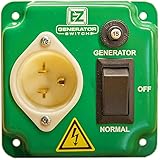
- This is the original, authentic, and patented EZ Generator Switch
- Made and assembled in the U.S.A by a veteran-employed company with real life customer support
- UL / CSA / ETL approved and compliant
- Battery inverter friendly, Bonded or Floating neutrals
- Transfers power to any type of essential load (heat, lights, refrigeration, solar, inverters, sump pumps)
When is solid neutral appropriate?
This arrangement is associated with a non-separately derived generator: the generator neutral is solidly interconnected with the service neutral, and the service is the system’s grounding and bonding point. Because the neutral remains common, the generator normally should not receive a second neutral-to-ground bond. Adding one without a design that specifically requires it can create parallel neutral and equipment-grounding paths.
What are the practical consequences?
- Neutral continuity is maintained during phase transfer.
- The generator does not have an independently switched grounded conductor.
- Ground-fault current can return over more than one metallic path if bonding is arranged incorrectly.
- The neutral must still be sized for the connected load, including harmonic current from nonlinear loads.
What is a switched-neutral, or four-pole, transfer switch?
A four-pole ATS switches phases A, B, C, and the neutral. In the usual break-before-make sequence, the neutral pole moves with the phase poles, so the normal and emergency neutrals are not connected to each other—even momentarily.
The Tool Desk
Outbyte PC Repair FREERepair Windows errors before they cause bigger problemsFix Now →Outbyte Driver Updater FREEScan for outdated or missing drivers - takes under a minuteDriver Scan →When is switched neutral required?
Use this arrangement when the generator is a separately derived system or when the ground-fault protection design requires the inactive source neutral to be isolated. A separately derived system has no direct connection between its circuit conductors and those of another source, other than grounding and bonding connections. With a switched neutral and a separately derived generator, the generator neutral must be bonded to an effective grounding system.
Also popular on Amazon

- This 100 amp generator transfer switch perfect to switch the power from the electric company to an auxiliary power (gas generator, solar). A simple movement of the transfer switch lever ensures seamless power management. With a maximum handling capacity of 100amps and a power capability of 24000W, it effortlessly powers your entire household, including high-demand appliances like dryers and stoves.
- Engineered for long-term stability, this manual transfer switch features a straightforward design with aluminum connections, devoid of any electronic components. Unlike electronic devices prone to issues like moisture, dust, and limited lifespan, this switch adeptly sidesteps such concerns, ensuring continuous power supply to your home for over a decade.
- The transfer switch's casing, crafted from galvanized steel, combines robustness with corrosion and rust resistance. Meeting NEMA 3R standards, it withstands adverse weather conditions, ensuring uninterrupted functionality even during rain, hail, or strong winds. Ample internal space allows for flexible wire bending, accommodating wires up to 3 AMG without space constraints.
- A lock hole at the bottom of the 100 amp manual transfer switch prevents accidental power shutdown during normal power supply. Additionally, a designated grounding position inside safeguards against inadvertent electrical contact, ensuring absolute safety during usage.
- This 100 amp transfer switch is easy to install for those with basic electrical know-how. That said, we highly recommend a licensed professional electrician for most installations to ensure safety. We’re so confident in its quality that we provide a 10-year warranty—reach out to us anytime for any product issues
Why does isolation help ground-fault protection?
Ground-fault current transformers (CTs) are intended to see the return current within a defined part of the system. Cummins states two essential rules: there can be only one neutral-to-ground connection on a neutral bus at a time, and CTs must be downstream (on the load side) of the bonding connection. Switching the neutral helps prevent normal return current from bypassing the intended sensor through the inactive source.
What is an overlapping-neutral transfer switch?
An overlapping, or make-before-break, neutral briefly connects the normal and emergency neutrals while the phase conductors remain under load-break control. The overlap can preserve neutral continuity for sensitive equipment, but it also creates a temporary dual return path.
Why is overlap difficult to apply?
During the overlap, neutral current can divide between the two sources. That condition may cause nuisance ground-fault trips, especially where CTs detect current imbalance. A contact or control failure can also leave a floating neutral or establish two neutral-to-ground bonds. The configuration therefore requires documented contact timing, bonding logic, and fault-current analysis rather than a generic preference for uninterrupted neutral continuity.
Quick wins for a faster PC:
Repair Windows errors before they cause bigger problemsFix Now →Fix the driver behind crashes, sound loss and screen glitchesFind Drivers →Also popular on Amazon
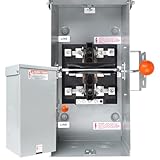
- 【100 Amp Transfer Switch】This manual transfer switch is perfect for shifting power from the utility grid to an auxiliary source (e.g., a gas generator or solar setup). Just a quick flick of its lever guarantees seamless power management. With a max capacity of 100 amps and a 24,000 - watt power rating, it can effortlessly power your whole home, even high - demand appliances like dryers and stoves
- 【Reliable and Stable】Designed for long - term reliability, this transfer switch 100 amp has a simple, no - fuss design with aluminum connections and zero electronic parts. Unlike electronic gadgets that often falter due to moisture, dust, and a short lifespan, this switch dodges those problems. It can keep your home powered up without a hitch for over 10 years, giving you peace of mind
- 【NEMA 3R Enclosure】Crafted from galvanized steel, this transfer switch's casing is a powerhouse, combines robustness with corrosion and rust resistance. It meets NEMA 3R standards, so it can brave harsh weather like rain, hail, and strong winds without skipping a beat, ensuring uninterrupted operation. Plus, its offers flexible wire - bending capabilities, easily fitting wires up to 3 AWG
- 【Powerful Security Protection】There's a lock hole at the base of the double throw transfer switch. It keeps accidental power cut - offs at bay during regular power supply. Plus, there's a dedicated grounding spot inside. This guards against unintended electrical contact, guaranteeing total safety when you're using the switch
- 【10-Year Warranty】Installing this thing is a piece of cake - it only takes a few minutes. Even though the process is super simple, we've included detailed installation instructions. For your own safety, though, we highly suggest having a pro electrician do the job. And if you've got any questions about the product, don't sweat it! Our 24 - hour technical support team is here to help you out
How does ground-fault protection affect the choice?
For context, NEC 2020 Article 230.95 requires ground-fault protection of equipment for solidly grounded wye services of more than 150 volts to ground, not exceeding 1,000 volts phase-to-phase, when each service disconnect is rated 1,000 amperes or more. The exact applicability depends on the installation and adopted code edition.
A sensing design must account for every neutral path in both source positions and during transition. If a solid neutral leaves an inactive-source path inside the CT arrangement, or an overlapping neutral temporarily creates two paths, the protection system may trip when no dangerous fault exists—or fail to detect the fault current it was intended to monitor.
Which neutral option fits each design?
| Design question | Solid neutral (usually 3-pole) | Switched neutral (usually 4-pole) | Overlapping neutral |
|---|---|---|---|
| Generator grounding | Non-separately derived; neutral shared with service | Separately derived; source neutral isolated | Site-specific; requires engineered bonding and timing |
| Neutral transition | Continuous | Break-before-make; brief neutral interruption is possible | Make-before-break; temporary neutral connection |
| Ground-fault concern | Parallel paths if an extra bond is added | Supports source isolation and controlled CT paths | Temporary dual paths and nuisance-trip risk |
| Generator neutral bond | Normally not added | Required at the separately derived generator system | Must follow the engineered grounding scheme |
| Typical product description | Three-pole ATS with solid neutral | “4-pole automatic transfer switch with switched neutral” | Overlapping-neutral ATS |
How should an engineer or contractor select the ATS?
- Classify the source. Confirm whether the generator neutral is solidly connected to the service neutral or grounded as a separate source.
- Map bonding points. Mark the service bonding jumper, generator system bond, grounding electrode connections, and every neutral-to-ground connection on the one-line diagram.
- Locate the CTs. Verify that ground-fault sensors are on the load side of the applicable bonding point and that no alternate neutral path bypasses them.
- Choose the contact sequence. Decide whether a brief neutral interruption is acceptable or whether overlap is genuinely necessary. Document break-before-make or make-before-break timing.
- Size the neutral. For nonlinear loads, specify a fully rated neutral. The switch ampacity must meet or exceed the connected-conductor ampacity; harmonic neutral current can be substantial.
- Check ratings and listing. Verify continuous-current rating, short-circuit withstand and closing rating, voltage, phase, enclosure, service-entrance status, and the applicable UL 1008 or CSA listing.
- Obtain AHJ approval. Have a qualified electrical professional submit the one-line diagram and confirm the requirements of the authority having jurisdiction before installation.
What can go wrong after installation?
- Nuisance ground-fault trips: look for an unintended parallel neutral path, CT placement on the wrong side of the bond, or an overlapping-neutral sequence that briefly shares current.
- Floating neutral: inspect neutral-pole operation, control wiring, and failed contacts; a neutral that does not establish a solid reference can produce abnormal line-to-neutral voltages.
- Repeated breaker or sensor alarms: verify that only one neutral-to-ground bond is active in each source position.
- Overheating neutral conductors: calculate triplen-harmonic current from electronic loads and confirm that the neutral and ATS are fully rated.
- Failed inspection: compare the installed equipment’s listing, short-circuit rating, enclosure, and service-entrance markings with the approved design and local code.
Does pole count alone tell me which ATS to buy?
No. “Three-pole” and “four-pole” describe the number of switched conductors, not the grounding design by themselves. Confirm the generator’s separately derived status, neutral-bond locations, CT arrangement, transition sequence, load characteristics, ratings, listing, and AHJ requirements before specifying an ATS.
Also popular on Amazon

- Current rating 50 Amps,operating voltage 240 volts,need some basic knowledge on electrical circuits
- Marks or tags on wires,its performance, convenience,and cost-effectiveness compared to pricier alternatives is best
- Contact type:normally open,terminal,normally open,supports up to 10 circuits for reliable power transfer.Great for whole-house backup or RV/off-grid applications
- Item dimensions:L x W x H:11.75 x 4.5 x 11 inches,make setup fast—even for DIY users with basic wiring experience
Frequently Asked Questions
Can a four-pole ATS be used with a non-separately derived generator?
It can be, but changing the pole count does not by itself make the system separately derived. The bonding and sensing design must be revised so the switched neutral does not leave the generator without the grounding connection it requires or introduce an unintended second bond.
Will a switched neutral make my lights go out during transfer?
A break-before-make switch can briefly interrupt neutral continuity, although the phase transfer also involves an interruption in a typical open-transition ATS. Equipment that cannot tolerate the transfer interval may need a UPS, closed-transition equipment, or another engineered ride-through method.
Why do nonlinear loads matter to the neutral conductor?
Electronic power supplies, adjustable-speed drives, and similar loads can produce triplen harmonics that add in the neutral rather than cancel. A reduced neutral can overheat even when phase-current calculations appear acceptable, so a fully rated neutral may be required.
Who decides whether the generator is separately derived?
The classification follows the actual conductor and bonding connections shown in the installation design, not the generator’s marketing description. A licensed electrical designer or engineer should document the classification and obtain approval from the local authority having jurisdiction.

