Recommended Free Tools
There is no single best wood for every speaker cabinet. For the safest all-purpose choice, use verified Baltic birch plywood. Choose MDF for an economical, stationary indoor hi-fi or subwoofer cabinet; solid pine for an intentionally resonant guitar cabinet; marine plywood for moisture exposure; and cabinet-grade hardwood plywood when appearance matters most.
Material matters, but cabinet volume, driver choice, baffle stiffness, bracing, airtight joints, port tuning, and construction quality usually matter more than wood species alone.
As an Amazon Associate I earn from qualifying purchases.
Quick verdict
| Material | Best use | Primary advantage | Main drawback |
|---|---|---|---|
| Baltic birch plywood | Portable, guitar, PA, and premium DIY cabinets | Strong, relatively light, durable, and consistent | More expensive; quality varies by product |
| MDF | Indoor hi-fi and subwoofer cabinets | Uniform, dense, inexpensive, and easy to paint | Heavy, moisture-sensitive, and weaker at edges |
| Marine plywood | Outdoor, humid, or mobile applications | Moisture and void resistance | Costlier and not inherently better sounding |
| Solid pine | Vintage-style guitar cabinets | Light, attractive, and intentionally resonant | Moves with humidity and can flex |
| Hardwood plywood | Furniture-style cabinets | Attractive veneer with good structural performance | Appearance does not guarantee acoustic superiority |
What actually affects cabinet sound?
A speaker enclosure is a mechanical and acoustic system, not simply a wooden box. The driver’s characteristics, net internal volume, sealed or ported alignment, port dimensions, baffle design, internal damping, and room placement all affect the result.
Cabinet material still matters because panels can flex, radiate sound, create resonances, leak air, or produce rattles. A rigid, well-braced enclosure generally contributes less coloration. In a guitar cabinet, however, controlled cabinet resonance may be part of the desired voicing. Claims that one wood universally sounds “warmer” or “faster” should therefore be treated cautiously.
#1 Best Overall

- Including:4 pieces of veneered MDF board with double side paulownia wood
- Dimension: Each board measures 12" x 17" with thickness 1/4th inches (6.4mm)
- Material: MDF sheets NOT SOLID WOOD, NOT BALSA WOOD
- Quality:Sturdy and smooth without nicks, gouges or scratche. The double sides covered with paulow ria wood are easily customized by using paint, wood stain, stencils and laser engraving.
- These versatile unfinished wood squares are ideal for DIY projects, party decorations, or home decor. The unfinished wood surface allows you to easily use paint, wood stain, stencils to create your amazing artwork.
Celestion’s DIY cabinet design specifies both material options and enclosure dimensions: 18 mm MDF or 15–18 mm birch plywood, with approximately 44 liters of cabinet volume. That illustrates the key principle: material selection must work with the complete enclosure design.
1. Baltic birch plywood: best overall
Baltic birch is the strongest all-purpose recommendation for portable, touring, PA, bass, and many guitar cabinets. A genuine Baltic birch panel typically uses multiple relatively uniform birch plies with fewer internal voids than ordinary construction plywood. It offers good screw-holding, durable edges, lower weight than MDF at comparable thickness, and better tolerance of transport and hardware installation.
It is not automatically better sounding than MDF. Its practical advantages are strength, consistency, and durability. A Parts Express 2×12 cabinet, for example, uses 9-ply, 1/2-inch Baltic birch and is designed around portable guitar and bass use.
PC Slower Than It Used to Be?
A free scan shows the junk files, broken settings and background clutter dragging Windows down - then fixes them in one click.Free scan · Windows 10 & 11Outdated Drivers Are Slowing You Down
One free scan finds every outdated or missing driver and matches the right update for your exact hardware.Free scan · exact hardware match- Best for: PA cabinets, touring guitar cabinets, portable subwoofers, and high-quality DIY builds.
- Finish: Suitable for paint, vinyl, carpet, textured coating, or an exposed edge finish.
- Watch for: High price, tear-out while routing, warping, delamination, and panels marketed merely as “birch.”
- Typical starting thickness: 15–18 mm for many medium cabinets, with thicker or doubled panels where spans and output demand it.
2. MDF: best value for indoor hi-fi and subwoofers
MDF has uniform density, a smooth surface, predictable routing, and excellent paintability. It is often the most economical choice for a stationary home-audio speaker or subwoofer. Its density can help reduce panel radiation, but “dead” is an oversimplification: the finished cabinet still depends on thickness, bracing, joints, and damping.
MDF’s weaknesses are equally important. It is heavy, swells when wet, loses edge strength after water exposure, and can loosen around screw holes after repeated assembly. Exposed edges should be sealed, particularly before painting.
- Best for: Painted bookshelf speakers, floorstanding hi-fi cabinets, and indoor subwoofers.
- Advantages: Low cost, smooth machining, clean roundovers, and easy finishing.
- Limitations: Poor choice for wet environments, frequent transport, or cabinets requiring repeated hardware removal.
- Typical starting thickness: 18 mm, with additional bracing for large panels and high-output subwoofers.
Parts Express and Celestion both publish designs using MDF, confirming that it remains a practical enclosure material rather than merely a budget substitute.
Rank #2

- Note: This product is designed specifically for DIY speaker projects and includes only the wooden panels; you will need to assemble the cabinet yourself and purchase a speaker kit separately for installation.
- ✅ Acoustic-Grade MDF Construction for Studio-Quality Sound High-density medium-density fiberboard (MDF) eliminates unwanted resonance and vibrations, ensuring your speaker drivers deliver tight, accurate bass, clear midrange, and smooth highs. Internal reinforcing braces further reduce sound distortion, so your custom speakers sound as professional as pre-built models.
- ✅ Unfinished MDF Surface: Your Creative Blank Canvas The raw, unprocessed MDF exterior lets you customize your speakers to match any decor. Paint, stain, wrap in vinyl, or apply real wood veneer to create a modern, vintage, or industrial look. Build speakers that not only sound amazing but also elevate your home’s aesthetic.
- ✅ Beginner-Friendly Assembly with All Hardware Included All panels feature interlocking slots for quick, stable assembly—no advanced woodworking skills required. The kit includes screws, sealing gaskets, and a step-by-step manual, so you can build a pair of cabinets in under an hour with basic tools.
- ✅ Versatile Empty Cabinets for Any Audio Project Perfect for building bookshelf speakers, upgrading old home theater systems, or creating custom desktop monitors. Compatible with most 6.5” 3-way driver sets on the market, giving you full control over your audio setup. Note: This listing is for empty cabinets only—speakers, crossovers, and wiring are not included.
3. Marine plywood: best for moisture resistance
Marine plywood is useful when a cabinet may encounter humidity, outdoor use, garages, vans, clubs, or transport in uncertain weather. Its principal benefits are moisture-resistant construction and reduced internal voids. “Marine” describes construction and adhesive requirements, not a special acoustic signature; it is not automatically better sounding than Baltic birch or MDF.
Quality varies by species, glue system, certification, and manufacturer. Seal cut edges and apply an appropriate protective finish even when using marine plywood. For enclosure-material background, Audioholics’ cabinet discussion identifies void-free marine plywood as a high-grade construction option.
- Best for: Outdoor or humid-use speakers, mobile PA cabinets, and rugged enclosures.
- Do not assume: Marine plywood is necessarily birch, lightweight, or acoustically superior.
- Typical starting thickness: Similar to other plywood designs, commonly 15–18 mm, with bracing determined by panel size and output.
4. Solid pine: best for vintage-style guitar cabinets
Solid pine is a deliberate tonal and construction choice in many guitar cabinets. It is light, easy to work, visually appealing, and more likely than MDF or plywood to contribute audible cabinet resonance. Line 6 describes solid woods such as pine and cedar as contributing more of their own resonance than plywood or chipboard. PRS product documentation also lists finger-jointed and dual-ported pine guitar cabinets.
That resonance can be desirable for an instrument amplifier but is usually not the goal in a precision-oriented hi-fi or subwoofer enclosure. Pine expands and contracts with humidity; wide boards can cup, twist, split, or open their joints. Use narrower boards, sound joinery, cleats or finger joints, and finishing on all sides. Do not build large solid-wood panels without allowing for seasonal movement.
- Best for: Open-back or vintage-style guitar cabinets.
- Advantages: Low weight, attractive appearance, and intentional cabinet coloration.
- Limitations: Dimensional movement, lower impact resistance, and more panel flexibility.
5. Cabinet-grade hardwood plywood: best-looking compromise
Maple-, oak-, or birch-faced cabinet plywood is appropriate when the enclosure will be clear-coated or finished like furniture. It combines a decorative face with a plywood core, but the face veneer does not make the cabinet acoustically superior.
Quick wins for a faster PC:
Scan for outdated or missing drivers - takes under a minuteDriver Scan →Clear out junk files and repair common Windows errorsFree Scan →Fix the driver behind crashes, sound loss and screen glitchesFind Drivers →Check the core rather than relying on the species named on the front veneer. A supplier’s product range may include Baltic birch, hardwood plywood, marine plywood, and multiple core types as separate products; Atlantic Plywood’s product listing demonstrates why these labels should not be treated as interchangeable.
Rank #3

- 【Vintage Bluetooth Speaker & Home Decor Accent】 The GDSK-4 Vintage Bluetooth Speaker combines timeless retro design with modern wireless convenience. Featuring an MDF wood cabinet, classic control knobs, and a leather-style carry strap, this decorative Bluetooth speaker complements home decor, apartment decor, bedroom decor, bookshelves, desks, and living spaces. More than a speaker, it adds warmth and character to any room.
- 【Warm, Balanced Sound for Everyday Listening】 Equipped with dual 4-inch drivers and an MDF wood enclosure, this retro Bluetooth speaker delivers warm, balanced sound with clear vocals and natural tones. Ideal for podcasts, audiobooks, jazz, acoustic music, and background listening. Designed for comfortable daily use rather than loud parties or heavy bass applications.
- 【Customizable Audio with Bass & Treble Controls】 Unlike typical wireless speakers, the GDSK-4 features dedicated bass and treble knobs for personalized sound adjustment. Easily fine-tune audio to suit different rooms, music styles, and listening preferences. Perfect as a desk speaker, bedroom speaker, or Bluetooth speaker for home use.
- 【Bluetooth 5.3 & USB-C Rechargeable Convenience】 Enjoy reliable wireless streaming with Bluetooth 5.3 technology and hassle-free USB-C charging. This rechargeable Bluetooth speaker provides up to 6 hours of playback at moderate volume, making it ideal for home offices, reading corners, kitchens, and everyday listening throughout the day.
- 【Designed for Modern Homes with Vintage Style】 Created for users who value both aesthetics and functionality, this home decor speaker blends seamlessly into vintage decor, cottagecore decor, farmhouse decor, and modern interior spaces. IPX4 splash resistance adds everyday versatility for kitchens, covered patios, and indoor living areas. Please note: microphone input and karaoke functions are not supported.
- Best for: Visible-edge hi-fi cabinets, furniture-style builds, and high-quality home installations.
- Choose it when: Appearance matters and the cabinet will not be carpeted or vinyl-wrapped.
- Avoid paying extra when: The cabinet will receive opaque paint, carpet, or textured protective coating.
MDF versus Baltic birch plywood
| Criteria | MDF | Baltic birch plywood |
|---|---|---|
| Weight | Heavier | Usually lighter for comparable construction |
| Rigidity and durability | Good when thick and braced | Strong and impact-resistant |
| Edges and screws | Edges are vulnerable; repeated screws can loosen | Better edge and screw-holding performance |
| Routing | Predictable and smooth | Strong but may tear out without sharp tooling |
| Painting | Very easy after edge sealing | Requires more preparation, especially at edges |
| Moisture | Swells and weakens when wet | Depends on grade; exterior and marine products perform better |
| Transport | Less convenient | Usually the better choice |
For a stationary painted cabinet, MDF often provides the best value. For a cabinet with handles, casters, pole cups, repeated servicing, or regular transport, Baltic birch is usually worth the premium.
Independent reader supportYour contribution helps us test, update, and keep practical guides available for everyone.Best material by cabinet type
Hi-fi bookshelf or floorstanding speaker
Use 18 mm MDF for an economical painted enclosure, or quality plywood when weight, durability, or exposed edges matter. Prioritize accurate volume, a rigid baffle, airtight joints, and well-supported large panels. Do not choose pine solely because it is described as “warm.”
Subwoofer
MDF is economical for an indoor build. Baltic birch is preferable when the subwoofer is large, portable, or frequently moved. Use marine plywood only when moisture exposure justifies its cost. Large panels need bracing, and a heavy driver may justify a doubled baffle.
PA or portable speaker
Choose Baltic birch or a suitable exterior-grade plywood. Handles, corners, casters, pole mounts, and connector panels place more stress on fasteners than a stationary home speaker does. Protect all cut edges and joints from moisture.
Guitar amplifier cabinet
Choose Baltic birch for durability and a relatively controlled, punchy enclosure; pine for lighter, more resonant vintage-style construction; and MDF when low cost, painting, and stationary use matter most. Open-back, closed-back, ported, and oversized cabinets are different tonal designs, so the wood is only one variable.
Outdoor or humid-use speaker
Use properly rated exterior or marine plywood, seal every cut edge, and apply a protective finish. MDF is unsuitable for direct or repeated water exposure unless it is exceptionally well protected and kept away from standing moisture.
Rank #4
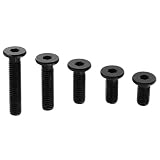
- Size Coverage: Provide M5 series of specifications to meet the needs of different board thicknesses in furniture assembly.Material: Low carbon steel is used to meet the general mechanical requirements of furniture assembly.
- Beveled Edge Flat Head: The head is 90° tapered design, flush with the surface of the plate, avoiding bulging and affecting the aesthetics, suitable for side mounting orHexagon socket drive: adapted to hexagonal wrenches or electric bits, uniform torque transmission, reducing the risk of wire slippage.Self-tapping thread: the end is designed with triangular teeth, which can be tapped directly into wood, MDF board or thin metal.
- Furniture assembly: for cabinet side panels, drawer slides, desktop panels connection.
- Quantity Options:50 pcs packages are available to support small trial quantities or bulk purchasing.
- face: Specification for surface treatment of carbon steel.
Thickness, bracing, and joints
A 15–18 mm panel—approximately 5/8 to 3/4 inch—is a practical starting range for many medium-sized cabinets. It is not a universal requirement. Large drivers, high output, wide unsupported panels, and heavy subwoofer designs may need thicker material, a doubled baffle, window braces, shelf braces, or constrained-layer treatment.
Free tools Windows power users keep installed
One-click scans. No signup required.
Audioholics identifies 19 mm as a common enclosure thickness and notes that some manufacturers double the baffle for heavy subwoofers. The correct choice depends on panel span and bracing, not thickness alone.
- Keep joints square, tight, and airtight.
- Support broad side, top, and bottom panels with braces.
- Use T-nuts or threaded inserts where drivers will be removed repeatedly.
- Seal terminal cups, handles, driver cutouts, and all joints in sealed or ported designs.
- Calculate net internal volume after subtracting the driver, port, braces, and lining.
- Do not use acoustic stuffing to compensate for incorrect volume, port tuning, or weak structure.
- Eliminate loose wires, grille parts, handles, and hardware that can buzz.
How to buy the right plywood
- Identify the product precisely. Ask whether it is Baltic birch, birch-faced plywood, construction plywood, cabinet plywood, or marine plywood.
- Inspect the edge. Look for many consistent plies rather than a thin birch face over a soft core.
- Check for voids. Large gaps can weaken joints and create rattles.
- Confirm thickness. Nominal and actual dimensions may differ.
- Check flatness. Reject badly warped, delaminated, or damaged sheets.
- Match the finish to the panel. Pay for decorative veneer only if it will remain visible.
- Store sheets flat and dry. Allow panels to acclimate before cutting when possible.
“Birch plywood” is not synonymous with Baltic birch. A birch-colored face veneer says little about the core, ply count, or void content.
Materials to avoid or use cautiously
- Thin particleboard: It can have poor edge strength and moisture resistance. Duncanamps warns about thin particleboard in higher-power applications.
- Low-grade construction plywood: Internal voids, uneven layers, and warping can compromise joints and create buzzes.
- Unsealed MDF in damp locations: Cut edges can swell rapidly.
- Wide solid-wood panels without movement allowances: Seasonal expansion can distort the cabinet or split joints.
- Very thin panels without bracing: A lightweight sheet is not a substitute for a stiff structure.
- Decorative veneer chosen over structural quality: A beautiful face cannot correct a weak core or poorly designed enclosure.
Build-first selection rule
Choose the enclosure design and driver before buying the wood. Confirm the required internal volume, alignment, port dimensions, baffle cutout, driver displacement, and expected output. Then select the material:
- Baltic birch: the safest all-purpose portable choice.
- MDF: the value choice for a painted indoor cabinet.
- Pine: the intentional resonance choice for a vintage-style guitar cabinet.
- Marine plywood: the environmental-durability choice.
- Hardwood plywood: the appearance-first choice.
A well-braced, accurately sealed MDF enclosure can outperform a poorly assembled Baltic-birch box. Spend first on correct design, rigid construction, and reliable joints; then pay for premium material where its actual advantages—weight, durability, moisture resistance, or appearance—solve a real problem.
What’s actually slowing this PC down?
Pick the symptom - the matching free tool is one click away.
Quick Recap
Product prices and availability are accurate as of the date/time indicated and are subject to change. Any price and availability information displayed on Amazon at the time of purchase will apply.

