PC Slower Than It Used to Be?
A free scan shows the junk files, broken settings and background clutter dragging Windows down - then fixes them in one click.Free scan · Windows 10 & 11Outdated Drivers Are Slowing You Down
One free scan finds every outdated or missing driver and matches the right update for your exact hardware.Free scan · exact hardware matchThe best cleaning schedule is flexible: reset high-use areas daily or as needed, clean rooms and floors weekly, handle detail work monthly, inspect moisture and equipment seasonally, and reserve deep cleaning or professional maintenance for annual or special situations. A home with children, pets, frequent visitors, heavy cooking, recent construction, or an illness needs more frequent attention than a lightly used home.
This checklist is designed for occupied homes as well as homeowners and contractors preparing a renovated or newly completed space for handover. It separates ordinary cleaning from sanitizing, disinfecting, food safety, mold response, and post-construction cleanup so you can do the right work without using unnecessarily harsh products.

As an Amazon Associate I earn from qualifying purchases.
First: clean safely
Before starting, read the product label and the manufacturer’s instructions for the surface, appliance, floor, fixture, or device. The wrong product can damage stone, wood, finished surfaces, electronics, fabrics, and food-contact materials.
- Clean before sanitizing or disinfecting. Water, soap or detergent, and scrubbing remove dirt and most germs. Sanitizing reduces germs to levels considered safe by public-health codes, while disinfecting kills most germs on surfaces. Soil can interfere with chemical action, so clean the surface first.
- Never mix cleaning products. In particular, never mix bleach with ammonia or another cleaner. Toxic vapors can result. Do not experiment with combinations of bleach, vinegar, peroxide, alcohol, or other products.
- Ventilate the area. Open windows or use effective ventilation when using strong products, sanitizers, or disinfectants. Wear gloves, eye protection, or protective clothing when the label or task calls for them.
- Use only products approved for the intended surface. A disinfectant for a general surface is not automatically suitable for a cutting board, utensil, food-contact counter, electronic device, natural stone, unfinished wood, or fabric. Check whether the label specifies dilution, contact time, ventilation, and rinsing.
- Store chemicals responsibly. Keep cleaners away from food, children, pets, and food-preparation surfaces. Keep them in their original, clearly labeled containers; never transfer chemicals to an unmarked bottle.
How to use this checklist
Work from high surfaces to low surfaces, clean from the cleaner areas toward the dirtier ones, and finish with floors. Keep a small caddy for each level or work zone if that makes the routine easier. Do not try to complete every task every day.
Use the following frequency as a starting point:
| Frequency | Primary purpose |
|---|---|
| Daily or as needed | Prevent food residue, spills, clutter, waste, and high-touch dirt from accumulating. |
| Weekly | Clean each room, wash textiles, vacuum or sweep, and address ordinary bathroom and kitchen soil. |
| Monthly | Reach neglected surfaces, appliance parts, upholstery crevices, bins, tools, and vents. |
| Seasonally | Inspect moisture, filters, curtains, areas behind furniture, and emergency equipment. |
| Annually or less often | Deep-clean materials and arrange maintenance or specialist work that depends on the building or equipment. |
Daily or as-needed cleaning reset
- ☐ Make beds and ventilate rooms when practical.
- ☐ Wash dishes or load the dishwasher.
- ☐ Wipe food-preparation areas after use.
- ☐ Clean spills promptly, especially on floors, upholstery, countertops, and other absorbent materials.
- ☐ Clear clutter from high-use surfaces so dirt and moisture do not accumulate.
- ☐ Empty food waste and check under sinks, around appliances, and near plumbing for leaks or standing water.
- ☐ Clean visibly dirty or frequently touched surfaces, including doorknobs, light switches, faucet handles, countertops, remote controls, phones, tablets, keyboards, and other device touchpoints.
- ☐ Give high-touch areas extra attention after visitors or when someone in the home is ill.
- ☐ Wash your hands with soap and water for at least 20 seconds after cleaning, handling waste, handling pets, or handling raw food. This is consistent with USDA food-safety guidance.
Weekly whole-home cleaning checklist
Kitchen
- ☐ Clean countertops, the stovetop, sink, faucet, cabinet pulls, appliance handles, and the frequently touched exterior of the refrigerator.
- ☐ Wash food-contact surfaces with hot, soapy water.
- ☐ If sanitizing is necessary, choose a product specifically approved for the relevant food-contact use. Follow the label, including any required contact time and rinsing step.
- ☐ Wash dishcloths and kitchen towels frequently. Use a hot cycle when appropriate for the fabric and care label.
- ☐ Do not use a dirty towel to dry clean dishes or food-contact surfaces; it can transfer germs back to them.
- ☐ Wipe the microwave, oven door, and range-hood exterior.
- ☐ Clean the dishwasher filter or trap according to the appliance manual.
- ☐ Clean the refrigerator interior as needed, removing spoiled food and wiping spills before they harden.
- ☐ Inspect the pantry and refrigerator for expired food, pests, leaks, and food residue.
Food-safety reminder: USDA’s framework is clean, separate, cook, chill. Keep raw meat, poultry, seafood, and eggs separate from ready-to-eat food. Wash cutting boards and utensils with hot, soapy water after use. Never use a general-purpose disinfectant on a cutting board or utensil unless its label specifically permits that food-contact use.
Bathroom
- ☐ Clean and rinse the sink, faucet, counter, toilet exterior, toilet seat, shower, and tub.
- ☐ Clean high-touch handles, switches, drawer pulls, and door hardware.
- ☐ Remove hair, soap scum, and visible soil before applying any sanitizer or disinfectant.
- ☐ Launder bath mats and towels according to their care labels.
- ☐ Check caulk, grout, exhaust ventilation, and damp areas for recurring moisture or mold.
- ☐ If mold keeps returning, investigate the moisture source instead of repeatedly treating only the visible spot.
Bedrooms and living areas
- ☐ Dust or vacuum floors, rugs, upholstery, vents, accessible baseboards, and high surfaces.
- ☐ Change bed linens according to household needs.
- ☐ Wash blankets, mattress protectors, and pillow protectors according to their care labels.
- ☐ Clean high-touch furniture surfaces, remotes, switches, handles, and frequently used devices with materials suitable for each item.
- ☐ Empty wastebaskets.
- ☐ Inspect under furniture for food, moisture, pet accidents, or signs of pests.
Floors and entryways
- ☐ Vacuum or sweep before mopping.
- ☐ Mop with a product compatible with the flooring manufacturer’s instructions.
- ☐ Clean doormats and entryway floors, paying extra attention during wet or muddy weather.
- ☐ Do not saturate wood, laminate, or other moisture-sensitive flooring.
Monthly detail-cleaning checklist
- ☐ Dust ceiling fans, light fixtures, blinds, curtain rods, door tops, baseboards, and air-return grilles.
- ☐ Clean windows, mirrors, screens, and window tracks with surface-appropriate products.
- ☐ Vacuum upholstery crevices, mattress surfaces, stairs, and hard-to-reach floor edges.
- ☐ Clean washing-machine seals and detergent drawers.
- ☐ Clean dishwasher filters.
- ☐ Clean refrigerator coils or vents only if the appliance manufacturer permits it and provides access instructions.
- ☐ Remove lint from dryer-lint areas and clean them according to the dryer’s instructions.
- ☐ Wash or replace reusable cleaning tools. Keep bathroom tools separate from kitchen tools.
- ☐ Clean trash cans, recycling bins, pet-feeding areas, litter-box surrounds, and storage shelves.
- ☐ Clean phones, tablets, keyboards, remote controls, and other electronics only according to their manufacturers’ instructions. Never spray liquid directly onto electronics.
- ☐ Review product labels, dispose of expired or degraded products according to local guidance, and replace containers with illegible labels.
Seasonal and annual checklist
Seasonal tasks
- ☐ Wash or vacuum curtains, fabric shades, and upholstery as their care labels permit.
- ☐ Rotate or clean mattresses if the manufacturer recommends it.
- ☐ Clean behind and beneath movable appliances and furniture.
- ☐ Inspect windows, doors, roof penetrations, plumbing, under-sink cabinets, basements, attics, and HVAC areas for leaks, condensation, or damp materials.
- ☐ Clean or replace HVAC filters according to the equipment manufacturer and the household’s conditions.
- ☐ Check smoke alarms, carbon-monoxide alarms, fire extinguishers, emergency supplies, and flashlights.
- ☐ Before heating or cooling season, confirm that vents are unobstructed and that moisture is not collecting around equipment.
Annual or less-frequent tasks
- ☐ Deep-clean carpets, upholstery, and hard-to-reach areas when appropriate for the material.
- ☐ Arrange professional inspection or cleaning for chimneys, ducts, septic systems, gutters, or other systems when required by the property, equipment, or local conditions.
- ☐ Review whether the household’s cleaning products, tools, and storage system still fit its needs.
- ☐ Replace heavily worn cutting boards with deep grooves that cannot be cleaned effectively. USDA identifies excessive wear and hard-to-clean grooves as reasons to replace a board.
Post-construction and renovation cleaning checklist
Construction cleanup should happen only after dust-producing work is complete and the responsible trades have cleared the area. A final handover clean is different from cleaning an occupied home: it must remove construction residue without damaging new finishes or concealing defects that should be corrected by the contractor.
Before cleaning
- ☐ Confirm that sanding, cutting, painting, grouting, caulking, installation, and other dust- or residue-producing work is complete.
- ☐ Confirm cure times and cleaning restrictions for new paint, sealants, grout, flooring, stone, cabinetry, and finishes.
- ☐ Remove or protect fixtures, hardware, appliances, and finished surfaces as directed by their manufacturers.
- ☐ Ventilate the work area and use task-appropriate gloves, eye protection, and clothing.
- ☐ If debris or dust may involve asbestos, lead, silica, or another hazardous material, stop ordinary cleanup and obtain applicable professional or regulatory guidance.
Rough clean
- ☐ Remove packaging, scrap, tape, labels, and construction debris through the appropriate disposal route.
- ☐ Collect large debris before vacuuming or mopping.
- ☐ Vacuum ceilings, walls, ledges, cabinet tops, trim, vents, and floors from high to low.
- ☐ Use a vacuum and attachments appropriate for fine dust and the surface. A HEPA-capable vacuum can be useful where dust control is important, but it does not replace safe handling of hazardous material.
Fine clean
- ☐ Wipe cabinets, shelves, doors, trim, switches, handles, countertops, and fixtures with a material-compatible cleaner.
- ☐ Clean glass, mirrors, screens, window tracks, and frames without scraping unknown residue with a metal tool.
- ☐ Clean floors using the method approved for the installed flooring; avoid excess water.
- ☐ Clean bathrooms, kitchens, appliances, and food-contact surfaces according to their individual instructions.
- ☐ Check vents, returns, and accessible filter areas for construction dust and replace filters if the equipment manufacturer or project requirements call for it.
Final walkthrough
- ☐ Inspect corners, behind doors, inside cabinets, drawer tracks, baseboards, stair edges, and high ledges.
- ☐ Check for paint splatter, adhesive, grout haze, dust, moisture, scratches, and damaged finishes.
- ☐ Test that windows, doors, drawers, faucets, appliances, vents, and fixtures operate normally.
- ☐ Confirm smoke and carbon-monoxide alarms are present and operational where required.
- ☐ Photograph and report defects rather than cleaning over them or accepting them as part of the final clean.
When someone in the home is sick
Follow the illness-specific guidance from public-health authorities. In general, increase attention to common touchpoints and clean surfaces first. Sanitize or disinfect afterward only when recommended for the illness or situation and only with a product whose label is appropriate for the surface.
- ☐ Clean doorknobs, light switches, phones, tablets, touch screens, remote controls, keyboards, handles, desks, toilets, sinks, and other commonly touched surfaces.
- ☐ Clean surfaces that are visibly soiled before disinfecting.
- ☐ Wash clothing, towels, cloth toys, and linens according to their care labels.
- ☐ Clean hampers and laundry baskets using guidance appropriate for their material.
- ☐ Avoid shaking dirty laundry if doing so could disperse contaminants.
- ☐ Wash hands after handling dirty laundry and after cleaning the sick person’s space.
Mold, dampness, and water-damage protocol
Cleaning visible mold without fixing the moisture problem is not a complete remedy. The first priority is to correct the leak, flood source, condensation, humidity, or ventilation failure.
- Stop the moisture source. Repair the leak or plumbing problem, address condensation, and investigate damp building materials.
- Dry wet materials quickly. After water intrusion, CDC advises drying the home and its contents within 24–48 hours when possible.
- Protect yourself. For mold cleanup, CDC guidance calls for at least a NIOSH-approved N95 respirator, protective gloves, and goggles that protect against dust and small particles.
- Keep high-risk people away. People with allergies, immune suppression, asthma, COPD, or other chronic lung disease may face higher risks and should not perform mold cleanup without appropriate professional advice.
- Use only an appropriate cleaning method. Small areas on hard, cleanable surfaces may be addressed with detergent and water or an appropriate bleach solution. Never mix bleach with any other cleaner, and provide fresh air.
- Do not cover the problem. Do not paint or caulk over mold before removing it and correcting the moisture source.
- Escalate when necessary. Extensive growth, contaminated porous materials, major flooding, hidden mold, structural damage, or health-sensitive occupants call for qualified professional assessment or remediation. Do not rely on a universal size threshold; local conditions and the material involved matter.
Food-contact surfaces: clean, separate, cook, chill
Food safety requires more than making a surface look clean. Wash hands and surfaces often, separate raw foods from ready-to-eat foods, cook food to safe temperatures, and refrigerate it promptly.
- ☐ Wash cutting boards, knives, utensils, and food-contact counters with hot, soapy water after use.
- ☐ Use separate boards or preparation areas for raw meat, poultry, seafood, eggs, and ready-to-eat foods where practical.
- ☐ Use a sanitizing solution only when it is labeled for the relevant food-contact use.
- ☐ Follow the label’s dilution, contact-time, and rinsing instructions.
- ☐ Do not use a general-purpose disinfectant on a cutting board or utensil unless its label specifically permits that use.
- ☐ Do not wash raw meat or poultry in the sink. USDA says rinsing can splash bacteria around the kitchen and is not recommended as the safest method.
Choosing safer cleaning products
Do not assume that a product is safer because it is described as natural, green, or eco-friendly. For a more meaningful screening standard, look for the EPA Safer Choice cleaner label. EPA evaluates ingredients in certified products against human-health and environmental criteria, requires the product to perform, and requires ingredient disclosure for labeled products.
Safer Choice listings include household and commercial surface cleaners, laundry products, dish detergents, floor-care products, and certified disinfectants. Check the live EPA directory and the product label before purchase because formulas, certification status, surface directions, availability, and pathogen claims can change. Safer Choice does not mean that one cleaner is suitable for every surface or every disinfecting purpose.
Rank #2

- A value pack of items for $28.99!
- The Multipurpose Cleaning Kit is perfect for dorm rooms with kitchen space, college students & new flats.
- Comes with Simple Green All-Purpose Cleaner, Windex original glass cleaning & much more
- All of your cleaning essentials found in one convenient box. just one click and all these items are on the way!
- Some items may vary.
Cleaning-kit essentials
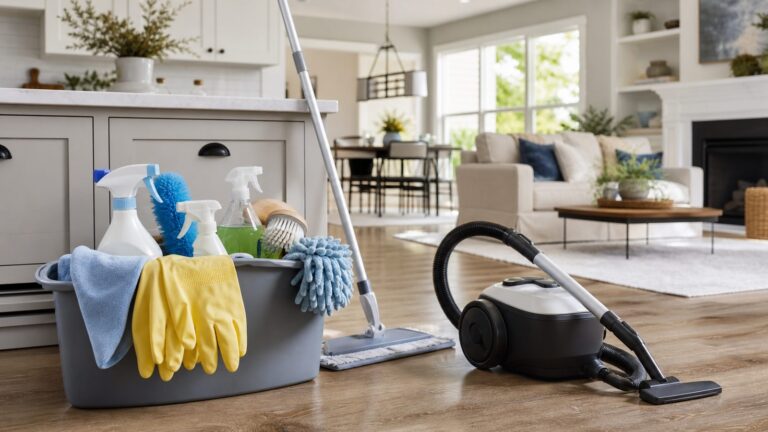
A practical kit should match the surfaces and hazards in the home rather than contain every product on a store shelf.
- For routine wiping: Keep several sets of microfiber cleaning cloths or other washable cloths. Color-coding can help keep bathroom tools separate from kitchen tools.
- For ordinary protection: Choose task-appropriate nitrile cleaning gloves. Gloves do not replace handwashing.
- For splash risk: Keep protective cleaning goggles available when the label or task creates a risk of splashing.
- For floors and dust: Select a HEPA-capable vacuum cleaner and floor-care tools that match the flooring, rugs, pets, allergies, and manufacturer requirements. HEPA capability alone does not make a machine appropriate for hazardous construction dust or mold remediation.
- For product selection: Consider an EPA Safer Choice cleaner when its label and surface directions fit the job. Do not use it merely because the name sounds safer.
- For mold cleanup: A NIOSH-approved N95 respirator may be part of the required protection for appropriate small-scale mold work. It is not a routine daily-cleaning requirement and is not a substitute for professional remediation when the situation is extensive or hazardous.
- For organization: A caddy, separate bathroom and kitchen brushes, washable mop heads, a bucket, a squeegee, and labeled storage can make the checklist easier to follow.
Do not assume a generic mask meets NIOSH approval, and do not buy a disinfectant based only on a marketing claim. Verify the current label and intended use.
What’s actually slowing this PC down?
Pick the symptom - the matching free tool is one click away.
Optional digital-cleaning reset
Digital decluttering is separate from cleaning physical devices, but it can be included in a monthly home-office routine:
- ☐ Back up important files before deleting or reorganizing data.
- ☐ Remove unnecessary downloads, duplicate files, and unused applications.
- ☐ Use built-in Windows storage and cleanup tools where appropriate.
- ☐ Update device software through the official manufacturer or operating-system channel.
- ☐ Clean screens and keyboards only according to the device manufacturer’s instructions, and never spray liquid directly onto the device.
Optional driver-maintenance software is not required for ordinary household cleaning and does not clean the physical computer, phone, or tablet.
Printable master checklist
Daily
☐ Dishes ☐ Food surfaces ☐ Spills ☐ Clutter reset ☐ Food waste ☐ Leaks or standing water ☐ Visible and high-touch soil ☐ Handwashing after cleaning
Weekly
☐ Kitchen ☐ Bathroom ☐ Floors and entryways ☐ Dusting and vacuuming ☐ Bed linens and towels ☐ Pet areas ☐ Wastebaskets ☐ Food-expiry and pest check
Recommended Free Tools
Monthly
☐ Appliances and filters ☐ Windows and tracks ☐ Baseboards and vents ☐ Upholstery and mattress surfaces ☐ Bins ☐ Electronics ☐ Cleaning tools ☐ Product-label and storage review
Seasonally
☐ Curtains and upholstery ☐ Behind appliances and furniture ☐ Leaks and condensation ☐ HVAC filters ☐ Vents ☐ Smoke and carbon-monoxide alarms ☐ Fire extinguisher and emergency supplies
Rank #3

- Complete Home Care Kit: This variety pack includes a comprehensive range of Lemon Verbena-scented products, covering room freshening, hand and dishwashing, surface cleaning, and toilet care.
- Invigorating Citrus Scent: The Mrs. Meyer's Room Freshener (8 OZ) fills your living spaces with a refreshing and energizing lemon verbena aroma
- Gentle Hand and Dishwashing: The Lemon Verbena Liquid Hand Soap (12.5 OZ) and Liquid Dish Soap (16 FL OZ) ensure effective cleaning for both your hands and dishes while leaving behind a delightful lemon verbena fragrance.
- Versatile Surface Cleaning: The Multi-Surface Cleaner (16 OZ) can be used on a variety of surfaces for effective cleaning, all while infusing your home with the soothing scent of lavender.
- Effective Bathroom Care: The Lavender Toilet Cleaner (24 OZ) ensures a sparkling clean toilet with the added benefit of a pleasant lavender fragrance. This variety pack offers a comprehensive and harmoniously scented solution for your home care needs.
Annually or as needed
☐ Deep-clean carpets and hard-to-reach areas ☐ Professional system maintenance ☐ Replace worn cutting boards ☐ Review products and tools ☐ Mold or water-damage assessment ☐ Construction or renovation handover clean
Special protocols
☐ Illness ☐ Food-contact surfaces ☐ Mold and moisture ☐ Flood damage ☐ Construction dust or residue ☐ Electronics
Quick wins for a faster PC:
Scan for outdated or missing drivers - takes under a minuteDriver Scan →Clear out junk files and repair common Windows errorsFree Scan →Fix the driver behind crashes, sound loss and screen glitchesFind Drivers →Frequently Asked Questions
Do I need to disinfect my house every day?
Usually not. In an ordinary home where nobody is sick and there is no special circumstance, regular cleaning of visibly dirty and frequently touched surfaces is generally sufficient. Clean first, then sanitize or disinfect when illness, contamination, or public-health guidance makes it appropriate.
How often should a home be cleaned?
Use visible soil, traffic, children, pets, cooking, visitors, illness, and household health needs to set the frequency. A practical starting point is a daily reset, weekly room cleaning, monthly detail work, seasonal inspections, and annual or as-needed deep cleaning.
Can I mix bleach with vinegar, ammonia, or another cleaner?
No. Never mix bleach with ammonia or any other cleaner. Toxic vapors can result. Follow the product label, ventilate the area, and keep products in their original labeled containers.
What should I do if I find mold after a leak or flood?
Fix the moisture source and dry wet materials within 24–48 hours when possible. Small areas on hard, cleanable surfaces may be handled with detergent and water or an appropriate bleach solution, with fresh air and proper protection. Extensive, hidden, porous, structural, or health-sensitive situations should be assessed by qualified professionals.
Can I use a general disinfectant on a cutting board?
Not automatically. Wash the board with hot, soapy water, and use a sanitizer only if its label specifically allows the relevant food-contact use. Follow the label’s dilution, contact-time, and rinsing directions.
The Bottom Line
A good cleaning system is not a race to disinfect everything. Remove dirt routinely, address high-touch and food-contact surfaces according to the situation, control moisture before mold spreads, protect new construction finishes, and use professional help when contamination or building damage exceeds ordinary household work.
Quick Recap
Product prices and availability are accurate as of the date/time indicated and are subject to change. Any price and availability information displayed on Amazon at the time of purchase will apply.