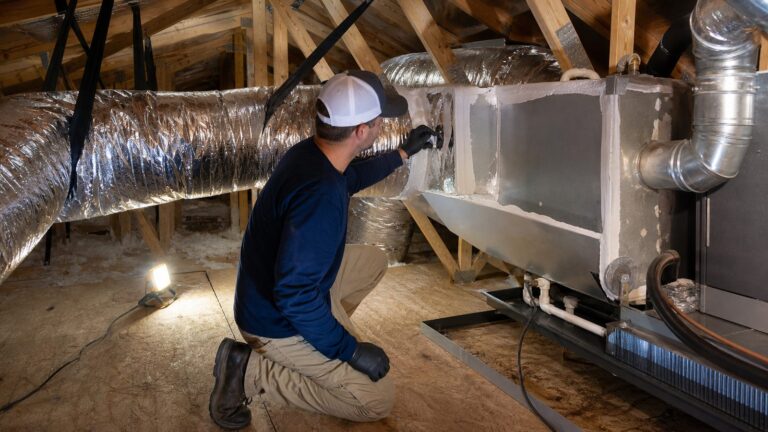
HVAC ductwork carries cooled air from the air handler to living spaces and provides a route for air to return to the system. Its design, condition, and connection to the equipment affect whether the installed AC can deliver the intended airflow and comfort. A properly selected unit alone cannot compensate for ducts that are poorly sized, leaky, or mismatched to the blower.
What ductwork does in a central AC system
Supply ducts carry conditioned air from the air handler toward rooms. Registers or grilles release that air into the spaces being cooled. Return grilles and return ducts bring room air back to the equipment, where it can be filtered and cooled again. Together, these parts form the system’s air-distribution path.
If that path is restricted, leaky, or poorly arranged, some rooms may receive less airflow than intended while others receive too much. Duct problems can contribute to uneven comfort and wasted energy, though equipment selection, refrigerant charge, the building envelope, and other factors also affect performance.
How duct design matches the AC equipment
Residential duct sizing is an engineering calculation, not a choice made by looking at a room or copying a neighbor’s duct diameter. ACCA’s Manual D® Residential Duct Design describes a method that uses room heating and cooling loads, duct-system resistance, and the selected equipment’s manufacturer blower data. The aim is to provide appropriate airflow to rooms while keeping the system within the equipment’s operating range.
Free tools Windows power users keep installed
One-click scans. No signup required.
#1 Best Overall

- 【Multi Purpose Duct Tape】Aluminum foil duct tape with adhesive backing is suitable for sealing, repairs and patching HVAC air duct system, wrap pipes insulation, waterproof sealing aluminum, sealing hot and cold air ducts, dryer vent tape, heavy duty ducts tapes, stainless steel and plastic joints/joints, temporary repair of metal surfaces, fixing hose and copper pipe, etc. Aluminum foil duct tape heavy duty waterproof tape is suitable for smooth flat and irregular surfaces to heat resistant.
- 【Strong Adhesive Duct Tapes】Aluminum metal tape for ductwork is made of high quality pressure sensitive adhesives. So, the silver duct tape metallic has stronger sticking, easier tearing, leave no trace without residual glue. This metal duct tape hvac is very fit for kitchen with heat resistant, moisture resistant, and waterproof. Provide you with excellent adhesive effects and stability under low and high temperature conditions (Temperature resistance: Long term is 120 ℃, short-term is 350 ℃).
- 【3.9mil Aluminum Foil Tape】If the foil tape for insulation is too thin, the HVAC air duct tape waterproof will break easily, and if insulation tape is too thick, the heavy duty tape will be difficult to fit the pipe surface wrapping. Hvac foil tape of 3.9mil thick is moderate and perfect for use. So our 3.9mil muffler tape is not easy to break, of high quality, affordable, and easy to peel off. Aluminum duct tape hvac duct tape, outdoor waterproof tape, better insulation, higher tear resistance.
- 【Premium Aluminum Foil Metal Tape】Our such aluminum silver tape for ductwork has good waterproof performance, UV resistance, moisture resistance, heating / heat resistant, corrosion resistance, anti-aging, insulation, flame retardant, sealing seams. The dryer duct tape performs well in any type of weather! This aluminum metal duct tape is your superior choice. The duct tape silver itself does not wrinkle and curl, making exhaust tape easier for the ducting work and saving you time.
- 【Package Included】You will get 1 roll silver aluminum foil tape for ductwork. Size: 2inch wide, 65feet long and 3.9mil thickness. The silver aluminum tape is also named as strong tape heavy duty duct tape, silver tape, metal ducting tapes, ac duct tape, thermal tape, furnace tape, metallic tape, outdoor duct tape waterproof, outdoor tape waterproof, waterproof duct tape for outdoor use, water proof tape for leaks. This is silver metal aluminum tape for ductwork. Heavy duty hvac tape for ducts.
ACCA identifies its Third Edition, ANSI/ACCA 1 Manual D—2016, as its current technical-manual page edition. In a February 23, 2024 announcement, ACCA said Manual D is referenced by the International Residential Code and Uniform Mechanical Code. Which code edition applies to a particular job depends on local adoption; the reference does not make one edition universally binding everywhere.
There is no reliable universal duct diameter or quick sizing formula for every home. The design depends on the room loads, equipment, duct routes, and system resistance.
Rank #2

- Versatile Thermal Insulation: R4.2 high-density insulation material effectively prevents heat loss and cold air penetration, ideal for HVAC systems, hot water pipes, and cooling systems, suitable for year-round use.
- Indoor & Outdoor Durability: Weather-resistant outer layer protects against extreme temperatures and UV exposure, perfect for outdoor or damp environments like garages, rooftops, and basements.
- Easy Installation: Flexible and lightweight, can be easily cut and bent to fit various pipe sizes (4-inch/6-inch options available). No specialized tools required for quick setup.
- Cost-Effective Solution: High-quality Chinese manufacturing with a durable, thickened structure that resists compression and tearing, offering long-lasting performance with reliable after-sales support.
Why duct leaks and weak connections matter
ENERGY STAR says a typical house loses about 20 to 30 percent of the air moving through its duct system through leaks, holes, and poorly connected ducts. That is a general consumer-guidance estimate, not a measurement for every home; the current page does not state a publication year. Leakage can waste conditioned air and contribute to higher bills or rooms that remain difficult to cool. See ENERGY STAR’s duct-sealing guidance.
For accessible joints and connections, ENERGY STAR recommends mastic sealant or metal tape and cautions that ordinary cloth-backed duct tape is not a durable repair. DOE Building Science likewise says joints, connections, and plenums should be sealed with UL-approved mastic, UL 181 tape, or an equivalent product. Details are in its guidance on tight duct sealing.
Outdated Drivers Are Slowing You Down
One free scan finds every outdated or missing driver and matches the right update for your exact hardware.Free scan · exact hardware matchWindows Errors? Fix Them Before They Spread
Repair common Windows errors and clear accumulated junk for a smoother, more stable PC - no reinstall needed.Free scan · no reinstallRank #3
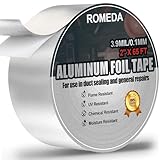
- THICKER: 3.9 mil / 0.1mm foil tape. Metal glosses, good insulation. The metal duct tape is too thin is easy to break, and too thick is difficult to fit the pipe surface. The thickness of 3.9mil is moderate for use. So foil tape of 3.9mil is not easy to break and is your best choice.
- MORE STICKY: Our aluminum foil tape is made of premium pressure-sensitive adhesive. Persistent adhesion is provided at low and high temperatures. (Long-term temperature resistance: 120℃, Short-term temperature resistance: 130℃) UV resistant, moisture resistant, heat resistant and show good performance in any type of weather.
- EASY TO SEPARATE: Due to the thicker foil and paper. Our HVAC tape is easier to strip the edges with a slight tear. The aluminum tape itself does not wrinkle and curl and is easier to work and saves you time. Paste more firmly, tear off more easily, leave no trace without residual glue.
- MULTI-PURPOSE: Aluminum foil tape is suitable for smooth flat and irregular surfaces. It is generally used for sealing hot and cold air ducts (excellent HVAC duct tape), pipe insulation systems, sealing aluminum, stainless steel and plastic joints/joints, temporary repair of metal surfaces, copper pipe fixing, etc. Extensive applicability to meet your daily needs.
- WHAT YOU GET: 1 Roll aluminum tape (2 inches x 65 feet), our 7*24 friendly customer services for peace of mind.
Sealing work should be followed by performance checks where appropriate. DOE’s measure guideline for existing homes recommends measuring airflow before and after sealing: closing leaks in a very leaky system can raise pressure and reduce total airflow, so a seal alone does not prove that delivery is correct. The guideline is available at DOE EERE.
Insulating ducts outside conditioned space
Ducts routed through attics, crawlspaces, garages, or other unconditioned areas can gain or lose heat through their walls. That can reduce the usefulness of the cooled air before it reaches the rooms. DOE Building Science describes metal ducts insulated on the exterior with duct wrap, such as a fiberglass blanket with a foil-faced vapor barrier. Its overview is HVAC Sealed and Insulated Metal Ducts.
Rank #4

- Product Function and Specifications: this galvanized duct end boot end boot connects a 4 inch/ 10.2 cm round duct to a 10 x 4 inch/ 25 x 10.2 cm rectangular register opening, designed for use in HVAC heating, cooling, and warm air distribution systems
- Design and Application Scenarios: rectangular HVAC end boot featuring a 90° angled design, it allows smooth airflow redirection in tight spaces such as behind walls, under floors, or above ceilings where straight duct runs are limited
- Material and Durability: galvanized end boot constructed from 30 gauge galvanized steel, it provides structural strength and corrosion resistance suitable for long-term residential and light commercial applications
- Compatibility and Apply Cases: 4 x 10 floor register vent compatible with standard 4 inch/ 10.2 cm round duct pipes and 10 x 4 inch/ 25 x 10.2 cm vent openings; Suitable for furnace ducts, warm air systems, bathroom exhausts, and ventilation upgrades
- Installation and Fit: 90 degree rectangular to round HVAC transition precision-formed edges enable a secure connection using screws or HVAC foil tape, supporting both DIY installations and professional HVAC contractor use
The appropriate insulation level depends on climate, duct location, the building assembly, and applicable local requirements. The cited guidance does not establish one R-value for every installation, so ask the contractor to specify the insulation selected for the actual route and code requirements.
Independent reader supportYour contribution helps us test, update, and keep practical guides available for everyone.Registers, grilles, returns, and airflow verification
Supply and return terminals are part of the design, not finishing details. The size, quality, and placement of grilles can contribute to drafts, stagnant areas, noise, or comfort problems. DOE Building Science explains these considerations in HVAC Duct Terminal Sizing.
What’s actually slowing this PC down?
Pick the symptom - the matching free tool is one click away.
Best Value

- Insulates, cushions, and reduces vibrations on heating and AC ducts
- Safe alternative - no gloves, face Mask, or goggles needed
- Class a fire rating
- Provides maximum insulating power
- Easy installation
Airflow should be checked rather than inferred from the AC’s nameplate or the fact that air comes out of a register. DOE notes that more than half of U.S. home HVAC systems are believed to perform poorly because of one or more installation issues; examples include oversizing and duct systems that are improperly designed, sized, or installed. The page does not state a date for that estimate. See HVAC Quality Installation.
For duct leakage testing, ASHRAE’s 2025 duct-design chapter places tests after duct sections are assembled but before insulation and concealment, with allowable leakage criteria set by the design engineer. DOE also provides training material on duct leakage testing. The test method and acceptance criteria for a project should be established for that system, not assumed from a generic target.
Questions to ask before the AC installation is finished
- Was the duct design based on room-by-room heating and cooling loads and the selected equipment’s blower data?
- Does each room have an appropriate supply path and a clear return-air path?
- Which ducts run inside the conditioned envelope, and which run through unconditioned spaces?
- What sealing and insulation products and locations are specified?
- What airflow or leakage checks will be performed, and what results will be recorded?
- Which locally adopted code, program requirements, and test protocol apply to this project?
Do not assume that older program targets are current code. For example, the ENERGY STAR V3 HVAC Quality Installation Guidebook, last updated March 23, 2011, listed 6 CFM25 per 100 square feet for total duct leakage and 4 CFM25 per 100 square feet for leakage to outdoors. Those were checklist limits for that guidebook version, not universal present-day legal thresholds. The dated guidebook is available here.
Quick Recap
Product prices and availability are accurate as of the date/time indicated and are subject to change. Any price and availability information displayed on Amazon at the time of purchase will apply.
Recommended Free Tools