Free tools Windows power users keep installed
One-click scans. No signup required.
AI is changing interior design in two different ways: it can help create and test a room before work begins, and it can help the finished home respond to its occupants. The first produces concepts, layouts, and visualizations. The second coordinates lighting, heating, appliances, security, and accessibility.
The most successful smart homes will not simply contain more connected gadgets. They will be designed as adaptive, reliable spaces—planned around real measurements, interoperable systems, privacy, manual controls, and safe failure modes.
As an Amazon Associate I earn from qualifying purchases.
AI in interior design means more than generated room images
“AI in interior design” covers several distinct technologies:
What’s actually slowing this PC down?
Pick the symptom - the matching free tool is one click away.
- Generative visualization: Restyling a photograph to explore colors, finishes, furniture, or lighting.
- Object replacement: Removing furniture or changing cabinets, flooring, wall treatments, and fixtures in an image.
- Layout assistance: Suggesting furniture arrangements, room zoning, or alternative uses for a space.
- 2D, 3D, and floor-plan generation: Turning plans, scans, or measurements into editable design environments.
- Natural-language assistance: Describing a desired mood, function, style, budget, or household routine conversationally.
- Product-aware design: Connecting a concept to identifiable furniture, appliances, lighting, or materials.
- Adaptive environmental control: Using occupancy, daylight, weather, schedules, and preferences to adjust the home.
- Predictive intelligence: Identifying unusual appliance behavior, energy waste, maintenance needs, or security events.
A photo restyler, an AI floor planner, and a conversational smart-home assistant solve different problems. They also have different requirements for accuracy, privacy, connectivity, and professional oversight.
#1 Best Overall

- Echo Hub — An easy-to-use smart home control panel redesigned for your home. Arrange controls on your dashboard to quickly adjust devices, view cameras, start routines, and more.
- Customize your dashboard — Arrange devices into sections and resize them to focus on what matters most. Create a personalized layout that matches how your family uses their connected devices.
- Reimagined for your home - With an Alexa+ and compatible Ring subscription (sold separately), get Ring camera event summaries to stay in the know. Search your Ring footage using simple voice commands. Create routines by voice, activate modes to manage multiple devices at once, and chat with Alexa to easily control your smart home.
- Home security for the whole family — Use Echo Hub to easily arm and disarm your compatible security system, making it easy for everyone in your family to manage home security. Use the Alexa app and compatible cameras, locks, alarms, and sensors to check in while you're out.
- Works with thousands of Alexa compatible devices — WiFi, Bluetooth, Zigbee, Matter, Sidewalk, and Thread devices sync seamlessly with the built-in smart home hub.
How AI changes the design process
The conventional workflow
- Brief and needs assessment
- Site measurement and existing-condition documentation
- Concept development
- Mood boards and material selection
- Floor plans, elevations, and specifications
- Budgeting and procurement
- Installation and commissioning
- Post-occupancy adjustment
The AI-assisted workflow
- Upload photographs, measured drawings, plans, or a room scan.
- Generate several concepts quickly.
- Compare colors, layouts, lighting scenes, materials, and furniture arrangements.
- Rebuild the preferred concept in an editable 2D or 3D model.
- Check dimensions, circulation, clearances, products, and budget manually.
- Plan sensors, switches, network access, lighting controls, HVAC interfaces, and other smart-home infrastructure.
- Test scenes and routines virtually before installation.
- Commission the system, observe how occupants use it, and refine the automations.
The major improvement is speed and iteration—not the removal of design expertise. AI can produce ten visual directions in the time it once took to make one, but it cannot reliably determine whether a cabinet clears a doorway, whether an appliance has adequate ventilation, or whether a proposed layout complies with accessibility requirements.
From static rooms to responsive rooms
A conventional room is designed primarily around appearance, furniture, circulation, and building services. An AI-enabled room is also designed around states, triggers, priorities, and exceptions.
A living room might have separate work, reading, entertainment, dinner, and evening modes. A “movie” request could lower shades, dim lights, adjust color temperature, set the thermostat, and activate suitable audio equipment. A bedroom could apply quiet hours and temperature preferences. An entryway could coordinate a lock, porch lighting, camera notifications, and indoor lights. A kitchen could connect ventilation, appliance status, lighting, water monitoring, and safety alerts.
The designer must therefore specify:
- What the room is used for and by whom.
- Which conditions should trigger a change.
- How long a condition must persist before action is taken.
- What happens when sensors disagree.
- How occupants override automation.
- What remains functional during an internet, power, or cloud-service failure.
This is the difference between adding a smart bulb and designing an intelligent home. Intelligence comes from useful coordination among systems, not from the number of devices installed.
Conversational assistants are moving beyond simple commands
Traditional voice control requires a rigid instruction such as, “Turn on the kitchen lights.” Newer platforms are being designed to interpret broader intent:
- Command: “Turn on the lights.”
- Scene: “Start movie mode.”
- Context: “Make the room comfortable for a movie.”
- Troubleshooting: “Why is the bedroom colder than usual?”
- Delegation: “Prepare the house for guests at 7 p.m.”
Google is positioning Gemini for Home as a broader AI offering for smart-home providers and hardware partners. Its 2026 Google I/O material references Home APIs and Google Home Premium integrations.
Amazon’s official Alexa+ information describes conversational generative-AI capabilities and says the service is included with Prime, subject to current eligibility, geography, and plan terms.
The Tool Desk
Outbyte PC Repair FREEClear out junk files and repair common Windows errorsFree Scan →Outbyte Driver Updater FREEScan for outdated or missing drivers - takes under a minuteDriver Scan →Apple’s June 8, 2026 announcement describes AI updates affecting Home features and HomeKit Secure Video, including a combination of on-device processing and Private Cloud Compute. Some announced capabilities may have testing or beta limitations.
Availability varies by country, language, account, subscription, controller, device category, and rollout stage. A conversational demonstration should not be treated as proof that every device in a home can perform the requested action.
Matter and Thread: why infrastructure is part of interior design
Matter improves interoperability by allowing supported devices to work across ecosystems such as Google Home, Apple Home, and Amazon Alexa. Matter can use Wi-Fi or Thread, and compatible devices may support multi-platform control. Amazon describes Matter Multi-Admin for connecting compatible products to multiple platforms. Apple likewise documents Matter support and cross-platform accessory use in its Home developer resources.
Rank #2

- MEET ECHO SHOW 15 - A stunning 15.6" Full-HD (1080p) smart display that's perfect for your kitchen and ready to show you more. Use customizable widgets to keep your day on track, watch your favorite shows with Fire TV and powerful vibrant sound, and enjoy natural video calling, with 3.3x zoom and wide field of view.
- FAMILY ORGANIZATION HUB - See your top widgets at a glance, like your family’s calendars and to-do lists, local weather, smart home, and more.
- ALL YOUR FAVORITES, ALL RIGHT HERE - Built-in Fire TV unlocks endless entertainment, so you can enjoy your favorite content from thousands of apps like Prime Video, Netflix, YouTube, Apple TV, and more (subscription may be required). Fire TV remote included. Plus, now you can quickly add a device to play music with Active Media - start playing a song in the kitchen, then add the living room and bedroom on the fly.
- SMART HOME CENTRAL - Control smart devices with your voice or a few taps using the smart home dashboard. Easily turn on all your living room lights at once or check live camera feeds to see what's happening around your home.
- YOUR FAVORITE MEMORIES ON DISPLAY - Brighten your space (and your day) by turning your home screen into a photo slideshow that displays your favorite memories. Auto curate your images and show off your favorite family memories.
That makes Matter valuable future-proofing, but it is not a guarantee of perfect compatibility. A device may expose fewer functions through Matter than through its manufacturer’s app. Advanced features may remain proprietary. Cameras and complex appliances can have more limited support than lights, plugs, or switches. Firmware updates can change behavior.
Do these 3 things before closing this tab:
1Fix the driver behind crashes, sound loss and screen glitches2Clear out junk files and repair common Windows errors3Scan for outdated or missing drivers - takes under a minuteThread devices also need suitable Thread infrastructure. Google notes that Matter requires IPv6 connectivity and that Thread products depend on Thread networking. Discovery and automation can fail because of poor Wi-Fi coverage, disabled IPv6, blocked multicast traffic, incorrect VLAN isolation, router changes, or a missing or badly positioned Thread Border Router.
Smart-home planning should therefore happen alongside electrical and construction planning. Account for:
- Reliable network coverage and equipment locations.
- Thread Border Routers and their power requirements.
- Sensor positions and sight lines.
- Neutral wires, deep electrical boxes, and compatible switches where required.
- Access to replace or reset devices.
- Physical switches and manual controls.
- Local operation for critical functions.
Lighting is one of AI’s most credible applications
Lighting combines strong visual impact with relatively controllable hardware. AI-assisted lighting can use daylight, occupancy, activity, time, and user preferences to:
- Dim electric lighting as daylight increases.
- Reduce glare near windows and screens.
- Change color temperature through the day.
- Activate task, relaxation, entertaining, or nighttime scenes.
- Turn lights off in unoccupied areas.
- Simulate occupancy while residents are away.
- Provide voice, sensor, or app control for people with limited mobility.
Over-automation is a real design failure. Presence sensors can mistake pets for people or fail to detect someone sitting still. Voice control struggles with noise and speech-recognition errors. Lights can switch off while someone is reading or turn on at an unwanted time.
Every important lighting circuit should have an obvious manual override. Decorative lighting, tactile comfort, and personal preference should not be sacrificed for algorithmic efficiency.
Climate, appliances, and energy planning
AI can affect the layout and specification of a home by making operational performance part of the design brief. Thermostats can use occupancy and schedules. Appliances may adjust cycles according to usage patterns or conditions. EV charging and heating controls may respond to grid forecasts.
Apple’s EnergyKit documentation describes access to grid-forecast information for apps managing EV charging or smart thermostats. Samsung’s Bespoke AI appliance material describes AI Energy Mode and software-support claims for particular flagship products. Samsung’s CES 2026 announcement presents a wider connected system involving appliances, energy, safety services, and partners.
These are examples of potential optimization, not universal proof of household savings. Results depend on insulation, equipment efficiency, climate, energy tariffs, utility data, commissioning, and occupant behavior. Separate manufacturer claims from independently measured whole-home savings.
Accessibility should be designed in, not added later
Adaptive automation can improve independence for people with limited mobility, vision, hearing, energy, or cognitive capacity. Useful features may include automated doors, blinds, lights, locks, thermostats, spoken or visual alerts, personalized scenes, appliance control, and notifications for caregivers.
Rank #3

- Powered by SmartThings: Connect, monitor, and automate your home through the SmartThings app. Build a reliable, unified smart home using Samsung's proven ecosystem
- Matter + Zigbee Smart Home Hub: Supports the newest Matter standard plus Zigbee for lighting, sensors, plugs, switches, thermostats, and more - thousands of compatible devices. PLEASE NOTE: Z-Wave not supported
- Easy Setup with Wi-Fi or Ethernet: Get started in minutes using Wi-Fi or a wired Ethernet connection for apartments, houses, and expanding smart home systems - Z-Wave not supported
- Automations That Work for You: Create custom routines for security, lighting, comfort, and energy savings. Many local automations continue working even if your internet goes offline
- Wide Device Compatibility: Connect compatible smart devices from Aeotec and many other brands to build a unified system for lighting, voice control, energy management, and climate settings
But automation can also create new barriers. Voice systems may misunderstand speech differences. An AI model may infer the wrong activity. A redesigned app may become harder to navigate. A subscription or discontinued device may remove an important capability. An automated lock, cooker, or heating system can create safety risks if it behaves unexpectedly.
The central principle is redundancy: voice, app, physical controls, and manual operation should coexist. Emergency-critical decisions should never depend on one cloud service, one microphone, or an unverified inference. Interfaces should remain simple, visible, and usable when the occupant is tired, distressed, offline, or unable to speak.
The physical-world accuracy problem
AI-generated interiors are visually persuasive because they are designed to look plausible. Plausibility is not the same as technical accuracy. A generated image may alter:
Recommended Free Tools
- Window and door locations
- Wall thickness and room proportions
- Furniture dimensions
- Plumbing and electrical locations
- Structural columns
- Cabinet clearances
- Appliance ventilation
- Accessible turning radii
- Material reflectance and texture
- Product identity, price, or availability
Use this safe validation sequence:
- Photograph the room from multiple angles.
- Record exact dimensions, ceiling heights, openings, radiators, outlets, plumbing, and fixed equipment.
- Use a measured floor plan or scan rather than relying on a single photograph.
- Treat AI images as concepts until they are rebuilt in an editable, dimensioned model.
- Check circulation, ergonomics, clearances, building regulations, and installation requirements.
- Confirm every product against a current manufacturer page, including dimensions and ventilation needs.
- Obtain qualified review for structural, electrical, plumbing, HVAC, and accessibility work.
For homeowners, tools such as Homestyler offer editable 2D/3D planning and rendering features, while Planner 5D presents consumer-oriented 2D/3D planning with premium AI features. Houzz Pro advertises professional floor planning, room scanning, and workflow tools, but directs users to request pricing. These platforms can accelerate planning; none removes the need for measured verification.
Privacy: the home becomes a data environment
An AI-enabled home can reveal when residents are present, when they sleep, which rooms they use, who visits, how appliances operate, and what cameras or microphones hear. That information can be more sensitive than the interior itself.
Before installing a camera, microphone, occupancy sensor, or cloud-connected appliance, ask:
- Can it operate locally?
- Is a cloud account mandatory?
- How long are recordings and metadata retained?
- Can users delete stored data?
- Is audio or video used to train models?
- Are third-party processors disclosed?
- Can household members and guests be separated in permissions?
- What remains available when a subscription ends?
- Can cameras and microphones be physically disabled?
- How long will security updates be provided?
Apple emphasizes user control, accessory permissions, and privacy-oriented processing in its Home documentation and Matter materials. Those are vendor statements, not an independent security certification. On-device processing can reduce some cloud exposure, but account data, notifications, backups, metadata, and integrations may still leave the home.
Windows Errors? Fix Them Before They Spread
Repair common Windows errors and clear accumulated junk for a smoother, more stable PC - no reinstall needed.Free scan · no reinstallCrashes, No Sound, or Screen Glitches?
Random freezes, missing sound and display glitches usually trace back to one bad driver. Find and replace yours safely.Free scan · under a minuteSustainability and lifecycle design
AI may reduce waste by helping people reuse existing furniture, test layouts before buying, minimize physical samples, and avoid purchasing items that do not fit. It may also help select energy-aware lighting and appliances or design spaces that adapt rather than require frequent renovation.
The opposite is also possible. Image generators can accelerate trend cycles and encourage disposable redecorating. Product recommendations may favor items with abundant online imagery or commercial integration rather than products that are durable, repairable, affordable, or low in embodied carbon.
Evaluate sustainability by outcomes: durability, repairability, energy performance, healthy materials, adaptability, reduced waste, and measured operating performance. A connected appliance that cannot be repaired or used after its service ends may have a worse lifecycle than a simpler product.
Rank #4
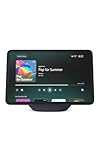
- New size, more viewing area: The 11“ smart display features a vibrant Full-HD touchscreen with 60% more viewing area versus Echo Show 8 (2025 release), built-in smart home hub, AZ3 Pro chip for powerful performance, and Omnisense technology for highly personalized experiences.
- Content looks and sounds incredible: Watch shows on Prime Video, Netflix, and more on the vibrant Full-HD 11" screen and enjoy room-filling spatial audio, crisper vocals, wider sound stage, and up to 2x bass versus Echo Show 8 (2023 release). With Alexa+, find the name of that song you love and discover new shows based on your preferences.
- Your everyday assistant: The 11" display makes it easy to see recipes and calendars at a glance, find meal inspo, and manage your shopping lists. With Alexa+, find recipes based on foods you love, make reservations, order groceries, and more.
- Simple Smart Home control: Pair and control thousands of devices that work with Alexa without needing a separate smart home hub. Easily view your camera feeds. Manage lights, thermostats, and more using the display or your voice. With Omnisense technology, you can activate routines via temperature, presence, or visual ID detection.
- Crystal-clear video calls: Video calls feel natural on the vibrant 11" screen with a centered, auto-framing camera, 3.3x zoom, and noise reduction technology. Use live view to check in on your family, pets, and more while you're away.
What remains human
AI is particularly effective at rapid ideation, variation, image manipulation, early visualization, conversational brainstorming, and organizing options.
Human designers remain essential for interpreting ambiguous needs, documenting existing conditions, understanding structure and building systems, checking regulations and accessibility, selecting materials for performance and maintenance, managing budgets, coordinating contractors, and accepting responsibility when a design fails.
The likely future is AI-augmented practice. Designers may spend less time producing repetitive visual options and more time on judgment, technical validation, systems integration, procurement, commissioning, and the occupant’s long-term experience. AI can show what a room might look like; a professional helps determine whether it can be built, afforded, maintained, and lived in.
How to choose AI design and smart-home tools
For homeowners
- Choose tools that accept measurements or scans, not only photographs.
- Prefer editable plans and exportable files over locked image results.
- Verify whether shown products are real, identifiable, available, and correctly sized.
- Check whether the tool supports quantities, prices, substitutions, and budgets.
- For smart hardware, confirm exact Matter functions rather than relying on a compatibility badge.
- Keep physical controls for lights, locks, heating, blinds, and other essential systems.
- Review privacy, retention, subscription, update, and offline-operation policies.
- Ask what happens if the platform or company disappears.
Homestyler’s published plan page lists a free Basic plan and paid plans with starting prices that vary by plan and billing terms. Its separate Homestyler AI service focuses on image rendering and has separate pricing. Do not confuse a fast rendering subscription with a technical planning platform.
Readers already committed to IKEA can consider its US virtual interior-design service, which lists $149 per residential room and commercial services starting at $299 for IKEA Business Network members. It is less suitable for vendor-neutral specification, custom millwork outside the IKEA system, or complex renovation coordination.
For designers and builders
- Check commercial-use rights, copyright terms, client-image storage, and model-training policies.
- Look for BIM, CAD, DWG, schedules, specifications, collaboration, and construction-document exports where relevant.
- Confirm that dimensions and product data are reliable.
- Use AI to improve client communication without creating unrealistic expectations.
- Require a traceable link between visual recommendations and actual products or materials.
- Retain professional responsibility for the final specification and installation.
For smart-home hardware
- Prefer certified Matter support and Thread where appropriate.
- Check local control, multi-admin support, physical controls, and safe failure behavior.
- Review security-update commitments and subscription boundaries.
- Confirm API and integration documentation.
- Consider repairability, replacement access, and migration to another ecosystem.
Common failure modes
A device pairs but does not expose the expected features
Matter may support the device category while a platform implements only part of its functionality. Confirm the exact controls and automations supported by the chosen controller.
Devices disappear from the network
Check Wi-Fi coverage, IPv6, multicast discovery, VLAN rules, router firmware, and Thread Border Router placement before adding more devices.
An AI render shows an impossible room
Recheck wall positions, openings, furniture dimensions, circulation, product SKUs, plumbing, electrical work, and ventilation. Rebuild the concept in a measured model.
Automation behaves unpredictably
Pets, stationary occupants, conflicting preferences, poor sensor placement, and unavailable cameras can produce ambiguous signals. Use delays, time windows, layered rules, and manual overrides.
Quick wins for a faster PC:
Fix the driver behind crashes, sound loss and screen glitchesFind Drivers →Clear out junk files and repair common Windows errorsFree Scan →A subscription removes essential functionality
Identify which features are local, which require the cloud, and which require a paid plan before purchase. Keep critical functions independent of a single subscription.
Design the system, not just the room
The best AI-enabled interior is not the one with the most automation or the most photorealistic render. It is the one that understands how occupants actually live, uses verified dimensions, works with interoperable components, protects private information, supports accessibility, remains manually controllable, and fails safely.
AI is likely to make design exploration faster and smart-home control more conversational. The durable value will come from the human work around it: accurate surveying, thoughtful spatial planning, careful product selection, robust infrastructure, professional coordination, and post-installation refinement.
Quick Recap
Product prices and availability are accurate as of the date/time indicated and are subject to change. Any price and availability information displayed on Amazon at the time of purchase will apply.
Recommended Free Tools

