Some links on this page are affiliate links: if you buy through them we may earn a commission, at no extra cost to you.
The best time to prepare a lawn for fewer spring weeds is before the weeds emerge—but the best preparation is not an aggressive spring overhaul. Test the soil before applying fertilizer or lime, clean up only when the ground is firm, keep desirable grass dense and properly mowed, and time crabgrass prevention by soil temperature rather than a fixed calendar date.
That approach can reduce weed pressure, but no responsible lawn-care plan can promise literally weed-free grass. A healthy, dense lawn is the foundation; pre-emergent herbicide is a carefully timed supplement, not a substitute for correcting bare soil, compaction, drainage problems, shade, or poor mowing.

As an Amazon Associate I earn from qualifying purchases.
Quick wins for a faster PC:
Fix the driver behind crashes, sound loss and screen glitchesFind Drivers →Repair Windows errors before they cause bigger problemsFix Now →Scan for outdated or missing drivers - takes under a minuteDriver Scan →Spring lawn-preparation timing at a glance
Dates vary with climate, elevation, soil, turf species, and the year’s weather. Use this sequence instead of treating one national date as universal.
| When | What to do | What to avoid |
|---|---|---|
| Before spring growth | Identify the grass and weeds, test the soil, inspect thin areas, and plan repairs. | Applying lime or fertilizer by guesswork. |
| When soil is firm and the grass is dry | Lightly remove leaves and matted debris, begin mowing as needed, and inspect for bare or compacted areas. | Rolling, aggressively raking, or driving equipment over soggy soil. |
| When the upper 1–2 inches of soil reach about 55°F for several days | Consider a crabgrass pre-emergent if the lawn is established and you are not planning incompatible spring seeding. | Using a fixed date, treating emerged weeds with a pre-emergent, or applying one immediately before ordinary overseeding. |
| Late summer or early fall in many cool-season regions | Schedule major overseeding, renovation, and substantial aeration when conditions favor establishment. | Trying to repair a severely declining lawn with repeated spring spot treatments alone. |
University of Minnesota Extension describes approximately 55°F in the upper soil layer as a useful crabgrass-germination threshold. Its Minnesota example—roughly mid-April through mid-May—is not a nationwide prescription. Soil temperature and the current product label are more dependable than the calendar.
#1 Best Overall

- 【High Efficiency 12-Inch Cutting Width】This cordless weed wacker has a 12-inch cutting width to clear more grass every pass. Its wide swath slashes trimming time, finishing lawn and yard landscaping faster than standard weed whackers.
- 【Powerful 9000RPM Cutting】Boasting a high-speed 9000RPM cutting head, this weed wacker provides swift, steady trimming performance. Serving as both a handy electric weed wacker, it effortlessly cuts dense grass and trims clean lawn edges, great for small yards and regular garden care.
- 【Dual Lithium Batteries with Fast Charging】 Equipped with two 2.0Ah lithium batteries, each delivers 15–20 mins of trimming runtime. The matching charger ensures this battery operated weed wacker cordless stays powered for continuous yard work.
- 【Auto&Manual Line Feed for Continuous Work】 This cordless string trimmer features automatic and manual line feed operation system. The string trimmer auto-releases 0.4 to 0.5 in line on startup, or 0.4 in per manual press. Extend the trimmer line to 6 inches before first use for smooth operation.
- 【Quick Tool-Free Assembly】 No extra tools required, you can assemble this battery-powered weed wacker within minutes. Simple to handle, it’s ideal for beginners, seniors and anyone who wants hassle-free yard maintenance.
1. Start with the soil, grass type, and cause of the weeds
Before choosing seed, fertilizer, lime, or herbicide, determine why the lawn is thin. Weeds often take advantage of openings created by compacted soil, poor drainage, construction-related soil loss, excessive shade, incorrect mowing, drought stress, or repeated traffic. Treating the weeds without correcting the opening usually produces a temporary result.
Identify whether the lawn contains cool-season grass such as tall fescue, Kentucky bluegrass, or fine fescue, or warm-season grass such as zoysia or bermudagrass. Mowing heights, spring growth patterns, seeding windows, and herbicide tolerances differ. A product suitable for one turf species may injure another.
Windows Errors? Fix Them Before They Spread
Repair common Windows errors and clear accumulated junk for a smoother, more stable PC - no reinstall needed.Free scan · no reinstallOutdated Drivers Are Slowing You Down
One free scan finds every outdated or missing driver and matches the right update for your exact hardware.Free scan · exact hardware matchGet a soil test before adding nutrients
A laboratory soil test can measure pH, organic matter, and available nutrients and can guide lime and fertilizer decisions. That is more reliable than applying products because the lawn looks yellow, thin, or generally “hungry.” University extension guidance recommends testing rather than guessing, especially before making repeated amendments.
A lawn soil test kit can be convenient for collecting or screening a sample, but a home kit should not automatically be treated as equivalent to a laboratory analysis. If the lawn has a history of construction disturbance, unexplained poor growth, or repeated fertilizer applications, an extension-supported or laboratory test may provide more complete recommendations.
Use the test results, local extension recommendations, and applicable state restrictions to decide whether the lawn needs lime, fertilizer, or neither. Do not apply heavy early nitrogen simply because the grass has turned green. Early excessive leaf growth can occur before roots are ready and may leave the turf less prepared for later stress.
2. Clean up only after the lawn can support the work
Wait until the soil is firm enough that your footsteps do not leave deep impressions and the grass is dry. Lightly rake away leaves and matted debris so air and light can reach the crowns of the grass. The goal is to remove winter debris—not to scrape the soil bare.
The Tool Desk
Outbyte PC Repair FREERepair Windows errors before they cause bigger problemsFix Now →Outbyte Driver Updater FREEScan for outdated or missing drivers - takes under a minuteDriver Scan →Aggressive raking on wet soil can tear or loosen turf and add compaction. The same is true of dragging heavy rollers, carts, or equipment across saturated ground. University of Minnesota Extension specifically cautions against rolling wet lawns and against treating every spring task as an emergency renovation.
When mowing resumes, use a sharp blade and mow only when the ground is firm. Avoid scalping the lawn. Removing too much leaf tissue at once weakens the turf and exposes soil where opportunistic weeds can establish. If the grass has become unusually tall, bring it down gradually rather than taking off a large amount in one pass.
Rank #2

- 9000RPM High-Speed Cutting Power: Built with a 9000RPM cutting head, this string trimmer delivers fast and efficient performance. As a versatile weed wacker / weed whacker, it cuts through thick grass and lawn edges smoothly, making it a reliable choice for maintaining small yards and everyday garden areas.
- Automatic Line Feed for Smooth Operation: With upgraded auto-feed system, this electric weed wacker releases 0.4–0.5 inches of line automatically when start. Please extend the line to 6 inches before first use, also you can pull the line in 0.4-inch increments by pressing the release button repeatedly if needed. This battery operated weed trimmer maintains steady cutting without the need for bumping or frequent adjustments.
- 12-Inch Cutting Width for Faster Coverage: Designed with a 12-inch cutting swath, this string trimmer cordless helps cover more ground in less time. The wider path reduces the number of passes required, improving efficiency for trimming lawns and larger outdoor areas.
- Tool-Free Setup & Enhanced Safety: Quick assembly with no tools required allows you to get started in minutes. This cordless weed wacker and grass trimmer is easy to operate, making it suitable for beginners, homeowners, and anyone looking for a simple lawn care solution. It comes impact-resistant goggles to shield your eyes from flying debris, plus a reinforced safety guard that effectively block grass clippings, stones, and other particles from khitting you.
- Dual Batteries with Convenient Charging: Powered by two 2.0Ah lithium batteries, this battery powered weed wacker offers approximately 15-20 minutes of runtime per charge. The included charger ensures your cordless trimmer lawn tool is always ready for the next trimming session.
3. Time crabgrass prevention by soil temperature
Crabgrass is a warm-season annual grass. Its seeds generally germinate in late spring as the soil warms. A commonly used extension benchmark is approximately 55°F in the upper 1–2 inches of soil for several days. The correct timing may arrive earlier or later depending on location, weather, sun exposure, soil type, and the product’s label.
A handheld soil thermometer can make that timing cue easier to check, but it does not replace local extension guidance or the label. Take readings in representative areas rather than relying on one unusually warm or shaded spot.
What a pre-emergent can and cannot do
A crabgrass pre-emergent creates a barrier that can stop susceptible weed seedlings as they germinate. It generally must be applied before the target weed emerges and usually needs rainfall or irrigation to activate. Follow the product label for the required watering, timing, application rate, and restrictions.
Pre-emergent is not a dependable treatment for established perennial weeds or crabgrass that is already growing. If weeds are visible, identify the weed first and choose a control method specifically labeled for that weed and turf—or remove small infestations by hand where practical. Do not assume that a product described as “crabgrass control” will solve every weed problem.
Extension sources list active ingredients used in some crabgrass pre-emergence products, including pendimethalin, prodiamine, benefin, bensulide, and dithiopyr. These are examples, not a universal shopping list. Formulations, turf tolerances, application windows, state registrations, and restrictions vary.
For an established lawn with a known history of crabgrass, a crabgrass preventer for established lawns may be one option to investigate. Verify that the exact product is labeled for your grass species, target site, timing, and state before purchase or application. The word “preventer” does not make a product appropriate for newly seeded grass.
Free tools Windows power users keep installed
One-click scans. No signup required.
4. Decide between spring seeding and crabgrass prevention
This is the most important spring trade-off. Many conventional crabgrass pre-emergents also inhibit newly germinating turfgrass. Because they can have residual activity, the label may require postponing seeding for a period that can last months depending on the product and rate.
Do not apply a standard pre-emergent and then overseed a few days later unless the product is specifically labeled for that intended seed and situation. If spring seeding is unavoidable, use only a product whose current label expressly permits it—and follow every restriction. Otherwise, you generally have to choose between protecting an established lawn from crabgrass and establishing new grass.
| Your situation | More defensible approach |
|---|---|
| The lawn is established, reasonably dense, and crabgrass is the main predictable problem. | Time a labeled pre-emergent to soil conditions, then use cultural practices to maintain density. |
| There are a few small bare spots and no pre-emergent has been applied. | Repair the spots when soil and weather support germination, while accepting that spring weed competition can be significant. |
| You need widespread cool-season lawn repair. | Consider postponing major overseeding or renovation until late summer or early fall, when establishment conditions are generally more favorable. |
| More than roughly half the lawn is affected by weeds or poor turf. | Investigate renovation rather than relying on repeated spot treatments. Correct grading, soil, drainage, shade, or compaction issues first. |
Maryland Extension reports that weed competition is greatest with early-spring seeding and is a common reason for failure. A small patch can sometimes be repaired in spring, but large cool-season renovation projects are usually better planned for late summer or early fall.
When conditions are appropriate for repair, choose cool-season grass seed that matches the existing turf, site conditions, and regional recommendations. Do not choose a seed mixture solely because it is marketed as fast-growing or weed-resistant. The correct species for shade, traffic, drought, and soil conditions matters more than a broad product claim.
5. Keep the lawn dense enough to compete
Weed prevention is largely a competition problem. The more completely desirable turf occupies the soil surface, the fewer open spaces are available for weed seedlings.
- Repair bare areas: Address small patches when the soil, moisture, and temperature favor establishment. Find the cause before reseeding a recurring patch.
- Mow at an appropriate height: Very short mowing weakens turf and allows more light to reach weed seedlings. Follow the needs of the species rather than a one-height-fits-all rule.
- Water deeply enough for the site: Frequent, light watering can encourage shallow roots and weaker turf. Irrigation should reflect local rainfall, soil type, drainage, grass species, and weather.
- Manage traffic: Repeated foot or equipment traffic can compact soil and create openings even when mowing and watering are otherwise correct.
- Do not overfertilize: Excess nutrients can damage turf and contribute to water-quality problems. Use soil-test results and observe applicable state rules.
Useful mowing-height starting points
Maryland Extension lists these approximate ranges for common turf types:
| Grass type | Approximate mowing height |
|---|---|
| Tall fescue | 3–4 inches |
| Kentucky bluegrass | 2.5–3.5 inches |
| Fine fescue | 3–4 inches |
| Zoysia | 1.5–2.5 inches |
| Bermudagrass | 1–1.5 inches |
These are starting points, not universal prescriptions. Mowing height must also account for the cultivar, season, shade, mowing frequency, equipment, and local recommendations. Keep the blade sharp and avoid removing an excessive portion of the leaf at one time.
6. Correct compaction and drainage before adding more seed
Compacted soil restricts roots, air, and water movement. Poor drainage can leave roots stressed while encouraging thin, unhealthy turf. In a lawn installed after construction, grading changes, buried debris, removed topsoil, subsoil exposure, and heavy equipment can all be part of the problem.
Do not automatically aerate the moment spring arrives. Aeration is generally most useful when the turf is actively growing and soil moisture is suitable. For many northern cool-season lawns, major aeration and overseeding are better scheduled for late summer or fall. Aerating wet soil can smear or compact it rather than improving its structure.
If water stands in the same area, grass repeatedly dies there, or construction has left shallow or heavily disturbed soil, diagnose the site before repeating seed and herbicide applications. A grading, drainage, soil-depth, or shade correction may produce a more durable result than another bag of lawn product.
Independent reader supportYour contribution helps us test, update, and keep practical guides available for everyone.7. Use fertilizer and herbicides as precise tools, not default spring steps
A spring lawn can look as though it needs fertilizer simply because growth has resumed. That appearance is not a soil test. Apply nutrients only when testing and local guidance support the need, and use the rate and timing required by the product and applicable regulations.
Rank #4
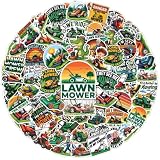
- 64 UNIQUE LAWN MOWER DESIGNS – Includes a fun and bold mix of lawn mowers, riding mowers, push mowers, grass-cutting scenes, funny mowing quotes, landscaper humor, and outdoor yard-work illustrations with no repeated designs.
- PREMIUM WATERPROOF VINYL – Made from high-quality PVC vinyl that is waterproof, scratch-resistant, and fade-resistant for long-lasting use.
- STRONG ADHESIVE & EASY PEEL – Pre-cut for easy application and removal. Sticks firmly to smooth surfaces without leaving sticky residue.
- VERSATILE FOR DAILY USE – Perfect for decorating laptops, water bottles, phone cases, notebooks, tablets, luggage, skateboards, and more.
- PERFECT GIFT FOR LAWN CARE LOVERS – Ideal gift for landscapers, lawn mower owners, gardeners, dads, yard-work enthusiasts, and anyone who loves mowing and outdoor work humor.
The same principle applies to herbicides. Before applying anything, identify:
- the grass species or mixture in the lawn;
- the target weed and whether it has emerged;
- the product’s labeled turf, site, application window, and rate;
- whether you intend to seed or overseed soon;
- the watering, re-entry, storage, weather, and environmental precautions; and
- any state or local restrictions, especially near water or sensitive areas.
The U.S. Environmental Protection Agency explains that pesticide labels are legally enforceable. Using a pesticide in a manner inconsistent with its labeling violates federal law. Never assume that a consumer product is suitable for every grass type, state, soil, pet situation, or water-adjacent site. Read the current label before buying and again before applying.
A practical spring checklist
- Identify the turf and weeds. If you cannot identify either, pause before selecting a product.
- Inspect the site. Mark bare areas and look for compaction, poor drainage, shade, construction-related soil loss, and traffic patterns.
- Test the soil. Use a laboratory test when you need dependable nutrient, pH, or amendment guidance; a home kit can be a convenient sampling aid.
- Wait for firm soil. Lightly rake debris and mow dry grass with a sharp blade. Do not roll or aggressively rake a wet lawn.
- Choose the spring objective. If preserving an established lawn is the priority, evaluate a labeled pre-emergent near the soil-temperature window. If establishing grass is the priority, check the seeding restrictions first.
- Measure soil temperature. Around 55°F in the upper 1–2 inches for several days is a useful crabgrass benchmark, but local conditions and the label control.
- Repair strategically. Seed small areas only when conditions support establishment. Plan major cool-season renovation for late summer or early fall where appropriate.
- Maintain density. Mow at a suitable height, avoid shallow frequent irrigation, manage traffic, and correct compaction or drainage.
- Recheck the label. Confirm rates, watering, re-entry, environmental precautions, storage, and state legality immediately before application.
Research basis: The timing and cultural guidance is consistent with University of Minnesota Extension, Maryland Extension, Penn State Extension, and U.S. Environmental Protection Agency guidance identified in the supporting research. Product labels and local extension recommendations take precedence because dates, registrations, turf tolerances, and restrictions vary.
Frequently Asked Questions
Can I apply crabgrass pre-emergent and overseed in the same spring?
Usually not with a conventional pre-emergent. Many products also inhibit newly germinating turfgrass and may require delaying seeding for months, depending on the product and rate. Check the current label. Only use a product for spring seeding when the label specifically allows the intended turf seed and situation.
Recommended Free Tools
What is the best month to apply crabgrass preventer?
There is no reliable nationwide month. Apply according to soil temperature and the label. A commonly used benchmark is about 55°F in the upper 1–2 inches of soil for several days, but the date varies by region, exposure, soil, and weather.
Will pre-emergent kill crabgrass that is already visible?
No. Pre-emergent is intended to prevent susceptible seedlings before emergence. It is not a dependable treatment for established crabgrass or perennial weeds. Identify emerged weeds and use only a control method labeled for the weed and turf.
Is spring the best time to renovate a cool-season lawn?
Often, no. Early-spring seeding faces strong weed competition, and conventional pre-emergent can interfere with germination. Late summer or early fall is generally a more favorable establishment window for major cool-season overseeding or renovation, although local conditions determine the final schedule.
The Bottom Line
Prepare before weeds emerge, but do not confuse activity with progress. Soil testing, firm-ground cleanup, correct mowing, dense turf, and corrected drainage or compaction provide the lasting advantage. Use crabgrass pre-emergent only at the right soil-temperature window, only on an established lawn when appropriate, and only according to the current label. That combination can produce a healthier lawn with fewer weeds—even though no spring plan can honestly guarantee weed-free grass.
Do these 3 things before closing this tab:
1Fix the driver behind crashes, sound loss and screen glitches2Repair Windows errors before they cause bigger problems3Scan for outdated or missing drivers - takes under a minuteQuick Recap
Product prices and availability are accurate as of the date/time indicated and are subject to change. Any price and availability information displayed on Amazon at the time of purchase will apply.

