The best time to plant grass depends on your grass type and location. For most cool-season lawns, sow seed in late summer or early fall; for warm-season grass, plant in spring or early summer. Local planting dates vary, so use regional extension guidance rather than treating any one calendar date as universal.
Choose the planting season for your grass type
Cool-season grasses
Late summer to early fall is generally the strongest window for seeding cool-season grass. Penn State Extension recommends that period for establishing a new lawn from seed. Fall planting can mean less weed competition for young seedlings, and the grass has fall and spring growing seasons before its first summer heat stress.
As an Amazon Associate I earn from qualifying purchases.
Spring is a possible alternative, but it can be more challenging. Maryland Extension identifies early autumn as the preferred time for cool-season turf and says spring seeding from March into early April is harder to establish. Its guidance notes that spring sod may be easier to establish than spring seed.
UC Agriculture and Natural Resources (UC ANR) gives September–October as the strongest general window for cool-season seed in its California guide, with March–April as the next-best window. These are regional recommendations, not dates to apply automatically elsewhere.
#1 Best Overall

- SUN AND SHADE GRASS SEED: This combination lawn seed, grass fertilizer, and soil improver thrives in a variety of conditions
- WHEN TO APPLY: Use this sun and shade lawn grass seed mix to seed a new lawn or overseed an existing lawn in the spring or fall when daily average soil temperatures are consistently between 55°F and 70°F, or air temperatures between 60°F and 80°F
- GROW THICK, GREEN GRASS: Scotts Turf Builder Grass Seed Sun & Shade Mix features Root-Building Nutrition crafted to help establish deep roots to build a better, stronger lawn
- WHERE TO USE: This grass seed for lawns is designed for full sun and moderate shade, and has medium drought resistance with medium to high durability
- COVERAGE: One 5.6 lb. bag of Scotts Turf Builder Grass Seed Sun & Shade Mix has a new lawn coverage of 745 sq. ft. and an overseeding coverage of 2,240 sq. ft.
Warm-season grasses
Warm-season grasses are generally planted in spring or early summer, when they are entering their active growing period. Maryland Extension identifies late spring as the ideal planting period in its region. UC ANR gives mid-April to mid-May for warm-season species that can be established from seed, while Florida IFAS describes spring and summer as common seeding times for warm-season grass.
Not every warm-season grass is normally established from seed; some are planted by other methods. Check local guidance and the seed label to confirm that the species suits your area and is intended to be seeded. Florida IFAS also cautions that retail seed can contain cool-season grasses mixed with the desired warm-season species.
Rank #2

- Sun and shade grass seed for use in full sun to medium-shaded areas
- This bag of tall fescue grass seeds for lawns covers up to 4,000 sq. ft.
A USDA Natural Resources Conservation Service document issued in 2022 gives a soil temperature of at least 55°F (13°C) for germination of the warm-season grasses covered by that guidance. Treat this as a species-specific planting cue, not a universal threshold for all lawn seed.
What’s actually slowing this PC down?
Pick the symptom - the matching free tool is one click away.
Use local dates, not a national calendar
Planting windows shift with climate and can differ even within one state. These extension recommendations illustrate the variation; use them as regional examples, not as a substitute for advice where you live.
Rank #3

- This pack of lawn seeds is ideal for new lawns, overseeding and lawn repair
- All-purpose lawn grass seed mix formulated and mixed specifically for the region of the country where it is sold
- Pennington Contractors Grass Seed Mix is a pack of spring and fall grass seeds for lawn
- Pennington Contractors Grass Seed Mix is a pack of spring and fall grass seeds for lawn
- See effects in 7 to 21 days with this grass patch repair for lawn
| Region and project | Recommended window | Source |
|---|---|---|
| California, cool-season grasses | September–October; March–April is the next-best window | UC ANR, year not stated |
| California, warm-season species that can be seeded | Mid-April to mid-May | UC ANR, year not stated |
| Delaware, cool-season turf establishment | Late August to mid-September | University of Delaware Extension, 2026 page |
| Eastern Nebraska, overseeding | August 15–September 15 | University of Nebraska–Lincoln Turfgrass Science; page reported as published 2.2 years before access |
| Western Nebraska, overseeding | August 15–September 5 | University of Nebraska–Lincoln Turfgrass Science; page reported as published 2.2 years before access |
| Iowa, renovating a thin lawn | Mid-August through mid-September | Iowa State University Extension and Outreach, year not stated |
For a date that fits your site, identify whether your lawn is cool-season or warm-season, then check your local university extension service for the species and project you have in mind. A date that works in one part of a state—or for one type of grass—may not fit another.
Independent reader supportYour contribution helps us test, update, and keep practical guides available for everyone.Adjust the plan for a new lawn or an existing lawn
Starting a new lawn from seed
For a new cool-season lawn, aim for your region’s late-summer or early-fall window. Select seed suited to the local climate and intended grass type; the right choice and seeding guidance vary by species and region. If you are considering warm-season grass, first confirm that the species can be established from seed and follow its local planting advice.
Rank #4
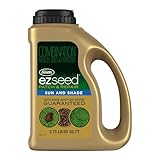
- WHEN TO APPLY : This lawn seed mix of Kentucky bluegrass seed, perennial ryegrass, and fine fescue grass seed germinates best when daytime temperatures are between 60°F and 80°F with no danger of frost
- PATCH & REPAIR: Scotts EZ Seed Patch & Repair Sun and Shade is a revolutionary grass seeding product that makes grass patch repair for lawns easy; it's designed to fill in bare spots and repair lawn damage
- COVERAGE: One 3.75 lb. jug of EZ Seed Patch & Repair lawn grass seed mix covers up to 85 sq. ft. in 3 easy steps: prep the area, evenly apply the seed and water until no more water is being absorbed
- WHERE TO USE: This sun and shade lawn repair grass seed mix is guaranteed to grow anywhere with proper care including in full sun, dense shade, high traffic areas and on slopes
- SUN AND SHADE GRASS: Contains a combination of high performance grass seed for lawns, mulch that expands to surround the seed, controlled release fertilizer, tackifier to help keep seed from washing away and a protectant to help keep seedlings safe
Overseeding or renovating thin turf
Overseeding means introducing seed into an existing stand of grass. The seed needs to reach the soil, so preparation depends on the condition of the turf. Penn State lists aeration, dethatching, and a disk-type seeder as possible preparation methods; a core aerator is not a required step for every lawn. Iowa State recommends mid-August through mid-September for renovating a thin lawn in its region.
Recommended Free Tools
Do not assume a new-lawn calendar automatically applies to overseeding: regional recommendations may set a window specifically for renovation or for an existing stand.
Quick Recap
A quick way to decide
- Identify the grass. Determine whether the intended lawn is cool-season or warm-season, and whether the chosen warm-season species is ordinarily seeded.
- Check your local window. Use a nearby extension service’s dates for your region and species, rather than borrowing a date from a different climate.
- Match the recommendation to the job. Look for guidance for a new seedbed, overseeding, or renovation of thin turf, as appropriate.
- Prepare for seed-to-soil contact. For an existing lawn, choose preparation based on turf condition; aeration, dethatching, or slit seeding are options, not universal requirements.
Product prices and availability are accurate as of the date/time indicated and are subject to change. Any price and availability information displayed on Amazon at the time of purchase will apply.

