Natural, aged pine bark mulch is the best general-purpose mulch for most blueberry bushes. It helps conserve moisture, moderate shallow-root temperatures, suppress weeds, and add organic matter. Pine straw, pine needles, and aged sawdust can also work, but no mulch should be expected to correct unsuitable soil pH. Test the soil, apply mulch at the right depth, and keep it away from the crown and stems.
The best general-purpose mulch for blueberry bushes is clean, natural, aged pine bark mulch. It helps hold moisture, moderate root-zone temperatures, suppress annual weeds, and add organic matter as it breaks down. Pine straw, pine needles, aged sawdust, and suitable untreated wood chips are also valid choices when they are available and appropriate for your soil.
As an Amazon Associate I earn from qualifying purchases.
Use mulch to improve the blueberry root zone—not to correct unsuitable soil. Blueberries generally need acidic soil, approximately pH 4.0 to 5.5 depending on the variety and regional recommendations. Test the soil before planting or mulching, and correct a high pH with a soil-based amendment plan rather than expecting pine products to lower it quickly or reliably.
Why mulch is important for blueberry bushes
Blueberries have shallow, sensitive root systems. Those roots can suffer when the soil repeatedly dries out and then becomes saturated. A properly installed organic mulch layer helps by:
#1 Best Overall

- ALL-NATURAL INGREDIENTS: No added fertilizers or pesticides
- USES: Potted plant decor, landscaping, terrariums, or soil supplement, soil barrier, bonsai care
- BENEFITS: Drainage, enhances appearance, water retention, blocks pesky creatures
- INGREDIENTS: 100% pine bark mulch, average size 1/2-inch pieces
- SIZE: 8 quarts (enough for a big 12-inch pot)
- Reducing evaporation and helping the soil stay consistently moist;
- Moderating temperature changes near the surface roots;
- Suppressing many annual weeds that compete for water and nutrients;
- Adding organic matter as the material decomposes; and
- Reducing soil disturbance around the shallow root system.
Mulch does not replace irrigation, drainage, soil testing, or pH correction. It is a root-zone and moisture-management tool. A thick layer of the wrong material cannot make alkaline, compacted, salty, or poorly drained soil suitable for blueberries.
1. Aged pine bark: the best overall choice
Natural aged pine bark mulch is the clearest all-around recommendation for most home blueberry plantings. Bark mulch is a commonly supported organic mulch for blueberries, and pine bark is widely available as a garden product.
Choose bark that is aged, screened, or well composted when possible. Aged material is generally less likely than very fresh woody material to create short-term nitrogen competition during decomposition. Look carefully at the product description: “pine mulch” may mean pine bark, pine wood, or a mixture rather than 100% bark.
What’s actually slowing this PC down?
Pick the symptom - the matching free tool is one click away.
A suitable product should be:
- Natural and untreated;
- Free of added herbicides and pesticides;
- Free of construction debris, painted wood, and unknown contaminants;
- Not blended with high-pH compost or salty soil amendments; and
- Appropriate for use around edible fruit plants according to its label.
If you are buying rather than sourcing material in bulk, compare the ingredient list and bag volume before choosing. Do not assume that every product with “pine” in its name is pure pine bark, or that pine bark automatically fixes high soil pH. Its chemistry varies with the source, age, processing, and existing soil.
2. Pine straw or pine needles: an excellent alternative
Pine straw and fallen pine needles are practical alternatives where they are locally abundant and affordable. They are lightweight, easy to spread, and can form a useful organic layer over the shallow blueberry roots. Regional growing guidance often lists pine needles or pine straw among suitable blueberry mulches.
They may help maintain an acidic surface environment as they decompose, but the common claim that pine needles will reliably acidify an entire planting bed is too broad. They do not remove the need for a soil test, and they should not be used as the sole treatment for substantially alkaline soil.
Use clean pine straw from a known source. Avoid material contaminated with lawn chemicals, trash, disease, or excessive soil. Pine straw can settle and decompose more quickly than some coarse bark products, so inspect the layer periodically and replenish it when it becomes thin.
Quick wins for a faster PC:
Clear out junk files and repair common Windows errorsFree Scan →Scan for outdated or missing drivers - takes under a minuteDriver Scan →Repair Windows errors before they cause bigger problemsFix Now →3. Aged sawdust: effective when its condition is known
Aged or rotted sawdust has long been used around blueberries and can work well when it is clean and suitable for the local soil. The important distinction is between aged sawdust and fresh sawdust.
Rank #2

- ALL-NATURAL INGREDIENTS: No added fertilizers or pesticides
- USES: Potted plant decor, landscaping, terrariums, or soil supplement, soil barrier, bonsai care
- BENEFITS: Drainage, enhances appearance, water retention, blocks pesky creatures
- INGREDIENTS: 100% pine bark mulch, average size 1/2-inch pieces
- Size: 30 quarts (1 cubic foot)
Fresh sawdust contains a high proportion of carbon. Microorganisms breaking it down may temporarily use available nitrogen, leaving less nitrogen for the plants. That does not mean fresh sawdust is always unusable, but it does mean fertilizer decisions should be based on the soil, plant symptoms, and local growing recommendations rather than an automatic extra dose.
Some regional recommendations specifically discuss Douglas-fir sawdust. That is not a universal requirement for every region. If the material comes from a mill or arborist, ask what wood species it contains and whether it has been treated, contaminated, or mixed with other materials.
4. Shredded bark and wood chips: workable regional options
Shredded bark, hardwood bark, and untreated or aged wood chips can be useful when pine bark or pine straw is unavailable. They are most appropriate when you know their composition and source.
The Tool Desk
Outbyte PC Repair FREEClear out junk files and repair common Windows errorsFree Scan →Outbyte Driver Updater FREEScan for outdated or missing drivers - takes under a minuteDriver Scan →Before spreading an unfamiliar product, check:
- Whether it is untreated and free of painted or preserved wood;
- Whether it contains compost, manure, lime, ash, or other potentially alkaline ingredients;
- Whether it has a high salt content;
- Whether it contains fines that may compact and hold excessive water; and
- Whether it includes construction waste or material from an unknown source.
Coarse wood chips may last longer than fine bark, but they can be less convenient in a small bed and may be more difficult to spread evenly. Their usefulness depends more on cleanliness, age, composition, and site conditions than on the word “wood” appearing on the bag.
Mulches to avoid or use cautiously
Mushroom compost and mushroom manure
Do not make mushroom compost or mushroom manure your default blueberry mulch. These materials may be too alkaline or contain enough soluble salts to damage sensitive plants. Other composts can have the same problem, so do not assume that every compost is suitable simply because it is organic.
If you use any compost near blueberries, know its pH and salt properties, confirm that it is fully finished, and use it sparingly. It should not form the main mulch layer unless its suitability is established.
Fresh cedar or redwood sawdust and bark
Fresh cedar or redwood sawdust and bark deserve particular caution around young blueberry plants. Regional guidance has warned against these fresh materials for new plantings. Choose an aged, known-source material instead, especially when the plants are small or recently transplanted.
Rank #3
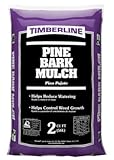
- Helps Maintain Your Garden
- Aromatic Blend
- Retains Moisture
Treated, dyed, or unknown-source wood
Avoid mulch made from pressure-treated lumber, painted or stained wood, demolition waste, pallet material of uncertain origin, or a source that cannot identify its ingredients. Dyed mulch may be acceptable in some landscape uses, but an unknown wood source is a poor choice around edible fruit plants.
Gravel and plastic as the primary blueberry mulch
Inorganic materials do not provide the same organic-matter benefits as bark, straw, or sawdust. Dark gravel can also increase surface temperatures, while solid plastic can interfere with water and air movement. If weed fabric is needed, use it as a carefully installed weed-control layer—not as a substitute for an appropriate organic mulch.
How deep should mulch be around blueberries?
For young or newly planted bushes, begin with approximately 2 to 4 inches of organic mulch. A conservative starting depth of 2 to 3 inches is particularly sensible immediately after planting. As the bushes mature, the total layer can be increased in suitable conditions to roughly 4 to 6 inches, although many home-garden recommendations use about 4 inches as a practical target.
The right depth depends on the material, climate, drainage, and age of the planting:
Do these 3 things before closing this tab:
1Fix the driver behind crashes, sound loss and screen glitches2Repair Windows errors before they cause bigger problems3Scan for outdated or missing drivers - takes under a minute| Situation | Practical approach |
|---|---|
| Newly planted or young bushes | Start around 2 to 3 inches and watch that the crown is not buried. |
| Established bushes | Maintain approximately 3 to 4 inches, increasing only where drainage and local guidance support a deeper layer. |
| Very coarse, rapidly settling material | Inspect more often and replenish as the layer shrinks. |
| Fine, moisture-retentive material or wet site | Use a thinner layer and correct drainage rather than piling on mulch. |
Spread the mulch over the useful root-zone area instead of making a narrow mound at the trunk. Leave a visible gap around the crown and stems—roughly several inches is a practical safeguard—so the plant base remains dry and well ventilated. Mulch touching the stems can create a persistently wet collar and increase the risk of rot or other problems.
How to install mulch around blueberry bushes
- Test the soil first. Blueberries generally perform best in acidic soil around pH 4.0 to 5.5, though the exact target can vary with regional recommendations and the plant. If the pH is too high, follow a soil-test-based amendment plan.
- Remove competing weeds carefully. Pull or shallowly cultivate weeds without digging deeply into the blueberry root zone. Established blueberry roots are close to the surface.
- Choose a clean material. Use aged natural pine bark, pine straw, clean pine needles, aged sawdust, or a known-source untreated bark or wood chip product.
- Spread it evenly. Apply about 2 to 4 inches around young bushes, covering the root zone rather than only the area immediately beside the stems.
- Keep the crown and stems clear. Do not bury the plant base or pack mulch against the bark.
- Water thoroughly. Moisture should reach the soil beneath the mulch. Mulch reduces water loss but does not eliminate the need for consistent irrigation.
- Inspect the layer regularly. Replenish it as it settles and decomposes. In some regions organic mulch may lose approximately an inch per year, but the rate varies by material and climate.
- Recheck soil conditions. Mulch can change as it decomposes. Monitor pH and plant performance rather than assuming the original material will permanently maintain the correct conditions.
Mulch, watering, and weed control
Consistent moisture is one of mulch’s biggest benefits for blueberries, but irrigation still matters during dry weather, flowering, fruit development, and establishment. Water deeply enough to moisten the root zone without keeping it saturated. The correct schedule depends on rainfall, soil texture, drainage, temperature, plant size, and container or in-ground culture.
A soaker hose for blueberry bushes or a drip-irrigation kit can make even watering easier in a larger bed, but neither is mandatory for every garden. If you install one, place the emitters or hose so water reaches the root zone across the planting rather than pooling against the crown.
For persistent weeds, a perforated woven weed mat can be used beneath or alongside organic mulch if it does not block irrigation and fertilizer access. Avoid sealing the soil with an impermeable sheet. The installation should allow water and air to reach the root zone, and the fabric should not be allowed to constrict expanding stems.
Windows Errors? Fix Them Before They Spread
Repair common Windows errors and clear accumulated junk for a smoother, more stable PC - no reinstall needed.Free scan · no reinstallOutdated Drivers Are Slowing You Down
One free scan finds every outdated or missing driver and matches the right update for your exact hardware.Free scan · exact hardware matchShould you add fertilizer with blueberry mulch?
Not automatically. Blueberries need an appropriate nutrient supply, but fertilizer should be selected and applied according to a soil test, plant age, symptoms, and local recommendations. Excess fertilizer can damage roots and does not compensate for poor pH or drainage.
Rank #4

- BENEFITS: Drainage, enhances appearance, water retention, blocks pesky creatures
Fresh sawdust is the main situation requiring extra attention because its decomposition can temporarily immobilize nitrogen. Instead of applying a fixed extra amount, use a soil-based fertilization plan and monitor plant growth. An acid-loving-plant or blueberry fertilizer may be appropriate in some situations, but the product and rate should follow local guidance and the soil’s actual needs.
Quick decision guide
| If you have… | Choose or do this |
|---|---|
| A typical home blueberry bed | Use clean, aged natural pine bark mulch at about 2 to 4 inches. |
| Abundant local pine straw | Use clean pine straw, replenish it as it settles, and continue monitoring soil pH. |
| Free sawdust from a known, untreated source | Prefer aged or rotted sawdust; account for possible nitrogen immobilization if it is fresh. |
| No pine products available | Consider aged shredded bark or untreated, suitable wood chips after checking their composition. |
| High-pH soil | Test the soil and follow a correction plan. Do not rely on mulch alone. |
| A wet or poorly drained site | Improve drainage and site conditions before increasing mulch depth. |
| A large planting with recurring weeds | Consider perforated woven weed fabric with organic mulch, while preserving irrigation and fertilizer access. |
Common mistakes to avoid
- Assuming pine needles will always acidify the entire soil profile;
- Assuming pine bark automatically corrects high soil pH;
- Buying “pine mulch” without checking whether it is bark, wood, or a mixture;
- Using mushroom compost or manure without checking pH and salt levels;
- Spreading fresh sawdust and automatically adding a large amount of fertilizer;
- Piling mulch against the crown or stems;
- Applying a deep layer over poorly drained soil; and
- Using treated, dyed, contaminated, or unknown-source wood around edible plants.
Final recommendation
For most gardeners, start with clean, natural, aged pine bark mulch. Apply it evenly at roughly 2 to 4 inches for young bushes, keep it away from the crown and stems, water consistently, and replenish it as it decomposes. Pine straw, pine needles, and aged sawdust are credible alternatives when their source and condition are known.
The most important qualification is that mulch supports a blueberry planting; it does not create the correct soil by itself. Test for pH, correct major soil problems separately, and choose the material that fits your local climate, drainage, availability, and maintenance needs.
Frequently Asked Questions
What is the best mulch for blueberry bushes?
Clean, natural, aged pine bark mulch is the best general-purpose choice for most blueberry bushes. Pine straw, pine needles, aged sawdust, and suitable untreated wood chips are also workable alternatives.
How deep should mulch be around blueberry bushes?
A 2- to 4-inch layer is a practical range for young blueberry plants. Start closer to 2 or 3 inches immediately after planting, then replenish or increase the layer as the plants mature and the mulch decomposes.
Do pine needles make soil acidic enough for blueberries?
Pine needles may help maintain an acidic surface environment, but they do not reliably correct high soil pH throughout the root zone. Test the soil and use a separate amendment plan when pH is unsuitable.
What mulch should not be used around blueberries?
Avoid using mushroom compost or mushroom manure as the default mulch because they may be too alkaline or salty. Also avoid treated, contaminated, unknown-source wood and fresh cedar or redwood material around young plants.
Free tools Windows power users keep installed
One-click scans. No signup required.
Can fresh sawdust be used as blueberry mulch?
Fresh sawdust can temporarily tie up nitrogen as microorganisms decompose it. Prefer aged sawdust, or use fresh sawdust only with a soil-based fertilization plan and local growing guidance.
The Bottom Line
Best overall: clean, natural, aged pine bark mulch. Use about 2 to 4 inches around young blueberry bushes, keep it off the crown and stems, maintain consistent moisture, and test soil pH rather than expecting mulch to correct alkaline soil. Pine straw, pine needles, and aged sawdust can also work when they are clean and suitable for the site.
Quick Recap
Product prices and availability are accurate as of the date/time indicated and are subject to change. Any price and availability information displayed on Amazon at the time of purchase will apply.

