The Tool Desk
Outbyte Driver Updater FREEFix the driver behind crashes, sound loss and screen glitchesFind Drivers →Outbyte PC Repair FREEClear out junk files and repair common Windows errorsFree Scan →Some links on this page are affiliate links: if you buy through them we may earn a commission, at no extra cost to you.
For most beginners, the Brother CS7000X is the best sewing machine to buy. It is easier to control than many basic machines, offers a drop-in bobbin, speed adjustment, start/stop sewing and a useful selection of stitches without being limited to simple repairs. The SINGER M3500 is the better mechanical alternative; the Singer 7285Q is aimed at quilting; the Brother XR9550 is stronger for clothes and mixed fabrics; and the Brother SE700 is the specialist choice for sewing plus embroidery.
These recommendations are based on current third-party hands-on testing—particularly Good Housekeeping’s February 23, 2026 update—and official Brother and SINGER specifications. They are not claims that this publication personally tested the machines.
Quick comparison
| Machine | Best for | Important strengths | Main limitation |
|---|---|---|---|
| Brother CS7000X | Most beginners | Simple drop-in bobbin, speed control, start/stop button, 70 stitches, wide table | Some stitch inaccuracy on polyester satin in testing |
| SINGER M3500 | A straightforward mechanical machine | Automatic needle threader, dial controls, metal frame, free arm | Front-loading bobbin and imperfect buttonhole performance |
| Singer 7285Q Patchwork | Beginner quilting | Manual speed control, start/stop sewing, automatic tension, quilting-oriented features | Less capable on thicker fabrics such as denim |
| Brother XR9550 | Garments and alterations | Strong multi-fabric performance, needle-up/down, speed control, 165 built-in stitches | Thread can slide off unless the spool cap is used correctly |
| Brother SE700 | Sewing plus embroidery | Wireless design transfer, 4-by-4-inch embroidery field, 103-plus sewing stitches | Much more expensive and complex than a basic sewing machine |
Prices, stock, retailer links and warranty details can change. The prices mentioned below were manufacturer or retailer listings available during the research period, not guaranteed current prices.
Recommended Free Tools
As an Amazon Associate I earn from qualifying purchases.
1. Brother CS7000X: best overall sewing machine for most beginners
The Brother CS7000X is the safest all-purpose choice for a beginner who wants to learn sewing without outgrowing the machine immediately. Good Housekeeping selected it as its best overall beginner machine after testing setup, threading, stitch accuracy, fabric handling and ease of use.
The controls are approachable without being too limiting. The drop-in Quick-Set bobbin is easy to monitor, the LCD screen simplifies stitch selection, and the adjustable speed control lets a new sewer slow down while learning. A start/stop button is also useful for people who find coordinating a foot pedal difficult. The machine includes a free arm for cuffs and other small tubular areas, a wide table for larger pieces, and 10 sewing feet.
#1 Best Overall

- 27 Unique Built-in Stitches: The Brother XM2701 sewing machine includes 27 built-in stitches including decorative, blind hem, zigzag, and stretch stitches and an auto-size buttonhole
- Automatic Needle Threader and Drop-in Top Bobbin: This beginner sewing machine is also great for experienced users; it includes an automatic needle threader that perfectly pushes thread through the needle and a convenient, jam resistant drop-in top bobbin
- Included Accessories: The XM2701 comes with 6 sewing feet, 3-piece needle set, twin needle, 4 bobbins, manual and more
- Versatile Free Arm: This free arm sewing machine is a simple sewing machine, perfect for a wide range of everyday sewing projects, and users from beginners to advanced
- At Your Side Support: The XM2701 small sewing machine comes with Brother At your side support offering free technical support via online, live chat or phone for the life of your machine
- 70 built-in stitches
- Seven one-step buttonhole styles
- Automatic needle threading
- Drop-in bobbin
- Adjustable sewing speed
- Free-motion quilting capability
- Free arm and wide extension table
- 25-year limited warranty listed by Brother in the United States
- 10.5-pound listed unit weight
Good Housekeeping reported generally accurate stitching across several fabrics, although the CS7000X was not perfectly consistent on polyester satin. That is a useful qualification: even a strong beginner machine may need a different needle, thread, tension setting or slower speed when working with slippery fabric.
Windows Errors? Fix Them Before They Spread
Repair common Windows errors and clear accumulated junk for a smoother, more stable PC - no reinstall needed.Free scan · no reinstallCrashes, No Sound, or Screen Glitches?
Random freezes, missing sound and display glitches usually trace back to one bad driver. Find and replace yours safely.Free scan · under a minuteBrother listed a U.S. price of $279.99 during the research period. Treat that figure as a reference rather than a current price. The large stitch count is not, by itself, the reason to buy this machine. Most beginners initially need a reliable straight stitch, zigzag stitch and buttonhole. The additional stitches matter because they give the user room to progress into decorative sewing, quilting and more varied projects.
Choose it if: you want one machine for repairs, hems, basic garments, household sewing and occasional quilting.
Look elsewhere if: you specifically want machine embroidery or prefer entirely mechanical dial controls.
2. SINGER M3500: easiest mechanical machine to thread
The SINGER M3500 is the better fit for a beginner who would rather use physical dials than navigate an LCD interface. Good Housekeeping named it the easiest-to-thread pick, with the automatic needle threader helping simplify one of the most frustrating parts of machine setup.
Quick wins for a faster PC:
Fix the driver behind crashes, sound loss and screen glitchesFind Drivers →Repair Windows errors before they cause bigger problemsFix Now →Scan for outdated or missing drivers - takes under a minuteDriver Scan →It is a mechanical machine with a metal frame, LED lighting, reverse stitching, adjustable stitch length and width, a free arm, and a one-step buttonhole. SINGER lists 32 built-in stitches and 110 stitch applications. The distinction is that applications can describe the ways the available stitches are used; it does not mean the machine has 110 separate stitch-forming mechanisms.
- Automatic needle threader
- 32 built-in stitches and 110 stitch applications
- Adjustable stitch length and width
- One-step buttonhole
- Front-loading bobbin
- Reverse stitching
- Free arm and LED work light
- Metal frame
- Listed dimensions of 15.16 by 7.35 by 10.9 inches
Independent testing found that the M3500 handled wool and cotton jersey well. It struggled with delicate silk chiffon, and the one-step buttonhole could stick until the machine was rethreaded. That does not make it a poor beginner machine, but it does mean that buttonhole problems should not automatically be treated as a mechanical failure: rethreading both the upper thread and bobbin path is a sensible first recovery step.
The front-loading bobbin is the main usability trade-off. Drop-in bobbins are visible and generally easier for a first-time user to understand, while a front-loading system requires the bobbin case to be inserted correctly behind the removable accessory compartment. Once learned, it is perfectly workable, but it is less immediately transparent than the systems on the Brother CS7000X and XR9550.
SINGER lists a $249.99 MSRP, although a lower sale price was displayed during the research period. The actual price and included accessories should be checked before purchase.
Choose it if: you want a compact, portable machine with simple dial-based controls and automatic needle threading.
Look elsewhere if: you want a drop-in bobbin, extensive computerized controls or especially dependable performance on delicate chiffon.
3. Singer 7285Q Patchwork: best for beginner quilting
The Singer 7285Q Patchwork is the most purposeful choice here for a beginner whose main goal is quilting. It combines a broad stitch selection with controls that can make slow, careful sewing easier: manual speed adjustment and a start/stop button allow the machine to run without relying entirely on foot-pedal pressure.
The computerized machine includes more than 100 stitch applications, six buttonhole styles, automatic tension adjustment, an automatic needle threader and quick-snap presser feet. Those features can reduce the amount of adjustment a new quilter has to make while learning piecing, decorative seams and basic quilting techniques.
- More than 100 stitch applications
- Six buttonhole styles
- Manual speed control
- Start/stop sewing button
- Automatic tension adjustment
- Automatic needle threader
- Quick-snap presser feet
Good Housekeeping’s testing favored the 7285Q for quilting but found it less convincing on thicker materials, including denim. Quilting involves managing multiple layers, but that does not mean every quilting machine is equally suitable for dense garment denim, upholstery-weight material or several bulky seams. If your projects are likely to alternate between quilt blocks and heavy fabric, the Brother XR9550 is the stronger all-purpose option based on the reported testing.
Choose it if: you want controlled speed and quilting-friendly features more than maximum heavy-fabric versatility.
Look elsewhere if: you expect to sew denim, upholstery fabric or other dense materials regularly.
4. Brother XR9550: best for making clothes and progressing
The Brother XR9550 is the best choice in this group for a beginner who expects to move from simple repairs into garments, alterations and more demanding projects. Good Housekeeping’s testers reported that it handled a range of fabrics, including denim and upholstery fabric, with ease.
Its clear LCD display, automatic needle threader, adjustable speed control, needle-up/down function and drop-in bobbin give a beginner several useful ways to control the machine. Needle-up/down is particularly helpful when pivoting at corners: leaving the needle down helps hold the fabric in place while the presser foot is lifted to change direction. The free arm, wide table, eight quick-change presser feet and hard case add practical flexibility.
Rank #2

- 17 built-in stitches
- 4-step buttonhole style
- Reverse button
- Free arm for sewing
- LED lighting for the work area
- 165 built-in stitches according to Brother, including 55 alphanumeric stitches
- 110 utility stitches plus 55 alphanumeric stitches in Good Housekeeping’s category breakdown
- Eight one-step, auto-size buttonhole styles
- Automatic needle threading
- Adjustable sewing speed
- Needle-up/down control
- Drop-in bobbin and drop-feed capability
- Free arm, wide table and hard case
- Eight quick-change presser feet
- 10.14-pound listed unit weight
The apparently different stitch totals are a counting distinction rather than a confirmed contradiction. Good Housekeeping separates utility stitches from the 55 alphanumeric stitches, while Brother presents the total as 165 built-in stitches.
One small but important operating note from Good Housekeeping: use the spool cap so the thread does not slide off the spool. A spool that shifts or unwinds unevenly can create looping, skipped stitches or thread breaks that may look like a tension problem.
Choose it if: you want to learn garment sewing, make alterations or work with a wider range of fabrics as your skills improve.
What’s actually slowing this PC down?
Pick the symptom - the matching free tool is one click away.
Look elsewhere if: you only need occasional hems and repairs and would prefer the lowest-cost, least feature-dense machine.
5. Brother SE700: best for beginners who want embroidery
The Brother SE700 is the specialist recommendation for someone who wants conventional sewing and machine embroidery in one unit. Remove the embroidery arm and it functions as a regular sewing machine, so it can handle ordinary seams, repairs and garment work as well as embroidery projects.
The machine has a 4-by-4-inch maximum embroidery field, wireless LAN for design transfer, an automatic thread cutter, an automatic needle threader, a free arm, a drop-in bobbin and an LED-lit work area. Brother lists 135 built-in embroidery designs, 10 embroidery fonts, more than 103 built-in sewing stitches and 10 one-step buttonhole styles. Its maximum sewing speed is listed as 710 stitches per minute, and its unit weight is 15.06 pounds.
- 135 built-in embroidery designs
- 10 embroidery fonts
- 103-plus built-in sewing stitches
- 10 one-step buttonhole styles
- 4-by-4-inch maximum embroidery area
- Wireless LAN design transfer
- Automatic thread cutter and needle threader
- Free arm, drop-in bobbin and LED work area
- 710-stitches-per-minute maximum sewing speed
The 4-by-4-inch field is the key limitation. It is suitable for learning embroidery and making smaller designs, monograms and embellishments, but it is smaller than the embroidery areas offered by more expensive machines. The SE700 also costs substantially more than the other beginner choices: Brother listed a U.S. price of $579.99 during the research period.
Free tools Windows power users keep installed
One-click scans. No signup required.
Choose it if: embroidery is a definite part of your plan, not merely a feature you might try someday.
Look elsewhere if: your needs are limited to hemming, repairs, simple garments or basic household sewing. You would be paying for embroidery hardware and software features you may never use.
Best ultra-budget alternative: KPCB Tech Sewing Machine
The KPCB Tech Sewing Machine deserves a separate budget category, not a place among the five most capable machines. Good Housekeeping named it a best-value option at approximately $40 in its article. It weighs under three pounds and includes one stitch, a drop-in bobbin, built-in lamp, side thread cutter, removable extension table and finger guard.
That low price comes with clear compromises. Good Housekeeping says the machine is not designed to be long-lasting and does not have a backstitch. To secure the ends of a seam, the recommendation is to sew over the seam ends again. That makes it potentially useful for children, very occasional simple projects or a buyer who needs the least expensive way to try machine sewing, but it is not the sensible choice for regular garment construction or ongoing repairs.
Choose it if: the budget is extremely limited and the intended projects are simple, light-duty and occasional.
Choose a full-size machine instead if: you want adjustable control, dependable seam finishing, multiple stitch types or a machine that can grow with your skills.
How the recommendations were determined
This article does not claim that the portfolio physically tested these machines. The recommendations are based on current third-party hands-on testing, especially Good Housekeeping’s Textiles Lab update published February 23, 2026, supplemented by official Brother and SINGER specifications.
Good Housekeeping said its lab most recently tested 13 machines, collected more than 100 data points and used consumer testers to assess setup, threading, stitch accuracy and beginner ease of use. Performance testing included lightweight cotton, polyester satin, wool, jersey cotton, denim, upholstery-grade fabric, multiple layers, basic and zigzag stitches, and buttonholes. That combination is more informative than comparing stitch counts alone: a machine can advertise many decorative stitches and still be frustrating to thread or inconsistent on ordinary fabric.
Which? describes a similarly practical testing approach. Its testers bought the machines rather than accepting free samples and examined cotton, satin, jersey, denim and five layers of thick fabric, along with buttonholes, threading, bobbin installation, lighting, noise and instructions. Its detailed results table is partly paywalled, so its public methodology and visible testing details should not be treated as a complete hidden ranking.
What a beginner should look for
Prioritize the stitches you will actually use
A reliable straight stitch and zigzag stitch are the baseline. Straight stitches handle most seams, hems and repairs; zigzag stitches can help finish raw edges and provide stretch-friendly uses when paired with the right fabric and settings. Decorative stitches are optional. A machine with 165 stitches is not automatically better for a person who has not yet learned to thread, wind a bobbin or adjust stitch length.
Make setup understandable
A clearly marked threading path, a readable manual and a bobbin system you can learn are more valuable than a long feature list. Automatic needle threading can reduce eye strain and setup frustration, but it does not replace correct upper-thread routing. If the thread path or bobbin is wrong, the machine can jam, loop thread underneath or produce uneven stitches regardless of its price.
Rank #3
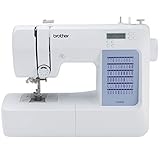
- 60 UNIQUE BUILT-IN STITCHES: The Brother CS5055 sewing machine includes 60 built-in stitches including utility, decorative and heirloom stitch functions, and 7 1-step auto-size buttonholes
- IMPROVED NEEDLE THREADER: Easier than ever to use, the automatic needle threader reliably pushes the thread through the needle. The convenient, jam resistant drop-in top bobbin easy to load and helps ensure your bobbin stays in place
- INCLUDED ACCESSORIES: The CS5055 includes 7 sewing feet, 4 bobbins, a needle set, a trilingual English/Spanish/French user manual and more
- METAL FRAME and FIXED NEEDLE BAR: The durable metal frame construction allows your machine to tackle any project, and the needle is fixed in place while you work, allowing for cleaner stitching and even lines
- LARGE NEEDLE-TO-ARM WORKSPACE: A larger workspace with increased width in needle-to-arm space allows users to work on larger projects
Look for control at slow speeds
Speed control and start/stop sewing are useful for beginners who are learning corners, curves and seam allowances. A foot pedal remains useful, but being able to limit the machine’s maximum speed gives a new sewer more time to react. The Brother CS7000X, Singer 7285Q and Brother XR9550 are especially notable here.
Do these 3 things before closing this tab:
1Fix the driver behind crashes, sound loss and screen glitches2Repair Windows errors before they cause bigger problems3Scan for outdated or missing drivers - takes under a minuteConsider a drop-in bobbin, free arm and extension table
A drop-in bobbin lets the user see the bobbin area more easily and is often less intimidating for a first machine. A free arm helps with cuffs, sleeves and other narrow sections. An extension or wide table supports large pieces so they do not pull against the needle while sewing. None of these features is mandatory, but each can make early projects less frustrating.
Do not ignore fabric handling
Think about the materials you will actually sew. Lightweight cotton is an easy starting point, while satin, jersey, denim, upholstery fabric and multiple layers expose different weaknesses. Good Housekeeping found the Brother XR9550 particularly capable across a broad fabric range, while the SINGER M3500 had difficulty with delicate chiffon and the Singer 7285Q was not as strong on thick denim.
For construction-related household projects, a domestic machine may be useful for hemming work trousers, repairing lighter workwear, making curtains or sewing small fabric covers. It should not automatically be treated as an industrial machine for repeated heavy-duty work, thick webbing or dense specialty materials. Match the machine to the fabric, needle, thread and number of layers.
Mechanical versus computerized machines
Mechanical machines such as the SINGER M3500 generally use dials, have fewer electronic features and can cost less. They suit users who want direct, simple controls. Computerized machines such as the Brother CS7000X, Singer 7285Q, Brother XR9550 and Brother SE700 generally provide more stitch choices and convenience features such as programmed buttonholes, speed controls or start/stop sewing. They can make progression easier, but they also add more controls to learn.
Recommended Free Tools
For most beginners, Good Housekeeping says a machine under $300 is a reasonable starting point unless the buyer specifically wants embroidery or another advanced capability. That makes the CS7000X and M3500 the most broadly sensible starting points, with the 7285Q and XR9550 justified by specific quilting or garment ambitions.
Independent reader supportYour contribution helps us test, update, and keep practical guides available for everyone.Which machine should you buy?
- Choose the Brother CS7000X for the best balance of ease, control, features and future growth.
- Choose the SINGER M3500 if you prefer mechanical dials and want an automatic needle threader in a compact machine.
- Choose the Singer 7285Q Patchwork if quilting is your main objective and you value manual speed control.
- Choose the Brother XR9550 if you expect to sew clothing, alter garments or handle a wider mix of fabrics.
- Choose the Brother SE700 only if machine embroidery is an important part of the purchase.
- Choose the KPCB Tech only for ultra-budget, light-duty or occasional use where the lack of backstitch and limited durability are acceptable.
What else you need to start sewing
A machine is only part of the beginner setup. For most first projects, plan for sewing machine needles, polyester all-purpose thread, fabric scissors, a measuring tape and a seam ripper. A beginner sewing kit can bundle several of these basics, but inspect its contents rather than assuming every kit includes the right needle sizes or thread quality.
Class 15 bobbins are common but are not universal across every machine. Check the model’s manual before buying replacement bobbins, needles, presser feet or a walking foot. Compatibility also matters for quilting rulers and cutting mats, and SE700 owners will need embroidery stabilizer and embroidery thread suited to the machine and project.
If you need hands-on help with threading, fitting or maintenance, local sewing classes and a reputable sewing-machine dealer can be more useful than buying extra accessories. For persistent timing, tension or feeding problems, use a qualified sewing-machine repair service rather than repeatedly changing settings at random.
Common beginner problems and sensible first checks
The thread is bunching underneath
Remove the upper thread and rethread it with the presser foot raised so the tension discs can engage. Confirm that the bobbin is installed in the correct direction and that the thread is passing through its guide. Replace a bent or incorrectly inserted needle before making complex tension adjustments.
The machine skips stitches
Check that the needle matches the fabric, is fully inserted and is not damaged. Rethread the upper path, verify the bobbin and slow the machine down. Satin, jersey and multiple layers can need different needle and handling choices than lightweight cotton.
The buttonhole is not working
Confirm that the correct buttonhole foot and stitch are selected, the fabric is positioned correctly and the machine is threaded properly. With the SINGER M3500 in particular, Good Housekeeping found that a one-step buttonhole could stick until the machine was rethreaded. If the problem persists after those checks, consult the manual rather than forcing the fabric through.
The machine will not feed thick fabric
Do not pull the fabric from behind the presser foot. Check the selected stitch, presser-foot pressure if the model provides that adjustment, needle and thread, and whether the project has become too bulky for the machine. The reported testing favors the XR9550 for denim and upholstery-weight fabric, while the 7285Q is a weaker choice for thick denim.
Do you need a serger?
Not as a first replacement for a standard sewing machine. An overlocker or serger is normally used alongside a conventional sewing machine for seam finishing and specialized edge work. It does not provide the same general-purpose combination of straight seams, basic repairs, hems and many common garment tasks. Start with a standard machine unless your specific sewing plan already requires serging.
Frequently Asked Questions
What is the best sewing machine for a complete beginner?
The Brother CS7000X is the best general choice for most beginners because it combines straightforward setup, a drop-in bobbin, speed control, start/stop sewing, a free arm, a wide table and enough features to support future projects.
How many stitches does a beginner sewing machine need?
A machine with a reliable straight stitch, zigzag stitch, adjustable stitch length, understandable threading path, clear manual and a buttonhole function is enough to begin. Decorative stitches are optional.
Is a mechanical or computerized sewing machine better for beginners?
The SINGER M3500 is the better mechanical option, while the Brother CS7000X, Singer 7285Q, Brother XR9550 and Brother SE700 are computerized machines with more convenience and stitch-selection features.
Which beginner sewing machine is best for quilting?
The Singer 7285Q Patchwork is the quilting pick in this comparison because it offers speed control, start/stop sewing, automatic tension and quilting-oriented features. The Brother XR9550 is the stronger choice if quilting will be combined with denim or garment sewing.
Is the Brother SE700 suitable for a beginner?
The Brother SE700 is the specialist choice because it combines conventional sewing with machine embroidery, wireless design transfer and a 4-by-4-inch embroidery field. It is not cost-effective if you only need hemming or repairs.
Do beginners need a serger instead of a sewing machine?
No. A serger or overlocker is normally used alongside a standard sewing machine for seam finishing. It does not replace the general-purpose sewing functions most beginners need.
The Bottom Line
For most first-time sewers, buy the Brother CS7000X. Select the SINGER M3500 for simpler mechanical controls, the Singer 7285Q for quilting, the Brother XR9550 for garments and mixed fabrics, or the Brother SE700 when embroidery is a genuine requirement. The KPCB Tech is a narrowly useful ultra-budget option, not a substitute for a capable full-size machine.
Free tools Windows power users keep installed
One-click scans. No signup required.
Quick Recap
Product prices and availability are accurate as of the date/time indicated and are subject to change. Any price and availability information displayed on Amazon at the time of purchase will apply.

