The 3 best basement dehumidifiers of 2026 are the Frigidaire FFAP5034W1 for tested performance, the Midea MAD50PS1AWT-C for built-in pumping and app control, and the GE APYR50LC as a well-documented pump-equipped alternative. Your best choice depends primarily on drainage, moisture load, noise tolerance, and whether the basement is occupied.
A dehumidifier is not a substitute for fixing leaks or foundation water entry. The right model can control airborne humidity after the moisture source, drainage route, and installation conditions have been addressed.
As an Amazon Associate I earn from qualifying purchases.
Key takeaways
- RTINGS names the Frigidaire FFAP5034W1 its best tested basement dehumidifier, with 31.0 PPD (14.7 LPD) of tested moisture removal in 2026.
- The Midea MAD50PS1AWT-C is the strongest choice when a basement needs a built-in pump and app control, with RTINGS reporting 31.7 PPD (15.0 LPD) in testing.
- The GE APYR50LC is a manufacturer-documented pump-equipped alternative with 50 pints-per-day capacity and a supplied hose rated for drainage up to 16 feet away.
- A gravity drain requires a lower discharge point; a built-in pump is necessary when water must travel uphill to a sink or other elevated outlet.
- The EPA recommends keeping indoor relative humidity below 60%, ideally between 30% and 50%; a dehumidifier does not repair leaks, seepage, or foundation drainage problems.
What is the best dehumidifier for a basement?
The best basement dehumidifier of 2026 is the Frigidaire FFAP5034W1 for maximum tested moisture removal and a nearby floor drain. The Midea MAD50PS1AWT-C is better when you need a built-in pump and app control, while the GE APYR50LC is a well-documented pump-equipped alternative for wet spaces.
What’s actually slowing this PC down?
Pick the symptom - the matching free tool is one click away.
How do the three best basement dehumidifiers of 2026 compare?
The three picks solve different basement problems. The Frigidaire is the performance-first option for an unfinished basement with a lower drain. The Midea adds pumped drainage and remote control. The GE has detailed current manufacturer specifications, including a 16-foot pump hose, but the supplied research does not provide an independent comparative test result for it.
#1 Best Overall

- 4,500 SQ. FT. DEHUMIDIFIER – Removes up to 50 pints of moisture per day with an adjustable humidity setting from 35% to 85%. Perfect for use in basement, bathroom, bedroom, office, kitchen, cellar, or crawlspace. Maintain a healthy 45%-55% humidity range
- ULTRA QUIET OPERAION – This model has quiet operation as 47 dBA. Enjoy sleep, a good book, or your favorite show without the disturbing noise of a traditional dehumidifier
- SMART CONTROL -This dehumidifier is Wi-Fi enabled and can be controlled from anywhere through the cloud using the MSmartHome app on iOS or Android. You can also use voice commands throughout your house, office, or apartment using Alexa or Google Assistant
- SIMPLE DRAINAGE – Simply empty the water tank when it is full or connect a standard hose (not included) to the built-in socket for continuous draining. The dehumidifier automatically stops with a full water tank and restarts after the tank is emptied
- Built In Pump - This pump automatically removes collected water from the dehumidifier so you never experience downtime due to a full water bucket.
| Model | Best for | Moisture-removal evidence | Drainage | Controls and documented features | Main limitation |
|---|---|---|---|---|---|
| Frigidaire FFAP5034W1 | Unfinished, storage, or laundry basements with a floor drain | 31.0 PPD (14.7 LPD) tested by RTINGS in 2026; 50-pint nominal class | Bucket or continuous gravity hose; no built-in pump | Integrated humidistat, large 2.1-gallon tank, strong airflow | Noticeably noisy, exhausts warm air, and cannot push water uphill |
| Midea MAD50PS1AWT-C | Basements needing elevated drainage and remote control | 31.7 PPD (15.0 LPD) tested by RTINGS in 2026; 50-pint nominal class | Bucket, gravity drainage, and built-in pump | MSmartHome app control, wheels, built-in pump | Can be noisy and warm-running; exact suffix specifications must be verified |
| GE APYR50LC | Wet spaces where a documented pump and hose reach matter | 50 pints per day listed by GE Appliances in 2026; no independent test figure supplied here | 14-pint bucket, built-in pump, included hose rated up to 16 feet away | Smart Dry, auto restart, auto defrost, adjustable humidistat, washable filter | Manufacturer claims are not interchangeable with independent lab results |
Which model removes the most moisture?
The Midea MAD50PS1AWT-C has the highest reported tested removal figure of these three, at 31.7 PPD (15.0 LPD), compared with 31.0 PPD (14.7 LPD) for the Frigidaire FFAP5034W1. Those figures are independent test results reported by RTINGS in its 2026 basement-dehumidifier review; they are not the same thing as a manufacturer’s nominal “50-pint” capacity label.
1. Frigidaire FFAP5034W1: best tested basement performer
Choose the Frigidaire FFAP5034W1 when a lower floor drain is available and moisture removal matters more than noise or remote control. RTINGS gives this model an 8.6 score in its basement category and identifies it as the best basement dehumidifier it has tested. RTINGS reports 31.0 PPD (14.7 LPD) of tested dehumidification capacity in 2026.
The Frigidaire is a 50-pint-class portable unit with strong airflow, an integrated humidistat, optional continuous drainage, and a large 2.1-gallon tank. The tank can reduce emptying frequency when a hose cannot be used. For readers shopping by exact model, the Frigidaire FFAP5034W1 is the relevant product name—not just any Frigidaire 50-pint dehumidifier.
Free tools Windows power users keep installed
One-click scans. No signup required.
The decisive drawback is drainage. This model lacks a built-in pump, so a continuous-drain hose must run downhill to a floor drain or another lower discharge point. A hose cannot reliably send water uphill to a laundry sink without a separate condensate pump and a suitable installation.
RTINGS also describes the unit as noticeably noisy and warm-running. That makes the Frigidaire a stronger fit for an unfinished basement, storage area, or laundry room than for a finished basement used as a bedroom, office, den, or playroom.
2. Midea MAD50PS1AWT-C: best if you need a pump and app control
Choose the Midea MAD50PS1AWT-C when the dehumidifier must discharge water uphill or you want to monitor and control it remotely. RTINGS reports 31.7 PPD (15.0 LPD) of tested removal in 2026, the highest tested figure among the three models in this article.
The Midea includes a built-in drain pump and MSmartHome app control, making it more flexible than the Frigidaire where a floor drain is unavailable. The related Midea manufacturer product page documents a 50-pint capacity, built-in pump, smart control, and wheels for the closely identified MAD50PS1AWBL variant.
Outdated Drivers Are Slowing You Down
One free scan finds every outdated or missing driver and matches the right update for your exact hardware.Free scan · exact hardware matchWindows Errors? Fix Them Before They Spread
Repair common Windows errors and clear accumulated junk for a smoother, more stable PC - no reinstall needed.Free scan · no reinstallRank #2

- 4,500 Sq.Ft. OF COVERAGE - Midea dehumidifier with drain hose collects 50 pints of water a day and adjusts humidity from 35% to 85%. This unit is perfect for use in the basement, bathroom, bedroom, or crawlspace
- SMALLER FORM, LARGER CAPACITY - Up to 3X larger water tank allows the Midea Cube dehumidifier to operate up to 3X longer than a conventional dehumidifier. You can enjoy more time without the hassle of emptying the water tank. Removable Bucket with 4.2 Gallons/15.9L bucket size.
- DEHUMIDIFIER WITH DRAIN HOSE allows CONTINUOUS DRAIN OPTION - Versatile, no-bucket option provides more flexibility to remove moisture. You can remove the water tank and place the unit above the sink using the included drain hose, or position it over a floor drain, near a window or door.
- SMART CONTROL -The Midea Cube dehumidifiers for home are Wi-Fi enabled and can be controlled from anywhere through the cloud using the SmartHome app on iOS or Android. You can also use voice commands throughout your house, office, or apartment using Alexa or Google Assistant.
- LIFT AND TWIST- World's first extendable dehumidifier for home offers unparalled flexibility - operate in extended or nested form. The nested design means you can easily find a place to store the unit when the space becomes dry, or extend it to its full capacity whenever you need it.
Model suffixes deserve careful attention. The MAD50PS1AWT-C and MAD50PS1AWBL are closely identified product variants, but the specifications on one product page should not automatically be transferred to the other. Verify the exact suffix in the retailer listing, product manual, warranty information, and current manufacturer documentation before buying.
The pump solves a drainage problem, not every installation problem. The discharge hose still needs a suitable destination, enough length, secure connections, and protection against kinks or backflow. RTINGS also notes that the Midea can be noisy and exhaust warm air, so app control does not make the appliance acoustically invisible in a living space.
3. GE APYR50LC: best documented pump-equipped alternative
Choose the GE APYR50LC when you want a current manufacturer specification page that clearly documents pump drainage, hose reach, and wet-space features. GE lists 50 pints per day, a built-in pump, and an included hose capable of draining up to 16 feet away.
The GE APYR50LC product page lists Smart Dry, auto restart, auto defrost, an adjustable humidistat, and a washable slide-out filter. GE also lists a 14-pint bucket, 520 watts, 50 dBA maximum noise, and 47 dBA on low fan.
Quick wins for a faster PC:
Fix the driver behind crashes, sound loss and screen glitchesFind Drivers →Clear out junk files and repair common Windows errorsFree Scan →The GE figures above are manufacturer specifications, not independent test results. Do not compare GE’s 50-pints-per-day listing directly with RTINGS’ tested PPD figures as though the measurements were made under identical conditions. The GE is best presented as a practical, well-documented pump-equipped alternative rather than as the independently proven performance winner.
Do you need a dehumidifier with a pump?
You need a pump when the water must travel uphill to reach the intended discharge point. If the appliance can sit beside a floor drain that is lower than the dehumidifier’s drain outlet, a gravity hose is usually the simpler arrangement.
| Basement drainage situation | Best arrangement | Shortlist fit | What to verify |
|---|---|---|---|
| Floor drain immediately below or near the unit | Gravity hose or bucket | Frigidaire, Midea, or GE | Downhill slope, connector fit, and hose security |
| Sink or drain located higher than the dehumidifier | Built-in pump or separate condensate pump | Midea or GE | Pump lift capability, hose length, discharge destination, and backflow protection |
| No convenient drain | Bucket, with frequent emptying | All three, subject to bucket handling | Tank size, shutoff behavior, and how often the basement can be checked |
| Remote or infrequently visited basement | Continuous drainage with overflow-safe routing | Midea or GE when the pump route is suitable | Power restoration, hose routing, leaks, and a separate humidity check |
A pump-equipped model does not eliminate the need to inspect the installation. A failed pump, blocked hose, loose fitting, or unsuitable outlet can still leave water on the floor. Keep the drain route visible enough to inspect, and follow the exact manual instructions for the model suffix you purchase.
Rank #3

- 3,000 SQ. FT. DEHUMIDIFIER – Removes up to 35 pints of moisture per day with an adjustable humidity setting from 35% to 85%. Perfect for use in basement, bathroom, bedroom, office, kitchen, cellar, or crawlspace. Maintain a healthy 45%-55% humidity range
- ULTRA QUIET OPERAION – This model has quiet operation as 49 dBA(low mode). Enjoy sleep, a good book, or your favorite show without the disturbing noise of a traditional dehumidifier
- SMART CONTROL -This dehumidifier is Wi-Fi enabled and can be controlled from anywhere through the cloud using the SmartHome app on iOS or Android. You can also use voice commands throughout your house, office, or apartment using Alexa or Google Assistant
- SIMPLE DRAINAGE – Simply empty the water tank when it is full or connect a standard hose (not included) to the built-in socket for continuous draining. The dehumidifier automatically stops with a full water tank and restarts after the tank is emptied
- EASY TO USE – This unit was designed with a clean, sleek look to fit the style of any home, apartment, or office. With 360° rotatable wheels, digital control panel, and handles, easily move this dehumidifier to any room and use it with ease
What size dehumidifier do you need for a basement?
Dehumidifier size depends on both the room area and how wet the basement is, so a 50-pint label is a sizing input rather than a guaranteed result. ENERGY STAR’s current guidance says capacity depends on room size and the moisture conditions present without dehumidification, and its guidance states, “Remember, it’s better to oversize than undersize!”
Recommended Free Tools
| Room condition described by ENERGY STAR | Large room over 2,000 square feet | Practical interpretation |
|---|---|---|
| Slightly to moderately damp | 30+ pints per day | A 50-pint-class unit is within the range of models considered for this condition, but actual basement conditions still matter |
| Very damp | 40+ pints per day | Consider more capacity or more than one unit if the moisture load remains high |
| Wet | 50+ pints per day | A portable unit may be insufficient if active water entry is contributing to the load |
The table is a direct extract of the large-room portion of ENERGY STAR’s guidance, not a guarantee that every 50-pint machine will control every basement. Basement temperature, air circulation, open doorways, laundry loads, and active water entry can materially change performance.
Frigidaire’s official dehumidifier sizing guide provides a manufacturer cross-check: it lists 50-pint units for several conditions covering 500 to 1,500 square feet, with required capacity increasing as dampness worsens. Use that guide as product-specific context, not universal law.
What humidity should you set a basement dehumidifier to?
Set the basement dehumidifier to maintain relative humidity below 60%, with 30% to 50% as the EPA’s ideal indoor range. The U.S. Environmental Protection Agency’s mold and moisture guidance recommends this range and says a moisture or humidity meter can measure indoor humidity.
Do not rely only on the appliance’s display. A separate digital hygrometer or indoor humidity meter placed away from the unit’s exhaust gives you an independent reading. Compare readings at different locations if the basement has several rooms or poor air circulation.
Do these 3 things before closing this tab:
1Clear out junk files and repair common Windows errors2Fix the driver behind crashes, sound loss and screen glitches3Repair Windows errors before they cause bigger problemsThe lowest possible humidity is not automatically the best target. Excessive drying can waste energy and make the space uncomfortable, while a reading that remains near or above 60% can continue to support moisture and mold problems. Adjust the setting based on measured RH, room use, temperature, and the condition of stored materials.
Why is a basement still damp with a dehumidifier?
A basement can remain damp because the appliance is undersized, the air cannot circulate, the drain arrangement is failing, or water is entering through leaks, seepage, condensation, or foundation drainage problems. A dehumidifier removes airborne moisture; it does not seal a foundation or correct exterior water management.
Rank #4

- EASY TO CLEAN WASHABLE FILTER: Capture dust from the air and keep your dehumidifier working efficiently with our easy-to-clean washable filter.
- CUSTOM HUMIDITY CONTROL: Maximize your comfort with customized control over the amount of humidity in your room.
- EASY TO CLEAN WASHABLE FILTER: Capture dust from the air and keep your dehumidifier working efficiently with our easy-to-clean washable filter.
- Check the humidity independently: confirm the actual RH with a separate hygrometer rather than trusting a single appliance reading.
- Inspect the water route: look for a full bucket, kinked gravity hose, blocked pump hose, loose fitting, or discharge point that cannot accept the flow.
- Improve air movement: leave adequate clearance around the intake and exhaust, and consider whether closed doors are isolating damp rooms from the appliance.
- Look for active water entry: inspect plumbing, walls, floors, windows, gutters, downspouts, grading, and foundation drainage.
- Reassess capacity: very damp or wet conditions can exceed what one portable unit can manage, especially in a large or divided basement.
ENERGY STAR recommends improving drainage around the foundation as one measure that may reduce basement humidity. If the basement has active seepage, recurring standing water, or a structural moisture problem, arrange a qualified basement moisture inspection or appropriate foundation-drainage assessment rather than treating a dehumidifier as the repair.
Independent reader supportYour contribution helps us test, update, and keep practical guides available for everyone.What trade-offs matter in an occupied basement?
Noise, warm exhaust, drainage, and maintenance matter more in a finished basement than they do in a storage room. The Frigidaire and Midea are strong moisture-removal choices according to RTINGS, but RTINGS notes that both can be noisy and warm-running. GE publishes 47 dBA on low fan and 50 dBA maximum for the APYR50LC, but a nominal dBA figure does not predict how loud a compressor will feel in every room.
The Tool Desk
Outbyte PC Repair FREEClear out junk files and repair common Windows errorsFree Scan →Outbyte Driver Updater FREEFix the driver behind crashes, sound loss and screen glitchesFind Drivers →Place any portable dehumidifier with clearance around its air intake and exhaust, on a stable surface, and close enough to power and drainage connections without using an unsafe extension arrangement. Keep the filter clean according to the manual, check hoses and pump operation, and make sure the unit can restart safely after a power interruption if unattended operation is important.
Should you choose an ENERGY STAR model?
ENERGY STAR says certified dehumidifiers use 20% less energy than similarly sized conventional units. That is a program-level comparison, not proof that every model in this shortlist has that certification. Verify the exact model and suffix in the current ENERGY STAR dehumidifier database before treating certification or energy performance as a buying criterion.
Certification is only one part of operating cost. A unit that runs continuously because of active leaks, an open basement door, poor drainage, or an unrealistic humidity setting can consume substantial energy regardless of its label. Correct the moisture source and select a capacity appropriate to the measured conditions.
Which basement dehumidifier should you buy?
Buy the Frigidaire FFAP5034W1 for a medium-to-large unfinished basement with a nearby lower floor drain and a priority on independently tested removal. Buy the Midea MAD50PS1AWT-C when a built-in pump and app control solve a real installation or monitoring need, but verify the exact model suffix. Choose the GE APYR50LC when its documented pump, 16-foot hose reach, controls, and wet-space features fit your installation.
Before ordering, confirm current stock, price, warranty, return policy, exact suffix, drain connector, hose routing, pump requirements, and ENERGY STAR status. Those details can change, and similarly named 50-pint models are not automatically interchangeable.
Best Value
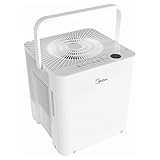
- SMALLER FORM, LARGER CAPACITY - 3X larger water tank allows the Midea Cube to operate up to 3X longer than a conventional dehumidifier. Enjoy more time without the hassle of emptying the water tank
- BUILT IN PUMP - The built-in water pump easily drains vertically or horizontally into a sink or out of a window (16 feet drain tube included). The bucket never needs emptying again.
- CONTINUOUS DRAIN OPTION - Versatile, no-bucket option provides more flexibility to remove moisture. You can remove the water tank and place the unit above the sink using the included drain hose, or position it over a floor drain, near a window or door.
- SMART CONTROL -The Midea Cube is Wi-Fi enabled and can be controlled from anywhere through the cloud using the SmartHome app on iOS or Android. You can also use voice commands throughout your house, office, or apartment using Alexa or Google Assistant.
- LIFT AND TWIST- World's first extendable dehumidifier offers unparalleled flexibility - operates in extended or nested form. You can easily find a place to store the unit when the space becomes dry, or extend it to its full capacity whenever you need it.
Frequently Asked Questions
What is the best dehumidifier for a basement?
The Frigidaire FFAP5034W1 is the best choice when a lower floor drain is available and tested moisture removal matters most. The Midea MAD50PS1AWT-C is a better fit when the basement needs a built-in pump and app control.
What basement dehumidifier has a pump?
A built-in pump is useful when water must travel uphill to reach a sink or elevated drain. A gravity hose is sufficient when the discharge point is lower than the dehumidifier and the hose can maintain a downhill route.
Do I need a 50-pint or 70-pint dehumidifier?
A 50-pint dehumidifier is a common starting point for a damp basement, but the correct capacity depends on room size and moisture conditions. ENERGY STAR’s guidance starts at 30+ pints for a large, slightly-to-moderately damp room, 40+ pints for a very damp room, and 50+ pints for a wet room.
What humidity should I set my basement dehumidifier to?
Set the basement dehumidifier to keep relative humidity below 60%, with 30% to 50% as the EPA’s ideal indoor range. Use a separate hygrometer to confirm the appliance’s reading, especially in a multi-room basement.
Is a dehumidifier enough to stop basement mold?
No. A dehumidifier removes airborne moisture but does not repair leaks, seepage, grading, gutters, downspouts, or foundation drainage. Active water entry requires diagnosis and correction in addition to humidity control.
The Bottom Line
Bottom line: The Frigidaire FFAP5034W1 is the performance-first pick for a basement with a lower floor drain. The Midea MAD50PS1AWT-C is the better drainage-and-control choice when you need a built-in pump. The GE APYR50LC is a practical pump-equipped alternative with unusually clear manufacturer specifications. Whichever model you choose, maintain indoor humidity below 60% and address leaks or foundation water entry separately.
Quick Recap
Product prices and availability are accurate as of the date/time indicated and are subject to change. Any price and availability information displayed on Amazon at the time of purchase will apply.

