The Tool Desk
Outbyte Driver Updater FREEFix the driver behind crashes, sound loss and screen glitchesFind Drivers →Outbyte PC Repair FREEClear out junk files and repair common Windows errorsFree Scan →Tamarack, also called American larch or eastern larch, is one of the few conifers that drops its needles every fall. In the right site, it is a beautiful native tree with soft green spring needles, golden fall color, and a narrow upright shape that works well near rain gardens, pond edges, wet naturalized areas, and larger northern landscapes.
The deciding factor is not whether tamarack is attractive. It is. The deciding factor is whether your site matches the tree. Tamarack is a cool-climate, moisture-loving tree. It wants full sun, acidic to moist soil, dependable water, and enough room to become a 40- to 80-foot tree with a 15- to 30-foot spread. If the site is hot, compacted, dry, alkaline, polluted, or boxed in by pavement, choose a different tree.

As an Amazon Associate I earn from qualifying purchases.
On our job sites, we treat tree selection the same way we treat grading, drainage, and utility layout: the plant has to fit the conditions that will exist 10, 20, and 40 years from now. Tamarack is not a generic evergreen for a front yard. It is a specialized native tree that performs best when placed with intent.
Quick wins for a faster PC:
Fix the driver behind crashes, sound loss and screen glitchesFind Drivers →Clear out junk files and repair common Windows errorsFree Scan →What Is a Tamarack Tree?
Tamarack is Larix laricina, a native North American conifer. Common names include tamarack, American larch, eastern larch, hackmatack, black larch, and red larch. It naturally grows across cold northern regions, often in bogs, swamps, wet woods, peatlands, and groundwater-influenced soils.
#1 Best Overall
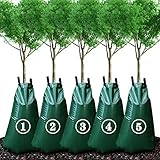
- 【BIG CAPACITY】Holds up to 20 gallons of water for deep watering to keep trees hydrated longer, especially in drought or hot weather areas. Most bags typically empty within 5–9 hours, while actual watering time may vary depending on soil type, weather, tree size, and water pressure. In some cases, it may take 5–24 hours to fully empty. Based on our testing, this release rate helps water reach the roots effectively while reducing evaporation in hot or dry conditions.
- 【EASY TO USE】Very easy to use, just wrap this water bag around the trunk, tighten the zipper and pour water in it. For larger trees, you can pull two of these drip irrigations together.
- 【HEAVY DUTY MATERIAL】Made of durable PVC tarpaulin material, UV resistant. Designed with wide water fill hole suitable for universal size hose, and sturdy handle for long time use.
- 【TIMELY HYDRATION】Our carefully tested watering system efficiently nourishes trees, saving you time and water. It guarantees water reaches the roots, preventing waste and evaporation, especially important during hot summers or droughts. Plus, It reduces the risk of waterlogging and root rot for too slow release. These are essential for newly planted or transplanted trees growth.
- 【BUY WITH CONFIDENCE】Thank you very much for your great support. Product quality and customer satisfaction is our top priority. If you're not completely satisfied with anything you get from us, contact us and we'll make it right.
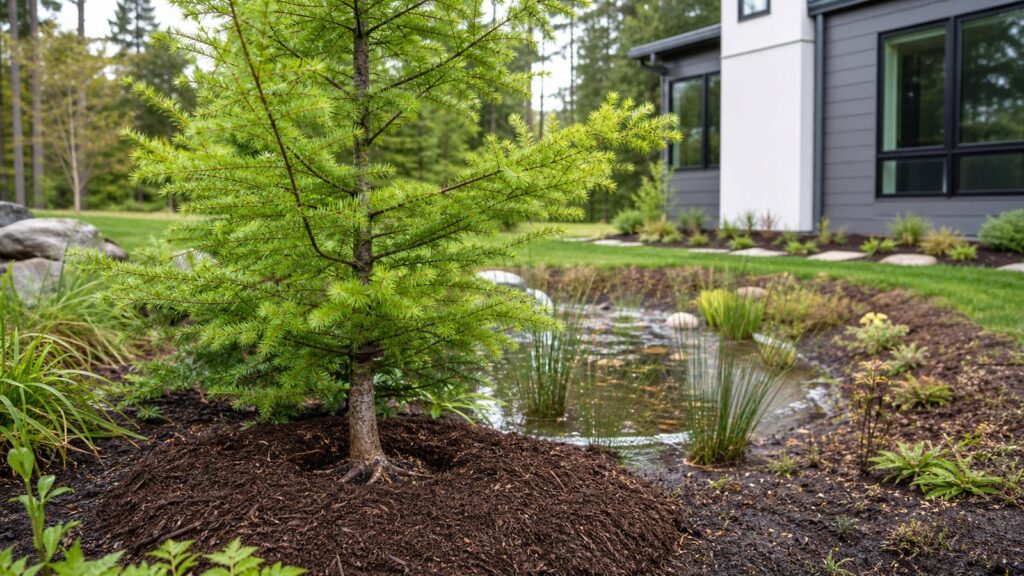
The tree usually grows with a narrow pyramidal form. In residential landscapes, a mature tamarack commonly reaches 40 to 80 feet tall and 15 to 30 feet wide. Young trees look light and delicate compared with spruce or pine because the needles are soft and borne in clusters on short spur shoots.
The most misunderstood feature is that tamarack is a deciduous conifer. It grows needles in spring, turns yellow to gold in fall, and then sheds those needles before winter. That is normal. A healthy tamarack can look bare in winter and still leaf out strongly the following spring.
That seasonal needle drop causes plenty of false alarms. If your tamarack turns golden yellow in October or November and drops needles evenly across the tree, it is probably doing exactly what it should. If needles brown in late spring or summer, drop unevenly, show mining damage, or the tree loses foliage several years in a row, that deserves closer inspection.
Should You Plant a Tamarack? Use This Site Checklist First
Before you buy a tree, check the site. Tamarack is easy to care for when it is planted where it belongs. It is difficult to keep alive when the site fights its biology.
Good sites for tamarack
A tamarack is a strong candidate if the planting area has full sun, cool regional temperatures, and soil that stays consistently moist without being a permanently stagnant hole. It is especially useful where typical evergreen choices struggle because the soil is too wet.
Good landscape uses include rain gardens, pond edges, moist naturalized borders, wet meadow edges, northern native plantings, wildlife-friendly landscapes, and larger lots with drainage patterns that already support moisture-loving plants.
In construction terms, this is a tree for the low, sunny part of the plan, not the dry strip between a sidewalk and street. It can help anchor a landscape where grading sends water to a designed collection area, but it should not be used as a shortcut for poor drainage that threatens a foundation, driveway, patio, or basement.
Poor sites for tamarack
Avoid tamarack in hot, humid, drought-prone, compacted, heavily polluted, or strongly alkaline sites. It is generally best suited to USDA Zones 2 through 5. Some protected northern or upper Midwestern sites outside that core range can work with excellent watering and heat protection, but it is not a good bet for hot urban yards.
Do not plant tamarack under power lines. A 40- to 80-foot tree does not belong beneath overhead utilities. Keep it away from building foundations, septic fields, tight sidewalks, driveways, retaining walls, and drainage infrastructure. Also avoid planting it where lawn competition will run right up to the trunk. Young tamaracks do not compete well with turf for water and light.
Best Growing Conditions for Tamarack
Sunlight
Tamarack wants full sun. Plan for at least 6 hours of direct sun per day, and more is better in northern climates. It is not a full-shade tree. If you plant it under established maples, oaks, spruces, or dense building shade, it will be weak from the start.
During establishment, nearby turf, shrubs, and volunteer trees can also create competition. Keep a mulched, grass-free area around the tree instead of letting grass grow to the trunk.
Soil
Tamarack performs best in moist, acidic soil. It naturally tolerates wet organic soils, peat, bog margins, swamps, and similar sites. In a designed landscape, it can grow in moist well-drained soil or wet-edge conditions, provided the site is sunny and cool.
Soil pH matters. If your property has alkaline soil, tamarack may struggle. A basic soil test is a smart investment before installing several trees or paying for professional planting. Soil tests often cost far less than replacing a failed tree and redoing the labor.
Water
Drought is one of the main reasons young tamaracks fail. A newly planted tree needs consistent moisture for the first 1 to 2 growing seasons. That does not mean keeping the trunk in standing water all summer. It means slow, deep watering that wets the root zone.
In dry spells, a deep soak once or twice a week is usually more useful than frequent shallow sprinkling. Lawn irrigation often wets the grass and the top inch or two of soil without reaching the full root ball. Check the soil 4 to 6 inches down near the planting area. If it is dry at that depth, the tree needs water.
Crashes, No Sound, or Screen Glitches?
Random freezes, missing sound and display glitches usually trace back to one bad driver. Find and replace yours safely.Free scan · under a minutePC Slower Than It Used to Be?
A free scan shows the junk files, broken settings and background clutter dragging Windows down - then fixes them in one click.Free scan · Windows 10 & 11How to Plant a Tamarack Tree Correctly
Most young tree failures start at installation. The species gets blamed, but the real issue is often a buried root flare, a hole dug too deep, poor watering, or mulch piled against the bark. Tamarack is no exception.
Best planting time
Spring is usually the best planting season for tamarack, especially for bare-root seedlings and transplants. Dormant-season planting can also work when soil is workable and the tree is not actively growing. Container-grown tamaracks can be planted in cool weather if irrigation is reliable.
Rank #2

- Package Include: You will receive 12 slow release tree watering bags, these are suitable for planting saplings in the arid areas or in the dry wheater, they can increase survival rate of saplings in the dry season well.
- Durable Material: These automatic tree drip irrigation bags are made of premium PE material and surface of these drip irrigation bags is sunlight-proof, so they are resistant to aging so you can keep them for a long time for not one-season use.
- Easy To Use: First, you need to place a tree watering bag around the bottom of the trunk, then tighten the zipper on the drip irrigation bag, finally you can put the water pipe into the water injection port at the top of the bag and fill the tree watering bag with water.
- Efficiently Work: These tree drip irrigation bags are all with a large capacity fo 20 gallon, and after you install these irrigation bag and fill them with water, the water in the bag body will slowly release and penetrate into the soil and trunk within 4-5 hours to keep the roots of the saplings moist.
- Of Great Benefits: These tree drip irrigation bags can save more than 30% of water than traditional irrigation methods, they are also very adaptable and do not pick soil, at the same time, they save lobor and can be used with nutrient solutions to improve the quality of tree growth.
Avoid planting during hot, dry weather unless you have no other option and can water consistently. A tree that is already stressed by heat has a smaller margin for error.
Step 1: Call 811 and check local rules
Before digging, contact 811 so underground utilities can be marked. This applies even for a small tree. Irrigation lines, gas, electric, communications, and drainage systems are not always where a homeowner expects them to be.
Also check right-of-way rules. Many cities require a permit or approval before planting street trees or trees in the public right-of-way. Some municipalities control species selection, spacing from intersections, distance from hydrants, and clearance from sidewalks or overhead utilities. If the tree is near a street, sidewalk, alley, or utility corridor, verify the rules before ordering stock.
Step 2: Find the root flare
The root flare is where the trunk widens into the first main roots. It should sit at or slightly above finished grade after planting. This detail matters. A buried root flare can stress the tree and contribute to girdling roots, bark problems, and long-term decline.
Container trees are often sold with excess soil over the root flare. Before measuring hole depth, scrape away that extra soil from the top of the root ball until you can see the flare. Measure from the root flare to the bottom of the root ball, not from the top of the nursery soil.
Step 3: Dig wide, not deep
Dig the planting hole at least 2 times the width of the root ball. In compacted soil, go wider. The hole should be no deeper than the root flare-to-bottom measurement. The root ball should sit on firm, undisturbed soil so it does not settle after planting.
Free tools Windows power users keep installed
One-click scans. No signup required.
A common mistake is digging a deep, soft hole and then backfilling under the tree. Once watered, that loose soil settles, the tree sinks, and the root flare ends up below grade. Set the tree high enough from the beginning.
Step 4: Backfill with mostly native soil
Use the soil you removed from the hole unless a soil test or site condition calls for a specific correction. Do not create a rich amended planting pocket surrounded by poor native soil. Roots need to move into the surrounding site, not circle inside a small pocket of compost.
Break up large clods, remove construction debris, and backfill in lifts. Water during backfill to settle soil around the roots. Do not stomp aggressively around the root ball; firm the soil by hand or with gentle foot pressure outside the root zone.
Step 5: Mulch correctly
Apply mulch 2 to 4 inches deep across the planting area. Keep mulch pulled back several inches from the trunk so the root flare remains visible. A mulch ring helps conserve moisture, moderates soil temperature, and reduces grass competition.
What’s actually slowing this PC down?
Pick the symptom - the matching free tool is one click away.
Do not build a mulch volcano. Mulch piled against bark traps moisture, encourages decay, and can hide stem and root problems.
Step 6: Stake only if needed
Most small trees do not need staking if they are planted correctly. Stake only when the site is windy, the root ball is unstable, or the tree cannot stand upright on its own. Use flexible straps, not wire against bark. Remove stakes after one growing season in most cases.
Watering and First-Year Care
The first year determines whether a tamarack establishes or stalls. Your goal is to keep the root ball and surrounding soil evenly moist while encouraging roots to move outward.
After planting, water thoroughly. For the first few weeks, check soil moisture every few days. During cool, wet periods, you may not need much supplemental water. During dry, windy, or warm weather, you may need to soak the root zone once or twice per week.
A practical target for a small container tree is to water slowly enough that moisture penetrates 6 to 8 inches into the soil. For larger balled-and-burlapped or field-dug trees, the root ball holds more volume and needs longer soaking. Watering bags can help, but they are not automatic tree care. Refill them as directed, move them when needed, and still check soil moisture by hand.
Keep the mulch ring maintained at 2 to 4 inches deep, but do not bury the trunk. Keep grass and weeds out of the mulched zone. Do not fertilize heavily at planting unless a soil test identifies a need. Excess nitrogen can push soft growth before the roots are ready to support it.
In year two, continue watering during dry spells. Once established in a suitable moist site, tamarack needs less intervention. In a marginal dry site, it may need supplemental watering for much longer, which is a sign the site was not ideal.
Pruning and Long-Term Maintenance
Tamarack usually needs minimal pruning. Its natural form is narrow and upright, so routine shearing is unnecessary and can make the tree look worse.
Recommended Free Tools
Prune dead, broken, crossing, or structurally weak branches when you see them. For most homeowners, the best pruning window is late winter or early spring before active growth. Small cuts are easier on the tree than delayed large cuts. Use clean, sharp tools and cut just outside the branch collar without leaving a long stub.
Do not top a tamarack. Topping ruins the structure, creates weak regrowth, and increases long-term maintenance problems. If the tree is too tall for its location, the site selection was wrong. Replace it with a species that fits the available space.
For young trees, monitor the central leader. If competing leaders develop, corrective pruning while the tree is small can help preserve a strong form. For large trees, hire a qualified arborist instead of making high cuts from a ladder.
Common Tamarack Problems and Pests
A well-sited tamarack is not high maintenance, but it is not pest-free. The two pests homeowners most often need to recognize are larch sawfly and larch casebearer.
Do these 3 things before closing this tab:
1Fix the driver behind crashes, sound loss and screen glitches2Repair Windows errors before they cause bigger problems3Scan for outdated or missing drivers - takes under a minuteLarch sawfly
Larch sawfly larvae feed on needles and can defoliate portions of the tree. Watch for groups of larvae and browning or stripped foliage in late spring and summer. A single light feeding event may not kill a healthy tree, but repeated defoliation can weaken it and reduce growth.
Larch casebearer
Larch casebearer larvae mine and feed on needles. Damage can make needles look browned or bleached, and small cases may be visible on foliage. As with sawfly, repeated defoliation over multiple years is the concern.
When yellow needles are normal
Golden yellow needles in fall are normal. Even needle drop across the whole tree in autumn is normal. Browning in June, July, or August is different. So is top dieback, repeated summer defoliation, cankers, or failure to leaf out in spring.
If you see active larvae, mined needles, webbing, cases, major thinning, or two consecutive years of serious defoliation, get a diagnosis from a certified arborist or your local extension office. Do not spray first and identify later. Correct timing and correct pest identification matter.
How Much Does It Cost to Plant a Tamarack Tree in 2026?
Costs vary widely because tamarack is sold as everything from small bare-root forestry stock to larger container trees. Installation cost also depends on access, soil, drainage, tree size, labor rates, warranty terms, and whether the job requires equipment.
| Item or Service | Typical 2026 US Cost | Best Use |
|---|---|---|
| Bare-root tamarack seedling or transplant | About $3 to $5 each, often less per tree in 25 to 1,000 quantity tiers | Naturalized plantings, shelterbelts, wetland-edge restoration |
| Small container tamarack | About $20 to $150+ | Single residential specimen, rain garden, pond edge |
| DIY planting budget | About $75 to $250 for a small tree if basic tools are already owned | Homeowner installation in easy soil with good water access |
| Professional tree planting | Commonly $150 to $3,000 per tree; many standard residential installs land in the mid-hundreds | Larger stock, difficult access, warranty-backed installation |
| Tree planting labor | About $50 to $150 per hour | Varies by market, crew size, equipment, and site difficulty |
| Arborist or tree service planting benchmark | About $235 to $918 for planting; transplanting about $247 to $980 | Professional planting or relocation work |
| Very large or mature tree installation | Can approach $5,000 installed | High-impact landscape projects with equipment access |
For a typical homeowner planting one small tamarack, the practical cost range is often $75 to $250 DIY or several hundred dollars professionally installed. Costs climb when the site needs drainage correction, compacted soil remediation, delivery, machine access, traffic control, permit handling, or post-installation warranty care.
Ongoing care is usually modest: mulch replacement, watering supplies, perhaps a soil test, and occasional pest diagnosis. Professional pruning or tree health visits can add hundreds of dollars when the tree is large or declining.
Independent reader supportYour contribution helps us test, update, and keep practical guides available for everyone.When to DIY vs. When to Hire a Pro
DIY makes sense when
DIY planting is reasonable if the tree is small enough to handle safely, the site is outside the right-of-way, utilities are marked, soil is workable, drainage is already appropriate, and you can water consistently for 1 to 2 growing seasons.
Recommended Free Tools
Small bare-root or 1-gallon to modest container stock is the best DIY category. The tree is easier to set at the correct depth, easier to water, and cheaper to replace if something goes wrong. For naturalized plantings, small stock often establishes better than oversized material.
Hire a pro when
Hire a professional when the tree is large, access is difficult, soil is compacted, drainage needs to be corrected, the site is near utilities or hardscape, or the planting is part of a larger grading and landscape plan. Also bring in a pro if the tree is going near a street, sidewalk, commercial property, or managed stormwater feature.
From a construction standpoint, the most expensive tree problems are not usually the tree itself. They are conflicts with utilities, pavement, foundations, drainage systems, and future access. A $300 planting decision can become a $3,000 removal and repair problem if it is placed without a long-term plan.
Rank #4

- Time-saving: if you got sick of manually watering trees in the Hot Summer over and over again with the hose.Tree Watering Bags Simply fill the bags with a hose or bucket, and they will provide continuous hydration for your plants, requiring only one simple operation from you.especially for maintaining large areas of trees
- Drought Savior: The stable water release function ensures continuous moisture at the roots of trees, sparing you the hassle of manually watering them repeatedly during hot summer days. Providing timely hydration for trees ensures their healthy growth.
- Strong Material: tree watering bags are made of Sturdy PVC material, ensuring durability and reliability for long-term use. they are resistant to tearing, eliminating concerns about damage if snagged. The sturdy material can easily withstand the pressure when the bags are filled.
- Slow Release Design: Each tree watering bag has a capacity of 20 gallons, ensuring that trees receive sufficient water during drought seasons or in the early stages of planting. The water is released slowly, penetrating into the ground to avoid wastage. Release time is between 8 hours.
- Easy Installation and Use: Ensure that trees are at least 25 inches above the ground with branches, and that one bag fits tree trunk diameters of 2-8 inches. Wrap the bag around the base of the tree, zip it up, insert the hose, and start filling. For larger trees, multiple bags can be connected together for use.
Permits, Utilities, and Placement Rules
Before planting, confirm three things: underground utilities, overhead clearance, and local planting rules.
Call 811 before digging. Keep tamarack away from overhead utility lines because it can mature at 40 to 80 feet tall. Maintain practical clearance from buildings, rooflines, sidewalks, driveways, septic systems, drainage swales, and buried infrastructure.
If the tree will be planted in a public right-of-way, parkway, planting strip, or street-tree zone, check with your city or municipality first. Some cities require permits, approved species lists, inspections, spacing standards, and minimum distances from intersections, signs, hydrants, driveways, and utilities.
If you are planting near a wetland, bog, pond, or natural drainage area, verify whether the area is regulated before disturbing soil. Tamarack is a good wet-edge species, but that does not override local wetland rules.
Common Mistakes That Kill Tamarack Trees
The biggest mistake is planting tamarack where it does not belong. Hot, dry, compacted, alkaline, and polluted urban sites are poor matches. A tree that wants cool, moist, acidic conditions will not become low-maintenance just because it was expensive.
Outdated Drivers Are Slowing You Down
One free scan finds every outdated or missing driver and matches the right update for your exact hardware.Free scan · exact hardware matchPC Slower Than It Used to Be?
A free scan shows the junk files, broken settings and background clutter dragging Windows down - then fixes them in one click.Free scan · Windows 10 & 11The second mistake is assuming fall needle drop means the tree is dead. Tamarack naturally turns yellow and drops its needles. Judge health by spring bud break, summer foliage condition, twig flexibility, and whether decline is uniform or patchy.
Other common mistakes include planting too deep, burying the root flare, piling mulch against the trunk, letting turf grow to the bark, underwatering during the first year, relying on shallow lawn sprinklers, planting under power lines, and collecting trees from the wild.
Buy nursery-propagated tamarack instead of digging from natural areas. Wild collection can damage sensitive habitats, violate local rules, and produce poor transplant results. Nursery stock is the cleaner, more reliable choice.
Bottom Line
Tamarack is a strong choice for the right northern property: full sun, cool climate, moist acidic soil, and enough space for a 40- to 80-foot native tree. It is especially valuable in rain gardens, pond edges, wet naturalized areas, and larger lots where other conifers struggle.
Free tools Windows power users keep installed
One-click scans. No signup required.
It is not a universal ornamental evergreen. It drops its needles every fall, dislikes drought, and performs poorly in hot, dry, compacted urban conditions. Plant it high enough to keep the root flare visible, dig wide instead of deep, mulch correctly, water deeply through establishment, and plan around utilities and future size. Do those things, and tamarack can be a long-lived, distinctive part of a well-built landscape.
Frequently Asked Questions
Is a tamarack tree evergreen or deciduous?
Tamarack is a deciduous conifer. It grows soft green needles in spring and summer, turns yellow to gold in fall, and drops its needles before winter.
Where is the best place to plant a tamarack tree?
The best site is sunny, cool, moist, and acidic, with enough room for a tree that may reach 40 to 80 feet tall and 15 to 30 feet wide. Rain gardens, pond edges, and moist naturalized areas are good fits.
Can tamarack grow in a normal lawn?
It can grow near a lawn if the soil stays moist and the tree has a wide mulch ring, but dry turf areas are not ideal. Grass competition and shallow lawn watering are hard on young tamaracks.
Do these 3 things before closing this tab:
1Repair Windows errors before they cause bigger problems2Scan for outdated or missing drivers - takes under a minute3Clear out junk files and repair common Windows errorsWhy is my tamarack turning yellow and dropping needles?
If it happens in fall, yellow needles and needle drop are normal. If browning happens in spring or summer, check for drought stress, planting problems, larch sawfly, larch casebearer, or other health issues.
How much does it cost to plant a tamarack tree in 2026?
Small bare-root tamaracks often cost about $3 to $5 each, while container trees commonly run about $20 to $150 or more. DIY planting for a small tree may cost $75 to $250, while professional planting commonly ranges from $150 to $3,000 per tree depending on size, access, labor, and site work.
Do I need a permit to plant a tamarack tree?
You may need a permit if planting in a public right-of-way, street-tree strip, regulated wetland area, or managed landscape zone. Always call 811 before digging and check local rules before planting near streets, sidewalks, or utilities.
Quick Recap
Product prices and availability are accurate as of the date/time indicated and are subject to change. Any price and availability information displayed on Amazon at the time of purchase will apply.

