Crashes, No Sound, or Screen Glitches?
Random freezes, missing sound and display glitches usually trace back to one bad driver. Find and replace yours safely.Free scan · under a minuteWindows Errors? Fix Them Before They Spread
Repair common Windows errors and clear accumulated junk for a smoother, more stable PC - no reinstall needed.Free scan · no reinstallThe right device depends on where the water comes from. A sump pump removes groundwater collected by foundation drainage in a sump pit. A backwater valve prevents wastewater or stormwater from reversing through the home’s drainage pipe. They are not interchangeable, and a property exposed to both risks may need both, designed as one drainage system. Start by identifying the pathway, then have a licensed plumbing professional assess the layout, discharge route and local requirements.
Government of Canada guidance strongly recommends professional assessment for sump-pump work and says, “Backwater valves should be installed by a licensed plumbing professional.” See the sump-pump guidance and backwater-valve guidance before authorizing work.
As an Amazon Associate I earn from qualifying purchases.
Start with the water pathway
Flood protection works only when it addresses the route water is taking. Before choosing equipment, note where water first appears, what is in it and whether it follows a storm or a plumbing event.
Free tools Windows power users keep installed
One-click scans. No signup required.
Groundwater and foundation drainage
Water seeping at foundation walls, rising through a floor crack, or collecting in a sump pit points to groundwater or water gathered by the foundation-drainage system. Rapid rain, ice melt and snowmelt can overwhelm that drainage. A sump pump is designed for this collected water; a backwater valve is not.
#1 Best Overall

- Outstanding Performance: This sump pump battery backup system delivers 2500W pure sine wave output, supporting dual-pump operation (1 HP main + 1/3 HP backup). Includes a USB port and AC outlet, ideal for emergency use and a home prone to heavy rainfall
- Quick Plug-In Setup: Say goodbye to risky wiring. This sump pump battery backup inverter features a standard 3-prong plug for quick and secure installation. It reduces errors and electrical hazards. Just plug in, and you're ready
- Battery-Friendly Charging: Equipped with 3-stage charging (Bulk, Absorption, Float), this basement protection sump pump inverter automatically optimizes battery performance and service life. Compatible with 12V Lead-acid, AGM, Gel, and LiFePO4 batteries
- Real-Time Display: Stay informed with an LCD screen and LED indicators. This pure sine wave power inverter allows you to monitor voltage, battery level, and working status easily. Control with confidence
- Security Comes First: Designed with security in mind, this back up system for emergency includes built-in protection against overcurrent, overvoltage, short circuit, reverse polarity, and high temp. A circuit breaker adds another layer of safeguards
Wastewater or stormwater reversing through plumbing
Dirty water rising from a basement floor drain, toilet, shower or other low fixture during a sewer event indicates reverse flow in the building drain. A backwater valve can close against that reverse flow. A sump pump cannot stop sewage entering through a fixture.
More than one pathway
Basements can experience both conditions. For example, heavy rain can raise groundwater while a surcharged municipal sewer pushes water toward the house. Treat these as separate hydraulic problems and plan the devices together rather than assuming one protects the other.
Quick comparison
| Question | Sump pump | Backwater valve |
|---|---|---|
| Water addressed | Water collected in a foundation-drainage sump pit. | Wastewater or stormwater attempting to flow backward through a protected drainage line. |
| Primary action | Mechanically pumps water away from the foundation. | Permits normal outward drainage and restricts reverse flow. |
| Typical trigger for investigation | Foundation dampness, a rising sump level or drainage overwhelmed by a storm. | Basement fixtures or floor drains backing up, especially during sewer surcharges. |
| Important limitation | It depends on functioning equipment, power and a suitable discharge location; it does not block sewer backflow. | When closed, it also prevents wastewater in the home from leaving through the protected line; it does not remove foundation water. |
| Questions for the installer | Is a pit connected to foundation drains? Where can discharge go legally and safely? Is backup power or an alarm appropriate? | Which fixtures and pipes require protection? Which valve type and location are permitted? Can the access point be maintained? |
The devices address different routes, so “which is better?” is the wrong first question. The useful question is which route has flooded, which route could flood, and whether the proposed protection leaves another route unmanaged.
How a sump-pump system works
Collection in the pit
Foundation drains and other drainage paths direct water to a sump pit. When the water reaches the pump’s activation level, a float or electronic control starts the pump. The pump sends water through a discharge pipe to an approved outlet away from the foundation.
When installing one makes sense
A sump pump may fit a home where foundation drainage routinely sends water to a pit, where groundwater accumulates around the footing, or where intense rainfall, ice or snowmelt can exceed passive drainage capacity. Canada.ca notes that a pump may not be necessary when grading and foundation drains already keep water from accumulating around the foundation. A licensed professional should verify the drainage arrangement rather than adding a pump to an unconnected pit.
Rank #2

- System comes preassembled and preplumbed so that installation is simple and quick
- Reliable design with durable ½ HP energy efficient copper-wound Permanent Split Capacitor (PSC) motor for long life and savings on your electric bills
- Includes a WiFi-capable battery backup system that provides 24-hour-a-day monitoring of pump, power and battery conditions; backup controller will sound an alarm, illuminate a warning light and describe what to do for easy maintenance
- Allows for connection to a Basement Watchdog CONNECT Module (BW-WiFi2—a SEPARATE PURCHASE), giving you real-time alerts via text, email, push notification or through the Basement Watchdog free app
- Provides days of intermittent pumping power on a single battery charge and is compatible with both maintenance-free AGM and wet-cell batteries. Connect two batteries in parallel for double the runtime.
Discharge is part of the design
The outlet must carry water far enough away that it does not return to the foundation or flow onto a neighbour’s property. The installer should explain the discharge route, seasonal restrictions and maintenance requirements. Obtain the model’s warranty and written maintenance instructions when the system is commissioned.
Power and equipment continuity
A pump cannot move water during a power interruption unless the installation has an appropriate alternative. Ask the professional whether a battery-backed pump, another backup-power arrangement or a high-water alarm suits the pit, expected inflow and electrical setup. A backup component is not automatically suitable for every pit or discharge layout; it must be sized and tested for the specific installation.
What’s actually slowing this PC down?
Pick the symptom - the matching free tool is one click away.
How a backwater valve works
Normal flow and reverse flow
In normal conditions, wastewater leaves the house through the building drain. A backwater valve remains open for that outward flow. If water in the public sewer or connected drainage line tries to move toward the house, the valve’s gate or flap closes. Designs differ, so the permitted location and maintenance method depend on the valve type and the plumbing layout.
Homes that commonly need investigation
Risk is higher where a basement has low plumbing fixtures, where the property has flooded from a sewer backup before, or where older municipal infrastructure is prone to surcharge. A plumber should determine why the earlier backup occurred and whether a valve can protect the affected fixtures. Installing a valve without identifying the route can leave an unprotected branch or protect the wrong section of pipe.
The closed-valve consequence
Once the valve closes, water used inside the home still has to go somewhere. Toronto’s basement-flooding guidance advises avoiding toilets, sinks, dishwashers, washing machines and similar fixtures while the valve is closed. A compatible alarm can alert occupants that closure has occurred, but an alarm does not restore drainage capacity; occupants must stop discharging water and follow the plumber’s instructions.
Rank #3

- 【CONTINUOUS POWER】The Cantonape 2000 Watt Sump Pump Backup Battery System is a professional backup system in case of a power outage, featuring pure sine wave output, 2000 watts of powerful power output, LED display and 3 AC outputs, which produces a seamless, grid-like power output that is resistant to interference, can drive any type of load (resistive and inductive loads), has the highest conversion efficiency, and the lowest losses, and is therefore safer for all types of loads.
- 【CHARGING MODE】The 2000W sump pump backup battery system has a built-in 20A battery charger, which supports fast charging. In the event of a power outage, this sump pump battery backup system can quickly auto-switch to battery inverter power, ensuring continuous sump pump operation.
- 【LED DISPLAY】The Cantonape sump pump battery backup system is equipped with LED display, you can instantly monitor vital information such as battery voltage and AC voltage. Enjoy confident and informed decision-making every step of the way!
- 【SAFETY IN USE】The Cantonape sump pump battery backup system has a built-in cooling system and overload protector, as well as multiple protection functions such as overheat protection, short circuit protection, low voltage protection, overcharge protection, etc., which not only improves the safety of use, but also extends the service life of the device.
- 【MULTIPLE APPLICATIONS】Our sump pump battery backup system also works as a power inverter for many applications requiring backup power. You can use it to operate various electric devices, including lights, mobile phones, monitors, and other equipment. This inverter doesn't come with battery, a 12V GEL, AGM/SLA, Flooded/Wet battery is required for backup power operation.
Access is not optional
The valve needs a reachable access point for inspection, cleaning and repairs. Do not permanently cover the access with finishes or stored items. The professional should identify the protected fixtures, shutoff or cleanout locations and the procedure for confirming that the gate or flap moves freely.
Quick wins for a faster PC:
Repair Windows errors before they cause bigger problemsFix Now →Scan for outdated or missing drivers - takes under a minuteDriver Scan →Clear out junk files and repair common Windows errorsFree Scan →When a home needs both systems
A sump pump and a backwater valve can be appropriate together because they control separate flows. The critical interaction is what happens to foundation-drainage water when a sewer or storm system is surcharged. If a closed backwater valve blocks the normal drainage route, foundation water still needs a safe discharge path.
National Research Council Canada guidance says provision should be made for foundation-drainage discharge if storm-system surcharge closes a backwater valve, and that sump systems used with backwater valves should be designed in consultation with the local authority having jurisdiction. Read the full guidance in Practical guidance for private-side drainage systems to reduce basement flood risk (2021).
This is not a plug-and-play combination. The professional must map foundation drains, sanitary and storm connections, valve location, pump discharge and any cross-connections before selecting equipment. A valve that protects a sewer line cannot pump a rising sump pit, and a pump discharge connected in an inappropriate way can defeat the intended backflow protection.
Installation, permits and code questions
Use licensed trades
Canada.ca recommends a licensed plumbing professional to determine whether a sump pump is right for a home and to install it when necessary. Its backwater-valve guidance likewise calls for licensed installation. A sump pump may require a dedicated electrical circuit, and local rules may require a licensed electrician for that work.
Do these 3 things before closing this tab:
1Fix the driver behind crashes, sound loss and screen glitches2Clear out junk files and repair common Windows errors3Scan for outdated or missing drivers - takes under a minuteRank #4

- Maintenance free - no need to add battery fluid or distilled water
- Up to 40-hour protection (based on a 10% duty cycle) on the Basement Watchdog Big Dog (BWD12-120C+)
- Up to 48-hour protection (based on a 10% duty cycle) on the Basement Watchdog Special + (BWSP+) and Basement Watchdog Big Combination sump pump system (BW4000, CITS-50)
- Up to 80-hour protection (based on a 10% duty cycle) on the Basement Watchdog Emergency (BWE) and Basement Watchdog Combination sump pump system (DFK961, CITE-33)
- Runs various Basement Watchdog sump pump systems intermittently for days
Confirm local approvals before work starts
Permit, inspection, discharge and electrical requirements vary by municipality, province or state and by the connection to a public sewer or septic system. Ask the building or plumbing authority which approvals apply to your address. Keep the permit, inspection record, equipment model and maintenance instructions with the property documents.
What a model code says—and does not say
The 2024 International Residential Code, Chapter 30, is one model-code example. It requires backwater protection for specified fixtures whose flood-level rims are below the elevation of the upstream public sewer manhole cover, and it describes normally open valves for the stated installation condition. A model code is not automatically the law at your home: local adoption, amendments and the authority having jurisdiction determine what is enforceable.
A practical decision process
- Record the evidence. Photograph the first point of entry, note whether the water is clear or contaminated, and record the date, weather and fixtures involved. Do not rely on the final puddle location alone; water can travel across a basement.
- Map the drainage. Ask a licensed plumber to trace foundation drains, the sump pit, sanitary branches, storm connections and low fixtures. Request a written explanation of the route each device would protect.
- Check authority requirements. Before buying equipment, confirm permits, inspections, allowable discharge points, electrical rules and any restrictions on connections to municipal or septic systems.
- Choose the primary protection. Use a sump design for foundation-collected water, a backwater-valve design for reverse flow in the drainage line, or both when the assessment identifies both hazards.
- Design failure contingencies. For a pump, discuss power loss, backup equipment, alarms and an unobstructed discharge. For a valve, plan access, cleaning, an alarm if useful and household procedures during closure.
- Commission and document. Test the pump and controls under the installer’s procedure, operate the valve as permitted, label shutoffs and access covers, and keep model-specific instructions where occupants can find them.
Maintenance that preserves protection
Sump pump checks
- Keep the discharge pipe unobstructed and aimed away from the foundation and neighbouring property.
- Follow the pump manufacturer’s inspection and test procedure; do not run a dry pump if the instructions prohibit it.
- Ask how often the backup pump or backup power should be tested. Canada.ca identifies a range of two to five tests per year, with the appropriate frequency depending on the installation and model.
- Check that the alarm, float or sensor can activate and that the discharge does not freeze, clog or disconnect.
Backwater-valve checks
- Keep the access opening clear so a professional can inspect it during a storm season or after a backup.
- At least twice a year, clean the valve in accordance with its manual and verify that the flap or gate moves freely; Canada.ca recommends this frequency.
- Inspect seals and the housing for debris or damage, and arrange repair if the valve does not seat or reopen as designed.
- Make sure occupants know the alarm signal and which fixtures must not be used while the valve is closed.
What failure looks like and what to do
The sump pit is full or the pump runs without lowering the level
Stop treating the pump as the only diagnosis. Check for a tripped breaker or loss of power, an obstructed or disconnected discharge, a stuck float and an overwhelmed inflow, following the model’s safety instructions. If the discharge is clear and the pump still cannot keep up, call the installer to assess capacity, backup equipment and the drainage route. Do not redirect the outlet toward the foundation.
Water rises from a floor drain or toilet
A sump pump will not stop this route. Avoid using fixtures that discharge into the affected line and contact a licensed plumber to investigate sewer surcharge, pipe condition, valve location and whether additional branches remain unprotected.
The backwater valve is closed during a storm
Stop using toilets, sinks, dishwashers, washing machines and other fixtures connected to the protected line, as Toronto advises. Do not force the flap open. Wait for the external surcharge to subside and have the valve inspected if it does not return to normal operation.
Best Value
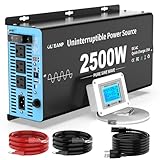
- 【Designed for Basement Flood Protection & Emergency Preparedness】: Protect your home from flooding during hurricanes, heavy rainstorms, and unexpected power outages. This sump pump battery backup system automatically switches from grid power to battery power, ensuring uninterrupted water removal and continuous basement protection. Ideal for homeowners in flood-prone areas and finished basement properties.
- 【Acts as a Reliable Emergency Backup Power Source (Battery Not Included)】: Serves as a dedicated emergency backup solution for primary or secondary sump pump systems. When utility power fails, it instantly transfers to 12V deep cycle battery power (battery required, not included) and automatically recharges when power is restored. Compatible with LiFePO4, AGM, GEL, and Flooded deep-cycle batteries.
- 【Built-in 25A Smart Charger with Multi-Stage Battery Protection】:Features a high-speed 25A charger with selectable charging modes to optimize battery lifespan. Includes overcharge, low voltage, overload, short circuit, and overheat protection. Designed for long-term reliability during storm season and emergency situations.
- 【2500W Pure Sine Wave Output – Safely Powers Sump Pumps & Essential Devices】: Delivers stable pure sine wave power capable of running sump pumps smoothly and efficiently without damaging sensitive equipment. With 3 AC outlets, USB port, and Type-C port, it can also support essential household devices during outages.
- 【LCD Remote Monitoring & Easy Installation】: Includes a remote controller with LCD display to monitor battery voltage, load status, and operating mode in real time. Supports wall mounting or flat placement with simple AC and DC connections — no complicated rewiring required. Trusted by homeowners, property managers, and contractors seeking dependable flood prevention solutions.
Flooding continues after one device is installed
Re-document the entry point and ask for a drainage review. Continued flooding may indicate that the original device addressed a different pathway, that a branch is outside the protected section, or that the discharge route becomes unusable during surcharge. The remedy is a revised system design, not simply a larger version of the same device.
Cost exposure and why prevention matters
Canada.ca reports an average cost of more than $40,000 to repair a flooded basement. The retrieved government page does not state the underlying study year or methodology, so treat this as a government-reported figure rather than a current estimate for a particular home, region or type of damage. Your actual exposure depends on contamination, finishes, structure, stored contents, drying time and insurance terms.
Because installation prices depend on excavation, plumbing access, electrical work, discharge conditions and permits, a meaningful quote requires a site assessment. Compare proposals by the pathway protected, equipment capacity, alarm and backup provisions, discharge location, access for maintenance, warranty and inspection—not by the pump or valve price alone.
Questions to put to your contractor
- What evidence shows the risk is groundwater, sewer backflow or both?
- Which exact fixtures, drains and foundation sections will the proposed device protect?
- Where will pumped water discharge during heavy rain, freezing weather and a municipal surcharge?
- What happens to foundation-drainage flow if the backwater valve closes?
- Which permits, inspections and electrical approvals are required at this address?
- What backup power, second pump or alarm is suitable for the expected inflow and outage risk?
- Where is the valve or pump access point, and what cleaning and testing schedule should the owner follow?
- What symptoms require an emergency call rather than owner troubleshooting?
Bottom line for choosing protection
Choose a sump-pump system when water is being collected around the foundation and directed to a pit. Choose a backwater valve when wastewater or stormwater can reverse through low plumbing fixtures. If both pathways exist, use a coordinated design that preserves foundation-drainage discharge even when a valve closes. Have a licensed professional verify the diagnosis, obtain local approvals and document a maintenance and outage plan before the next major storm.
Quick Recap
Product prices and availability are accurate as of the date/time indicated and are subject to change. Any price and availability information displayed on Amazon at the time of purchase will apply.

