Free tools Windows power users keep installed
One-click scans. No signup required.
Yes—sowing small batches of the same vegetable at intervals works. It replaces one large glut with a sequence of younger, harvest-ready plants. Growth is not perfectly predictable: temperature, daylight, moisture and variety can speed up or slow down each batch, so use the intervals below as starting points rather than fixed promises.
Succession sowing means repeating the same crop in short rows or small batches. It is different from clearing a finished crop and planting a different vegetable in the same bed, although gardeners also use “succession planting” for that broader rotation. The nine crops here—lettuce, radish, spinach, carrots, peas, beetroot, turnips, French beans and rocket—are a practical selection drawn from Royal Horticultural Society and university extension guidance, not an official fixed list.
As an Amazon Associate I earn from qualifying purchases.
What succession sowing solves
Vegetables often mature in a narrow window. Sow a whole packet of lettuce or radishes on one weekend and you may have more than you can eat, followed by an empty salad bed. Repeating a small sowing every week or few weeks creates overlapping ages: one row is germinating, another is sizing up, and another is ready to pick.
PC Slower Than It Used to Be?
A free scan shows the junk files, broken settings and background clutter dragging Windows down - then fixes them in one click.Free scan · Windows 10 & 11Outdated Drivers Are Slowing You Down
One free scan finds every outdated or missing driver and matches the right update for your exact hardware.Free scan · exact hardware matchThe RHS describes the method as “making repeated sowings of a crop—usually in small batches every two to three weeks—to provide a continuous harvest across the growing season and avoid gluts.” Its guide also notes the familiar problem of “gluts and shortages common to most vegetable gardeners.” Read the full advice at Royal Horticultural Society: Successional Sowing Tips.
#1 Best Overall

- Set includes 43 lightly assorted Vegetable and Herb seeds!
- All Seeds are Heirloom, 100% Non-GMO!
- High Germination Rate within 7-14 days
- Great way to stock up for the next planting season! Includes Freedom Farms Vegetable Set Mylar Bag for Optimal Seed Packet Storage!
- Wonderfully producing plants - Current stock will last for years when stored in a dry - cool place!
Intervals must change with conditions. A July lettuce can race from seedling to bolting plant, while a spring sowing may take much longer. Heat can make radishes fibrous, cause spinach and rocket to bolt, and shorten the quality window for leafy crops. Conversely, French beans need warm soil and protection from frost. Plan by crop, season and variety—not by calendar alone.
The nine best candidates at a glance
The table separates figures supplied by Iowa State University Extension from general horticultural guidance. Iowa’s maturity and interval numbers are regional examples, not guarantees for every garden. “Direct sow” means seed can normally be placed where the crop will grow; always check your packet for exceptions and spacing.
| Crop | Season preference | Direct sowing | Maturity or suggested stagger | Heat and bolting considerations |
|---|---|---|---|---|
| Lettuce | Cool to mild | Yes | 45–60 days; Iowa example: every 3–4 weeks | Heat encourages bolting and poorer leaves; interval may tighten in warm, moist weather |
| Radish | Cool to mild | Yes | 25–40 days; Iowa example: every 7–10 days | Warm conditions can produce fibrous, unpleasant roots |
| Spinach | Cool | Yes | Regular small sowings; no universal interval stated | Prone to bolting; use cool windows and locally suitable slower-to-bolt varieties |
| Carrots | Cool to mild | Yes | 60–80 days; Iowa example: every 3–4 weeks | Heat affects establishment; do not add manure or rich organic material immediately before sowing |
| Peas | Cool | Yes | Next sowing when the first plants are about 5 cm (2 in) high, as a rough RHS cue | Prefer cool-season timing; follow local sowing windows |
| Beetroot (beet) | Cool-season to intermediate | Yes | 50–70 days; Iowa example: every 4 weeks | Very hot weather can reduce quality; timing depends on variety |
| Turnips | Cool, especially early varieties | Yes | 45–70 days; Iowa maturity example | Check variety because warm-weather tolerance differs |
| French beans | Warm | Yes after frost danger | Regular small batches for continuous supply; exact interval varies by variety | Do not sow outdoors until local frost risk has passed and soil is warm enough |
| Rocket (arugula) | Cool to mild | Yes | Frequent small sowings; no universal interval stated | Bolts readily; succession sowing keeps young leaves coming |
The maturity and stagger figures in the table come from Iowa State University Extension and Outreach’s Early Spring Planting of Vegetables (last reviewed October 2024). The crop and seasonal recommendations are also consistent with University of Connecticut Extension’s Succession Planting guidance.
Recommended Free Tools
How to succession sow, step by step
1. Choose a workable site
Use a sunny bed or container area with free-draining soil. Work the soil to a fine, crumbly texture and incorporate well-rotted organic material for most vegetables. The RHS specifically advises against adding manure or well-rotted organic material immediately before sowing carrots, because fresh fertility and loose soil can encourage misshapen roots. Keep a clear strip for the next sowing rather than filling every inch on day one.
2. Divide the packet into batches
Estimate how much you can eat in a week, then sow only that amount. A short row, a section of a raised bed or a few container modules is enough. Store the remaining seed cool, dry and sealed. For fine seed, make a shallow drill, water the base before sowing, then distribute seed thinly so seedlings do not compete.
3. Label every sowing
Write the crop, variety and date on a row marker. Include the expected harvest window if the packet gives one. Leave a visible gap between rows so you can identify older and newer batches, hoe around them and add the next sowing without disturbing roots.
Rank #2

- EASIER SEED STARTING: Our Burpee SuperSeed tray with 36 flexible pop-out cells is designed to simplify indoor seed starting for all your favorite vegetables, flowers and herbs. Just add seed starting mix, seeds, water and light to get growing! Rows are labeled alphanumerically for seedling identification with included Plant-o-Gram diagram. Tray dimensions: 11.5" x 10-3/8" x 2-1/4"
- SMARTER WATERING SYSTEM: Molded corner slots in each cell improve drainage and soil aeration to set your seeds up for germination success. Deep channels in the watering tray draw excess away from the cells, while the raised perimeter edge keeps water contained in the tray - no spills! Seed tray side handles make it easy to lift and pour off excess water or check seedlings daily.
- SIMPLER TRANSPLANTING: Soft food-grade silicone cells cradle seedlings and gently flex to pop out when it’s time to transplant into your outdoor garden! This system is specially designed to reduce stress on your seedlings, so you don't damage their roots. After transplanting, trays are easy to clean and reuse or simply store for next growing season. Top shelf dishwasher safe.
- SEED STARTER TIP: Many favorite vegetables, including peppers and tomatoes, must be started indoors before warmer weather arrives. Start pepper seeds 8-10 weeks before your area’s average last frost date, and tomato seeds 6-8 weeks before last frost. Check your Burpee seed packets for instructions on when and how to plant any of your herb, flower and vegetable seeds.
- 100% GUARANTEED: Burpee is committed to the success of all gardeners. We treat each order with care to ensure healthy seeds, plants, soil mixes and gardening supplies are packaged and sent in excellent condition. If you are unsatisfied with your purchase, we aim to make it right!
4. Start with a two-to-three-week rhythm
Two to three weeks is a useful first estimate, not a rule. RHS guidance allows outdoor sowings roughly every one to four weeks from mid-spring through late summer, depending on crop and conditions. Radishes may justify a 7–10-day rhythm, while carrots or lettuce often suit three to four weeks. In hot weather, a weekly lettuce or rocket sowing may be more useful than a three-week interval; in cool weather, delay the next batch until the previous one is developing.
What’s actually slowing this PC down?
Pick the symptom - the matching free tool is one click away.
5. Use plant development as well as dates
RHS suggests about four true leaves as a cue for leafy crops, peas at roughly 5 cm (2 in) tall, and beans at about 10 cm (4 in). These are practical signals that the first batch has established and your next batch may be due. They do not override a frost warning, heatwave or the seed packet’s seasonal limits.
6. Check the remaining season
Before sowing, count the likely frost-free or cool-season days left and compare them with the variety’s days to harvest. Iowa State notes that cool-season vegetables can be planted when soil reaches 50°F; in central Iowa this is typically early to mid-April, about a week earlier in southern Iowa and a week later in northern Iowa. Those dates are Iowa-specific and should not be transplanted to another region. UConn likewise cautions that weather and daylight can change maturity even when a plan is carefully calculated.
7. Water each new row
New seed needs consistent moisture until germination and early root growth. Summer sowings require particular attention: Maryland Extension warns that new plantings made during summer heat need careful watering. Water the soil deeply enough to moisten the seed zone, check containers daily in hot weather, and use shade cloth or light row cover when appropriate for cool-season seedlings. Avoid keeping soil saturated, which can reduce oxygen and encourage disease.
8. Record what actually happened
Keep a notebook or simple chart with sowing date, variety, weather, germination date, first harvest and the point at which quality declined. UConn recommends this kind of record because weather can disrupt even a well-spaced plan. Next season, shorten intervals that left a gap and lengthen those that produced more food than your household could use.
Crop-by-crop schedules and techniques
Lettuce
Lettuce is one of the easiest crops to repeat-sow. Begin with a short row, then sow another when the first batch has around four true leaves or when the planned interval arrives. Iowa State’s regional example is 45–60 days to maturity with sowings every three to four weeks. In early spring, RHS gives lettuce as an example of sowing about every three weeks; in warm, moist summer conditions, a weekly rhythm may be more appropriate. Choose heat-tolerant or slow-bolting varieties for summer, harvest outer leaves early, and provide moisture so plants do not stall and then bolt.
Rank #3

- 【Value Package】The kit contain 4 pcs base trays, 4 pcs seed trays with 12 cells in each, 4 pcs humidity lids with dome, and 50 pcs peat pellets, not need soil to fill the cells, help you keep clean and tidy when planting, and creates a moist and warm environment needed for seed germination.
- 【High Quality Material】Seed start trays are made of thick plastic, sturdy and durable, holds up to multiple uses, easy to wash and dry, the seed starter pod soil is made of peat and degradable non-woven fabric, safe and eco-friendly, make plant quickly sprout and grow.
- 【Considerate Design】The transparent lid can help seeds absorb more sunlight to grow, dome works well to control humidity and air circulation for tray, the drain holes at the bottom help breathe and prevent the root oversaturating, peat pellet can well keep moist even if it is not watered for a few days.
- 【Easy to Use】You just put peat pellet in warm water to expand them, insert the seeds or cuttings, keep moist and warm and done. Then transplant them into your garden when they are grown, you can cut the netting off to prevent the roots stifled due to the plant grows too fast but the netting has not been biodegraded.
- 【Application】Starting seeds or cuttings, also can be used for plant cloning, propagating flowers, vegetables, herbs, succulents or as an ideal gift for planting enthusiast, gardener. It won't take up too much space, can put in windowsill, kitchen or outdoor.
Radish
Radishes mature quickly enough for a 7–10-day stagger in Iowa State’s guide, with 25–40 days to maturity under those regional conditions. Sow a narrow line rather than a full bed. Thin seedlings to the packet’s spacing so roots can swell evenly. Re-sow in a cooler part of the day during warm weather, keep the root zone moist and move to a shadier seasonal window when heat makes roots hot, hollow or fibrous.
Spinach
Spinach rewards frequent small sowings in cool weather. It is quick to mature, but bolting can end the harvest abruptly as temperatures and day length rise. Sow in early spring, late summer or autumn windows appropriate to your climate, and select slower-to-bolt varieties where available. Harvest young leaves from several batches rather than stripping one row bare; this gives later sowings time to catch up.
Carrots
Carrots need patience but store well in the ground, so staggered sowing spreads both harvest and thinning work. Iowa State lists 60–80 days to maturity and a three-to-four-week stagger. Prepare a fine, stone-free seedbed and keep the shallow drill evenly moist until emergence. Follow the RHS advice not to add manure or well-rotted organic material immediately before sowing. Because carrots germinate slowly, mark their rows and avoid mistaking them for weeds. Late batches are worthwhile only if enough growing time remains for the selected variety.
The Tool Desk
Outbyte Driver Updater FREEFix the driver behind crashes, sound loss and screen glitchesFind Drivers →Outbyte PC Repair FREEClear out junk files and repair common Windows errorsFree Scan →Peas
Peas prefer cool conditions and can be repeated through the suitable spring or autumn window in your area. Instead of relying only on a date, RHS suggests sowing the next batch when the first is about 5 cm (2 in) high. Provide support as vines develop, and avoid pushing new sowings into hot weather, when flowering and pod set can suffer. Check local guidance for the best early, maincrop or autumn varieties.
Beetroot
Beetroot (called beet in US extension material) is an intermediate cool-season crop. Iowa State gives 50–70 days to maturity and a four-week stagger. Sow clusters thinly enough for the intended root size, or plan to harvest baby leaves and roots from the same row. Keep moisture even during root swelling, and adjust the final sowing to your local autumn frost and soil conditions.
Turnips
Early turnip varieties are short-season, cool-weather options in UConn’s classification. Iowa State lists 45–70 days to maturity. Sow small rows and harvest young roots before they become woody. Since warm-weather suitability varies considerably among varieties, use the packet’s seasonal recommendation rather than assuming every turnip can be sown through summer.
Rank #4
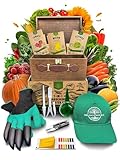
- 7-in-1 Gardening Starter Kit includes 75 non-GMO heirloom vegetable and greens seed packs for planting outdoor and indoor gardens. It also includes essential gardening tools: a seed dispenser, gloves with claws, a mini garden tool set, pH test strips, and a UV-protective cap. The kit is organized in a stylish wooden storage box, making it the perfect gardening gift for women, men, or any gardening enthusiast.
French beans
French beans are the warm-season exception in this list. RHS recommends regular small batches for a continuous supply, but outdoor sowing should wait until local frost danger has passed. Sow the next batch after the first plants are established—RHS gives around 10 cm (4 in) as a rough developmental cue—while leaving enough time for pods to mature before autumn cold. Pick pods frequently; regular harvesting encourages further production and makes each sowing last longer.
Rocket (arugula)
Rocket is fast and particularly prone to bolting, which makes succession sowing valuable. UConn lists arugula among short-season, cool-weather crops. Sow a little and often, harvest young leaves, and re-sow as soon as a row begins to lose quality. In hot periods, provide afternoon shade and dependable moisture, then reserve larger sowings for cooler weather.
Seasonal timing without a misleading calendar
There is no universal sowing date because latitude, elevation, daylight, soil temperature and local frost patterns differ. Use the following framework:
- Cool-season start: Sow lettuce, radish, spinach, peas, beetroot, turnips and rocket when local soil and weather suit them. Iowa State’s 50°F threshold and April examples apply to Iowa only.
- Warm-season start: Wait for frost danger to pass before outdoor French beans. Cold soil can delay germination and expose seedlings to rot.
- Mid-season adjustment: Shorten or lengthen the interval according to germination speed and crop development. A hot spell may justify pausing spinach or rocket and increasing shade and irrigation.
- Late-season check: Count backward from the expected end of suitable weather using the packet’s maturity range. Do not sow a batch that cannot reach usable size.
RHS’s broad guidance allows repeated outdoor sowings from mid-spring to late summer at intervals of one to four weeks. Treat that as a flexible framework, not a calendar that overrides local conditions.
Independent reader supportYour contribution helps us test, update, and keep practical guides available for everyone.Common failures and practical fixes
Every batch matures together
The interval may be too short for that season, or the crop may have been sown too heavily. Increase the gap, reduce each batch and harvest the earliest usable leaves or roots instead of waiting for maximum size.
A gap appears between harvests
Cold soil, poor germination or a missed sowing can create a break. Start the next batch when the previous crop shows the relevant development cue, keep a spare short row available and record the delay so next year’s interval reflects real conditions.
Best Value
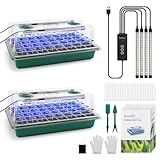
- 【360°Spectrum Seed Starter Tray with Grow Light】 The Larger 360°full-spectrum plant grow light in our seed start tray promotes healthier roots, faster germination, stronger seedlings. Seed starter kit with 4 full spectrum strip, mounted on the dome of garden plant starter kit. White & blue grow light helps seedlings grow faster and healthier. 3 lighting modes, 3 timer settings (3H/6H/12H), 5 brightness modes fully adjustable to your plants' needs. Your journey from seed to harvest starts here!
- 【Higher Dome & Deeper Cell Trays】80 powerful lamp beads (40 per tray) provide full & even plant light for every seed. More grow lights, more growth, this is our secret to healthier seedlings. Give every plant starter room to grow. 9cm tall humidity dome lets seedlings grow taller indoors. 1.96in deeper seed cell trays help build stronger roots for healthier plants. 0.31in drainage holes prevent overwatering and root rot. Every cell of seed starting kit is engineered for a perfect start.
- 【Adjustable Humidity & Grow Light】Upgraded seed starting trays with adjustable grow light timer & ventilation vents, for superior seed starting & precise humidity control. Remote indicator: red for 3-hour timer, blue for 6-hour, red & blue for 12-hour. With this greenhouse germination kit, you can add grow light strips to cultivate seeds. Easily adjust vent covers to change the humidity of plant starter trays, adjust moisture for different growth stages.
- 【Durable ABS & Clear Dome】 Our seeding starter trays are made of high-quality, thickened, unbreakable ABS plastic. It is a great seed starter kit, anti-UV, corrosion-resistant, water-saving, and dry-resistant. Clear seed trays let you monitor soil condition, while clear dome allows tracking seedling growth without lifting it. Super lightweight, easy to carry & clean, our reusable seed starter tray is ready for the next season. Plant germination trays — from seeding tray to harvest.
- 【Versatile for All Plants】Seed starter trays powered by USB or plug-in adapter, 2 ways to use seedling trays (adapter included). Our seed starter tray create ideal growing conditions for a wide range of plants—flowers, vegetables, fruits, tomatoes, herbs, and more. Whether you're beginner or seasoned gardener, this planting trays let you learn and get fun of planting at home with your family.
Leafy crops bolt before harvest
Heat, long days, drought and variety all contribute. Switch to a cooler sowing window, choose slower-to-bolt seed, water consistently and harvest young. Lettuce, spinach and rocket are especially sensitive.
Radishes are tough or hot
Warm temperatures and uneven moisture reduce quality. Sow smaller batches in cooler weather, shade the soil where practical, thin correctly and harvest promptly.
Beans fail to emerge
Outdoor sowing before frost danger has passed is a common cause. Wait for warmer soil, protect young plants from cold and water without saturating the bed.
Quick wins for a faster PC:
Clear out junk files and repair common Windows errorsFree Scan →Scan for outdated or missing drivers - takes under a minuteDriver Scan →Carrots fork or emerge unevenly
Remove stones, make the seedbed fine and avoid immediate manure or rich organic additions. Keep the shallow drill moist through the long germination period and mark the row clearly.
A simple planning example
For a household that wants salad every week, divide the available bed into four short lettuce rows and four rocket sections. Sow one lettuce row and one rocket section in week 1, repeat in week 3, week 5 and week 7, then reassess temperature and plant development. Add radish rows every 7–10 days during a suitable cool window. Start carrots and beetroot at roughly three- to four-week intervals, and add peas or French beans only while their respective cool- or warm-season windows remain open. The exact dates should come from your local frost pattern and packet, while the notebook records whether your chosen rhythm delivered the amount you could eat.
Quick Recap
Sources and further guidance
- Royal Horticultural Society, “Successional Sowing Tips”
- Iowa State University Extension and Outreach, “Early Spring Planting of Vegetables” (last reviewed October 2024)
- University of Connecticut Extension, “Succession Planting”
- University of Maryland Extension, “Vegetable Succession and Companion Planting”
Product prices and availability are accurate as of the date/time indicated and are subject to change. Any price and availability information displayed on Amazon at the time of purchase will apply.

