Recommended Free Tools
Sono was a 2013 concept and working prototype—not a currently available window gadget. Austrian industrial designer Rudolf Stefanich proposed attaching the device directly to a window so it could detect incoming urban noise, process it, and produce an opposing sound wave. The intended result was selective noise reduction: less traffic, construction, barking, or horns, while still allowing desirable sounds such as birdsong to remain audible.
As of August 11, 2026, no verified retail channel, active manufacturer sales page, or current product catalog entry for the original Sono device has been found. For homeowners dealing with exterior noise today, the practical options are passive window inserts, improved seals, curtains, acoustic glazing, or personal noise-control equipment—not a purchasable Sono unit.
As an Amazon Associate I earn from qualifying purchases.
What was Sono?
Sono was presented in 2013 as a window-mounted noise-cancellation and isolation concept by Austrian industrial designer Rudolf Stefanich. The prototype was designed to attach to the inside of a window and use the pane as part of an active acoustic-control system.
Do these 3 things before closing this tab:
1Clear out junk files and repair common Windows errors2Scan for outdated or missing drivers - takes under a minute3Repair Windows errors before they cause bigger problemsIts proposed purpose was more ambitious than simply making a room quieter. Instead of blocking every sound, Sono was described as allowing users to reduce specific unwanted noises—such as road traffic, construction, barking dogs, and car horns—while preserving sounds they wanted to hear, including birdsong and other ambient audio.
#1 Best Overall

- 2026 Updated Backing Grids: Our window tint for home has been upgraded to the latest version! There are 1 inch grids on the backing for you to cut it easily. Now you can complete the installation more easily!
- Note: 1. Dwersty one way window film provides superb DAYTIME privacy, with a mirror effect looking in from outside when the light is stronger outside than inside. However, when inside light is stronger than outside (for example, at nighttime or when it's very cloudy), the mirror effect disappears and you can see in from outside. Remember to draw the curtains at night for privacy. 2. The free tools are inside of the paper tube.
- HEAT CONTROL & ENERGY SAVING: Dwersty home window tint let in the light you love while reflecting much of the sun's heat away from your home, so you can stay cooler in hot days. It also helps to save energy and cut cost on your energy bills by providing better insolation and allowing air conditioners reach a constant temperature faster. You and your family can enjoy a safer and more comfortable home time economically!
- UV BLOCKING & GLARE CONTROL: This sun blocker film for windows blocks 93% of UV rays and 85% of IR rays, reducing fading and aging of your beloved furnishings and protecting skin from harmful rays, which is number one cause for skin aging and damage. The home window tint allows natural light enter the room, while protecting your eyes from harsh sunlight and glare.
- STATIC CLING & NO MESS NO FUSS INSTALLATION: This removable window tint has no glue or chemical substances, which makes it easier and safer to install or remove without any trace left on glass. In addition, we provide complementary tools save you money and trouble - please look for them inside of the film roll. if any is missing, please contact us. For smooth application, make sure window surface is completely clean and spray A LOT of soapy water on both the adhesive side and the window.
That selective-filtering idea is why Sono attracted attention. Conventional soundproofing generally treats sound transmission as a physical problem: add mass, improve airtightness, introduce separation, or damp vibration. Sono proposed treating at least part of the problem electronically, using microphones, signal processing, and an acoustic counter-signal.
How Sono was supposed to work
The operating principle was compared with active noise cancellation in headphones:
- Detection: microphones would sense incoming sound, and descriptions of the prototype also referred to sensing vibrations in the window pane.
- Analysis: electronics would process the detected signal and determine how to respond to it.
- Counter-signal: a transducer would produce an opposing sound wave intended to interfere destructively with the unwanted sound.
- Sound selection: proposed modes would allow users to influence which types of sound were reduced or retained.
Destructive interference does not mean that sound is simply “deleted” everywhere. Two sound waves can reduce one another at particular locations and frequencies, but the result depends on timing, phase, direction, reflections, and the position of the listener. A system that works well at one point may work less well a short distance away.
The Tool Desk
Outbyte PC Repair FREERepair Windows errors before they cause bigger problemsFix Now →Outbyte Driver Updater FREEFix the driver behind crashes, sound loss and screen glitchesFind Drivers →This is relatively manageable inside a headphone ear cup, where the speakers, microphones, and listener’s ears occupy a tightly controlled geometry. It is substantially harder across a room. A window-mounted system would have to cope with changing vehicles, voices, aircraft, construction equipment, reflections from walls and furniture, and the different ways a pane transmits low and high frequencies.
Was Sono a real product?
It was a real prototype, but the available historical evidence does not show that it became a commercial product.
Contemporary reporting in October 2013 described Sono as still being a prototype that had not reached production. A contemporaneous design article called it a working prototype and associated it with the 2013 James Dyson Award finalist or shortlist context. The James Dyson Award is a platform for student and early-stage design and engineering inventions; award attention should not be confused with a product launch, retail availability, or successful commercialization.
The accurate description is therefore: Sono was a 2013 window-mounted noise-cancellation prototype that attracted design-award attention. It is not accurate to say that Sono shipped, launched commercially, or can currently be bought as a finished consumer device.
Rank #2
- Note: 1. Dwersty one way window film provides superb DAYTIME privacy, with a mirror effect looking in from outside when the light is stronger outside than inside. However, when inside light is stronger than outside (for example, at nighttime or when it's very cloudy), the mirror effect disappears and you can see in from outside. Remember to draw the curtains at night for privacy. 2. The free tools are inside of the paper tube.
- HEAT CONTROL & ENERGY SAVING: Dwersty home window tint let in the light you love while reflecting much of the sun's heat away from your home, so you can stay cooler in hot days. It also helps to save energy and cut cost on your energy bills by providing better insolation and allowing air conditioners reach a constant temperature faster. You and your family can enjoy a safer and more comfortable home time economically!
- UV BLOCKING & GLARE CONTROL: This sun blocker film for windows blocks 93% of UV rays and 85% of IR rays, reducing fading and aging of your beloved furnishings and protecting skin from harmful rays, which is number one cause for skin aging and damage. The home window tint allows natural light enter the room, while protecting your eyes from harsh sunlight and glare.
- STATIC CLING & NO MESS NO FUSS INSTALLATION: This removable window tint has no glue or chemical substances, which makes it easier and safer to install or remove without any trace left on glass. In addition, we provide complementary tools save you money and trouble - please look for them inside of the film roll. if any is missing, please contact us. For smooth application, make sure window surface is completely clean and spray A LOT of soapy water on both the adhesive side and the window.
- 100% SATISFACTION SERVICE: We want to provide you the best DAYTIME one way privacy window film (see out not in), with 100% satisfaction. We offer a 3-month warranty against non-human damage and 24/7 email support. For any product problems, shipping damage, and installation issues, please contact the seller via email first and your problem will be resolved within 24 hours! Now Click "Add to Cart" and experience better home time.
The current status conclusion is based on the available research as of August 11, 2026. It does not prove that no privately held prototype, licensing effort, successor project, or unrelated device using the same name exists. It does mean that readers should be skeptical of pages presenting the original Sono as an available product.
Why window-mounted active noise cancellation is difficult
Sono’s basic engineering idea is not absurd. Active acoustic control is a legitimate research area, and later patent literature describes systems that use windows or other fenestration surfaces as part of an active noise-control arrangement.
For example, one patent describes using a window or wall surface as a coupling surface for generated sound waves and discusses predicting changing noise. Another describes a fenestration unit containing microphones, a control module, and a vibration generator intended to vibrate a transparent pane in response to incoming sound.
Those later patents show that active control at a window remains a technically credible area of engineering. They do not establish that those systems descended from Sono, that Sono achieved the same design, or that any particular patented system is available for residential purchase.
A practical window system would face several problems:
- Multiple noise paths: sound may enter through the glass, frame, gaps, walls, ceilings, floors, vents, or adjoining structures.
- Changing source positions: a passing vehicle and a stationary mechanical unit do not present the same acoustic geometry.
- Reflections: room surfaces create multiple reflected paths that complicate cancellation.
- Frequency limits: a system may reduce some frequencies more effectively than others. Low-frequency traffic rumble is a different challenge from high-frequency voices or sirens.
- Listening position: cancellation may be strongest in a particular zone rather than uniformly throughout the room.
- Window behavior: the pane can flex and vibrate differently depending on its size, thickness, framing, mounting, and condition.
For these reasons, “noise cancellation” should not be interpreted as a promise of silence throughout an entire room. Room-scale active noise control is geometry-dependent and generally requires careful sensing, calibration, and control.
Were Sono’s noise-reduction claims independently tested?
Historical coverage included ambitious descriptions of the amount of noise Sono might reduce. However, no independent laboratory test report for the Sono prototype was located in the available research.
Rank #3

- Stop Closing Curtains All Day: Turns your windows into a one-way mirror during daylight: nosy neighbors, passersby and delivery drivers see only their reflection, while you enjoy crystal-clear views of birds, trees and the outdoors. Note: Draw curtains at night for full privacy when indoor lights are on. Perfect for ground-floor homes, street-facing bedrooms and busy offices
- Protect What You Love From Sun: Blocks 92% of harmful UV rays (2x better than standard film) to stop sofas, floors and artwork from fading. Shields your white cats and dogs from painful sunburns and skin damage. Rejects 95% of sun heat to cool west-facing rooms , cutting AC bills by up to 30%. Filters harsh glare so you can watch TV and work on your computer without squinting
- 100% Renter-Approved No Damage: No glue, no sticky residue, no damage to windows ever. Installs in minutes with just soapy water, peels off cleanly in seconds when you move. Fully reusable—roll it up and take it to your next apartment. No need to ask your landlord for permission, no lost security deposits
- 365-Day Zero Risk Guarantee: Buy with zero risk! We stand behind our window film with a no-questions-asked guarantee. If you're not completely happy for any reason—even if you installed it wrong—just contact us. No need to send the product back, no hidden fees, no hassle
- 15-Minute Bubble-Free DIY Install: No professional needed! Even a total beginner can install flawlessly in 15 minutes per window. Follow these 3 foolproof tips: 1. Wipe glass completely free of dust; 2. Spray LOTS of soapy water on both glass and film; 3. Trim to size before peeling the backing. Most customers finish all their windows in under an hour
That distinction matters. Reported prototype performance, a design goal, a demonstration, and an independently verified laboratory result are not interchangeable. Unless a primary test document becomes available, precise reduction figures should be described as reported claims or prototype goals—not as validated consumer performance.
Free tools Windows power users keep installed
One-click scans. No signup required.
What can you buy instead?
The best replacement depends on whether the noise is entering through the window, around the frame, through the building structure, or directly into the listener’s ears. None of the following products reproduces Sono’s proposed selective filtering, but several are practical today.
1. Passive acoustic window inserts
A removable insert fitted inside the existing window is the closest practical substitute for the “attach something to the window” idea. Unlike Sono, an insert does not listen to the noise or generate anti-noise. It works passively by adding another glazing layer and creating a compression seal around the frame.
Indow Acoustic Grade window inserts are one current example. Indow reports that its acoustic inserts can reduce noise by up to 12 dBA over some double-pane configurations, with larger manufacturer-reported reductions in some single-pane applications. Those figures depend on the existing window, the fit, the installation, and the noise conditions; they are manufacturer claims, not evidence about Sono.
Passive inserts can be particularly useful where traffic noise enters through a specific window and the occupant wants to preserve ventilation or avoid replacing the entire window. They are also worth considering for renters when the product can be removed without permanent alterations. Custom measurement and fit are important: a poorly sealed insert will undermine the expected result.
What’s actually slowing this PC down?
Pick the symptom - the matching free tool is one click away.
2. Noise-reducing blackout curtains
Noise-reducing blackout curtains are a lower-cost, renter-friendly intervention. Insulated curtains can reduce the perceived intrusion of exterior noise and may limit some leakage around the window area. They also provide light and thermal-control benefits.
They should not be described as active cancellation, soundproofing, or equivalent to a properly fitted acoustic insert. Curtains are most useful when the goal is modest improvement, privacy, light control, or a reversible treatment. Their effectiveness depends on full coverage, adequate overlap around the frame, and how much of the noise is actually traveling through the window rather than through the surrounding wall.
Rank #4

- ADHESIVE-FREE FILM - Made of environmental friendly materials, our static cling window film can be easily removed, re-positioned and reused
- UV RAYS PREVENTION - Rain glass window film can protect your family from harmful UV rays by reducing up to 96% of UV rays, limiting damage from fading of your sofa or hardwood floors
- REEDED GLASS SIMULATION - An excellent way to upgrade normal glass into reeded glass look at a fraction of the cost. Not only does the reeded glass film add an attractive design for an updated look but it also offers privacy protection
- ENERGY SAVINGS - Our window films can keep your heat inside during winter and get rid of hot spots near the windows in summer, significant saving on your heating bill and A/C costs
- EASY INSTALLATION - It can be applied to smooth, clean, and non-porous glass surfaces, ideal to use on glass door panels, mirrored wardrobes and shower screens. You can DIY this film as a glass décor by cutting it into any shape
3. Weatherstripping and gap sealing
Before buying a major acoustic treatment, inspect the window for obvious air gaps. A worn gasket, loose sash, or poorly sealed frame can allow both drafts and sound leakage. Replacing it with window weatherstripping or an appropriate seal kit is often a sensible first repair.
Gap sealing will not reproduce Sono’s selective sound filtering. It also will not solve a problem caused mainly by sound passing through the glazing, masonry, ceiling, floor, or a shared wall. A simple diagnostic is to listen near the frame during a noise event and check for moving air or a noticeable change when the sash is pressed closed. Do not seal required ventilation openings or interfere with emergency egress.
Windows Errors? Fix Them Before They Spread
Repair common Windows errors and clear accumulated junk for a smoother, more stable PC - no reinstall needed.Free scan · no reinstallOutdated Drivers Are Slowing You Down
One free scan finds every outdated or missing driver and matches the right update for your exact hardware.Free scan · exact hardware matchFor larger building-envelope problems, professional window soundproofing, secondary glazing, acoustic glazing, or a contractor’s assessment may be more appropriate. The right solution depends on the existing construction and the transmission path; no universal decibel result or price should be assumed.
4. Personal ANC headphones
If the goal is to make one person’s listening position quieter, active noise-cancelling headphones are a more controlled application of the same broad principle than trying to cancel sound throughout a room.
ANC headphones are generally most useful against steady, low-frequency sounds such as engine or HVAC rumble. They may be less effective against sudden horns, voices, barking, impact noise, or sounds that change rapidly. Fit, comfort, battery life, microphone quality, and whether the headphones permit awareness of the surroundings all matter.
Consumer ANC headphones are not automatically hearing protection. If the environment is loud enough to create a risk of hearing damage, choose equipment with an appropriate noise-reduction rating and follow occupational-safety guidance rather than relying on the ANC label.
Quick wins for a faster PC:
Repair Windows errors before they cause bigger problemsFix Now →Fix the driver behind crashes, sound loss and screen glitchesFind Drivers →Clear out junk files and repair common Windows errorsFree Scan →5. Earplugs and earmuffs
For sleep, short-term exposure, or situations where the user needs direct hearing protection, foam earplugs and hearing-protection earmuffs may be more appropriate than consumer ANC headphones. CDC and NIOSH guidance distinguishes passive hearing protectors from electronic ANC headphones and emphasizes appropriate selection and fit.
Earplugs can be effective when inserted correctly, but comfort and fit vary considerably. Earmuffs may be easier to position and can work well when combined with earplugs in very loud conditions. Neither option makes the room quieter for other occupants, and neither provides Sono-style selective filtering.
Independent reader supportYour contribution helps us test, update, and keep practical guides available for everyone.Choosing the right intervention
| Problem | Most logical first step | What to expect |
|---|---|---|
| Noise and drafts enter around an operable sash | Inspect and replace weatherstripping or seals | Useful for leakage through gaps; limited if the glass or structure is the main path |
| Traffic noise enters through one or two windows | Consider a properly fitted acoustic window insert | Passive reduction focused on the window; performance depends on fit and construction |
| You rent and need a reversible improvement | Try curtains or a removable insert | Lower disruption; curtains generally offer less acoustic control than a sealed insert |
| One person needs relief at a desk or in bed | ANC headphones, earplugs, or earmuffs | Personal relief rather than whole-room noise reduction |
| Noise is severe, persistent, or comes through walls and floors | Obtain a building-envelope or acoustic assessment | May require secondary glazing, construction changes, or professional soundproofing |
What Sono got right—and what it did not solve
Sono identified a real weakness in ordinary soundproofing: people do not always want complete silence. A resident may want to reduce road noise while retaining birdsong, conversation, or awareness of the outside world. Selective acoustic control is an appealing goal, particularly in dense urban housing.
Best Value
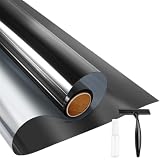
- ONLY DAYTIME PRIVACY PROTECTION: This one way window film provides superb privacy during daytime, the mirror reflection of privacy control window film allows others to not see any interiors from the outside, effectively protecting your private space. But when inside light is stronger than outside, loss of light difference, such as the lights turning on, the mirror effect will disappear and will be seen from the outside. So at night with this mirror tint, it is necessary to draw the curtains
- UV BLOCKING & GLARE CONTROL: KESPEN sun blocking window film can effectively block 82% of infrared rays and 90% of UV rays which may hurt your skin, prevent your precious furniture and interior decorations from fading. 12% VLT means that some visible light can enter the room, not only to block the harsh light and reduce glare, but also to maintain your good view
- HEAT CONTROL & ENERGY SAVING: The window tinting film for home reflects some of the heat back outside, thus reducing the amount of heat transmitted through window glass, which can keep cool in summer and retain heat in winter, helping you save money by cutting the high energy bills
- STATIC CLING & EASY TO INSTALL: The reflective window film is designed with non glue, this static cling window film avoids the release of chemical substances, very easy to use just spray A LOT of water on both the adhesive side and the window. It can also be removed easily without any traces left on the glass
- WIDELY APPLICATION OCCASIONS: Our house window tint film is suitable for the smooth and clean glass surface of your kitchen, sliding door, bedroom, balcony, restroom, office doors, and windows. Not used on double-paned glass, frosted glass, cut glass, and curved glass. Useful Tips: Please make sure the glass, edges, and corners are totally cleaned without any dust and tear off the protective film before pasting it onto the glass
The difficult part is delivering that selectivity reliably in a real room. Blocking or reducing sound through a physical window treatment is comparatively predictable. Active cancellation must identify the unwanted signal, generate a properly timed response, and maintain useful cancellation despite changes in the source and listening position. It may also need to avoid creating an unpleasant or audible artifact of its own.
That is why Sono is best understood as an interesting early-stage design proposal rather than a missed product that consumers can still order. Its concept remains relevant to active-window research, but the evidence does not justify treating its reported capabilities as proven or its patents and later technologies as commercial successors.
Bottom line
Sono was a genuine 2013 window-mounted noise-cancellation prototype by Rudolf Stefanich. It was intended to sense sound or window vibration, generate opposing sound, and selectively reduce urban noise. It did not become a verified retail product, and no current official sales channel for the original device has been established.
For a home facing traffic or neighborhood noise, start by identifying the transmission path. Seal gaps if the frame leaks, use a passive acoustic insert when the glazing is the main problem, consider curtains for a modest reversible improvement, and use ANC headphones or rated hearing protection when only one person needs relief. These solutions are available approaches—but none should be marketed as the original Sono or as uniform, room-wide active cancellation.
Frequently Asked Questions
Is Sono available to buy?
No verified current retail channel, official catalog entry, or active manufacturer sales page for the original Sono prototype was found as of August 11, 2026. Historical evidence identifies it as a 2013 prototype that did not reach production.
Did Sono really cancel traffic and barking-dog noise?
Those uses were part of the prototype’s reported intended function. However, no independent laboratory report verifying a specific Sono noise-reduction result was located, so precise performance figures should not be presented as proven.
Is Sono the same as active noise-cancelling headphones?
The proposed principle is related: microphones detect sound and a system generates an opposing signal. Headphones operate in a tightly controlled space around the ears, while a window-mounted room system must handle reflections, changing sound sources, and multiple listening positions.
What is the closest practical alternative to Sono?
A properly fitted passive acoustic window insert is the closest whole-window alternative. It reduces sound through sealing and added glazing rather than active cancellation. Weatherstripping, curtains, professional glazing, and personal hearing equipment may be better choices depending on the source of the noise.
Quick Recap
Product prices and availability are accurate as of the date/time indicated and are subject to change. Any price and availability information displayed on Amazon at the time of purchase will apply.

