What’s actually slowing this PC down?
Pick the symptom - the matching free tool is one click away.
A useful sewing machine maintenance tracker follows the schedule in your exact model’s manual—not a universal oiling calendar. Record the machine’s identity, each completed task, the usage or trigger behind it, what you observed, and when the task is next due. Keep routine owner care separate from internal service that belongs with a qualified technician or authorized service center.
Set up the tracker around your machine
Start with a profile so every entry stays tied to the right machine and instructions. A spreadsheet, notebook, or maintenance app can work; the important part is retaining enough detail to repeat the manual’s schedule and understand the machine’s service history.

As an Amazon Associate I earn from qualifying purchases.
- Machine profile: brand, exact model, serial number if useful, manual link, and date acquired.
- Task schedule: task name, interval or trigger exactly as the manual states, and whether it is owner maintenance or professional service.
- Usage basis: hours, projects, bobbins, stitch count, or another measure the manual uses. Do not substitute a calendar interval for a usage trigger unless the manual provides one.
For each completed task, log the date, task, usage basis at the time, relevant materials or conditions, observations, work performed, and next due date. For a professional visit, add the provider or technician and parts or materials used. These fields align with the service-report details in the BERNINA service manual, which includes machine and customer data, counters, maintenance interval, complaint, work, time and materials, next maintenance date, and technician.
Some machines provide useful counters. Brother documents total and trip stitch counters for certain embroidery models; the trip counter represents stitches since the last maintenance. Check whether your own model supports a counter and how to view it in its manual or the manufacturer’s instructions: Brother’s stitch-count instructions.
#1 Best Overall
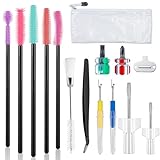
- Product Includes: The sewing machine tool kit includes 1 black curved nose tweezers, 1 double headed lint brush, 1 needle board screwdrivers, 4 flat head cross head screwdrivers, 2 seam rippers, 5 silicone brushes and 1 storage bag, 15 pieces in total. Different styles of screwdrivers and brushes, a sufficient number of tools are enough to meet your daily needs for cleaning and repairing your sewing machine, and the storage bag allows you to better store this set
- Nook and Cranny Cleaning Brush: The double-ended brush has bristles of different hardness on both ends, making it easier to clean hard-to-reach places. The silicone brush has 5 different shapes, more choices and more convenient to use. This variety makes it easier and more convenient to clean different areas of your sewing machine
- Different Sizes of Screwdrivers: Contains a red Phillips screwdriver, a green flat-head screwdriver, and two white screwdrivers of different sizes for easy distinction. The short handle end has 6 easy grip grooves that allow your fingers to maneuver in tight spaces, two different sized white screwdrivers for bobbin case tension adjustment
- Seam Rippers with Cover & Practical Tweezers: Seam rippers have a handle and housing made of plastic, and the seam ripper is made of metal with a very sharp tip that can easily remove seams and is not easy to break; Each has its own plastic cover that you can put on when not in use to prevent injury. The small, curved top design of the tweezers helps you easily reach tight spaces inside your sewing machine to clean dust and lint
- Easy to carry and store: Our sewing machine cleaning kit comes with a storage bag, which can be conveniently and neatly stored in the kit, and can be easily found and taken out when using it
Use three categories to make the schedule scannable
- After a project or use: cleaning or inspection tasks that the manual calls for at that point.
- Usage-based: tasks due after a stated number of hours, bobbins, stitches, or another measure.
- Professional service: internal maintenance, scheduled tune-ups, or repairs assigned to an authorized center or qualified technician.
For each task, copy the interval from the exact model’s manual and note any conditions that change it, such as intensive use, fabric, thread, or prolonged high speed. Do not assign every machine daily, weekly, monthly, or annual maintenance by default.
Why oiling schedules cannot be generalized
“How often should I oil my machine?” is a reasonable question, but the answer depends on the model. Some machines require owner oiling at specified points; others are pre-lubricated and need no periodic user oiling. Before cleaning or maintenance, consult the exact manual and follow its power-down or unplugging directions. Use sewing machine oil only where the manual specifies it, apply it only at the stated points, and wipe away excess if instructed. Brother warns that excess oil can soil work on applicable models.
Rank #2

- KEEPS MACHINES RUNNING SMOOTH - Crystal-clear, non-staining light oil (ISO VG-10) made from highly refined mineral oil; odorless, resists gumming; quiets hook/bobbin, shafts & bearings.
- PRECICION & NON-MESS DOSING - Two Precision Oil Applicators (1" & 1.5") with protective caps reach tight spots for drop-by-drop control. Perfect around the bobbin case and presser-bar.
- SOFT BOTTLE - Soft LDPE squeeze bottle with induction foil seal + ribbed cap to prevent spills in transit or storage. Compatible for serger sewing machine for singer sewing machine for brother sewing machine accessories
- COMPLETE CARE KIT - Double-ended detail brush + 4 silicone lint brushes sweep away fuzz before oiling. This oil perfect for serger & overlock machine accessories.
- WIDELY COMPATIBLE - Suitable for most home & industrial sewing/embroidery machines. Compatible for singer heavy duty sewing machine for maquina de coser singer for bernina for costura for Juki and many more Brands.
| Example and scope | Manufacturer guidance | How to use it in a tracker |
|---|---|---|
| Brother XL-5500; Brother Support page dated 2026-07-29 | For light to moderate use of 2–3 hours per day, follow the manual’s oil points once a month, remove thread or dirt, and wipe excess oil. For heavy or regular use—more than 3 hours daily or prolonged high speed—arrange scheduled maintenance at a Brother Authorized Service Center. | Enter the oiling and cleaning tasks only if they match the XL-5500 manual. Record the use level and refer heavy-use service to the authorized center. Brother XL-5500 guidance. |
| Brother model covered by the “Oiling the machine” FAQ | The machine is described as pre-lubricated, with no need for periodic user oiling. Service is advised every 500 hours for light or moderate use and every 300 hours for heavy, consistent, or prolonged high-speed use. | Keep this schedule attached to the FAQ’s model scope; do not apply it to another machine. Record the relevant hour count. If the handwheel is difficult to turn or unusual noise occurs, stop use and contact authorized service. Brother FAQ. |
| bernette b59 | The manual says maintenance needs depend on frequency of use, fabric, stitch count, and thread, and suggests maintenance after every 3–4 bobbins. Listed tasks include surface cleaning and inspection, bobbin-case cleaning and oiling, and cleaning the needle threader and thread clamp. It gives needle-bar oiling examples for frequent use every six months, after longer downtime, or when unusual noise is heard. For internal component service, it recommends a dealer annually for intensive use or every two years for normal use. | Track bobbins and the specific tasks separately; record use conditions and any noise. These intervals are for the b59, not other models. bernette b59 manual. |
| Brother PR embroidery series | Brother says to oil the hook daily and replace needles around every 6–8 hours of embroidery, more often for heavy fabrics or metallic thread. | Use embroidery hours and material or thread type in the log. These instructions are for the PR embroidery series, not household sewing machines. Brother PR maintenance. |
| Singer FAQ guidance | If a manual has no oiling instructions, Singer says the machine is factory pre-lubricated and does not need additional lubrication. If the manual calls for oiling, its FAQ suggests weekly oiling for daily use, monthly for weekly use, and every three months for monthly use; it recommends a qualified-technician tune-up every 3–4 years. | Treat these as Singer FAQ guidance, not a schedule for every brand or model. Check your machine’s manual first. Singer UK FAQ. |
Separate owner care from service work
Owner tasks
Use the manual’s cleaning and inspection instructions. A soft lint brush may be appropriate where the manual calls for lint removal; compatible needles are relevant when the manual or manufacturer specifies replacement. Oil is only for machines and points whose manuals call for user oiling. Do not open covers or lubricate internal parts based on generic advice.
Technician or authorized-center tasks
Log internal servicing, repairs, and scheduled professional visits separately from routine cleaning. Include the complaint or symptom, date, work completed, parts or materials, provider or technician, and next due date. Routine cleaning does not replace repair or professional servicing.
Rank #3

- Well Organized with Sturdy Storage Box All 30 tools are stored neatly in the reinforced box. Compact and portable, it prevents accessories from getting lost or messy for daily use.
- Dual Brushes for Full Cleaning Combined soft and stiff brushes easily clear lint, dust and dirt from gaps and needle plates. Gentle on machine surfaces with no scratches.
- Special Screwdriver for Easy Access Specially designed screwdriver fits narrow spaces, helping you take apart needle plates quickly for thorough cleaning.
- Wide Compatibility Fits most mainstream household sewing machines. Ideal for daily cleaning and routine upkeep. Durable materials ensure long service life.
- All-in-one Practical Tool Set One set covers all daily maintenance needs. Great for home, craft room and sewing workshop use.
Know when to stop and seek service
If your machine’s handwheel becomes difficult to turn or you hear unusual noise, stop sewing and follow the model’s service guidance. Brother’s cited FAQ directs owners of its covered model to stop and contact authorized service for either symptom. The bernette b59 manual also treats unusual noise as a needle-bar oiling trigger for that model; follow its specified procedure rather than assuming the same remedy applies elsewhere. Persistent symptoms, internal problems, or work the manual reserves for a dealer or technician belong with a qualified service provider.
Independent reader supportYour contribution helps us test, update, and keep practical guides available for everyone.Keep the record useful over time
When you finish a task, update its next-due date or usage threshold immediately. At the next entry, note whether the machine’s use, fabric, or thread differed from the conditions behind the schedule. If the machine has a maintenance reminder or counter, record the reading alongside the date so you can reconcile calendar and usage-based intervals. Keep the manual link and service records with the machine profile, especially if more than one person operates or maintains the machine.
Quick Recap
Rank #4

- Packing list: The sewing machine tool kit includes 1 curved nose tweezers, 1 double headed lint brush, 2 needle board screwdrivers, 4 flat head cross head screwdrivers, 2 seam rippers, 4 silicone brushes, 14 pieces in total; Different styles of screwdrivers and brushes, a sufficient number of tools are enough to meet your daily needs for cleaning and repairing your sewing machine
- Nook and Cranny Cleaning Brush: The sewing machine cleaning tool is equipped with a double ended brush and 4 silicone brushes, which is convenient, durable, easy to clean, and can deeply penetrate every nook and cranny of the sewing machine to meet different cleaning needs; To clean your brushes, simply wash them with mild soapy water and air dry to remove dust and lint from the cleaning tool
- Practical Tweezers: The tweezers are designed with a small and curved top, which can better reach the narrow parts of the sewing machine, applied to remove stubborn threads that are stuck or clogged in the machine, have a long and sturdy handle, you can hold it easily; Conducive to machine maintenance
- Different Sizes of Screwdrivers: Different sizes of sewing machine screwdrivers can be applied for bobbin case tension adjustment; Green flat head screwdriver and cross head screwdriver for easy differentiation; The short handle end has 6 easy grip grooves that allow your fingers to maneuver in tight spaces, making it easy to repair and clean your sewing machine
- Seam Rippers with Cover: Seam rippers have a handle and housing made of plastic, and the seam ripper is made of metal with a very sharp tip that can easily remove seams and is not easy to break; Each has its own plastic cover that you can put on when not in use to prevent injury, and can be added to the back to extend the handle when in use
Product prices and availability are accurate as of the date/time indicated and are subject to change. Any price and availability information displayed on Amazon at the time of purchase will apply.

