Quick wins for a faster PC:
Fix the driver behind crashes, sound loss and screen glitchesFind Drivers →Repair Windows errors before they cause bigger problemsFix Now →Scan for outdated or missing drivers - takes under a minuteDriver Scan →Short answer: Ring has restored a way for verified U.S. public-safety agencies to ask nearby customers for recorded doorbell and security-camera footage through the Neighbors app. That does not give police automatic access to your camera, live feed, or video history. You decide whether to respond and which clips to share.
The current feature is called Community Requests. It is similar in purpose to Ring’s former Request for Assistance program, but Ring says the old system ended in January 2024 and was not simply switched back on.
As an Amazon Associate I earn from qualifying purchases.
What changed
Ring discontinued its Request for Assistance (RFA) tool in January 2024 after sustained criticism over how police could solicit customer footage through Neighbors.
In September 2025, Ring began rolling out Community Requests in the United States. The feature gives verified public-safety agencies a platform-mediated way to publish a request for video from a defined location and time period.
#1 Best Overall
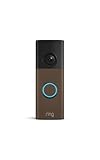
- Capture it all with Retinal 2K video — From wide views to tighter focus, it’s easy to see your home or business in crisp clarity with Retinal 2K.
- Zoom in up to 6x — Catch details at a distance, inspect faces, and more with up to 6x Enhanced Zoom.
- Connect to who’s there — See, hear, and speak in real time with Live View and Two-Way Talk.
- Get real-time alerts — Receive real-time notifications on your phone when motion is detected.
- Easily recharge — Simply insert the included removal tool to detach your doorbell from the wall, then recharge the built-in battery via USB-C. (Cable not included.)
That is a significant policy reversal, but the wording matters: police can request footage. They do not automatically receive access to Ring cameras merely because a request appears in the Neighbors feed.
The key distinction: a request is not access
- Police can ask nearby Ring users for relevant recorded clips.
- Ring says participation is voluntary.
- Customers choose whether to respond and which clips to submit.
- A Community Request does not provide unrestricted access to a camera or an entire video history.
- Ring’s current documentation does not describe Community Requests as granting police direct live-camera access.
A voluntary request is also different from a warrant, subpoena, court order, or other legally binding demand. Police do not necessarily need a warrant before asking a private camera owner whether they have useful footage. That does not mean the owner must comply with the voluntary request, and it does not prevent a later formal legal process.
How Community Requests work
Ring says an eligible public-safety agency creates a request using an approved agency account and evidence-management system. The request must include:
- the incident location;
- the requested date and time range;
- investigator contact information;
- a unique investigation code; and
- a map defining the request area.
Ring reviews the request under its Community Guidelines. If it is published, it appears in the Neighbors feed. Ring users in the selected area may receive a push notification and email.
A customer can then review available footage and select individual clips to share. The alternatives are to ignore the request or contact the investigator directly. Ring says agencies cannot see which customers ignored a request, failed to respond, or declined to participate.
According to Ring’s customer documentation, selected footage is uploaded to Axon Evidence for the investigator.
Rank #2

- Capture it all with Retinal 2K video — From wide views to tighter focus, it’s easy to see your home or business in crisp clarity with Retinal 2K.
- Zoom in up to 6x — Catch details at a distance, inspect faces, and more with up to 6x Enhanced Zoom.
- Connect to who’s there — See, hear, and speak in real time with Live View and Two-Way Talk.
- Get real-time alerts — Receive real-time notifications on your phone when motion is detected.
- Easily recharge — Simply insert the included removal tool to detach your doorbell from the wall, then recharge the built-in battery via USB-C. (Cable not included.)
What information goes with a shared video?
Sharing a clip is more than sending an anonymous video file. Ring’s current support material says the following information is automatically provided to the investigator with footage submitted through a Community Request:
- the selected video;
- the customer’s home address; and
- the email address associated with the Ring account.
Ring’s agency guidance also says a video cannot be retracted or deleted through the Community Requests workflow after it has been shared. Ring does not state that the agency will delete the footage when its investigation ends; retention is a separate matter governed by the agency’s evidence procedures.
Before submitting anything, check the timestamp, time zone, camera angle, and the entire clip. Share only the specific relevant recordings rather than an unnecessarily broad portion of your timeline.
Community Requests versus the former RFA system
| Issue | Former RFA tool | Current Community Requests |
|---|---|---|
| Status | Retired in January 2024 | Active, according to Ring |
| Where requests appeared | Requests were sent through Neighbors | Requests are publicly posted in the Neighbors feed |
| User choice | Sharing was voluntary | Sharing remains voluntary |
| Request details | Historical requirements varied and should be understood from period documentation | Location, time range, investigator information, code, and map are required |
| Evidence handling | Handled under the former RFA process | Selected clips are sent to Axon Evidence |
| Automatic camera access | There is no evidence that RFA provided unrestricted camera access | Ring explicitly says agencies receive only what users choose to share |
The current feature should therefore be described as a successor-like system, not as the literal return of RFA.
Who can submit a request?
Ring describes Community Requests as available to verified public-safety agencies, including city and county law-enforcement agencies, fire departments, and other eligible agencies using supported systems. Ring’s launch material refers to agencies with Neighbors Verified and Axon Evidence accounts.
What’s actually slowing this PC down?
Pick the symptom - the matching free tool is one click away.
The initial rollout described by Ring was in the United States. It should not be assumed that every police department in every country can use the feature.
Rank #3

- Capture it all with Retinal 2K video — From wide views to tighter focus, it’s easy to see your home or business in crisp clarity with Retinal 2K.
- Zoom in up to 6x — Catch details at a distance, inspect faces, and more with up to 6x Enhanced Zoom.
- Connect to who’s there — See, hear, and speak in real time with Live View and Two-Way Talk.
- Get real-time alerts — Receive real-time notifications on your phone when motion is detected.
- Easily recharge — Simply insert the included removal tool to detach your doorbell from the wall, then recharge the built-in battery via USB-C. (Cable not included.)
What Ring can provide under legal process
Community Requests are only one route for investigators. Ring separately says it responds to legally valid government demands, including:
- search warrants;
- subpoenas;
- court orders; and
- other legally valid and binding requests.
Ring’s law-enforcement information page also describes emergency requests. Emergency disclosures are governed by separate requirements and exceptions. Ring says customer notification may occur after certain disclosures, but notice can be prohibited or delayed when doing so could create danger, interfere with an investigation, or violate applicable law.
These categories should not be blended together:
- Community Request: a public, voluntary appeal to nearby users.
- Legal demand: a formal request served on Ring or another relevant party under applicable law.
- Emergency request: a separate process for urgent threats, subject to Ring’s guidelines and legal requirements.
What happened to the Flock Safety integration?
Ring announced in October 2025 that it planned to expand Community Requests through Flock Safety’s Nova and FlockOS platforms. That plan was canceled on February 12, 2026.
Do these 3 things before closing this tab:
1Fix the driver behind crashes, sound loss and screen glitches2Clear out junk files and repair common Windows errors3Scan for outdated or missing drivers - takes under a minuteRing says the integration never launched and that no Ring customer videos were sent to Flock through it. The cancellation did not end Community Requests generally. Ring says its existing Community Requests system remains active.
That means reports claiming Flock currently receives Ring videos through the planned integration are outdated as of February 2026.
Independent reader supportYour contribution helps us test, update, and keep practical guides available for everyone.Privacy concerns and practical trade-offs
Ring presents Community Requests as a faster way to find footage during an investigation, with a defined area, time window, public visibility, and voluntary participation. In a company case study, Ring described neighbors sharing 168 videos after a December 2025 shooting near Brown University. That is Ring’s example of the feature’s potential usefulness, not independent proof that the system will improve every investigation.
Rank #4

- AI-Powered Smart Detection: Advanced AI technology accurately identifies people while filtering out vehicles and animals, so you only get the alerts that matter most
- Secure Cloud Storage: Protect your recordings with AES-128 encrypted cloud storage
- Pre-Capture Recording: Cloud subscribers benefit from pre-capture functionality, ensuring the camera starts recording right at the moment motion begins - never miss a thing
- Reliable 2.4GHz Wi-Fi Connection: Optimized for 2.4GHz networks to deliver stable, uninterrupted performance. (Not compatible with 5GHz Wi-Fi.)
- Exceptional Night Vision: Equipped with four powerful infrared LEDs and an advanced image sensor, providing sharp, detailed footage even in total darkness
Privacy objections remain substantial:
- A neighborhood request can normalize residential cameras as part of a police-surveillance network.
- Users may share more footage than they intended.
- Shared footage cannot be retracted through the documented workflow.
- The customer’s address and account email accompany the selected video.
- A request may feel coercive even though Ring describes it as voluntary.
- Public requests may reveal information about an active investigation or a neighborhood event.
The practical privacy question is not simply whether a camera is made by Ring. It is where recordings are stored, who controls the account, what information accompanies a submission, and how the provider handles legal demands.
Questions Ring owners should ask before responding
- Is the request specific? Check the incident location, date, time range, investigator name, and investigation code.
- Does your camera actually cover the relevant area? A camera aimed at a wall or private yard may not be useful, even if the address falls inside the map.
- Is the footage still available? A request cannot recover video that has already expired or been deleted.
- Are you sharing only relevant clips? Select individual recordings instead of uploading an entire timeline.
- Are you comfortable disclosing identifying information? Ring says your home address and account email accompany the submission.
- Are you treating the request as voluntary? Ignoring it is different from ignoring a subpoena, warrant, or court order.
Ring cameras can function without a Ring Protect plan, but stored video and advanced features depend on the applicable device and plan. Whether you can respond to a particular request depends on whether relevant footage exists and remains available; Ring’s plan information should be checked for current storage rules.
Does switching camera brands solve the problem?
Not necessarily. Police can ask owners of non-Ring cameras for footage through ordinary investigative methods, and cloud providers may have their own disclosure policies. A different brand does not make footage immune from a lawful demand.
The meaningful buying distinction is usually between cloud-dependent systems and cameras that support local storage or an NVR. Buyers comparing Arlo, Google Nest, eufy Security, or Reolink should examine storage location, account architecture, retention controls, and each company’s privacy and law-enforcement policies. None should be assumed to be exempt from legal process.
The bottom line for Ring customers
Ring has brought back a platform for verified public-safety agencies to solicit nearby camera footage, but it has not restored blanket police access to Ring cameras. Community Requests are designed around selected recorded clips that customers voluntarily submit.
The Tool Desk
Outbyte PC Repair FREEClear out junk files and repair common Windows errorsFree Scan →Outbyte Driver Updater FREEScan for outdated or missing drivers - takes under a minuteDriver Scan →The decision still carries consequences: Ring says the shared video goes to Axon Evidence, cannot be retracted through the feature, and is accompanied by the customer’s home address and account email. Separately, Ring may respond to valid warrants, subpoenas, court orders, and emergency requests. The canceled Flock partnership does not change that distinction.
Quick Recap
Product prices and availability are accurate as of the date/time indicated and are subject to change. Any price and availability information displayed on Amazon at the time of purchase will apply.

