The Tool Desk
Outbyte Driver Updater FREEScan for outdated or missing drivers - takes under a minuteDriver Scan →Outbyte PC Repair FREERepair Windows errors before they cause bigger problemsFix Now →Raised garden beds look simple from the sidewalk, but the good ones are designed like small construction projects: proper dimensions, stable walls, workable paths, drainage, soil volume, irrigation, and materials that match the climate. A cheap box can grow lettuce for a season. A well-built raised bed can become part of the landscape for 10 to 20 years.
For most homeowners, the best raised garden bed is 3 to 4 feet wide, 6 to 8 feet long, and 12 to 18 inches deep. Beds along a fence should be narrower, usually 2 to 2.5 feet wide. Paths should be at least 30 inches wide, with 36 inches better for wheelbarrows. A 4-by-8-foot bed that is 12 inches deep takes about 32 cubic feet of growing mix, or roughly 1.2 cubic yards before settling.
As an Amazon Associate I earn from qualifying purchases.
In 2026, a small DIY metal kit can cost under $100 before soil. A more realistic DIY 5-by-12-foot kit project often lands around $300 to $900 before premium soil, irrigation, plants, and delivery. Professionally installed custom raised beds commonly run about $20 to $67 per square foot for a 5-by-12 example, or roughly $1,200 to $4,000. Premium cedar, masonry, steel edging, grading, drip irrigation, lighting, and hardscape paths can push the number higher.
Free tools Windows power users keep installed
One-click scans. No signup required.
Below are 32 raised garden bed design ideas we would actually consider buildable on a residential job site, with the practical details homeowners need before buying lumber or calling a landscape contractor.
#1 Best Overall

- Large capacity: Provide enough growth space for deep-rooted plants like potatoes, tomatoes, broccoli, etc. Tall enough to keep pets away from the garden planter and give you easy access!
- Stable and Solid Construction: Double card frames on the two sides of the sheet make the raised garden kits more durable and stable, and 4 reinforcing rods make the whole raised garden bed more stable. Never worry about its distortion or collapse and it presents a much more beautiful design.
- Open bottom: Sits on the ground garden bed, provide good drainage, keep weeds away from soil, defense against pests, and protect your plants. An open base design supports soil drainage, It is more conducive to the healthy growth of plants and balances soil moisture. Planter raised beds will be the best choice for your garden planting.
- Environment-Friendly: Built with an open bottom so it keeps the plants away from root rotting and water built up.
- Easy to assemble: We come with nuts, bolts, washers and instructions so that you can easily assemble without any experience.
Start With the Dimensions That Make Raised Beds Work
The first design decision is not the material. It is reach. If the bed is too wide, people step into it, compact the soil, damage roots, and make maintenance harder every season after that.
For adult gardeners, keep beds 3 to 4 feet wide when they can be reached from both sides. For children, 3 feet is easier. Against a wall, fence, hedge, or property line, stay closer to 2 to 2.5 feet wide because access is only from one side. Standard lengths such as 4, 6, 8, 10, and 12 feet are efficient because they match common lumber and metal kit sizes.
Depth depends on what you want to grow. Six to 8 inches can work for shallow-rooted greens and herbs, but it leaves little moisture reserve. Eight to 12 inches works for many vegetables. Twelve to 18 inches is a better all-around depth for tomatoes, peppers, carrots, beets, and improved water buffering. For accessible gardens or back-saving work, 24 inches is a practical minimum, and 30 to 36 inches can reduce bending significantly.
Paths deserve the same attention as the bed. A 24-inch path is tight. A 30-inch path is workable. A 36-inch path is better for wheelbarrows, garden carts, and two people passing. For wheelchair access, the surface should be firm and stable, with wider turning areas designed into the layout.
32 Raised Garden Bed Design Ideas
1. Classic 4-by-8 Cedar Vegetable Bed
A 4-by-8 cedar bed is the standard for a reason. It is wide enough for efficient planting, narrow enough to reach from both sides, and it uses common lumber lengths with little waste. Build it 12 to 18 inches deep for vegetables. Cedar costs more than pine, but it resists decay better and looks appropriate in both casual and high-end yards.
2. Three-Foot-Wide Children’s Garden Bed
For families, a 3-by-6 or 3-by-8 bed gives kids a workable reach. Keep the height around 10 to 16 inches so they can see and work comfortably. Use smooth cap boards, rounded exposed edges, and avoid sharp metal corners.
3. Narrow Fence-Line Herb Bed
A 2-by-8 or 2.5-by-10 bed along a fence is excellent for rosemary, thyme, basil, parsley, chives, and edible flowers. Do not build it 4 feet wide unless you can access both sides. Leave a few inches behind the bed for fence maintenance and airflow.
4. Galvanized Metal Kitchen Garden
Galvanized beds install quickly, hold clean lines, and work well in modern landscapes. Small metal beds can sell under $70, while larger modular beds are often a few hundred dollars before soil. Use safety edging, check that cut edges are covered, and anchor tall beds where wind or uneven soil could move them.
5. U-Shaped Raised Bed Layout
A U-shaped kitchen garden gives a lot of growing area with a central work zone. Keep each leg 2 to 3 feet wide and the center aisle at least 36 inches. This layout is efficient for herbs, greens, and daily harvest crops near a back door.
6. L-Shaped Corner Bed
An L-shaped bed turns an unused patio or fence corner into productive space. The trick is reach: each section should still be narrow enough to work without climbing inside. This design works especially well with drip irrigation routed along the inside corner.
7. Potager Grid With Gravel Paths
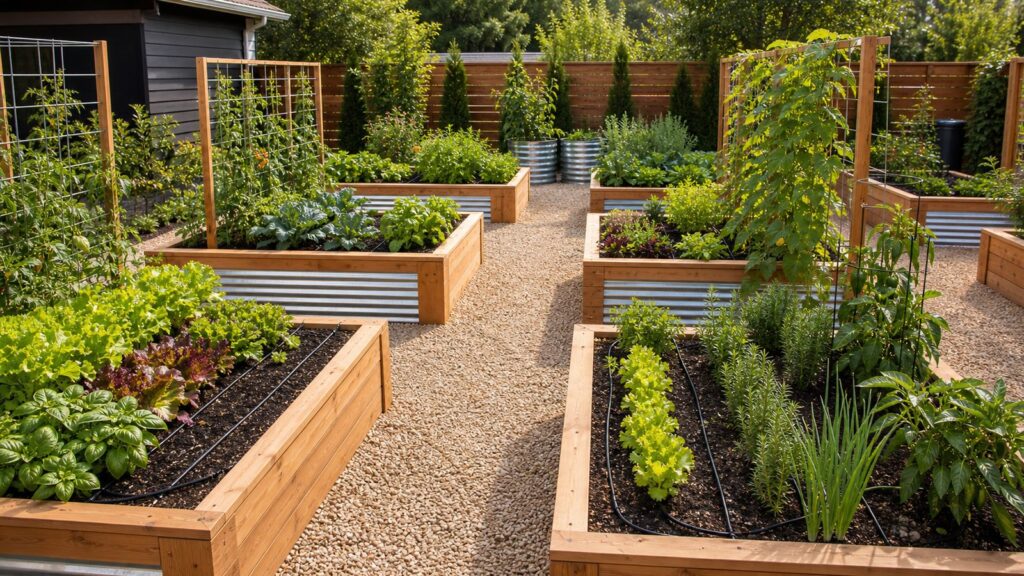
A potager uses geometric beds, defined paths, and mixed edible and ornamental planting. Four 4-by-8 beds with 36-inch gravel paths can fit in a side yard or sunny backyard. On our job sites, we treat the path base like light hardscape: compacted subgrade, weed barrier where appropriate, and enough gravel depth to stay firm.
Rank #2
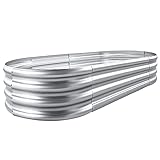
- Each raised metal garden bed size: 4×2×1ft ,7.14Cu
- Upgraded quality and structure: raised garden beds outdoor are made of Q195 galvanized metal sheet, double-layer anti-corrosion galvanizing and oval structure design, which is more beautiful, can withstand greater pressure at the interface, is not easy to loose, and the interface will not Deformed and can be reused for many years.
- Easy to set up, this galvanized stock tank only takes about 5 minutes to easily assemble and continue planting plants.
- Open base: This planter raised garden bed metal galvanized is designed with an open base, which can effectively avoid water accumulation and decay, protect the roots of plants, and allow the roots to better absorb nutrients
- Double thickness: The average thickness of this galvanized planter galvanized sheet reaches 0.78mm, and the thickest part can reach 1.56mm, which is extremely stable. Compared with the ordinary rectangular elevated garden bed with a thickness of 0.3mm, it will be the right choice for you. buy it! ! !
8. Front-Yard Edible Raised Beds
Front-yard beds should look intentional. Use consistent materials, clean edges, ornamental herbs, pollinator flowers, and tidy path surfaces. Check HOA and municipal rules before building. Some neighborhoods restrict front-yard food gardens, fencing, or structures visible from the street.
9. Bench-Edge Raised Bed
A cap rail can make a bed easier to work around, but sitting loads require real structure. A thin kit wall is not a bench. For a sit-able edge, use properly supported framing, masonry, or reinforced posts, and fasten the cap to resist rocking.
10. Waist-High Accessible Planter
A 30- to 36-inch-tall planter reduces bending and can serve older gardeners well. For wheelchair users, 24 inches is a common working height, but knee clearance and reach matter. Plan the path surface, turning space, and hose access before choosing the box.
11. Stock Tank Planter
Stock tanks create durable, farmhouse-style planters. Drill adequate drainage holes, elevate slightly where needed, and avoid placing them directly on delicate patio surfaces without protection. In hot climates, metal can heat soil faster, so mulch and irrigation are important.
12. Concrete Block Raised Bed
Concrete block is durable, modular, and easy to source. Concrete raised garden bed products commonly run in the $250 to $1,000 range depending on kit size and block count. Use a level base, stagger joints where the system allows, and include drainage behind taller walls.
13. Mortared Masonry Garden Bed
Brick, stone, or block beds can look permanent and upscale. They also introduce construction details: footing depth, frost movement, drainage, and wall height. Once the bed starts acting like a retaining wall, permit and structural concerns may apply.
14. Corten Steel Raised Bed
Corten steel gives a weathered architectural finish and works well with gravel, concrete patios, and modern homes. It costs more than basic galvanized beds and can stain adjacent surfaces during weathering, so protect pale pavers and concrete during the early months.
15. Composite Lumber Bed
Composite boards resist rot and can suit clients who want lower maintenance than wood. The downside is cost and flexibility under soil pressure. Use the manufacturer’s recommended spans, posts, and fasteners, especially for beds over 12 inches tall.
16. Tiered Bed for a Gentle Slope
Tiered beds can make a sloped yard usable, but they need layout discipline. Keep each tier level, control water flow, and avoid sending runoff into the next bed at high speed. For significant grade change, involve a pro before stacking soil against walls.
17. Retaining-Wall Garden Bed
A raised bed becomes a different project when it retains soil on a slope. Many cities have permit triggers around wall height, surcharge loads, property lines, and slopes. Even when no permit is required, drainage stone, filter fabric, base prep, and safe wall design matter.
18. Trellis-Integrated Raised Bed
Beans, cucumbers, peas, tomatoes, and flowering vines benefit from trellises. Fasten the trellis to posts or a separate frame, not just thin side boards. A loaded trellis catches wind, especially when covered with foliage.
Rank #3

- Multifunctional Design: This garden planter is separated into two growing areas for different plants or planting methods. The baffle can be removed to form a bigger growing area.
- Practical Use: With this plants box, you can cultivate plants like vegetable, flower, or herbs in your patio, yard, garden, and greenhouse, making it more convenient to manage.
- Simple Assembly: This divisible garden bed is built in a simple yet stable structure by heavy-duty screws and tight connection piece by piece. It is very easy and quick to put them together.
- Flexible DIY: The corner posts have been upgraded that the number of slotting on the posts is increased from 2 on the opposite 2 faces into 4 on 4 faces. Such a change enables users to combine two or more such planting beds more flexibly and fixedly.
- Stable Construction: Our planting raised bed has a piece of complete side plate at each side of the garden bed. It is fixed firmly without leakage of soil. The whole structure is very stable, and the installation is very easy.
19. Arbor Entry Kitchen Garden
An arbor between two beds creates a formal entrance and a place for climbing plants. This works best when the beds and arbor are aligned with an existing patio, path, or door. Use ground-rated posts or proper post bases, and keep the arbor wide enough for tools and carts.
What’s actually slowing this PC down?
Pick the symptom - the matching free tool is one click away.
20. Patio Planter Bed
Raised planters on patios need bottoms, drainage holes, liners, and protection for the hardscape below. Open-bottom beds are best on soil, but on concrete or pavers you must manage water staining, trapped moisture, and weight. Wet soil is heavy, so avoid oversized patio boxes on questionable decks or balconies without structural review.
21. Self-Watering Wicking Bed
Wicking beds store water in a lower reservoir and pull moisture upward. They are useful in hot climates, vacation homes, and water-conscious gardens. They require more careful construction than an open-bottom bed: overflow outlet, reservoir layer, separation fabric, and a fill tube.
22. Drip-Irrigated Multi-Bed Garden
For more than one or two beds, drip irrigation with a timer is worth planning from the start. Raised beds dry faster than in-ground beds because they drain and warm quickly. A simple hose-end timer, pressure regulator, filter, mainline, and drip tubing can prevent the boom-and-bust watering cycle that stresses vegetables.
23. Pollinator Raised Bed Border
Not every raised bed needs vegetables. A long 2- to 3-foot-wide raised border can hold native perennials, herbs, and pollinator plants. It gives clean definition where turf meets planting and can improve drainage in heavy clay soils.
Outdated Drivers Are Slowing You Down
One free scan finds every outdated or missing driver and matches the right update for your exact hardware.Free scan · exact hardware matchPC Slower Than It Used to Be?
A free scan shows the junk files, broken settings and background clutter dragging Windows down - then fixes them in one click.Free scan · Windows 10 & 1124. Cut-Flower Raised Bed
A 3-by-8 or 4-by-10 bed works well for zinnias, cosmos, dahlias, snapdragons, and other cut flowers. Use sturdy corner posts and consider low hoops or netting supports. Flower beds installed professionally often fall in the same broad range as other planted beds, commonly around $20 to $65 per square foot depending on prep, edging, soil, and planting.
25. Square-Foot Gardening Bed
A 4-by-4 bed divided into 16 one-foot squares is efficient for beginners and small spaces. It is also easy to cover with frost cloth or pest netting. Keep the depth at 10 to 12 inches minimum for a useful mix of greens, herbs, and compact vegetables.
26. Modular Bed System
Modular beds let homeowners start small and expand later. Use repeatable sizes, such as 3-by-6 or 4-by-8, so future additions do not look improvised. Leave utility routes and hose bib access open for phase two.
27. Keyhole Raised Bed
A keyhole bed uses a notch or center access point to increase reach into a round or square planting area. It is useful where space is tight, but the geometry must still allow comfortable working positions. Avoid making the planting zones deeper than arm’s reach.
Quick wins for a faster PC:
Scan for outdated or missing drivers - takes under a minuteDriver Scan →Repair Windows errors before they cause bigger problemsFix Now →28. Herb Spiral
An herb spiral creates different moisture and sun exposures in a small footprint. Stone or block is the usual material. Keep it modest, about 3 to 5 feet across, so it remains maintainable and does not become an awkward mound.
29. Raised Bed With Pest Covers
Low hoops, hinged frames, or removable cages protect greens from rabbits, birds, insects, and intense sun. Build attachment points into the bed frame. Retrofitted covers often look messy because there is no planned place for clips, hinges, or storage.
Rank #4

- 2 feet height: Compared with the ordinary 1-foot garden bed, this raised garden box has been improved in all aspects in terms of aesthetics, stable performance, and soil volume. It is time to replace the previous small planter box with a large raised planter box Now, it must be your better choice! ! !
- Large volume: Our large metal raised garden boxes of several specifications have a planting volume of 8×4×2ft=64 cubic meters Feet = 396 gallons. The box with 24 inches deep is very suitable for planting beans, broccoli and other medium to deep root plants
- Durable high-quality material: Galvanized steel raised garden bed is made of upgraded coated steel plate, which has strong anti-rust and corrosion resistance. It can be exposed to the sun, rain and snow for a long time, Reinforced cross bars and fixed piles have been added to help the metal panel maintain its shape and prevent warping and soil leakage over time. Environmentally friendly paint is used on all parts, which does not pollute the soil and provides a healthy environment for plants.
- Open base: This Galvanized planter raised beds uses a bottomless design that allows crops with developed rhizomes to grow without restriction, allowing excess water to be easily drained, and maintaining soil and nutrients.
- Easy to assemble: We provide detailed installation instructions, you can complete the assembly in a short time and start your planting immediately
30. Greenhouse-Ready Raised Bed
If you may add a hoop house or small greenhouse later, set the beds and paths to match that footprint now. Keep irrigation lines accessible and avoid permanent trellises where a seasonal cover needs to land.
31. Outdoor Kitchen Garden Bed
Near a grill or outdoor kitchen, raised beds are best for herbs, greens, peppers, and compact tomatoes. Use durable materials that match the patio: cedar with stainless fasteners, masonry, steel, or composite. Keep soil and mulch from washing onto cooking areas.
Do these 3 things before closing this tab:
1Fix the driver behind crashes, sound loss and screen glitches2Clear out junk files and repair common Windows errors3Scan for outdated or missing drivers - takes under a minute32. Luxury Integrated Garden Room
For high-end landscapes, raised beds should align with the patio grid, lighting plan, irrigation zones, fencing, and outdoor living spaces. This is where custom cedar, masonry, steel edging, gravel paths, low-voltage lighting, and automatic irrigation make the garden feel permanent rather than temporary.
Raised Garden Bed Material Comparison and 2026 Cost Guide
Material choice controls appearance, lifespan, maintenance, and cost. The table below gives realistic planning ranges for US homeowners. Local labor, access, demolition, delivery, and soil can move prices significantly.
| Material or Build Type | Typical 2026 Cost Range | Best For | Watchouts |
|---|---|---|---|
| Small DIY galvanized kit | Under $100 to $300+ before soil | Budget vegetable beds, renters, quick installs | Sharp edges, thin panels, heat, anchoring |
| DIY prefabricated kit | About $5-$15 per sq. ft. for materials | Simple backyard gardens | Soil, delivery, irrigation, and plants not included |
| DIY wood kitchen garden | About $25-$50 per sq. ft. | Cedar or framed garden layouts | Fastener quality, rot resistance, bracing |
| Professionally installed custom bed | About $20-$67 per sq. ft.; 5-by-12 often $1,200-$4,000 | Permanent gardens, clean layout, better finish | Site prep and soil volume can raise total |
| Concrete or block bed products | Commonly $250-$1,000 for product kits | Durability, masonry look, fire-resistant landscapes | Base prep, drainage, freeze-thaw movement |
| Premium installed kitchen garden | $100+ per sq. ft. on higher-end projects | Custom cedar, paths, irrigation, trellises, design | Needs careful scope control |
On our projects, the hidden cost is usually soil. A single 4-by-8-by-12-inch bed needs about 32 cubic feet of mix. Since 27 cubic feet equals 1 cubic yard, that bed takes about 1.2 cubic yards before settling. Four beds of that size can need nearly 5 cubic yards. Bagged mix is convenient but expensive at that volume. Bulk soil and compost blends are usually more economical, but you need delivery access, staging space, wheelbarrow routes, and labor to move it.
Drainage, Soil, and Irrigation Details That Prevent Problems
Open-bottom raised beds are usually best when installed over soil. They allow roots to grow deeper and excess water to move into the native ground. Remove turf under the bed, loosen compacted soil, and avoid placing a plastic sheet across the bottom. If weed pressure is a concern, cardboard can be used as a temporary biodegradable layer, but the long-term performance comes from soil depth, mulch, and maintenance.
Recommended Free Tools
For patio planters, the rules change. A planter on concrete, pavers, a deck, or a balcony needs a bottom, drainage openings, and a way to keep dirty water from staining or damaging the surface below. Do not assume a deck can carry a large soil-filled planter. Wet soil can impose serious dead load, especially in deep boxes.
Raised beds drain well, warm earlier in spring, and are useful on clay or compacted sites. The tradeoff is that they dry out faster than in-ground beds. Drip irrigation is a design item, not a luxury add-on. A basic raised bed irrigation setup should include a timer, pressure regulator, filter, supply line, drip tubing or inline emitter hose, and a shutoff for each zone. Mulch the soil surface with straw, shredded leaves, compost, or another appropriate mulch to reduce evaporation.
For fill, avoid using straight topsoil, straight compost, or heavy clay. A practical mix is a screened topsoil and compost blend with enough mineral content to hold nutrients and enough organic matter to improve structure. Plan to top-dress with compost annually. You should not need to replace all the soil every year.
Independent reader supportYour contribution helps us test, update, and keep practical guides available for everyone.Safety, Permits, Utilities, and HOA Checks
Most simple, low raised garden beds do not need a building permit, but homeowners should not treat that as universal. Rules change by city and county. The risk increases when a bed becomes tall, masonry, structural, located near a property line, built on a slope, or functioning as a retaining wall.
Do these 3 things before closing this tab:
1Repair Windows errors before they cause bigger problems2Scan for outdated or missing drivers - takes under a minute3Clear out junk files and repair common Windows errorsBefore digging posts, trenching irrigation, or building near utilities, call 811 for utility locating. Hand digging near marked lines is still required. For front yards, corner lots, drainage easements, and HOA communities, check rules before installation. Some properties have restrictions on height, visibility, fencing, hardscape coverage, or changes inside easements.
Best Value
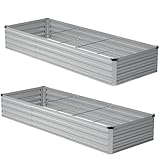
- Specialized in Garden Bed: Size:10x2x1ft.Ideal choice for your gardens,yards and patio to grow vegetables,flowers,fruits and other plants.
- Upgraded Structure and Extra Thickness: The garden bed is made of galvanized metal steel, which can be used for many years without getting rust and deformed.
- Open Bottom Design: The transparent structure at the bottom can prevent water accumulation and protect the roots of plants.At the same time,it can be planted in any position as needed.
- Four Plastic Caps: The garden bed come with 4 protective caps, which install in the 30 corners of the garden bed. Compared with the ordinary rectangular raised garden bed with none components, the caps can protect you from injuring and better looking!
- Quick Setup: With lesser screws and better structure, you just need few minutes to setup your new raised garden bed!
Retaining walls are the big dividing line. A 12-inch cedar vegetable bed on flat lawn is a garden project. A 3-foot masonry bed holding back a slope is a structural and drainage project. Many municipalities use height thresholds, surcharge conditions, and location to determine when engineering or permits are required. If the wall supports a driveway, fence, slope, patio, or structure above it, bring in a qualified pro.
Material safety matters too. For food gardens, many homeowners ask about pressure-treated lumber and galvanized metal. Current guidance from extension sources generally treats modern pressure-treated lumber differently from older arsenic-treated products, but comfort levels vary. If a client wants the most conservative choice for vegetables, we steer them toward cedar, redwood, untreated rot-resistant lumber, galvanized kits from reputable manufacturers, concrete block, stone, or food-safe liners where appropriate.
When to DIY and When to Hire a Pro
DIY makes sense when the site is flat, access is easy, the bed is low, and the design uses a kit or simple lumber layout. A handy homeowner can often assemble one or two 4-by-8 beds in a weekend, not counting soil delivery and planting. Expect more time if you need to remove sod, level the area, build paths, or run irrigation.
Hire a pro when the garden is part of a larger landscape, the yard is sloped, the beds are masonry or steel, the height exceeds 18 to 24 inches, accessibility is a priority, or the project includes grading, drainage, lighting, irrigation, fencing, or hardscape paths. Professional labor commonly runs $50 to $100 per hour, and installed flower or raised bed work is often priced around $20 to $65 per square foot depending on scope. That cost buys more than assembly. It buys layout, drainage judgment, material handling, clean corners, soil logistics, and fewer redo issues.
A good middle-ground approach is to hire out grading, hardscape paths, irrigation stub-outs, and bulk soil placement, then assemble simple beds yourself. That keeps the heavy and technical work controlled while leaving planting and seasonal changes in the homeowner’s hands.
How to Choose the Right Raised Bed Design
Match the raised bed to the way you will actually use it. For food production, prioritize sun, 12 to 18 inches of soil, drip irrigation, and 36-inch paths. For a front yard, prioritize appearance, code compliance, and clean year-round planting. For seniors or gardeners with back pain, prioritize height, path firmness, and reach. For patios, prioritize drainage, weight, and surface protection. For luxury outdoor living spaces, integrate the beds with the hardscape geometry instead of dropping boxes into leftover space.
Climate should influence the material. In wet regions, rot resistance and drainage are critical. In freeze-thaw climates, masonry needs better base prep and drainage. In hot climates, metal beds need mulch and consistent irrigation. In termite-prone areas, be careful with wood-to-soil contact near the house. In wildfire-prone regions, noncombustible materials such as metal, concrete, or masonry may make more sense close to structures.
The best raised garden bed design is not the most complicated one. It is the one you can reach, water, maintain, and afford to fill with good soil. Get those basics right, and the design will keep working long after the first planting season.
Frequently Asked Questions
How much does it cost to build a raised garden bed in 2026?
A small DIY metal bed can cost under $100 before soil. DIY prefabricated kits commonly run about $5-$15 per square foot for materials. A professionally installed 5-by-12 custom raised bed is often about $1,200-$4,000, depending on material, height, soil, access, irrigation, and site prep.
How deep should a raised garden bed be for vegetables?
Six to 8 inches can work for shallow greens, but 12 inches is a better minimum for most vegetables. For root crops, moisture reserve, and more forgiving growing conditions, 12 to 18 inches is better. Accessible or back-saving beds are often 24 to 36 inches tall.
What size raised garden bed is easiest to maintain?
A 4-by-8-foot bed is one of the easiest standard sizes when you can access both sides. Against a fence or wall, keep the bed 2 to 2.5 feet wide. Plan paths at 30 to 36 inches so a wheelbarrow or garden cart can move through comfortably.
The Tool Desk
Outbyte Driver Updater FREEFix the driver behind crashes, sound loss and screen glitchesFind Drivers →Outbyte PC Repair FREEClear out junk files and repair common Windows errorsFree Scan →Should a raised garden bed have a bottom?
On soil, an open-bottom bed is usually best because roots can grow deeper and water can drain naturally. On patios, decks, balconies, or concrete slabs, the planter needs a bottom, drainage holes, and surface protection below.
Do raised garden beds need a permit?
Low garden beds on flat ground usually do not need a permit, but local rules vary. Check requirements if the bed is tall, masonry, near a property line, in a front yard, inside an easement, on a slope, or acting as a retaining wall.
Are galvanized metal or pressure-treated wood beds safe for vegetables?
Galvanized beds from reputable manufacturers are commonly used for vegetables. Modern pressure-treated lumber is different from older arsenic-treated products, but some homeowners prefer cedar, redwood, concrete, stone, or metal for food gardens to keep the material choice conservative.
Quick Recap
Product prices and availability are accurate as of the date/time indicated and are subject to change. Any price and availability information displayed on Amazon at the time of purchase will apply.

