Quick wins for a faster PC:
Fix the driver behind crashes, sound loss and screen glitchesFind Drivers →Repair Windows errors before they cause bigger problemsFix Now →A private building describes ownership or a legal status; a gated community describes a development whose shared roads or entrances are restricted; and a secure facility describes a site designed and operated to control identified risks. The terms can overlap, but none is a guarantee of the others: private ownership does not automatically restrict entry, a gate does not make an entire site secure, and the words “secure facility” mean little without specific safeguards and procedures.
The short distinction
These labels answer different questions. “Private” asks who owns or operates a property, or how a law classifies it. “Gated” asks whether access to a larger development is controlled by gates or similar barriers. “Secure” asks what risks the site is intended to manage and which physical, electronic and operational controls are in place.
As an Amazon Associate I earn from qualifying purchases.
A private office, apartment block or house may welcome visitors during set hours. A gated development may contain ordinary homes with no unusual security inside each dwelling. A facility described as secure may be a single building, a campus or a set of internal zones, and its controls should be based on a documented risk assessment rather than on the label alone.
Because these are not universal legal categories, the governing jurisdiction and the document using the term matter. The examples below explain the ordinary construction and facilities-management meaning, while noting where a cited rule is local or sector-specific.
#1 Best Overall
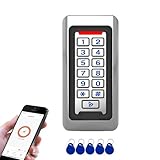
- Durable Stainless Steel Construction - Made with high-quality stainless steel metal housing for long-lasting performance, suitable for indoor or outdoor installation in harsh environments.
- Backlit Keypad with Doorbell Button - Numeric backlit keypad for easy use day or night, with built-in doorbell button and support for external doorbell connection.
- Multiple Access Methods - Supports RFID ID card, PIN code entry, and Tuya App remote unlocking for flexible and secure access control.
- Large User Capacity - Stores up to 2,000 users, with Wiegand 26-bit input and output for easy integration with other access control systems.
- IP68 Waterproof & Weatherproof - Fully sealed design for reliable operation in rain, dust, and extreme temperatures, perfect for gates, offices, warehouses, and residential use.
How the three terms compare
| Question | Private building | Gated community | Secure facility |
|---|---|---|---|
| What it primarily describes | Ownership, operation or a legal classification | A development with a controlled perimeter or entrance | A security purpose supported by defined safeguards |
| Typical scale | One building, although a legal definition may include its site, routes and other improvements | Multiple homes or units plus shared roads, open space and services | A building, campus, site or separately controlled internal zone |
| Who may enter | Depends on the owner’s policy and the building’s use; visitors or the public may be admitted | Residents, authorized guests, staff and service providers under the development’s access rules | People, vehicles or deliveries authorized for a particular time, zone or purpose |
| What a gate proves | Nothing about entry control by itself | That at least one access point is restricted under the relevant arrangement | Nothing unless the actual controls, monitoring and procedures are identified |
| Who maintains shared infrastructure | Usually the owner or a management body for the building and its site | An owners’ association, developer, private road authority or other designated manager, subject to local law | The facility owner, tenant, operator or contracted security team |
| Critical practical test | Who owns or operates it, and which laws apply? | Who controls the roads and gates, and how do visitors and emergency responders enter? | Which risks are being addressed, which controls work together, and how are incidents and emergencies handled? |
This is a plain-language comparison, not a universal legal taxonomy. A contract, planning approval, accessibility rule, fire code or local ordinance can assign a narrower meaning.
What “private building” means
Ownership and operation come first
In everyday construction language, a private building is one owned or operated by an individual, company, trust, housing association or other non-government entity. That says who has title or management responsibility; it does not say whether the doors are locked, whether visitors are welcome or whether the building has a security system.
A privately owned museum, clinic, shop or office can be open to the public. A privately owned warehouse can admit only employees and booked carriers. Both are private in ownership, while their access arrangements are completely different.
Legal definitions can be narrower
The US Access Board’s ADA glossary uses “Private Building or Facility” in connection with categories covered by Title III. The same glossary notes that public use can occur in a privately or publicly owned building. That is a jurisdiction-specific accessibility reference, not a worldwide definition of private property.
The glossary also uses “facility” broadly enough to include buildings, structures, site improvements, pedestrian routes and vehicular ways on a site. In a standards context, therefore, “private facility” may cover more than the building envelope shown on an architectural plan.
Rank #2

- ✅ 【Wireless Access Control System】Integrated wireless access control keypad allows you to control the keypad share, modify and delete passwords/ID cards, remote Unlock doors/gates, view access logs, manage users, and assign temporary or permanent access from your phone, anytime and anywhere
- ✅ 【Multiple Access Options】Come with 5PCS ID key fobs, support 2000 users capacity. Swipe card or password or TUYA APP multiple unlocking methods to open the door. Equipped with doorbell button, compatible with all electric locks.
- ✅ 【Reliable and Practical】The access control keypad with strong zinc alloy electroplated technology, epoxy to completely encapsulated, anti-prying hexagonal star screw, anti-vandal and weatherproof. Suitable for mounting either indoor or outdoor. Backlight design(non-turn-off), in dark locations or night you can read numbers.
- ✅ 【Widely Used】Wiegand access control keypad system can prevent unauthorized personnel from entering. Built in buzzer and light dependent resistor (LDR) for anti tamper. Can be as a standalone reader or keypad. Very suitable for garage, hotel, shops, warehouses, laboratories, other private spaces. Note: Models whose connection protocol is Wi-Fi, learn buttons, safety sensors, rolling code are not currently supported! Keypad uses 2-wire connection directly to the opener's push button switch terminals.
- ✅ 【Simple Setup for Use】Connect the access controller to the power supply and the electric lock, Keypad enter "*master code#73#" code, turn on wireless pairing, add the keypad to the TUYA APP, you can remotely manage the access control system. Attention: The password keypad working on 2.4 GHz network, when adding keypad, make sure the keypad must be connected to the same Wi-Fi network as your smartphone. Powered by 12V DC power supply (not included)
Access is a separate design decision
For a private building, document the intended users and operating hours before selecting hardware. A reception desk, staffed entrance, intercom, keyed door, card reader or visitor register may each be appropriate in different circumstances. None should be specified merely because the building is privately owned.
What “gated community” means
A development-scale boundary
A gated community is normally a residential development in which entry to shared roads or common areas is restricted by gates or another controlled boundary. The defining feature is the scale of the arrangement: the boundary generally serves multiple homes, units or buildings, not just one front door.
Gates may be staffed, remotely operated, opened by a resident credential, released through an intercom or managed by a combination of methods. The development may also use fencing, walls, landscaping, lighting, cameras or patrols, but those additions are not implied by the word “gated.”
Local rules change the legal meaning
McDowell County, North Carolina, defines gated communities for its local public-safety ordinance in relation to a development enclosed by restrictive gates. The ordinance separately addresses private streets and ingress and egress. That local wording should not be presented as a nationwide planning or legal standard.
The same ordinance specifies a minimum 12-foot (12′) width for fire-department and emergency-vehicle ingress and egress gates. The figure applies to that county’s rule and should be verified against the current local ordinance, fire authority requirements and the approved site plan before construction.
Rank #3

- ✅ 【Tuya Wireless Access Control System】Adopt touch code keypad panel and fingerprint identification with LED indication, Integrated wireless modules allows you to control the keypad from your phone, anytime and anywhere. Remote unlocking, set public password, share, modify and delete fingerprint/passwords/ID cards, view door opening records.
- ✅ 【Multiple Users, Multiple Access Ways】10000 users capacity. Fingerprint, swipe card or code password or TUYA APP multiple unlocking methods to open the door. Keypad come with 5PCS ID keyfobs, compatible with all electric locks. Smart phone APP wireless control keypad, management users, more convenient and quick.
- ✅ 【Reliable and Practical and Extendibility】Strong zinc alloy shell, epoxy to completely encapsulated, anti-prying, anti-vandal and weatherproof, anti-strong magnet unlocking, anti-duplicate card,semiconductor biometric fingerprint, Wiegand 26/34 input output, support door magnetic switch, exit button, all electric lock, alarm and garage door/sliding door openers.
- ✅ 【Widely Used】Fingerprint access control system can prevent unauthorized personnel from entering. Standalone access control mode, reader mode, relay toggle mode three work modes switch. Very suitable for garage, hotel, shops, warehouses, laboratories, school campus access, identification, parking lot entry, other private spaces.
- ✅ 【Simple Setup for Use】Turn on wireless pairing, add access control keypad to the TUYA APP, you can remotely manage the access control system. Everything is smart and simple, your finger is the key. The fingerprint password touch panel with backlighting allows you to see clearly even when the light is dark. Attention: connect to Tuya APP first need to turn on the keypad WIFI matching, in the keypad to enter the command: * Master code # 08 .
Residents, visitors and service traffic
A gate creates an access-management problem as well as a physical opening. The operating plan should explain how residents receive credentials, how a lost credential is disabled, how deliveries are admitted, where visitors wait, and how contractors, waste vehicles and utility crews are identified. It should also state who can override the system when a gate fails.
Private roads raise additional questions about lighting, drainage, snow or vegetation clearance, pavement loading, maintenance funding and responsibility for signage. A development can be gated while still relying on public emergency services, so the access arrangement must be agreed with the relevant responders.
What “secure facility” means
Security is an objective, not a badge
A secure facility is a building or site designed and operated to reduce particular risks, such as unauthorized entry, theft, violence, sabotage, data loss or the movement of dangerous materials. The appropriate measures depend on the occupants, assets, threat environment, operating hours and consequences of a failure.
Calling a facility secure does not certify a protection level. Ask for the risk assessment, the zones it defines, the controls selected for each zone and the procedures that keep those controls effective.
Layered safeguards
Royal Canadian Mounted Police guidance on facility design describes a risk-based, layered approach. Examples include site zoning, perimeter measures, electronic access control, intrusion detection and closed-circuit television monitoring. Layers should complement one another: a fence may delay an approach, a locked door may limit entry, a credential system may identify an authorized user, and monitoring may allow an operator to respond to an alarm.
Rank #4
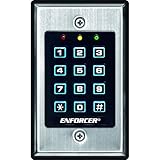
- 12-button, always-on backlit keypad with stainless-steel face
- Supports 1,000 permanent codes, 50 guest codes (4-8 digits)
- Auto-disable access at specific times with built-in clock
- Egress input allows exit without code entry
- Auto-adjusting operation - 12-24 VDC/VAC
Electronic and mechanical locks can govern people, items or vehicles, and may be used with physical barriers. A door access control keypad is one category-level example, not proof that a site is secure. Its suitability depends on credential management, weather exposure, power and network resilience, fire egress, accessibility, audit requirements and the consequences of a compromise.
Operations are part of the facility
Security performance depends on management as well as equipment. HM Revenue & Customs guidance for Authorised Economic Operator applicants illustrates the breadth of a security description: external boundaries, staff and visitor access, internal restrictions, key handling, monitoring and incident procedures. That guidance serves a specific customs-assurance process, but it shows why a drawing full of locks is not a complete security plan.
Training, maintenance, alarm response, credential revocation, delivery checks, record retention and periodic review should be assigned to named roles. A camera that nobody monitors, or a badge that remains active after an employee leaves, is a control in name only.
Independent reader supportYour contribution helps us test, update, and keep practical guides available for everyone.Emergency movement cannot be traded away
Security measures must preserve life safety. The Royal Canadian Mounted Police’s 2024 Physical Security Considerations in Facility Design guide states: “While physical security measures are required, they must not supersede nor negate life safety measures or legal requirements.”
Recommended Free Tools
In practice, that means checking every controlled door, turnstile, vehicle gate and internal zone for safe evacuation, fire-service access, accessibility and power-loss behavior. Emergency release arrangements should be coordinated with the fire authority and documented in the building’s operating procedures.
Best Value

- Multiple Access Ways:The access control keypad integrated machine support 1000 users capacity, Support swipe card or password to open the door. Can add users and delete users as your requirement.used for automatic gate opener、magnetic lock、electric gate lock ect.
- Come with 5PCS Keyfobs Keychains:Each card pre-programmed with a unique number, which is printed on the keyfob. Only the keyfob authorized by the access control system then can be open the door.
- Reliable and practical:Shell is made of ABS fire retardant, panel hard shell rubber film, which has good fire retardant effect, Full programming from the keypad, don't need to connect to computer. Power off data protection.
- Strong Flexibility and Extendibility:Working with DC12V power supply. Can directly drive the electric lock. Support external doorbell. Support the switch for opening the door.
- Widely Used:Access control system able to deterring unauthorized personnel, Suitable for apartment, office, access control, off-limit area, hotel locks, school campus access, identification, parking lot entry, etc.
For a gated community, responders need a dependable route at any hour, not merely a promise that someone can open the gate. For a secure facility, evacuation routes must remain usable even when access-control systems, communications or utilities fail. A security upgrade that blocks an exit, narrows an apparatus route or creates an inaccessible entrance is a design failure.
How to identify which description fits a project
- Define the boundary. Mark whether the controlled edge is one room, one building, a campus or the entire residential development. Include pedestrian paths, service yards, parking areas and private roads.
- Record ownership and responsibility. Identify the legal owner, day-to-day operator, landlord, tenants’ association, road authority and security contractor. Assign maintenance and decision rights for gates, doors, lighting, cameras and alarms.
- Describe legitimate users. List residents, employees, visitors, deliveries, contractors, utilities, emergency responders and people who need accessible routes. Specify when each group may enter and which zones they may reach.
- Assess the risks. Consider the assets and activities at risk, likely threats, consequences of unauthorized access and the effect of a system failure. Use the assessment to select controls rather than selecting a label first.
- Design the layers. Combine appropriate boundaries, doors, locks, credentials, detection, lighting, surveillance, signage and staffing. Avoid assuming that one gate, camera or keypad solves every risk.
- Test normal and abnormal conditions. Verify visitor processing, lost credentials, deliveries, tailgating, power loss, network outage, fire alarm activation, medical response and evacuation. Record who can override each control and how the override is audited.
- Confirm legal and authority requirements. Check planning conditions, accessibility rules, fire and building codes, privacy obligations, local road standards and any sector-specific requirements. Local definitions and dimensions must be confirmed with the authority having jurisdiction.
- Plan continuing management. Set inspection intervals, training, incident reporting, credential reviews, camera retention, alarm response and a process for updating the risk assessment when use or threats change.
Design implications for builders and owners
When the project is simply private
Prioritize the building’s use, accessibility, fire strategy, visitor experience and owner responsibilities. Do not add costly security infrastructure solely to signal exclusivity. If access must be restricted, state the hours, user groups and failure procedures in the brief.
When the project is a gated development
Design the gate as shared infrastructure. Coordinate vehicle geometry, pedestrian safety, queuing, drainage, lighting, communications, maintenance access and emergency override before construction. The gatehouse or control point should not create a conflict between resident convenience and fire-service access.
What’s actually slowing this PC down?
Pick the symptom - the matching free tool is one click away.
When the project has a higher security objective
Start with a documented threat and vulnerability assessment, then divide the site into zones with different authorization rules. Integrate physical construction, electronic systems and operating procedures. Commission the system with realistic scenarios, train the people who operate it and retain evidence that controls are maintained.
Questions to ask before relying on any label
- Is “private” describing ownership, a lease arrangement, a planning category or an accessibility/legal term?
- Does the gate control the whole development or only one entrance, and are there uncontrolled pedestrian or service routes?
- Who maintains private roads, gates, lighting, fencing and emergency overrides?
- Which people, vehicles, items and internal zones are covered by access rules?
- What happens when a credential is lost, a gate is damaged, power fails or the network is unavailable?
- How are visitors, deliveries and contractors identified and recorded?
- Can occupants evacuate and can responders enter without unsafe delay?
- Which controls are monitored, who responds to alerts and how often is the system tested?
- Which local authority, code, planning condition or sector rule governs the design?
Bottom line for construction decisions
Use private building when the important fact is ownership or legal status, gated community when the important fact is controlled access to a shared development, and secure facility when the project has a defined security objective backed by layered controls and ongoing management. Describe the boundary, responsibilities, access rules and emergency arrangements explicitly; the label alone cannot do that work.
Quick Recap
Product prices and availability are accurate as of the date/time indicated and are subject to change. Any price and availability information displayed on Amazon at the time of purchase will apply.

