Free tools Windows power users keep installed
One-click scans. No signup required.
Use a garden hose for routine rinsing, light dirt, and surfaces that could be damaged by concentrated force. Use a pressure washer when stubborn grime is bonded to a suitable hard surface and you are prepared to control the spray. A pressure washer can reduce scrubbing on walks, patios, and some decks, but its extra force can strip paint, scar wood, etch certain stone, or drive water behind siding. The right choice depends on the surface and the soil—not on which tool is more powerful.
For an occasional heavy-cleaning job, renting can make more sense than buying, storing, and maintaining a machine. Whatever you use, follow the surface manufacturer’s directions, the machine manual, and any cleaner label exactly.
As an Amazon Associate I earn from qualifying purchases.
Choose by surface and dirt first
Start by identifying what you are cleaning and how firmly the soil is attached. A garden hose paired with a soft brush is usually the lower-risk approach for dust, pollen, loose mud, and routine rinsing. It also suits materials whose finish or fibers can be damaged by a narrow, high-force stream.
What’s actually slowing this PC down?
Pick the symptom - the matching free tool is one click away.
A pressure washer earns its place when grime is stubborn and the substrate is a hard surface that can tolerate controlled pressure. The tool can remove buildup from concrete walks, patios, and some decks with less manual scrubbing. That does not make it a universal outdoor cleaner: the same force that lifts dirt can remove paint, nick wood, or damage stone.
#1 Best Overall
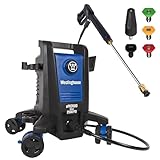
- Delivers 2500 max PSI and 1.76 max GPM (at lowest pressure), and 2000 rated PSI and 1.2 rated GPM of water flow; Pro-style steel extendable 17.5” wand with quick-connect nozzles (0°, 15°, 25°, turbo and soap applicator)
- Super compact and lightweight at 16.5” tall and 19 pounds for convenient storage and portability; Four quick-lock wheels with 360° steering design and low center of gravity engineered for anti-tipping design
- Easy-coil nylon braided 25' hose; 20 ounce onboard soap tank to add detergents/chemicals for heavy duty cleaning power on decks, driveways, garage floors, stairs, fencing, patio furniture and vehicles
- Pump automatically stops when trigger is not engaged to conserve energy and promote pump and motor life
- Backed by a 3-Year limited service, labor and parts coverage with nationwide customer service and support network
| Cleaning situation | Better starting tool | Reason |
|---|---|---|
| Light dust, pollen, or loose soil | Garden hose | Rinses loose material without introducing unnecessary force. |
| Routine washing of a delicate or painted surface | Garden hose plus light scrubbing | Gives you more control over contact and reduces the chance of stripping a finish. |
| Stubborn grime on a sound concrete walk or patio | Pressure washer, used cautiously | Higher force can reduce scrubbing time on a compatible hard surface. |
| Soft wood or an uncertain deck finish | Garden hose and conservative hand cleaning | Concentrated spray can nick or etch wood; confirm the deck maker’s instructions before using machine pressure. |
| Infrequent heavy cleaning | Rent a pressure washer if needed | Avoids permanent storage and maintenance for a tool you rarely use. |
How much stronger is a pressure washer?
Consumer Reports’ 2026 buying guide gives a broad comparison: pressure-washer nozzles produce water at “30 to 80 times the pressure of a hose.” That is a general description, not a specification for every hose or machine. Nozzle design, distance, spray angle, flow, and the equipment’s setting all affect what reaches the surface.
For historical context, a 2016 Consumer Reports article wrote: “Though a garden hose alone delivers water pressure at about 50 pounds per square inch, pressure washers can generate 1,500 to 4,000 psi.” That older range should be read as dated published guidance, not a current universal specification or a safe setting for every material.
The practical implication is more important than the headline number: a pressure washer concentrates substantially more force into a smaller area. Moving the wand closer, selecting a narrower spray, or pausing over one spot increases the chance of cutting into a coating or substrate. More force is useful only when the surface can accept it and the operator can keep the spray moving at a safe distance.
The Tool Desk
Outbyte Driver Updater FREEFix the driver behind crashes, sound loss and screen glitchesFind Drivers →Outbyte PC Repair FREEClear out junk files and repair common Windows errorsFree Scan →Where a garden hose is the better tool
Routine rinsing and loose dirt
Use the hose when the job is mainly to rinse dust, pollen, loose mud, or a cleaner from a surface. Begin with the gentlest practical flow, work from a clean area toward a drain or lower edge, and use a soft brush for spots that need agitation. This approach is slower against bonded grime but limits the risk of surface damage and water intrusion.
Rank #2

- LawnMaster
- POWER FOR THE JOB: 2000-2300PSI (Max) and 1.2-GPM Max provides superior performance to revitalize exteriors, porches, decks, fences, & more
- FIVE NOZZLE STRENGTHS: Tackle grime, rust, mud & more with a customizable spray
- XL DETERGENT TANK: Integrated soap tank sprays aerated foam for car cleaning
- EXTENDED REACH: Utilize a 25-ft high-pressure hose coupled with a 35-ft power cord to easily cover large areas
Painted, coated, or fragile surfaces
Paint and coatings can be lifted or dulled by an aggressive stream. If you do not know the coating’s condition or the surface’s pressure limit, treat it as vulnerable. A hose and light hand scrubbing let you see how the finish responds before you escalate. Stop if paint begins to soften, flake, or change sheen.
Composite decking that only needs light cleaning
Composite decking may clean well with light scrubbing followed by a garden-hose rinse. That method is often sufficient for ordinary surface dirt and avoids making a high-force pass merely because a machine is available. Follow the decking manufacturer’s cleaning instructions for stains, embedded growth, and approved tools.
Areas where water could enter the building
On siding and other cladding, the goal is to clean the face without forcing water into joints, laps, vents, trim, or penetrations. Consumer Reports cautions against allowing water to become trapped between siding and the home’s sheathing, where moisture can promote mold. A hose gives you a wider, less aggressive rinse and more time to control the direction of flow.
Recommended Free Tools
When a pressure washer is justified
Stubborn soil on compatible hard surfaces
A pressure washer is most useful for bonded grime on sound concrete walks, patios, and other hard surfaces that the manufacturer identifies as pressure-washable. Test a small, inconspicuous area first. If the test reveals exposed aggregate, a change in texture, streaking, or color loss, stop and switch to a gentler method.
Rank #3

- POWERFUL & CETA CERTIFIED: 1700 PSI TruPressure and 1.2 GPM for effective cleaning of various surfaces. Independently tested and CETA certified for proven performance you can trust.
- VERSATILE CLEANING OPTIONS: Equipped with three different nozzles (15°, turbo, and 65°), the K1700 allows you to tackle a wide range of cleaning jobs with precision
- USER-FRIENDLY OPERATION: An on/off foot switch provides back-friendly operation, and the unit automatically stops when the trigger is released. A 0.5 gal detergent tank makes cleaning even easier
- EFFORTLESS MANEUVERABILITY: Featuring never-flat wheels, the K1700 can be easily transported across various terrains for convenient use around your property
- THE KÄRCHER PROMISE - CLEANER. QUICKER: The K1700 power washer is perfect for cleaning pavement, patios, decks, cars, homes, fencing, and much more
Large areas where scrubbing is the bottleneck
On a compatible surface, machine pressure can cover a broad area faster than hand brushing. You still need to manage runoff, protect nearby finishes, and keep the spray moving. The machine saves effort only when setup, rinsing, and cleanup do not create greater risks than the original soil.
Work that is occasional rather than routine
If you need high-force cleaning once or twice for a specific project, renting is an option identified by Consumer Reports. Rental availability, equipment condition, instructions, and rates vary by location; confirm those details locally. A rental does not remove the need to verify surface compatibility or wear protective equipment.
Surface-by-surface guidance
Siding and exterior cladding
Use the least force that removes the soil. Keep the stream directed down the face of the cladding rather than upward into laps, seams, vents, or trim. Do not assume that a stronger rinse is better: water driven behind siding can remain against sheathing and create a moisture problem.
If you use a pressure washer, read the siding manufacturer’s guidance and the washer manual first. Work in a small test area, maintain a conservative distance, and watch the interior side of the wall for signs of leakage. Use a hose when the siding only needs a light rinse or when its construction and condition are uncertain.
Rank #4

- High-Pressure Cleaning: This electric pressure washer delivers up to 2030 PSI working pressure and 1.2 GPM water flow to help remove dirt, grime, and buildup from homes, driveways, vehicles, RVs, and outdoor equipment
- Multiple Spray Options: This water pressure washer includes five quick-connect spray tips (0°, 15°, 25°, 40°, and soap) to switch between narrow jet streams and wider fan patterns, plus a soap applicator for detergent use
- Tough Components for Everyday Use: This pressure washer electric is equipped with a 34-inch stainless steel spray lance with brass fittings and a 20-foot high pressure hose designed to support deep cleaning during routine outdoor maintenance
- Dual Detergent Tank System: These Sun Joe electric pressure washers features two onboard 0.9L detergent tanks that let you store separate cleaning solutions and switch between them easily for different surfaces and cleaning tasks
- Go with Joe: Joe brands designs, manufactures, and markets a wide range of innovative, affordable, and reliable consumer tools, including power washers electric powered, for the home, lawn, yard, garden, and garage
Wood decks
Soft wood can be damaged by concentrated spray. A pressure washer can leave lines, raised fibers, or small gouges that become more visible after the deck dries. Keep pressure conservative, keep the wand moving, and follow the deck or coating maker’s instructions. When those instructions are unavailable, a hose and controlled hand cleaning are the safer default.
Composite decks
For ordinary dirt, light scrubbing and a garden-hose rinse may be all that is required. Do not infer that a composite board can tolerate any nozzle or setting; products differ. Use the decking maker’s approved method for stains and embedded contamination.
Concrete walks and patios
These are common candidates for pressure washing when the concrete is sound and the finish can tolerate it. Inspect for loose sections, failing joints, coatings, and decorative treatments before starting. Keep the spray moving in consistent passes so one area does not receive a visibly different treatment from the rest.
Quick wins for a faster PC:
Scan for outdated or missing drivers - takes under a minuteDriver Scan →Repair Windows errors before they cause bigger problemsFix Now →Natural and manufactured stone
Some stone can be harmed by aggressive pressure, which may etch the face, dislodge joint material, or alter the appearance. Verify the stone supplier’s cleaning guidance and test an inconspicuous area. If the stone type, finish, or joint condition is unknown, choose a hose and a compatible soft-cleaning method.
Best Value
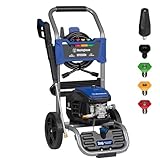
- Delivers 3000 max PSI and 1.76 max GPM (at lowest pressure), and 2600 rated PSI and 1.1 rated GPM of water flow. Perfect for decks, sidewalks, fences, garage floors, exterior walls, cars and patio furniture; Comes with a .45 gallon soap tank
- 25′ abrasion resistant super-flex hose with lightweight high pressure metal spray gun and wand with 5 quick connect nozzles (0°, 15°, 25°, soap and turbo); Compatible with pressure washer accessories like surface cleaners, undercarriage cleaners and foam cannons with M22 fittings
- Heavy duty AC 120V electric motor and long-lasting, maintenance-free axial 3 piston auto-stop pump provides up to 1.76 gallons of water (and soap) a minute
- Rugged steel frame with high profile 10” never-flat wheels and 35’ GFCI cord provide easy transportation and maneuverability; Includes tools and quick start guide to get cleaning in minutes
- All Westinghouse pressure washers are functionally tested in the factory and are backed by 3-year limited manufacturer service, labor and parts coverage
A safe pressure-washing procedure
- Identify the substrate. Determine whether you are cleaning concrete, stone, wood, composite, painted material, or cladding. Find the manufacturer’s pressure and cleaner guidance before connecting the machine.
- Inspect for defects. Look for loose paint, cracked masonry, open joints, soft wood, failed caulk, damaged siding, and openings around lights or outlets. Repair or protect defects before introducing pressurized water.
- Clear and protect the work area. Move outdoor furniture and fragile items. Cover or shield vulnerable finishes, keep people and pets away, and plan where dirty water will flow.
- Read the washer manual. Confirm the correct water supply, hose connections, startup and shutdown sequence, approved nozzles, and any restrictions. Do not improvise attachments that the manufacturer has not approved.
- Wear protective equipment. Consumer Reports advises eye, hearing, hand, and foot protection. Wear equipment suited to the machine and surroundings, including sturdy closed footwear; keep your face and exposed skin out of the spray path.
- Skip the 0-degree nozzle for ordinary work. Consumer Reports recommends against routine use of this nozzle because its concentrated stream creates avoidable risk. Select a broader, less aggressive spray that the manual and surface guidance permit.
- Test a hidden area. Start with the least aggressive available setting and a greater distance. Check the dried result, not only the appearance while wet, for color change, etching, raised fibers, or coating loss.
- Keep the wand moving. Use controlled, overlapping passes. Do not dwell on one point, aim at people or animals, or use the spray to move objects.
- Control direction around buildings. On siding, direct water down the face and away from seams, vents, trim, and openings. Stop immediately if water appears inside or behind the cladding.
- Rinse and shut down correctly. Follow the manual’s shutdown, depressurization, hose-disconnection, and storage steps. Leaving pressure in the system or storing it wet can create avoidable equipment and safety problems.
A safer garden-hose procedure
- Check the surface and drainage. Confirm that runoff will not enter a building, damage a finished area, or carry soil into a drain where it is prohibited.
- Remove loose debris by hand. Sweep leaves, grit, and loose soil before wetting the area; this reduces muddy runoff and prevents dragging abrasive particles across a finish.
- Apply only a compatible cleaner. Read the product label for approved surfaces, dilution, contact time, ventilation, and rinsing. Do not assume a cleaner suitable for one siding or deck is suitable for another.
- Agitate lightly. Use a soft brush or the tool specified by the surface maker. Work in manageable sections so cleaner does not dry on the surface.
- Rinse from the top down. Use a controlled fan of water, keep the stream away from openings, and inspect as you go. Repeat a section rather than increasing force indiscriminately.
- Check the finished surface. Look for residue, streaks, lifted coating, and water entry. Correct the cause before moving to another section.
Cleaner directions are not interchangeable
The EPA-hosted 2024 label for Mold Armor E-Z House Wash includes both pressure-washer and hose directions. That label demonstrates why cleaner instructions must be treated as product-specific: dilution, application method, dwell time, approved surfaces, and rinsing requirements belong to that product and its label.
Use the cleaner label together with the pressure washer manual and the surface manufacturer’s instructions. Never generalize one product’s pressure-washer directions to another cleaner, and do not treat a label’s optional bracketed language as permission to use the product on every exterior material.
Pressure washer versus hose: the ownership trade-off
| Consideration | Garden hose | Pressure washer |
|---|---|---|
| Purchase and setup | Usually already available for ordinary outdoor work; setup is simple. | Requires a machine, compatible water and power connections, and time to learn the controls. |
| Cleaning force | Gentle rinse, with scrubbing providing most of the agitation. | Much higher localized force; useful on suitable stubborn grime but capable of damage. |
| Surface risk | Lower risk when used carefully, though water can still enter openings. | Greater risk of stripping paint, nicking wood, etching some stone, or driving water behind cladding. |
| Safety burden | Basic water-handling precautions and eye protection where splashing is possible. | Eye, hearing, hand, and foot protection; strict nozzle, distance, direction, and manual controls. |
| Storage and maintenance | Hose draining and ordinary seasonal care. | Machine storage, hose and wand care, shutdown procedures, and any manufacturer-prescribed maintenance. |
| Occasional use | Often the practical default. | Rental may avoid owning and storing equipment for a rare project. |
Consumer Reports specifically describes renting as an option for people who use a pressure washer infrequently. Because local rental inventory, rates, and machine condition are not established here, compare the rental terms in your area and ask for an operating demonstration before taking the equipment home.
How to decide in five questions
- What is the soil? If it is loose dust, pollen, or mud, start with the hose. If it is firmly bonded grime on a compatible hard surface, consider pressure.
- What is underneath it? Treat paint, soft wood, unknown stone, coatings, and aging cladding as vulnerable until the maker says otherwise.
- Could water enter the building? If the answer is yes or uncertain, choose the gentler method and keep water away from seams, vents, trim, and penetrations.
- Can you control the machine? If you cannot identify the permitted nozzle, maintain a safe distance, wear the required protection, and follow the manual, do not use a pressure washer for that job.
- Will you use it often enough to own it? For a one-off or infrequent project, renting can be more practical than accepting long-term storage and maintenance.
Common mistakes and what to do instead
- Choosing the strongest setting first: Start with the hose or the least aggressive washer setting and increase force only after a hidden-area test.
- Using a 0-degree nozzle as a default: Avoid it for ordinary cleaning, as Consumer Reports warns that the concentrated stream creates unnecessary risk.
- Holding the spray in one place: Keep the wand moving in even passes to reduce striping and gouging.
- Spraying upward under siding: Direct water down the face of the cladding and stop if moisture appears behind it or indoors.
- Assuming all decks and stone are alike: Verify the material and finish, then follow the maker’s method and test first.
- Using a cleaner by analogy: Read that product’s own label; the directions for one house wash do not establish directions for another.
- Ignoring runoff: Plan drainage before cleaning so contaminated water does not enter a building or damage an adjacent finished area.
- Buying for a single job: Consider local rental options when the need is occasional and ownership would add more burden than value.
Bottom line for homeowners and builders
A garden hose is the better default for light rinsing, routine maintenance, delicate materials, and any situation where water intrusion or finish damage is a concern. A pressure washer is the better specialist tool for stubborn grime on sound, pressure-compatible hard surfaces, provided you use conservative technique and proper protection. The decision is not “strong versus weak”; it is whether the surface can safely accept the force required to remove the dirt.
Quick Recap
Product prices and availability are accurate as of the date/time indicated and are subject to change. Any price and availability information displayed on Amazon at the time of purchase will apply.

