Prefabricated bridge elements usually win on construction speed and traffic impact, but they are not automatically cheaper or longer-lasting. Factory production can improve consistency and reduce closure time; the price premium, transport and lifting requirements, and field connection details can erase those gains on a difficult project. Cast-in-place concrete remains competitive for irregular geometry, poor access and one-off structures. The right choice is the option with the lowest whole-project and life-cycle cost for the site, not the lowest concrete bid alone.
What the two bridge methods mean
Prefabricated bridge elements
Prefabricated bridge elements and systems (PBES) are produced away from the final bridge location, either in a plant or at a nearby casting yard. Beams, deck panels, caps, columns or complete modules are cured and inspected before trucks deliver them to the site. Cranes or other erection equipment then place the pieces, and crews complete bearings, closure pours, joints, barriers, wearing surfaces and other connections in the field.
As an Amazon Associate I earn from qualifying purchases.
The Federal Highway Administration describes PBES as a way to reduce on-site construction time and traffic impacts while improving constructability, quality and work-zone safety. The approach moves a large share of labor, formwork and curing out of the traffic area.
Windows Errors? Fix Them Before They Spread
Repair common Windows errors and clear accumulated junk for a smoother, more stable PC - no reinstall needed.Free scan · no reinstallOutdated Drivers Are Slowing You Down
One free scan finds every outdated or missing driver and matches the right update for your exact hardware.Free scan · exact hardware matchCast-in-place concrete
With cast-in-place construction, crews assemble formwork and reinforcement at the bridge, pour concrete into those forms, and keep the structure supported while the concrete cures. The method can create nearly any geometry and can be adapted continuously to field conditions. Its disadvantages are the time required for forming, falsework, curing and inspection in the work zone, plus greater exposure to weather and traffic-control constraints.
#1 Best Overall

- Build 20 different models that each teach about force, load, compression, tension and more
- Over 285 interchangeable building pieces
- Includes 36-page, illustrated experiment manual and Assembly guide
- Skill level: Intermediate
Which is cheaper?
There is no universal price winner. A Federal Highway Administration international bridge-cost dataset reported precast bridges at about 25 percent more than cast-in-place concrete bridges. The page extract does not state the dataset’s publication year, so the figure should be treated as a historical comparison rather than a current bid rule. The same source says agencies selected precast when shorter construction, fewer traffic restrictions or limited formwork and falsework justified the premium.
Direct bids do not capture what a bridge closure costs the owner, road users or nearby businesses. FHWA has reported that prefabrication can reduce costs on long water crossings and multilevel structures where cast-in-place work requires sophisticated temporary works. In a 2004 statement, Benjamin Tang, a team leader in FHWA’s Office of Bridge Technology, gave an illustrative range of $50,000 to $340,000 per day for some project costs. That is a historical example, not a current universal closure rate; local traffic volumes, detour length and valuation methods must be used for a present project.
Cost items that belong in the comparison
| Cost or risk | How prefabrication changes it | How cast-in-place compares |
|---|---|---|
| Fabrication and materials | May be higher because of molds, plant handling, lifting inserts, special reinforcement and tighter tolerances. | Uses site forms and reinforcement; economical for simple, one-off shapes when labor and materials are readily available. |
| Transport | Requires route surveys, permits, escorts, staging space and possible night deliveries. | Moves raw materials rather than large finished pieces, so haul limits are less restrictive. |
| Cranes and erection | Needs cranes, barges or specialized equipment sized for the heaviest unit and the site reach. | May need less heavy lifting but can require extensive falsework, access platforms or temporary supports. |
| Traffic control and user delay | Shorter closures can sharply reduce lane-rental, detour, crash-exposure and economic-delay costs. | Longer occupation of lanes or waterways can dominate total project cost on busy routes. |
| Design and connections | Includes lifting points, tolerances, bearings, closure joints, continuity details and erection sequencing. | Has fewer piece-to-piece field connections but more site formwork and reinforcement detailing. |
| Weather and schedule risk | Plant curing is protected; site work is concentrated into shorter installation windows. | Rain, heat, cold or wind can delay pours, curing and formwork removal. |
| Financing and opening date | Earlier opening can bring earlier service and revenue, where those benefits are valued. | Longer construction can defer opening and extend exposure to escalation or financing costs. |
| Maintenance and renewal | Potentially lower for consistent concrete, but field joints and closures require careful inspection and protection. | Fewer modular joints, but quality depends heavily on field placement, curing and protection. |
Standardized, repeated components improve the economics of prefabrication because one mold and one set of details can be used many times. A single irregular bridge can favor cast-in-place flexibility. Compare both alternatives using direct bid price, traffic and user-delay cost, temporary works, weather risk, financing, expected maintenance and the cost of future closures.
Free tools Windows power users keep installed
One-click scans. No signup required.
How much faster is a prefabricated bridge?
Prefabrication is generally faster on site, not necessarily faster from the first design meeting to final opening. Plant fabrication can begin while foundations, utilities or approaches are prepared, but the project still needs shop drawings, approvals, transport permits and an erection plan.
Rank #2

- 【DIY London Tower Bridge Model Kit】This 3D London Tower Bridge wooden puzzle with LED light is one of the iconic buildings in Britain, ancient and elegant. Assemble Size: 14.1x2.9x4.6in.
- 【Unique Gifts】This Tower Bridge construction model kit is the best gift for teens, friends, family members, architectural enthusiasts around the world or those who love handmade crafts on birthday, Christmas, or another occasion.
- 【English Instruction】This DIY model Tower Bridge Kit cut with exquisite laser technology and accompany english instruction, the matierial is environmentally friendly, non-toxic, 113 pcs easy to assemble, recommended for over 14 years old. Kids can also assemble with the help of adults.
- 【Fun Project】This 3D puzzles can greatly stimulate the spatial imagination of players, improve the graphics recognition ability, enhance the player's observation and hand-eye coordination ability, Three-dimensional Puzzles is also a very interactive activity for both children & adults
- 【Perfect Decoration】Our Big Ben model kit is good for Home decoration. It looks great to show on your table, bookshelf, add it in your collections or hang on the window, wherever you put, it makes your home more exquisite and vintage.
PBES components are built outside the traffic area, transported and installed rapidly. A shorter work zone means fewer lane closures and detours, less exposure for workers and travelers, fewer weather delays and less environmental disturbance. FHWA says the case is especially strong where average daily traffic is high or a bridge is an essential evacuation route.
Why full-depth decks can change the schedule
Full-depth prefabricated deck panels eliminate much of the deck formwork and the need to place and cure a large cast-in-place deck pour. FHWA examples from Japan and France reduced construction time by using this approach. The exact saving depends on span arrangement, panel size, connection design, crane access and the amount of cast-in-place closure work that remains.
Situations where the time advantage is greatest
- High-traffic roads where every closure hour creates substantial delay.
- Evacuation or emergency routes that must return to service quickly.
- Sites over railways, navigable water or active highways where falsework is difficult or prohibited.
- Short weather windows, cold conditions or wet environments that make field curing unreliable.
- Repeated spans or standardized components that can be fabricated in a production sequence.
- Projects with a planned weekend, overnight or staged closure for erection.
When cast-in-place may be faster overall
Cast-in-place can win when transport routes cannot accommodate the required units, available cranes cannot reach the bearing locations, or the bridge geometry is strongly curved, skewed or otherwise irregular. It can also be faster when local contractors already have the forms, crews and suppliers, while no qualified PBES fabricator is nearby. FHWA’s decision framework identifies component size, transport, erection equipment, local expertise, curvilinear geometry and connection detailing as constraints that must be checked before selecting PBES.
Which type is more durable?
Neither method guarantees a longer service life. Durability depends on concrete quality, reinforcement design, exposure, drainage, waterproofing, detailing, workmanship, inspection and the ability to repair damage before it spreads.
Rank #3
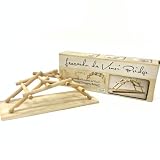
- BUILD A REAL DA VINCI INSPIRED BRIDGE Construct a working model based on Leonardo da Vinci’s famous self-supporting bridge design. This hands-on wooden STEM kit demonstrates real engineering principles through an engaging and rewarding building experience.
- EDUCATIONAL STEM LEARNING EXPERIENCE Explore concepts in engineering, architecture, physics, and history while building. Great for students, hobbyists, makers, homeschool projects, classroom activities, and anyone interested in mechanical design.
- APPROXIMATELY 1 HOUR BUILD TIME Designed to provide an immersive yet manageable project experience. The completed bridge makes an impressive display piece and conversation starter once assembled.
- HIGH-QUALITY WOODEN MODEL KIT – AGE 14+
- Made from durable precision-cut wood components with detailed illustrated instructions. A thoughtful gift idea for teens, adults, engineers, history enthusiasts, and STEM lovers.
Factory production can improve temperature control, materials consistency, curing and inspection. FHWA explains that precast elements cure in an unrestrained condition, which reduces and can often eliminate shrinkage cracking associated with placing new concrete against previously cast concrete. Those advantages are real, but they do not remove the vulnerabilities created when separate pieces are joined in the field.
Connections and closure joints are the critical variable
FHWA identifies transverse and longitudinal deck closure joints as the biggest challenge to long-term durability, low maintenance and rideability in prefabricated systems. These joints are built on site and retain the variability of field construction. Poor consolidation, inadequate curing, leakage, differential movement or failed joint protection can admit water and chlorides to reinforcement.
A durable PBES specification should address:
- Connection materials, reinforcement development and required strength before opening traffic.
- Dimensional tolerances, bearing fit-up and methods for correcting accumulated errors.
- Joint geometry, waterproofing, sealants and protection from deicing chemicals.
- Positive drainage so water cannot pond at panel interfaces or bearings.
- Inspection access, acceptance criteria and non-destructive testing where appropriate.
- How a damaged panel, joint or bearing will be replaced without an unnecessarily long closure.
Cast-in-place construction avoids many modular joints, but it is not joint-free: expansion joints, deck pours, construction joints and interfaces with old concrete still require protection. Poor field curing or early loading can create its own cracking and durability problems.
What’s actually slowing this PC down?
Pick the symptom - the matching free tool is one click away.
Which bridge needs less maintenance?
A prefabricated bridge may need less routine intervention when plant quality produces dense, well-cured concrete and the design minimizes vulnerable joints. It may also be easier to renew in sections if individual components are accessible and replacement procedures were planned. However, a bridge with poorly protected closure joints can require more frequent sealing, leak repairs and ride-quality work than a well-executed cast-in-place bridge.
Rank #4

- HOBBY MODEL KIT – Unassembled model packed in an envelope with easy to follow instructions. Ideal for ages 14 and up
- NO GLUE OR SOLDER NEEDED – Parts can be easily clipped from the metal sheets. Tweezers are the recommended tool for bending and twisting the connection tabs
- BROOKLYN BRIDGE – 2 Sheet Model with a moderate difficulty level. Once assembled, dimensions are 5.39"L x 0.91"W x 1.97"H (13.7 x 2.3 x 5 cm)
- FROM STEEL SHEETS TO 3D – Pop out the pieces and connect using tabs and holes. Includes illustrated instructions
- HIGHLY DETAILED ETCHED MODEL – Display your 3D model once completed - collect and build them all
No general percentage reduction in maintenance cost or universal service-life figure applies. FHWA emphasizes that details, exposure, workmanship and inspection determine outcomes. Owners should compare the maintenance tasks and access requirements for each design rather than applying a generic “precast lasts longer” assumption.
Maintenance planning questions
- Can inspectors see and reach every closure joint, bearing and drainage path?
- What are the inspection intervals for cracking, leakage, corrosion, joint opening and bearing movement?
- Can traffic be maintained on one side while a joint or panel is repaired?
- Are replacement panels or connection materials available locally, or would they require a new fabrication run?
- Will the wearing surface, waterproofing membrane and barriers be replaceable without damaging the structural units?
- Does the owner have records of panel IDs, concrete batches, lifting points and as-built tolerances?
How to choose for a specific project
- Define the opening requirement. Record the maximum acceptable closure, detour and possession window. Price user delay and emergency-route consequences rather than treating traffic control as a minor allowance.
- Survey access and logistics. Check haul routes, bridge clearances, turning radii, permits, staging areas, crane capacity, ground bearing, barges and overhead restrictions. Confirm that the largest unit can be delivered and placed safely.
- Classify the geometry. Repeated straight spans and standardized decks favor PBES. Tight curves, unusual skews, variable cross-sections or complex geometry may favor cast-in-place or a hybrid design.
- Check supply and workforce capability. Verify a fabricator’s capacity, quality-control system, lead time, molds, reinforcement procurement, transport fleet and erection experience. Confirm that local crews can complete joints and closure pours to the specified standard.
- Set structural and seismic requirements. Review continuity, staged construction, bearing movement, fatigue, wind, scour and seismic demands. Connection detailing must be developed early, not left as an erection-site adjustment.
- Compare whole-project cost. Add fabrication, transport, cranes, temporary works, traffic control, detours, inspection, weather contingency, financing and expected maintenance to each alternative.
- Model the life-cycle and renewal plan. Estimate inspection access, joint replacement, deck resurfacing, corrosion protection and the consequences of future closures. Include the cost and duration of replacing a damaged component.
- Choose a delivery sequence. Coordinate foundation completion, shop approvals, casting, curing, storage, delivery and erection so that finished units do not wait in storage or arrive before the site is ready.
When a hybrid bridge is the better answer
A hybrid design combines prefabricated elements with cast-in-place continuity or closure concrete. For example, precast beams or deck panels can be erected quickly, while cast-in-place caps, diaphragms or closure strips create continuity and accommodate field tolerances. FHWA describes a seismic bent system using staged precast and cast-in-place caps. This approach can preserve much of the speed benefit while reducing the number or structural importance of joints, but it still requires careful sequencing and curing of the field concrete.
Practical decision guide
| Project condition | Likely advantage | Reason |
|---|---|---|
| Busy urban route with expensive closures | Prefabricated or hybrid | Rapid erection limits delay, exposure and detours. |
| Essential evacuation route | Prefabricated | Shorter disruption improves resilience and availability. |
| Long water crossing or multilevel interchange | Prefabricated or hybrid | Reduces difficult falsework and work over obstacles. |
| Remote site with narrow roads and limited crane capacity | Cast-in-place | Large-unit delivery and lifting may be impractical. |
| Highly curved or unique geometry | Cast-in-place or hybrid | On-site forming adapts more easily to changing dimensions. |
| Repeated standard spans with a capable nearby fabricator | Prefabricated | Production repetition spreads setup costs and improves consistency. |
| Severe exposure with difficult joint access | Either, subject to detailing | Joint protection, drainage and inspection access matter more than the label. |
Bottom-line answer
Choose prefabrication when rapid installation, reduced traffic disruption, difficult falsework, harsh weather or repeated components dominate the project. Expect higher direct costs in some markets—the cited FHWA dataset found about a 25 percent precast premium—but test whether avoided closure and user-delay costs outweigh it. Choose cast-in-place when access is poor, geometry is irregular, heavy units cannot be transported or lifted, or local capability makes site construction more reliable. For many bridges, a hybrid arrangement provides the best balance.
For durability and maintenance, specify the joints, drainage, tolerances, inspection access and replacement method in as much detail as the concrete strength. Plant-controlled curing is an advantage, not a guarantee; field connections remain the decisive risk.
Quick Recap
Product prices and availability are accurate as of the date/time indicated and are subject to change. Any price and availability information displayed on Amazon at the time of purchase will apply.

