The Tool Desk
Outbyte PC Repair FREEClear out junk files and repair common Windows errorsFree Scan →Outbyte Driver Updater FREEScan for outdated or missing drivers - takes under a minuteDriver Scan →The best tankless water heater depends on your fuel supply, electrical service, coldest groundwater temperature, peak hot-water demand, and installation location. For many U.S. homes with adequate natural-gas or propane infrastructure, a high-efficiency condensing gas model is the most practical whole-home choice. Electric tankless can be a good fit where there is no gas service or venting is impractical, but larger units may require roughly 100–150 amps of dedicated 240-volt capacity. That electrical work can cost more than the heater itself.
Our specification-based shortlist starts with the Navien NPE-240S2 and Rinnai SENSEI RXP199iN for gas homes, the Rinnai RUR199iN when integrated recirculation is especially important, the Stiebel Eltron Tempra Plus for many electric whole-home installations, and the EcoSmart ECO 27 only when an electrician confirms that the home can support its 113-amp load. None of these heaters is universally best, and none provides unlimited flow or instant hot water at every fixture.
This guide uses current manufacturer specifications, official warranty information, ENERGY STAR criteria, and U.S. Department of Energy installation guidance. These are not claims of independent hands-on testing or long-term reliability testing.
As an Amazon Associate I earn from qualifying purchases.
What’s actually slowing this PC down?
Pick the symptom - the matching free tool is one click away.
Our Top Tankless Water Heaters to Consider Now
Quick picks
| Pick | Fuel | Best for | Published efficiency and output | Installation type | Warranty highlights | Primary drawback |
|---|---|---|---|---|---|---|
| Navien NPE-240S2 | Natural gas or field-convertible propane | Best overall gas choice when the installer and infrastructure fit | 0.96 UEF; 11.2 GPM at a 35°F rise; 5.8 GPM at a 67°F rise | Indoor or outdoor; direct vent | 15-year heat exchanger under standard or controlled recirculation; five-year parts; one-year labor | Requires 120V power, approved venting, condensate disposal, and adequate gas capacity |
| Rinnai SENSEI RXP199iN | Natural gas or propane | Premium gas installation with indoor/outdoor flexibility | 0.98 UEF; up to 11.1 GPM; 15,000–199,000 Btu/h | Indoor or outdoor | 15 years or 12,000 operating hours on heat exchanger; five-year parts; one-year labor | Its maximum GPM depends on temperature rise, and professional installation is important for warranty and safe operation |
| Rinnai RUR199iN | Natural gas | Indoor installations where integrated recirculation is a priority | 0.93 UEF; up to 11 GPM | Indoor-only; integrated-pump design | Rinnai residential warranty structure includes heat-exchanger, parts, and labor coverage subject to its terms | Indoor-only and lower published UEF than the RXP199iN |
| Rheem Performance Platinum ECOH200DVELN-3 | Natural gas | Retailer-accessible gas option with monitoring features | 0.93 UEF; 9.5 GPM | Indoor/outdoor with the appropriate equipment | 15-year heat exchanger; five-year parts; one-year labor | Lower published output and UEF than the highest-output premium competitors |
| Stiebel Eltron Tempra Plus | Electric resistance | Whole-home electric installations without gas venting | 12–36 kW product line; model-specific output | Indoor; no combustion venting | Seven-year leakage; three-year parts | Large models need multiple 208/240V circuits and substantial service capacity |
| EcoSmart ECO 27 | Electric resistance | Compact electric whole-home candidate when the panel can support it | 27 kW; maximum published 0.94 UEF | Indoor; no combustion venting | Limited lifetime warranty with registration | 240V, 113 amps, three 40-amp double-pole breakers, 8-AWG copper wiring, and a recommended 200-amp service panel |
| Rheem RTG-95DVLN-3 | Natural gas | Non-condensing retrofit candidate where its listed venting works | 0.82 UEF; 9.5 GPM | Indoor; non-condensing venting | 15-year heat exchanger; five-year parts; one-year labor | Less efficient than modern condensing models; an existing vent is not automatically reusable |
Published output figures are not directly comparable unless they use the same temperature rise. Verify the exact model, fuel version, installation manual, local code, and current warranty before ordering.
Our recommendations by situation
Best overall gas category: Navien NPE-240S2
The Navien NPE-240S2 is the strongest all-around gas candidate in this comparison when a qualified local installer supports Navien and the home can accommodate its gas, venting, electrical, and condensate requirements. It accepts natural gas or can be field-converted to propane, has a 13,300–199,900 Btu/h input range, and lists a 0.96 UEF.
#1 Best Overall
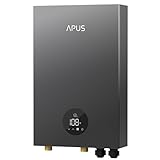
- 𝐇𝐈𝐆𝐇-𝐅𝐋𝐎𝐖 𝐇𝐎𝐓 𝐖𝐀𝐓𝐄𝐑 𝐅𝐎𝐑 𝐖𝐇𝐎𝐋𝐄 𝐇𝐎𝐌𝐄: Powered by a 27kW tankless water heater electric heating system, this electric water heater delivers up to 6.5 GPM (—ideal for 3-4 simultaneous uses) for showers, sinks, kitchens and laundry, making it a strong choice for larger households and multi-point residential use. Enjoy continuous hot water without waiting for a storage tank to recover. Actual flow varies with inlet-water temperature, selected outlet temperature and household demand.
- 𝐃𝐈𝐆𝐈𝐓𝐀𝐋 𝐂𝐎𝐍𝐓𝐑𝐎𝐋 𝐖𝐈𝐓𝐇 𝟏°𝐅 𝐀𝐃𝐉𝐔𝐒𝐓𝐌𝐄𝐍𝐓: Adjust water temperature from 86°F–140°F in 1°F increments using the LED digital display. The built-in Memory Function automatically recalls your previous setting, while intelligent self-modulating technology continuously adjusts heating output based on water flow to help maintain stable comfort.
- 𝐒𝐄𝐋𝐅-𝐌𝐎𝐃𝐔𝐋𝐀𝐓𝐈𝐍𝐆 𝐇𝐄𝐀𝐓𝐈𝐍𝐆 𝐖𝐈𝐓𝐇 𝐍𝐎 𝐒𝐓𝐀𝐍𝐃𝐁𝐘 𝐓𝐀𝐍𝐊 𝐋𝐎𝐒𝐒: Intelligent self-modulating technology automatically matches power output to real-time water flow and temperature demand, helping maintain a stable outlet temperature while reducing unnecessary electricity use. Because there is no storage tank, the hot water heater avoids repeatedly reheating stored water when hot water is not being used.
- 𝐂𝐎𝐌𝐏𝐀𝐂𝐓 𝐖𝐀𝐋𝐋-𝐌𝐎𝐔𝐍𝐓𝐄𝐃 𝐃𝐄𝐒𝐈𝐆𝐍 𝐖𝐈𝐓𝐇 𝐌𝐔𝐋𝐓𝐈𝐏𝐋𝐄 𝐒𝐀𝐅𝐄𝐆𝐔𝐀𝐑𝐃𝐒: The compact wall-mounted body measures approximately 17.7 × 11.4 × 3.5 inches, helping save valuable floor space in utility rooms, basements and protected indoor installation areas. Standard 3/4-inch NPT water connections support straightforward plumbing integration for permanent residential installations.
- 𝟐𝟒𝟎𝐕 𝐑𝐄𝐒𝐈𝐃𝐄𝐍𝐓𝐈𝐀𝐋 𝐈𝐍𝐒𝐓𝐀𝐋𝐋𝐀𝐓𝐈𝐎𝐍 𝐖𝐈𝐓𝐇 𝐌𝐔𝐋𝐓𝐈𝐏𝐋𝐄 𝐒𝐀𝐅𝐄𝐆𝐔𝐀𝐑𝐃𝐒: Designed for permanent 240V residential installation (requires 3×40 A breakers,6×8 AWG cable), the system monitors operating temperature, water flow and electrical conditions to support dependable everyday use. Fault information can be displayed when abnormal conditions are detected. Professional installation and proper grounding are recommended to help ensure safe, reliable long-term performance.
Its output table is more useful than its headline GPM: 11.2 GPM at a 35°F temperature rise, 8.7 GPM at 45°F, 5.8 GPM at 67°F, and 2.8 GPM at 140°F. The unit has a 0.5-GPM minimum flow, uses 120V AC power, and can be installed indoors or outdoors with approved direct-vent materials including listed PVC, CPVC, polypropylene, or special gas vent systems.
Navien lists a residential warranty of one year labor, five years parts, and 15 years on the heat exchanger under standard or controlled recirculation. Uncontrolled recirculation receives reduced coverage. That distinction matters if the goal is faster delivery at distant fixtures.
Do these 3 things before closing this tab:
1Clear out junk files and repair common Windows errors2Scan for outdated or missing drivers - takes under a minute3Repair Windows errors before they cause bigger problemsChoose it when: the house has adequate gas capacity, the cold-weather output matches the calculated demand, a condensate drain is practical, and the local installer has Navien experience.
Do not choose it solely because: the product page says 11.2 GPM. That figure is at a 35°F rise and may not represent performance with cold groundwater.
Best premium gas option for indoor/outdoor flexibility: Rinnai SENSEI RXP199iN
The Rinnai SENSEI RXP199iN is a premium natural-gas or propane model with indoor or outdoor installation flexibility. Rinnai lists a 0.98 UEF, up to 11.1 GPM, a 15,000–199,000 Btu/h input range, Wi-Fi capability, recirculation capability, ENERGY STAR certification, and ultra-low-NOx approval.
Rinnai lists one year labor, five years parts, and 15 years or 12,000 operating hours on the heat exchanger for residential use, subject to the company’s warranty conditions. Installation requirements, registration, fuel conversion, water quality, and local rules can affect coverage.
Choose it when: you want a high-efficiency gas unit, need indoor/outdoor flexibility, and have a qualified Rinnai installer available.
Important qualification: “Up to 11.1 GPM” is not a universal flow rate. Ask the installer for the manufacturer’s output at your required temperature rise rather than comparing that number with another model’s maximum rating.
Best when built-in recirculation matters: Rinnai RUR199iN
The Rinnai RUR199iN is an indoor natural-gas model with an integrated-pump design. It lists a 0.93 UEF, up to 11 GPM, Wi-Fi capability, recirculation capability, ENERGY STAR certification, and ultra-low-NOx approval.
The integrated pump distinguishes this model from a standard tankless heater that merely supports an external recirculation pump. That can simplify a properly designed recirculation installation, but it does not eliminate the need for correctly sized return piping and controls. Recirculation also uses energy, particularly if it runs continuously.
Quick wins for a faster PC:
Fix the driver behind crashes, sound loss and screen glitchesFind Drivers →Clear out junk files and repair common Windows errorsFree Scan →Scan for outdated or missing drivers - takes under a minuteDriver Scan →Choose it when: the heater will be indoors, fast hot-water delivery is a major priority, and the installer can design controlled recirculation correctly.
Trade-off: the RUR199iN has a lower published UEF than the RXP199iN and lacks the latter’s indoor/outdoor flexibility.
Best value and availability candidate: Rheem ECOH200DVELN-3
The Rheem Performance Platinum ECOH200DVELN-3 is a natural-gas condensing unit with a published 9.5-GPM output and 0.93 UEF. It includes built-in EcoNet Wi-Fi and leak detection, and it can support indoor or outdoor installation with the appropriate conversion equipment.
Rheem lists a 15-year heat-exchanger warranty, five years on parts, and one year labor. Its retailer access and installer familiarity may make it a better real-world choice than a technically stronger model that local professionals do not support.
Choose it when: the installed price, local availability, service network, and installer experience outweigh a modest efficiency or maximum-output difference.
Availability changes by location, and a product being sold through a major retailer is not proof of superior reliability. Before buying, confirm who will install and service it.
Best electric whole-home category: Stiebel Eltron Tempra Plus
The Stiebel Eltron Tempra Plus line is a strong electric option where gas is unavailable, restricted, or undesirable and the electrical service can support the selected model. The line ranges from 12 through 36 kW and requires no combustion venting.
Rank #2

- Note: Please ensure the household circuit breaker panel has a total current capacity of at least 150 amps. Our Orbek tankless water heater electric 14kw requires a 240V/60AMP two-pole breaker, 1 set of 6 AWG wires and 1/2" NPT water connections.
- Instant Hot Water Supply: Orbek electric tankless water heater 240v can provides max 3.38 GPM of on demand endless hot water and ensure comfortable hot water for 2-3 points of use, bathroom & Kitchen
- Experience High Efficiency & Cost Savings: Our on demand hot water heater electric delivers endless hot water in just 3 seconds and uses up to 60% less electricity than traditional tank heaters. Its advanced water-electricity separation technology minimizes scale and corrosion, ensuring lasting performance. Save energy and enjoy reliable, instant hot water.
- Certified Safety & Advanced Protection: This tankless hot water heater is ETL certified and engineered for your peace of mind. It features comprehensive safety systems including leakage, over-temperature, and dry-heating protection, along with lightning resistance. Every unit undergoes rigorous factory testing to ensure safe, reliable, and normal operation in your home.
- Stable Temperature Control: The built-in chip adjusts heating power 20,000 times per second, keeping water temperature stable within 1°F for a comfortable shower experience
Tempra Plus models self-modulate by monitoring incoming-water temperature, flow, and outlet temperature. Their Advanced Flow Control reduces flow when demand exceeds heating capacity rather than allowing outlet temperature to fall as sharply. That can produce a more predictable shower, although the heater cannot create more heat than the electrical service and model can supply.
Recommended Free Tools
Stiebel lists a seven-year leakage warranty and three-year parts warranty. The exact voltage, amperage, breaker count, and conductor requirements vary by model and 208/240V configuration; use the technical specifications rather than estimating from the product family name.
Choose it when: an electrician has confirmed the service capacity, the calculated demand is within the model’s cold-water output, and avoiding gas venting is valuable.
Best compact high-output electric candidate: EcoSmart ECO 27
The EcoSmart ECO 27 illustrates both the appeal and the main risk of electric tankless water heating. It is compact—17 by 17 by 3.625 inches—and lists a 0.3-GPM activation flow, 25–150 psi operating pressure, 27 kW power, and a maximum published 0.94 UEF.
The electrical requirements are substantial: 240V service, 113 amps, three 40-amp double-pole breakers, and 8-AWG copper wire. EcoSmart recommends a 200-amp service panel. A limited lifetime warranty is available with registration, subject to the warranty terms.
Free tools Windows power users keep installed
One-click scans. No signup required.
Choose it only after: an electrician confirms the service rating, feeder capacity, breaker space, conductor routing, load calculation, and permit requirements. A 30-amp circuit that served a conventional electric tank does not automatically support a 27-kW tankless heater.
Best non-condensing retrofit candidate: Rheem RTG-95DVLN-3
The Rheem RTG-95DVLN-3 is an indoor natural-gas, non-condensing model rated at 9.5 GPM and 0.82 UEF. Rheem lists a 43-foot vent-run capability and Hot-Start Programming intended to reduce cold-water bursts. Its warranty listing is 15 years on the heat exchanger, five years on parts, and one year labor.
Non-condensing equipment exhausts hotter gases and uses a different approved venting approach from condensing equipment. It may suit a particular retrofit, but it should not be selected merely because an old tank vent is already present. The vent material, diameter, length, elbows, clearances, termination, combustion air, and local code must all comply with the exact model manual.
Choose it when: the installer confirms that its approved venting is genuinely easier or more practical for the specific retrofit and the efficiency trade-off is acceptable.
Best point-of-use approach: size for one fixture, not the whole house
Point-of-use electric tankless heaters belong in a separate category from 199,000-Btu whole-home gas systems. They can be useful for a remote sink, bathroom addition, workshop, outbuilding, or other location where extending a long hot-water line is expensive or wasteful.
Select a point-of-use heater by measuring the fixture’s actual flow and calculating temperature rise. Confirm the circuit, voltage, minimum activation flow, and expected outlet temperature. A small sink heater is not an appropriate substitute for a whole-home heater serving several showers, a kitchen, a dishwasher, and a washing machine.
How we chose these models
The recommendations are based on:
- Published output at relevant temperature rises where available.
- UEF, while recognizing that efficiency does not determine installed cost or operating cost by itself.
- Fuel compatibility and the infrastructure required to use it.
- Minimum activation flow and the ability to serve low-flow fixtures.
- Venting, condensate, electrical, and gas-supply requirements.
- Recirculation features and warranty implications.
- Official warranty structure for residential use.
- Availability of manufacturer documentation and the importance of local service support.
We do not call any model “the most reliable” because the supplied evidence does not establish long-term failure rates. Warranty length, brand reputation, retailer reviews, and a product’s specification sheet are not the same as independent reliability data.
Gas model specifications: compare temperature rise, not just maximum GPM
| Model | Maximum input | UEF | GPM at 35°F rise | GPM at 67°F rise | Minimum flow | Fuel | Venting or placement | Power |
|---|---|---|---|---|---|---|---|---|
| Navien NPE-240S2 | 199,900 Btu/h | 0.96 | 11.2 | 5.8 | 0.5 GPM | Natural gas; field-convertible propane | Indoor or outdoor; direct vent with approved materials | 120V AC |
| Rinnai RXP199iN | 199,000 Btu/h | 0.98 | Not published in the supplied product data | Not published in the supplied product data | Verify current specification sheet | Natural gas or propane | Indoor or outdoor | Verify current installation manual |
| Rinnai RUR199iN | Not stated in the supplied product data | 0.93 | Not published in the supplied product data | Not published in the supplied product data | Verify current specification sheet | Natural gas | Indoor-only; integrated recirculation pump | Verify current installation manual |
| Rheem ECOH200DVELN-3 | Not stated in the supplied product data | 0.93 | Not published in the supplied product data | Not published in the supplied product data | Verify current specification sheet | Natural gas | Indoor/outdoor with appropriate equipment | Verify current installation manual |
| Rheem RTG-95DVLN-3 | Not stated in the supplied product data | 0.82 | Not published in the supplied product data | Not published in the supplied product data | Verify current specification sheet | Natural gas | Indoor; non-condensing venting | Verify current installation manual |
The missing cells are intentional: a headline comparison should not invent output ratings that were not verified from the supplied product pages. Ask for the manufacturer’s full performance chart at the temperature rise your home requires.
Electric model specifications
| Model or line | Power | Voltage | Total amps | Breakers | Minimum activation flow | Published flow information | Recommended service |
|---|---|---|---|---|---|---|---|
| Stiebel Eltron Tempra Plus | 12–36 kW, model-dependent | 208/240V configurations | Model-dependent | Model-dependent; see technical sheet | Model-dependent | Whole-home, model-specific output | Must be calculated for the selected model and house load |
| EcoSmart ECO 27 | 27 kW | 240V | 113 amps | Three 40-amp double-pole breakers | 0.3 GPM | Model-specific output varies with temperature rise and flow | EcoSmart recommends a 200-amp service panel |
How to size a tankless water heater correctly
Tankless sizing requires two separate calculations:
- Peak simultaneous flow: how many gallons per minute of hot water may be needed at one time.
- Temperature rise: how much the heater must raise the incoming water temperature.
Step 1: Add simultaneous fixture flow
List the fixtures that could operate together, then add their actual hot-water flow. Planning estimates might include a shower at approximately 1.5–2.5 GPM, a kitchen faucet at approximately 1–2 GPM, and model-specific demand for a dishwasher or washing machine. These are estimates, not universal standards.
For better accuracy, measure each fixture with a flow bag or a container and stopwatch, check the appliance specifications, and use the manufacturer’s sizing tool. Navien’s sizing guidance emphasizes simultaneous fixture demand and incoming water conditions. Rinnai’s selector assumptions include 2.0-GPM showerheads, a 120°F setpoint, and regional groundwater bands.
Step 2: Calculate temperature rise
Use this formula:
Required temperature rise = desired outlet temperature − coldest incoming groundwater temperature
Rank #3

- 【Dedicated Circuit Requirements & Installation】This Westinghouse tankless water heater electric requires a dedicated 60A double-pole breaker and 6 AWG wire at 240V for stable, safe operation. With 1/2" NPT connections and a compact wall-mountable design at just 12.59"H x 9.56"W x 3.28"D that takes zero floor space, this Westinghouse electric tankless water heater offers quick, hassle-free installation—whether new build or replacement, just as you'd expect from a genuine Westinghouse tankless water heater.
- 【3s Instant Heating& Strong GPM Output】This Westinghouse electric tankless water heater 240v delivers hot water in just 3 seconds with 98% thermal efficiency. The minimum start-up flow rate is 0.53 GPM.When inlet temperature is 62°F and outlet is set to 105°F, flow reaches 3.4 GPM—supporting 2 water points simultaneously. This on demand water heater brings endless instant hot water to your daily routine. That's the reliable performance you expect from a 14kW Westinghouse tankless water heater electric.
- 【Smart WiFi , Voice Control & Temperature Memory】 Compatible with Alexa and Google Home, this 14kW Westinghouse tankless water heater lets you adjust temperature and monitor usage via simple voice commands or the mobile app from anywhere. The new temperature memory function automatically restores your last preset temperature after a power outage—no repetitive setup required. This Westinghouse electric tankless water heater makes hot water management as effortless as controlling your smart lights, making it an essential component of any modern smart home, all backed by the trusted Westinghouse name.
- 【ETL Certified Safe & Reliable】This Westinghouse tankless water heater electric is ETL certified with 4-layer protection (leakage, overheat, dry-fire, over-voltage), IPX4 rating, and separated water-electricity pathway. Upgraded anti-fog technology resists moisture, allowing installation in bathrooms. This14kW on demand water heater is built with safety you can trust from Westinghouse.
- 【Long-Lasting Durability & Scale Reduction】 The separated water-electricity pathway in this Westinghouse tankless water heater electric significantly reduces internal corrosion and scale buildup, extending the unit's service life. A removable inlet filter and rotor can be easily taken out by hand for cleaning—we recommend rinsing them every 6 months to remove trapped sediment and scale. This simple maintenance step restores optimal water flow and ensures your Westinghouse electric tankless water heater consistently performs at its best, year after year, with the durability that Westinghouse products are famous for.
For example, a 120°F outlet with 50°F groundwater requires a 70°F temperature rise. Use the coldest expected groundwater—not the annual average—because winter conditions often determine whether the unit can serve multiple fixtures.
The U.S. Department of Energy tankless guide explains that colder incoming water requires more energy to reach the same outlet temperature and flow.
Step 3: Compare the manufacturer’s chart at that rise
Suppose two showers use 2 GPM each and a kitchen faucet uses 1 GPM. The planning demand is 5 GPM. If the desired outlet is 120°F and the coldest groundwater is 50°F, look for a unit that can provide at least 5 GPM at a 70°F rise—or at the nearest, more demanding published test condition.
Do not compare one unit’s 11 GPM rating at a 35°F rise with another unit’s 8 GPM rating at a 67°F rise. The first may have less useful capacity in a cold-climate application. The NPE-240S2 demonstrates the issue directly: its published output changes from 11.2 GPM at 35°F to 5.8 GPM at 67°F and 2.8 GPM at 140°F.
PC Slower Than It Used to Be?
A free scan shows the junk files, broken settings and background clutter dragging Windows down - then fixes them in one click.Free scan · Windows 10 & 11Crashes, No Sound, or Screen Glitches?
Random freezes, missing sound and display glitches usually trace back to one bad driver. Find and replace yours safely.Free scan · under a minuteGas versus electric tankless water heaters
| Choose gas or propane when… | Choose electric when… |
|---|---|
| The home already has adequate gas-meter and gas-line capacity. | The home has no gas service or local rules make new gas equipment difficult. |
| Several fixtures may operate together. | Demand is modest, or the heater is for one remote fixture. |
| Groundwater is cold and high whole-home flow matters. | An electrician confirms enough 208/240V service capacity. |
| A qualified gas-tankless installer can handle venting and condensate. | Avoiding combustion and venting is more important than compact electrical requirements. |
| The fuel cost and installation quote support the lifecycle economics. | The panel, feeder, breakers, wiring, and permits do not require an excessive upgrade. |
Gas and propane: higher output, more installation work
Gas and propane models can deliver much higher heat input than residential electric-resistance tankless units. That makes them more practical for multiple showers and cold groundwater. Modern condensing models can list UEF ratings around 0.93–0.98.
The trade-off is infrastructure. A gas unit may require a larger gas line or meter, sealed combustion air and direct venting, intake and exhaust clearances, condensate drainage, 120V power, freeze protection, and professional commissioning. A gas tankless heater is not automatically usable during a power outage: ignition, controls, fans, and freeze protection commonly require electricity. The Navien NPE-240S2, for example, specifies 120V AC power.
Natural-gas and propane models are not interchangeable unless the manufacturer explicitly permits conversion. A field conversion must follow the manufacturer’s instructions and local requirements.
Electric resistance: simple venting, demanding electrical service
Electric tankless heaters require no combustion vent, produce no on-site combustion emissions, and can fit in locations where gas venting is impossible. They are often particularly practical for point-of-use applications.
Whole-home electric resistance is a different matter. The largest models can require approximately 100–150 amps of dedicated 240V capacity. The ECO 27’s 113-amp requirement, three double-pole breakers, 8-AWG copper wiring, and recommended 200-amp panel show why an apparently inexpensive heater can become an expensive electrical project.
High electrical conversion efficiency does not automatically mean low operating cost. Compare local electricity rates, gas or propane rates, demand, and the cost of infrastructure before deciding.
Condensing versus non-condensing gas
Condensing models
Condensing gas heaters use a secondary heat exchanger to recover additional heat from combustion gases. That lowers exhaust temperature and allows approved plastic or polypropylene venting on many models, but it creates acidic condensate that must be drained and sometimes neutralized according to the installation manual and local code.
ENERGY STAR explains that certified gas tankless models use a secondary heat exchanger and can use about 9% less energy than conventional gas tankless models under its comparison assumptions. Condensing is generally attractive in new construction, major renovations, and installations where the drain and vent route are straightforward.
Outdated Drivers Are Slowing You Down
One free scan finds every outdated or missing driver and matches the right update for your exact hardware.Free scan · exact hardware matchPC Slower Than It Used to Be?
A free scan shows the junk files, broken settings and background clutter dragging Windows down - then fixes them in one click.Free scan · Windows 10 & 11Non-condensing models
Non-condensing units discharge hotter exhaust and use a different venting system. They may be useful in a particular retrofit, but they are not universally easier to install. A non-condensing unit can still require model-specific vent material, clearances, termination rules, adequate combustion air, and gas capacity.
Rheem lists a 43-foot vent-run capability for the RTG-95DVLN-3, but that does not authorize reuse of an existing tank vent. The exact model manual and local code control.
Installation requirements and hidden costs
Tankless replacement often costs more than swapping one storage tank for another because the fuel, venting, electrical, plumbing, and drainage systems may all change. Get a written quote that separates the following:
- Equipment and accessories.
- Removal and disposal of the old heater.
- Gas-line enlargement or gas-meter work.
- Electrical panel, feeder, breaker, conduit, disconnect, or service upgrades.
- Condensing vent materials and termination.
- Condensate drain, pump, or neutralizer where required.
- Isolation/service valves and flushing connections.
- Recirculation piping, pump, controls, and insulation.
- Water treatment for hard water.
- Permits, inspections, startup, and commissioning.
- Warranty registration and the first maintenance visit.
The DOE installation guidance identifies gas-supply capacity, electrical capacity, combustion air, venting, condensate disposal, location, and sizing as issues to evaluate before purchase.
Before buying: homeowner checklist
- Confirm whether the home uses natural gas, propane, or electricity.
- For gas, ask for the available meter and line capacity at the required Btu/h input.
- For electric, record the service size, voltage, main breaker, spare spaces, and existing large loads.
- Determine the coldest expected groundwater temperature or obtain a reputable regional estimate.
- List the fixtures likely to operate simultaneously and measure their flow where possible.
- Identify the installation location, vent route, intake and exhaust termination area, and condensate-drain route.
- Check water pressure, hardness, and filtration or treatment needs.
- Ask the building department or installer about permits, high-altitude rules, manufactured-home requirements, and local air-quality regulations.
- Get a written quote naming the exact model, fuel, venting method, upgrades, controls, startup, and warranty registration.
Gas-specific checks
- The gas line and meter must deliver the required Btu/h at the required pressure.
- Vent diameter, material, length, elbows, slope, and termination are model-specific.
- Condensing units need a suitable condensate-management plan.
- Indoor units generally use sealed direct venting or another approved combustion-air arrangement.
- Outdoor units need suitable freeze protection and weather-appropriate placement.
- Snow, ice, wind, and termination clearances can affect outdoor installations.
- Modern gas units usually need electricity for ignition, controls, fans, and freeze protection.
Electric-specific checks
- Verify whether the selected unit is configured for 208V or 240V.
- Have the electrician calculate the required load under the manufacturer’s instructions and applicable electrical code.
- Confirm breaker count, breaker size, conductor gauge, conduit routing, and panel capacity.
- Include the cost of a feeder, subpanel, panel replacement, service upgrade, disconnect, and permit work if needed.
- Do not assume an existing 30-amp storage-heater circuit can support a 27- or 36-kW tankless unit.
Plumbing-specific checks
- Install isolation valves and service ports for flushing.
- Confirm water pressure is within the model’s published range.
- Clean the inlet filter as directed.
- Address hard or mineral-rich water before it damages the heat exchanger.
- Insulate hot-water lines where appropriate.
- Use timers, aquastats, demand buttons, or motion sensors to control recirculation instead of relying on continuous circulation where avoidable.
- Check that low-flow fixtures exceed the heater’s minimum activation flow.
“Endless” and “instant” hot water: what you really get
Tankless is continuous, not unlimited
A correctly sized unit can provide continuous hot water while demand remains within its rated flow, temperature rise, and fuel or electrical capacity. It cannot deliver unlimited GPM. Two showers, a tub, a dishwasher, and a washing machine operating together may exceed one residential unit’s capacity.
Rank #4

- 【Instant Heating & Precise Temperature Control 】This 110V 3000W tankless water heater adopts premium stainless steel and ABS materials, heating water instantly in seconds without preheating. It supports temperature adjustment from 82°F (0.3GPM) to 131°F (0.5GPM) to meet daily water demands. The built-in LED display supports Celsius and Fahrenheit switching by long pressing the power button for 6 seconds, enabling real-time and accurate temperature monitoring for convenient use
- 【Full Safety Protection & High Energy Efficiency】 Equipped with comprehensive safety functions, this water heater features IPX4 waterproof, water-electric isolation, leakage-proof, dry-burn-proof and overheating protection, with automatic power-off for idle status. It eliminates daily safety hazards effectively. With a high thermal efficiency of 98%, it cuts down power waste greatly. Intelligent real-time operation monitoring ensures long-term stable and safe working performance
- 【Compact Wall-mounted Design & Versatile Usage】Featuring a lightweight wall-mounted structure, this space-saving water heater takes up no floor space and adapts to various narrow spaces. It is ideal for kitchens, bathrooms, apartments, RVs and outdoor camping. ETL certified with reliable quality, it delivers stable heating
- 【Fast Installation & Standard Universal Interface 】This water heater is designed with pre-drilled fixing holes and standard 1/2 inch NPT connectors, paired with detailed English instructions. It requires no complex tools or professional skills for quick installation, saving your time and cost. Note: This unit is not for shower use, which requires a minimum 1.8GPM water flow for stable heating
- 【Standard Installation Guide & Worry-free After-sales Service 】 To avoid E2 faults, only vertical installation is allowed while horizontal installation is forbidden. Seal pipe joints with Teflon tape, and match with ≥2.5mm² wires and 32A+ circuit breakers. We provide a 24-month warranty and 24/7 online customer service to solve your product and after-sales problems in time
If the calculated demand is unusually high, possible solutions include a larger unit, multiple units in a manufacturer-approved cascade, or a storage or buffer strategy. Do not solve an undersizing problem by assuming the outlet temperature can simply be raised indefinitely; scald protection and the unit’s operating limits still apply.
Tankless heats water on demand, not at the faucet
Tankless heating begins at the unit when flow is detected. The water already sitting cold in the pipe between the heater and shower still has to leave. Wait time depends on pipe distance and volume, fixture flow, minimum activation flow, ignition and ramp-up time, and the presence of a properly designed recirculation system.
Recirculation can reduce waiting time, but it does not make delivery literally instantaneous. Uncontrolled or poorly timed circulation can waste energy and may reduce warranty coverage on some products. Navien’s warranty, for example, distinguishes standard or controlled recirculation from uncontrolled recirculation.
Do these 3 things before closing this tab:
1Clear out junk files and repair common Windows errors2Fix the driver behind crashes, sound loss and screen glitches3Repair Windows errors before they cause bigger problemsMaintenance, hard water, and warranty terms
Plan for periodic flushing
Tankless heaters are not maintenance-free. Mineral scale reduces heat transfer, restricts flow, and can interfere with sensors and heat exchangers. Rinnai, Navien, and Rheem each recommend periodic maintenance, with annual flushing commonly used as a starting point. Hard-water conditions may require more frequent service.
Typical maintenance includes:
- Flushing or descaling the heat exchanger.
- Cleaning the inlet-water filter.
- Inspecting intake and exhaust terminations.
- Checking condensate drains and neutralizers on condensing models.
- Checking gas pressure, combustion, and error codes on gas units.
- Inspecting connections, valves, and controls.
Follow the exact owner’s and installation manuals. Rinnai’s FAQ, Navien’s maintenance guidance, and Rheem’s maintenance guidance all emphasize water quality and periodic service.
A long heat-exchanger warranty is not an all-inclusive warranty
Compare the heat exchanger, parts, labor, electronics, residential or commercial classification, registration requirement, professional-installation requirement, water-quality exclusions, and recirculation conditions separately.
For example, Rinnai’s warranty information includes trained-professional installation conditions in specified circumstances. Navien reduces coverage for uncontrolled recirculation. Scale damage, incorrect fuel conversion, improper venting, unauthorized parts, missing registration, inadequate maintenance, relocation, and non-residential use can also affect a claim.
What’s actually slowing this PC down?
Pick the symptom - the matching free tool is one click away.
ENERGY STAR cites a 20-year life expectancy for gas tankless units under its comparison assumptions, but that is not a guarantee for an individual heater. Water quality, maintenance, usage, installation, and service availability matter.
Are tankless water heaters worth it?
Tankless is often worth considering when you value compact installation, repeated hot-water availability, or the ability to avoid exhausting a storage tank. It is especially attractive in new construction, where the gas line, vent termination, condensate drain, electrical circuit, plumbing layout, and recirculation loop can be designed from the start.
It may be less compelling when the existing tank is inexpensive to replace, hot-water demand is modest, electricity is costly, or the home needs major gas, electrical, venting, or plumbing upgrades. ENERGY STAR estimates that certified gas tankless units can save a family of four approximately $95 per year compared with a standard gas storage heater and approximately $20 per year compared with a conventional gas tankless heater under its stated assumptions. Actual savings vary with fuel prices, demand, climate, installation, and recirculation.
For an electric-only home, compare electric resistance tankless with a heat-pump water heater before deciding. A heat-pump water heater stores hot water and transfers heat from surrounding air, and ENERGY STAR describes it as generally much more efficient than resistance heating. It may require a different amount of space and a different plumbing and condensate plan, but electric tankless is not automatically the most efficient electric choice.
Federal tax credits, rebates, and local rules in 2026
Do not rely on older pages claiming a current federal 25C tankless-gas credit. As of August 10, 2026, the IRS states that the Energy Efficient Home Improvement Credit applies to qualifying property placed in service through December 31, 2025. The IRS’s current legislation summary says the credit is not allowed for property placed in service after December 31, 2025.
Some older ENERGY STAR pages still display the former 30% credit and $600 maximum for qualifying natural-gas, oil, or propane tankless water heaters purchased and installed from January 1, 2023, through December 31, 2025. Treat that as historical information, not a 2026 incentive.
Utility rebates, state and local programs, manufacturer rebates, and installer promotions may still exist. Check the ENERGY STAR rebate finder using the correct ZIP code and installation date before signing a contract. Never assume a rebate applies to every model in a product family.
Also check local air-quality requirements. Some jurisdictions are adopting or implementing zero-NOx requirements for new water-heating equipment. Bay Area Air Quality Management District rules, for example, establish zero-NOx requirements for certain water-heating equipment beginning in 2027, while California materials describe regional zero-emission standards affecting water heaters. These are location- and equipment-specific rules, not a nationwide gas ban. Review the California Energy Commission material and the Bay Area source material if you are in an affected jurisdiction.
Common problems and how to recover
“The advertised GPM was nowhere near what I received.”
Usually, the rating was measured at a lower temperature rise than your home requires. Other causes include simultaneous demand, colder groundwater, inadequate gas pressure or electrical supply, an undersized unit, a clogged inlet filter, or a scaled heat exchanger.
Recovery: Recalculate peak GPM and temperature rise, then compare the manufacturer’s output chart at that rise. Have the installer verify fuel pressure or electrical supply and inspect filters and scale.
Best Value

- Tankless Electric Water Heater - This electric tankless water heater uses stainless steel and ABS materials, LED display. With 3000W power, the electric water heater tankless can raise the water by 82° F(0.3GPM) -131° F(0.5GPM) in seconds. The instant water heater can set Fahrenheit or Celsius degrees by holding the power button for 6 seconds. This 110 volt electric tankless hot water heater uses advanced technology, no need to preheat, eliminating the long waiting time for hot water!
- Safety Intelligence Reliable - This instant hot water heater has multiple protection functions. IPX4 waterproof, water and electricity isolation, leakage protection, dry boil protection, and automatic power off under overheating and inactivity. On demand water heater with LCD digital display, intelligent detection of working status, and performance. The thermal efficiency of electric hot water heater is as high as 98%, allowing you to enjoy hot water at any time and save energy.
- Efficient And Compact Design - This tankless hot water heater electric has a compact design, perfect for spaces such as kitchens, apartments, bathrooms, RVs, and camping. The on demand water heater electric adopts a wall-mounted design, freeing up valuable space for your home, enjoy hot water at any time. This instant electric water heater qualifies for ETL standard. You can expect the outstanding performance of this on demand electric water heater in the coming years.
- Easy To Install And Application - This electric instant hot water heater comes with pre-fabricated set screw holes, English instructions, and 1/2 inch NPT standard connections. This small tankless water heater electric has a simple design and is quick and easy to install, saving time. This tankless water heater electric 110v is ideal for spaces such as kitchens, apartments, bathrooms, RVs, and camping. TIP: Not Suitable for showers (Shower normally requires at least 1.8 GPM).
- Importance For Installation - ① The 110v point of use water heater for vertical installation only, no horizontal installation is allowed to avoid malfunction of the heating elements (E2). ② The electric tankless water heaters tighten the pipe connectors with Teflon tape to prevent a short circuit (E2). ③ This under sink water heater is recommended to be connected with wires with a cross-sectional area of ≥ 2.5 square millimeters, and connected to trip switches of over 32A for use.
“The water is hot at the heater but cold at the shower.”
The shower may be far from the unit, or the recirculation system may be absent or incorrectly piped. A malfunctioning mixing valve, cold-water crossover, low flow below the activation threshold, or a restriction can create the same symptom.
Recovery: Measure shower flow, clean the inlet filter, test for crossover, inspect mixing valves, and evaluate controlled recirculation.
Quick wins for a faster PC:
Scan for outdated or missing drivers - takes under a minuteDriver Scan →Repair Windows errors before they cause bigger problemsFix Now →Fix the driver behind crashes, sound loss and screen glitchesFind Drivers →“It runs hot, cold, then hot again.”
Demand may be exceeding capacity, flow may be fluctuating near the activation threshold, the unit may be short-cycling, or scale and debris may be affecting the flow sensor. Incorrect gas pressure, venting, or multiple low-flow fixtures can also cause cycling.
Recovery: Record error codes, measure flow, clean the inlet filter, verify gas or electrical supply, and have a qualified technician inspect combustion and venting where applicable.
“The gas heater stopped during a power outage.”
That is expected for many modern electronic gas tankless heaters. Ignition, controls, combustion fans, and freeze protection commonly need electricity. A generator or backup battery may help, but the correct solution depends on the model and installation. The NPE-240S2, for example, specifies 120V AC power.
“The electric heater was inexpensive, but installation was not.”
The electrical infrastructure is usually the reason. A 27-kW unit can require 113 amps and three dedicated double-pole breakers. Panel work, feeder upgrades, conduit, wiring, permits, and labor can dominate the project cost.
Recommended Free Tools
“The outdoor unit froze.”
Outdoor-rated does not mean freeze-proof. Freezing can occur after a power loss, when freeze protection is inadequate, when the unit is exposed to severe conditions, or when the plumbing is not drained correctly. Snow, ice, wind, and extended outages require a model-specific plan. Follow the owner’s manual for freeze protection and draining.
“The warranty claim was denied.”
Common causes include improper installation, missing registration, incorrect fuel or conversion, uncontrolled recirculation, skipped maintenance, scale or water-quality damage, unauthorized parts or venting, commercial use outside residential terms, and relocation or reinstallation.
Final buying checklist
- Decide whether you need whole-home or point-of-use heating.
- Calculate simultaneous GPM rather than using the largest advertised number.
- Use the coldest groundwater temperature to calculate temperature rise.
- Compare output at that temperature rise.
- Verify gas capacity or electrical service before purchasing.
- Choose condensing or non-condensing based on the complete venting and drainage design.
- Confirm propane compatibility and conversion requirements if applicable.
- Check local permits, air-quality rules, high-altitude requirements, and manufactured-home approvals.
- Plan for service valves, flushing, filtration, water treatment, and condensate management.
- Ask for an itemized installation quote and identify the local service provider.
- Read the warranty conditions, register the product, and schedule maintenance.
Frequently Asked Questions
Can a tankless water heater replace a 40-gallon tank?
Yes, if the tankless unit is sized for the home’s simultaneous flow and temperature rise. The comparison is not based on storage gallons; it is based on how many fixtures need hot water at once and how cold the incoming water gets. A unit that is too small may provide continuous hot water for one fixture but fail to maintain temperature when several fixtures operate together.
Can one tankless heater run two showers at once?
Often, but not always. Two 2-GPM showers require approximately 4 GPM before adding any other demand. In a home requiring a roughly 67–70°F temperature rise, compare that demand with the manufacturer’s output at the same rise. Maximum GPM at a low temperature rise is not an adequate answer.
Free tools Windows power users keep installed
One-click scans. No signup required.
Does a gas tankless water heater work during a power outage?
Usually not. Modern gas units commonly need electricity for ignition, controls, fans, and freeze protection. Check the exact model’s electrical requirements and consult the installer about a properly sized generator or backup system.
Does an electric tankless water heater require a larger electrical panel?
It may. Whole-home resistance models can require roughly 100–150 amps of dedicated 240V capacity. The EcoSmart ECO 27, for example, lists 113 amps, three 40-amp double-pole breakers, 8-AWG copper wiring, and a recommended 200-amp service panel. An electrician must verify the actual service and load calculation.
Do tankless water heaters need annual flushing?
Periodic flushing is commonly recommended, with annual maintenance a reasonable starting point. Hard or mineral-rich water may require more frequent descaling. Clean the inlet filter and follow the exact manufacturer’s maintenance and warranty instructions.
Are condensing gas tankless heaters better?
They are generally more efficient and are often a good choice for new construction or major renovations, but they require condensate management and approved venting. A non-condensing unit may make sense for a specific retrofit. Neither category is automatically easier or cheaper without reviewing the complete installation.
The Tool Desk
Outbyte PC Repair FREERepair Windows errors before they cause bigger problemsFix Now →Outbyte Driver Updater FREEFix the driver behind crashes, sound loss and screen glitchesFind Drivers →Can an outdoor tankless water heater freeze?
Yes. Outdoor models need adequate freeze protection, electrical power, suitable placement, and correct draining during extended outages or severe weather. Outdoor-rated does not mean immune to freezing.
How far can the heater be from the shower?
There is no single distance that guarantees fast delivery. Waiting time depends on pipe length, diameter, water volume, fixture flow, heater activation and ramp-up time, and recirculation. A controlled recirculation system can reduce the wait but adds equipment, piping, energy use, and maintenance.
Is a heat-pump water heater a better electric alternative?
It can be. A heat-pump water heater stores hot water and transfers heat from surrounding air, and ENERGY STAR describes it as generally much more efficient than electric resistance heating. Compare its space, plumbing, condensate, capacity, and installation requirements with electric tankless before choosing.
Are gas tankless heaters legal everywhere?
No equipment choice should be made without checking local rules. Some regions have adopted or are implementing zero-NOx requirements that affect certain new gas water heaters. These rules are location- and equipment-specific rather than a nationwide ban.
Does the warranty require professional installation?
Warranty requirements vary. Some manufacturers specify trained-professional installation in particular circumstances, while others distinguish controlled from uncontrolled recirculation or require registration and maintenance records. Read the exact model warranty before purchase and keep the installation and commissioning documentation.
The Bottom Line
Start with the home, not the product listing. For a gas home with adequate infrastructure, compare the Navien NPE-240S2, Rinnai RXP199iN, Rinnai RUR199iN, and Rheem ECOH200DVELN-3 at your actual temperature rise. For an electric home, have an electrician verify service capacity before comparing Stiebel Eltron or EcoSmart prices. If the required gas, venting, electrical, or condensate upgrades are excessive, a conventional or heat-pump storage water heater may provide better overall value.
Quick Recap
Product prices and availability are accurate as of the date/time indicated and are subject to change. Any price and availability information displayed on Amazon at the time of purchase will apply.




