The Tool Desk
Outbyte Driver Updater FREEScan for outdated or missing drivers - takes under a minuteDriver Scan →Outbyte PC Repair FREERepair Windows errors before they cause bigger problemsFix Now →Some links on this page are affiliate links: if you buy through them we may earn a commission, at no extra cost to you.
Yes—but only as a reset, not a permanent cure. This 30-day decluttering challenge uses one bounded task per day, a 15–30-minute time limit, and responsible routes for everything that leaves the home. The final step is a maintenance routine, because no challenge can keep a home tidy without ongoing habits.
Yes—but only if you treat the 30 days as a reset, not a permanent cure. This decluttering challenge gives you one bounded task per day, a 15–30-minute time limit, and a clear plan for deciding what stays, leaves, gets recycled, or needs special disposal. At the end, you should have less friction in the home and a maintenance routine that prevents the same piles from returning.
As an Amazon Associate I earn from qualifying purchases.
It is deliberately not a race to discard a fixed number of possessions. A steadily increasing quota can be motivating for some people, but it is a poor universal rule for families, renters, people with disabilities, or anyone dealing with grief or a major life change. Work at a safe pace and stop when the day’s time limit ends.
Before day one: set up the challenge
- Choose a daily window. Set a timer for 15–30 minutes. Stop when it rings, even if the room is not perfect.
- Prepare four destinations: keep, donate or rehome, recycle, and trash. Add a temporary relocate pile only for items that clearly belong somewhere else.
- Keep departures moving. Donation bags should leave the house promptly, recycling should go to an appropriate facility, and trash should not sit in a staging area for weeks.
- Use a “maybe” box sparingly. Date it and write a review deadline on the lid. It is a decision aid, not permanent storage.
- Do not shop first. Storage products can make an overfilled space look orderly while preserving the excess. Reduce the volume before deciding whether anything needs containing.
Keep important identity documents, financial records, medication, safety equipment, legal paperwork, and information needed for active warranties or taxes out of the general discard process. When uncertain, pause and verify before throwing something away.
Popular on Amazon
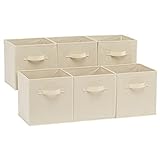
- INCLUDES SIX CUBES: Keep your home tidy and organized with this set of six cloth storage cubes
- EASY PORTABILITY: Each collapsible fabric storage cube comes with one sewn-in fabric handles.
- STURDY YET LIGHTWEIGHT: Made from lightweight yet durable fabric, these cube storage bins offer both strength and breathability
- MULTIFUNCTIONAL USE: These fabric cube organizer bins can be used as either open-top bins or as drawers in a storage-cube organizer (not included)
- STORAGE SPACE: Each collapsible fabric cube storage bin is suitable for organizing a variety of items
The 30-day decluttering challenge
Days 1–7: remove visible friction
- Day 1 — Entryway and drop zone
- Remove abandoned mail, duplicate bags, worn-out shoes, and objects that do not belong near the door. Create one defined landing place for keys, bags, and daily essentials.
- Day 2 — Living-room surfaces
- Clear coffee tables, side tables, media consoles, and floor piles. Return things to their homes before deciding that you need more storage.
- Day 3 — Media and technology
- Gather unused cables, obsolete remotes, duplicate chargers, and manuals for devices you no longer own. Keep accessories connected to equipment that is still in use. Set aside electronics and batteries for the appropriate local recycling route rather than automatically placing them in household trash.
- Day 4 — Kitchen counters and visible appliances
- Remove expired, broken, duplicate, or rarely used countertop items. Keep appliances that support your current routines, not hypothetical future habits.
- Day 5 — Pantry and food-storage containers
- Match containers with lids, discard damaged pieces, and consolidate duplicates. Group remaining containers by size only after the excess is gone.
- Day 6 — Refrigerator and freezer
- Check forgotten food, duplicate condiments, and containers with unidentified contents. Follow your local guidance for food and packaging disposal.
- Day 7 — Bathroom surfaces and cabinets
- Remove empty products, unusable cosmetics, dried-out items, and products no one uses. Medicines and chemical products may require special disposal; do not flush or pour them away unless local guidance specifically says to do so.
Days 8–14: clothing and personal care
- Day 8 — Everyday clothing
- Start with the current season. Pull out clothing that does not fit, feels uncomfortable, is damaged beyond repair, or is never chosen.
- Day 9 — Shoes, bags, and accessories
- Pair items, remove worn-out pieces, and identify duplicates. Keep the best version of genuinely multipurpose items.
- Day 10 — Underwear, socks, and sleepwear
- Remove stretched, damaged, or uncomfortable pieces. Keep a practical quantity that matches your laundry schedule.
- Day 11 — Outerwear and seasonal clothing
- Let go of items that no longer fit your climate, lifestyle, or size needs. Store only clothing that is genuinely used or needed for a foreseeable season.
- Day 12 — Linens and towels
- Keep a usable rotation and remove stained, torn, or excessive extras. Check an organization’s current policy before donating textiles; not every charity accepts damaged fabric.
- Day 13 — Toiletries and cosmetics
- Group products by type and remove empty or unusable items. Check product safety and expiration guidance where applicable rather than assuming every product can be discarded in the same way.
- Day 14 — Laundry area
- Dispose of empty containers and identify duplicate tools. Cleaners and other chemicals may qualify as household hazardous waste, so check the instructions from your local environmental or solid-waste authority.
Days 15–21: paper, work, hobbies, and children’s belongings
- Day 15 — Mail and paper backlog
- Recycle obvious junk mail, file documents that must be retained, and create one action location for unresolved paperwork. Shred sensitive material according to your privacy needs. Do not discard tax, legal, identity, financial, or active-warranty records without reviewing retention requirements.
- Day 16 — Home-office supplies
- Remove dried pens, duplicate notebooks, obsolete cables, and supplies that no longer match your current work.
- Day 17 — Books and manuals
- Keep books that are read, referenced, or meaningfully wanted. Manuals for products you no longer own can usually leave, but retain documents required for warranties, taxes, legal matters, or active equipment.
- Day 18 — Craft and hobby supplies
- Group supplies by active hobby, remove dried or incomplete materials, and set a realistic container limit. A limit is useful only if it reflects the space and time you actually have.
- Day 19 — Toys and games
- Remove broken, incomplete, outgrown, and persistently unused items. Involve children in age-appropriate choices, but do not make them solely responsible for difficult disposal decisions.
- Day 20 — Pet supplies
- Remove empty packaging, broken accessories, and supplies for pets or routines that no longer exist. Local shelters may accept unopened food or usable equipment, but confirm first.
- Day 21 — Garage, utility area, or basement shelf
- Choose one bounded zone rather than tackling the whole space. Keep hazardous products separate from ordinary trash and follow local household-hazardous-waste instructions.
Days 22–26: storage and emotionally difficult categories
- Day 22 — Linen closet and storage bins
- Empty one shelf or bin at a time. Remove duplicates and return only items with a clear category and a defined home.
- Day 23 — Holiday and seasonal décor
- Keep what your household actually displays or values. Label retained categories only after reducing the quantity.
- Day 24 — Sentimental items
- Choose a small, defined area and make decisions slowly. Keep meaningful possessions. Photographing a bulky object may preserve its memory, but a photograph is not a universal replacement for an item that matters to you.
- Day 25 — Keepsakes, cards, and children’s artwork
- Set a container limit and choose representative pieces rather than automatically preserving everything. For grief-related belongings, it is reasonable to defer decisions until you are ready.
- Day 26 — Digital clutter
- Delete duplicate downloads, obsolete files, and unused applications. Back up important information before deleting anything. If you accidentally delete a needed file, stop writing new data to that storage and consider specialized file-recovery help; recovery software is not a routine decluttering tool and cannot guarantee success.
Days 27–30: finish the reset and make it stick
- Day 27 — Review the “maybe” box
- Make a final decision on every item. If you cannot identify a realistic use, recipient, or deadline, the item should not automatically return to active storage.
- Day 28 — Donation, recycling, and disposal day
- Schedule donation drop-offs or pickups, recycling, electronics and battery collection, and hazardous-waste visits. Check accepted-item lists before loading a vehicle. A donation bag is not the correct destination for every unwanted item.
- Day 29 — Create homes for what remains
- Use existing shelves and furniture first. Only after measuring the space and reducing the inventory should you consider clear storage bins with lids for seasonal or infrequently used belongings. Clear containers keep contents visible, but they are containment aids—not a substitute for removing excess.
- Day 30 — Establish the maintenance reset
- Set a five- to ten-minute daily reset, a weekly donation or recycling exit, and a monthly review of one high-friction category. Labels can help identify stable homes, but labels should follow decisions rather than create new categories for excess possessions.
How to decide what leaves
Use practical questions instead of trying to reach an arbitrary item count:
- Do I use this, or is there a realistic near-term use?
- Does it fit my current home, body, work, household, and lifestyle?
- Is it safe, complete, functional, and worth maintaining?
- Do I already own a better or equivalent version?
- Would I choose this item again today?
- Am I keeping it because it is meaningful—or because deciding feels uncomfortable?
For shared belongings, ask the owner before discarding. For sentimental categories, a slower review is better than a forced decision that creates regret. Decluttering should reduce household friction, not create conflict or distress.
Also popular on Amazon

- Premium Material:The drawer organizer is made of non-toxic plastic which may be safely used. The transparent design makes it easy to find what you need quickly
- 4 Combinations of Different Sizes: A set of cabinet organizer includes 25 storage bins of 4 different sizes. Includes: 9 x 6 x 1.8 inches (3 pcs), 9 x 3x 1.8 inches(6 pcs), 6 x 3 x 1.8 inches(8 pcs), 3 x 3 x 1.8 inches(8 pcs)
- Long Lasting and Non-Slip: The plastic is robust and long lasting. The bottom of the storage organizers has a non-slip design to prevent the tray from moving around when the drawer is used
- Stackable Design: These clear storage bins stack into one other to help maximize your space. Use them side by side to keep organized. The clear color allows you to save time and find what you need quickly and easily
- Variety Storage Ways: Suitable for all kinds of drawers, such as dresser / bathroom / kitchen / office. Ideal choice for organizing cosmetics, pins, hair accessories, jewelry, office supplies, craft supplies, utensils, etc
Donate, recycle, or dispose of items responsibly
The right destination depends on the item and your location. The U.S. Environmental Protection Agency’s waste hierarchy favors reducing and reusing before recycling, while local programs determine what they actually accept. A recycling symbol alone does not prove that your curbside program takes an item.
- Donate or rehome: offer clean, safe, complete, usable items. Check the organization’s current accepted-item list before arranging a drop-off or pickup.
- Recycle: use the local program or facility’s rules for electronics, packaging, textiles, and other materials. Different facilities accept different items.
- Batteries and electronics: wipe personal information from devices. Lithium-ion batteries and devices containing them should not be placed in ordinary household garbage or recycling bins; use a collection route that specifically accepts them where required.
- Chemicals and paint: flammable, corrosive, toxic, or reactive products may qualify as household hazardous waste. Do not combine chemicals or pour them down a drain; ask your local authority about accepted drop-off options.
- Trash: use ordinary garbage only when the material is not suitable for reuse, recycling, or a special collection route under your local rules.
For U.S. readers, a ZIP-code or locality-based service that helps you find a donation center, locate electronics or battery recycling, or identify a household-hazardous-waste drop-off could make day 28 easier. Availability and accepted materials must be verified locally.
Also popular on Amazon

- BPA Free Material: Our storage bins are made of premium BPA free, durable, shatter-resistant, clear plastic. Food Safe. These organizer bins are crystal clear, allows you to find the contents quickly.
- Larger Capacity: Our organizer bins are 25% larger than other items of the same type, more practical, must haves in your daily life.
- Perfect Size: Our storage containers are 4.2L each. Measurement: 10.5"x7.2"x4.5". Suitable for all your home usage. Great help to organize your food, snacks, cleaning tools, towels even toys. Set of 12.
- Easy-grip Design: Our clear bins have built-in easy-grip cutout side handles, making it simple to lift, slide, and move from one shelf to another. They are ideal for storing anything in your pantry or elsewhere in your home.
- Multipurpose Bins: Designed to keep your pantry shelves neatly organized. Our clear organizer bins are great for home and office use for organization. Also use for the laundry room and bathroom. Expand your possibilities with our versatile clear organizer.
Only buy storage after you know what remains
Once the challenge has reduced the inventory, measure the shelf, cabinet, closet, or vehicle space before buying anything. Clear lidded containers are most useful for defined categories that are seasonal or infrequently used; choose a size you can safely lift and a shape that uses the available space. Do not buy containers to postpone decisions or fill every available inch.
Disclosure: This section may contain compensated retailer referrals. Any financial relationship should be stated clearly near the recommendation; a generic “affiliate link” label alone may not adequately explain it.
Do these 3 things before closing this tab:
1Clear out junk files and repair common Windows errors2Scan for outdated or missing drivers - takes under a minute3Repair Windows errors before they cause bigger problemsAlso popular on Amazon

- Make Storage More Simple — These clear storage bins are versatile enough to fit easily in your fridge, refrigerator as well as pantry shelves, and cabinets, make your storage easier and help to keep your refrigerator, fridge and pantry look neat and organized.
- Multi-Purpose — This set comes with 6 pcs same size bins, measures 11.3x 7.5 x 6 inches; these storage bins are great for storing your drinks, fruits, vegetables, yogurts, packaged goods, canned foods, baby foods, boxed foods, condiments, spices, bottled beers, small toys, toiletries, and more.
- Functional Storage For Any Space — Ideal for refrigerator, fridge, deep pantry shelves, cabinet, kitchen, bathrooms,laundry room ,under sink bedrooms, garages, living rooms, craft rooms, offices and other places. You can decide where to use these cabinet organizer bins according to your need.
- Clear View and Stackable— The visible clear material makes it easy to see what each storage bin contains, making it easier to locate your items and bring more convenience to your daily life. Stackable to maximize space when not in use.
- Easy to Carry with Built-Handles — Easy-grip side handles allow you to easily pull the bins out and select what you need. Made of premium BPA free durable material. Just need to wash with warm water and soap, don't place it in the dishwasher.
Optional maintenance tool: label only stable homes
If a category has survived the challenge and has a permanent location, a label can help household members return items consistently. The Brother P-touch PT-D202 home label maker is an optional example: Brother positions it for home organization and provides templates relevant to spaces such as pantries, linen closets, laundry rooms, and seasonal storage. It is not necessary for decluttering, and buying one before making decisions simply adds another possession. Compatible Brother P-touch TZe label tape is a replacement-consumable consideration for existing owners.
When a 30-day challenge is not enough
Pause the self-guided project and seek practical help if clutter blocks exits, creates pest or sanitation risks, interferes with cooking or bathing, makes the home unsafe, or causes severe distress. Hoarding-related distress and major life transitions may require professional or community support rather than a solo challenge. Safety takes priority over completing the calendar.
What success looks like after day 30
Success is not an empty house or a home that never becomes messy. It is knowing where daily essentials belong, being able to use the rooms safely, and having a short routine for correcting drift. Keep the five- to ten-minute reset, move donations and recycling out weekly, and revisit one troublesome category each month. The 30 days create the reset; those small habits are what keep the result usable.
Also popular on Amazon
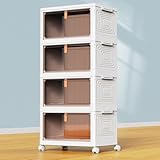
- 【92Qt Storage Boxes】With total volume of 92QT, the storage box measures 15.35in*11in*8.27in each tier.The Storage bins are good for sorting out crafts, photos, makeup product etc. Also handy as extra storage in the garage, classroom, bedroom, bathroom, office, or pantry. Combining good looks and practicality
- 【Collapsible & Install-Free】Stackable bins for storage with lid is a collapsible and install-free storage bin. It allows to fold flat when not use and you don’t need to keep instructions to remember how to assemble and reassemble or use tools to operate it when you want to use it
- 【High Quality Material】Made of high-quality PP,the product can be firmly used after assembly, and can also be detached for use alone. High-quality materials make the product have a longer life, which is undoubtedly the first choice for the same price
- 【Two Opening Ways】Storage bins with lid can be opened in two ways. You can open the top lid or open it from the front door.The front door switch comes with a magnet to ensure that the door does not open automatically. The front door makes it easy to access everything inside without having to pull everything down or remove things from the top cover. Prevent objects from being exposed to dust
- 【Movable Storage Containers】There are 4 wheels at the bottom of the storage box, which can be easily moved when needed. In addition, the storage organizer's 2 wheels have buckles that keep the wheel in place to prevent it from moving
Frequently Asked Questions
Will a 30-day decluttering challenge keep my home tidy permanently?
No. The plan is designed to reset a home, not guarantee permanent tidiness. A five- to ten-minute daily reset, a weekly exit for donations and recycling, and a monthly review are needed to maintain the result.
What are the four piles for decluttering?
Use keep, donate or rehome, recycle, and trash destinations. Add a dated, deadline-based maybe box only when you genuinely need more time. Electronics, batteries, chemicals, medicines, and sensitive paperwork may require special handling.
Can I donate everything I no longer want?
Not necessarily. Check the organization’s current accepted-item list first. Broken, unsafe, contaminated, hazardous, or location-restricted items may need recycling, repair, special collection, or disposal instead.
Should I buy storage bins before I declutter?
Only after reducing the quantity and measuring the space. Clear lidded bins can contain seasonal or infrequently used items, but buying containers first can preserve excess clutter.
The Bottom Line
A sustainable 30-day declutter challenge is a timed reset: remove what no longer serves the household, route each item responsibly, create homes for what remains, and maintain those decisions with short recurring habits. Do not buy storage until the volume is reduced—and do not treat the end of day 30 as the end of maintenance.
Quick Recap
Product prices and availability are accurate as of the date/time indicated and are subject to change. Any price and availability information displayed on Amazon at the time of purchase will apply.

