What’s actually slowing this PC down?
Pick the symptom - the matching free tool is one click away.
The best onion companions are plants that can share the same bed without competing for light, moisture, or root space. Carrots, lettuce, beets, brassicas, and tomatoes are among the most practical choices. Some traditional claims—such as onions automatically repelling every nearby pest—are much less certain, so treat companion planting as a bed-planning strategy, not a guaranteed pest-control system.
Success depends on spacing, planting time, climate, irrigation, and whether the companion will eventually shade the onions. Here are 18 plants that can grow beside onions, followed by the combinations to avoid and a practical plan for arranging them.
As an Amazon Associate I earn from qualifying purchases.
At a glance: the best onion companions
| Companion | Why it works | Important planning point |
|---|---|---|
| Carrots | Different root depths and compatible moisture needs | Do not rely on onions alone to prevent carrot fly |
| Lettuce | Cool-season crop that uses open space around developing onions | Harvest before the bed becomes crowded |
| Beets | Compatible root crop with a different foliage shape | Compatibility does not prove higher yields |
| Cabbage-family crops | Can share a bed when mature spacing is adequate | Leave room for broad leaves and airflow |
| Tomatoes | Different growth pattern and harvest timing | Plant onions on the sunny side |
| Strawberries | Listed as compatible in extension guidance | Use onions around established crowns rather than disturbing them |
| Spinach, chard, celery, herbs | Useful mixed-bed or cool-season neighbors | Manage moisture, shade, and final plant size |
The strongest evidence here is about compatibility: the crops can share space successfully. It is not proof that one plant will repel a named insect, improve flavor, or increase the other plant’s yield. University extension guidance also warns that many popular companion-planting claims have limited or contradictory research support. [CIT-001] [CIT-002]
Windows Errors? Fix Them Before They Spread
Repair common Windows errors and clear accumulated junk for a smoother, more stable PC - no reinstall needed.Free scan · no reinstallOutdated Drivers Are Slowing You Down
One free scan finds every outdated or missing driver and matches the right update for your exact hardware.Free scan · exact hardware match18 onion companion plants to grow
1. Carrots
Carrots are one of the most useful companions for onions. Both crops appreciate consistent moisture, but carrots develop deeper roots while onions are relatively shallow-rooted. Their contrasting foliage also lets a small bed use light and space efficiently.
#1 Best Overall

- Set includes 43 lightly assorted Vegetable and Herb seeds!
- All Seeds are Heirloom, 100% Non-GMO!
- High Germination Rate within 7-14 days
- Great way to stock up for the next planting season! Includes Freedom Farms Vegetable Set Mylar Bag for Optimal Seed Packet Storage!
- Wonderfully producing plants - Current stock will last for years when stored in a dry - cool place!
The familiar claim that onions deter carrot flies is often repeated, but it should be treated cautiously. The dependable benefit is that carrots and onions are compatible crops with different root zones and leaf forms. Penn State specifically describes onions, carrots, and lettuce as a workable interplanting combination. [CIT-002] [CIT-003] [CIT-004]
2. Lettuce
Lettuce is a strong space-saving companion, particularly in a cool-season bed. It can occupy open soil between young onions while the bulbs are still developing. Sow or transplant lettuce so that it can be harvested before its mature leaves crowd the onions.
Because both crops can grow during cooler conditions, onions, carrots, and lettuce make a practical combination for succession planting. [CIT-002]
Quick wins for a faster PC:
Repair Windows errors before they cause bigger problemsFix Now →Fix the driver behind crashes, sound loss and screen glitchesFind Drivers →3. Beets
Beets appear repeatedly on extension compatibility charts for the onion family. They make a sensible pairing when you want two root crops with different foliage patterns and harvest windows.
Plant them with enough room for beet roots to enlarge, and avoid claiming that onions will improve beet flavor or production. The evidence supports growing them together—not a guaranteed yield benefit. [CIT-003] [CIT-005]
4. Cabbage
Cabbage and onions can share a bed when the cabbage has enough room to form its broad head. Grouping them can also make it easier to inspect the brassicas and use row cover or other physical protection where needed.
Onions should not be presented as a substitute for pest scouting or cabbage protection. Cabbage worms, aphids, and other brassica problems still require their own management plan. [CIT-003] [CIT-006]
5. Broccoli
Broccoli is another compatible brassica. It can grow near onions as long as the mature broccoli plant does not block the onions’ light or force them into an overcrowded row.
Use the pairing for efficient space use, not as a proven broccoli-protection formula. Check the mature spacing on the broccoli variety before deciding how many onions to fit around it. [CIT-003] [CIT-006]
6. Cauliflower
Cauliflower can share space with onions, but it needs especially careful planning because its leaves form a broad canopy. Position onions where they will receive adequate light during bulb formation, and leave enough room for airflow around both crops.
A compatible crop chart does not mean the plants should be planted tightly together. Crowding can reduce growth and make disease and moisture problems harder to manage. [CIT-003] [CIT-006]
Rank #2

- Indoor Herb Garden: Grow your own indoor herb garden with our 12 variety pack of herb seeds. This kit includes homesteading essentials for a prolific kitchen garden.
- Variety: Includes basil seeds, chives seeds, cilantro seeds, dill seeds, marjoram seeds, oregano seeds, parsley seeds, sage seeds, thyme seeds, borage seeds, summer savory seeds & rosemary seeds. All fresh for the current planting season.
- Hydroponics: Herbs seeds are excellent for planting in hydroponics systems indoors! This is a planting method that doesn't use soil and has become increasingly popular in homestead gardens. Seeds for hydroponic garden indoor & outdoor.
- Culinary & Medicinal Herbs: The seeds within this collection / variety pack include both medicinal herb seeds and culinary herb seeds to grow and plant all sorts of versatile herbs in a home grown garden for cooking and medicine.
- Quality: All herbs seeds packaged by Seed Needs are intended for the current and the following growing seasons. All seeds are stored in a temperature controlled facility that is free of significant amounts of moisture.
7. Kale
Kale is a useful cool-season neighbor for onions and may suit a succession-planted bed. Young kale can occupy space while onions are small, although mature kale leaves can shade nearby plants.
Harvest outer kale leaves regularly and keep the onion row open enough to receive light. Kale’s compatibility comes from its cabbage-family relationship, not from a proven onion-derived pest effect. [CIT-003] [CIT-006]
8. Brussels sprouts
Brussels sprouts can be grown with onions if the bed has room for a large, long-season plant. The main challenge is timing: Brussels sprouts may remain in the garden long after the onions are ready to harvest.
Plan the onion harvest before the Brussels sprouts’ canopy expands. Planting onions along the edge or in spaces that will be accessible later is usually more practical than wedging them directly beneath the mature brassica.
Do these 3 things before closing this tab:
1Scan for outdated or missing drivers - takes under a minute2Repair Windows errors before they cause bigger problems3Fix the driver behind crashes, sound loss and screen glitches9. Collards
Collards are another cabbage-family crop that can share a bed with onions. They are particularly useful in a mixed vegetable garden where the gardener wants a long harvest from the collards and an earlier harvest from the onions.
Give collards their mature space and prevent their large leaves from covering young onions. Treat the pairing as compatible interplanting rather than guaranteed pest control. [CIT-003] [CIT-006]
10. Kohlrabi
Kohlrabi’s relatively compact, quick-growing form can fit well into a mixed bed with onions. It may be harvested before the onion bulbs need their full growing space, making it a good candidate for succession planting.
Even compact crops need adequate spacing. Keep the foliage from pressing against onion leaves, and do not assume that a compatibility chart guarantees improved growth. [CIT-003] [CIT-006]
11. Tomatoes
Tomatoes and onions have distinctly different growth patterns and can be useful in the same vegetable bed. The problem is shade: tomatoes eventually become tall and may block the light onions need as bulbs develop.
Plant onions on the sunny side of the tomatoes, or harvest them as green onions before the tomato canopy closes. Avoid placing onions where tomato foliage will consistently keep the soil damp and airflow poor. Several extension charts list tomatoes as compatible with the onion family. [CIT-005] [CIT-007]
12. Strawberries
Strawberries are listed as compatible with onions in extension resources, including guidance from the University of Vermont and West Virginia University. In a perennial strawberry bed, onions can serve as seasonal neighbors between or beside established plants.
Rank #3

- USDA CERTIFIED ORGANIC & NON-GMO: Grow your own fresh culinary herbs with peace of mind. Our open pollinated, heirloom variety pack is 100% clean, natural, rigorously tested for germination, and proudly certified organic by Oregon Tilth.
- 10 GOURMET HERB VARIETIES: Elevate your home cooking with this curated kit of popular kitchen herbs: Thyme, Italian Oregano, Cilantro, Giant Italian Parsley, English Lavender, Genovese Basil, Broadleaf Sage, Bouquet Dill, Common Chives, and Thai Basil.
- GERMINATION GUARANTEE: Never worry about dud seeds again. We sustainably store our herb packets in temperature- and humidity-controlled facilities to maximize freshness, ensuring robust sprouting and a beautiful, thriving home garden. If any issues, we promise to make it right.
- EXPERT GROWING SUPPORT INCLUDED: Perfect for beginners and seasoned gardeners alike. Every purchase grants exclusive access to our step-by-step seed-starting video guides, plus on-packet planting tips to help your indoor or outdoor garden flourish.
- PERFECT FOR ALL GARDEN TYPES: Whether you are planting in a windowsill planter, raised backyard bed, or indoor kitchen hydroponics system, these versatile heirloom plants adapt beautifully to any environment for fresh, year-round harvesting.
Do not dig up established strawberry crowns simply to add onions. Instead, use open spaces and keep cultivation shallow so the strawberry roots are not damaged. [CIT-005] [CIT-007]
13. Summer savory
Summer savory is a compact herb that can fit along the edge of an onion bed. It is a practical aromatic neighbor when it does not compete heavily for light or room.
Keep the claim modest: summer savory may be a useful companion, but the available compatibility guidance does not establish that it will repel a specific onion pest. [CIT-003] [CIT-006]
14. Spinach
Spinach suits a cool-season onion bed and can be harvested while the onions are still developing. It is especially useful in a succession plan: sow spinach early, harvest it as temperatures rise, and leave the onions to finish.
Spinach needs dependable moisture during establishment, but its short growing window can prevent it from competing with onions for the entire season. [CIT-003] [CIT-006] [CIT-012]
Free tools Windows power users keep installed
One-click scans. No signup required.
15. Chard
Chard is a reasonable mixed-bed neighbor for onions and can provide a longer harvest than spinach. Its leaves become large, however, so young onions should not be planted where they will be shaded throughout the day.
Place chard on the side of the bed where its mature leaves will not cover the onions, and harvest outer leaves to manage its footprint. [CIT-003] [CIT-006]
16. Celery
Celery is listed as compatible with the onion and cabbage families. Both crops need consistent moisture, making this combination better suited to a reliably irrigated bed than to a dry garden.
Celery is not a low-water companion. If the bed dries repeatedly, neither crop is likely to perform well. Use mulch and regular irrigation, while ensuring that the soil remains well drained. [CIT-003] [CIT-006]
17. Dill
Dill can be interplanted with onions when it is given enough room and does not block the onions’ light. Its fine foliage makes it less physically competitive than a large, dense crop, especially when grown near the edge of the bed.
Flowering dill may support beneficial insects, but that is a potential habitat and biological-control strategy—not a guarantee that onion pests will disappear. Let only as much dill flower as the bed can accommodate, since mature plants can become tall and self-seed. [CIT-005] [CIT-008]
Rank #4

- Includes 30 Different Varieties! 30 Packs of Seeds!
- High Germination Rate within 7-14 days
- All Seeds are Heirloom, 100% Non-GMO (Non Genetically Engineered)
- Create a Deluxe Vegetable Garden
- All seeds are dated Sell By December of the year you are purchasing them in but if kept in a cool dry place seeds typically stay viable for years
18. Chamomile
Chamomile is a lower-confidence addition to an onion companion list. It is listed as an aromatic companion for the cabbage family in Virginia Cooperative Extension material, while onion-family crops are listed as compatible with that group.
It is reasonable to grow chamomile near onions if you have room, but direct onion-specific evidence is weaker than it is for carrots, lettuce, beets, brassicas, and tomatoes. Use wording such as “may be compatible” rather than claiming that chamomile prevents a named pest or disease. [CIT-003]
Recommended Free Tools
Plants to avoid beside onions
Beans and English peas
Beans and English peas are the clearest conventional “avoid” recommendations in the sources reviewed. The University of Vermont, West Virginia University, and Virginia Cooperative Extension charts list beans and English peas as incompatible with the onion family. [CIT-005] [CIT-007] [CIT-009]
This is best understood as a compatibility recommendation, not as proof of a universal chemical incompatibility in every soil and climate. If space is limited, place beans and peas in a separate bed rather than testing the combination in your main onion planting.
Do not confuse companion planting with crop rotation
Garlic, leeks, shallots, scallions, and chives are all members of the onion family. They may be visually convenient neighbors, but repeatedly planting alliums in the same soil can allow shared pests and diseases to build up.
Rotate by plant family when possible. Moving onions and other alliums to a different part of the garden is more important for long-term disease and pest management than scattering onions among several compatible crops. The University of Minnesota also notes that onions are shallow-rooted while carrots have deeper roots, which is useful for planning a mixed bed but does not replace rotation. [CIT-009] [CIT-010]
The Tool Desk
Outbyte Driver Updater FREEScan for outdated or missing drivers - takes under a minuteDriver Scan →Outbyte PC Repair FREERepair Windows errors before they cause bigger problemsFix Now →How to arrange an onion companion bed
1. Start with the light requirements
Onions need sufficient light for foliage growth and bulb development. Put onions on the sunny side of tomatoes, Brussels sprouts, cauliflower, chard, or other plants that will become tall or broad.
Tomatoes are particularly important to position carefully. A young tomato may look harmless in spring, but its canopy can shade onions later in the season. If the bed is narrow, place the tallest crop on the side that will not cast afternoon shade across the onions.
2. Combine contrasting root zones
Use the classic onion-carrot-lettuce combination when you want an efficient cool-season bed. Onions are shallow-rooted, carrots explore deeper soil, and lettuce fills some of the open space above ground. This does not eliminate competition, but it can make better use of the available bed. [CIT-002] [CIT-010]
3. Leave room for mature brassicas
Young cabbage, broccoli, kale, cauliflower, collards, kohlrabi, and Brussels sprouts often look small at planting time. Use their mature width—not their seedling size—to calculate spacing.
The Tool Desk
Outbyte Driver Updater FREEFix the driver behind crashes, sound loss and screen glitchesFind Drivers →Outbyte PC Repair FREEClear out junk files and repair common Windows errorsFree Scan →Keep onion foliage from being buried under brassica leaves, and maintain enough airflow for the plants to dry after watering. If the brassica will occupy the bed for a long season, plant onions at its sunny edge or plan to harvest the onions earlier.
Best Value
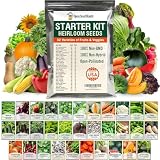
- COMPLETE VEGETABLE GARDEN VARIETY PACK – Grow a thriving home garden with 32 popular vegetable seeds including Bean, Beet, Bell Pepper, Broccoli, Brussels Sprout, Cabbage, Cantaloupe, Carrot, Cauliflower, Celery, Corn, Cucumber, Eggplant, Kale, Lettuce (3 types), Lima Bean, Okra, Onion, Pea, Parsnip, Pumpkin, Radish, Spinach, Sunflower, Swiss Chard, Tomato, Turnip, Watermelon, Zucchini. A diverse mix perfect for fresh meals, backyard gardens, and sustainable growing.
- PREMIUM HEIRLOOM SEEDS – Our carefully selected heirloom seeds are chosen for reliability, strong germination, and adaptability, making them ideal for beginner gardeners, experienced growers, homesteads, and small farms.
- GROW A SELF-SUFFICIENT GARDEN – Enjoy a wide range of vegetables from crisp greens and root crops to flavorful fruits and hearty garden staples. Perfect for fresh ingredients for salads, soups, and home-cooked meals straight from your garden. Each pack includes an easy-to-follow growing guide to ensure success for every gardener.
- INDIVIDUALLY PACKED FOR FRESHNESS – Each seed variety comes in its own resealable, waterproof packet designed for long-term storage, easy organization, and protection from moisture to keep seeds fresh until planting time.
- GIFTABLE GARDENING SET – Thoughtfully packaged and ready to share, this vegetable seed collection makes a perfect gift for gardeners, homesteaders, beginners, or anyone who loves growing their own food.
4. Use succession planting
Fast crops such as lettuce and spinach can be planted between or near onions and harvested before the onions need their full space. This is more reliable than planting every crop at the same time and hoping they remain compatible as they mature.
Succession planting can also help you avoid a crowded bed: sow a quick crop first, then remove it as the slower onion crop expands. [CIT-012]
5. Keep moisture consistent during onion growth
Onions are shallow-rooted and need steady moisture while actively growing. Water deeply enough to wet the root zone, then monitor the soil rather than relying on a fixed national watering schedule. Sandy beds may need more frequent irrigation than heavier soils.
Free tools Windows power users keep installed
One-click scans. No signup required.
As bulbs mature and the tops begin to fall, reduce or stop irrigation according to local growing conditions and the crop’s stage. Excess moisture late in the season can interfere with curing and may increase rot risk. Onions also need well-drained soil. [CIT-011]
6. Use sensible onion spacing
For bulb onions grown from sets, Oregon State University guidance gives approximately 4 inches between plants and 12–15 inches between rows. Green onions can be planted more closely because they are harvested before forming large bulbs. Adjust spacing for the variety, growing method, and whether neighboring crops will compete for light. [CIT-010] [CIT-011]
Independent reader supportYour contribution helps us test, update, and keep practical guides available for everyone.Seeds or sets: choosing onions for a companion bed
Choose varieties according to your region and day length rather than assuming one onion performs everywhere. Day length affects when bulb onions begin bulbing, and local planting dates vary substantially.
- onion sets: usually the simpler choice for beginners and useful when you want a straightforward planting method. Select firm, dormant sets and plant them at the appropriate depth and spacing for your crop.
- Onion seeds: offer more variety choices and can be started indoors or sown directly where the climate and season permit. They require more planning, especially where the growing season is short.
- Green onions: can be planted more closely and harvested earlier, making them convenient for filling spaces around slower companion crops.
If you are buying supplies, compare onion seeds for companion planting by variety, day-length suitability, planting season, and seller—not simply by packet price. For a beginner-friendly start, onion sets may be less demanding than raising seedlings, but they are not automatically the best choice for every climate or onion type.
Common mistakes with onion companion planting
- Expecting pest control instead of planning space: A compatible neighbor does not guarantee that insects or diseases will be prevented.
- Overcrowding the bed: Compatibility charts do not override mature plant size, light requirements, or airflow.
- Planting tall crops on the sunny side: Tomatoes and large brassicas can shade onions during bulb formation.
- Keeping the bed wet late in the season: Onions need moisture while growing, but irrigation should be reduced as bulbs mature and tops fall.
- Planting alliums repeatedly in the same soil: Onions, garlic, leeks, shallots, scallions, and chives share pest and disease risks.
- Using a national planting calendar: Onion timing depends on region, variety, day length, and whether you are growing from seed or sets.
A practical planting plan
- Choose a well-drained, sunny bed and check the local planting window for your onion variety.
- Place onions where they will receive light throughout bulb formation, especially if tomatoes or brassicas are nearby.
- Plant carrots, lettuce, or beets in open spaces where their roots and foliage will not immediately crowd the onions.
- Use spinach or lettuce as an early crop that can be harvested before the onion canopy expands.
- Put large brassicas and chard at their mature spacing, with onions along a sunny edge or in a harvestable gap.
- Keep beans and English peas in a separate bed.
- Water consistently while onions are actively growing, then taper irrigation as the bulbs mature.
- Rotate alliums to another bed in future seasons, even if the current companion combination performs well.
Frequently Asked Questions
What is the best companion plant for onions?
Carrots are one of the best-supported choices because onions and carrots have different root depths, compatible moisture needs, and contrasting foliage. Lettuce also works well in a cool-season, space-saving planting.
Can onions be planted next to tomatoes?
Yes, tomatoes are commonly listed as compatible with onions. Plant the onions on the sunny side or harvest them as green onions before the tomato canopy becomes large enough to shade them.
Do these 3 things before closing this tab:
1Fix the driver behind crashes, sound loss and screen glitches2Repair Windows errors before they cause bigger problems3Scan for outdated or missing drivers - takes under a minuteCan I plant beans or peas with onions?
Most extension compatibility charts recommend keeping beans and English peas away from onions. This is a conventional compatibility recommendation rather than a claim of a universally proven chemical incompatibility.
Do onions repel carrot flies?
That claim is widely repeated, but the stronger evidence is that onions and carrots can share space successfully. Do not rely on onions alone for carrot-fly control.
Can onions be planted next to garlic, leeks, or chives?
They are all members of the onion family, so they may be physically compatible, but repeatedly planting alliums together or in the same soil can increase shared pest and disease pressure. Crop rotation is still important.
The Bottom Line
Choose onion companions for practical compatibility: carrots and lettuce for efficient cool-season spacing, beets for another root-crop pairing, brassicas where mature spacing allows, and tomatoes where onions can stay in full sun. Use herbs, strawberries, spinach, chard, celery, and chamomile as situational neighbors rather than guaranteed pest-control plants. Keep beans and English peas separate, maintain consistent moisture while onions grow, and rotate alliums between beds in future seasons.
Quick Recap
Product prices and availability are accurate as of the date/time indicated and are subject to change. Any price and availability information displayed on Amazon at the time of purchase will apply.

