October is not a universal pruning month. The right task depends on your climate, whether the plant is dormant, whether it flowers on old or new wood, and whether you are removing a hazard or reshaping healthy growth. In many regions, October is suitable for sanitation cuts, spent summer canes, suckers and selected light trims—not heavy pruning of every shrub.
The safest rule is simple: identify the plant first, make only necessary cuts in dry weather, and postpone structural pruning when local guidance says fall cuts could trigger tender growth or remove next spring’s flower buds.
As an Amazon Associate I earn from qualifying purchases.
Why October pruning advice varies
Several reputable sources give different fall recommendations because they address different climates and plant groups. The Royal Horticultural Society’s UK schedule permits selected October work on hedges, climbing and rambling roses, Buddleja davidii and Lavatera. University of New Hampshire and University of Maryland Extension guidance is more conservative for woody plants in the United States, warning that fall pruning can stimulate tender growth just before freezing weather.
What’s actually slowing this PC down?
Pick the symptom - the matching free tool is one click away.
Neither approach is a contradiction. Treat October as a decision window rather than a deadline. A dry, mild autumn in one region may be followed by an early freeze in another. A plant that blooms on new wood can tolerate a different timing from one that formed next spring’s buds months ago.
#1 Best Overall

- CLEAN CUTS FOR LIVE GROWTH: Bypass blade design is ideal for pruning delicate flower stems and green growth, helping reduce crushing and plant damage while cutting stems and small branches up to 5/8” in diameter
- BLADES STAY SHARP: Precision-ground steel blades are engineered to stay sharp through heavy use, & all-steel construction provides lasting durability, delivering consistent cutting performance for regular garden maintenance & detailed pruning tasks
- SMART BLADE FEATURES: Blade coating helps reduce friction for smoother cuts, minimizes sap buildup & gumming, and enhances resistance to rust for longer-lasting performance in outdoor conditions; sap groove keeps the blades from sticking during use
- COMFORTABLE, CONTROLLED GRIP: Ergonomic, non‑slip handle enhances control and reduces hand fatigue during repetitive cuts; easy‑open safety lock secures the blade for safe transport and compact storage
- INCLUDES: (1) Fiskars Bypass Pruning Shears designed for everyday gardening and plant care and backed by a Lifetime Warranty. Product care tips: Wipe pruners clean after each use to prevent sap build-up and lightly oil blade for longer product life
Four checks before you make a cut
1. Find out where the flowers form
Spring bloomers such as azalea, dogwood, redbud, rhododendron and forsythia commonly set flower buds on old wood in fall. Cutting them before bloom can remove the display you want next spring. University of Georgia and University of Maryland guidance generally places their pruning after flowering, not in October.
Panicle and smooth hydrangeas flower on new-season growth, while mophead and oakleaf hydrangeas generally carry buds on older stems. A plant label, cultivar record or local extension office can prevent an expensive identification mistake.
2. Separate sanitation from reshaping
Removing a dead, diseased, broken or dangerous branch is a different job from reducing a healthy plant’s size. New Hampshire and Delaware Extension both recognize the “3 Ds”—dead, damaged and diseased wood—as the main reason to prune outside the ideal seasonal window. If a branch threatens people, structures or utility lines, safety takes priority; use a qualified arborist for large or elevated work.
3. Check dormancy and weather
Wait for the plant to be fully dormant when the recommendation calls for it, and choose a dry day. Wet foliage and wet cuts can increase disease spread. Early-fall cuts may also produce immature growth that is less prepared for cold. New Hampshire Extension notes that autumn wounds can heal more slowly and face fungal or insect pressure.
4. Decide whether wildlife or disease has priority
Standing ornamental grasses and seedheads from coneflower or black-eyed Susan can supply winter shelter and bird food. Remove foliage from disease-prone perennials when sanitation is needed, but do not strip every bed simply to make it look tidy.
Rank #2
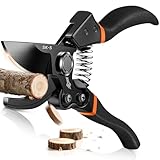
- LONG-LASTING SHARPNESS: Japanese SK5 bypass blade with titanium coating is tested through 5,000 cuts to maintain a sharp edge and deliver clean, consistent cuts on live stems and branches
- BUILT FOR 5X DURABILITY: Heavy-duty 3-layer titanium-coated SK5 blade resists wear and corrosion, while anodized aluminum handles and high-hardness screws reinforce the pruner. Repeated cutting tests show up to 5X the durability of standard pruners
- POWERFUL 4X LEVER CUTTING: The optimized lever-action design multiplies cutting force up to 4X, making thicker branches easier to prune with less hand effort. Cuts branches up to 3/4" with smooth, controlled power for everyday garden pruning
- ARTHRITIS & SENIORS FRIENDLY: Ergonomic non-slip rubber handles cushion pressure and provide a secure, comfortable grip, helping reduce hand and wrist fatigue. A comfortable hand pruner for seniors, arthritis and longer pruning sessions
- ONE-HAND SAFETY LOCK: The easy-access safety lock opens and closes with one hand for faster trimming, then securely holds the blades closed for safer carrying and storage
Ten October pruning decisions
| Plant or group | October action | Delay or avoid | Key reason |
|---|---|---|---|
| Japanese spirea | Light 3-D cleanup and removal of spent blooms | Heavy annual reduction | Major shaping is better in early spring |
| Panicle and smooth hydrangea | After full dormancy, remove 3-D wood and spent heads; shorten modestly | Major reshaping; fall cuts on mophead or oakleaf types | Flowering wood differs by species |
| Raspberries | Remove spent summer floricanes; handle two-crop fall types selectively | Cutting every green cane | Cane age and crop system determine next year’s fruit |
| Blueberries | Remove dead, diseased, broken, weak or crossing canes | Major thinning | Structural renewal is best while dormant in late winter or early spring |
| Roses | Lightly shorten whippy canes, about one-third, where wind-rock is a concern | Hard pruning in most US regions | Rose type and regional climate change the timing |
| Southern magnolia | In southern regions after flowering, remove 3-D branches and shape lightly | Heavy winter cuts | Bleeding sap and regional conditions matter |
| Gardenia | In warm regions after flowering, remove leggy or unhealthy growth and shape lightly | Severe reduction | Heavy cuts can reduce next season’s flowers |
| Fruit trees | Remove dead or damaged wood, rubbing low apple or pear branches, diseased wood and mummified fruit | Structural pruning; October-January peach pruning | Framework work belongs in the late-winter window |
| Selected herbaceous perennials | Remove diseased foliage from iris, hollyhock, phlox, peonies, bee balm and hostas | Automatic removal of healthy grasses and seedheads | Disease control must be balanced with wildlife value |
| Shrubs with suckers | Cut basal suckers close to their origin | Late-fall overhaul of overgrown shrubs and trees | Containment is different from rejuvenation pruning |
Plant-by-plant instructions
Japanese spirea: clean, do not renovate
Use sharp bypass shears to remove dead, damaged or diseased stems and any remaining spent flower clusters. Make the cut back to a healthy branch or the plant’s base without removing healthy framework. Japanese spirea’s heavy annual pruning belongs in early spring, so October is for appearance and sanitation rather than a drastic size correction.
Panicle and smooth hydrangeas: confirm the species first
Once a panicle or smooth hydrangea is fully dormant, remove 3-D stems and spent flower heads. If a branch must be shortened, keep the reduction modest. Save major reshaping for late winter or early spring.
Quick wins for a faster PC:
Scan for outdated or missing drivers - takes under a minuteDriver Scan →Repair Windows errors before they cause bigger problemsFix Now →Do not apply that instruction to every hydrangea. Mophead and oakleaf hydrangeas can carry next year’s flowers on old wood. University of Georgia Extension identifies oakleaf hydrangea as an exception to the general new-wood rule; a fall cut can remove those buds.
Raspberries: identify the cane and crop system
Summer-bearing raspberries fruit on second-year floricanes. After fruiting, those old brown canes can be cut to ground level. Tie the fresh green primocanes to their support so snow and wind do not damage them.
Fall-bearing raspberries grown for two crops require more restraint. Remove only the fruiting upper portion and retain the lower section for its potential summer crop. The same fall-cane rule should not automatically be extended to every cane berry: the October article also names summer-fruiting blackberries and gooseberries, but crop type still matters.
Rank #3

- What Makes VT-C800 Unique? Ever-Sharp Teflon-Coated SK5 Blades | Jam-Proof Sealed Spring | Ambidextrous Thumb Lock | Backed by Lifetime Support
- 【UPGRADED SK5 BLADE FOR 3X LASTING SHARPNESS】Built with an ultra-sharp SK5 steel blade and Teflon non-stick coating, the C800 is designed for cleaner cuts, smoother slicing, and less sticking during repeated garden scissors. The hard SK5 blade helps maintain a sharp cutting edge, while the low-friction coating helps reduce sap and resin buildup on roses, stems, shrubs, vines, and small branches
- 【SEALED JAM-PROOF SPRING, NO MID-CUT JAMS】Say goodbye to exposed springs that catch leaves, dirt, and garden debris. Unlike ordinary plant shears and garden shears, the C800 uses a sealed Jam-Proof Spring system that helps block moisture and debris, resist rust and wear, and keep the blade snapping back smoothly. Less cleaning, more reliable blade return — for backyard gardens, flower beds, shrubs, and damp outdoor conditions
- 【EASY THUMB-ACTIVATED SAFETY LOCK】These garden clippers feature a simple one-handed thumb glide lock that works smoothly for both left- and right-handed gardeners, even when wearing thick gardening gloves. It delivers quick, secure locking during storage or transport, helping prevent accidental openings and making the gardening shears safer and easier to carry between pruning tasks
- 【ERGONOMIC DESIGN FOR WEAK HANDS】Designed for comfort during longer backyard pruning sessions, the C800 features curved non-slip grips that help improve control and reduce hand fatigue. Smooth blade return and a comfortable handle shape make pruning easier for seniors, regular growers, and women gardeners
Blueberries: reserve renewal cuts for dormancy
In October, remove only canes that are dead, diseased, damaged, weak, broken or clearly crossing and rubbing. Avoid taking out substantial healthy wood merely to open the center. Major blueberry thinning is better evaluated in late winter or early spring, when the plant is dormant and its structure is easier to see.
Roses: reduce wind leverage, not the whole plant
In the October guidance for many regions, overly long or whippy rose canes may be shortened by about one-third to reduce wind-rock. Remove fallen leaves and prunings from the bed, especially where disease has been present. Reserve hard pruning for late winter or early spring unless local rose guidance says otherwise.
The RHS gives a different UK recipe: climbing and rambling roses can be pruned in October, and some roses may be cut back by half to reduce wind-rock. Rose class, exposure and local climate determine which approach is appropriate; do not transfer the UK amount automatically to a colder or warmer US garden.
Southern magnolia: a regional, post-flowering exception
For gardeners in the South, the October article permits light shaping of southern magnolia after flowering has finished, along with removal of dead, damaged or diseased branches. Avoid turning that into a winter renovation. Magnolia and other “bleeding” trees can release sap from winter cuts. University of Georgia guidance lists related bleeding species—including birch, maple, beech, willow and dogwood—as reasons not to rely on a simple October rule.
Gardenia: wait for the last flowers
In warm regions, wait until flowering has ended, then remove leggy, dead, damaged or unhealthy growth. Shape lightly so the plant keeps enough flowering wood for the next season. Severe pruning can reduce the following year’s bloom, so October is not the time to force a dramatically smaller gardenia.
Windows Errors? Fix Them Before They Spread
Repair common Windows errors and clear accumulated junk for a smoother, more stable PC - no reinstall needed.Free scan · no reinstallCrashes, No Sound, or Screen Glitches?
Random freezes, missing sound and display glitches usually trace back to one bad driver. Find and replace yours safely.Free scan · under a minuteRank #4

- DUAL CUTTING POWER: VERSATILE PRUNING COMBO --- With both Pruning Shears and Pruning Snip, this combo delivers unmatched versatility. Whether you're delicately trimming flowers and shrubs, tackling thicker tree branches, or tending to your vegetable and fruit garden, our combo pack excels in all areas. They're also perfect for landscaping projects and maintaining the health and appearance of indoor plants. With this pack, you have a versatile tool that simplifies your gardening tasks.
- ULTRA SHARP --- Much less effort to cut branches with our combo pack. Our pruning shears are crafted from premium Stainless Steel, and the pruning snip features a stainless steel blade with a titanium coating. Our garden scissors and garden clippers boast exceptional durability and sharpness. A perfect pruning shears for gardening and a must-have garden tool, hedge clippers pruners for gardening.
- RUST PROOF STAINLESS STEEL GARDENING SHEARS --- Our branch cutter tree pruner combo is built to last.
- SENIORS AND ARTHRITIS FRIENDLY --- Our pruners for gardening have comfortable handles that are easy to grip. With a non-slip texture for enhanced control, you can confidently prune in wet conditions. You can work longer without any hand fatigue.
- SAFETY LOCK PREVENTS ACCIDENTS --- Both of our pruning shears and pruning snips come with a built-in safety lock that securely holds the blades closed when not in use, preventing any accidental openings that could lead to injuries. This feature is designed for easy, one-handed activation, offering convenience and peace of mind whether you're storing the combo or carrying them in your pocket or toolkit. Trust in the safety and simplicity of our combo pack for all your gardening needs.
Fruit trees: cleanup is not structural pruning
Do not use October for framework redesign, major heading cuts or size reduction of fruit trees. You can remove dead or damaged wood, low branches that rub on apple or pear fruit or soil, diseased wood and mummified fruit. Bag or dispose of diseased material rather than leaving it under the tree.
Species-specific restrictions matter. University of Georgia Extension says peach trees should not be pruned from October through January. Plan structural fruit-tree work for the appropriate late-winter window instead.
Herbaceous perennials: cut disease, retain habitat
Remove and dispose of foliage showing fungal disease, and clear old leaves from susceptible iris, hollyhock, phlox, peonies, bee balm and hostas when sanitation is needed. Clean tools between diseased plants to avoid carrying spores.
Healthy ornamental grasses, coneflower seedheads and black-eyed Susan seedheads can remain standing. Their stems shelter insects and their seeds feed birds. Cut them only when disease, safety or a specific design requirement outweighs that habitat value.
Suckering shrubs: remove the source, not just the visible shoot
Dogwood, black locust, lilac, forsythia, sumac, witch hazel and some fruit trees can send up basal suckers. Trace each shoot to its origin and cut it as close to the base as possible without leaving a stub. Mowing or clipping the top repeatedly encourages more shoots. This is targeted containment, not permission to overhaul an overgrown shrub in late fall.
Best Value

- IDEAL BRANCH TRIMMER: 28" Steel blade garden bypass lopper that glides through up to 1.5" thick branches for easy cuts; Works well for trimming tree branches to maintain your yard and garden, and to encourage overall plant health and appearance
- MAXIMUM POWER AND PRECISION: Low-friction blade coating makes smooth cuts, reduces gumming, and enhances rust resistance; Non-slip grip handle allows for more control of clippers
- LONG-LASTING AND RELIABLE: Steel blades stay sharp through heavy use and provide excellent durability for lasting value; Fiskars pruning shears and tools are built to last and backed by a lifetime warranty
- QUALITY GARDEN TOOLS: Designed to help you cultivate a better garden, Fiskars garden and yard tools are equipped with smart technologies and award-winning, ergonomic features that make it easier and more enjoyable to transform your outdoor space
- INCLUDES: (1) Fiskars Manual Bypass Lopper measuring 28” long; Makes clean cuts on branches up to 1-1/2" in diameter
A safe October pruning procedure
- Inventory the plant. Record the exact species or cultivar, whether it flowers in spring or summer, and whether it is a shrub, cane berry, tree or perennial.
- Check local timing. Use your state or country extension service, botanical garden or council guidance for the current weather pattern. A UK recommendation is not automatically suitable for North America.
- Mark only necessary cuts. Flag dead, damaged, diseased, rubbing, hazardous or spent fruiting wood before you pick up the shears.
- Disinfect and sharpen tools. Clean, sharp bypass shears make smaller cuts on small stems. Use loppers or a saw only when the branch size requires them; never climb an unstable ladder for a difficult tree cut.
- Cut correctly. Make a clean cut just outside the branch collar or healthy bud, without leaving a long stub or cutting into the trunk. Do not paint ordinary pruning wounds.
- Handle diseased material separately. Remove infected leaves and branches from the bed and clean the blade before moving to a healthy plant.
- Stop when the purpose is met. If the plant is safe, sanitary and within bounds, postpone cosmetic or structural work until its recommended dormant or post-bloom period.
Common October mistakes and their fixes
“I always prune shrubs in fall.”
Correct the habit by identifying the shrub’s flowering wood and checking local advice first. A generalized fall haircut can remove old-wood buds or stimulate growth that freezes.
“The plant is dormant, so any cut is safe.”
Dormancy reduces active growth but does not erase species differences, wound-healing concerns or regional freeze risk. Dormancy is one condition, not a universal permission slip.
“Every brown cane is dead.”
For raspberries, brown floricanes may be finished fruiting, but green canes may be next year’s crop. For blueberries and shrubs, verify whether a stem is dead, weak or merely dormant before removing it.
Recommended Free Tools
“A tidy perennial bed is healthier.”
Remove diseased foliage, but leave healthy grasses and seedheads when they provide winter habitat or food. Cleanliness and ecological value are not always the same goal.
Bottom line for the October window
Use October for selective cleanup, not an automatic garden-wide haircut. The most dependable jobs are removing dead, damaged or diseased material, taking out spent summer raspberry canes, controlling suckers, cleaning diseased perennial foliage and making limited, species-appropriate trims. Delay major shaping of most woody plants until the correct dormant or post-flowering season, and identify hydrangeas, roses, raspberries and fruit trees before cutting.
Quick Recap
Product prices and availability are accurate as of the date/time indicated and are subject to change. Any price and availability information displayed on Amazon at the time of purchase will apply.

