Yes—you can grow beautiful crystals at home, but the safest project depends on what you mean by “home.” Sugar, alum, salt, Epsom salt, and borax can be grown with simple equipment. Copper sulfate requires dedicated chemical equipment and adult supervision. Bismuth produces extraordinary rainbow-colored crystals, but it involves molten metal and is not a family craft.
This guide ranks nine projects by appearance, speed, difficulty, and hazard. It also leaves out lead-acetate crystals and beginner sulfur-melting experiments, which do not belong in an ordinary home DIY activity.
As an Amazon Associate I earn from qualifying purchases.
Choose the right crystal project first
For a first attempt, grow alum crystals: they are inexpensive, attractive, relatively low hazard, and can form clear, gem-like shapes. For children, choose sugar, table salt, or Epsom salt with adult supervision. Borax produces quick decorations, while copper sulfate makes intensely blue crystals but requires chemical-safety precautions. MAP and Rochelle salt are better suited to patient hobbyists. Bismuth produces spectacular metallic crystals, but it involves molten metal at about 271.4°C (520.5°F) and is an adult-only workshop project.
Only sugar crystals may be edible, and only when the entire setup uses food-safe ingredients, clean food equipment, and food-safe supports. Alum, borax, Epsom salt, copper sulfate, MAP, Rochelle salt, and bismuth crystals are not candy, even when they look like gemstones.
#1 Best Overall
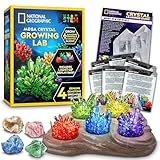
- FAST-GROWING CRYSTALS IN 6 COLORS - Grow blue, red, purple, green, yellow, and glow in the dark crystals! Crystal chemistry has never been so fast (grows in 3 - 4 days), fun, and colorful, making this the perfect educational activity or gift!
- GROWING IS EASY – Easy-to-follow instructions and the 2 included silicone growing chambers make growing your crystals easier than ever!
- NIGHT LIGHT DISPLAY – Show off 5 of your favorite home-grown crystals in the USB-powered (cable included) light-up display! This fun kids STEM activity can help inspire a lifelong love of science and learning.
- INCLUDES REAL CRYSTAL SPECIMENS – Start or expand your rock collection with 4 real gemstone specimens: rose quartz, fluorite, blue calcite, and quartz geode. Learn about the gemstones in the kit with the included full-color Learning Guide.
- AMAZON EXCLUSIVE - Blue Marble has developed this product exclusively for Amazon.
Important safety correction: do not grow lead crystals from lead acetate at home. Lead acetate is toxic and lead exposure is particularly dangerous for children and pregnant people. Sulfur melting is also excluded from the beginner projects because sulfur powder is combustible, the melt causes severe burns, and burning sulfur can produce irritating or toxic sulfur oxides. See the PubChem lead acetate information, EPA lead guidance, and PubChem sulfur information.
Quick comparison: nine crystals you can grow at home
| Crystal | Appearance | First crystals | Best growth time | Difficulty | Safety | Edible? |
|---|---|---|---|---|---|---|
| Sugar | Clear or colored rock-candy clusters | 3 days | 3–10 days | Easy | Hot-syrup burn risk | Yes, under food-safe conditions |
| Alum | Clear, sparkling, often octahedral | 1 day | 1–7 days; longer for large seeds | Easy | Low hazard; do not eat | No |
| Borax | Frosty clusters on pipe cleaners | Overnight | 1–2 days | Easy | Avoid dust and ingestion | No |
| Table salt | Small cubic crystals | Several days | Several days to weeks | Easy | Low hazard; do not consume experimental material | Not as prepared |
| Epsom salt | White or colored needles | A few hours | Hours to overnight | Easy | Low hazard; fragile crystals | No |
| Copper sulfate | Vivid blue crystals | Several days | Several days to weeks | Intermediate | Harmful if swallowed; serious eye hazard | No |
| monoammonium phosphate | Clear, white, blue-tinted, or spiky clusters | Hours to days | Days to weeks | Intermediate | Check the exact product and SDS | No |
| Rochelle salt | Transparent elongated crystals | Several days | Several days | Intermediate | Relatively low hazard; hot solution | No |
| Bismuth | Iridescent stair-step metallic crystals | Same day | Same day | Advanced | Adult-only molten-metal work | No |
“Overnight” means visible crystallization may begin overnight; it does not guarantee a large, clear specimen. Larger crystals usually require slower, cleaner, more stable growth.
How home-grown crystals form
A crystal is a solid in which atoms, ions, or molecules arrange themselves in a repeating structure. The repeating arrangement is microscopic, but it produces visible faces and shapes such as salt cubes, Epsom-salt needles, alum octahedra, and bismuth stair steps. The International Union of Crystallography explains crystal growth and common home-growing materials.
Do these 3 things before closing this tab:
1Clear out junk files and repair common Windows errors2Scan for outdated or missing drivers - takes under a minute3Repair Windows errors before they cause bigger problemsMost home projects begin with a solution. You dissolve as much material as possible in water to make a saturated solution. When the water cools or evaporates, the solution can no longer hold all of the dissolved material. It becomes effectively supersaturated, and the excess material leaves the solution as crystals. This process is described in the Science Buddies crystal-growing guide.
The first tiny crystals are called nuclei. If you provide one good seed crystal and suspend it in clean solution, dissolved material can attach to it and enlarge it. Without a seed, crystals may form randomly on the jar, on dust particles, or on the bottom of the container.
There are four useful methods here: evaporation, cooling a hot saturated solution, slow evaporation around a seed crystal, and crystallization from a melt or supersaturated melt. Slow, undisturbed growth generally produces larger, better-defined crystals; rapid cooling or excessive agitation usually creates many small crystals or powder. The Royal Society of Chemistry explains how crystallization conditions affect crystal form.
There are seven crystal systems and 230 standard three-dimensional crystallographic space groups—not 219. Space groups describe symmetry in crystal structures; they are not the same thing as the seven broad crystal systems. See the IUCr symmetry overview.
Basic equipment and setup
- Clean glass jars or beakers
- Distilled water when clarity matters
- Coffee filters for removing dust and insoluble particles
- Paper towels, filter paper, or breathable covers
- String, wooden skewers, pencils, or dedicated fishing line for suspending seeds
- Labels showing the chemical, date, and safety warning
- Separate tools for non-food chemicals
- Gloves and splash-resistant eye protection for chemical projects
Keep every jar away from vibration, fans, direct sunlight, pets, and young children. A crystal or pipe cleaner should not touch the container’s sides or bottom. Never store a non-food crystal in a food container, and never reuse chemical-project cookware for food.
1. Sugar crystals or rock candy
Best for: the only genuinely edible project in this list, provided the whole setup is food-clean.
What it is: sucrose crystals grown from a hot, highly concentrated sugar solution. They can remain clear or be colored and flavored with food-safe ingredients.
Materials
- 1 cup water
- About 3 cups granulated sugar
- Clean glass jar
- Cotton string or wooden skewer
- Pencil, chopstick, or skewer
- Optional food coloring or food flavoring
Method
- Wet the string, coat it with sugar, and let it dry overnight. These grains act as seed crystals.
- Bring the water to a boil. Add sugar gradually, stirring until it dissolves. Continue until the solution can no longer dissolve the added sugar.
- Preheat the jar with hot water so hot syrup does not contact cold glass.
- Pour in the syrup and let it cool briefly.
- Suspend the seeded string without touching the sides or bottom.
- Cover loosely with a paper towel and leave undisturbed for up to a week.
- Remove the candy, briefly rinse it with cold water, and dry it for about 30 minutes.
Visible crystals may appear after three days, while a fuller result commonly takes about a week. This baseline is consistent with the Science Buddies rock-candy activity.
Crashes, No Sound, or Screen Glitches?
Random freezes, missing sound and display glitches usually trace back to one bad driver. Find and replace yours safely.Free scan · under a minuteWindows Errors? Fix Them Before They Spread
Repair common Windows errors and clear accumulated junk for a smoother, more stable PC - no reinstall needed.Free scan · no reinstallSafety: boiling sugar syrup can cause serious burns and sticks to skin. An adult should handle the heating and pouring. Use only food-safe string, skewers, jars, and flavorings.
Failure recovery: no crystals usually means the syrup was too dilute, the string lacked seed crystals, or the jar was disturbed. Crystals on the jar indicate contamination, rapid cooling, or a string touching the glass. Tiny crystals everywhere indicate too many nucleation sites or agitation. Cloudy candy may result from impurities, undissolved sugar, or contamination.
Storage and use: store finished rock candy in a clean, dry food container. Do not describe crystals from a chemically contaminated or non-food setup as edible.
2. Alum crystals
Best for: a first large, clear, gem-like crystal.
What it is: commonly potassium alum, KAl(SO₄)₂·12H₂O, although commercial products can vary. Potassium alum commonly forms transparent octahedral crystals.
Materials and method
- ½ cup hot water
- About 4 teaspoons alum powder
- Clean jar
- Paper cover or breathable lid
- Dissolve the alum in hot water.
- Cover the jar lightly to keep out dust.
- Leave it undisturbed while water evaporates and crystals form.
- For a larger crystal, remove the best small seed, save the clear solution, and suspend the seed in fresh clear saturated alum solution.
A classroom procedure from the Yale Teachers Institute uses approximately 4 teaspoons of alum in ½ cup of hot water. For better suspension, nylon fishing line or a tiny mechanical loop may work better than ordinary thread.
Time: small crystals may appear within a day; large, well-shaped crystals can take a week or longer.
Safety: alum is relatively low hazard under ordinary handling, but the crystals are not food. Wear eye protection while measuring powder, wash hands, and keep the solution away from children and pets.
Troubleshooting: rapid cooling produces many small crystals. If the seed dissolves, the new solution was not saturated enough or was too warm. Food coloring generally colors the liquid more than the crystal because crystallization tends to reject impurities.
What’s actually slowing this PC down?
Pick the symptom - the matching free tool is one click away.
Rank #2
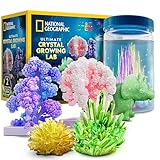
- 5 CRYSTAL-GROWING ACTIVITIES – This ultimate crystal kit lets kids safely grow five unique types of crystals: a mini crystal, a dinosaur-shaped crystal, a glow-in-the-dark crystal, 2 crystal trees, and awesome underwater crystals!
- GLOW-IN-THE-DARK CRYSTAL – Grow a luminous crystal that shines in the dark, making science fun even after the lights go out.
- UNDERWATER CRYSTALS – Kids will love watching 4 vibrant crystals grow right before their eyes in a safe, immersive underwater environment!
- CRYSTAL TREES & DINOSAUR – Grow a sparkling crystal-covered dinosaur figure and 2 colorful crystal trees for an eye-catching display.
- ALL-INCLUSIVE EDUCATIONAL SCIENCE KIT – Includes crystal solutions, crystal-growing stones, display container, dinosaur mold, tree forms, safety gear, kid-friendly instructions & an educational Learning Guide filled with cool facts about crystals!
Best use: classroom demonstrations, display specimens, and a first serious single-crystal project.
3. Borax crystals
Best for: quick crystal-covered ornaments and pipe-cleaner shapes.
What it is: sodium tetraborate decahydrate, Na₂B₄O₇·10H₂O.
Materials
- 1 cup boiling water
- About 3–4 tablespoons borax
- Pipe cleaner
- Thread and pencil
- Glass jar
Method
- Shape the pipe cleaner and suspend it in the jar.
- Add borax gradually to boiling water, stirring until the solution is clear with a small amount of undissolved borax remaining.
- Leave the pipe cleaner undisturbed overnight.
- Remove it carefully and let it dry without rinsing.
The Discovery Place procedure and Science Buddies guide use this hot saturated-solution approach.
Recommended Free Tools
Safety: do not inhale borax dust, taste the crystals, or allow toddlers and pets near the setup. Wear eye protection and wash hands afterward. Follow the product’s current label and U.S. Borax health and safety guidance.
Failure recovery: a pipe cleaner touching the jar causes unwanted growth on the glass. Too little borax produces sparse crystals; too much movement makes a cloudy mass. Borax crystals can dissolve if returned to water.
Best use: fast decorative ornaments and demonstrations of cooling-driven crystallization.
4. Table-salt crystals
Best for: seeing the characteristic cubic shape of sodium chloride.
The Tool Desk
Outbyte Driver Updater FREEFix the driver behind crashes, sound loss and screen glitchesFind Drivers →Outbyte PC Repair FREERepair Windows errors before they cause bigger problemsFix Now →What it is: sodium chloride, NaCl. Use non-iodized salt if possible; anti-caking agents and other impurities can affect clarity.
Method
- Add salt to hot or very hot distilled water until some remains undissolved.
- Let the mixture settle.
- Decant the clear solution without disturbing the sediment.
- Pour it into a shallow clean dish or jar.
- Cover loosely and allow slow evaporation for several days or longer.
The Oklahoma State chemistry activity and IUCr crystal handbook document salt as a basic crystal-growing material.
Time: salt is usually slower and less dramatic than alum or borax; several days to weeks is normal.
Safety and storage: the material is low hazard, but experimental crystals should not automatically be eaten. Store them dry and labeled. Dispose of the remaining solution according to the ingredients used and local guidance.
Best use: a simple classroom demonstration connecting a visible cube to the repeating lattice inside table salt.
5. Epsom-salt crystals
Best for: fast, needle-like crystals.
What it is: magnesium sulfate heptahydrate, MgSO₄·7H₂O.
Method
- Mix approximately ½ cup Epsom salt with ½ cup hot water.
- Stir for at least one minute. If everything dissolves, add a little more salt.
- Add food coloring only if desired; the crystals are not edible.
- Refrigerate the solution.
- Check after several hours and pour off excess liquid once crystals appear.
The Penn State activity reports that crystals can appear within a few hours after refrigeration.
Expected result: slender needles, often fragile and easily crumbled. Refrigeration favors speed, not necessarily one large crystal.
Quick wins for a faster PC:
Clear out junk files and repair common Windows errorsFree Scan →Scan for outdated or missing drivers - takes under a minuteDriver Scan →Safety: use clean but dedicated equipment, do not wash the crystals, and keep them away from children who might mistake them for salt or sugar. Water can dissolve them.
Troubleshooting: no crystals usually means the solution was not saturated. A shallow dish and a slightly more concentrated solution can encourage visible growth, but fast growth generally creates many small needles.
6. Copper sulfate crystals
Best for: vivid blue crystals and a more advanced solution-growth project.
What it is: copper(II) sulfate pentahydrate, CuSO₄·5H₂O. It can form striking blue crystals when grown slowly around a seed.
Free tools Windows power users keep installed
One-click scans. No signup required.
Method
- Dissolve copper sulfate in hot water until no more dissolves.
- Pour a small amount onto a shallow plate to create seed crystals.
- Let the remaining solution cool and settle.
- Select the best-shaped seed crystal.
- Suspend it in the clear solution without touching the container.
- Leave it undisturbed for several days or weeks.
This seed-crystal approach is described by the California State University copper-sulfate activity.
Rank #3

- GROW VIBRANT COLORED CRYSTALS - Grow crystals in 3 amazing colors: blue, purple, and green. With this engaging and educational science experiment for kids, chemistry has never been so fun and colorful!
- NIGHT LIGHT DISPLAY - Show off your crystals on the patent-pending light-up display. With 7 single color modes, rainbow color mode, and 3 brightness levels to choose from, your crystal treasures will shine!
- COMPLETE SCIENCE KIT – Contains all you need! Growing powder, clear seed rocks, growing chamber, light-up display, and easy-to-follow instructions. Our uniquely flexible growing chamber allows you to easily remove your crystals for display without damage!
- START A ROCK COLLECTION – This kit comes with 3 real gemstone specimens, including a geode, green fluorite, and blue calcite, along with a detailed learning guide explaining how crystals grow and more! Makes an excellent STEM gift for boys and girls.
- AWARD-WINNING PRODUCTS - Blue Marble, winner of the Toy Association's prestigious Toy of the Year Award, proudly develops products that foster education, imagination, and creativity, with a U.S. support team to ensure a stellar experience!
Safety: copper sulfate is not a food ingredient, is harmful if swallowed, and can cause serious eye damage. Some products are sold as pesticides, so the exact label and SDS control. Wear gloves and splash-resistant eye protection, use no food equipment, and keep children away from both powder and solution. Review the NPIC copper-sulfate fact sheet and the relevant product SDS.
Storage and disposal: keep crystals dry and labeled. Copper sulfate crystals contain water of crystallization and may change appearance as they lose it. Do not casually pour concentrated solution down a drain; follow the product SDS and local disposal rules.
Best use: an adult-supervised chemistry demonstration where color and crystal habit matter more than simplicity.
The Tool Desk
Outbyte Driver Updater FREEFix the driver behind crashes, sound loss and screen glitchesFind Drivers →Outbyte PC Repair FREEClear out junk files and repair common Windows errorsFree Scan →7. Monoammonium phosphate crystals
Best for: large clusters and controllable crystal-kit-style results.
What it is: monoammonium phosphate, also called ammonium dihydrogen phosphate or ADP, NH₄H₂PO₄.
Practical method
- For seed crystals, dissolve about 60 g MAP per 100 mL water.
- For clearer growth, use about 45 g MAP per 100 mL water.
- Dissolve the material in hot water.
- Filter the solution through a coffee filter.
- Cool it without disturbance and select a good seed crystal.
- Transfer the seed to the less-concentrated growth solution and allow slow evaporation.
These concentrations and the seed-growth sequence are described in the Crystalverse MAP guide.
Purity qualification: fertilizer-grade MAP may contain impurities or additives that produce cloudy, rough, or misshapen crystals. Reagent-grade MAP is generally more predictable, but the exact result depends on the product formulation. Do not call fertilizer-grade material “non-toxic” without checking its label and SDS.
Advanced variable: small additions of alum may make MAP crystals more pointed, but this can also create cloudiness or unwanted precipitate. Leave this experiment until the basic method works.
Safety and storage: use dedicated equipment, eye protection, gloves, and a labeled container. MAP crystals are water-soluble and brittle, so they are poor candidates for jewelry or repeated handling.
Best use: patient hobbyists who want to compare concentration, purity, temperature, and seed-crystal effects.
8. Rochelle-salt crystals
Best for: transparent elongated crystals and a satisfying kitchen-chemistry reaction.
What’s actually slowing this PC down?
Pick the symptom - the matching free tool is one click away.
What it is: potassium sodium tartrate tetrahydrate, KNaC₄H₄O₆·4H₂O. The IUCr compounds guide lists Rochelle salt as producing transparent long crystals.
Small-batch synthesis and growth
- 75 g cream of tartar
- 28 g baking soda
- 200 mL water
- Heat the water to approximately 70°C.
- Dissolve the cream of tartar.
- Add baking soda slowly; the mixture will fizz.
- Filter the solution to remove insoluble material.
- Leave the clear liquid covered and undisturbed so it crystallizes slowly.
The quantities come from a specialist Rochelle-salt growing guide, not a regulator or university laboratory manual. Try a small batch first because brands of cream of tartar may behave differently.
Safety: the ingredients are relatively low hazard, but the hot solution can burn and the reaction foams. Use eye protection, dedicated equipment, and a well-ventilated work area. The final crystals are not automatically edible because they were made as an experiment.
Best use: an advanced classroom or hobby project combining acid-base reaction, filtration, and slow evaporation.
9. Bismuth crystals
Best for: iridescent metallic stair-step crystals—but only for an experienced adult with suitable equipment.
What it is: elemental bismuth, Bi. It melts at approximately 271.4°C (520.5°F). As the crystal cools, a thin oxide layer produces interference colors that create the familiar rainbow appearance. The Royal Society of Chemistry bismuth data gives the melting point.
Safety requirements
- Use only clean elemental bismuth. Never assume an unknown alloy is lead- or cadmium-free.
- Use dedicated non-food equipment and a stable, heat-resistant surface.
- Wear appropriate eye protection and heat-resistant protective equipment.
- Keep water away from molten metal; hot splashes can be severe.
- Provide ventilation and keep children, pets, and flammable materials away.
- Do not attempt this in a bedroom or as a casual kitchen craft.
Commercial bismuth SDSs still require laboratory-style handling precautions even though solid elemental bismuth is far less concerning than lead. Consult the bismuth SDS before working with a specific product.
Method overview: melt the bismuth in dedicated equipment, allow the surface and edges to begin crystallizing, then carefully drain or remove remaining liquid metal so the solid crystal structure is exposed. The exact timing controls whether you get large stair-step forms or a mass of smaller crystals.
Recommended Free Tools
Best use: an advanced metalworking or materials-science project. It is not child-safe, edible, jewelry-grade by default, or suitable for unsupervised home experimentation.
Rank #4
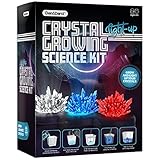
- GROW RED, BLUE AND CLEAR CRYSTALS AND MAKE THEM GLOW: Let your child feel like a real chemist mixing the special ingredients and watching the crystal grow, day by day. And when you're done, display it on the light-up display for all to admire! Follow along with the beautifully illustrated 12-page booklet describing how crystals are formed.
- LET IT GLOW: Growing the crystals is only half the fun. Turn your newly formed crystals into a piece of art by placing them on the included LED Light-up Display and watch the lights burst through the complex crystal formations. It's a truly magical sight at night. (Powered by an included Micro-USB cable).
- KIT INCLUDES: USB Powered LED Light-up Display, Micro-USB Cable, 3 Growing Cups, 3 Crystal Powder Bags (Red, Blue, Clear), 3 Crystal Starters, Mixing Stick, Tweezers, and a gorgeous 12-page instruction and learning guide. Includes everything needed for the young scientist to grow the crystals with ease, and gain a deeper understanding of them.
- FOOL-PROOF SATISFACTION GUARANTEED: This kit has been designed from the ground up to help kids grow beautiful crystals with confidence. With premium ingredients, innovative tools, and a comprehensive step-by-step instruction booklet that adults and children can easily understand and follow, it’s a fun, hands-on activity the whole family can enjoy.
- A FUN AND EDUCATIONAL GIFT FOR ALL AGES: It's not often that a science project can be fun and engaging, but this kit achieves both! It fascinates children as soon as they pull it out of the box and is a perfect STEM project. It fosters a love for science and crystallography in a fun and exciting way.
Safer family alternative: sodium-acetate “hot ice”
If the audience is children or a family group, replace bismuth with sodium acetate. A supersaturated sodium acetate solution can suddenly crystallize into a white, stalagmite-like structure while releasing heat. University demonstrations from UW–Madison and Rutgers use a seed crystal to trigger the change.
Hot ice is lower toxicity than the chemical and molten-metal projects, but the solution is still hot and can burn. It is better described as a crystallization demonstration or “crystal fireworks” than as a route to one large gem-like specimen.
What not to try at home
- Lead acetate or lead crystals: exclude completely. Lead-containing material should never be introduced into a home or classroom craft project.
- Sulfur melting: omit from beginner lists. Sulfur powder is combustible, molten sulfur causes severe burns, and combustion can produce sulfur oxides. See the RSC sulfur data.
- Unknown metal alloys: they may contain lead, cadmium, or other hazardous metals.
- Recipes involving nitric acid, cyanide compounds, mercury, chromium salts, or strong oxidizers: these require professional laboratory controls and do not belong in ordinary home DIY content.
Troubleshooting crystal-growing failures
“I got powder instead of crystals.”
The solution may have cooled or evaporated too quickly, creating many nucleation sites. Redissolve the material in clean solvent, filter it, reduce vibration, and let it cool or evaporate more slowly. Use one seed crystal rather than many.
Do these 3 things before closing this tab:
1Clear out junk files and repair common Windows errors2Scan for outdated or missing drivers - takes under a minute3Repair Windows errors before they cause bigger problems“The seed crystal dissolved.”
The growth solution was probably too dilute or too warm. Prepare a more concentrated solution, let it cool to room temperature, and suspend the seed only after the temperature is stable. Avoid dropping a cold seed into a hot solution.
“Crystals grew on the jar.”
Dust, scratches, residue, or a string touching the glass supplied uncontrolled nucleation sites. Clean the container, filter the solution, suspend the seed in the center, and decant only the clear liquid.
“The solution became cloudy.”
Impurities, undissolved starting material, contamination, or an incompatible additive may have caused precipitation. Do not keep adding chemicals at random. Filter the solution and restart with a known, single chemical if the product label permits.
“The crystals are tiny.”
Rapid cooling, excessive concentration, too many seeds, or too much movement can all produce small crystals. Use a clean seed, lower the evaporation rate, and keep the container in a stable location.
Free tools Windows power users keep installed
One-click scans. No signup required.
“The crystals changed color.”
Some crystals contain water of crystallization and can change as they dry. Copper sulfate, for example, may change appearance when it loses water. Humidity, contamination, and surface oxidation can also matter. Store specimens dry and follow the product information.
“The crystal collapsed when I removed it.”
Many solution-grown crystals are water-soluble and brittle. Do not rinse them unless the specific procedure says to. Let them drain and dry naturally, then handle them with minimal force.
“Nothing happened after several days.”
Check the concentration, temperature, purity, and container cleanliness. The solution may not have been saturated, or it may have been sealed so tightly that evaporation stopped. For cooling-driven projects, verify that the solution actually cooled. For evaporation projects, use a breathable cover rather than an airtight lid.
How to choose your first project
| Your goal | Best choice | Why |
|---|---|---|
| Edible crystal treat | Sugar | The only suitable edible option when the entire setup is food-safe |
| Best first large crystal | Alum | Clear, attractive, relatively forgiving, and easy to seed |
| Fastest visible result | Epsom salt or borax | Needles or coatings can appear within hours or overnight |
| Recognizable crystal shape | Table salt or alum | Salt forms cubes; alum commonly forms octahedra |
| Most dramatic color | Copper sulfate | Strong blue color, with significantly higher handling precautions |
| Large hobbyist clusters | MAP | Concentration and seed growth can be tuned |
| Kitchen chemistry | Rochelle salt | Made through a fizzing reaction, then crystallized slowly |
| Metallic rainbow effect | Bismuth | Exceptional appearance, but advanced molten-metal work only |
Most of these crystals dissolve in water, and many are brittle. They are generally display specimens rather than durable jewelry. MAP, for example, is water-soluble and too fragile to polish reliably. “Gem-like” describes the appearance, not gemstone durability or value.
Final recommendations
Start with alum if you want the best balance of appearance, cost, and simplicity. Choose sugar for a genuine edible project, or salt and Epsom salt for low-cost demonstrations. Use borax for quick decorations. Reserve copper sulfate for supervised chemical work, MAP and Rochelle salt for more patient hobby projects, and bismuth for experienced adults with proper heat-safe equipment.
Crystal growing rewards patience more than complexity: clean containers, filtered solutions, one well-placed seed, stable temperature, and minimal disturbance usually matter more than adding extra ingredients.
Sources and further reading
- International Union of Crystallography: crystal growth handbook
- IUCr: compounds and crystal-growing guidance
- Science Buddies: how to grow crystals
- IUCr: crystal systems and space-group symmetry
Frequently Asked Questions
Which home-grown crystal is edible?
Only sugar crystals are potentially edible, and only when food-safe ingredients, equipment, supports, and handling are used throughout. No other crystal in this guide should be eaten.
What is the easiest crystal to grow at home?
Alum is the best first project for a large, clear crystal. It is relatively low hazard, inexpensive, and commonly forms attractive octahedral crystals.
Quick wins for a faster PC:
Repair Windows errors before they cause bigger problemsFix Now →Scan for outdated or missing drivers - takes under a minuteDriver Scan →Which crystals grow overnight?
Epsom salt and borax usually show visible crystals fastest. Overnight growth means crystallization has started, not that a large finished crystal is guaranteed.
Can home-grown crystals be used as jewelry?
No. Most home-grown crystals are water-soluble and brittle. They are better for display than jewelry, especially MAP, alum, borax, Epsom salt, and Rochelle salt.
Are lead crystals safe to make at home?
Do not grow lead crystals from lead acetate. Lead acetate is toxic, and lead exposure is especially dangerous for children and pregnant people.
The Bottom Line
The best first choice is alum. Sugar is the only edible option under genuinely food-safe conditions; borax and Epsom salt are quick demonstrations; copper sulfate needs chemical precautions; and bismuth belongs only in an experienced adult workshop. Lead-acetate crystals and beginner sulfur-melting projects should be excluded.
PC Slower Than It Used to Be?
A free scan shows the junk files, broken settings and background clutter dragging Windows down - then fixes them in one click.Free scan · Windows 10 & 11Crashes, No Sound, or Screen Glitches?
Random freezes, missing sound and display glitches usually trace back to one bad driver. Find and replace yours safely.Free scan · under a minuteQuick Recap
Product prices and availability are accurate as of the date/time indicated and are subject to change. Any price and availability information displayed on Amazon at the time of purchase will apply.

