Some links on this page are affiliate links: if you buy through them we may earn a commission, at no extra cost to you.
The three natural homemade weed killers that actually earn a place in a homeowner’s toolkit are vinegar-based contact spray, boiling water, and smothering with cardboard plus mulch. Each one can work well in the right location. Each one can also disappoint you, damage good plants, or create cleanup problems if you use it like a blanket lawn treatment.
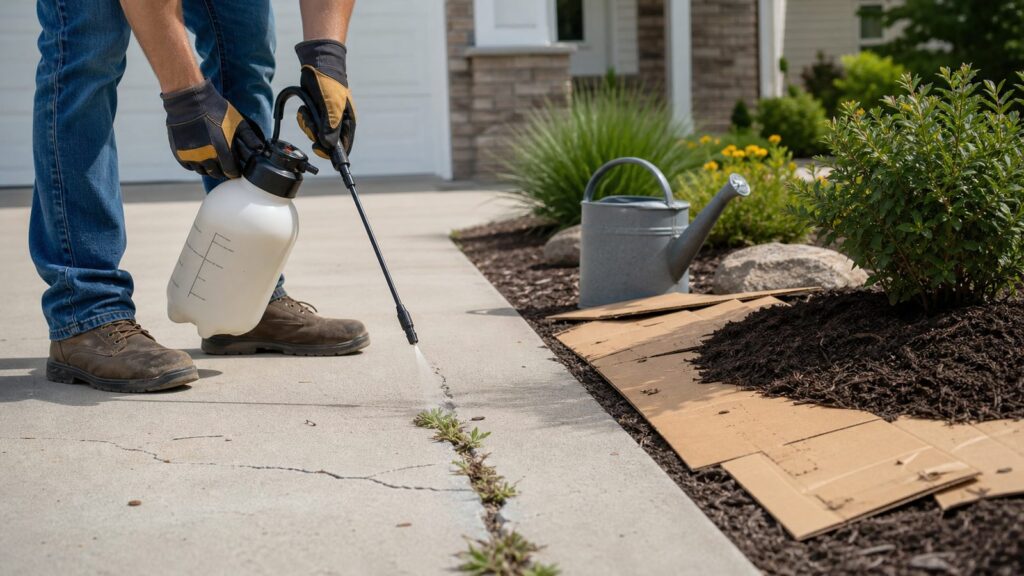
Here is the straight answer: use vinegar spray for small, young weeds in pavement cracks, gravel edges, and bare-bed prep. Use boiling water for hardscape joints where you can pour safely. Use cardboard and 3 to 4 inches of mulch when you want longer-term suppression in planting beds. Do not expect any of these methods to fix a lawn full of crabgrass, nutsedge, bindweed, Bermuda grass, poison ivy, or mature perennial weeds with deep roots.
As an Amazon Associate I earn from qualifying purchases.
On our job sites, we think about weed control the same way we think about drainage or concrete prep: the method has to fit the surface. A driveway crack, a mulched bed, and a thin fescue lawn are three different problems. The mistake many homeowners make is looking for one natural recipe to use everywhere. That is where vinegar burns turf, salt ruins soil, and boiling water turns into a safety hazard.
This guide explains what works, where it works, what it costs in 2026, and when it is smarter to bring in a licensed lawn-care professional instead of fighting the same weeds every other Saturday.
Popular on Amazon

- Easy to Use: The handheld weeder tool removes weeds from your garden, including stubborn weeds like dandelions and thistles. The stainless steel two-pronged fork cuts through weeding roots with ease, allowing surrounding plants to grow healthily and thrive
- Robust and Sturdy: The weed puller tool is made of high-hardness polished stainless steel that is extremely resistant to rust and corrosion, ensuring longevity and reliability. And it won't bend or break during use, and can quickly meet any challenges in gardening
- Ergonomic Soft-Grip Handle: Non-slip and comfortable plastic handle is gentle on hands and improves control while reducing hand and wrist fatigue, which is a good helper for gardening and weeding
- Convenient Size for Storage: Our lightweight gardening weeding tool is 11.5 inches in length and light in weight (5.3 oz), and the practical handle hanging hole design and lanyard allow for convenient storage after use
- Wonderful Gifts for Gardening Lover: The manual weed puller can help you weeding easily in farms, gardens, yards, fields, bonsai, and more. A sharp gardening hand tool for weeding, and digging, it is a practical gift for gardeners or gardening enthusiasts
First, Know What Homemade Weed Killers Can And Cannot Do
Most natural weed killers are contact treatments. They damage the leaves and green tissue they touch. That is very different from killing the entire plant, roots included.
Young annual weeds are the easiest targets. These are weeds that sprout, grow, set seed, and die in one season. If you hit them early, before they have a deep root system or seed heads, vinegar or boiling water may knock them out with one or two treatments.
Established perennial weeds are a different fight. Dandelions, bindweed, nutsedge, Bermuda grass, poison ivy, and many invasive vines store energy below ground in taproots, rhizomes, bulbs, tubers, or woody crowns. Burn the leaves today and they may push new growth in 7 to 21 days. That does not mean the treatment did nothing. It means you only removed the top growth, and the root system still has reserves.
Location matters just as much as weed type. Homemade treatments are best used in places where a little overspray, heat, or temporary bare ground will not ruin the yard. Good targets include driveway joints, sidewalk cracks, patio pavers, gravel paths, fence lines, bed edges before replanting, and isolated weeds away from desirable plants.
Poor targets include active lawns, vegetable beds, shallow-rooted shrubs, tree root zones, sloped areas where runoff moves into turf or storm drains, and any bed where you want strong future plant growth. Natural does not automatically mean gentle. Concentrated vinegar can injure skin and eyes. Boiling water burns. Salt can persist in soil. Dish soap can damage plants you meant to keep.
Quick Comparison: Which Natural Weed Killer Should You Use?
If you only remember one thing, remember this: choose the least aggressive method that fits the surface. A small weed in a paver joint does not need the same approach as a weedy bed being renovated for spring planting.
Recommended Free Tools
| Method | Best Use | Typical 2026 DIY Cost | Time To See Results | Main Risk |
|---|---|---|---|---|
| 5% white vinegar spray | Young annual weeds in cracks, gravel, and bare areas | About $4-$8 per gallon, plus pennies to about $1 for dish soap | Several hours to 2 days | Nonselective burn on turf and ornamentals |
| 20%-30% Horticultural vinegar | Tougher spot treatment where no desirable plants are nearby | Commonly about $15-$35 per gallon | Often same day | Eye and skin injury risk; label restrictions |
| Boiling water | Sidewalk cracks, driveway joints, pavers, gravel edges | Near-zero material cost | Minutes to 1 day | Burns, splashing, damage to nearby plants |
| Cardboard plus mulch | Garden beds, bed renovation, bare soil suppression | Free cardboard plus several dollars per bag of mulch, or regional bulk pricing | Works over weeks; lasts months when maintained | Poor installation leaves gaps for regrowth |
For most homeowners, the best kit is simple: a 1-gallon pump sprayer, 5% white distilled vinegar, a small amount of dish soap, a kettle or stockpot for boiling water, flattened cardboard, and enough mulch to hold a consistent 3- to 4-inch layer. A basic 1-gallon pump sprayer commonly runs about $13-$18 at big-box stores. Larger pump or backpack sprayers can cost under $30 to well over $100, but for spot treatment around a normal house, one gallon is usually easier to control.
Method 1: Vinegar Spray For Young Weeds And Hardscape Cracks
Vinegar works because acetic acid strips moisture from green plant tissue. Household white vinegar is usually 5% acetic acid. It can burn leaves, especially on small annual weeds in hot, sunny weather. It is not a magic root killer, and it is often too weak to reliably kill mature or perennial weeds with one application.
That said, vinegar has a useful role. Around construction sites and finished landscapes, we use the same basic thinking we use for sealants or coatings: clean target, dry weather, controlled application, and no drift. If you spray a mature weed at the wrong time, you mostly make it look worse for a week. If you spray small regrowth in a driveway joint on a dry afternoon, you have a much better chance of getting a clean result.
Basic 5% Vinegar Spot Spray Recipe
For light spot treatment, use this simple batch:
- 1 gallon 5% white distilled vinegar
- 1 tablespoon dish soap
- 1 clean 1-gallon pump sprayer labeled for weed use only
The dish soap is not the weed killer. It acts as a surfactant, helping the vinegar wet waxy leaf surfaces instead of beading up and rolling off. More soap does not make the mix more professional. It only increases the chance of residue, plant injury, and slick surfaces.
Apply enough spray to wet the leaves, not so much that liquid runs down the pavement and into nearby lawn or drains. The target is full leaf coverage. You are not trying to soak the soil.
When Vinegar Works Best
Use vinegar on a warm, sunny, dry day when no rain is expected for at least 24 hours. Light wind matters. Even a small breeze can move droplets onto turf, hostas, vegetables, roses, or groundcovers. A piece of cardboard held behind the weed works well as a spray shield. For tight paver joints, use the narrow spray pattern on your sprayer and work close to the plant.
For tall weeds in cracks, cut or pull the top growth first, sweep out debris, then treat the regrowth when the leaves are small. Small leaves are easier to wet thoroughly, and the plant has less stored energy above ground. Expect repeat applications every 1 to 3 weeks during active growth if the weed is perennial.
Also popular on Amazon

- Easy to Use: weed remover tool easy to removes weeds, dandelions, and thistles from your lawn, farmland, yard and garden. The stainless steel tow-pronged fork cuts through weeding roots with ease, allows you to dig and pry the roots, stem, and leaves with less effort
- Sturdy Enough: garden weeder tool made of reinforced stainless steel that won't bend or break during use, and rust resistant coating providing excellent durability for long term use
- Ergonomic Soft Rubber Grip: ergonomic grip is non-slip and easy to hold, soft rubber grip designed for reducing the hand fatigue, never feel tired after day of weeding, even for the older people
- Widely Applicable: this manual weed puller has a v-shaped forks that you can push, pull, dig, or cut to remove weeds and moss from the lawn, farmland, yard ,bonsai and more, and make your tough weeding work easy
- Easy to Hanging and Storage: this lightweight weeding tool is 12.2 inches in length and light in weight (6.2oz), and design a hanging hole for convenient storage after use, High quality lawn garden tools are easier to clean and maintain
What About 20% Or 30% Vinegar?
Horticultural vinegar and high-strength acetic-acid products commonly run 20% to 30% acetic acid and cost about $15-$35 per gallon. They can act faster than household vinegar, but they are also much more hazardous. Registered acetic-acid herbicides can carry a DANGER signal word because of eye and skin risks.
If you use a concentrated product, treat it like a real pesticide product, not a pantry item. Read the label, wear eye protection, chemical-resistant gloves, long sleeves, pants, and closed-toe shoes. Keep children and pets away during application and until treated areas are dry according to the product label. Do not transfer it into an unlabeled bottle. Do not spray overhead, uphill, or in wind.
Also pay attention to how the product is sold. A product marketed and labeled as an herbicide must be used according to its label. If a product is sold as cleaning vinegar, that does not automatically make it appropriate or legal to use as a weed killer in every setting. For a homeowner doing small work on their own property, this may feel like a technical detail, but labels are still the controlling instructions for pesticide products.
Where Vinegar Is A Bad Choice
Do not use vinegar as a lawn-safe weed killer. It is nonselective, which means it can burn grass just as readily as weeds. It can also damage ornamental plants, vegetables, and desirable groundcovers. Avoid spraying near shallow-rooted shrubs, exposed tree roots, porous stone, decorative concrete, or any area where runoff could move into storm drains or planted beds.
Vinegar is also weak against many problem weeds in established lawns. Crabgrass, nutsedge, bindweed, poison ivy, and Bermuda grass usually require identification-based control, repeated mechanical removal, turf improvement, or a professional program. Burning the leaves without correcting thin turf, compacted soil, irrigation issues, or low mowing height only resets the problem for a short time.
Crashes, No Sound, or Screen Glitches?
Random freezes, missing sound and display glitches usually trace back to one bad driver. Find and replace yours safely.Free scan · under a minuteWindows Errors? Fix Them Before They Spread
Repair common Windows errors and clear accumulated junk for a smoother, more stable PC - no reinstall needed.Free scan · no reinstallMethod 2: Boiling Water For Driveways, Pavers, And Sidewalk Joints
Boiling water is one of the simplest natural weed killers, and it is also one of the easiest to misuse. It works by scalding foliage and crowns. When the plant tissue is cooked, it collapses. On very young weeds in pavement cracks, that may be enough. On deeper-rooted weeds, it may only knock back the top growth.
The best use case is small hardscape work: sidewalk cracks, driveway expansion joints, patio pavers, gravel joints, and fence lines where you can stand safely and pour with control. It is not practical for a whole yard. Carrying large pots of boiling water across a lawn is slow, awkward, and risky.
How To Use Boiling Water Safely
Use a kettle or pot you can control with two hands. Wear closed-toe shoes, long pants, and gloves. Keep children and pets out of the area. Pour low and slow, close to the crown of the weed where stems meet the surface. Avoid splashing on your legs, feet, nearby plants, painted surfaces, plastic edging, irrigation tubing, and synthetic turf.
For a driveway or paver walk, work in small sections of 5 to 10 linear feet at a time. Sweep loose debris first so you can see the weed crowns. Pour enough water to scald the crown and the immediate joint. You should see wilting quickly, often within minutes, with full browning over the next day.
Do these 3 things before closing this tab:
1Clear out junk files and repair common Windows errors2Fix the driver behind crashes, sound loss and screen glitches3Repair Windows errors before they cause bigger problemsIf the weed regrows, repeat the treatment when new leaves are 1 to 3 inches tall. Repeatedly forcing the plant to regrow can deplete some weeds over time, but this is labor-intensive. If the same deep-rooted weed keeps returning from the same joint, mechanical removal with a crack weeder followed by joint repair may be more effective.
Where Boiling Water Makes Sense
Boiling water is excellent when the material cost needs to stay near zero and the treatment area is small. A few sidewalk cracks near the front entry, a patio joint beside the grill, or a gravel strip at a fence line are reasonable targets.
It is less useful for large gravel drives, broad patios, sloped hardscape, or weeds growing inside active planting beds. Water runs. Heat moves. If you pour near desirable roots, you can injure the plant you want to keep. If you pour on a slope, you may scald turf below the target.
Be careful around sealed concrete, natural stone, and pavers in freeze-thaw climates. Occasional boiling water in a joint is not the same as pressure washing or chemical etching, but repeated heat and moisture can contribute to surface wear, joint sand loss, or sealer issues on some materials. If the surface is expensive or newly installed, test an inconspicuous area first.
Free tools Windows power users keep installed
One-click scans. No signup required.
Also popular on Amazon
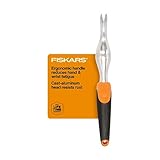
- GARDENING ESSENTIAL: Garden weeder ideal for a variety of gardening tasks like removing invasive weeds, maintaining your herb garden, uprooting dandelions and thistles, and more to encourage overall plant health and appearance
- MAXIMUM POWER AND PRECISION: Cast-aluminum angled head boosts leverage for uprooting in tough soil; Ergonomic handle with SoftGrip allows for more control of scratch tool and reduces fatigue
- LONG-LASTING AND RELIABLE: Aluminum head is rust-resistant and stays sharp through heavy use, providing excellent durability for lasting value; Fiskars hand trowels and garden tools are built to last
- QUALITY GARDEN TOOLS: Designed to help you cultivate a better garden, Fiskars garden and yard tools are equipped with smart technologies and award-winning, ergonomic features that make it easier and more enjoyable to transform your outdoor space
- INCLUDES: 1 Fiskars Ergo Weeder with hang hole; Full lifetime warranty
Method 3: Cardboard And Mulch Smothering For Beds
For planting beds, smothering is usually better than spraying. Instead of trying to burn each weed leaf, you block light, suppress germination, and improve the bed surface. This method is slow compared with vinegar, but it is more durable when installed correctly.
The basic system is simple: cut down existing weeds, lay overlapping cardboard or thick newspaper, wet it so it settles, then cover it with 3 to 4 inches of mulch. The cardboard blocks light. The mulch holds it in place, protects it from drying out, and creates a cleaner finished surface.
How To Build A Smothered Bed
Start by mowing, string-trimming, or hand-cutting weeds close to the ground. Remove seed heads before they drop. Pull large woody stems, vines, and taproot weeds where practical. Rake out rocks, trash, and thick piles of dead material.
Use plain, unwaxed cardboard with tape and plastic labels removed. Overlap seams by several inches. More overlap is better than a perfect-looking layout with gaps. Weeds find light through cracks. Around shrubs and trees, keep cardboard and mulch pulled a few inches back from trunks and stems. Do not pile mulch against bark.
What’s actually slowing this PC down?
Pick the symptom - the matching free tool is one click away.
Wet the cardboard thoroughly after it is placed. Then install mulch at a consistent 3- to 4-inch depth. Less than 2 inches often lets light through and dries out quickly. More than 4 inches can hold excess moisture against crowns, smother small desirable plants, and make future planting harder.
For a 100-square-foot bed, a 3-inch mulch layer requires about 25 cubic feet of mulch, or just under 1 cubic yard. A 4-inch layer requires about 33 cubic feet, or about 1.25 cubic yards. Bagged mulch often costs several dollars per bag, while bulk mulch varies heavily by region, delivery distance, color, type, and volume. For larger beds, bulk delivery often makes more sense than hauling 20 to 40 bags in a car.
Where Smothering Works Best
Use cardboard and mulch for bed renovation, foundation plantings, fence-line beds, tree rings, and bare soil where weeds keep germinating. It is especially useful before planting shrubs, perennials, or native plants because it reduces the first wave of weed pressure without spraying the entire bed.
Smothering is not ideal over aggressive invasive plants unless you first remove as much root mass as possible and monitor regrowth. Bindweed, Japanese knotweed, poison ivy, and vigorous running grasses can push through weak seams or emerge at the edges. For those, you may need extension-guided control or a licensed professional.
The Tool Desk
Outbyte PC Repair FREEClear out junk files and repair common Windows errorsFree Scan →Outbyte Driver Updater FREEScan for outdated or missing drivers - takes under a minuteDriver Scan →Maintenance still matters. Mulch decomposes and thins. Plan to top it off annually or when depth drops below about 2 inches. Keep edges clean, pull breakthrough weeds while they are small, and avoid blowing soil or grass clippings into the bed, because organic debris can create a new seedbed on top of the mulch.
The Salt Problem: Why We Usually Leave It Out
The classic internet recipe is vinegar, salt, and dish soap. It can brown weeds. The problem is what the salt leaves behind.
Salt desiccates plant tissue, but it can also persist in soil, reduce future plant growth, move with runoff, and damage nearby turf or beds. That makes it a poor choice for flower beds, vegetable gardens, lawns, tree rings, and any area you may want to plant later. Once salt is in the soil, fixing the problem is harder than killing the original weed.
If you use salt at all, reserve it for pavement cracks or gravel areas where you truly want bare ground and where runoff will not carry it into planted soil, storm drains, or a neighbor’s landscape. Even there, use restraint. The long-term risk often outweighs the short-term savings.
Quick wins for a faster PC:
Repair Windows errors before they cause bigger problemsFix Now →Scan for outdated or missing drivers - takes under a minuteDriver Scan →From a cost standpoint, a vinegar-salt-soap batch might run about $5-$12 per gallon using 5% vinegar, table salt, and dish soap. That looks cheap until it damages a lawn edge, a planting bed, or soil you later need to restore. In construction terms, it is like saving a few dollars on prep and paying for it during finish work.
Also popular on Amazon

- STAND-UP WEEDER TOOL: Allsetool 43.7in long-handled weed puller tool allows you to weed comfortably while standing upright, saying goodbye to bending, kneeling, and strenuous pulling.
- WEED EJECT FEATURE: There are 2 eject mechanism that spits the weed out so you don’t have to pull it out manually. You can use the eject handle to slide the weeds out or use the eject pedal to push them out with your foot.
- STURDY 4-CLAW HEAD: The 4 pointed metal claws of the weed remover tool let you penetrate the soil easily and effectively grip the roots. It works best when the ground is damp after rain or watering.
- HEAVY DUTY FOOT PEDAL: Metal foot pedal is less prone to damage than plastic ones and features a non-slip textured design to help you step on them safely.
- SAFE WEED CONTROL: This dandelion removal tool helps you eliminate garden weeds safely and naturally, which is safer for children, pets and the mother earth. The colorful box and instruction makes a great gift for parents, grandparents and friends.
Safety, Labels, Pets, And Runoff
Homemade does not mean risk-free. Treat every weed-control method as something that can injure people, plants, surfaces, or soil if used carelessly.
For vinegar sprays, wear eye protection and gloves, especially with stronger products. Keep spray low, use a shield, and avoid windy days. Do not mix vinegar with bleach, ammonia cleaners, or other household chemicals. Mixing cleaners can create dangerous reactions or toxic gases.
For boiling water, think about the walking path before you start. Do not carry a full open pot across uneven ground, stairs, wet grass, or loose gravel. A kettle with a controlled spout is safer than a wide pot. Pour away from your body and keep your feet clear.
Quick wins for a faster PC:
Clear out junk files and repair common Windows errorsFree Scan →Scan for outdated or missing drivers - takes under a minuteDriver Scan →Repair Windows errors before they cause bigger problemsFix Now →For mulch smothering, avoid burying crowns, trunks, siding, weep holes, and low vents. Keep mulch below siding clearances and away from wood trim. Around houses, we also pay attention to drainage. Mulch should not create a dam that holds water against foundations, walks, or patios.
Pets and children should stay away from treated areas until surfaces are dry, cooled, and cleaned up. With registered herbicide products, follow the label exactly for reentry and storage. Store vinegar concentrates and sprayers where they cannot be mistaken for food, drink, or cleaning supplies.
Runoff matters. Do not spray before rain or irrigation. Do not flood pavement joints so liquid runs into storm drains. Many municipal landscaping best practices focus on keeping lawn and garden pollutants out of stormwater systems. That principle applies to natural products too.
Independent reader supportYour contribution helps us test, update, and keep practical guides available for everyone.What These Methods Cost Compared With Professional Weed Control
DIY weed control is cheapest when the area is small, the weeds are young, and the surface is forgiving. It gets expensive when you repeat the same treatment all season, damage nearby turf, or lose weekends to a problem that needs a different strategy.
The Tool Desk
Outbyte Driver Updater FREEFix the driver behind crashes, sound loss and screen glitchesFind Drivers →Outbyte PC Repair FREERepair Windows errors before they cause bigger problemsFix Now →In 2026, household vinegar spray usually costs about $4-$8 per gallon for 5% white vinegar, plus pennies to about $1 of dish soap per batch. A basic 1-gallon sprayer adds about $13-$18 if you do not already own one. Horticultural vinegar products commonly cost about $15-$35 per gallon. Boiling water has near-zero material cost but a high labor and burn-risk cost. Mulch smothering can be inexpensive if cardboard is free, but mulch volume adds up quickly on larger beds.
Professional weed-control visits commonly fall around $49-$210 per treatment in national consumer cost guides for 2026. Hand-weeding labor often runs about $35-$140 per hour. Annual fertilization and weed-control programs for a standard residential lawn commonly run about $400-$900, depending on yard size, region, weed pressure, number of visits, and whether licensed pesticide application is required.
Those numbers do not mean every weed problem needs a pro. They do mean you should compare the real scope. If you have 20 weeds in driveway cracks, DIY is sensible. If you have a 7,000-square-foot lawn thinning out under crabgrass and nutsedge, a few gallons of vinegar may waste time and damage turf while the root problem gets worse.
When To DIY And When To Hire A Pro
DIY makes sense when the weeds are isolated, the area is small, and you can keep treatment away from desirable plants. A homeowner can reasonably handle sidewalk cracks, patio joints, gravel path edges, a small bare bed before planting, or a few annual weeds that have not gone to seed.
Hire a professional, or at least contact your local extension office for identification guidance, when the weed is hard to identify, spreading quickly, or growing throughout valuable turf. Nutsedge, poison ivy, invasive vines, bindweed, large patches of Bermuda grass, and woody invasive plants are not good candidates for casual homemade recipes.
Also popular on Amazon

- Old-School, Easy-To-Use Design That's Been Around Since 1913. Please Review Instructions on How To Use The Tool Properly & Watch Product Videos. It's Almost So Simple, People Over Think It!
- Easy & Simple Weeding Tool That Saves Your Back & Knees With Grampa's 45" Stand Up Long Handle. Remove Weeds Without Bending, Pulling, Or Kneeling.
- Grampa’s Weeder Is The Original Garden Weeder & Has Been Removing Weeds & Their Roots For Over 100 Years. Strong & Durable Weed Puller That's Built To Last.
- This Stand Up Weeder Features A 4-Claw Design That Tackles Weeds on Softer Soil Types, Particularly After A Good Watering or Rainfall. Please Note That It May Not Perform As Well on Hard Clay or Rocky Surfaces.
- Controls Weeds Without Harmful Chemicals, Safe For Children, Pets, & Mother Nature.
A pro also makes sense when the site has drainage complications, steep slopes, wells, ponds, storm drains, expensive landscaping, or HOA and municipal rules about vegetation. Some communities have weed-height ordinances, nuisance plant rules, or native planting protections. If you are converting lawn to native beds, check local rules before assuming bare cardboard and mulch will satisfy every ordinance during establishment.
The best professional programs do more than spray. They identify the weed, correct the lawn or bed conditions that allowed it, and time treatments around growth stage. In turf, that may include mowing at the recommended height, overseeding thin areas, aerating compacted soil, watering deeply but less often, and using pre-emergent or post-emergent products only where appropriate.
Prevention: The Part That Makes Weed Control Last
Killing visible weeds is only half the job. Prevention is what keeps the same area from looking bad again in a month.
What’s actually slowing this PC down?
Pick the symptom - the matching free tool is one click away.
For lawns, dense turf is the best weed control. Mow at the proper height for your grass type. Many cool-season lawns perform better when kept around 3 to 4 inches during active growth, though local recommendations vary by species and climate. Do not scalp the lawn to make it look neat for one weekend. Low mowing opens sunlight at the soil surface and helps weed seeds germinate.
Overseed thin areas at the right seasonal window for your region. Aerate compacted soil when appropriate. Fix drainage problems instead of blaming every weed on bad luck. Water deeply but less often so turf roots grow stronger. Shallow daily watering favors shallow roots and can encourage some weeds.
For beds, keep mulch at a consistent depth, usually 3 inches after settling. Pull weeds when they are small and before they seed. Maintain clean bed edges so turf does not creep in. Avoid leaving bare soil exposed for weeks. If you are not ready to plant, cover the soil with mulch or a temporary cover crop suited to your area.
For hardscapes, remove debris from cracks before it turns into soil. Joint sand, blown leaves, grass clippings, and dust can create a growing medium in pavers and concrete joints. After weeds are removed, consider repairing large cracks, refreshing polymeric sand where appropriate, or improving drainage so joints do not stay wet.
Bottom Line: Use The Right Natural Weed Killer In The Right Place
Vinegar, boiling water, and cardboard mulch all work when used honestly. Vinegar is a contact spray for small weeds, not a lawn-safe herbicide. Boiling water is a hardscape tool, not a yard-wide solution. Cardboard and mulch are slower, but they are the strongest natural option for suppressing weeds in beds over time.
Skip salt in planted areas. Be careful with concentrated vinegar. Do not spray in wind or before rain. Identify the weed before choosing a method. If the problem is widespread, recurring, or growing through valuable turf, the cheaper long-term answer may be a professional plan that fixes the conditions behind the weeds instead of repeatedly burning the leaves.
Frequently Asked Questions
Does vinegar kill weeds permanently?
Usually no. Vinegar burns the leaves and green top growth it touches, but many perennial weeds regrow from roots, rhizomes, bulbs, or tubers. It works best on young annual weeds and often needs repeat applications.
Is vinegar, salt, and dish soap safe for lawns?
No. That mix is nonselective and can damage turf. Salt can also persist in soil and harm future plant growth, so it should not be used in lawns, flower beds, vegetable gardens, or tree root zones.
What is the best natural weed killer for driveway cracks?
For small driveway cracks, boiling water or a carefully applied vinegar spray are the most practical options. Cut tall weeds first, clear debris from the crack, then treat small regrowth for better results.
Will boiling water kill weeds down to the root?
Sometimes, but not reliably on deep-rooted perennial weeds. Boiling water scalds foliage and crowns. Young weeds in pavement joints may die, while established weeds may regrow and need repeated treatment or mechanical removal.
Is 20% or 30% vinegar safe to use as weed killer?
It can be effective, but it is hazardous. High-strength vinegar can injure eyes and skin, and registered acetic-acid herbicides may carry strong warning labels. Wear protective gear and follow the product label exactly.
When should I call a professional for weed control?
Call a pro for lawn-wide weed pressure, poison ivy, invasive vines, nutsedge, bindweed, Bermuda grass, woody weeds, or sites near drainage features, expensive landscaping, ponds, wells, or storm drains.
Do these 3 things before closing this tab:
1Clear out junk files and repair common Windows errors2Fix the driver behind crashes, sound loss and screen glitches3Repair Windows errors before they cause bigger problemsQuick Recap
Product prices and availability are accurate as of the date/time indicated and are subject to change. Any price and availability information displayed on Amazon at the time of purchase will apply.

