Windows Errors? Fix Them Before They Spread
Repair common Windows errors and clear accumulated junk for a smoother, more stable PC - no reinstall needed.Free scan · no reinstallCrashes, No Sound, or Screen Glitches?
Random freezes, missing sound and display glitches usually trace back to one bad driver. Find and replace yours safely.Free scan · under a minuteChoose a backup generator when you need a comparatively simple, outage-only source for a defined set of critical loads and can reliably maintain its fuel and equipment. Choose a microgrid when your facility needs coordinated control of generation, storage, renewable resources and loads, potentially across several buildings, with useful operation while the utility is available as well as during outages. Neither option is inherently cheaper, more reliable or better. The right choice depends on which loads must remain operating, how long an outage could last, what energy is available on site, how much operational complexity your team can manage and what an outage costs your organization.
Start with a facility-specific load and resilience assessment rather than a generic generator size or payback claim. The U.S. Department of Energy (DOE) guidance discussed below provides planning methods, but final equipment selection, protection, controls, permitting, utility coordination and procurement require qualified engineering review.
As an Amazon Associate I earn from qualifying purchases.
The decision starts with the outage you must survive
Technology should follow the required outcome. A facility that only needs a few life-safety, security, communications or process-control circuits for short interruptions has a different problem from a campus that must keep production, refrigeration, data systems or occupied space running through a multiday utility failure.
Free tools Windows power users keep installed
One-click scans. No signup required.
Inventory critical and deferrable loads
List every load that could affect safety, legal compliance, business continuity or recovery. Separate loads into at least three groups:
#1 Best Overall

- Whole House Protection: Keep your family comfortable and connected during power outages. Avoid the disruption of losing refrigeration, heating/cooling, lights and connectivity of your devices with a Home Standby Generator that automatically detects an outage and delivers backup power to your home.
- Lowest Total Cost Of Ownership: Electronic fuel & ignition control optimizes fuel use for a more cost-efficient and lower emission back-up power solution* and financing options that offer you solutions that meet your budget *On average versus Generac Guardian Series standby generators
- Remote Monitoring & Control: Built-in Cellular Connectivity allows you to monitor performance and control your generator with Mobile Link app whether you're home or away. Provides real-time updates and maintenance alerts right on your device.* *Requires Mobile Link premium subscription
- Superior Reliability: Oil level sensors monitor oil level to help ensure generator readiness, support in cold climates with improved cold start performance and sloped roof & rear intake to reduce risk of ice or snow intrusion
- Compatible with the Generac Home Energy Ecosystem: Compatible with ecobee by Generac thermostats and Generac PWRcell battery systems to seamlessly monitor & control your home’s energy. Reviews on this project may contain feedback based on the 14 kW Generac Guardian Home Standby Generator.
- Critical loads: circuits that must remain energized throughout an outage.
- Priority loads: services that should operate when available but can be shed temporarily.
- Deferrable loads: equipment that can wait, cycle or remain off until normal service returns.
Record each load’s starting behavior, steady demand, power quality sensitivity and acceptable interruption. A motor, compressor or process line may impose a different requirement at startup than its running wattage suggests. This inventory determines whether one building, several buildings or only selected panels need backup.
Define the required duration
Estimate credible outage lengths for the facility’s location and utility service, then test the consequence of a longer event. A generator’s theoretical runtime is not the same as dependable duration: fuel on hand, fuel delivery, maintenance status, operating limits, load changes and access during an emergency all matter. A battery’s duration is constrained by its usable energy, discharge rate, temperature and the load being served.
Write the requirement in operational terms: for example, “keep the identified critical circuits operating for the expected outage and maintain a safe shutdown if fuel or stored energy becomes unavailable.” Do not promise indefinite operation unless the fuel, energy supply, maintenance and staffing plan can support it.
Put a cost on interruption
Estimate the effects of losing each load: damaged materials, lost production, spoiled inventory, unsafe conditions, data loss, contractual penalties, delayed restart and labor needed for recovery. DOE’s Federal Energy Management Program (FEMP) identifies its Customer Damage Function Calculator as a way to estimate outage costs. The result is not a universal price for resilience; it is an input to a site-specific decision.
What a backup generator does well
A building-connected standby generator is the familiar facility approach: when utility power is unavailable, the generator supplies a defined set of critical loads, usually through the building’s backup distribution. DOE FEMP describes this common arrangement as a generator connected to each building with critical loads.
Where a generator-only design fits
- Outage-only requirement: The system has little or no need to manage energy while the utility is healthy.
- One-building coverage: The critical circuits are concentrated in a single facility and do not require coordinated service across a campus.
- Predictable fuel logistics: The site can store, test, inspect and replenish fuel, including during a regional emergency.
- Limited control scope: Operators prefer a focused backup system rather than controls that coordinate several distributed resources.
This approach can reduce the scope of integration when only selected loads need emergency power. It does not eliminate engineering: the facility still needs an appropriate connection, protection and transfer arrangement, load prioritization, ventilation and exhaust provisions, commissioning, testing and an operating procedure.
Fuel, maintenance and sizing constraints
DOE FEMP notes that generators require scheduled maintenance and dependable fuel access. A fuel tank that is full on the day of commissioning does not guarantee resilience months or years later. Include inspection, exercise testing, fuel-quality management, service parts, vendor response and a replenishment plan in the operating budget.
Quick wins for a faster PC:
Fix the driver behind crashes, sound loss and screen glitchesFind Drivers →Repair Windows errors before they cause bigger problemsFix Now →Scan for outdated or missing drivers - takes under a minuteDriver Scan →Rank #2
- Whole House Protection: Keep your family comfortable and connected during power outages. Avoid the disruption of losing refrigeration, heating/cooling, lights and connectivity of your devices with a Home Standby Generator that automatically detects an outage and delivers backup power to your home.
- Lowest Total Cost Of Ownership: Electronic fuel & ignition control optimizes fuel use for a more cost-efficient and lower emission back-up power solution* and financing options that offer you solutions that meet your budget *On average versus Generac Guardian Series standby generators
- Remote Monitoring & Control: Built-in Cellular Connectivity allows you to monitor performance and control your generator with Mobile Link app whether you're home or away. Provides real-time updates and maintenance alerts right on your device.* *Requires Mobile Link premium subscription
- Superior Reliability: Oil level sensors monitor oil level to help ensure generator readiness, support in cold climates with improved cold start performance and sloped roof & rear intake to reduce risk of ice or snow intrusion
- Long Term Assurance: Every Generac Standby Generator comes with a 5-year limited warranty and 24/7/365 customer support
Oversizing is another risk. FEMP warns that an oversized generator can operate inefficiently. A unit selected from a simple total-connected-load calculation may spend most of its life at a light load, while a unit that is too small may trip or force essential equipment to be disconnected. Size against the verified critical-load profile, starting requirements, future changes and the facility’s staged-load strategy—not against a marketing rule of thumb.
What a generator does not automatically provide
A generator normally waits for an outage or a test. It does not, by itself, coordinate solar production, batteries, flexible loads or several buildings; provide an economic dispatch strategy while the grid is available; or create redundancy if the single unit fails. Those capabilities can be engineered around a generator, but they add controls, equipment and operating decisions.
What a microgrid adds
DOE defines a microgrid as “a group of interconnected loads and distributed energy resources within clearly defined electrical boundaries that acts as a single controllable entity with respect to the grid. A microgrid can connect and disconnect from the grid to enable it to operate in both grid-connected or island-mode.” The definition is reproduced in DOE FEMP material from the DOE Microgrid Exchange Group.
It is a coordinated electrical system, not just a battery
A microgrid establishes a bounded local system and a controller that manages its resources and demand. Depending on the facility, those resources can include generators, batteries, renewable generation and controllable loads. The controller coordinates them while the site is connected to the utility and can direct operation after the microgrid disconnects.
Grid-connected and island modes
In grid-connected mode, the facility exchanges power with the utility while local resources and flexible loads are operated according to the site’s objectives. Those objectives might include reducing demand, using local generation, charging or discharging storage, or preparing for an expected event.
In island mode, the microgrid has disconnected from the utility and is operating with onsite resources. The controller must balance available generation, stored energy and demand; shed lower-priority loads when necessary; and maintain a safe, stable local system. Reconnection also requires coordinated control rather than simply closing a switch.
One building or many
A microgrid can serve one building or multiple buildings within defined electrical boundaries. A multi-building design can prioritize loads across the site and share resources, but it also requires more detailed distribution studies, communications, protection coordination, physical interconnection and operating procedures.
Rank #3
- Whole House Protection: Keep your family comfortable and connected during power outages. Avoid the disruption of losing refrigeration, heating/cooling, lights and connectivity of your devices with a Home Standby Generator that automatically detects an outage and delivers backup power to your home.
- Lowest Total Cost Of Ownership: Electronic fuel & ignition control optimizes fuel use for a more cost-efficient and lower emission back-up power solution* and financing options that offer you solutions that meet your budget *On average versus Generac Guardian Series standby generators
- Remote Monitoring & Control: Built-in Cellular Connectivity allows you to monitor performance and control your generator with Mobile Link app whether you're home or away. Provides real-time updates and maintenance alerts right on your device.* *Requires Mobile Link premium subscription
- Superior Reliability: Oil level sensors monitor oil level to help ensure generator readiness, support in cold climates with improved cold start performance and sloped roof & rear intake to reduce risk of ice or snow intrusion
- Long Term Assurance: Every Generac Standby Generator comes with a 5-year limited warranty and 24/7/365 customer support
Redundancy and load priority
Using more than one resource can reduce dependence on a single device. For example, a facility may combine a generator with storage and renewable generation, then reserve fuel for the highest-priority circuits while using storage for short events or transitions. Redundancy is not automatic: the resources must be independently available, the controls must recognize failures, and staff must know which loads are shed under each condition.
The Tool Desk
Outbyte PC Repair FREEClear out junk files and repair common Windows errorsFree Scan →Outbyte Driver Updater FREEScan for outdated or missing drivers - takes under a minuteDriver Scan →Microgrid and generator compared
The table below compares the two approaches at the system level. Actual results depend on the design, site and operating plan.
| Decision factor | Generator-only backup | Microgrid |
|---|---|---|
| Primary purpose | Supply selected loads when utility power is unavailable or during testing. | Operate a bounded local electrical system that can remain grid-connected or operate independently. |
| Loads and buildings | Often focused on critical loads in one building; additional buildings generally require separate design and interconnection. | Can coordinate loads in one building or across multiple buildings within defined boundaries. |
| Energy resources | Usually a generator and its fuel supply. | May coordinate generators, batteries, renewable resources and managed loads. |
| Long-outage dependence | Depends on fuel quantity, fuel quality, delivery, service and the generator’s operating limits. | Depends on the combined availability of generation, stored energy, renewable output, fuel and load-management rules. |
| Normal grid operation | Typically provides little value outside testing and emergency readiness. | May provide value during normal operation, such as coordinated resource use or demand management, if the host-site economics support it. |
| Controls and integration | Narrower scope when only outage backup for defined circuits is required. | More extensive controls, communications, protection coordination and commissioning are needed to manage resources and islanding. |
| Maintenance and operations | Scheduled generator maintenance, testing and fuel management are central. | Includes generator and storage or renewable maintenance plus controller, communications, switching and load-management procedures. |
| Economic case | Often evaluated against the cost of serving critical loads during outages; no universal price or payback applies. | Must account for resilience and any normal-operation value against higher integration and operating complexity; no universal price or payback applies. |
How outage duration changes the answer
Short, infrequent interruptions
If the critical-load list is small and interruptions are generally brief, a generator with a documented fuel and maintenance program may meet the requirement without building a broader energy-management system. Confirm that the generator can start and carry the actual loads, not merely their nameplate total, and that staff can test it without disrupting operations.
Extended or uncertain interruptions
Long events shift attention from equipment rating to energy logistics. A generator may continue operating only while fuel, service access and acceptable load conditions remain available. A microgrid can sequence resources and shed lower-priority loads, but storage is not automatically a generator substitute. DOE FEMP states that batteries are not typically sized for generator-equivalent duration, and that their cost-effectiveness depends on site load and energy rates.
For a long outage, ask how the facility will replenish fuel, charge storage, maintain equipment, protect critical processes and communicate load-shedding decisions. A design that looks adequate for a four-hour event may not support a multiday interruption without a different logistics plan.
Do these 3 things before closing this tab:
1Fix the driver behind crashes, sound loss and screen glitches2Clear out junk files and repair common Windows errors3Scan for outdated or missing drivers - takes under a minuteEconomics: evaluate the whole operating case
Capital cost is only one line item
Compare the installed system, distribution changes, controls, interconnection work, civil and electrical construction, commissioning, permitting and staff training. For a generator, include the fuel system, enclosure or room modifications, exhaust and service access. For a microgrid, include the controller, communications, switching, protection studies, storage or renewable equipment and integration of every resource.
No common, directly comparable statistic is published for facility microgrid and standby-generator cost, reliability or payback. A percentage or average drawn from another facility would not establish your project’s result.
Rank #4
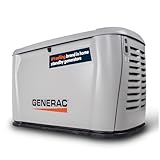
- Whole House Protection: Keep your family comfortable and connected during power outages. Avoid the disruption of losing refrigeration, heating/cooling, lights and connectivity of your devices with a Home Standby Generator that automatically detects an outage and delivers backup power to your home.
- Lowest Total Cost Of Ownership: Electronic fuel & ignition control optimizes fuel use for a more cost-efficient and lower emission back-up power solution* and financing options that offer you solutions that meet your budget *On average versus Generac Guardian Series standby generators
- Remote Monitoring & Control: Built-in Cellular Connectivity allows you to monitor performance and control your generator with Mobile Link app whether you're home or away. Provides real-time updates and maintenance alerts right on your device.* *Requires Mobile Link premium subscription
- Superior Reliability: Oil level sensors monitor oil level to help ensure generator readiness, support in cold climates with improved cold start performance and sloped roof & rear intake to reduce risk of ice or snow intrusion
- Long Term Assurance: Every Generac Standby Generator comes with a 5-year limited warranty and 24/7/365 customer support
Operating value while the grid is available
Microgrids may create value during normal grid conditions as well as during outages. Possible value streams depend on the utility tariff, load shape, operating rules and available resources. They could include coordinated use of local generation or storage and management of flexible demand. DOE’s “Power in the Storm: Capturing the Value of Microgrids Resilience” explains that resilience and normal-operation value should be assessed for the host site rather than assumed.
Use planning tools for scenarios, not promises
DOE FEMP’s Distributed Energy Resources for Resilience guidance identifies REopt as a planning tool that can evaluate economic viability, system sizes, battery-dispatch strategies, energy costs while grid-connected and during an outage, and estimated survival time for the critical load. Use several scenarios: different critical-load definitions, outage durations, fuel assumptions, storage sizes, renewable production and load-shedding rules.
REopt and the Customer Damage Function Calculator are planning aids. They do not replace engineering design, utility coordination, protection review, site surveys, procurement analysis or an operations plan. Treat their outputs as scenario results with stated assumptions, not as a guaranteed payback or runtime.
Independent reader supportYour contribution helps us test, update, and keep practical guides available for everyone.When each approach is the better starting point
Start with a generator assessment when
- The resilience objective is limited to outage-only service for identified circuits.
- Critical loads are concentrated and do not need campus-wide coordination.
- Fuel storage, delivery and maintenance can be made dependable.
- The facility has little operational need for local resources when the utility is available.
- The team can operate and test a focused backup system but does not have a business case for broader controls.
Start with a microgrid assessment when
- Several buildings or electrical areas must be coordinated.
- Critical loads have different priorities and some demand can be shed or shifted.
- The site wants local generation, storage or renewable resources to work together.
- Normal-operation energy management could have material value.
- Outage duration, fuel access or recovery requirements justify multiple resources and more operating flexibility.
Consider a staged or hybrid design
The choice is not always a single generator versus a fully built-out microgrid. A facility can begin with a well-defined critical-load system and design its distribution, controls and space so additional resources can be integrated later. A generator may remain the long-duration resource while batteries handle short transitions, momentary support or selected loads. Whether that sequence is sensible depends on the facility’s electrical architecture, budget, outage exposure and long-term plans; it should be modeled rather than assumed.
A practical assessment process
- Map the electrical system. Document utility service points, distribution paths, panels, existing generation, renewable equipment, storage, control systems and physical constraints. Mark which circuits can be isolated and which buildings share resources.
- Classify loads. Measure or estimate demand for critical, priority and deferrable loads. Record starting currents, acceptable interruption, power-quality needs and the consequences of losing each load.
- Set resilience scenarios. Model the expected outage, a longer credible outage and a severe case. State assumptions for fuel deliveries, solar or other renewable output, storage state of charge, staffing and access.
- Define operating modes. Describe normal grid-connected operation, the transition into island mode, load shedding, resource failure, black-start or restart needs, and reconnection to the utility. Assign decision authority to named facility roles.
- Model alternatives. Compare generator-only, microgrid and staged or hybrid configurations. Evaluate critical-load survival time, outage consequences, energy costs, capital requirements, maintenance and normal-operation value under the same assumptions.
- Review engineering and utility requirements. Have qualified professionals assess protection, controls, grounding, interconnection, emissions or fuel constraints, physical construction, communications and commissioning. Coordinate with the utility before selecting an islanding or reconnection scheme.
- Plan operations and procurement. Specify preventive maintenance, testing, fuel or energy replenishment, spare parts, cybersecurity and communications responsibilities, training, documentation and acceptance tests. Require vendors or contractors to demonstrate the operating sequences that matter to the facility.
- Validate with a drill. Test the critical-load sequence, communications, load shedding, resource dispatch and recovery procedure under controlled conditions. Update the plan when loads, tenants, processes, tariffs or utility conditions change.
Common mistakes and how to correct them
Choosing by total connected load
Problem: The design uses every nameplate rating, producing an oversized and inefficient generator or an unnecessarily large microgrid.
Correction: Build a measured critical-load profile, account for starting behavior and identify loads that can be delayed or shed.
Assuming stored energy equals fuel-backed runtime
Problem: A battery is treated as a drop-in replacement for a generator during a long outage.
Best Value
- Whole House Protection: Keep your family comfortable and connected during power outages. Avoid the disruption of losing refrigeration, heating/cooling, lights and connectivity of your devices with a Home Standby Generator that automatically detects an outage and delivers backup power to your home.
- Lowest Total Cost Of Ownership: Electronic fuel & ignition control optimizes fuel use for a more cost-efficient and lower emission back-up power solution* and financing options that offer you solutions that meet your budget *On average versus Generac Guardian Series standby generators
- Remote Monitoring & Control: Built-in Cellular Connectivity allows you to monitor performance and control your generator with Mobile Link app whether you're home or away. Provides real-time updates and maintenance alerts right on your device.* *Requires Mobile Link premium subscription
- Superior Reliability: Oil level sensors monitor oil level to help ensure generator readiness, support in cold climates with improved cold start performance and sloped roof & rear intake to reduce risk of ice or snow intrusion
- Long Term Assurance: Every Generac Standby Generator comes with a 5-year limited warranty and 24/7/365 customer support
Correction: Calculate usable storage for the actual load and duration, then test recharge, weather, degradation and load-shedding assumptions. Keep a fuel-backed or other long-duration plan where the scenario requires it.
Ignoring fuel access after a regional event
Problem: The generator runs successfully during a test but cannot be refueled when roads, suppliers or staff are constrained.
Correction: Document stored quantity, fuel quality checks, delivery agreements, access routes, priority allocation and the point at which loads will be reduced.
What’s actually slowing this PC down?
Pick the symptom - the matching free tool is one click away.
Buying controls without an operating plan
Problem: A microgrid is installed with sophisticated resources but no agreed priorities, authority or response to equipment failure.
Correction: Write the operating modes and load-shedding logic first, assign responsibilities, train operators and verify the sequences during commissioning and drills.
Counting resilience value twice
Problem: A model treats avoided outage losses, energy savings and every possible service as certain revenue.
Correction: Separate avoided damage, energy costs, demand effects and other potential benefits; document the tariff, probability, duration and operational assumptions behind each one.
Recommended Free Tools
Bottom line for facility owners and operators
A generator is often the appropriate answer when the requirement is straightforward: keep a defined set of critical loads operating during an outage, with dependable fuel, maintenance and testing. A microgrid is the stronger candidate when the facility needs a controllable local system that coordinates multiple resources, serves one or more buildings, manages priorities and can deliver value while the utility is operating.
Make the decision from your critical-load inventory, outage-duration scenarios, fuel and energy logistics, operating capability and site economics. Use DOE FEMP’s REopt and outage-cost tools to compare scenarios, then have qualified engineering and utility professionals turn the preferred scenario into a design and operating plan. That process is more defensible than selecting a generic equipment size or assuming that one technology is universally less expensive.
Quick Recap
Product prices and availability are accurate as of the date/time indicated and are subject to change. Any price and availability information displayed on Amazon at the time of purchase will apply.

